Hello everyone! 🙂
Welcome to ‘Bradley’s Basement’ blog and I’m Tim Bradley!
Season 15 of the classic ‘Doctor Who’ TV series is arguably a transitionary season. As well as being Tom Baker’s fourth season as the Fourth Doctor, it was the first one to be heralded by new producer Graham Williams. 🙂 Graham Williams would implement quite a lot of changes to the show’s format.
With criticisms made against the gothic horror elements by Philip Hinchcliffe in Season 14, Graham Williams was asked to tone them down with gentler, comedic aspects. Robert Holmes was still the script editor by that point, but he only remained for half of the season before soon being taken over.
Anthony Read was invited to be the show’s script editor and he incorporated more classic literary elements to the series as opposed to gothic horror movie aspects. This is clearly indicated in ‘Underworld’, a story that is based on Greek legends, specifically the ‘Jason and the Argonauts’ tale.
In my opinion, Season 15 is the weakest of the three seasons under Graham Williams’ time as producer of the show. Whilst he managed to find his mark at the end of the season, he was still having to work with the gothic horror elements that were prevalent in the previous three seasons. 😐
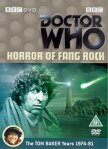
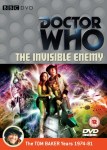
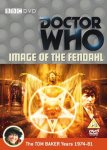
This is shown in ‘Horror of Fang Rock’, ‘The Invisible Enemy’ and ‘Image of the Fendahl’. Arguably, ‘The Sun Makers’, ‘Underworld’ and ‘The Invasion of Time’ are more comedic by nature and they suited Graham Williams/Anthony Read’s vision for the TV show more than the first three stories did.
This season was also Louise Jameson’s last one as Leela. It’s clear that Leela’s stories in Season 15 aren’t as strong as her stories in Season 14. Season 15 also introduces us to K-9, a robot dog, voiced by John Leeson. K-9 would become popular in the Graham Williams era and for the rest of the series.
Thanks for reading!
Bye for now!
Tim 🙂
 Bradley's Basement
It’s certainly much more thought-provoking to look back on transitional periods in our favorite SF shows after so long, judging from many WordPress reviews I’ve read on Dr. Who and Star Trek. A change in showrunners is all the more notable nowadays with Dr. Who, through Russell T. Davies, Steven Moffat, Chris Chibnall and now back to Davies. A child fan’s perspective may be a lot more flexible in the sense of watching shows for the fun. Both Hinchcliffe’s and Williams’ eras had that much for me and certainly thanks to the marvels of Tom Baker. It was John Nathan-Turner’s time that made me most aware of how Dr. Who’s longevity may often depend greatly on the individual visions of whoever’s in charge. Thank you, Tim, for this summary of S15.
LikeLiked by 2 people
Hi scifimike,
Thanks for sharing your thoughts on Season 15 of ‘Doctor Who’ and very glad you enjoyed my summary of it. It’s interesting how the transitionary period of Season 15 took place with the ending of the gothic horror aspects to the more gentler comedic aspects of the Tom Baker era. I enjoyed Season 15 in general, but not so much in the same way as I enjoyed Seasons 16 and 17. I’m glad Graham Williams found his mark by the time this season came to an end, but it’s clear how the TV show made an adjustment after a period of over three years of gothic horror elements.
Many thanks,
Tim 🙂
LikeLiked by 1 person
I’m curious to hear other opinions: Is Season 15 one of the most transparently transitional seasons in Doctor Who’s original run?
We’ve many, many years, across many, many showrunners, but quite a number of production teams are able to make their mark within the first two serials. Philip Hinchcliffe’s vision for the series, for instance, doesn’t arrive in “Robot” but is out in full force by the time of “The Ark in Space”.
Season 15, by comparison, is ultimately neither fish, nor fowl. We don’t encounter a uniquely Williams-style tale until “The Sun Makers”. Ironically, penned by outgoing script editor, Robert Holmes. It’s a season of mythology (Greek and Gallifreyan), slapstick gags, suicides (both thwarted and successful), comedic misdirection, mass murder, corporate greed, tongue-in-cheek satire, mad dictators and Time Lords. It’s a frenzied patchwork quilt of a thing.
Stories like “The Horror of Fang Rock” and “The Sun Makers” work well in their own framework. Individually delivering on what they promise. More broadly, however, the season seems more emblematic in “Image of the Fendahl”. A well-directed story with a fascinating villain… that, unfortunately, can’t decide whether to be a final Gothic hurrah (under Holmes) or a self-aware send-up (under Read).
I think the Graham Williams era, for me, will heat its tonal stride next season. Season 16 feels unique unto itself. Cohesive. Even “The Armageddon Factor”, with its grim subject matter, feels distinct to the new approach. With a new companion, an unexpected format change, and a surer footing. It just needed to get the initial identity crisis out of the way first.
LikeLiked by 2 people
Hi Wolfie,
Thanks for sharing your thoughts on Season 15 of ‘Doctor Who’. It’s intriguing how the season progresed from having the gothic horror attitudes carried over from the end of the Hinchcliffe/Holmes era to gaining the slightly comedic and more literary/fantasy elements under Graham Williams and Anthony Read. I look forward to expanding my thoughts on each story in Season 15 of the classic ‘Doctor Who’ TV series to emphasise why I feel this season is the weakest of the three seasons under Graham Williams as producer compared to when he found his feet in Seasons 16 and 17.
Many thanks for your comments.
Tim 🙂
LikeLiked by 1 person
If the first story arc in Dr. Who via The Key To Time was Williams’ hope for making a strong mark on the show, then I certainly gave him points for it. I know that Tom Baker had mixed feelings for it because he had preferred always moving onto a totally new story instead of doing a basic coherence of stories.
LikeLiked by 2 people
Hi scifimike,
There are times where I prefer ‘Doctor Who’ seasons featuring standalone stories with no continous arc going through them, but I do enjoy a ‘quest romp’ style of season or a season that has continous story going through it like ‘The Trial of a Time Lord’ and ‘Flux’. I can understand Tom’s mixed feelings about ‘The Key to Time’, but I think the season worked well to its advantage, especially when having Mary Tamm on board as Romana. And I think ‘The Key to Time’ season is Graham Williams’ strongest season out of the three he did as the show’s producer.
Many thanks,
Tim 🙂
LikeLiked by 1 person