‘DAY OF THE DALEKS’
Please feel free to comment on my review.
Eliminate All Humans! Exterminate! with the Third Doctor, Jo and U.N.I.T.


For Richard Franklin
Let’s do Jon Pertwee’s third season as the Third Doctor in ‘Doctor Who’! 🙂
Like Season 2 with William Hartnell, it’s taken me a while to do updated versions of my reviews on the five stories featured in Season 9 of the classic ‘Doctor Who’ TV series through ‘The Collection’ Blu-ray box set range. In 2023, I was busy putting together ‘Doctor Who’s 60th anniversary celebrations on my blog.
Thankfully, in 2024, I can now talk about these stories. I recall when it was announced that Season 9 of the classic ‘Doctor Who’ TV series would be released in its Blu-ray box set. The announcement for it came via the ‘Doctor Who’ YouTube channel with a trailer for Season 9 on Blu-ray in January 2023.

It had the mini-episode ‘Defenders of Earth’, starring Katy Manning who reprised her role as Jo Jones née Grant. There was a baby Sea Devil, and a lesbian couple in Kat and Alex. The mini-episode also paid a tribute to Stewart Bevan (Clifford Jones in ‘Doctor Who’) who had sadly passed away in 2022.
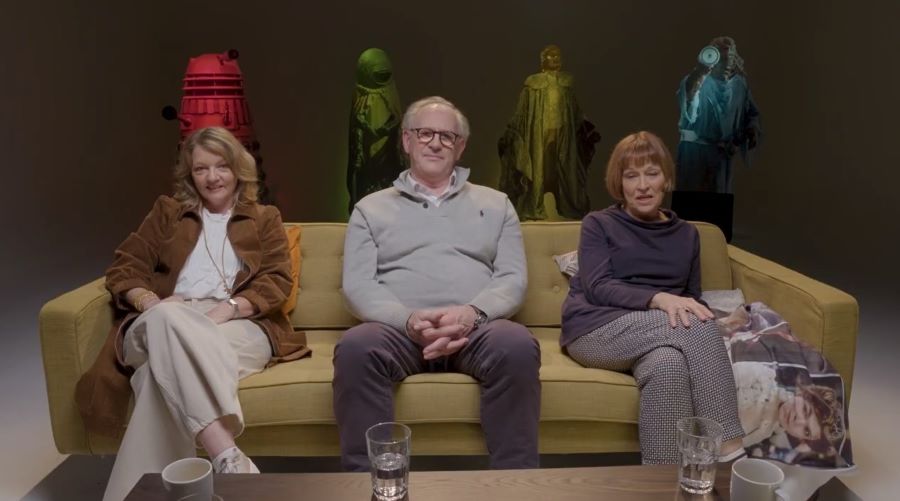
There was also a preview of various behind-the-scenes extras exclusive to the Season 9 Blu-ray box set, including the ‘Behind the Sofa’ items for Season 9, which featured Peter Davison, Sarah Sutton and Janet Fielding. Again, it’s a treat to check out these box sets and know Sarah Sutton’s in them. 🙂
Katy Manning and director Michael E. Briant also contributed to the ‘Behind the Sofa’ items as well as Wendy Padbury and Sophie Aldred. Unlike Season 2, all five stories in the Season 9 Blu-ray box set are given the ‘Behind the Sofa’ treatment, which is a huge relief as I enjoy watching them on Blu-ray.
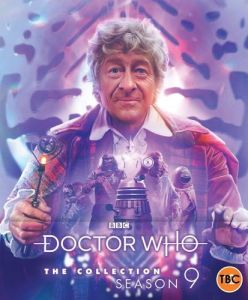
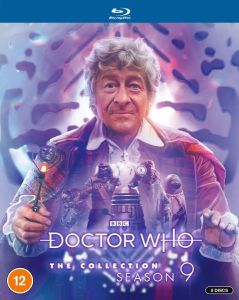
The Blu-ray box set of Season 9 of classic ‘Doctor Who’ contains the following five stories. There’s ‘Day of the Daleks’, ‘The Curse of Peladon’, ‘The Sea Devils’, ‘The Mutants’ and ‘The Time Monster’. Apparently, ‘Day of the Daleks’, ‘The Sea Devils’ and ‘The Time Monster’ get the 2-disc treatment. 😀
Not that I mind that, since ‘Day of the Daleks’, ‘The Sea Devils’ and ‘The Time Monster’ are three stories that I’ve enjoyed greatly compared to ‘The Curse of Peladon’ and ‘The Mutants’. Yet, it’s intriguing those three stories get the 2-disc treatment compared to the two even-numbered stories. 🙂
Season 9 of classic ‘Doctor Who’ is a season that I believe was a turning point in Jon Pertwee’s era of the TV show. Bear in mind, most of the Jon Pertwee era had been earthbound, due to the fact that the Third Doctor had been exiled to Earth following his trial by the Time Lords in ‘The War Games’. 😐
His exile would be lifted by Season 10 in ‘The Three Doctors’ of course, but this is a season that tries to experiment with the notion of the Doctor being sent on missions by the Time Lords, giving him the chance to be off Earth at times. This was something that started in Season 8 in ‘Colony In Space’.
Now, it’s not exactly an ideal situation for the Doctor to be in, considering his freedom to travel in the TARDIS is limited by the Time Lords who send him on adventures of their accord. But you’re bound to notice the tell-tale signs that ‘Doctor Who’ was veering away from doing earthbound stories.
It’s clear that producer Barry Letts and script editor Terrance Dicks weren’t keen on the series being like the ‘Quatermass’ TV serials of the 1950s. This was something that had been set up by producer Peter Bryant and script editor/producer Derrick Sherwin towards the end of Patrick Troughton’s era.
At this stage, the ‘Doctor Who’ production team were trying to find ways of getting the Doctor off Earth as much as possible so that he can travel back in space and time again. It would take a while to happen from 1970 to 1973, but it did happen. Barry Letts and Terrance Dicks are to thank for that. 🙂
I actually like how the journey of the Third Doctor from being an exile on Earth to being a space-and-time traveller again progresses in his tenure from Season 7 to Season 11. It’s easy to forget that Jon Pertwee’s Doctor had adventures that weren’t set on contemporary planet Earth, as was the norm.
One of the reasons why the Jon Pertwee/Third Doctor era seasons are shorter and mostly set on Earth is to do with saving budgets and time, considering the William Hartnell/First Doctor and Patrick Troughton/Second Doctor eras were made under punishing schedules by producing so many episodes.
I’m not saying this to discredit the earthbound stories featured in Jon Pertwee’s era of ‘Doctor Who’. On the contrary, it’s often enjoyable to see a ‘Doctor Who’ story set on contemporary Earth now and again. But you don’t want to keep repeating the stories’ settings on Earth like that, as it lacks variety.
One of the highlights of the Jon Pertwee era of ‘Doctor Who’ is the relationship that the Third Doctor has with Katy Manning as Jo Grant, his trusty companion. There’s also the family relationship with U.N.I.T. members like Brigadier Lethbridge-Stewart, Captain Yates and Sergeant Benton to consider.
Now, this is jumping ahead a bit, but the U.N.I.T. elements of the earthbound stories featured in Season 9 of the classic ‘Doctor Who’ TV series aren’t so prevalent as they were in Season 8. Heck, the Master, who was a regular villain in Season 8, only appears in two of the five stories in this season. 😐
The story lengths in each of the Jon Pertwee era seasons tend to have a pattern, with mostly containing two four-parters and three six-parters. That would change by the time we get to Tom Baker’s era, but that is how the show was done under Barry Letts and Terrance Dicks’ management.
With these things said, what does that say about Season 9 overall? Is it better than what came before in Seasons 7 and 8 in the Jon Pertwee era? Is there more variety to be found in Season 9, especially when you have a blend of earthbound and outer space adventure stories throughout it? 🙂
Let’s take a look. The season begins with the four-part story ‘Day of the Daleks’. I found this a delightful ‘Dalek box of chocolates’ treat for ‘Doctor Who’ fans to enjoy when I checked out the story via the 2-disc DVD set in 2011. And it was when I checked out the story in Special Edition form.

Yes, I’m reviewing ‘Day of the Daleks’ via the Special Edition version, not the original 1972 TV version. When ‘Day of the Daleks’ was released on DVD in 2011, it contained two versions of the story. Now on Blu-ray, there are three versions of the story, which I didn’t even know was possible. 🙂
There’s the original 1972 TV version, the Special Edition version and there’s an omnibus version, which was originally shown on TV in 1973 and is missing from the BBC Archives, but has been reconstructed using High-Definition versions of the episodes and the restored TV audio soundtracks.
Since the omnibus version is a movie version of the original 1972 TV version of the story, I decided not to check it out for this updated Blu-ray review and just rely on the Special Edition version of the story. Which, let’s be honest, is a superior version of the story compared to the original TV version. 🙂
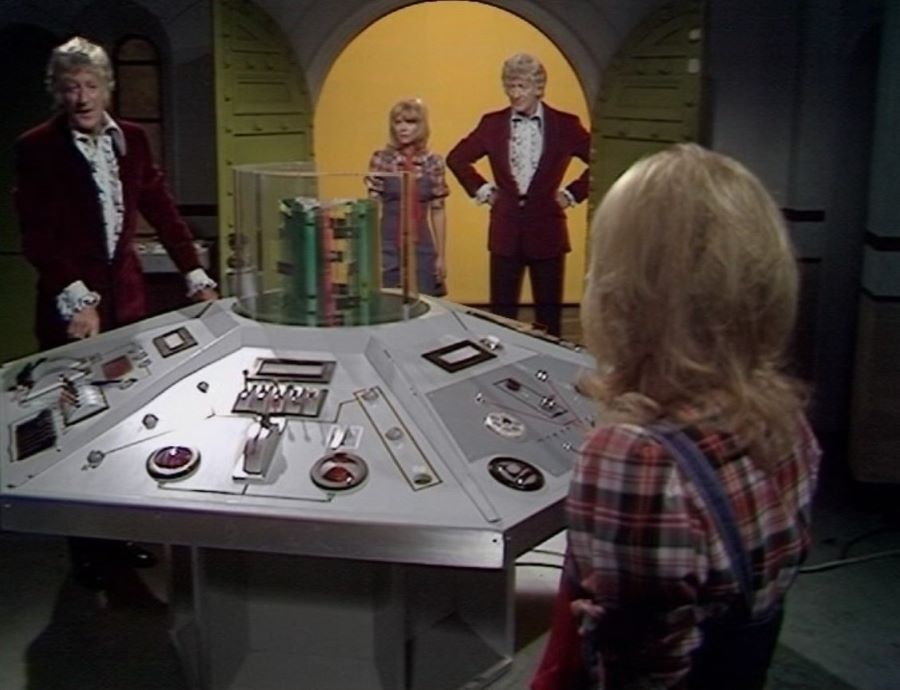
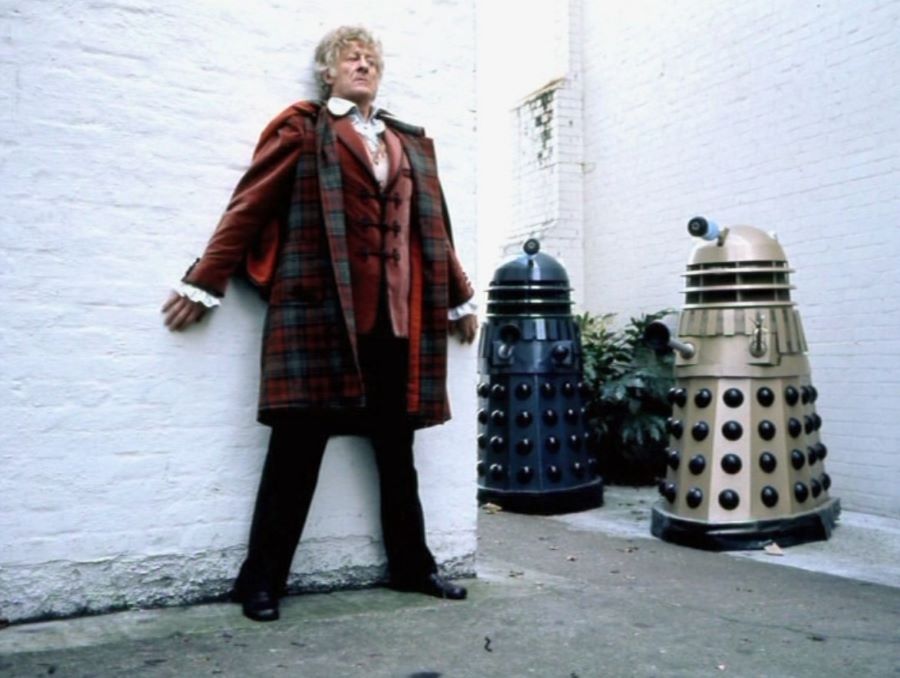
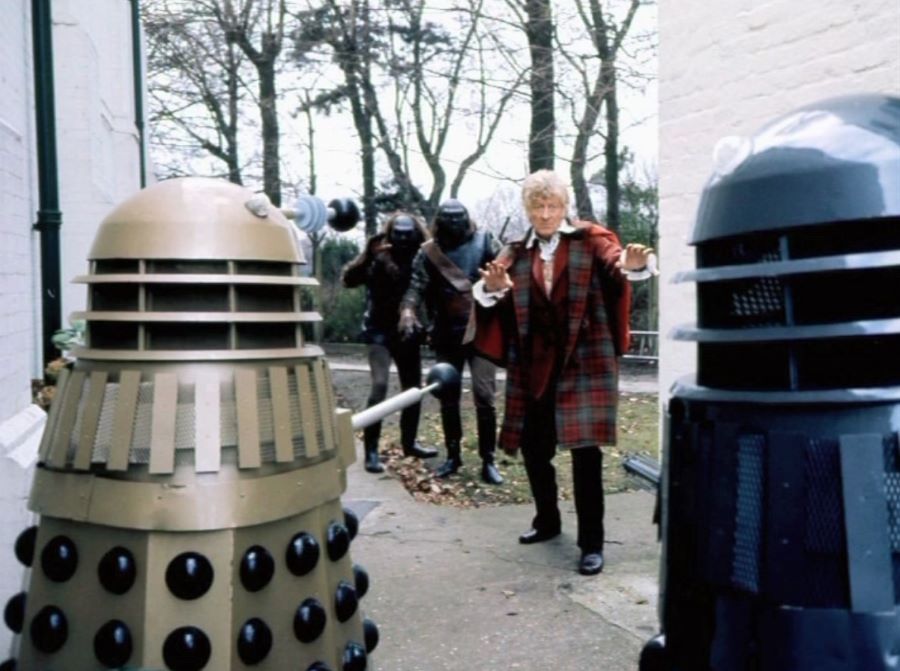
‘Day of the Daleks’ stars Jon Pertwee as the Doctor, Katy Manning as Jo Grant, Nicholas Courtney as the Brigadier, Richard Franklin as Mike Yates and John Levene as Sergeant Benton. This is like one out of two times where the U.N.I.T. family of those five characters would feature in Season 9 itself. 🙂
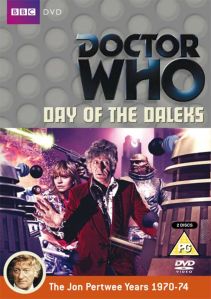
Regarding the 2011 DVD release, I’ve had my DVD cover of ‘Day of the Daleks’ signed by the lovely Katy Manning and Richard Franklin. They signed my DVD cover when I met them at the ‘Valiant 2015’ convention in Sheffield in March 2015. I’m very happy I’ve had my DVD cover signed by them.
When I heard there was going to be a new version of ‘Day of the Daleks’ released on DVD in 2011, I was very pleased. I’d seen clips and previews of the original TV story in DVD documentaries and such, and I was hoping for there to be updated voices and effects for the story on the DVD release. 🙂
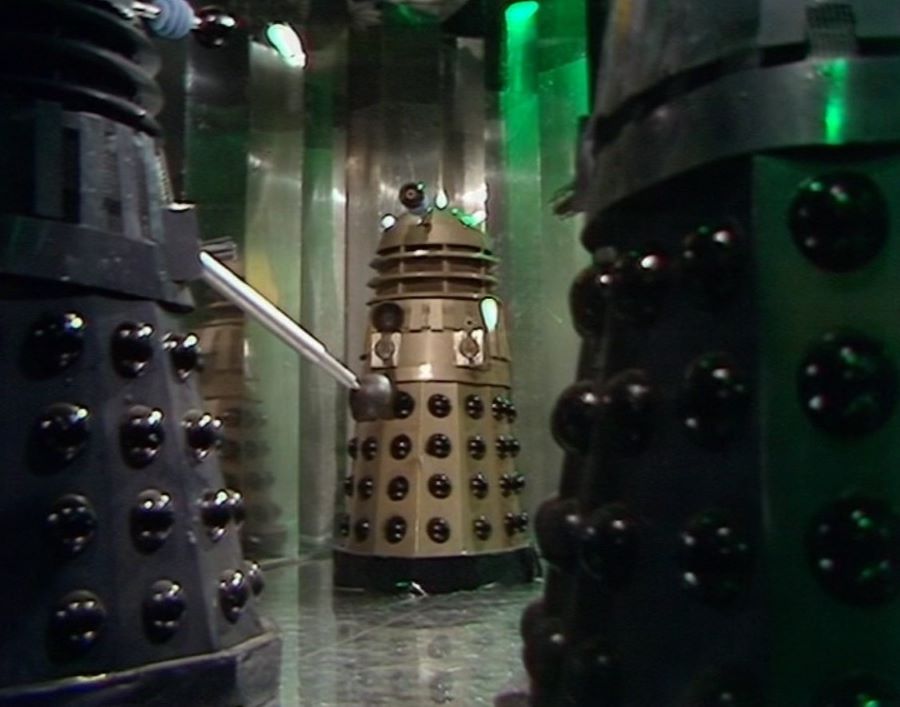
I was relieved when it turned out to be the case. The voices for the Daleks in ‘Day of the Daleks’, originally provided by Oliver Gilbert and Peter Messaline, were very disappointing. So, I was pleased the Special Edition version of this tale contained improved Dalek voices by Nicholas Briggs himself. 🙂
I did see the Special Edition version of ‘Day of the Daleks’ first before I checked out the original four-part version of the TV story. Unlike previous Special Editions of certain ‘Doctor Who’ stories that were basically movies, this Special Edition version of ‘Day of the Daleks’ is actually a four-part tale. 🙂
I’m pleased I can see the Special Edition version of the story as a four-parter and see what it’s like had it had proper Dalek voices in it. There’s also the improved CGI effects, sound design and editing to make ‘Day of the Daleks’ more effective and impressive to watch compared to the original TV story.
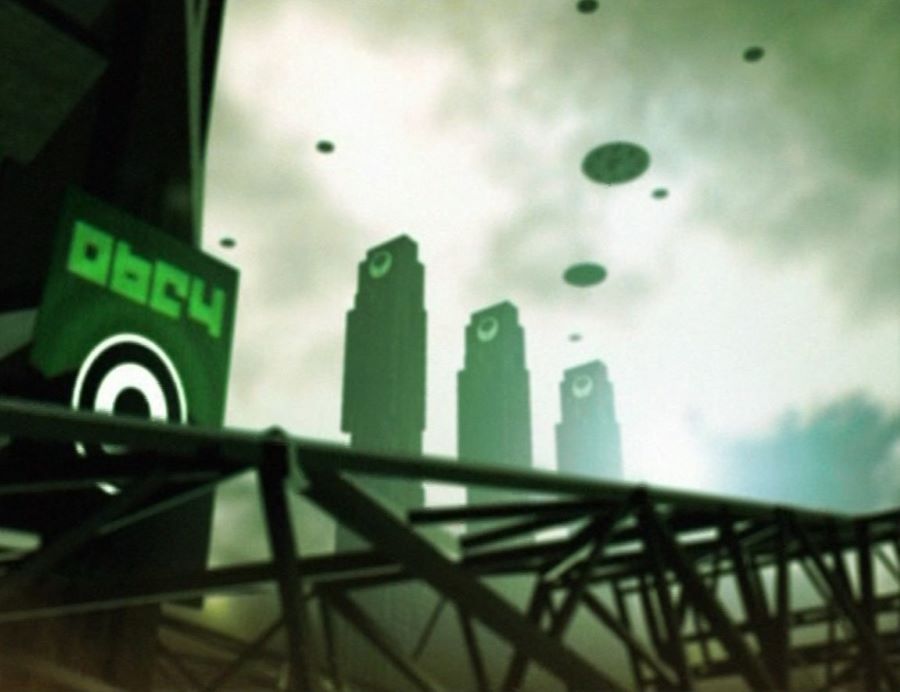
It’s also astonishing how lacking the original version of the TV story is in not just having poor Dalek voices but poor visual effects. Whenever I check out ‘Day of the Daleks’ as a ‘Doctor Who’ story, it’s always the Special Edition version that I turn to, since it’s the best version to check out for today.
‘Day of the Daleks’ is a ‘Doctor Who’ story by Louis Marks. This happens to be Louis Marks’ second contribution to the classic ‘Doctor Who’ TV series, as he previously penned ‘Planet of Giants’ in Season 2 with William Hartnell. Clearly, ‘Day of the Daleks’ is so much better than ‘Planet of Giants’.
Incidentally, when the story was shown on BBC TV in 1972, it was very popular with audiences, earning viewers from 9.1 million to 10.4 million. And this story was all shown in the first full month of 1972 – January. It’s amazing that many viewers were hyped about this ‘Doctor Who’ story then. 🙂

Of course, the story has become average over the years, and that was before producer Steve Broster came in and embarked on what is essentially his dream project to deliver the Special Edition version of ‘Day of the Daleks’ in 2011. I’m pleased he put it together to make the DVD release worthwhile. 🙂
Apparently, this story had the working title ‘The Ghost Hunters’ and alternatively ‘Years of Doom’. Most significantly is that the story initially didn’t have the Daleks in it. Originally, Louis Marks’ story was about a group of guerrillas from Earth’s future who came back into the past to change history. 😐
In a sense, it’s not a bad story. From seeing the ‘Blasting the Past’ making-of documentary, it’s intriguing that comparisons are made to the 1984 film ‘The Terminator’ by James Cameron and ‘The Outer Limits’ episode ‘Soldier’. I haven’t seen those lately to make a comparison, but it’s fascinating.
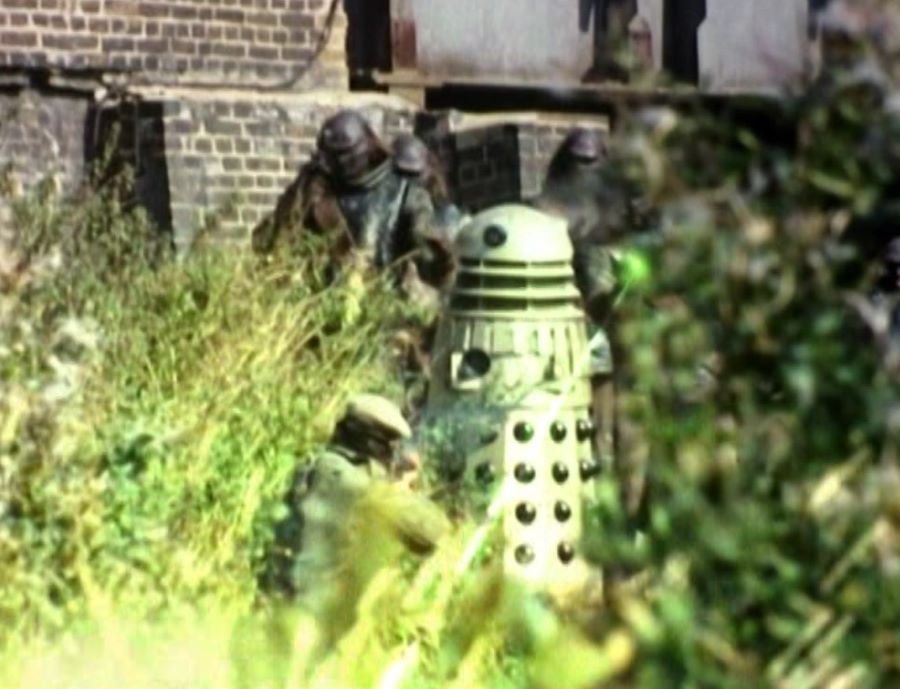
But of course, producer Barry Letts and script editor Terrance Dicks felt this story needed to have something else to make it more exciting. Therefore, they decided to put the Daleks into the story. This was interrupted when original Dalek author Terry Nation advised them they were his copyright.
Thankfully, over a diplomatic lunch, Terry Nation gave the ‘Doctor Who’ production team permission for them to use the Daleks in the story, as long as he was given an on-screen credit. That seems to be the case in the episodes’ end credits for both the original TV and Special Edition versions of the tale.
I’m sure it’s the case for the omnibus version of the story in the Season 9 Blu-ray box set. Thus, ‘The Ghost Hunters’ story with the Daleks incorporated by Louis Marks went ahead. It’s an inspired idea to have ‘Day of the Daleks’ being the opening story in Season 9 of the classic ‘Doctor Who’ TV series.
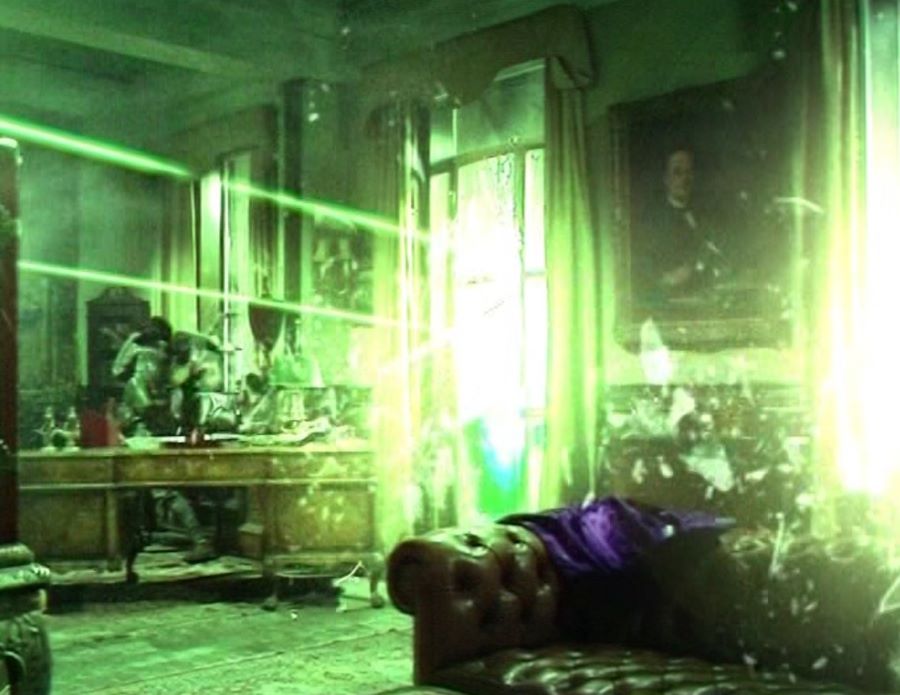
It also must have been exciting for audiences to watch this ‘Doctor Who’ story back in 1972, especially with having Daleks featured in it, after having been away for so long since ‘The Evil of the Daleks’ in 1967. The ‘Radio Times’ cover for this TV story did help in complimenting it in that regard.
Apparently, it had been planned to bring the Daleks back at the end of Season 9, I believe, in a serial which would have been called ‘The Daleks in London’. Presumably, it would have been co-written by Robert Sloman and Barry Letts in the slot that would soon end up being given to ‘The Time Monster’.
Of course, the plan was dropped to have the Daleks appear at the beginning of the season and not at the end, as each of Jon Pertwee’s seasons began with bangs. ‘Spearhead From Space’ introduced the Third Doctor in Season 7. BANG!!! ‘Terror of the Autons’ introduced the Master in Season 8. BANG!!!

After ‘Day of the Daleks’ introduced the Daleks in Season 9, ‘The Three Doctors’ reunited the first three Doctors in Season 10 and ‘The Time Warrior’ introduced the Sontarans in Season 11. I’m surprised not every season ‘Doctor Who’ has the energy to start off with a bang of an opening story.
It was also indicated that Robert Sloman’s original ‘Daleks in London’ story would have been too similar to ‘The Dalek Invasion of Earth’, which makes sense, considering the 22nd century elements being involved in ‘Day of the Daleks’ itself as a story. You don’t want a repeat of that particular story.
The concept of guerrillas from the 22nd century travelling back in time to the 20th century to prevent a disastrous event is intriguing, if perhaps not unoriginal. There is a time paradox involved, which is fascinating, as it’s an idea that’s rarely done in ‘Doctor Who’, at least in the classic TV series.
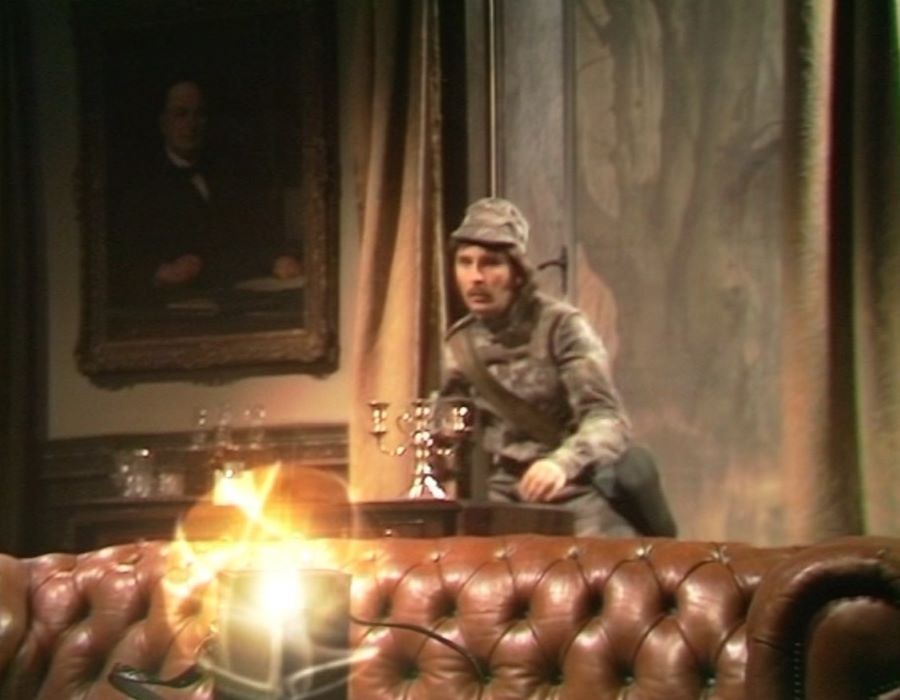
It might be resurfaced in ‘Mawdryn Undead’ with two Brigadiers, the Blinovitch Limitation Effect and everything (The concept of the Blinovitch Limitation Effect is introduced here in ‘Day of the Daleks’), but time paradoxes aren’t something that you see very often when watching classic ‘Doctor Who’.
Steven Moffat likes to get timey-wimey in some of his ‘Doctor Who’ stories, particularly in the Matt Smith and Peter Capaldi eras. Although it can be argued that some of those timey-wimey stories can be debatable in whether they’re well-executed or not, judging how many plotholes you can identify.
As well as time paradoxes being addressed in ‘Day of the Daleks’ and ‘Mawdryn Undead’, Nicholas Briggs, the aficionado concerning Daleks, has used the concept of time paradoxes in his own story about the Daleks called ‘The Mutant Phase’, although the ending for that particular story is debatable.
And if any of you are confused by this stage regarding how time paradoxes work in ‘Doctor Who’, I don’t blame you, since as many would say, time-travel is a very confusing thing. But at least the time-travel aspects in this story aren’t so confusing compared to some of the modern-day TV adventures.
The Daleks’ place in 22nd century Earth is very significant in ‘Doctor Who’ terms, especially since they invaded and occupied the Earth in ‘The Dalek Invasion of Earth’ before William Hartnell’s First Doctor and his friends put a stop to it. I don’t think this is the same 22nd century Earth in ‘Day of the Daleks’.
Yeah, I know, that does sound obvious considering ‘The Dalek Invasion of Earth’ was shown in 1964 whilst ‘Day of the Daleks’ was shown in 1972. But I do think the 22nd century Earth in ‘Day of the Daleks’ is not exactly the Dalek-occupied version that was presented in ‘The Dalek Invasion of Earth’.
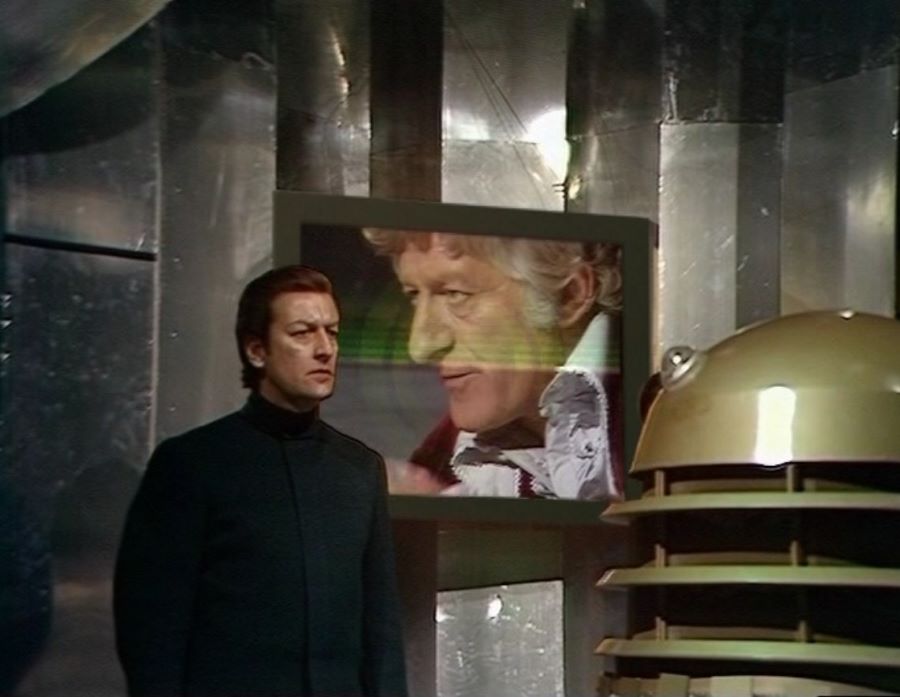
For one thing, the Daleks already know who the Doctor is in ‘Day of the Daleks’ compared to when they didn’t know him at all in ‘The Dalek Invasion of Earth’. Another thing is that there aren’t any Robomen featured in ‘Day of the Daleks’, and the human guards treating the slaves are subservient. 😐
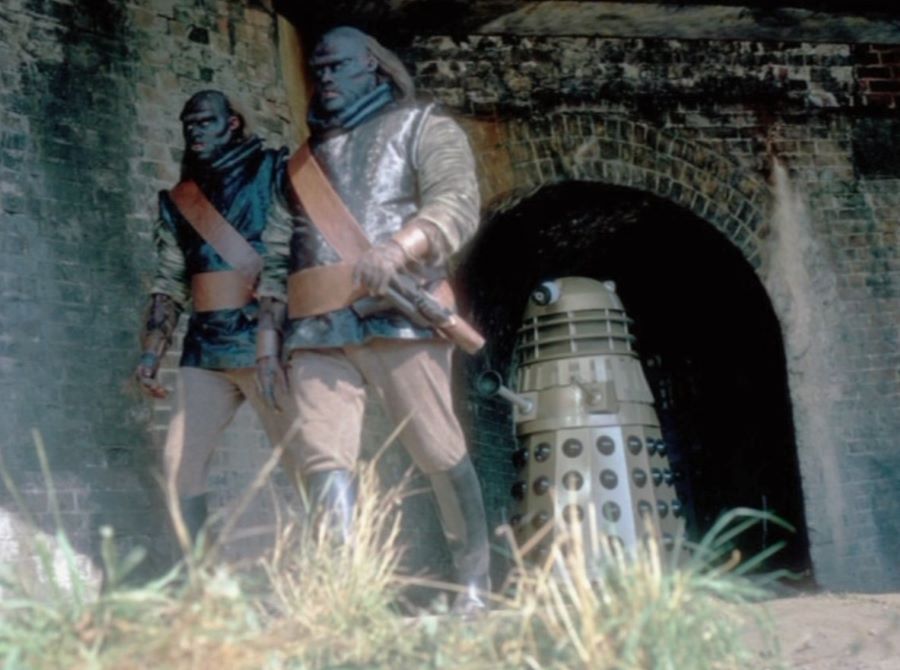
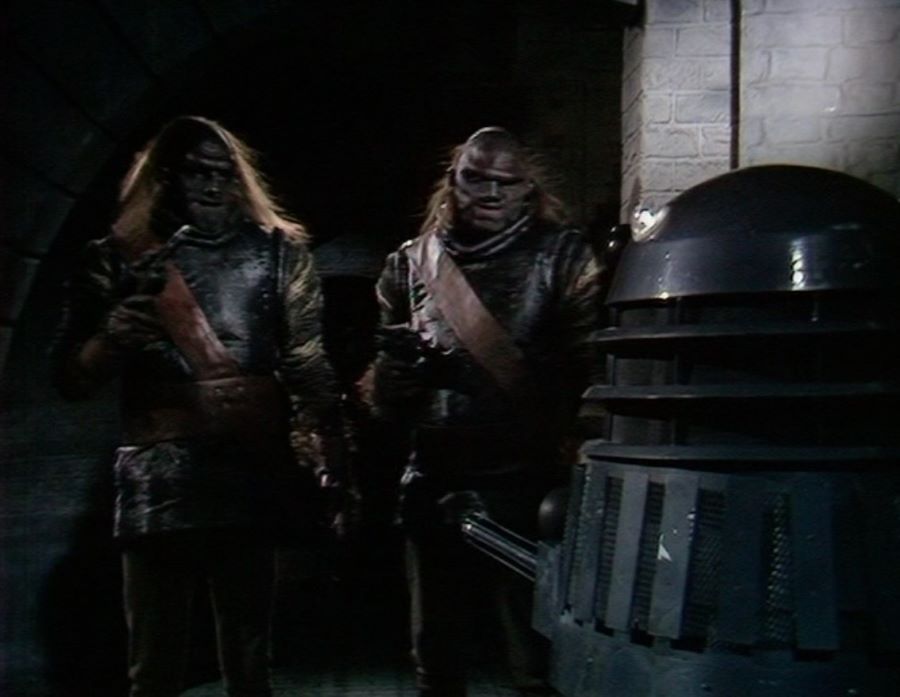
Instead of Robomen, we have the Ogrons working for the Daleks. I know that the Ogrons were part of the original storyline without the Daleks in ‘The Ghost Hunters’, but it’s intriguing that Louis Marks didn’t change the Ogrons to Robomen for continuity’s sake. Maybe there wasn’t enough time.
Or maybe because the production team didn’t do much research in term of connecting dots to ‘The Dalek Invasion of Earth’ and decided to make the continuity aspects as flexible as possible. This is especially when the Daleks are claiming to invade the Earth again in an attempt to change history. 😐
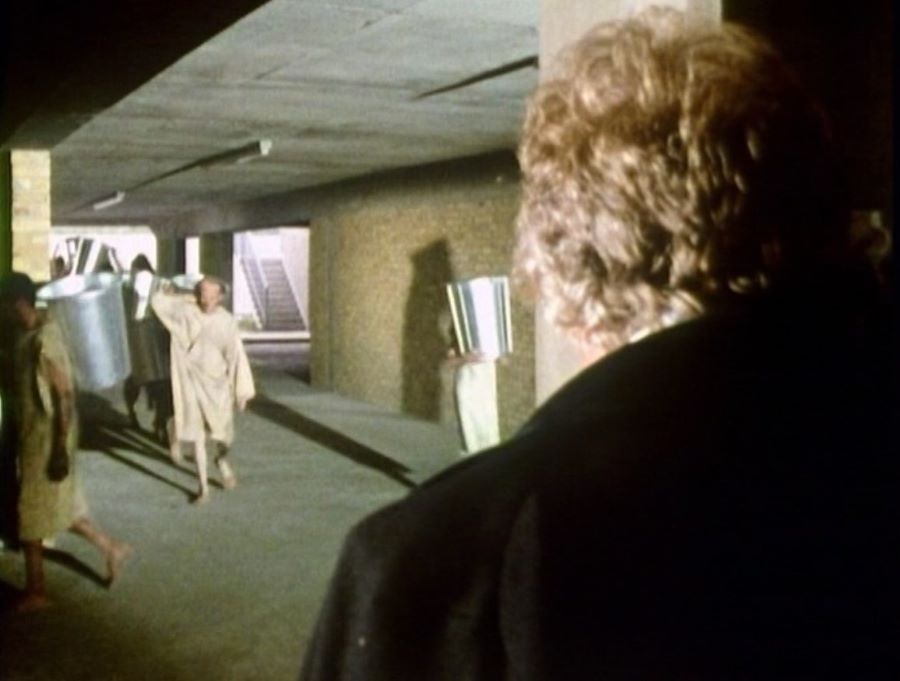
Also, things aren’t exactly black-and-white when the story is addressing Earth’s future in ‘Day of the Daleks’. And that’s not just the monochrome presentation of ‘The Dalek Invasion of Earth’. It’s also a question of how things are handled concerning how to prevent a time paradox from ever happening.
The story’s focus concerns a peace conference that’s about to take place in the 20th century. The conference is being held by Wilfred Carter as Sir Reginald Styles. The character doesn’t appear much in this story, as he’s like in ‘Episodes One and Four’. As the Doctor described Sir Reginald in the story…
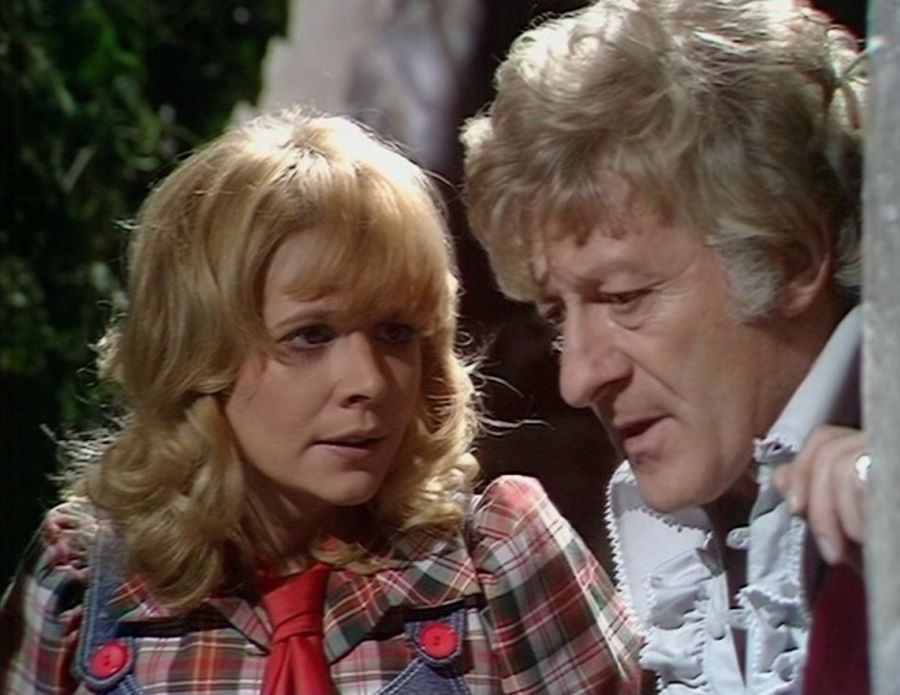
Doctor: Vain to the point of arrogance, a trifle obstinate, perhaps, but basically a good man.
Yes, that would describe him amply, considering he’s pretty brusque when trying to deny seeing someone attacking him, despite the Doctor, Jo, the Brigadier and U.N.I.T.’s attempts to help him out. Sir Reginald holds the conference at his home called Auderly House where the ghost sightings take place.
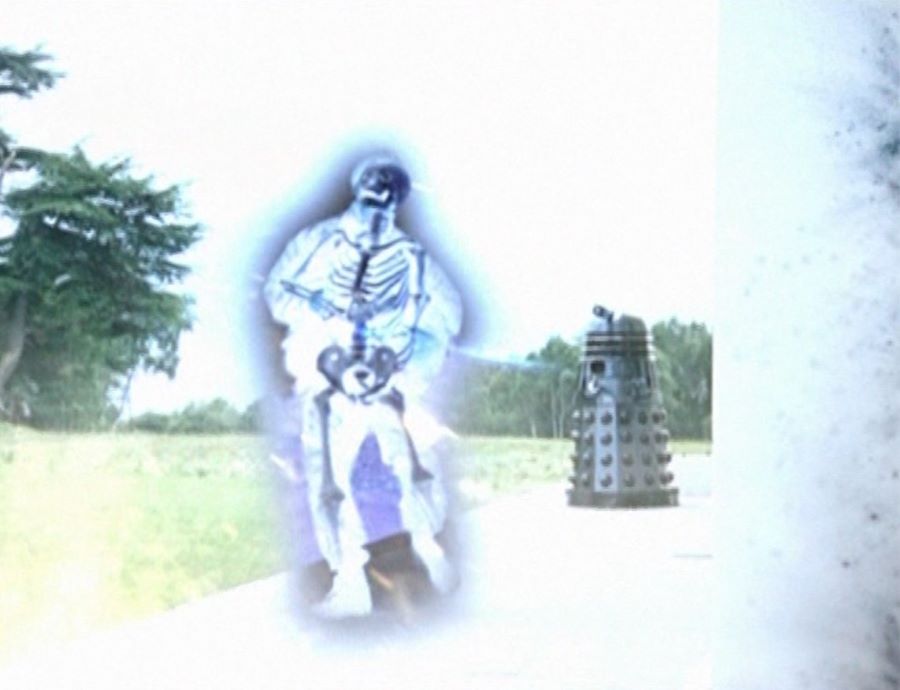
In the story, the time-travelling guerrillas appear from the 22nd century to the 20th century in an attempt to kill Styles, as they believe he was responsible for causing an explosion at Auderly House which would start a war with the Daleks in the future. The guerrillas are very fanatical in that regard.
Incidentally, since these people are from the future, shouldn’t they know what Sir Reginald looks like? I mean, I know it’s an alternative 22nd century we’re talking about, but surely they would have kept photographic records of Styles. It would save the guerrilla fighters mistaking the Doctor for him.
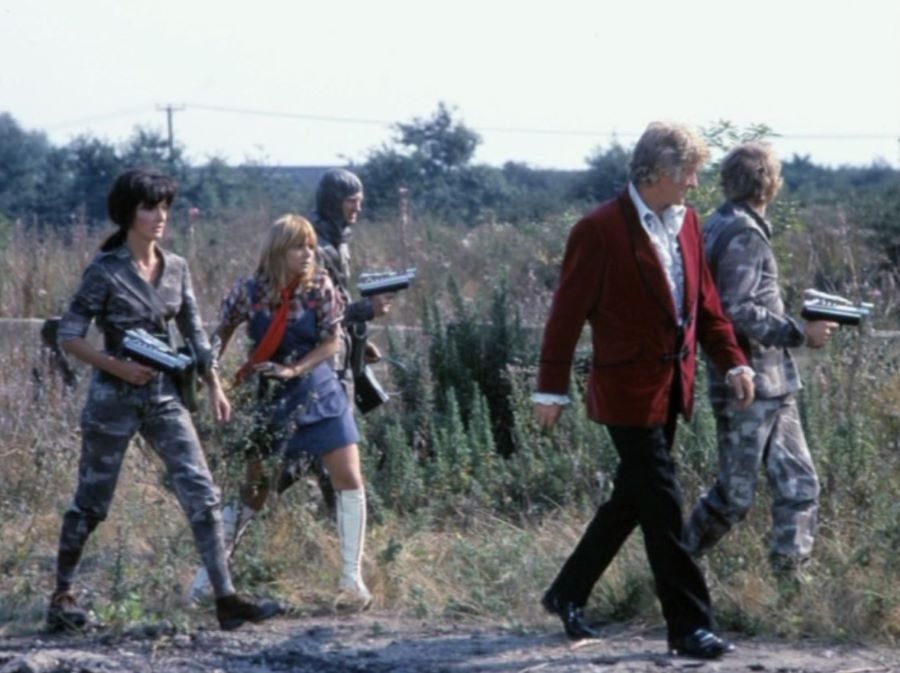
The Doctor gets to meet the guerrilla fighters from the 22nd century and, on first glance, they do seem to be pretty aggressive and murderous, especially when their motives are put into question on whether they’re freedom fighters or terrorists. I mean, Shura killed two U.N.I.T. soldiers in the story!
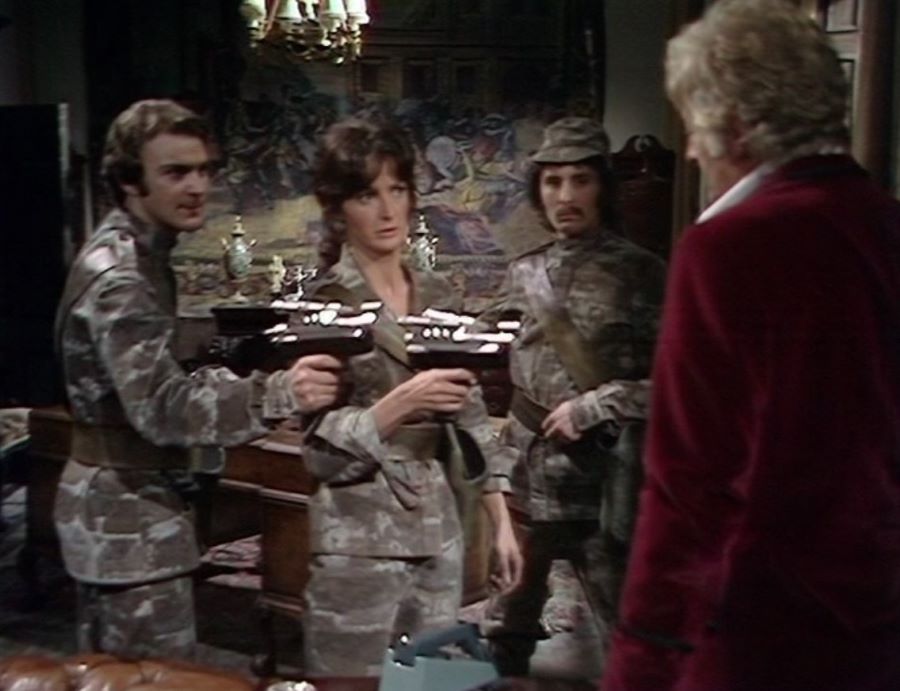
Anat: We are soldiers, not murderers
(scoffs; laughs) Apparently, killing two U.N.I.T. soldiers that did nothing to threaten them is not considered ‘murder’ in their future. I mean, the killing of individuals by the guerrilla fighters and the Ogrons when using their weapons is more effective in the Special Edition than the original TV story. 😐
Anyway, as the Doctor tells Jo, the guerrilla fighters are fanatics since time travel can be considered a fanatical thing when you think about it. I suppose that is true, considering when you time travel to stop a disaster from occurring in the past, you’d go to extreme lengths to succeed in your mission. 😐
The story’s director was Paul Bernard, and he makes his first contribution to ‘Doctor Who’ here. He would later direct ‘The Time Monster’ and ‘Frontier In Space’ – the latter also featured the Ogrons. As I’ve gathered, Paul Bernard wasn’t very accommodating on set and didn’t take suggestions aboard.
This makes me wonder how he was hired to direct ‘Day of the Daleks’ and later ‘Frontier In Space’ by the production team of Barry Letts and Terrance Dicks to begin with. It also might explain why the original ‘Day of the Daleks’ feels so lacklustre compared to the Special Edition version of the TV tale.
Apparently, the design elements of ‘Day of the Daleks’ were inspired by Paul Bernard, especially since he’s more a designer director compared to being an actors’ director. The design elements shine well, especially when the 22nd century atmosphere of Dalek and guerrilla bases is considered.
Mind you, I feel the design elements are enhanced better in the Special Edition version of the story compared to the original 1972 TV version, especially with the CGI effects sequences included. Granted, it wouldn’t have been how it looked on a 1972 TV budget, but I like the CGI effects shots. 🙂
I do enjoy the action scenes featured throughout this ‘Doctor Who’ story. This includes when the Doctor and Jo are running away or fighting their way through a bunch of Ogrons chasing after them, or whether it’s a battle scene between soldiers and Ogrons or soldiers, Ogrons and the Daleks in this.
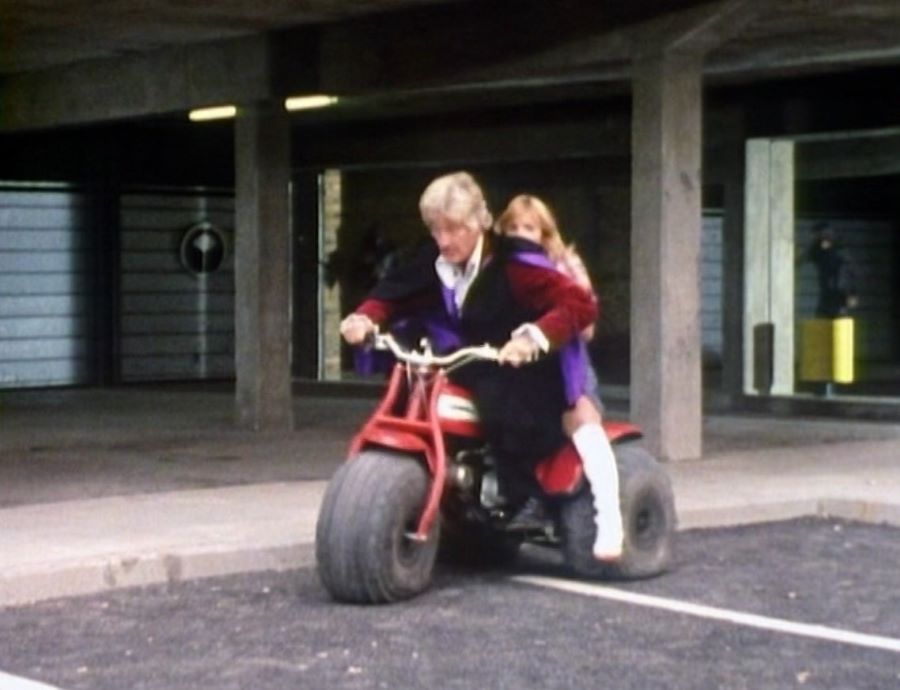
I did enjoy the tricycle chase scene featured in ‘Episode Three’ of the story, and I know that Jon Pertwee enjoyed riding the tricycle when he and Katy Manning as Jo are on it once being chased by Ogrons. The tricycle chase scene is far better and enjoyable in the Special Edition version of the tale.
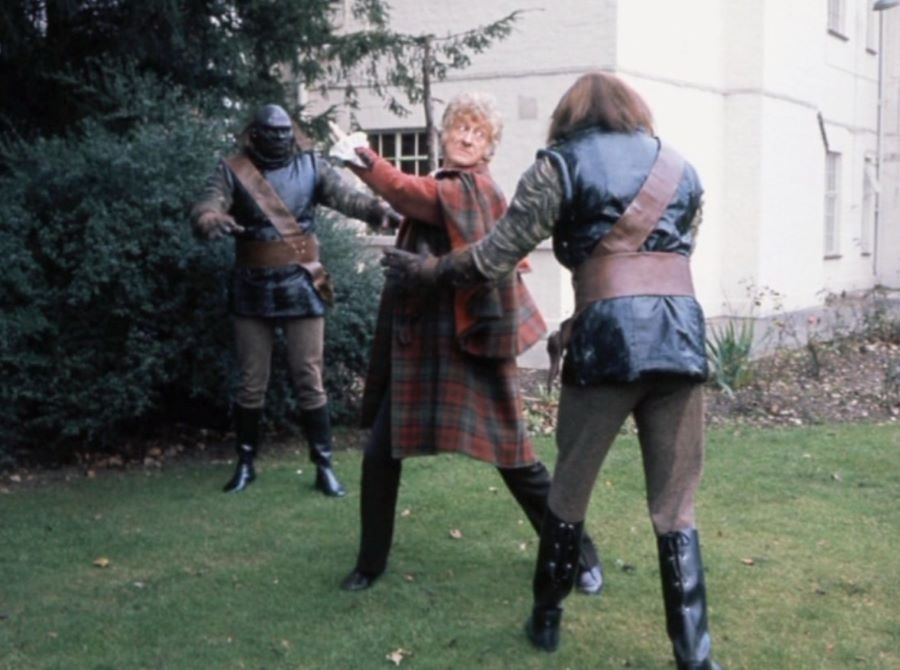
Jon Pertwee is great as the Third Doctor in this adventure. As ever, he gets to be the action hero when using his Venusian aikido on guerrilla fighters like Shura or an Ogron crashing through a door at Auderly house. 😀 He also happens to be a connoisseur of food and wine during this certain story.
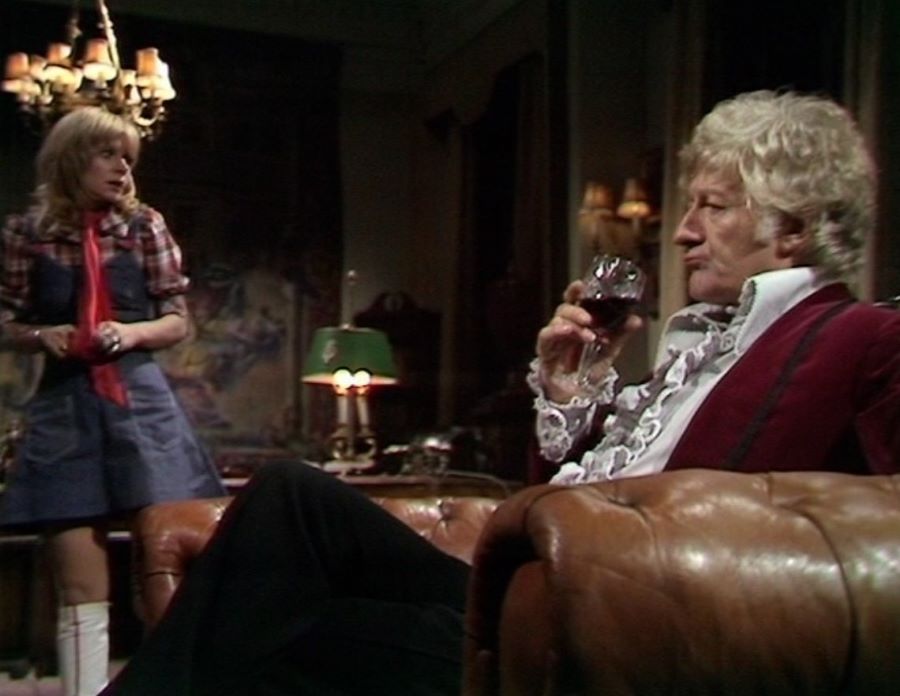
This is when he and Jo decide to stay overnight at Auderly House in anticipation of the guerrilla fighters making an appearance. I wouldn’t have considered the Doctor to be an alcoholic in that regard, though I’d like to join Jon Pertwee in a food and wine society when I meet him in heaven someday. 🙂
There has been a debate about the Doctor’s actions in this story, particularly when he uses a ray gun to kill an Ogron attacking him. Now, in the original TV version of the story, the Doctor’s actions seem callous, considering he shoots an Ogron who wasn’t doing anything when walking over towards him.
In the Special Edition version though, the editing is better in showing the Ogron firing first before the Doctor fired back with the ray guns. It’s rather uncharacteristic that the Doctor would use guns since he regularly abhors violence, but if it’s something for him to defend himself, I would give it a pass. 😐
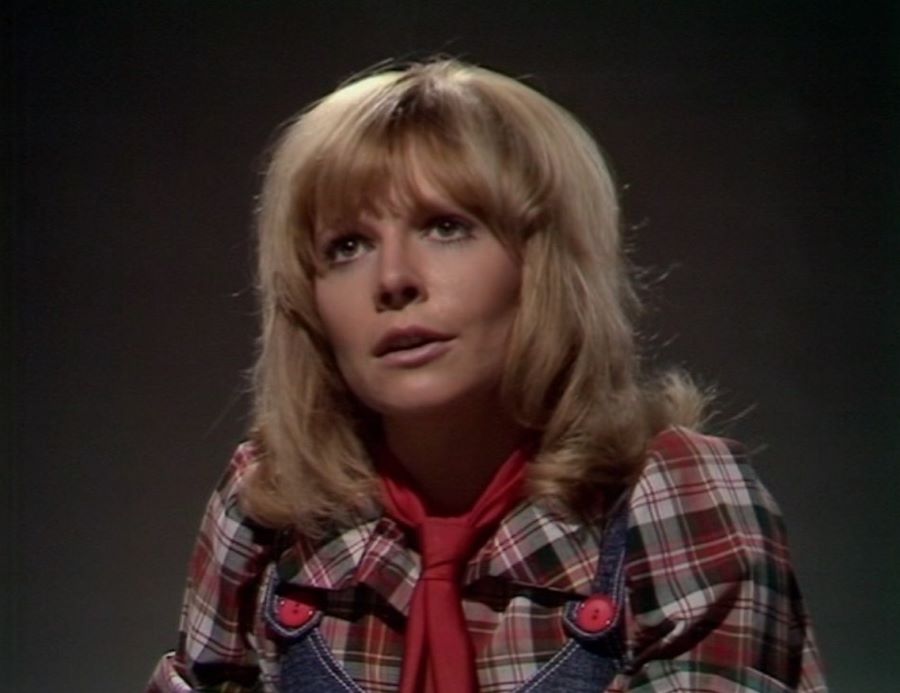
Katy Manning is lovely as Jo Grant in this ‘Doctor Who’ adventure. I’ve had the pleasure of meeting Katy at many ‘Doctor Who’ conventions over the years and have enjoyed chatting with her, sharing how much I’ve enjoyed her in the stories she’s in as Jo – both the TV series and the Big Finish audios.
At conventions, Katy is very friendly and always has time to chat with people. It’s easy to have a laugh with Katy as well as have photos with her at conventions. It’s good that her bubbling personality shines throughout this ‘Doctor Who’ story, especially when she interacts with the Doctor.
It’s amusing when Jo appears very uneasy about having to stay overnight at a ‘haunted house’ once she and the Doctor decide to wait for their ‘ghosts’ to appear to them. Initially, Jo believes the guerrilla fighters are the bad guys and considers them ‘thugs’ once they’re threatening the Doctor. 😐
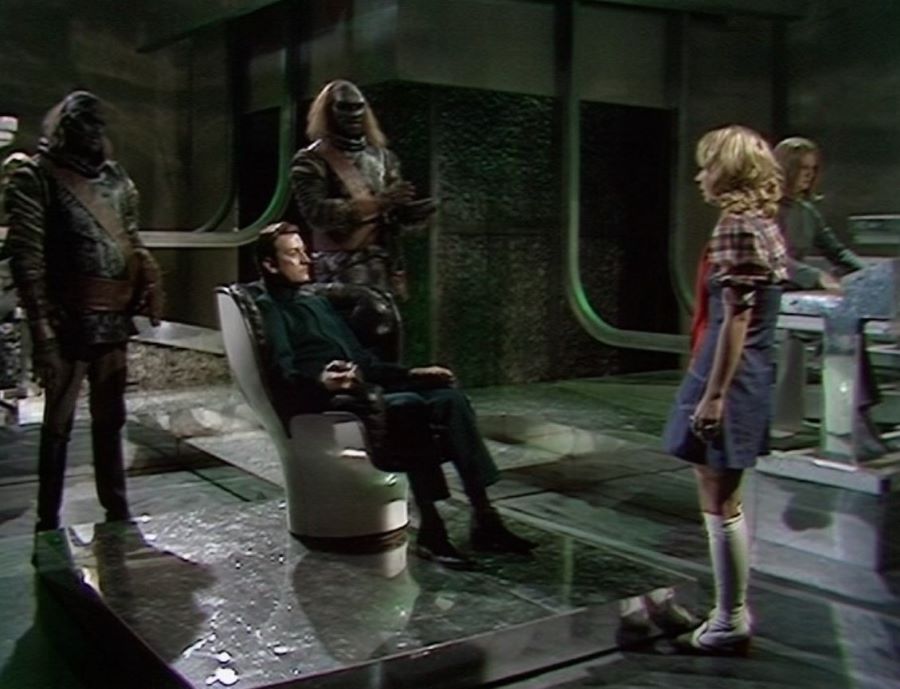
In the story, Jo gets zapped into the 22nd century once she accidentally uses the guerrilla fighters’ time machine, which happens to be a big black box. 😀 When she meets the human Controller, Jo is easily convinced about his ‘good’ intentions and believes him to be helping her out upon her arrival.
Nicholas Courtney is great as the Brigadier in this ‘Doctor Who’ story, even though he appears in only three episodes of this. The Brigadier is involved when the arrangement for the peace conference led by Sir Reginald Styles goes into a crisis. He does his best to maintain the peace conference’s stability.
Understandably, the Brigadier is easily frustrated when the Doctor and Jo go missing in ‘Episode Two’ and he lashes out his frustration at Captain Yates and Sergeant Benton once they report to him. Thankfully, the Brigadier is there to save the Doctor when an Ogron is about to open fire upon him. 🙂
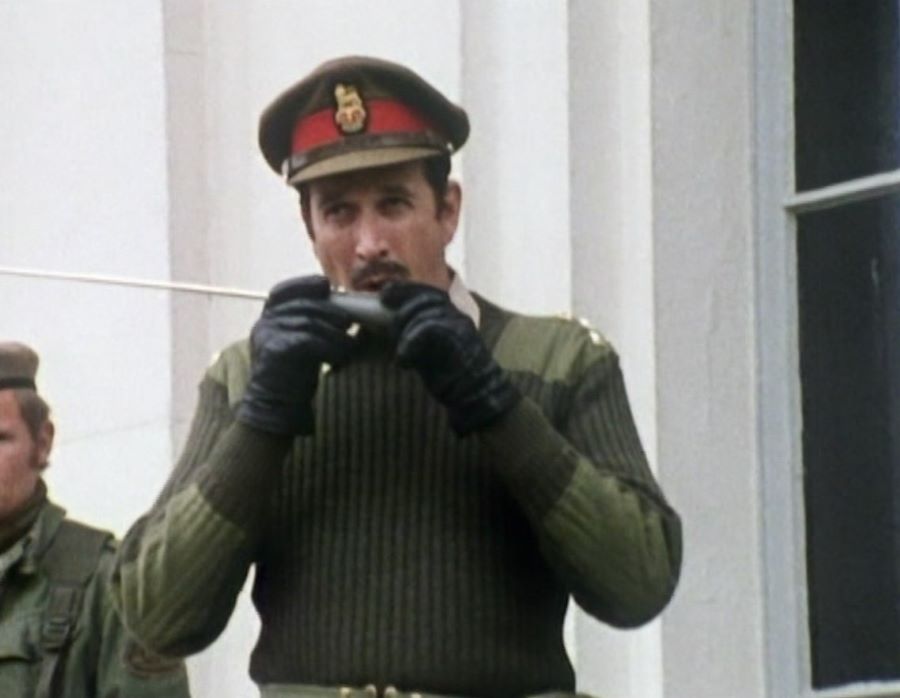
The Brigadier is also present when the Daleks come and attack Auderly House in the climax of ‘Episode Four’. It’s funny when the Brigadier tries to persuade Sir Reginald to evacuate himself and the delegates of the peace conference once the Daleks attack and he has to raise his voice to do it. 🙂
There’s a moment in ‘Episode One’ where the Brigadier enters the U.N.I.T. office with his jacket unbuttoned and he asks, “Any chance of a cup of coffee?” When he’s told the canteen is closed, the Brigadier answers, “It would be.” The way Nicholas Courtney delivers that line is so amusing to hear.
Richard Franklin is great as Mike Yates in this ‘Doctor Who’ story. I’m pleased I’ve met Richard at conventions over the years, as I’ve found him to be a true gentleman. He was always friendly and very good to chat to, and I enjoyed sharing some of things that I liked about him playing Mike Yates.

From my conversations with Richard, it was clear he had very fond memories of ‘Doctor Who’ when he played Mike Yates in the 1970s. At the time of this review, it’s sad to think that he’s no longer with us, as he passed away in December 2023. I shall miss the times I’ve enjoyed chatting to Richard.
As always in these ‘Doctor Who’ stories featuring U.N.I.T., Mike is in charge when he and the U.N.I.T. soldiers protect and surround Auderly House whilst the Doctor and Jo are inside. I found it a funny scene when he caught Sergeant Benton about to have food from Jo and he sent him someplace else.
It’s even funnier when Mike takes the food for himself from Jo and she pointed out that it wasn’t very kind of him to do that. But as Mike tells Jo, “R.H.I.P., Jo”, which means Rank Has Its Privileges. I’m sure that’s a line that Richard Franklin would like to be remembered for very fondly as his character.
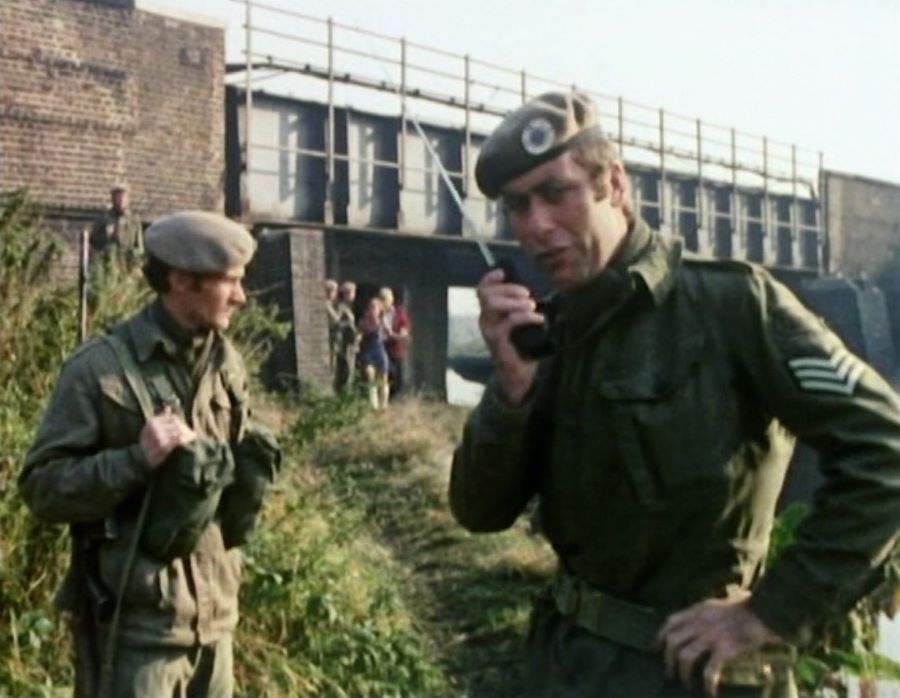
John Levene is equally good as Sergeant Benton in this story. I’ve also met John Levene at ‘Doctor Who’ conventions over the years. I’ve had a couple of chats with him as well as have had photos with him. I may not have interacted with him as much as Katy and Richard, but I’m glad I’ve met him.
As I’ve established, I enjoyed the scene where Benton gets caught by Mike Yates when he’s about to be given food from Jo. It’s a lovely character moment and it’s one of the rare occasions where humour is applied very deftly and appropriately, especially in a story filled with tension and action. 🙂
Mind you, I wonder why Benton didn’t go into the living room where the Doctor and Jo were to get the food himself? Would he have been caught by Mike Yates in the same way he would have been caught out in the corridor? Probably, but it could have saved plenty of time and effort on his part. 😀
It was funny when John Levene made his tribute to Richard Franklin on his passing by slightly complaining that Mike Yates took his wine and cheese, saying, “Keep your hands off my food.” 😀 I also liked it when Benton took charge of the U.N.I.T. soldiers fighting the Daleks at Auderly House. 🙂

The story’s guest cast includes Aubrey Woods as the human Controller at the Daleks’ base. Even in the Target novelization, the Controller isn’t given a name, which is a shame. And if you recognise Aubrey Woods from somewhere, it’s because he’s been in ‘Willy Wonka & The Chocolate Factory’. 🙂

Bill: ♪ Who can take the sunrise, Sprinkle it with dew ♫
Yeah, that’s it. He’s also been in an episode of ‘Blake’s 7’ and an episode of ‘Ever Decreasing Circles’. 😀 I enjoyed Aubrery’s ‘theatrical’ performance as the Controller, since he’s a traitor (or a quisling as the Doctor calls him) who’s stressed out and under pressure when working for the Daleks in this tale.
I like how he manages to gain Jo’s trust when she ends up where he is in the 22nd century and it was fascinating to hear the conversations going on between the Doctor, Jo and the Controller about the Daleks. I like how the Controller ends up helping the Doctor and Jo, only to be killed by the Daleks. 😦
The guerrilla fighters include Anna Barry as Anat, who I believe is the only female of the group and she leads the party that invades Sir Reginald Styles’ house when the Doctor and Jo are there. Anna Barry later appeared in the two Big Finish audio stories ‘The Lost Resort’ and ‘The Lure of the Nomad’.
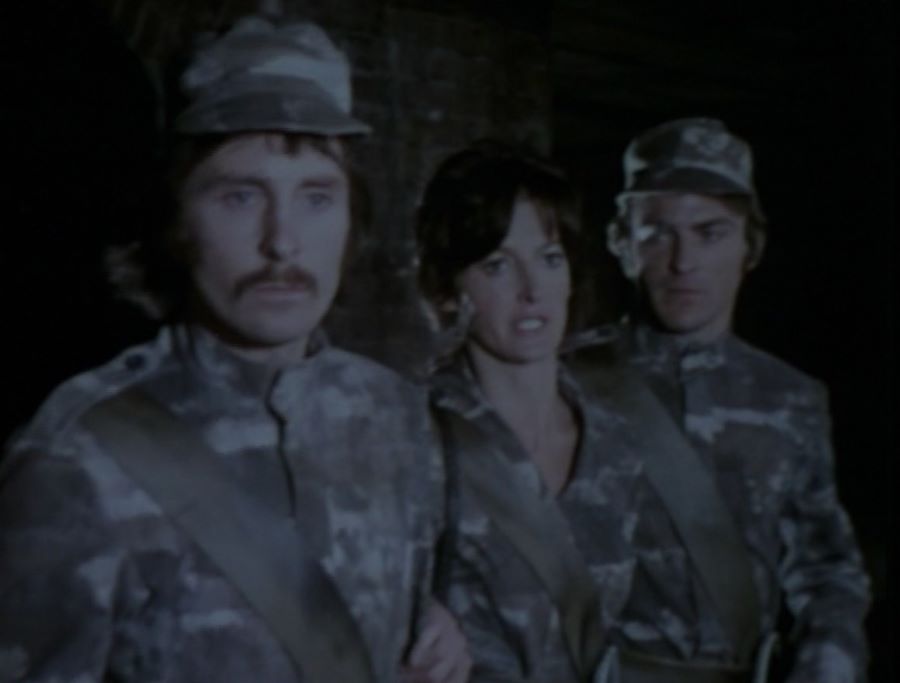
There’s Scott Fredericks as Boaz, who’s a pretty aggressive guerrilla fighter and not as ‘soft’ as Anat. 😀 Scott Fredericks later played Maximilian Stael in ‘Image of the Fendahl’ and he also played Carnell in the ‘Kaldor City’ audio series. I’ve also seen him play a Nazi soldier in the 1971 ‘Dad’s Army’ film. 🙂
Jimmy Winston guest stars as Shura, a guerrilla freedom fighter who ends up left behind in the 20th century time zone and attempts to carry out his orders to blow up Auderly House with Sir Regnald Styles inside. It turns out Shura is quite significant in how the future in the 22nd century goes wrong.
The guerrilla freedom fighters are led by Valentine Palmer as Monia, who does his best to keep everyone under control. Monia appears in only ‘Episodes Three and Four’ of the story. It’s rather fascinating Monia’s sources know and inform him that the Doctor is the sworn enemy of the Daleks.
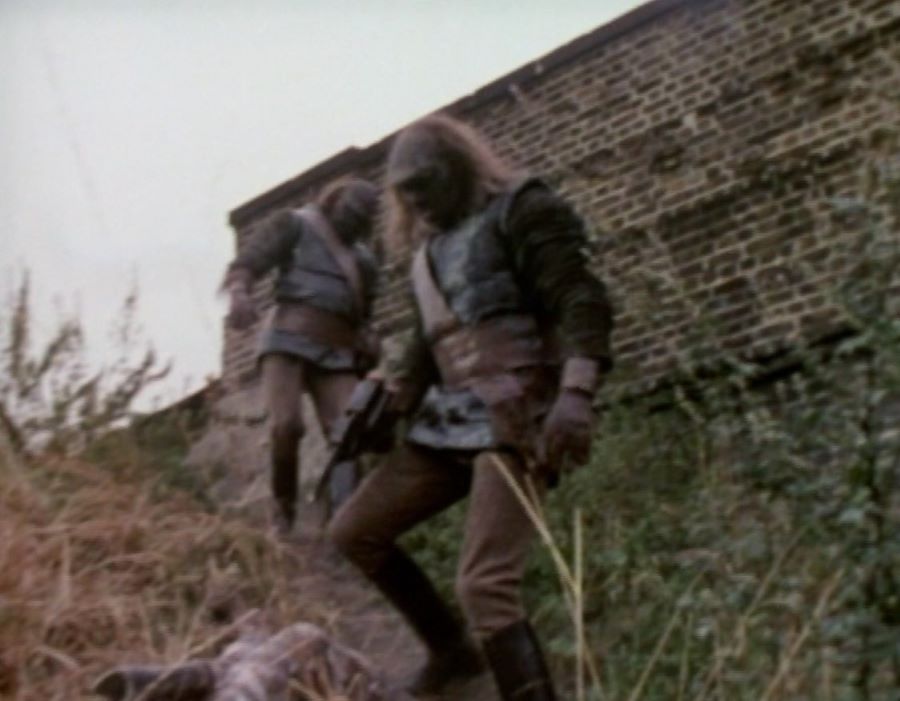
As established, ‘Day of the Daleks’ features the TV debut of the Ogrons, who are these ape-like mercenaries under the control of the Daleks. The Ogrons did put me in mind of the Uruk-Hai in ‘The Lord of the Rings’ film trilogy. I wonder if Peter Jackson was inspired by the Ogrons for the Uruk-Hai.
Sarah Sutton said a similar thing in the ‘Behind the Sofa’ item for ‘Day of the Daleks’ about the Ogrons looking like Orcs from ‘The Lord of the Rings’ films. 😀 I shared with Sarah at the ‘Popcorn’ comic con in Sheffield in September 2023 that she and I thought of the same thing regarding the Ogrons.
Keeping on track with the ‘Behind the Sofa’ item, my Dad commented that he hoped Sir Reginald Styles got insurance when Auderly House was blown up in ‘Episode Four’. It was very funny that Janet Fielding said the same thing as my Dad did when my parents and I saw the ‘Behind the Sofa’ item. 😀

Incidentally, I wish the ‘Behind the Sofa’ contributors saw the Special Edition version of ‘Day of the Daleks’ instead of the original 1972 TV version, as the Special Edition version is superior. They should have at least been impressed by the new Dalek voices and the new CGI effects in the ‘Behind the Sofa’ item.
It was funny when watching the ‘Behind the Sofa’ item of ‘Day of the Daleks’ that Peter Davison, Sarah Sutton and Janet Fielding could see up Jo’s skirt, as she got up when she and the Doctor were being rescued by the guerrilla fighters in ‘Episode Four’. I didn’t notice that specific part of the story.
Bizarrely, at the time of this review, the Special Edition version of ‘Day of the Daleks’ is shown on ITVX (previously Britbox) and BBC iPlayer. Why couldn’t the ‘Behind the Sofa’ contributors have received the same viewing treatment as those viewing the story on ITVX/Britbox and BBC iPlayer? 😐

Going back to the Ogrons, they’re not very bright when in the employ of the Daleks. I enjoyed the Ogrons’ gruff voices and the funny runs they did when pursuing the Doctor and Jo. They’re played by actors such as Rick Lester, Maurice Bush, David Joyce, Frank Menzie, Bruce Wells and Geoffrey Todd.
I’ve found the Daleks very impressive in the Special Edition version of ‘Day of the Daleks’ than in the original 1972 TV version. I was thrilled to bits about Nicholas Briggs redubbing the Dalek voices to make them sound like the new TV series ones. They sound threatening and intimidating in the story.
It’s no surprise the Special Edition version is used on ITV/Britbox and BBC iPlayer. It’s astonishing the Dalek voices in the original TV version of the story were terrible and very unimpressive. I’ve found a video on YouTube that compares the original Dalek voices and Special Edition Dalek voices superbly.
In the original TV version of ‘Day of the Daleks’, the climactic battle scene in ‘Episode Four’ is just three Daleks and a bunch of Ogrons attacking Auderly House with U.N.I.T. soldiers defending the place. In retrospect, it’s unimpressive, though I guess kids back in 1972 would have been really excited.
In the Special Edition version of the story however, the climactic battle scene is enhanced with impressive CGI effects and new shots of U.N.I.T. soldiers and Ogrons fighting each other as well as more Daleks. It’s easy to get swept into the action in the Special Edition version of the story more. 🙂
The locations used for ‘Day of the Daleks’ are equally impressive. This includes the house and grounds for Auderly House called Dropmore Park in Buckinghamshire. The gleaming white exterior of the house is majestic. The reshoots of the climatic battle scene in the Special Edition version helps more.
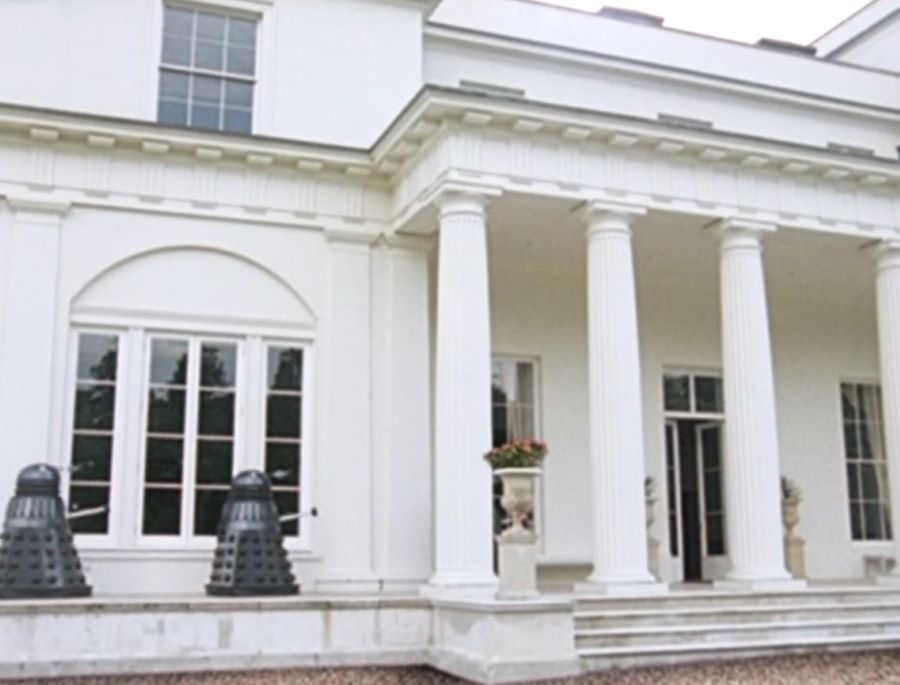
Apparently, producer Steve Broster visited Auderly House to get still backgrounds for the behind-the-scenes special features on the 2011 2-disc DVD release. Doing that inspired hm to put together the Special Edition version of ‘Day of the Daleks’. I’m certain ‘Doctor Who’ fans are thankful for that.
In terms of the exposition stuff being included in ‘Episode Four’ to establish why the guerrilla fighters travelled back in time to change history, some have criticised it for being too long-winded and being in the wrong place of the story. I didn’t really see that as a problem in viewing the story. 🙂
Some of the exposition was very interesting and fascinating to listen to and it provides revelations about what’s going on in the story. I mean, I revealed ‘a fixed point element’ in ‘Part Four’ of ‘Doom of the Daleks’ whilst building everything else up in the previous three episodes of my four-part story.
I suppose it’s down to perception. Maybe if the exposition stuff was placed in ‘Episode Three’ or if there had been an ‘Episode Five’ to extend the action scenes more, perhaps this would have helped to make the story better? I don’t know to be honest, but I wouldn’t say it’s too much to fret about.
The original DVD special features were as follows. There was the original four-part 1972 TV version of the story, the ‘Blasting the Past’ making-of documentary with behind-the-scenes cast and crew interviews, ‘A View From The Gallery’ featurette with producer Barry Letts and vision mixer Mike Catherwood, a ‘Nationwide’ item featuring a Dalek and a ‘Blue Peter’ item featuring Peter Purves. There was a photo gallery of the story, a dual mono sound audio mix option for the story, and an audio commentary with Anna Barry, Jim Winston, producer Barry Letts, script editor Terrance Dicks and vision mixer Mike Catherwood. There was an info-text commentary option to enjoy, PDF materials, including a ‘Radio Times Listings’ PDF of ‘Day of the Daleks’, and a ‘coming soon’ trailer for ‘Colony In Space’, starring Jon Pertwee, Katy Manning, Nicholas Courtney and Roger Delgado (which is now included on Disc 3 of the Season 8 Blu-ray box set for ‘The Claws of Axos’).
There was the Special Edition version of the story, ‘The Making of ‘Day of the Daleks’ – Special Edition’ documentary, the ‘Now and Then’ locations featurette, narrated by Toby Hadoke, ‘The U.N.I.T. Family – Part Two’ documentary, which looks into the U.N.I.T. stories during Jon Pertwee’s era from Seasons 8 to 10, ‘The U.N.I.T. Dating Conundrum’ documentary, narrated by Toby Hadoke, ‘The Cheating Memory’ documentary, and a teaser trailer for the ‘Day of the Daleks’ 2-disc Special Edition DVD.
On Disc 1 of the ‘Doctor Who – The Collection – Season 9’ Blu-ray, the original four-part 1972 TV version of the story, the ‘Blasting the Past’ making-of documentary, the ‘A View From The Gallery’ featurette, the ‘Blue Peter’ item, the dual mono sound audio mix option, the DVD audio commentary and the ‘Now and Then’ locations featurette can be found on there. The photo gallery and the info-text commentary option have been updated for 2023 on the Blu-ray.
The new special features on Blu-ray include the ‘Behind the Sofa’ feature on ‘Day of the Daleks’ with Katy Manning (Jo) and director Michael E. Briant as well as Peter Davison (the Fifth Doctor), Sarah Sutton (Nyssa) and Janet Fielding (Tegan) as well as Wendy Padbury (Zoe) and Sophie Aldred (Ace). There are BBC trailers and continuity announcements for the story and two audio archive items, including ‘Sunday Best’, a 1972 Radio 4 interview with Terry Nation, and ‘Free Thinking’, a 2022 Radio 3 discussion about the Daleks.
On the PDF front, as well as the ‘Radio Times Listings’ of ‘Day of the Daleks’, there are production documents, four camera scripts, plus three of director Paul Bernard’s scripts, a compilation editing script, studio floorplans, BBC television play synopses, BBC Enterprise sales sheets for Season 9, PasB (Programme as Broadcast) paperwork for Season 9, the 1973 ‘Doctor Who Annual’ and the 1973 ‘Doctor Who Annual’ production documentation. You need a special Blu-ray computer drive for that.
On Disc 2 of the ‘Doctor Who – The Collection – Season 9’ Blu-ray, the Special Edition version of the story, ‘The Making of ‘Day of the Daleks’ – Special Edition’ documentary, ‘The U.N.I.T. Dating Conundrum’ documentary, ‘The Cheating Memory’ documentary and the teaser trailer for the ‘Day of the Daleks’ 2-disc Special Edition DVD can be found on there. ‘The U.N.I.T. Family – Part Two’ documentary is now included on Disc 5 of the Season 10 Blu-ray box set for ‘The Green Death’). The ‘Nationwide’ item featuring a Dalek is now included on Disc 4 of the Season 9 Blu-ray box set (the first of two Blu-ray discs for ‘The Sea Devils’).
The new special features on Blu-ray include the 60-minute omnibus edition of ‘Day of the Daleks’ and ‘Monstercon II’ convention footage, featuring Nicholas Courtney and Richard Franklin, interviewed by Gary Russell. 😀
‘Day of the Daleks’ is a great ‘Doctor Who’ story that you don’t want to miss out on, especially in its Special Edition form. I love checking out ‘Day of the Daleks’ in its Special Edition form whenever I get to revisit the story, especially with the new Dalek voices provided by Nicholas Briggs and the new CGI effects.
The Special Edition version is impressive and lavish, making ‘Day of the Daleks’ so much better than its original 1972 TV counterpart. It also works well when the Third Doctor and Jo are battling Daleks and Ogrons and trying to work out how the future of humanity can be saved via a temporal paradox.
‘Day of the Daleks’ is one of my favourite ‘Doctor Who’ stories from the Jon Pertwee era, especially through its superior Special Edition form. If the Special Edition version hadn’t been made, I would’ve regarded ‘Day of the Daleks’ as average in the same way I regard ‘The Dalek Invasion of Earth’ as average.
I’m sure there are fans of the original TV version of ‘Day of the Daleks’ as well as possibly the omnibus version of the story, but the Special Edition version always works for me whenever I revisit ‘Day of the Daleks’. I’m certain that I’ll be revisiting the story again soon at some point in the future.
‘Day of the Daleks’ rating – 10/10
| The previous story
For the Third Doctor was
For Jo was
For the Brigadier was For Mike Yates was For Benton was For the Daleks was
|
The next story For the Third Doctor is
For Jo is For the Brigadier is For Mike Yates is For Benton is
|
| Return to The Third Doctor’s Timeline | |
| Return to Jo’s Timeline | |
| Return to The Brigadier’s Timeline | |
| Return to Mike Yates’ Timeline | |
| Return to Benton’s Timeline | |
| Return to The Daleks’ Timeline | |
| Return to The Doctors’ Timelines Index | |
| Return to The Companions’ Timelines Index | |
| Return to The Monsters’ Timelines Index | |
| Return to Doctor Who Timelines | |
| Return to Doctor Who | |
| Return to Sci-Fi |
 Bradley's Basement
Awesome review Tim & i completely agree with your comments, amazing how a average four parter can become a classic faster paced entertaining adventure with just a few tweaks here & there, new special effects & redub Dalek voices by Nick Briggs culminate into making this a excellent Dalek story, i love the Special Edition version & the changes made improve this 4 parter tenfold.
LikeLiked by 2 people
Hi Simon.
Very pleased you enjoyed my review on ‘Day of the Daleks’.
The Special Edition version of this story is far superior compared to the original and I’m very pleased this story was remade with new CGI effects and new Dalek voices by Nicholas Briggs, making it one of my favourite ‘Doctor Who’ stories from the Jon Pertwee era.
Glad you agree with my comments on this ‘Doctor Who’ story.
Tim. 🙂
LikeLiked by 1 person
Day Of The Daleks is a classic example of how occasionally the CGI recuts for a vintage sci-fi story can be a timely improvement, as opposed to the original Star Wars trilogy. I first saw the original cut on VHS and in regards to the point of the story, I was fairly impressed. Certainly with how the Doctor would be permitted for this adventure to change history for the sake of defeating the Daleks.
The changeable and the unchangeable both play a vital role in many areas of our lives. Perhaps history is no exception, as movies like Frequency and shows like the modern Quantum Leap may within reason find the best ways to teach us. For Doctor Who it can be most special and even more so now with the current threats of WW3. The wisdom on when and how to make changes, whether it’s making exceptions for the Prime Directive or some element of history, has been one of the most traditional sci-fi themes. I think it’s particularly effective for Day Of The Daleks and I’m pleased that its remastering has honored that. Thank you, Tim, for your review. I’d also like to saw that I think Anna Barry’s Anat is one of the best female role models in the Whoniverse.
LikeLiked by 2 people
Day of the Daleks occupies an interesting place in Doctor Who for whether or not it’s acceptable to change history. As the Doctor notes to Jo:
“Changing history is a very fanatical idea, you know.”
And that will remain quite true until the era of the Eleventh Doctor where it becomes treated as far more a party trick (which has its own massive problems). Here, in 1972, we’re treated to a rather unique perspective for Doctor Who. For once, the Doctor is on the inside of the timeline looking out, rather than vice versa.
That raises an interesting question with Anat and her guerilla fighters, though — was her future the “correct” one? The “destined” one? Was Styles’s death a part of the Web of Time?
Day of the Daleks wouldn’t seem to think so. But, if we know our history, we know the Daleks must succeed because we’ve already seen The Dalek Invasion of Earth. In the 22nd century, there’s an asteroid strike, a plague and subsequent subjugation by the Daleks. All these things must come to pass.
But the emphasis of this same invasion in Day of the Daleks is all wrong. Earth is already a factory planet by the 22nd-century. There’s no real sense of what the world once was. In England, there’s no Westminster, no Trafalgar Square, nothing recognisable, as we could see in The Dalek Invasion of Earth.
Ironically, the Daleks must succeed in our history, but the implication of Day of the Daleks is that by changing that history, the guerillas destroyed the Daleks’ ability to be, in turn, defeated. As we know the Daleks must be. We’ve already seen it. The Bedfordshire mine explosion, arranged by the First Doctor, Ian, Barbara and Susan.
The Doctor’s intervention here uses the classic tropes of the Doctor Who historical, but in a then-contemporary setting. Maintaining the course of history from hostile time-travellers. Reminds me of an old piece of advice: “Those who fail to learn their history are doomed to repeat it. Those who fail to learn their history correctly are simply doomed.“
(Interesting side-note: Part of the problem with Styles’s conference is the lack of commitment from other nations in the peacekeeping process. At first, this seems like classic politicking; i.e. squabbling. That is, unless we’re keeping track of what’s been going on with UNIT.
The Chinese government’s reluctance to be involved in the peace talks, for instance, makes perfect sense if we factor in The Mind of Evil. The last time they sent a delegate to England, he was killed and his aide was co-opted by a third party, who attempted to launch a missile on the prior conference. I’d want reassurances, too.)
LikeLiked by 2 people
All the clashing aspects of Earth’s future throughout Doctor Who have raised speculation on how changeable the Whoniversal future can be or has been. We know that the TARDIS after Inferno and Battlefield is able to cross dimensions. Whatever suits the story might make it a lot more acceptable. So it may come down to what’s actually entertaining enough. Even for fixed points like the Dalek invasion that led to Susan staying on Earth to marry David, we can understand why writers like Louis Marks like to put their own ideas to things that have been used before. I don’t really see the harm in it.
In classic Star Trek, we had the Metrons and then we had the Organians with their clashes in what a highly advanced race of ETs would be like and how they’d stop cosmic violence in its tracks. So it’s permissible in a lot of sci-fi areas. What I can always take away from a Doctor Who story like Day Of The Daleks is the wisdom on how much our choices matter and most especially when you’ve been given a vision of what the consequences would be.
LikeLiked by 2 people
Agreed, and the measure of Day of the Daleks is that while it may be a sequel, it still functions quite excellently as a story in its own right. With its own themes, conflicts and expectations.
Like a lot of Pertwee stories, it’s about the line between idealism and fanaticism. “How far are you willing to go for what you believe in?” Something we’ll see again come Invasion of the Dinosaurs.
What grabs me particularly about Day of the Daleks is how it includes its time-travel component.
The Daleks boast that they have invaded Earth “again” and changed history. It’s not as obvious as the Doctor recounting The Daleks to the Thals in Planet of the Daleks (“Barbara, Ian, Susan.”), but it does imply The Dalek Invasion of Earth has already occurred. Add to that, Anat and her people using a time transmitter, based on plans for a Dalek time-machine. Time-travel. Something we know the Daleks already have…
Given the Daleks duplicity in the earlier Whitaker-penned stories, I wonder if they deliberately leaked faulty information to human groups interested in rewriting history in the 22nd-century. The guerillas would go back in Time, kill Styles (based on bad data), and this causal point would trigger a far more unstable Earth to conquer (which, given the state of world politics circa Warriors of the Deep, must be pretty bad).
Part of a Dalek contingency for if the invasion of Earth should fail? I’m assuming that their plan for Earth is the same as in Invasion of Earth, which is to hollow it out and pilot it around as a battle station.
LikeLiked by 2 people
Hi scifmike, Hi Wolfie,
Thanks for sharing these extra thoughts on linking ‘Day of the Daleks’ to ‘The Dalek Invasion of Earth’ as well as to ‘The Mind of Evil’ and ‘Warriors of the Deep’. It’s fascinating how quite often these ‘Doctor Who’ stories interconnect with each other, even if they tend to be standalone stories. I think something of that is lost in the new TV series lately when not so much interconnection between classic and new TV series is made, but it’s always nice when someone brings up these points years later to establish how they all interconnect despite continuity hiccups along the way.
Many thanks,
Best wishes,
Tim 🙂
LikeLiked by 1 person
Hi scifimike, Hi Wolfie,
Thanks for sharing your thoughts on ‘Day of the Daleks’. It’s intriguing how this story addresses issues concerning time travel, which I don’t think had been addressed to a great extent by this point, particularly with concerning paradoxes. You could argue the 22nd century aspects of ‘Day of the Daleks’ take place in an alternative timeline compared to what we know already to be the case of 22nd century Earth in ‘The Dalek Invasion of Earth’. Terrance has novelized both stories, so perhaps it’ll be interesting to check out whether the two stories connect to each other in novelization/audiobook form compared to how they ended up on TV. I agree, the time travel/changing history notion doesn’t seem to be taken very seriously nowadays, especially when we get to the Steven Moffat era. And of course, it’s created a whole set of problems with multiple continuities overlapping with each other, especially in terms of establishing where certain stories and events take place e.g. what happened when Isaac Newton met the Doctor for the first time (in Fourth, Fifth and Fourteenth incarnations) and how Mary Shelley meets the Doctor (in Eighth, Tenth and Thirteenth incarnations). Anna Barry as Anat is very good in ‘Day of the Daleks’. I wonder what happened to her and the remaining guerrillas when the Earth timeline was essentially…restored?…I think…in the 22nd century. The story does end quite abruptly once Shura detonated the explosives to blow up Auderly House.
Many thanks for your comments.
Best wishes,
Tim 🙂
LikeLiked by 1 person
Alternate timelines can be fun in the sci-fi universe and especially in the Whoniverse. When it comes to how flamboyant the modern Doctor Who has been and certainly when meeting our most historical figures like President Nixon and Isaac Newton, such a sci-fi notion might in all fairness help to soften some blows. Shura’s abrupt end on the other hand does leave us with the question of how much has been significantly changed. As for Newton, the 4th Doctor (in The Pirate Planet) sharing with Romana how he dropped that apple on his head has been my favorite example. The power to choose our timelines and especially now with all that’s been coming in the quantum physics revolution is a compelling subject. So it’s inevitable that our sci-fi franchises and certainly both Doctor Who and Star Trek can build on it more than ever.
LikeLiked by 2 people
Yeah, it’s interesting because that final abruptness isn’t in the novelisation. Day of the Daleks ends with the Doctor repairing the TARDIS, but at a far more urgent pace than when he started. Feeling that he’ll need it to fight the Daleks at some point in the future.
Terrance Dicks wrote the novelisations for both The Dalek Invasion of Earth and Day of the Daleks in short order, one after the other, so by that point, at least, he would’ve been aware of the connections. Readers certainly would have been if they’d been collecting the Target Books.
From a production standpoint, I think they deliberately avoided mentioning The Dalek Invasion of Earth for the same reason that their reference to The Evil of the Daleks was removed. By this point, audiences hadn’t seen the Daleks since the late ’60s. In an age prior to home media (no video, DVD, Blu-ray, Britbox), it was unlikely the average viewer would remember.
Day of the Daleks is particularly interesting because it doesn’t clash with The Dalek Invasion of Earth. Not really. I remember a particularly good piece of fanfiction that actually places Susan in the events of the story. She’s Monia’s contact, the one who tells him that the Doctor is “the one man they’re afraid of.”
Simple, clean, effective, and no need to warp the story out of shape to slot it in. Day of the Daleks doesn’t replace that prior story, but instead, works as the invasion’s worst-case scenario. We’ll see that carried forward for things like The Mutant Phase.
~
Continuity is a really interesting topic regarding Day of the Daleks, actually. The Jon Pertwee era begins with a really curious dichotomy. We don’t have a regeneration scene, so there’s no acknowledgement of Patrick Troughton’s departure from the role. However, we do get the Brigadier and UNIT, who fulfils that same touchstone with the past.
Doctor Who has maintained an internal continuity throughout the sixties, but aside from a few oblique nods — the Second Doctor pulls out a dagger from The Crusade for The Power of the Daleks — the broader past is not really acknowledged.
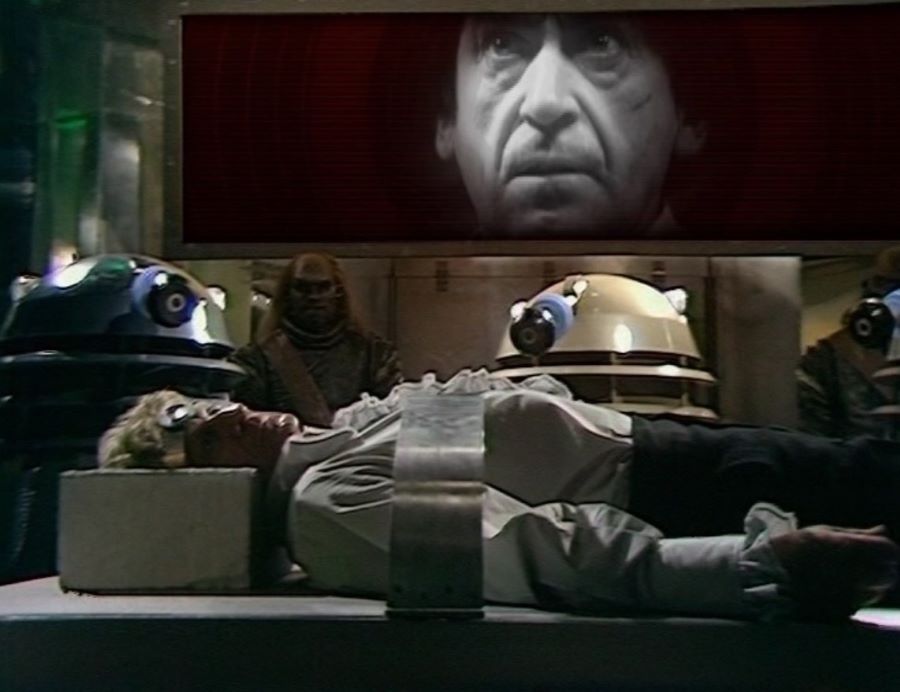
Then we get to Day of the Daleks. The Doctor is interrogated in the mind analysis machine. We see faces projected up onto the screen… And it’s William Hartnell and Patrick Troughton. It’s the first time that we see each actor of the Doctor recognised by the current production team. It barely registers with us now, it occurs every other year, but at the time, that’s quite significant.
The Pertwee era will continue to touch base with its past in all manner of ways. To the extent that Malcolm Hulke will mention Monoids and Dravins in his novelisation for Colony in Space. Eventually, we’ll have The Three Doctors and that is the moment that I think the idea of a hard continuity clicks into place.
When we go beyond the soft continuity mentality of something like the James Bond series (Connery, Lazenby, Moore, Dalton, Brosnan, etc.) and genuinely start to look at how these Doctors are connected. That doesn’t happen until the 1970s, but the idea of continuity stays consistent from there. Also helped by the arrival of regular Target novelisations to keep track.
That continuity will become aggressively prominent by the ’80s and by the 1990s — when Doctor Who has died — we’ll get very rigid ideas of the timelines in the Wilderness Years. Any story that doesn’t fit is an alternate continuity and treated as thus. When there’s a more esoteric take on time-travel, we’ll be more used to something like Jubilee (which borrows from Inferno), than we will The Kingmaker.
We still broadly have the Time Lords as our escape clause.
By the 2000s, there is an established effort to keep it all consistent. In Big Finish, we also have a newly-revisited Sixth Doctor. With character development. We need that storytelling continuity to make this aborted idea come to fruition. It’s actually quite important to telling a good story.
But then, Doctor Who comes back. And when it does, there is a deliberate effort to wipe the slate clean. Wholesale. The Last Great Time War puts a button on any inconsistencies and said: “2005 is our watershed moment. Beyond this point, things are going to be different. We are our own animal.“
And it very much was. Continuity was kept a stranglehold on in the revival. We only got glimpses. All the better to establish the Ninth and Tenth Doctors on their own terms. The Time War becomes this massive radiation zone between 20th and 21st-century Doctor Who.
Then, little by little, the walls between these series are broken down. A reference, here. An acknowledgement, there. The return of old adversaries can do wonders for bridging that gap. Until, eventually, the idea of, say, the Tenth Doctor doing a sequel to Destiny of the Daleks becomes quite achievable. Dare I say, ordinary.
There is now so much Doctor Who that it is impossible to keep it all consistent as a whole. It was much easier when it was 26, 30, even 40 years of history. At over a half-century, we’ve had to shift our approach to make it work accordingly.
One of the sacrifices, I think, is that idea of a broader history. Absolute time. It’s just not possible any more. It’s far more achievable to look at each incarnation on their own merits. If you treat them as the “current” Doctor and say their stories are prioritised over other incarnations, then you’ll have an easier time keeping it all consistent.
It’s a new idea. We’ve never really had to do that before. But, it’s probably the best way of looking at the linkages between these stories without… melting? Melting.
LikeLiked by 2 people
Hi scifimike, Hi Wolfie,
Many thanks for sharing your thoughts on how continuity in ‘Doctor Who’ works nowadays compared to how it was back then. I suppose when I was getting into the TV series, both classic and new, in the late 2000s, things weren’t so much of an issue for me in terms of understanding how continuity works, even when checking out the Big Finish audios for the first time. Nowadays, through the 2010s and 2020s, continuity has become a big jigsaw puzzle for me in ‘Doctor Who’ terms and I’ve only barely been able to make sense of it. Just….just barely.
And despite some frustrations I have with how certain continuites in ‘Doctor Who’ work, particularly in the post-TARDIS stories for Nyssa, Tegan and Ace , it’s always fun to check these stories out and understand what new angles they can provide to established continuity in other stories
Many thanks for your comments.
Best wishes,
Tim 🙂
LikeLiked by 1 person
Another story for Anat might have been imaginable for either a written novel or Big Finish. Knowing what the spinoff range of the Whoniverse has done for many women from Sarah Jane and Liz Shaw to Kate Stewart, our freedom to imagine is abundantly blessed by this most specific sci-fi universe.
LikeLiked by 2 people
Hi scifimike,
Honestly, a spin-off series featuring Anat would be welcome. I’m surprised that hasn’t happened yet in either prose or on audio. I checked her TARDIS.wiki page to see whether she had more than one appearance beyond ‘Day of the Daleks’ and was surprised to find that was it.
Many thanks,
Tim 🙂
LikeLiked by 1 person
I would imagine that some fan fiction might have given her a go. I remember some written fan fiction stories that someone once shared with me where guest characters, City Of Death’s Duggan included, were able to return. If Anna Barry couldn’t return to the role, then I hope the recast actress does Anat the same justice that Anna did. Right now I’m imagining Emily Blunt as Anat and she would be great.
LikeLiked by 2 people
In that vein, I found it. The story featuring Susan was It Never Happened Anyway (by Lydia Hunter):
https://www.whofic.com/viewstory.php?sid=53288
LikeLiked by 2 people
Hi Wolfie,
Thanks for sharing the link to the short story featuring Susan. From what I’ve glanced, it looks interesting, especially with Anat appearing in the story.
Emily Blunt being cast Anat is not a bad idea. Thanks, scifimike.
Tim 🙂
LikeLiked by 1 person