‘THE TWIN DILEMMA’
Please feel free to comment on my review.
Colin Baker is the Sixth Doctor…whether you like it or not


‘The Twin Dilemma’ is Colin Baker’s first ‘Doctor Who’ adventure!
It’s also regarded by the fans as the worst ‘Doctor Who’ story ever made in the poll! This is a shame, as it’s Colin’s first appearance as the Sixth Doctor. Despite being given a weak story to start and tackle with in his tenure of ‘Doctor Who’; Colin Baker delivers an amazing (and loud!) performance.
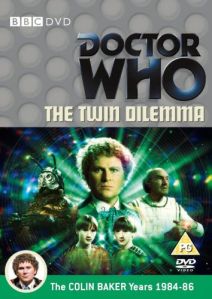
I’ve had the DVD cover of ‘The Twin Dilemma’ signed by Colin Baker at the ‘Stars of Time Film and Comic Con’ @ The Tropicana’ in Weston-super-Mare, August 2016. I told Colin that I didn’t mind this story so much compared to how other fans rate it. He was very pleased to hear me say that to him.
This four-part story was tagged on at the end of Peter Davison’s third season. This was unusual, as all Doctors begin their tenure with the first story of the season instead of the last. But producer John Nathan-Turner decided to have Colin’s Doctor in action before his first season starts in the next year.
‘The Twin Dilemma’ takes place directly after ‘The Caves of Androzani’, where Peter Davison’s Fifth Doctor regenerated into Colin Baker. The new Doctor has become arrogant and smug. He has a tasteless sense in clothes; becomes rude and angry and he acts strangely when he attempts to strangle Peri.
This ‘Doctor Who’ story was originally by Anthony Steven, who was a newcomer to the TV series. But his original scripts didn’t work and they had to be re-written by script editor Eric Saward. Sadly, the script suffered problems as well as the production and it didn’t turn out to be the success that it was.
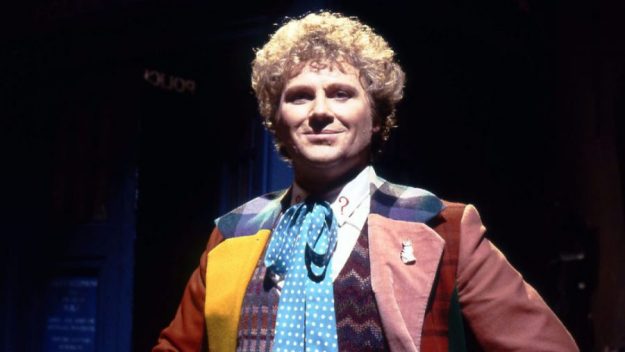
This story was also directed by Peter Moffatt, who had directed a number of ‘Doctor Who’ stories before this. Sadly, and this is no disrespect to Peter Moffatt’s direction, but this isn’t his greatest work. The story is typical of the 1980s and is too colourful, and that’s not just Colin Baker’s costume.
This story is a bold experiment to start off Colin’s era by making his Doctor unlikeable. It was a brave move, but it upset fans at the time who were watching this, especially after three years of Peter Davison’s Doctor. It was a matter of time on how Colin’s Doctor was to appeal to the viewing public.
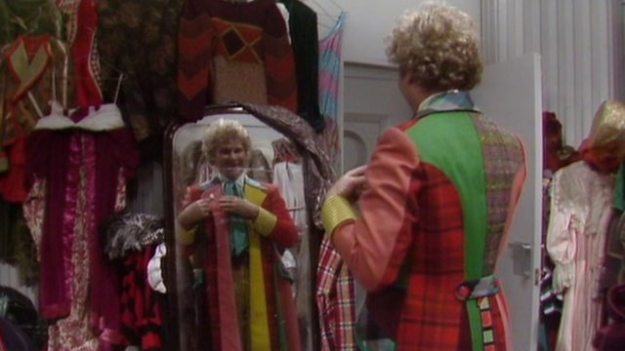
The new era of ‘Doctor Who’ begins with a brand new title sequence designed by graphic designer Sid Sutton. From watching the title sequence, it looks very dazzling and colourful (too colourful in my opinion). Colin’s Doctor is also very colourful as he dons a new multi-coloured costume in this story.
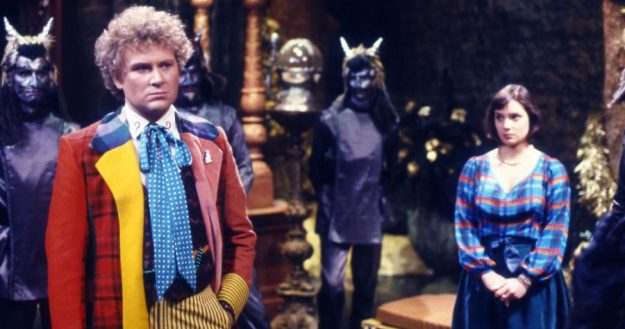
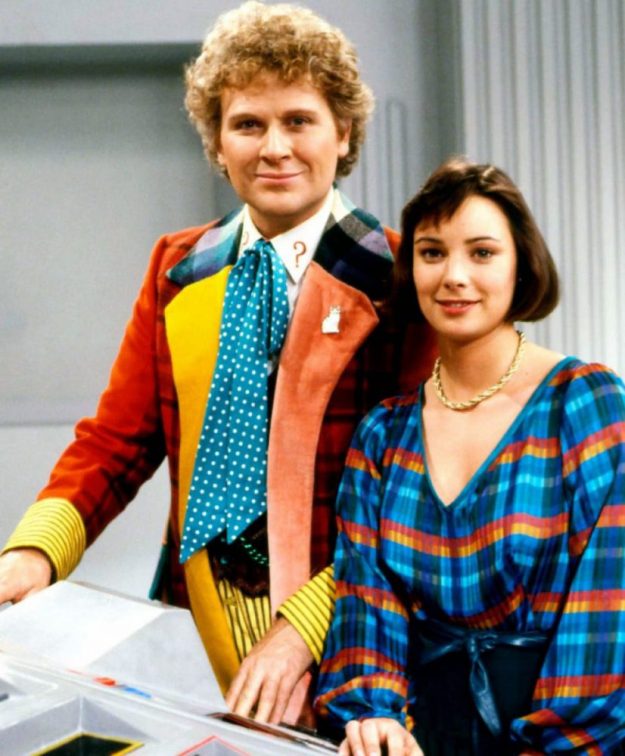
I don’t think Colin’s multi-coloured costume suits his Doctor well. It’s simply outrageous and unbelievable to watch. It’s difficult to take Colin’s Doctor seriously. It makes him a figure of fun and a jester. It’s not a costume Colin would have chosen to wear and Peri tells him that he looks ‘dreadful’.
Aside from these negative aspects, Colin Baker delivers an extraordinary interpretation of the Doctor that was never seen before on TV. I liked Colin’s boldness in how he plays the Doctor; how he interacts with Peri and how he goes through the stages of his post-regeneration trauma in this story.
Nicola Bryant is wonderful as Peri in this adventure. She’s shocked by what the Doctor looks like after his regeneration. She misses Peter Davison’s Doctor already and doesn’t like the manner of clothes Colin’s Doctor wears. She’s shocked by his change in behaviour when he tries to strangle her.
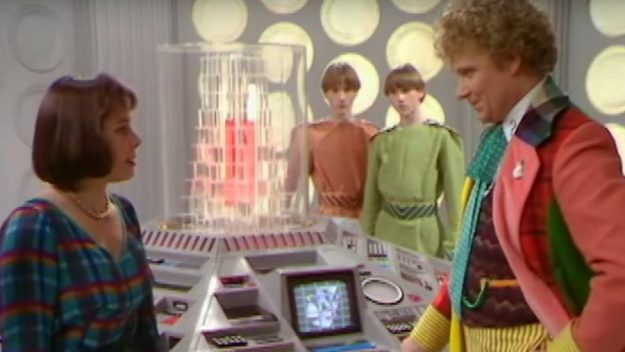
I wondered why Peri puts up with Colin’s Doctor in the series. She could have easily left him as the Doctor was treating her badly and was dismissing her. By the end, she’s compassionate and caring and remains with this new Doctor. Despite his abrasive behaviour, she’s able to put him in his place.
In this story, the Doctor and Peri have to rescue two twin boys – hence ‘The Twin Dilemma’. The two twins are Romulus and Remus (not the two planets in ‘Star Trek’). These twins are mathematical geniuses, so that’s two more Adrics. What is it about this obsession with learning maths in the 1980s?
The two actors, Gavin (real name: Paul) and Andrew Conrad, who play the twins in this adventure are pretty inexperienced. You can tell that they’re doing their best to act, but sometimes I found them annoying, especially in scenes when they’re arrogant and showing off their mathematical skills.
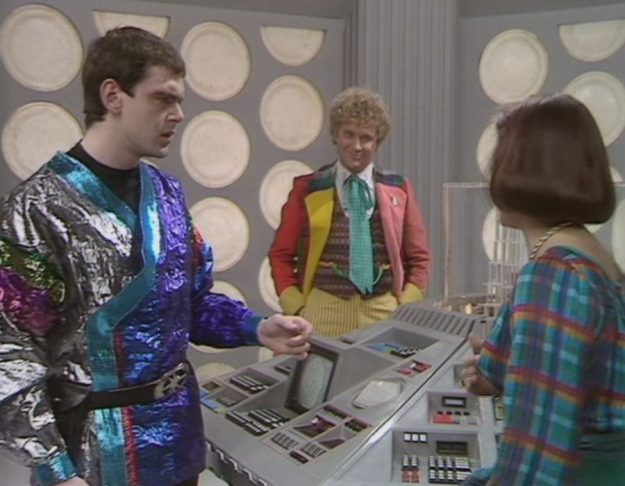
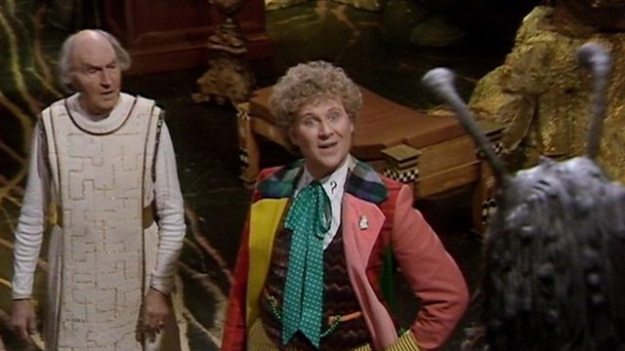
The guest cast also includes Kevin McNally as Hugo Lang, lieutenant of the space police. Hugo is sent off to search for the young twins before he meets up with the Doctor and Peri. Hugo is a likeable character, but why he changed into a multi-coloured jacket instead of his police uniform I’ve no idea.
There’s also Maurice Denham as Professor Edgeworth, who kidnaps the twins. It turns out that he’s really a Time Lord called Azmael and an old tutor and friend of the Doctor’s. Azmael is working for a Gastropod named Mestor and has kidnapped the two boys in an attempt to save the planet Jaconda.
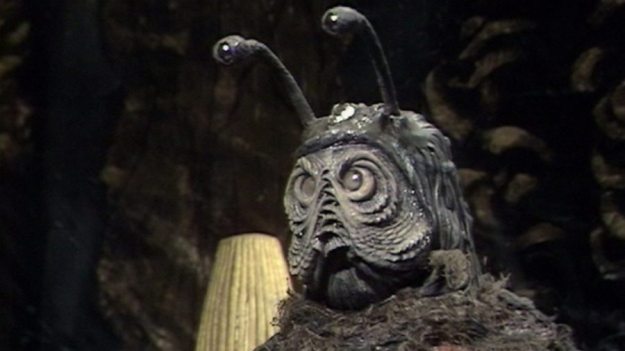
Edwin Richfield plays Mestor the Gastropod, the villain of the story. I’ve seen Edwin in ‘Doctor Who’ before in ‘The Sea Devils’, but I couldn’t recognise him in that Gastropod make-up as Mestor. Mestor the Gastropod is unconvincing as a ‘Doctor Who’ monster and is pretty weak in terms of a character.
The rest of the guest cast includes Dennis Chinnery (who was in ‘Genesis of the Daleks’) as Professor Sylvest, the twins’ father; Seymour Green as the Jacondan Chamberlain; Oliver Smith as Drak and Barry Stanton as Noma, two Jacondans; and Helen Blatch as Commander Fabian of the space police.
By the end, Peri is unhappy with how the Doctor has changed for her. But the Doctor insists that Peri waits before she judges him. In a way, the Doctor is telling the viewers to wait before judging him. Colin has done plenty of Big Finish audios that have expanded his Doctor in a larger ways than one.
The DVD special features are as follows. There’s an audio commentary with Colin Baker, Nicola Bryant and Kevin McNally and an info-text commentary option. There’s also ‘The Star Man’, an interview with graphic designer Sid Sutton and ‘Look 100 Years Younger’ with Colin Baker and comedian Amy Lamé. There’s also the ‘Stripped For Action – The Sixth Doctor’ documentary. This is looks into the comic book adventures of the Sixth Doctor. There’s also a morning ‘Breakfast Time’ interview with Colin Baker and Nicola Bryant. There’s also a ‘Blue Peter’ interview with Colin Baker; continuities; a photo gallery and a ‘Radio Times Listing’ PDF. There’s also a ‘coming soon’ trailer for ‘The Keys of Marinus’ DVD, starring William Hartnell, William Russell, Jacqueline Hill and Carole Ann Ford.
So, ‘The Twin Dilemma’ is a pretty rocky start for Colin Baker’s Doctor. The story isn’t great, but I enjoyed both Colin Baker and Nicola Bryant as the Doctor and Peri. Although Colin delivers a bold performance, his Doctor didn’t prove popular with the viewing public back then, which is a shame.
But no matter how you look at it, Colin Baker is the Doctor…whether you like it not!
‘The Twin Dilemma’ rating – 6/10
| The previous story
For the Fifth Doctor was
For the Sixth Doctor was For Peri was |
The next story
For the Sixth Doctor is For Peri is |
| Return to The Sixth Doctor’s Timeline | |
| Return to Peri’s Timeline | |
| Return to The Doctors’ Timelines Index | |
| Return to The Companions’ Timelines Index | |
| Return to Doctor Who Timelines | |
| Return to Doctor Who | |
| Return to Sci-Fi |
 Bradley's Basement
I class this one as a guilty pleasure, i think tagging this story on to the end of a very strong season didn’t do it any favours as the production budget had run out making the setting look cheap & tacky, you needed something more dynamic in introducing a new Doctor not a man in a rubber costume.
I like Colins performance however as he brings a chilling unpredictability to the Doctor & shows moments of darkness never seen before gives the character a whole new dimension.
A great review & fair rating for this Sixth Doctors debut adventure.
LikeLiked by 2 people
It is unusual that Colin Baker’s debut story in ‘Doctor Who’ should start at the end of a season rather than at the beginning of the season. I would have preferred ‘The Twin Dilemma’ as a season opener and would be patient to wait for nine months until the next season with Colin Baker’s Doctor to get over the departure of Peter Davison. It’s a shame the budget ran out on this story and the script could have worked better with more editing on the dialogue to make it sound better.
I too like Colin’s performance in this story. He stands out for me as the unpredictable, loud Doctor as the beginning of his era. I wish he wasn’t always like that in his TV tenure as he came across as unlikeable throughout most of his stories. Thank goodness Big Finish have toned the Colin’s Doctor down and made him lighter; happier and become more interesting over the years in his audio adventures.
Many thanks for your comments, Simon. Glad you enjoyed my review on ‘The Twin Dilemma’.
Tim. 🙂
LikeLiked by 1 person
Great review Tim.
I just finished watching this story on Britbox. I wouldn’t call it a guilty pleasure, I just decided to watch it for completion sake. I’ve only seen two of Colin Baker’s tv stories (five if you count the four parts of ‘The Trial of a Timelord’ as seperate stories). If the story had opened Season 22 they might have been able to make the script work and use better production values. Hugo Lang was my favourite guest character played well by Kavin McNally from the Dad’s Army 2019 episodes.
The Sixth Doctor was a mixed bag for me in this story. He showed genuine concern for Azmael and did a good job when face-to-face with Mestor. However, he was most definetely abrasive at times especially during the strangling scene. Poor Peri. I hope to get a better opinion of the Sixth Doctor when watching Season 22 and listening to his Big Finish audios. I’m sure his relationship with Peri improves as I saw it had in Season 23.
P.s. I might be able to go to the Bedford Who Charity Con after all. Have you been to any of the previous ones or will this year be your first one?
Take care, WF92.
LikeLiked by 2 people
Hi WF92,
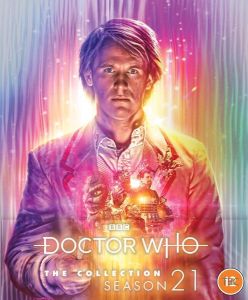
Glad you enjoyed my review on ‘The Twin Dilemma’. Thank you for sharing your thoughts on this story. My review does require an update, which I hope will happen when it comes to the Season 21 Blu-ray box set of ‘Doctor Who’ whenever that comes out. Yes, ‘The Twin Dilemma’ could have worked better as a season opener and Kevin McNally is great as Hugo Lang in this. Who knew he would go on to be in ‘Pirates of the Caribbean’ and the ‘Dad’s Army’ 2019 episodes. I found out he’s married to Phyllis Logan who is well-known for being in ‘Downton Abbey’ and she was in the ‘Doctor Who’ episode ‘The Battle of Ranskoor Av Kolos’ with Jodie Whittaker. So both have been in ‘Doctor Who’. 😀
Yeah it’s a shame the Sixth Doctor divided fan opinion when he was in the TV series. Sometimes he can be unlikeable, sometimes he can be very enjoyable, which is an inconsistency in how his character developed in the TV series. Colin Baker still delivers great performances as his Doctor though. It’s a good thing that the Big Finish audios have been able to develop the Sixth Doctor’s character and have made him more likeable compared to how he was in the TV series.
Well, that’s good to hear. Maybe I might see you in Bedford then. 😀 This will be my first trip to a ‘Bedford Who Charity Con’ so I’m hoping it’ll be good. I’ve read another chapter of ‘Four Time-Travellers and a Baby’. I wonder what the Master’s up to and fancy Nyssa finding that baby. What will happen next? 😀
By the way, Series 2 of new ‘All Creatures Great and Small’ will begin on Channel 5 on Thursday 16th of September.
Best wishes,
Tim. 🙂
LikeLiked by 2 people
As a side note, there is something I wanted to ask about the second chapter of ‘Four-Travellers and a Baby’. Did you find it funny that Michael, Nyssa and Tegan weren’t properly dressed when they confronted the Master?
LikeLiked by 2 people
Yes it was funny, especially when Michael assumed Nyssa and Tegan were warm as he was and when the Master made comment about their attire before he left.
Tim 🙂
LikeLiked by 2 people
Hi Tim.
Having re-watched ‘The Twin Dilemma’, it is pretty bad, although not as bad as it’s reputation suggests in my opinion. ‘The Caves of Androzani’ is better, although I found the plot in this one to be a bit easier to follow. I expect they were trying to experiment with the Doctor being unlikeable at first, which didn’t work out in the end. I felt bad for Peri throughout the story, Especially when the Doctor almost killed her. Could you imagine if the Sixth Doctor met Mr. Brittas? 😀
Kevin McNally as Hugo Lang is still my favourite character in this story. I liked his decision to stay behind on Jaconda, a moment that was let down by the Doctor saying he could believe Hugo had no one on Earth. The Sixth Doctor did have his positive moments though, especially with Azmael.
I’ll finally get around to watching ‘Attack of the Cyberman’ to start Season 22 (even though I’ve already seen ‘Attack of the Cybermen’). It will be interesting to see Stephen Churchett in that, as well as Terry Molloy, Brian Glover and Maurice Colbourne returning as Lytton.
P.s. have you been coping with the current heatwave?
Take care, WF92.
LikeLiked by 2 people
Hi WF92,
Thanks for sharing your updated thoughts on ‘The Twin Dilemma’. Yeah, Colin Baker’s first ‘Doctor Who’ story isn’t all that great but I wouldn’t consider it the absolute worst ‘Doctor Who’ story in the series. Again, hope to re-examine the story when it comes to the Season 21 Blu-ray box set release. If the Sixth Doctor actually met Mr. Brittas following his regeneration, he would definitely strangle him. 😆 I think you should do reviews on ‘The Brittas Empire’ on your blog sometime. 🙂
Glad you enjoyed Kevin McNally as Hugo Lang in the story as well as the Sixth Doctor’s positive moments. Did you know the story’s writer Anthony Steven wrote episodes of the original ‘All Creatures Great and Small’ series?
Hope you enjoy revisiting ‘Attack of the Cybermen’. I’m currently revisiting ‘Vengeance on Varos’ in the Season 22 Blu-ray box set. I just found out Stephen Churchett was in ‘Attack of the Cybermen’ and he doesn’t last long, does he? 😆
I’m coping okay with the hot weather. Hope you are too. Having a Calippo to cool me down. 🙂
Many thanks for your comments.
Tim 🙂
LikeLiked by 2 people
Hi Tim.
I have actually been considering doing ‘Brittas Empire’ reviews for a while now. I’m still hoping that Britbox will make series 6 and 7 available to watch soon. After that, I might purchase the complete series on DVD. I know there is already one, but I would like it if Eureka Films released a new box set that featured more extras such as audio commentaries, BTS featurettes, cast and crew interviews etc.
Whilst were on the subject of Chris Barrie, are you familiar with any of the ‘Red Dwarf’ cast members other than him and Norman Lovett (who was in ‘Soldiers of Love’ which I know you’re familiar with).
P.s. I didn’t know Anthony Stevens wrote episodes of ‘All Creatures Great and Small’. Thanks for mentioning that. 😀
WF92.
LikeLiked by 2 people
Hi WF92,
I look forward to your ‘Brittas Empire’ reviews when they arrive on your blog. I’m not familar with many cast members from ‘Red Dwarf’ apart from Chris Barrie and Norman Lovett. Norman Lovett was also in an episode of ‘Keeping Up Appearances’. I did see some of a ‘Red Dwarf’ episode where they did a crossover with ‘Coronation Street’ once. 😆 No problem. Glad to have helped out regarding Anthony Stevens.
Many thanks,
Tim 🙂
LikeLiked by 2 people
A wise author once said there was a keen difference between executing a story and assassinating it. There’s a very good idea at the heart of “The Twin Dilemma”, but its development stacked all the odds against it. It would’ve been interesting to see someone like Terrance Dicks (or Robert Holmes, again) receive the brief and see what they came up with.
I love the dynamic between the Doctor and Azmael. We’ve never met Maurice Denham’s character before, but as soon as they step into the same room, they feel like old friends. I think it’s their friendship that actually sustains a lot of a very troubled story. Peri still has her sparkiness from “Planet of Fire” here and Hugo Lang could easily have come aboard like Jamie McCrimmon in 1967. The make-up for the Jacondans, transforming them into silvered birds, was a brilliant touch of originality on the part of the production and the final confrontation recalls many a worthy Tom Baker baddie duel.
Some of the lines in “The Twin Dilemma” are even quite unironically witty. Especially, for the Doctor in the latter half. “In my time, I have been threatened by experts, I don’t rate you fairly highly at all,” shines. As does the Doctor’s riposte to Hugo’s “Frankly, I find you unreliable.” The Time Lord responds, “So’s most currency. Doesn’t stop people from spending money wisely.”
I think the biggest critique I can bring to it is that it has all these wonderful elements and it doesn’t *do* anything with them. We spend two episodes idling before we reach Jaconda and, once we’re there, we don’t get much of an opportunity to explore it. I’d have loved to see a more cohesive “The Twin Dilemma” (“The Seeds of Jaconda”?) start up Season 22. Something that set up the Sixth Doctor’s kindlier baseline in “Part One” and then radically jostled with it like a manic barometer for the rest of the story/season.
LikeLiked by 2 people
Hi Wolfie,
Thanks for sharing your thoughts on ‘The Twin Dilemma’ as a ‘Doctor Who’ story. It’s shame about this story not being well-recieved, especially as it’s the first one with Colin Baker’s Doctor and the last story of Season 21. It would’ve been better to make this the opening story of Season 22 as opposed to the finale of Season 21. I look forward to expanding my thoughts on ‘The Twin Dilemma’ when it comes to the Season 21 Blu-ray box set. I especially enjoyed Colin Baker’s performance as the Doctor as well as Nicola Bryant as Peri, Maurice Denham as Azmael and Kevin McNally as Hugo Lang.
I would like to check out the Target novelization of ‘The Twin Dilemma’ by Eric Saward, with the audiobook read by Colin Baker, to see how much is improved in terms of the development of the story and the characters in book/audio compared to the TV version. I’ve just finished revisiting ‘Vengeance on Varos’ and hope to update my review on it soon.
Once again, many thanks for your comments, Wolfie.
Tim 🙂
LikeLiked by 1 person
Thanks, Tim. The novelisation makes for a much more cohesive experience than on television, I found. It’s much more tongue-in-cheek, but hits many of the same beats while injecting a lot of background detail that makes the Universe feel a lot more alive than what the television version could offer at the time. I think it’s a credit to the cast — Colin, Nicola, Kevin, Maurice, Edwin, et al. — that “The Twin Dilemma” is as watchable as it is. They certainly weren’t in want of talent, they had it.
“Vengeance on Varos” is, perhaps, I think my favourite from Season 22. Much of the season tries to emulate the virtues of “The Caves of Androzani” and I think “Varos” is the most successful of the efforts. It replicates many of the cosmetic choices, but it also understands the core. It has the doggedly heroic Doctor that made that story so special (“I can show you new prosperity!”). As always, looking forward to hearing your own (new) thoughts on the story.
LikeLiked by 2 people
Hi Wolfie,
I’m sure my new thoughts on ‘Vengeance on Varos’ will be entertaining and interesting. I watched the extended version of the story on Blu-ray and it has been an enjoyable experience. Interesting it’s your favourite story out of Season 22.
Many thanks,
Tim 🙂
LikeLiked by 1 person
“The Twin Dilemma” is a bit of an odd duck.
This is not the first instance of this kind of misjudgement for the programme. Only two years ago, the climactic death of a companion was followed up by a story seemingly oblivious to the emotional (and narrative) aftershock of its predecessor. The problem was dutifully dodged with the production of “The Five Doctors” for Season 20, but Season 21 was again hit by the same curious problem.
The debut of a Doctor should not be an afterthought and yet… It’s difficult to describe “The Twin Dilemma” as anything else. An afterthought and a baffling one at that. Rather than be armed with the resources of a full season, the flow of a production block’s worth of stories, the Sixth Doctor was deposited on our screens in what feels like a bout of overeagerness. It’s a shame as there’s quite a lot going for “The Twin Dilemma” if only it had been in better circumstances.
The Sixth Doctor and Peri have developed a strikingly excellent friendship in other mediums. Audio, especially, and that has been down to the chemistry between Colin Baker and Nicola Bryant. Here, in their debut, you can see the sparks and how well they’re bouncing off one another… But they’re mired in a script that for half its runtime doesn’t want to take them anywhere.
The kidnap of the Sylvest twins could have been as nailbiting as some scenes from “Frontier in Space” at the Earth Empire prison. There was a great opportunity here for intrigue and complex characterisation. Unfortunately, Anthony Steven’s screenplay simply doesn’t know what to do with them. There was a nice observation made about the arguments in one of the programme’s cousins — ‘Blake’s 7’. The arguments, whether fleeting or dire, always led to a decision. It’s not until halfway through “Part Two” that the Doctor and Peri are permitted just that.
Let’s look at the antagonists. Azmael is perhaps one of the best characterised guest stars in “The Twin Dilemma”. In no small part due to Maurice Denham who invests him with pathos, consideration and a gentle gravitas. Something similar to his performance as the half-mad and destitute Prince Lorenzo in “The Village that Sold Its Soul” from ‘Return of the Saint’. The Doctor’s former teacher feels like someone we should’ve met before and will be our throughline for much of this story. What better way to pass the torch than have the Doctor meet a figure from his Gallifreyan origins?
Noma, Drak and the Chamberlain all feel as though they’re chomping at the bit for more material. Each actor in their respective role is trying to imbue them with substance and purpose. From Drak’s understated friendship with Azmael to Noma’s awestruck and curiously genuine fealty to Mestor. In the next season, it would be easy to have seen all these roles expanded to something a bit more meaty. However, how does the classic ‘Doctor Who’ monster (to use the old nomenclature) stack up?
Perhaps this is one of those decisions made obvious by hindsight: Mestor bears a strong resemblance to the Gravis from “Frontios”. Indeed, there’s nothing in this story that could have prevented another appearance from the Tractors. A different colony with differing abilities and objectives. There would be a writer’s credit to pay Christopher H. Bidmead, but you’d save on costumes, surely? Regardless, Edwin Richfield does extremely well with what he’s given. Both physically and narratively. The confrontation between the Doctor and Azmael versus Mestor is one of this incarnation’s best.
Some good material swamped beneath some rather baffling choices.
SCRIPT DOCTOR: ‘What would help this story?’
— Do we need Titan III? Probably not, actually. We certainly don’t need Earth or Fabian. Focus directly on Jaconda and its people, instead. There’s enough interesting material there to fit the whole serial.
— Who is the Sixth Doctor? We don’t really know in this version. He’s all madness, no method, so let’s give him little “moments of charm” with Peri and other characters. The barbs should come from two passionate, headstrong characters butting heads (The Peri of “Planet of Fire”, rather than “The Caves of Androzani”).
— What is the Twin Dilemma? Well, it’s Azmael’s choice of saving the people of Jaconda by aiding Mestor in colonising the Universe with Gastropod eggs. A bit more could be made of this choice with the added space. The more alien Doctor and Azmael ending up at odds with Peri and Hugo who get the wrong impression of the two Time Lords.
— Where do we want to leave this incarnation? In the audio commentary, Colin Baker cites his final scene with Maurice Denham as “the Doctor [he] wanted to be.” Delivering a quiet eulogy with a sad smile. Observed by Peri, who perhaps gives us a thoughtful look at the (un)surprising depths of this new Doctor’s compassion.
LikeLiked by 2 people
Hi Wolfie,
Thanks for sharing more thoughts on ‘The Twin Dilemma’. I agree, having ‘The Twin Dilemma’ placed at the end of Peter Davison’s third and final season is an odd thing to do to start off Colin Baker’s era. With Season 4 starting off with William Hartnell in the first two stories and having the rest of the season featuring Patrick Troughton, I can forgive it for that, since the production team then were starting off with regeneration and they didn’t know how to introduce new Doctors due to how the format of the TV show worked in the 1960s. The decision to start Colin Baker’s Sixth Doctor at the end of a season is an interesting one albiet a mistep and producer John Nathan-Turner should have thought this through. ‘The Twin Dilemma’ would work better as a season opener than a season finale. I was happy to wait for Peter Capaldi’s Doctor to get over Matt Smith in 2014 and was happy to wait for Jodie Whittaker’s Doctor to get over Peter Capaldi in 2018.
Thanks for sharing what good ideas ‘The Twin Dilemma’ had going for it and what could have been improved upon had the story gone in a different direction. I enjoyed reading your thoughts on Maurice Denham’s performance as Azmael. Interesting comparison you made between Mestor and the Tractators. That would have been an interesting twist if Mestor was a Tractator all this time. 😀 I’m astounded Edwin Richfield played Mestor, having seen him recently as Captain Hart in ‘The Sea Devils’. I liked your Script Doctor suggestions for where the story could go in a different direction. I personally would have ended ‘The Twin Dilemma’ with the Sixth Doctor becoming nicer to Peri, but wondering whether he’s still the good Doctor, much like how Peter Capaldi’s Doctor asked Clara, “Am I a good man?” Actually, thinking about it, the Twelfth Doctor’s journey in Series 8 could have been how Steven Moffat would have handled the Sixth Doctor in starting him off from being unlikeable to becoming likeable as the seasons went on.
Many thanks for your comments.
Tim 🙂
LikeLiked by 1 person
Peter Davison’s era, the quite obvious change that it needed to be from Tom Baker’s, could certainly be mixed for how to best appeal to enduring audiences. So Colin Baker’s had a more daunting task for which even the returns of familiar adversaries like the Cybermen, Sontarans and the Master were particularly challenged. Revelation Of The Daleks is a quite a gem though which made it ironic how it was almost the classic series finale. Introducing new villains like Sil, the Rani and The Valeyard are always noteworthy for how original Colin’s era could significantly be in its own right.
LikeLiked by 2 people
Hi scifimike,
Thanks for sharing your thoughts. I do wonder how much was planned in advance in setting up Colin Baker’s first season when it was decided to have his first story tagged on at the end of Peter Davison’s third season as the Doctor. You’d also have to wonder how many returning foes the production team considered to bring back for Colin Baker’s first season when the decision was made to make his Doctor brash and unlikeable.
Many thanks and best wishes,
Tim 🙂
LikeLiked by 1 person
As an experiment, I’m going through and doing a fanedit of The Twin Dilemma as a follow-up to the events of Attack of the Cybermen. Removing much of the post-regenerative furore in favour of the more stabilised elements of the Sixth Doctor’s personality.
It got me thinking about regeneration stories in general. Should a Doctor’s debut be about the regeneration from its core concept or should it be a cohesive story in its own right with the regeneration as a bit of gossamer?
Would Castrovalva work as effectively if it were a standard adventure? Would the Fourth Doctor have suffered if his debut were Terror of the Zygons and not Robot?
The most egregious elements of the Sixth Doctor’s personality in The Twin Dilemma, I wouldn’t argue is his puffed ego or his bravura energy, but his bouts of cowardice. They’re so strikingly uncharacteristic of any Doctor — let alone the lionhearted Sixth — it’s a struggle to rationalise their presence.
Burning Heart would later contextualise his manic attacks as a side effect of post-traumatic stress disorder. I would posit, as well, that we’ve seen this kind of breathless anxiety before. Exaggerated, true, but we have seen it…. In the Fifth Doctor.
If we assume that the Sixth Doctor takes on traits of his former selves as Doctors before and after will do… Is the Sixth Doctor taking on exaggerated aspects of prior personas? The hauteur of the Third Doctor. The temper of the Fourth Doctor. The fretting of the Second Doctor.
Dark inversions of familiar personas. But bigger. All that polite repression come untangled in one volcanic deluge of emotionality.
LikeLiked by 2 people
Hi Wolfie,
Thanks for sharing your latest thoughts about ‘The Twin Dilemma’ and regeneration stories in general. Hope it goes well with your fan edit in setting ‘The Twin Dilemma’ after ‘Attack of the Cybermen’. Sounds fascinating.
I think regeneration stories need to be handled with care when it comes to establishing a brand-new Doctor. Having the first story of a new Doctor be a post-regeneration story is not necessarily a requirement. I think it’d be better if a new season with a new Doctor began with a story focusing on a companion meeting the Doctor for the first time in an standalone adventure, and as the season progresses, we have flashbacks to when the Doctor is recovering from his regeneration. We don’t need to have the first story be a story where the Doctor is recovering, as we can take that for granted and go straight into the adventure. I wonder what would happen if an Doctor’s tenure ended without a regeneration scene, as we can assume a particular incarnation is on their way out without needing to see the regeneration. I know that breaks tradition, but I’d like to see it done, as we can assume the regeneration took place with one Doctor going out and a new one coming in. It might freshen the storytelling approach in ‘Doctor Who’ as a result of that.
Many thanks,
Tim 🙂
LikeLiked by 1 person
I’ll do you one potentially better: I think it might be great to start with no knowledge of the Doctor or companion’s debut. A Canadian-led fan series The Doctor Who Project ended one of their incarnations with him violently gunned down by his own companion. That’s a really interesting place to drop the audience in cold. A dynamic between the Doctor and his companion, informed by knowledge between the characters, but not by the first impressions of the audience.
Instead, we’re given clues over the course of the season that eventually point to that origin. Say, if it were the Fourth Doctor, then it would be a severe arachnophobia. Something that seems rather innocuous, at first, until slowly — through repetition — becomes more noticeable. By the finale, it’s revealed what actually happened.
One particular method could be to have the whole season’s arc be about the Doctor discovering how they died. That could easily lead to a situation similar to what we had with The Stranger where we learn Nicola Bryant isn’t the Stranger’s companion, she was his Protectorate custodian. A good shake-up of character dynamics.
The actual regeneration itself is something a little bit sacrosanct, I feel. Bi-generation, as good as an idea it was in principle, just didn’t work in practice. I think we can change the cause of the regeneration, but the process itself is kind of important to that passing of the torch. Arguably, it seems the “death” is more important than the “birth”.
If it were me — and I’d probably do an incarnation modelled after Alan Moore — I’d have that Doctor’s final story be a funeral he’s planned for himself. He suffers the fatal blow at the start of the season and the remaining stories are about him getting his affairs in order and tying off loose ends (or fraying up some new ones). Premiere with To Kill a Time Lord and close with Dead to Rites. The final image is the Doctor getting into the coffin, there’s a flash of artron from inside, and the new Doctor emerges in billowing golden smoke like the Mummy.
LikeLiked by 2 people
Hi Wolfie,
Thanks for sharing these fascinating ideas you have. It’s always a challenge to start off a new Doctor’s tenure with a post-regeneration story and frankly, the tradition of doing a new Doctor era by starting off with a post-regeneration story is wearimg a bit thin. I think we should have an era ending with a Doctor not regenerating and then start a new era with a Doctor already in costume (like with Christopher Eccleston in ‘Rose’) and we can put the pieces together as to what happened in-between the two eras.
Sylvsster McCoy didn’t need to start off in Colin Baker’s costume in ‘Time and the Rani’ and we could have done without the regeneration. It would allow us the opportunity to speculate what happened between Colin Baker and Sylvester McCoy, and it would have paid more respect to Colin when he refused to do the regeneration. But of course, we’re having to abide by this tradition of doing a regeneration between Doctors because we must see how a Doctor change from one face to another.
Considering the show has lasted for over 60 years, I’m surprised tje break in tradition hasn’t happened. Well, technically, we had one in the bi-generation between David Tennant and Ncuti Gatwa in ‘The Giggle’, but like you said, whilst the concept is good in its initial stage, it’s ruined when you consider the consqeuences afterwards, particularly in how the Rani’s bi-generation in Series 15 of new ‘Doctor Who’.
Best wishes,
Tim 🙂
LikeLiked by 1 person
The change to the blue costume for Colin Baker during his time with Big Finish was nice. Biased as I am with blue being my favourite colour. But it blended him well with the blue of the TARDIS.
LikeLiked by 2 people
Hi scifimike,
Blue’s my favourite colour too. And it’s nice Colin Baker’s Doctor got a change in costume via the Big Finish audios by having it all blue instead of the multi-coloured outfit he wore in his TV era.
Many thanks,
Tim 🙂
LikeLiked by 1 person
I had an idea… that I don’t think could ever be pulled off… but I loved the notion that in Lupin III each of his jackets and undershirts signified a genre shift. Pink coat for comedy, black coat for drama, and so on.
I kind of loved the idea that the Doctor’s cravat and/or waistcoat would change depending on the medium he was travelling in. Different for television, audio dramas, novels and comics.
It could never be done that way because there’s no chance such coordination could be pulled off, but I’d have loved to see it in an ideal world. The closest we got was that lovely navy-blue coat for the subdued Sixie of his Big Finish heyday.
LikeLiked by 2 people
Hi Wolfie,
Well, when you consider the Ninth Doctor being able to have different coloured shirts, the Tenth Doctor having a brown and blue outfit, the Eleventh Doctor going from light tweed to dark tweed, the Twelfth Doctor having different shirts from collared to t-shirts, the Thirteenth Doctor having a blue jumper and a purple jumper, and the Fifteenth Doctor having different outfits in every story he’s in, it’s a relief the Sixth Doctor is able to have two different outfits from multi-coloured to subdued blue in his era, both TV and audio.
Many thanks,
Tim 🙂
LikeLiked by 1 person
Yeah, it’s a side-effect of JNT’s costume policy in the 1980s.
On the one hand, it means that the Doctor has a recognisable silhouette and that was important after so many years of Tom Baker’s scarf and jelly-babies. It probably saved quite a budget in costuming, too.
On the other, it meant that we didn’t really get any variety in the Doctor’s ensemble, which means it ended up feeling like, well… Exactly what it was. A costume. I do wonder if the Sixth Doctor’s coat would have been so egregious if it had been balanced out with more opportunities for dress-up?
LikeLiked by 2 people
Hi Wolfie,
I’m sure Colin Baker would be in agreement with that, since he would have preferred playing the Doctor as a character who had a normal sense of attire compared to what he wore in every story of his tenure. I know he’s a fan of Christopher Ecceleston’s leather jacket outfit in his era of ‘Doctor Who’ and I’m sure that would have suited Colin Baker’s Doctor nicely.
Whilst people criticise the fact that the Fifteenth Doctor kept changing outfits in his era of ‘Doctor Who’, I understand why that decision was made, as it allows the Doctor more flexibility in terms of the costumes he wears in the series and he doesn’t need to stick to one outfit. I think the orange leather outfit in ‘The Church on Ruby Road’ and ‘Joy to the World’ is the one that will stand out in many people’s memories of the Fifteenth Doctor, but at least it doesn’t mean he’s bound by it as it would be bizarre and nonsensical if he wore the same outfit every time like the former Doctors tended to do in their eras.
Many thanks and best wishes,
Tim 🙂
LikeLiked by 1 person
One might imagine as I did that BBV’s Summoned By Shadows was in some sense intended as the proper 6th Doctor’s first story that The Twin Dilemma could have been. Having liked Peter Davison, Colin was a lot to get used to. Mostly it was the lovely Nicola that kept me tuning in.
Thank you, Tim, for your review.
LikeLiked by 2 people
Hi scifimike
Yes, ‘Summoned by Shadows’ does seem to be a proper introduction to the Sixth Doctor in ‘Doctor Who’. Had they went with the Sixth Doctor being a hermit for a while, then maybe his comeback and his recovery from his regeneration would have been very worthwhile. It also would have set the Sixth Doctor’s journey in an interesting direction and avoid ‘The Twin Dilemma’s messy approach in terms of a story.
Many thanks,
Tim 🙂
LikeLiked by 1 person
It’s something that Peri says in Attack of the Cybermen: “It’s all there, just in a pile of unrelated bits and pieces.”
I think you could’ve done The Twin Dilemma and done it well. Putting aside everything else, there are four main components that would need to be adjusted:
Our first impression of the Sixth Doctor probably should’ve been seeing him firing on all cylinders. We don’t have issues with the regeneration until maybe ‘Part Two’ or ‘Part Three’. That way we have a baseline to measure these bizarre shifts in mood and mental state.
The strangulation scene is built for a cliffhanger. It’s shocking, its confronting and it makes you want to see it resolved. It’s something that needed to be very late into the story, maybe the cliffhanger to ‘Part Three’, and it needed to be long enough after we’d begun to adjust to this new Doctor.
There’s a perfect way to introduce ambiguity into the Doctor’s mania once they’re on Jaconda. The influence of Mestor. Leaning far more heavily on that, as ‘Part Four’ does in the actual story, would cast doubt on any misgivings the audience had in the Sixth Doctor’s debut. Is that really him? Or was that Mestor?
And, finally, there’s no real reason why the Doctor and Peri should be so aggressively at odds. Peri’s first words to the Sixth Doctor are: “It’s terrible. […] I meant you,” which is just an awful way to introduce this new incarnation. The fact that the writing doubles-down on it for the first two parts — for both characters — adds an unnecessary edge to an already delicate relationship.
It doesn’t help that Peri doesn’t get a conversation with Azmael to discover that her Doctor wasn’t the only Doctor, either. Imagine her and Azmael reminiscing about old incarnations and Peri discovering that the Fourth Doctor was alien, bombastic, at times egotistical and–gosh, that sounds familiar.
Poor Peri, she was often forgotten after The Caves of Androzani and, ironically, I think she gets some really good characterisation among the difficulties of The Twin Dilemma. She proves that she can step up and do the Doctor’s role when he himself is hors de combat.
LikeLiked by 2 people
Hi Wolfie,
Thanks for sharing these thoughts. I agree, it would have been better if Mestor was responsible for the Doctor’s change in mood rather than having the post-regeneration trauma be responsible for it. Also, I agree that having the Sixth Doctor and Peri be aggressive to each other is not the right way to set out their relationship together. It undermines what happened in ‘The Caves of Androzani’, as the Fifth Doctor just saved Peri’s life and there’s no sense of gratitude from her when she sees him as the Sixth Doctor in ‘The Twin Dilemma’. Clearly, the inconsistency of character development for Peri is evident when we see how she reacts to the Sixth Doctor’s appearance and not with sensitivity by saying he’s ‘terrible’ in terms of his appearance. Quite frankly, he’s fine in terms of the change of his face. What’s so awful about it?
Best wishes,
Tim 🙂
LikeLiked by 1 person
Yes, we never quite explore that, do we? What is so awful about it? A post-regeneration story is about the Doctor, true, but it’s also about their companions, as well.
For those overseeing the Change, they can react with disbelief, assurance, confusion, all manner of emotions. For Power of the Daleks we actually got a chance to have two companions bouncing opposing viewpoints off one another. Polly is right in the end, it is the Doctor, but Ben’s disbelief is an important part of solidifying that new incarnation.
We don’t really get any opportunity to explore how Peri feels about the regeneration beyond a petulant “Yuck!” It’s very shallow and her barbs don’t even stop after the Doctor has his first manic fit in the TARDIS wardrobe. “You were so young. I really liked you. And you were sweet!” is about as far as we get into unpacking her view.
We never see Peri mourn her Doctor or really come to understand what a regeneration means. We don’t even get a sense of how much Peri remembers of The Caves of Androzani being so close to death as she was. Later stories, on audio especially, will paper over those cracks. The Reaping, in particular, in Peri’s conversation with her mother. The Thousand Year Thaw is probably one of the most explicit with outlining her motivations for staying.
But you know what really caused this story to land with a dull thud? Not addressing the strangulation. That was a scene that needed, above all else, a moment between the Doctor and Peri to be reconciled. They could fight, they could bicker, they could argue… But that scene couldn’t be left hanging over their heads.
(Colin Baker, for his part, never puts his arm around Nicola Bryant’s neck in their scenes together. Always her shoulders. I thought that was a nice acting touch.)
LikeLiked by 2 people
Hi Wolfie,
Thanks again for sharing your thoughts. I suppose because ‘The Twin Dilemma’ was made towards the end of Season 21, there wasn’t enough time to explore Peri’s reaction to the Sixth Doctor’s new appearance, the loss of the Fifth Doctor and the fact he attempted to strangle her in ‘Part One’. But then, things were done differently in the 1980s in how stories and characters were developed, as emotions weren’t at the forefront. It’s thanks to the Big Finish audios and with the benefit of hindsight that we’re able to explore more of Peri’s feelings about the Doctor and the transition between ‘The Caves of Androzani’ and ‘The Twin Dilemma’. ‘The Reaping’ is a very good example of that.
The closest we have in terms of an improvement over a companion reacting to the Doctor’s change in appearance and not liking it so much at the start is Clara in ‘Deep Breath’ when she’s horrified that the Doctor’s become older instead of younger in his ‘twelfth’ persona. It’s flawed in terms of its execution no doubt, but it’s interesting how it explores a companion’s reaction to a Doctor who’s not so nice as their previous incarnation, much like how Peri reacts to the Sixth Doctor not being so nice as the Fifth Doctor. ‘Kill the Moon’ adds to that when Clara reacts angrily to the Twelfth Doctor at the end of that episode.
Many thanks for your comments.
Best wishes,
Tim 🙂
LikeLiked by 1 person
Yeah, the reality is that women didn’t typically get that level of in-depth character exploration in 1980s television. Something like Cagney and Lacey or CATS Eyes was the exception, rather than the norm. There’s a reason why a lot of the conversation around the Sixth Doctor’s “rehabilitation” on audio often failed to mention Peri comes a cropper quite prominently, too. Paradise 5 does an amazing job of fleshing out her character for a story originally slated as Mel’s debut.
I’d argue that attitude was changing in Doctor Who during the Andrew Cartmel era, though. Ace receives some quite intensive character work from Season 25 onwards. There’s definitely the attitude around the prevailing zeitgeist of the machismo ’80s, but Cartmel’s more emotive script-editing style really pushed that dynamic into focus in a way that the ’90s would later further with Benny Summerfield, et al.
The Clara example is an interesting one because, while the story itself is better, it commits a cardinal sin of its own. The same one, actually. It fails to have the new Twelfth Doctor validated in the narrative on his own merits. Clara needs to be reassured by the Eleventh Doctor to stay around, which implies she’s waiting for the other Doctor to return.
Clara’s whole character arc that season, though, is very odd. She treats her boyfriend very badly. Her travels with the Doctor are portrayed almost like she’s having an affair. It’s a very awkward attempt at ramming a love triangle into a situation where you can tell Peter Capaldi isn’t comfortable playing his Doctor that way.
That’s one of the small nods I will give The Twin Dilemma. The line: “I am, in your terms, an alien. I am therefore bound to have different values and customs,” does a lot of heavy lifting.
LikeLiked by 2 people
Hi Wolfie,
Thanks for sharing your thoughts. It’s quite frustrating how the persistent battle for strong character development in films and TV shows is always a constant. Granted, you have to be emotionally invested in terms of the characters you’re watching, but it often depends on who’s writing the scripts and who’s running the show. I think Andrew Cartmel’s appointment in ‘Doctor Who’ as script editor was a breath of fresh air, especially when Ace was given more focus in terms of how the character should be developed and not having the plots of stories override things. This is a contrast to how Clara gets developed in the TV series where the character development is inconsistent and you’re struggling to connect with her when the bad aspects of her character come to the fore more. It’s a shame considering Steven Moffat was the showrunner.
I feel the new TV series is heading in that same direction where character development isn’t important and the plots are more the focus and it’s style over substance in terms of the glitzy, glamarous aspects of the show. If only RTD was given 13 episodes to work with instead of 8 for each season of his neo-era, I’m sure we’d have a stronger dynamic between the Fifteenth Doctor and Ruby in Series 14, as well as between the Fifteenth Doctor and Belinda in Series 15. It’s only because the actors are likeable and that they’ve made the characters likeable that I’ve been able to connect to them in the neo-RTD compared to some of the mean-spiritedness of characters in Steven Moffat’s eras.
Best wishes,
Tim 🙂
LikeLiked by 1 person
This was something that I noticed in the transition from Season 1 to Season 2 waaaaaay back in the ’60s. Barbara Wright is an amazing character and one of the strongest contenders for arguing against the idea that every ’60s companion was an ineffective screamer. She was intelligent, resourceful, and demonstrated a lot of agency in her time on the series.
In the shift from script editor David Whitaker to Dennis Spooner, something rather interesting happens. Whitaker and Spooner both write teenagers in quite a different style. Spooner, I think, ends up having more fun with it than Whitaker purely because his approach is much more flippant. However, as Vicki becomes more and more solid, Barbara falls increasingly into the role of “the one who gets into trouble,” and it shows towards the end of her time on the programme. The production team behind the wheel does matter. It’s why Sarah Jane feel so different between the Third and Fourth Doctors.
I noticed that, too. We know, at least, three different iterations of Clara. Not counting doppelgangers like Bonnie in The Zygon Invasion, etc. For a character who’s supposed to make this radical impression, she ended up worryingly interchangeable. When people say they like the character, I have to wonder which version. Oswin? Victorian!Clara? Modern!Clara? She never really had a stable characterisation even with the same Doctor.
And that’s the crux, really. Time. There’s not enough time to get to know companions these days and, because of that, the Mystery Box format actively harms them now. We’re not allowed to know about them because it’s a big objectifying secret saved solely for the finale. They’re not people, they’re props, and that’s so damaging to any connection we need to make with them as the audience. It stopped being about Bad Wolf, Harold Saxon, missing planets, and became… Well, the same mystery over and over again — who is this mysterious woman?
If Doctor Who is in trouble, it’s because it’s stuck in a rut that’s been there since the 2010s. The Moffat era, specifically. And it’s grinding its gearbox because it can’t seem to break free of it.
LikeLiked by 2 people
The Horns Of Nimon was chronologically my first impression of how youngsters could be characteristically treated in Doctor Who (long before knowing Susan, Jamie or Zoe) and I liked Seth and Teka. Then when Adric, Varsh, Tylos and Keara took their youthful drama of such characters to a most serious level, it encouraged me to appreciate how the 80s Whoniverse would potentially improve on certain things.
As for any rut that Doctor Who could get stuck in after a while, perhaps Moffat’s era is partly to blame. There can be points of no return even for the Whoniverse. And that’s why Ruby finding her mother without the sci-fi complexity that the Ponds had was the most rewarding break for me. Youngsters among the TARDIS crew need their awe and wonder. But we must be in awe of them too for how they could retain their characters in the midst of what the Whoniverse has to offer.
The longevity for franchises like Doctor Who, Star Trek and Star Wars may tend to lose much of the magic that made them so captivating to begin with. Consequently it may clear the way for new shows like Stranger Things, Manifest and La Brea to refresh a lot of sci-fi tradition. Doctor Who can succeed with the freedom for what we subjectively choose to gain from it. So long as that is maintained, I have enough hope.
LikeLiked by 2 people
Yeah, Doctor Who‘s biggest strength is its capacity for total reinvention. The Doctor, the TARDIS and the Daleks. That’s all that’s really needed to make the series work. Everything else is malleable.
I think what we’re seeing now is a good ol’ fashioned culture clash. We’re kind of in the middle of a cultural revolution as radical as the 1960s. Writing for the young isn’t like what it was (as is the way). Their storytelling requires what we would’ve once called an adult-level comprehension. That doesn’t mean sex and violence, but kids these days are much more emotionally intelligent because of the content they consume. They understand a great deal more than is often expected of them.
The storytelling language has also changed dramatically, as well. The Sixth Doctor’s costume, for instance. A rainbow coat has a strikingly different — quite positive — connotation in queer culture, which is much more mainstream among the young than it was ever possible to show in the ’80s (as evidenced by both the Fourteenth and Fifteenth Doctors).
We end up going back to the old writing caution — how is it being written for its audience? Is it written for the young? With the young? Or at the young? Space Babies or 73 Yards?
LikeLiked by 2 people
Hi Wolfie, Hi scifimike,
Thanks for sharing your thoughts. It’s often a challenge to understand what’s considered proper entertainment and how it appeals to various age groups. I feel it’s important to ackowledge the fact that ‘Doctor Who’ is a family show and not necessarily a kids’ show. The action and drama levels in a TV series like ‘Doctor Who’ need to be maintained and well-balanced as long as you don’t veer too much into violence or comedic or pantomime territory.
When it comes to dealing with topical issue currently happening in the world, I feel the story and character development needs to be at the forefront in order for it be compelling rather than having messaging override what you’re trying to deliver to entertain audiences. It’s what I experienced when checking out Season 3 of ‘The Orville’, as I feel the balance of storytelling, character development and messaging is very well handled to make the episodes compelling. I think ‘Doctor Who’ should take an example out of ‘The Orville’s book, especially when the episodes in Season 3 are longer and the endings aren’t so rushed.
Best wishes,
Tim 🙂
LikeLiked by 1 person
I’ve a question for you both, actually — what do you define as a “kids show” and a “family show” in this day and age? Would we potentially call Stranger Things a family show? Is a kids’ show the seven-minute bites of Bluey or something like the Gothic ghoulery The Owl House?
LikeLiked by 2 people
Stranger Things is certainly a show where these issues may be most debatable. I for one don’t have a good-enough answer. I do however appreciate a show that both kids and adults can safely enjoy.
LikeLiked by 2 people
Hello both,
It’s hard to tell. Usually, I’d say a kids’ show or a film is one that can range from either a cartoon, animated or a live-action show that’s specifically catered for kids and is generally devoid of any trappings such as bad language and grown-up content that may be considered unsuitable depending on how look at it – usually, it’d be more lighthearted. A family show is where both children and adults, usually parents, can watch a show or film together where maybe bad language and scary imagery might slip in so long as there’s parental guidance for children to watch a programme or film safely.
I don’t watch many of the latest programmes on TV and I’ve not seen ‘Stranger Things’ at all, so I can’t claim to be an expert on how to differentiate between kids and family entertainment, as I think the rules have changed significantly from what’s identified as a U/G rating to a PG rating. It’s rather fuzzy. 😐
Best wishes,
Tim 🙂
LikeLiked by 1 person
Doctor Who is a bit of a challenge because one of its most recognisable eras — Tom Baker under Philip Hinchcliffe and Robert Holmes — thrives in quite a prominent vein of Gothic horror. Very specifically, terror. The idea that Doctor Who can scare is often used as a form of praise.
Tom Baker himself said once that violence on the programme should be used theatrically. To be so overblown and baroque that it can’t possibly be taken seriously. Much more in the vein of something like a Roger Corman Poe film, than a true crime series.
It’s interesting because I wouldn’t call Alien family viewing, but The Ark in Space and Earthshock both use prominent elements of that film (accidentally and deliberately). The Eric Saward era of the Fifth and Sixth Doctors is replete with bloodbaths and tragedy, but so do most Shakespearean plays which are taught in schools.
Even topics such as classicism, racism and fascism are all components of quite young people’s education. The Daleks and many despots like Helen A or the Marshall are a warning against fascist regimes. The Cybermen and many a Holmesian grotesque are about loss of bodily autonomy.
These are topics that children are taught — and need to be taught — but, crucially, Doctor Who can talk about them behind a veneer of fantasy. Away from the disturbing truth of unvarnished history. But again the pure historical also captivates the audience, too, so how much buffer do we actually need?
I think about K-Pop Demon Hunters, which is family viewing, and it’s a story fundamentally about how a young woman is rejected by her mother — and friends — because she’s the “wrong” race. I think we can go much further than we think we can with a lot of this stuff. The only thing that really changes is the context.
That was Verity Lambert’s approach, from memory. Adult storytelling without the adult content. After all, The Dalek Invasion of Earth was all the horrors of World War II come home to roost. They’d lived it. There wasn’t any sense hiding from it. But it was worth showing that the evil of the Nazis or the Daleks could be thwarted.
LikeLiked by 2 people
Hi Wolfie,
Thanks for sharing your thoughts. It’s quite fascinating and sometimes frustrating how certain periods of ‘Doctor Who’ reflect society and the world we live in, as it ranges from those preferring horrific storytelling to action adventure to light-hearted entertainment. I enjoy checking out ‘Doctor Who’ in all it forms and it’s intriguing how there isn’t a definite approach to what should make a good ‘Docror Who’ story.
As Colin Baker said in the ‘Terror of the Vervoids’ DVD making-of documentary, “The joy of ‘Doctor Who’ is that it can be anything”. So, judging from that statement, it depends on how you want the ‘Doctor Who’ story to be and whether it’s going to be judged postively or negatively by those watching the series. Sometimes it can range and it often depends on how many viewing figures are coming in, which is often what many studio exectives are striving for when it comes to how successful a TV show or a film is.
I’m sure when it comes to families, it depends on how certain people react to stories, as the parents might consider ‘Doctor Who’ unsuitable for their children whereas the kids are enjoying it. I find it amusing when Sophie Aldred, as a little girl, was forbidden to watch ‘Doctor Who’ by her mother because she was scared of the Cybermen. And yet, years later, she embraces ‘Doctor Who’ with her family as well as being in it herself.
Best wishes,
Tim 🙂
LikeLiked by 1 person
Seeing Sophie conquer her fear of the Cybermen with gold coins and a slingshot was therefore most rewarding.
LikeLiked by 2 people
I think you might’ve hit upon something with Sophie Aldred. Doctor Who, whatever its wonderful shape is, has always helped us to speak on the unspeakable. Anything and everything. The conversations that parents can’t have with their children or children can’t have with their parents.
And sensibilities do change as we age, I feel. As an adult, I’d be very deliberate in using knife-related violence in writing. As a child, though, I remember cheering when Jamie rammed his dirk into Stike’s leg in The Two Doctors (not undeservedly on the Sontaran’s part, either).
LikeLiked by 2 people
I remember Tom making that point and it was certainly a good one.
LikeLiked by 2 people
Hi scifimike, Hi Wolfie,
Many thanks for sharing your latest thoughts. It also reflects how ‘Doctor Who’ was regarded back in the 1960s compared to today. ‘Doctor Who’ wasn’t the success it was back in the 1960s as it is today. Nowadays, ‘Doctor Who’ is part of everyday tradition and sometimes, the grown-ups who used to be kids enjoying ‘Doctor Who’ can either get to share that enjoyment with their own kids or not. It depends on how much of an impact ‘Doctor Who’ made for them back then compared to today. And it also reflects on what particular era of ‘Doctor Who’ they enjoyed, whether it’s gothic horror, action-adventure, light-entertainment, hard sci-fi or something else.
Many thanks,
Tim 🙂
LikeLiked by 1 person