‘WILD BLUE YONDER’
Please feel free to comment on my review.
Not-Things with the Fourteenth Doctor and Donna – Celebrating 60 Years of ‘Doctor Who’
For Bernard Cribbins
So, as established in my previous review for ‘The Star Beast’, ‘Wild Blue Yonder’ was a mystery in terms of being a 60th anniversary special of ‘Doctor Who’. Russell T. Davies and the production team were keen to keep this special under wraps and to have fans guess over what it might turn out to be.
I was intrigued about this 60th anniversary special. I couldn’t tell much from the promotional material and trailers building up to its release on BBC TV. In the preview for the 60th anniversary specials in ‘Doctor Who Magazine’, three names in the cast list were redacted to avoid spoiler leaks.
After feeling underwhelmed from watching ‘The Star Beast’ on the 25th of November, I hoped ‘Wild Blue Yonder’ would make up for any disappointments I had about the 60th anniversary celebrations on TV. I hoped ‘Wild Blue Yonder’ would be worthwhile to make me happy as a ‘Doctor Who’ fan. 😐
There was a myth circulating between the transmissions of ‘The Star Beast’ and ‘Wild Blue Yonder’ that Matt Smith, Peter Capaldi and Jodie Whittaker would return in some form. That would’ve been welcome, and it would have dispelled any misgivings I had about the official 60th anniversary specials.
Perhaps the mystery of the Fourteenth Doctor looking like David Tennant could have been deepened further if he shifted from David to Matt to Peter to Jodie and back to David again, or perhaps with some variations. Maybe a premature appearance of Ncuti Gatwa would’ve made the special exciting.
Sadly, that never happened, and my preconceptions about ‘Wild Blue Yonder’ were ruined when it was reported in an interview with the special’s director – Tom Kingsley (who makes his first ‘Doctor Who’ contribution here) – that there would be no returning faces for the second anniversary special.
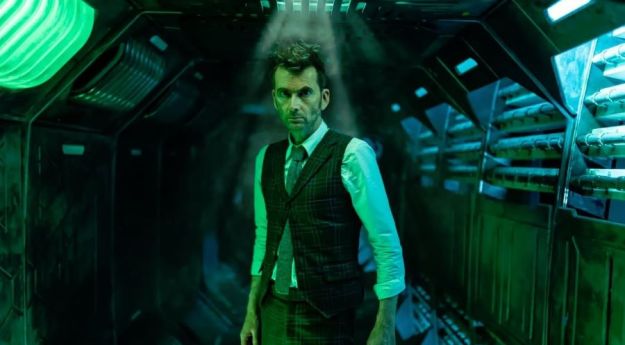
That put a damper on any hope I had about this being a worthwhile special to celebrate 60 years of ‘Doctor Who’. But I was determined to be open-minded about this. Maybe something would surprise me in this anniversary special. Perhaps I would come to like ‘Wild Blue Yonder’ as a story. 😐
After seeing the special on BBC TV though… Yeah, I couldn’t help be disappointed. Now, everyone is entitled to their opinions on this. If you love ‘Wild Blue Yonder’ as a ‘Doctor Who’ story, fine. That’s your prerogative. But for me, I felt this special was more or less on the same level as ‘The Star Beast’.
Possibly less than that, considering there aren’t that many callbacks to the show’s past to celebrate 60 years of ‘Doctor Who’. The callbacks that are present in the special… well, that’s something we’ll get into as we go through the review. In the meantime, let’s crack on with what this special is about.
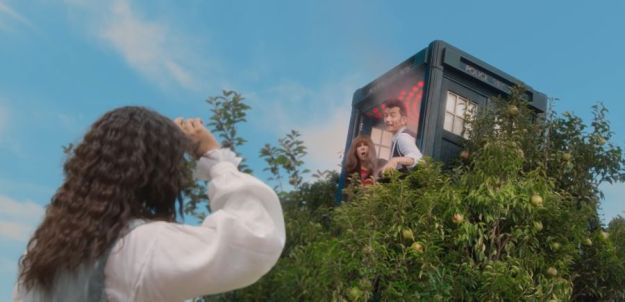
It starts with a teaser sequence where the Doctor and Donna in the TARDIS end up crashing into an apple tree in England in the year 1666. It’s where they come across Nathaniel Curtis as Isaac Newton. Nathaniel Curtis has worked with RTD before, as he appeared in the Channel 4 miniseries ‘It’s a Sin’.
He’s also guest starred in some ‘Doctor Who’ audio spin-off shows by Big Finish, including ‘U.N.I.T.’ and ‘Torchwood’. Nathaniel Curtis was one of the names redacted in the ‘DWM’ preview for ‘Wild Blue Yonder’, although was it really worth it, considering he only appears at the beginning of this story?
But hey, Isaac Newton is in this ‘Doctor Who’ special! He’s not a ‘sir’ yet, but this should be a good opportunity for RTD to make a connection to Isaac’s other ‘Doctor Who’ appearances over the years, such as ‘Circular Time: Summer’, a Big Finish audio story where the Fifth Doctor and Nyssa met him. 🙂
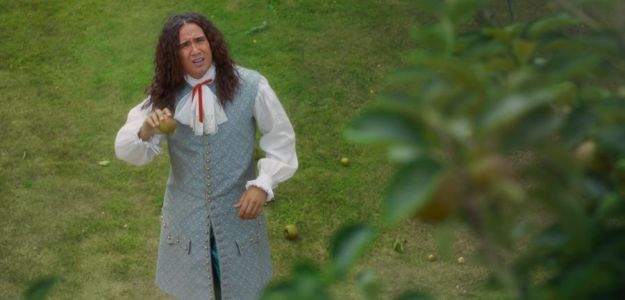
Or perhaps RTD could clarify whether the Fourth Doctor actually dropped an apple on Isaac’s head before explaining to him about gravity over dinner, as established in ‘The Pirate Planet’. Or, you know, perhaps not, as we don’t get to have any of those references mentioned in the special itself. 😦
In fact, ‘Wild Blue Yonder’ seems to contradict everything that’s established about Isaac Newton in ‘Doctor Who’ on TV and other mediums. We don’t even see the Fourth Doctor falling out of a tree on that occasion. We don’t get to see the Fifth Doctor do a fast bowler with an apple on Isaac either.
Sir Isaac claimed in ‘Circular Time: Summer’ that the apple struck him ‘full in face hard’ and his nose ‘bled for three days’. You don’t forget details like that, especially when you’ve listened to ‘Circular Time’ for umpteen times like I have. It astonishes me RTD didn’t match up all these details together.
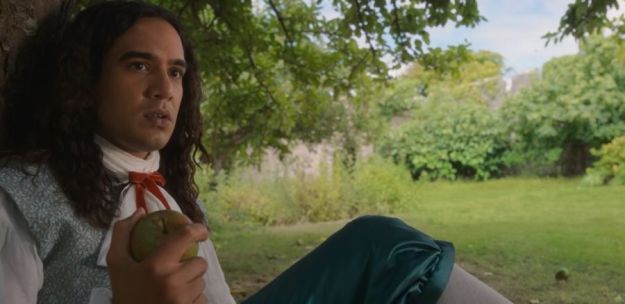
Also, and this is not to disrespect Nathaniel Curtis, but I found David Warner more convincing as Sir Isaac Newton in ‘Circular Time: Summer’. I’ve also found Sir Isaac’s depictions in the ‘Star Trek’ episodes like ‘Part I’ of ‘Descent’ from ‘TNG’ and ‘Death Wish’ from ‘Voyager’ far more convincing. 😐
When David Warner played Sir Isaac Newton in ‘Circular Time: Summer’, you could feel how formidable he was in playing him, and he played Isaac with such gravitas. It’s the same for John Neville and Peter Dennis in their ‘Star Trek’ episodes. I didn’t feel that when Nathaniel Curtis played Isaac. 😐
And of course, this leads to a joke that Donna makes about ‘the gravity of the situation’ she and the Doctor are in to give Isaac the idea of ‘gravity’. Dear Isaac tries to recall what Donna said, and for his discovery of the apples falling from the tree, he comes up with the word ‘mavity’ instead of ‘gravity’.
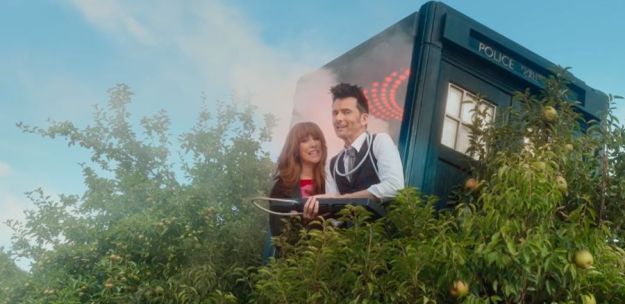
Yeah. 😐 Now if this had been left as a one-off joke at the beginning of the special at RTD’s expense, that would’ve been okay. Except, the word ‘mavity’ keeps coming back into the special when Donna uses it, even though she said the word ‘gravity’ at the special’s start to give Isaac Newton the idea. 😐
It seems the term ‘gravity’ has been retroactively erased from history to be replaced by the word ‘mavity’, although the Doctor retains some partial memory of ‘gravity’. From seeing the ‘Doctor Who Unleashed’ episode for ‘Wild Blue Yonder’, I think Catherine Tate struggled to get what was going on. 😀
This didn’t end up being a plot point to be used again in ‘The Giggle’, but I hope the Doctor will find a way to restore the timelines and have Isaac coming up with ‘gravity’ instead of ‘mavity’. Maybe he does when being the Fourth and Fifth Doctors, according to the aforementioned Isaac Newton stories.
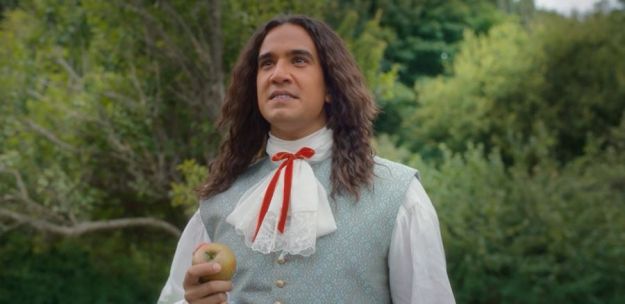
I’m surprised RTD didn’t clarify on these details. 😐 But then again, this might tie in to ‘the timelines and canon are rupturing’ thing that’s going on, according to ‘Destination: Skaro’, which hasn’t been resolved yet. Will RTD resolve this plot thread in the next special or in the next season? Who knows?
By the way, the Fourteenth Doctor warns Isaac Newton not to visit London in the year 1666. Again, another missed opportunity is made here to include a reference or perhaps a cameo of the Fifth Doctor, Nyssa, Tegan and Adric during ‘The Visitation’. That story happened in the year 1666 after all!
And I’ve barely begun talking about the main story of ‘Wild Blue Yonder’ itself. 😐 Anyway, the main story has Donna and the Doctor getting out of the TARDIS, as it releases fire from within, following the accidental spilling of Donna’s coffee onto the TARDIS console. I’m amazed it caused that big fire.

Incidentally, after checking out ‘Wild Blue Yonder’ first via BBC TV on its initial transmission on the 2nd of December 2023, I decided to revisit the special on BBC iPlayer. I did the same thing in seeing ‘The Star Beast’ first on BBC TV and then for a second time on BBC iPlayer before I got to review it. 🙂
In revisiting the specials on BBC iPlayer, you don’t realise how much more details you pick up on in seeing a ‘Doctor Who’ story a second time round. It’s very refreshing and rewarding. I hoped the same would happen again when it came to watching ‘The Giggle’ first on TV and again on BBC iPlayer.
The reason why I bring these points up is that from revisiting ‘Wild Blue Yonder’ on BBC iPlayer, I picked up that a song was being played in the TARDIS whilst breathing fire through its doors after the Doctor and Donna escaped. Donna picked up on this detail whilst she and the Doctor recovered.
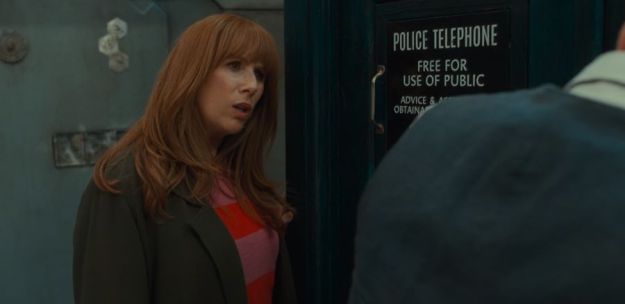
Apparently, the song being played is the titular ‘Wild Blue Yonder’ song. It’s a song that’s played for the U.S. Air Force. I played a sample of the song on Wikipedia to check that it matched to the one in the ‘Doctor Who’ special. It’s intriguing that it’s played in the special and it’s the title of this special. 🙂
Donna shares that she sang ‘Wild Blue Yonder’ in the choir at primary school, as they had a little concert every Christmas. Wilfred complained about that, as whilst the song sounds jaunty and fun, it’s actually about the military going to war. I would agree there, as war should never be encouraged.
I’m not entirely sure why ‘Wild Blue Yonder’ was played in the special and what purpose it served in the actual story. Maybe with more rewatches, I might get what’s going on, but it does seem random, and I probably would have called this special something else like ‘Friends Trapped on a Spaceship’. 😐
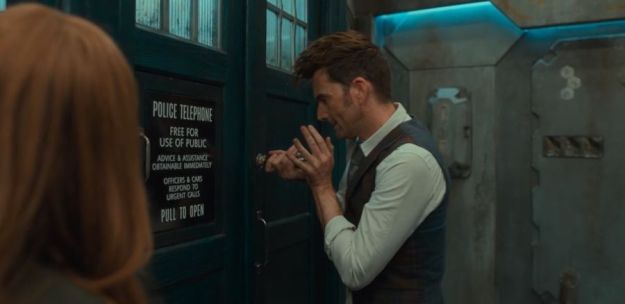
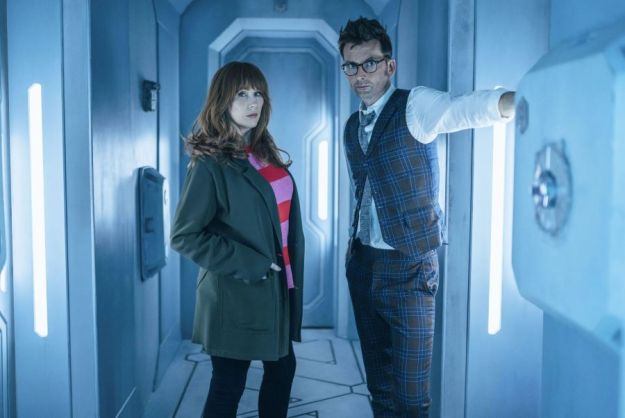
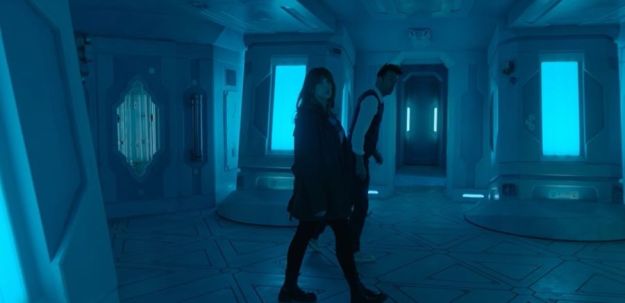
Anyway, the Doctor places his sonic screwdriver into the latch of the TARDIS in order to prime the ship to regenerate and heal itself from the damage it’s sustained. Whilst waiting for the TARDIS to heal, the Doctor and Donna decide to explore the ship. It appears to be vast and impressive at first. 🙂
They also spot a robot, whom they name Jimbo. He’s a fair distance away in the corridor. How the Doctor and Donna were able to see him from that distance, I’ve no idea. Even when revisiting ‘Wild Blue Yonder’ on BBC iPlayer, I still found it a challenge to make out that he was there in the corridor.
But the joy of exploring the ship doesn’t last long, as the Doctor and Donna hear the TARDIS dematerialising. They run back to find the ship gone. The Doctor reveals to Donna that the Hostile Action Displacement System (also called the HADS) has kicked in, and it caused the TARDIS to ‘run away’.
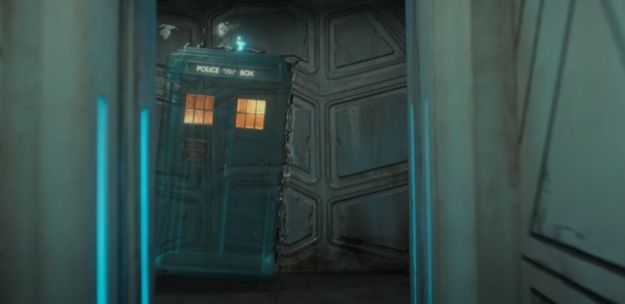
Well, I suppose the HADS is another callback to ‘Doctor Who’s past and I should be thankful that it’s in the special, since it was first introduced in ‘The Krotons’ with Patrick Troughton. But then, I would have preferred more past characters returning to ‘Doctor Who’ in these 60th anniversary specials. 😐
Initially, our TARDIS duo despair, but the Doctor reassures Donna that if they resolve whatever hostile action is aboard this spaceship they’re on, there’s a chance the TARDIS will return for them. I like the scene where the Doctor reassures Donna, even to the point of kissing her hand in the story. 🙂
Language, Donna! There was no need to swear in the special! 😀 Also, the Doctor switched off the HADS at some point in his life? That’s a bit irresponsible, Doctor. When did that happen? Was that when the Doctor was Peter Capaldi or Jodie Whittaker? This raises so many questions on that level.
And yeah, I know he claimed he was in orbit of something for three years before switching off the HADS, as it prevented him from landing anywhere. But surely the Doctor would have thought to switch on the HADS afterwards. He can’t be that forgetful, can he? Or wait, maybe he can be that. 😀
Anyway, the Doctor and Donna continue exploring the ship to find out what’s going on and what the hostile action is. They march down a long corridor before the environment shifts around them. A loudspeaker blares out loud the word ‘Fenslaw’. It’s a word very unfamiliar to the Doctor and Donna.
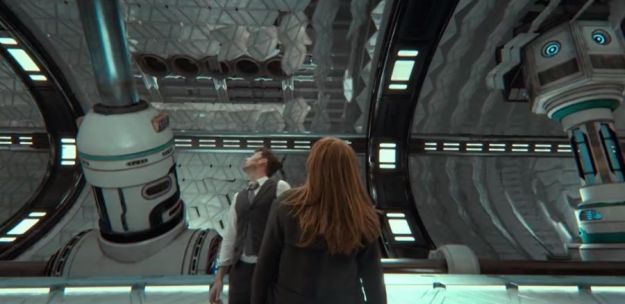
Now from watching the special first on BBC TV, I didn’t pick up so much on the word ‘fenlsaw’ and the other alien words that followed after that. Whether that was down to the plot being a bit complicated for me in first viewing the special or that the incidental music is too much, I don’t know. 😐
Upon revisiting the special on BBC iPlayer, I picked up that the words were actually alien numbers counting down to zero. It’s interesting how the Doctor and Donna discovered that in the special, especially as the TARDIS, which can translate any language, has left our heroic duo, due to the HADS.
The Doctor also doesn’t recognise the language, as he’s never spoken it before, which is intriguing. This is of course due to the fact that the spaceship is at the edge of the universe. As to why there’s a countdown to zero aboard the weird alien spaceship, well, we’ll return to that later in the review.
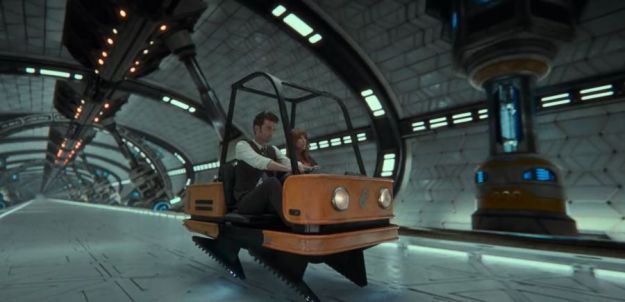
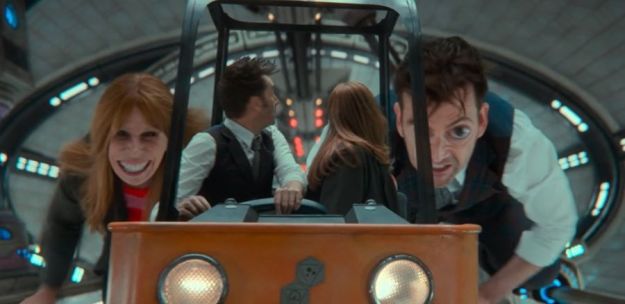
In order to get to Jimbo the robot a bit faster, the Doctor and Donna manage to acquire a small hovercraft, which was buried in the floor of the corridor. I liked it and found it funny when the Doctor mimicked Parker by saying “Your car, milady” and Donna replied with “Thank you, Parker!” 😀
Always good to have a ‘Thunderbirds’ reference in ‘Doctor Who’. 😀 After meeting up with Jimbo, and finding he’s slow-moving with no idea why, the Doctor and Donna get to a cockpit and decipher what’s going on from the ship’s computer, before they realise they’re at the edge of the universe. 😐
It’s fascinating and sad when the Doctor describes to Donna what it’s like to be a 100 trillion light years away from everything else, especially when there are no stars and the starlight hasn’t reached them yet. But then, surely the Doctor would have been through something like this before in ‘Utopia’.
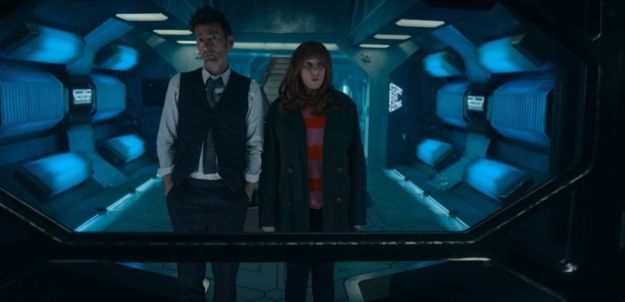
After the ship shifts again and the intercom blares ‘Coliss’, the Doctor and Donna wander into a room filled with drawers of baseplate repetition filaments. When the Doctor tasted one of the filaments, I thought for one moment that he had been poisoned. But it transpired he was playacting with Donna.
Don’t do that, Doctor! You had me worried there! 😀 Anyway, the Doctor asks Donna to move all the filaments in a lower drawer to a higher one. The ship is on idle and needs to be powered back up. The Doctor finds another room with a spindle and works on adjusting it whilst Donna is quite busy. 🙂
There’s a point where the Doctor comes back into the filament room with Donna, and Donna joins the Doctor in the room with the spindle. Initially, I thought this was bad editing and that we were crossing back and forth to two different points in time. But it soon transpires it isn’t like that at all.
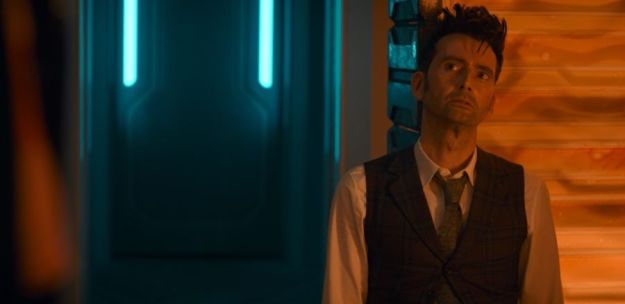
In fact, the Doctor with Donna in the filament room complains that his arms are too long and so does Donna with the Doctor in the spindle room. Our Doctor and Donna have been interacting with doppelgängers aboard the ship. I admit, that was quite a surprise when I watched it in the special. 🙂
The doppelgängers of the Doctor and Donna happen to have come from nothing and are called Not-Things. They can also grow and twist in size, especially when chasing after the Doctor and Donna in their hovercraft. This causes them to tangle together before blocking each other and the corridor. 😐
By the way, did Donna have to mention the ‘Venom’ films when talking about mass to the Doctor? The less I know or talk about the ‘Venom’ films, the better. Also, it astounds me to think RTD has seen the ‘Venom’ films in the time between leaving ‘Doctor Who’ and returning to showrun the show again.
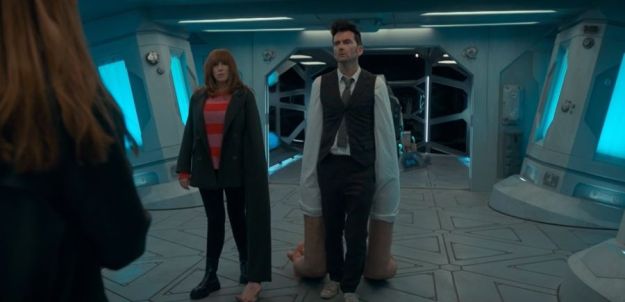
And… this is the surprise reveal of the villains in ‘Wild Blue Yonder’. These aren’t past villains in ‘Doctor Who’s 60-year-long history like Beep the Meep in ‘The Star Beast’ or the Toymaker in ‘The Giggle’. These villains happen to be original alien doppelgängers of the Doctor and Donna in this story.
Apparently, RTD wanted to have this special mostly devoted to David Tennant as the Doctor and Catherine Tate as Donna as its main cast. He wanted to have David and Catherine playing both the heroes and the villains. That’s why we don’t see anyone else aboard this spaceship apart from Jimbo.
Hmm. Yeah, this sort-of illustrates the problem I personally have with the 60th anniversary specials of ‘Doctor Who’ by RTD, starring David Tennant and Catherine Tate, even though I’ve heard and read a lot of opinions about ‘Wild Blue Yonder’ in saying that it’s great and that ‘Doctor Who’ is back on track.
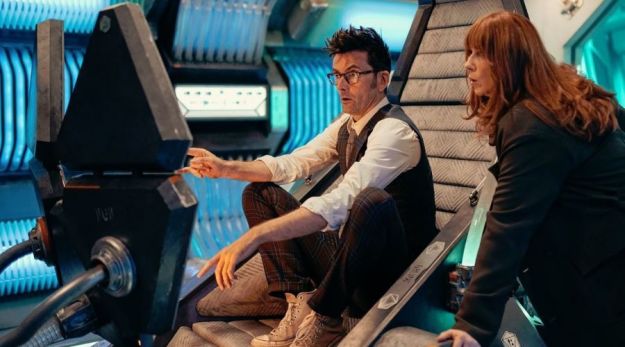
What is it about ‘Wild Blue Yonder’ as well as ‘The Star Beast’ that says to us that they’re celebrating 60 years of ‘Doctor Who’? Now, the quick answer to that would be, “Well, it’s because David Tennant and Catherine Tate are back. They were a Doctor and companion in the TV show’s history.”
The thing is, RTD could have taken a huge opportunity with returning as ‘Doctor Who’s showrunner by having many elements of the show’s past to be featured in the official 60th anniversary TV specials, and show off how a big ‘Doctor Who’ fan he is. He has this big toy box with so many characters to play with.
Instead, he decided to bring back mostly David Tennant and Catherine Tate to celebrate ‘Doctor Who’s very long history, thinking that would be enough to justify celebrating the 60th anniversary. Yes, he might have brought back a few more elements too, but it is mostly David Tennant and Catherine Tate.
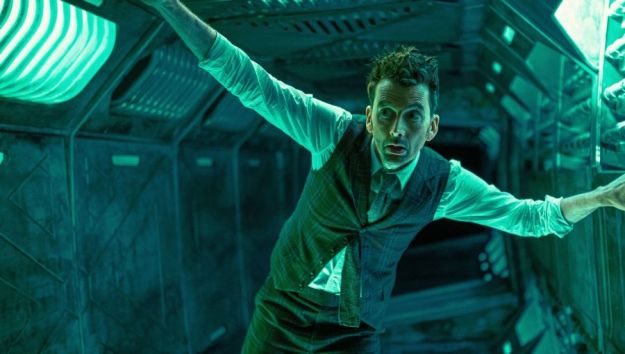
I’m sorry to break it to you, but ‘Doctor Who’ has been more about David Tennant and Catherine Tate. There have been many other contributors to the TV show’s history, such as William Hartnell, Patrick Troughton, Tom Baker and Peter Davison, who have played the Doctor at certain points in their lives.
To think that RTD isn’t catering for more than one era of ‘Doctor Who’ is mind-boggling. He could have taken advantage of including more past actors to play past characters in ‘Doctor Who’ to make ‘Wild Blue Yonder’ exciting. To make it more weird, bizarre and very fulfilling for ‘Doctor Who’ fans.
I was expecting Carole Ann Ford as Susan to make an appearance at some point in the 60th anniversary specials, especially from checking out the ‘Doctor Who’ 60th anniversary edition of the Radio Times. I expected it to happen in ‘The Giggle’ once we got to it. I didn’t know it wasn’t going to happen by that stage.
The point I’m trying to make here is that RTD doesn’t take full advantage of celebrating ‘Doctor Who’s long history when writing the anniversary specials. The specials so far have been unexciting and so underwhelming for me, despite the fact that David Tennant and Catherine Tate are the main stars.
RTD is favouring David Tennant and Catherine Tate more from his original era and he’s not including anyone else from other eras. That’s not how I would have celebrated 60 years of ‘Doctor Who’, as established in ‘The Thirteen+ Doctors’, the epic three-part 60th anniversary story that I’ve written.
And if you think I’m being too harsh on that score, then I turn your attention to the Not-Things. This is the first time they’re introduced in ‘Doctor Who’. What significance do they have in the show’s long history? Maybe they’re being set up as recurring ‘Doctor Who’ villains in Ncuti Gatwa’s era. 😐
Even if that were the case, surely RTD could’ve taken full advantage of making the ‘Wild Blue Yonder’ villains something else to connect to the show’s past. He had Beep the Meep from the comics in ‘The Star Beast’. Perhaps he could have had a Big Finish audio villain in one of the specials.
Maybe it could have been the Morass from ‘Kiss of Death’ to match the fact that the villains can change size in ‘Wild Blue Yonder’. Or it could be a villain dependent on sound like the sentient house from ‘The Chimes of Midnight’ and it could end up as a spaceship instead of a house for a change. 😐
Just something to link to the TV show’s long history in any medium, whether it’s from the TV series, the Big Finish audios, the books or such. I just wish that RTD had a villain from ‘Doctor Who’s past in ‘Wild Blue Yonder’ to justify this special is celebrating 60 years of the TV series. Is it really too much to ask?
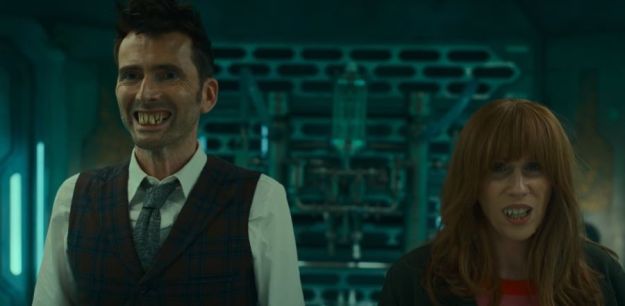
There’s one point where the Not-Thing versions of the Doctor and Donna have fangs, making them look like vampires. RTD could have made the Not-Things the vampires from ‘State of Decay’ instead. Or even better, have them be the Saturnyns, since they’re vampire-like in ‘The Vampires of Venice’.
If the idea was to establish the fact that David Tennant and Catherine Tate were playing doppelgängers in this ‘Doctor Who’ anniversary special, as ‘double trouble’ stories were often a thing in the TV show’s history, it’s not very clear to me to be enough of a callback to the TV show’s past.
A point is made that ‘Wild Blue Yonder’ is meant to be another scary ‘Doctor Who’ story, which is what the TV show – both classic and new – did a lot of. There are couple of scares for me, especially when Donna is in a dark corridor. But that’s not enough for me to celebrate 60 years of the TV show.
For the past 60 years, we’ve had anniversary specials that have celebrated landmark years in ‘Doctor Who’s long history. Traditionally, they’ve mostly found a way to acknowledge every aspect of the TV show, whether it’s large or small, and it’s a contrast to what the 60th anniversary specials are doing.
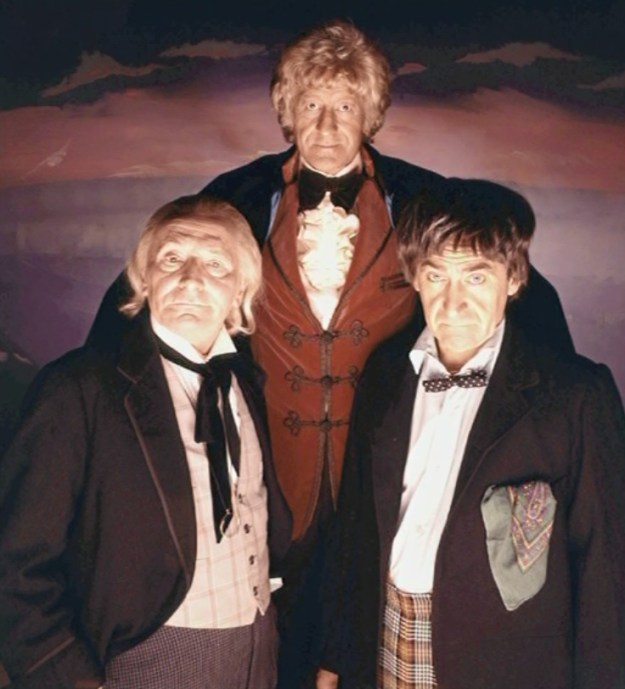
‘The Three Doctors’, whilst part of Season 10 in the classic TV series and mostly had Third Doctor era elements, found a way to acknowledge its 10-year history by having William Hartnell and Patrick Troughton returning to join and help Jon Pertwee’s Third Doctor to combat a very dangerous enemy.
‘The Five Doctors’, whilst a flawed story in many respects, was still able to acknowledge the TV show’s 20-year history by having not just most of the first five Doctors in the specials (including Tom Baker from ‘Shada’ 😀 ), but had returning companions and monsters to commemorate the occasion.
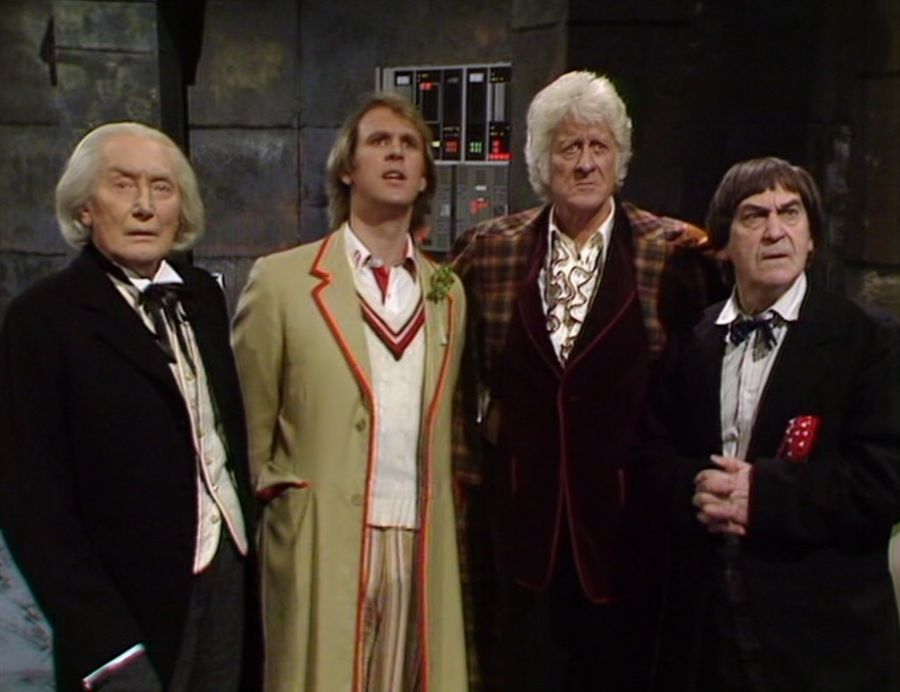
‘Dimensions In Time’ is arguably a repeat of ‘The Five Doctors’ and is criminally condensed to two five-minute episodes, but it still acknowledged the TV show’s 30-year history by having the first seven Doctors and their companions as well as monsters, and it was at least produced for Children in Need.
‘Zagreus’ is an attempt to do something different with the multi-Doctor story format, especially to celebrate 40 years of ‘Doctor Who’ by Big Finish, even if the results aren’t well-realised. But at least it had past actors who played Doctors and companions in it to commemorate the TV show’s history.
Even ‘The Day of the Doctor’, as much as I have issues with it in terms of being a celebration of 50 years of ‘Doctor Who’ on TV, is at least able to acknowledge the show’s long history by including clips of past Doctors at the story’s end and it at least featured all the Doctors in the story’s final shot.
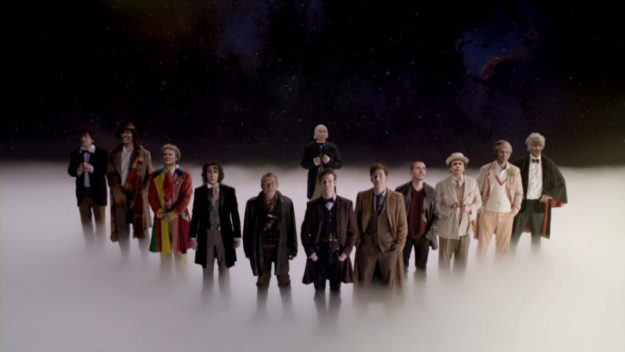
In no way is a ‘Doctor Who’ anniversary special going to be perfect, but I at least would like some effort to be put into the 60th anniversary specials by RTD to commemorate the occasion. And it astounds me and saddens me that RTD doesn’t want to do that, even for three anniversary TV specials. 😦
I personally felt more excitement about ‘Spider-Man: No Way Home’, which featured all three film versions of Spidey, including Tom Holland, Tobey Maguire and Andrew Garfield, working together as a team. That film is more enjoyable compared to what I’ve seen for ‘Doctor Who’s 60th anniversary.
I’ve enjoyed ‘The Lord of the Rings’ film trilogy more than what I’ve seen in RTD’s handling of the 60th anniversary celebrations. In fact, I expected the 60th anniversary specials by RTD to be more epic and matching to what I’ve seen in the ‘LOTR’ film trilogy compared to what was delivered to us.
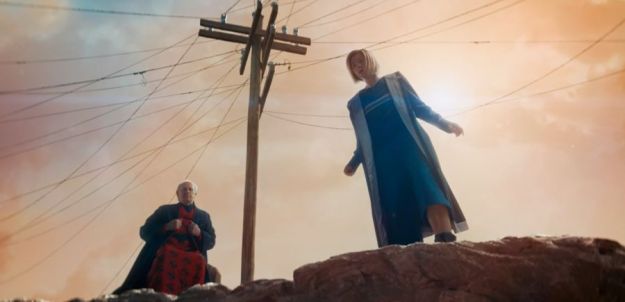
In my opinion, ‘The Power of the Doctor’ is a better and worthy celebration of the history of ‘Doctor Who’ on TV. And it’s not even an anniversary special! It’s a centenary special to celebrate 100 years of the BBC as well as being Jodie Whittaker and Chris Chibnall’s swansong in their era of the TV series!
I know, I know. This is a ‘me’ problem I’m having with the 60th anniversary specials. Other ‘Doctor Who’ fans are allowed to enjoy the 60th anniversary specials by RTD as much as they want to. Mainly because they’re content with the fact that it’s David Tennant and Catherine Tate appearing in them.
Perhaps in five or ten years from now, I might have a different opinion on how these 60th anniversary specials are presented to us. We haven’t even got to ‘The Giggle’ yet, but maybe my overall opinion on these specials will change significantly and I’ll be more appreciative of them in years to come.
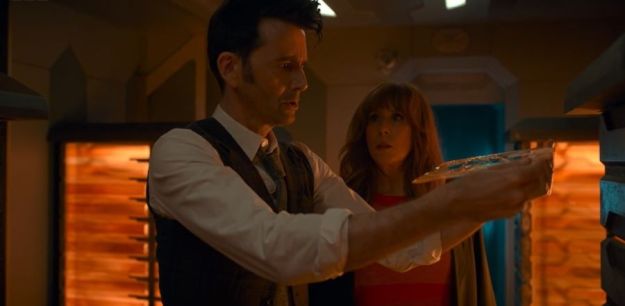
But for some reason, at this point in time in experiencing the 60th anniversary specials so far, I’m struggling to understand why they’re regarded highly by ‘Doctor Who’ fans and the general public. I don’t consider them exciting and worthy enough as proper ‘Doctor Who’ 60th anniversary specials.
They don’t scream to me as saying, “We’re celebrating 60 years of ‘Doctor Who’.” All I’m seeing with these 60th anniversary specials is, “We’re celebrating that David Tennant and Catherine Tate are back in ‘Doctor Who’. And our dear Russell T. Davies is the man in charge of the new TV show again.”
That isn’t enough to say to me that the TV show is celebrating 60 years of its long history. I feel that myself and the Divergent Wordsmiths, who put together the ‘A Sparkle of Doctors’ anthologies, have done a better job in celebrating ‘Doctor Who’s 60-year history compared to what RTD has done.
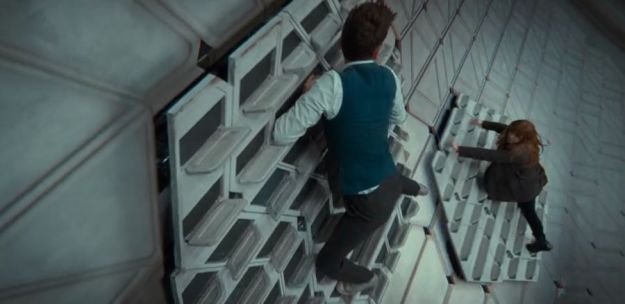
Anyway, back to ‘Wild Blue Yonder’. The Doctor and Donna end up separated from each other when the spaceship’s environment shifts again and the intercom blares out loud ‘Brate’. They try to find each other, but two pairs of Doctors and Donnas unite with each other in different parts of the ship.
The four struggle to convince their partners that they’re real, via conversations and by other means. One of the Doctors takes off his tie to prove to Donna that he’s real, but the Not-Things soon realise the mistakes they’ve made in convincing their counterparts, as they soon revert to their alien forms.
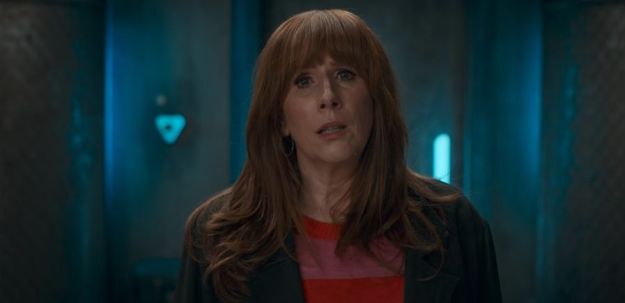
In the conversation the Doctor has with the Not-Thing Donna, interesting points are brought up as well as a callback to an arguably controversial thing that’s happened to ‘Doctor Who’ in recent years. Not-Thing Donna points out that the Doctor is not from Gallifrey and he has no idea where he came from.
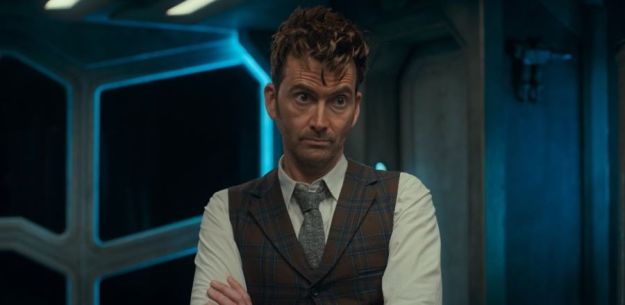
This is of course a reference to the Timeless Child reveal that occurred in the Jodie Whittaker/Thirteenth Doctor era, introduced by Chris Chibnall in ‘Ascension of the Cybermen’/’The Timeless Children’. There’s also a reference to the Flux in the Doctor’s conversation with Not-Thing Donna.
RTD has stated that he wasn’t going to change anything that had been set up by Chris Chibnall in the previous era with Jodie Whittaker, and he revealed that the history of both the Flux and the Timeless Child would be dealt with very slightly in ‘Wild Blue Yonder’. I’m glad that it’s included in this special.
As much as the Timeless Child reveal divided a lot of ‘Doctor Who’ fandom since 2020, I wasn’t one of those people who was against it. Quite frankly, I found it an interesting revelation in terms of the Doctor as a character and I’m pleased Chris Chibnall was able to explore it further when he did ‘Flux’.
I was afraid that RTD might have rewritten what Chris Chibnall introduced in his era of ‘Doctor Who’ with Jodie Whittaker, and I’m glad he’s managed to keep it intact so far in ‘Wild Blue Yonder’. Whether it’s going to be explored further in future seasons of RTD’s neo-era is yet to be determined.
But here, I’m glad RTD touched upon it slightly in the conversation between the Doctor and Not-Thing Donna, and I like that the performances between David Tennant as the Fourteenth Doctor and Catherine Tate as Not-Thing Donna reflect that well, since it’s something taken from a different era.
Incidentally, when the Not-Thing Donna posed as Donna, she claimed that she recalled what she saw when she was the DoctorDonna on Earth, including the Doctor’s memories of the Flux and the Timeless Child reveal. 🙂 I suspect that the real Donna also recalled these details in ‘The Star Beast’. 🙂
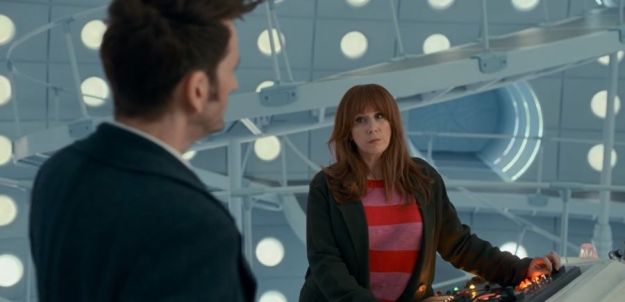
Yes, the DoctorDonna is gone now and the real Donna hasn’t retained those memories since the meta-crisis was expelled from her and Rose, but Donna did briefly remember that the Doctor was a woman once in Jodie Whittaker. So, it’s likely the real Donna would keep traces of the Doctor’s memories. 🙂
I liked it when David Tennant’s Doctor reflected that the Flux ‘destroyed half of the universe’ because of him, and it’s possible that the space station they’re on at the edge of the universe is in that half of the universe destroyed by the Flux. Interesting how RTD ties these connections together.
I also wonder if the entropy wave created by the Master in ‘Logopolis’ and destroyed Nyssa’s home of Traken is in that destroyed half of the universe caused by the Flux. There are so many possibilities to explore in that area, which I don’t think are answered very satisfyingly at this point in the TV series. 😦
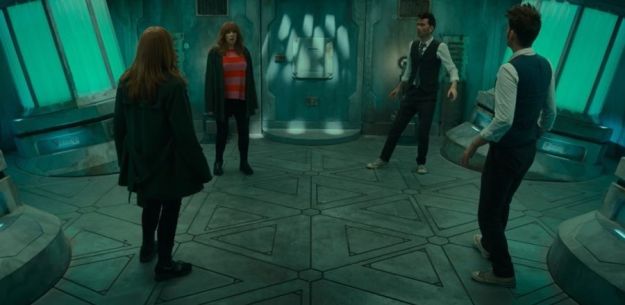
After the environment shifts again and the intercom blares ‘Gilvane’, the Doctor, Donna and their doppelgängers end up in a room together. There’s the Doctor and Donna figuring out who’s real and who’s not. The Doctor also lays down a line of salt on the floor to stop the Not-Things crossing over.
Whilst Not-Thing Donna counts every grain of salt as part of the superstition the Doctor claims to be real, the Doctor and Donna learn from the Not-Thing Doctor about what their kind is like. Apparently, the Not-Things wish to start a war and play games in the universe they’re yet to explore.
Not-Thing Donna soon realises that the Doctor lied about the line of salt, and she blows it away. The environment shifts again and the intercom blares ‘Stond’. It becomes clear that the Not-Things don’t know what’s going on, and soon, our heroes discover that it’s an alien countdown to zero aboard the ship.
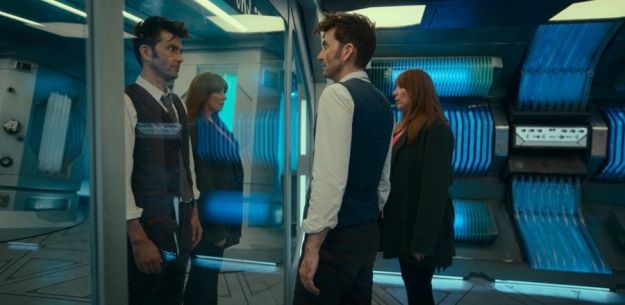
The Doctor and Donna struggle to think as little as possible to prevent their doppelgängers from knowing too much. It turns out the captain of the spaceship left via the airlock three years ago and committed suicide, but caused the spaceship to explode by detonating a slow-timed bomb on board.
I must confess, I’m not entirely sure how and why this is happening, considering things aren’t being slow in real-time for the Doctor and Donna. I suppose it’s on a slow countdown because the captain wanted to prevent the Not-Things from knowing what was happening, hence the suicide endeavour. 😐
After the alien numbers ‘Ratico’ and ‘Vandeen’ are blared out loud on the intercom and realising the spaceship is reconfiguring to be a slow bomb, the Not-Things try to stop Jimbo the robot from pressing the button to blow up the spaceship. 😐 The Doctor and Donna pursue their doppelgängers.
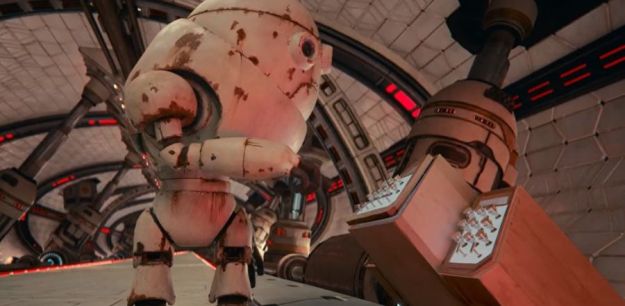
The Doctor speeds up the countdown and we’re now on the number ‘Blinss’. Donna and her doppelgänger end up tussling with each other whilst the Doctor chases the Not-Thing Doctor. After ‘Sensill’ is declared, the hostile action is resolved. The TARDIS returns, materialising for the Doctor. 🙂
One of the numbers in the countdown happens to be ‘One’ – Because of course it is! 😀 – and the Doctor tries to pick up one of the Donnas before the spaceship explodes. He brings in what he thinks is the real Donna, since she had answered his question satisfactorily, but she’s not the real Donna. 😮
The real Donna calls out to the Doctor, insisting that he’s got the wrong Donna. I found it tense when that revelation happened in the story, and I was afraid the Doctor was going to end up taking the Not-Thing Donna back to Earth and the real Donna would be blown up in the exploding spaceship. 😐
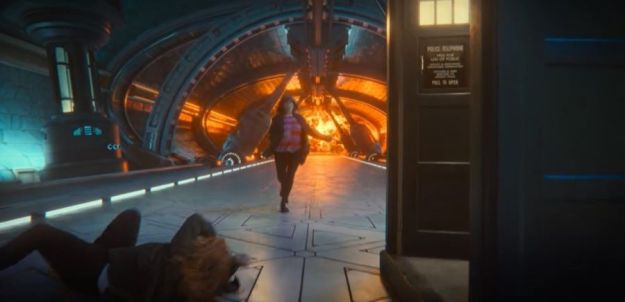
Thankfully, that didn’t happen, as once the final number ‘Tacsladia’ is declared and the robot pushes the button to cause the explosion, the Doctor works out that Not-Thing Donna is not the real Donna, as her arms are slightly too long. He ejects her back into the spaceship and the real Donna rushes in.
The Doctor and Donna hug each other as the TARDIS dematerialises, whilst the Not-Thing Donna and the Not-Thing Doctor are caught in the flames of the exploding ship. The Doctor and Donna travel back to London, reflecting on the adventure they’ve had and what could have been done differently.
As well as checking whether Donna remembers the Flux and the Timeless Child reveal (which she doesn’t), the Doctor is concerned about whether it was a good idea to use the salt as a superstition at the edge of the universe, as it could be dangerous, especially with the walls of reality being thin. 😐
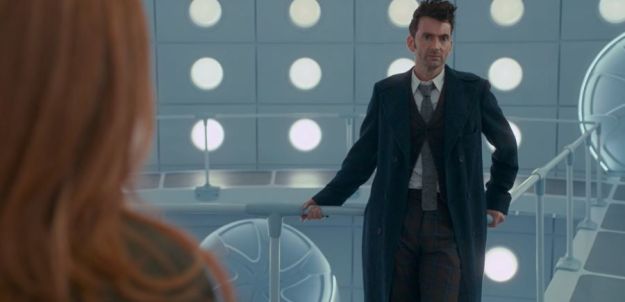
I wasn’t sure if this was setting up the Toymaker’s appearance in the next story ‘The Giggle’, but I found this very intriguing to ponder on. This is especially in whether it’ll be explained how the Toymaker ended up on Earth, following previous encounters on TV and in other mediums with the dear Doctor.
I liked that scene between the Fourteenth Doctor and Donna in the TARDIS towards the end of ‘Wild Blue Yonder’. It’s also sad that Fourteen and Donna’s time in ‘Doctor Who’ would be coming to an end soon, especially since their TV appearances appear to be rather limited to only three TV specials so far.
That’s something we’ll get to another time, of course. In the meantime however, we have the return of Bernard Cribbins as Wilfred Mott in the special! 😀 Yep! Wilfred is there to greet Donna and the Fourteenth Doctor upon their return to London on Earth – a day or two off, according to the Doctor.
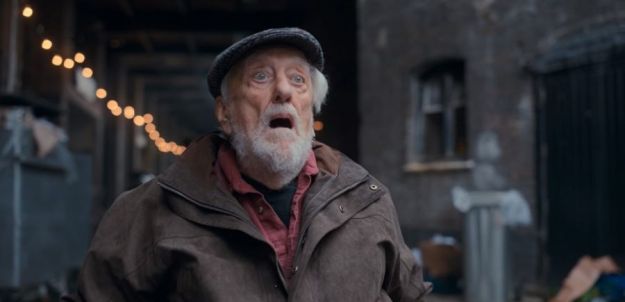
Bernard Cribbins was another name redacted in the cast list for ‘Wild Blue Yonder’ in ‘Doctor Who Magazine’. As well as him and Nathaniel Curtis who played Isaac Newton, the other cast member in this special was Susan Twist as Mrs. Merridew, Isaac Newton’s maid, who was at the story’s beginning.
It was so lovely to see Bernard Cribbins in ‘Doctor Who’ again. Having met and had photos with him at a couple of conventions in-between ‘The End of Time’ and ‘Wild Blue Yonder’, including Cardiff and London, it’s so poignant to see dear Bernard make his return as Wilfred in this anniversary special. 🙂
I also saw him in the 2018 film ‘Patrick’ on the big screen at the cinema before he made his comeback in ‘Doctor Who’. It’s very fitting that Bernard’s final on-screen credit appearance was in this ‘Doctor Who’ anniversary special, especially since he passed away not long after appearing in it.
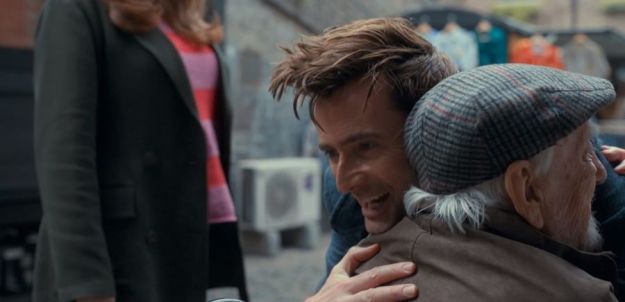
I wondered how much screentime Bernard Cribbins would have as Wilfred in the 60th anniversary specials and whether it would be all three of them. As I’ve gathered, he could only do this one scene at the end of ‘Wild Blue Yonder’, since he was not a well-man at the time he appeared in this special.
It’s a shame he didn’t get to do more as Wilfred before he passed away in July 2022, but I’m glad he was able to do this one scene with David Tennant and Catherine Tate, as it does come full circle with Wilfred’s character journey in ‘Doctor Who’. He’s overjoyed that Donna can now remember the Doctor. 🙂
It must have been hard for Wilfred to avoid telling Donna about the Doctor in the years where she couldn’t remember him whilst she was married to Shaun. It’s lovely to see that happy reunion between Wilfred, Donna and the Doctor, and the Doctor is absolutely delighted to see Wilfred again.
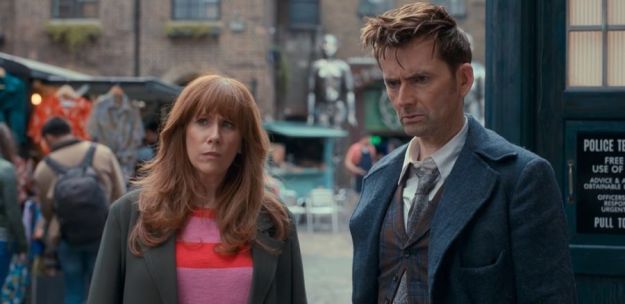
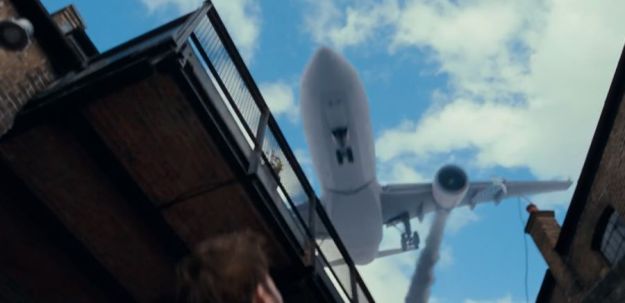
Unfortunately, the happy reunion doesn’t last long, as there’s soon trouble in the alley where the TARDIS has landed. Small explosions go off and riots break out. A plane also crash-lands nearby. Wilfred hopes the Doctor can save them, since it seems the entire world is about to come to an end.
Dear me, the Doctor never stops to rest, does he? After escaping an exploding spaceship at the edge of the universe, he must have hoped for a rest period where he can spend time with Donna and her granddad. What has caused these explosions and riots to occur? Will it be satisfying in the next story?
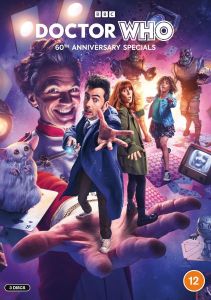
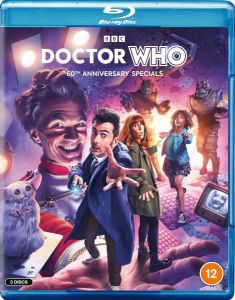
The DVD and Blu-ray special features for ‘Wild Blue Yonder’ are as follows. There’s the ‘Doctor Who Unleashed’ episode for ‘Wild Blue Yonder’, a scene breakdown on ‘Wild Blue Yonder’ with director Tom Kingsley, a behind-the-scenes featurette on ‘Wild Blue Yonder’, a behind-the-scenes trailer on ‘Wild Blue Yonder’, ‘The Cast Introduce the Villains in ‘Wild Blue Yonder’, ‘Behind the Scenes Fun with David and Catherine’, a video diary with David Tennant’s stand-in and a ‘TARDIS Set Tour’ with David Tennant and production designer Phil Sims.
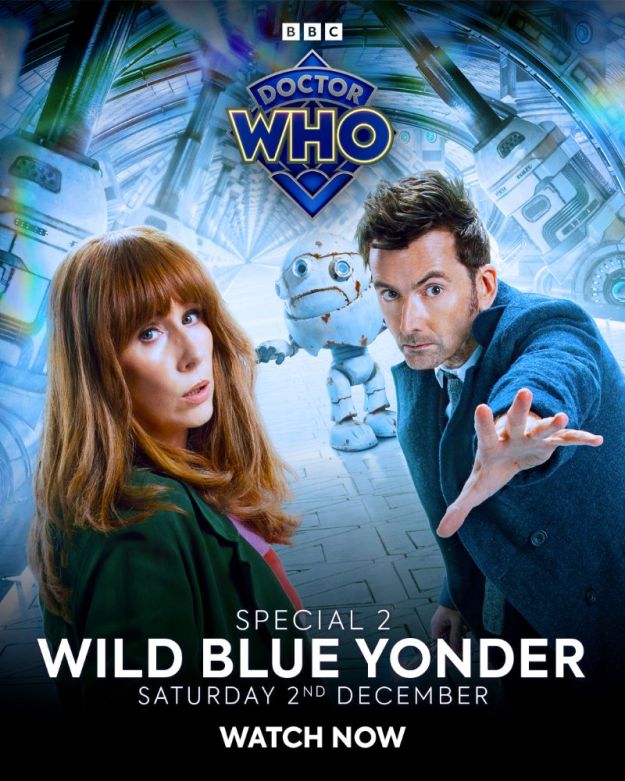
So, overall, I can’t say that I’m entirely satisfied with ‘Wild Blue Yonder’ as a 60th anniversary special of ‘Doctor Who’. It might be impressive in terms of the visuals and pushing the boundaries of what ‘Doctor Who’ can do. It has some very good performances from David Tennant and Catherine Tate. 🙂
But as a ‘Doctor Who’ special celebrating 60 years of the TV show, it didn’t do it for me. I expected more to be included in this anniversary special, especially with the teases and secrecy the special was put under to keep us guessing what it actually might be about. In the end, I felt rather disappointed by it.
I expected Russell T. Davies to deliver more in his 60th anniversary specials, with many callbacks to the TV show’s past instead of just having David Tennant and Catherine Tate. I figured the callbacks were being saved for ‘The Giggle’ next time. But at this point, I’ve not been impressed with these anniversary specials.
If you’ve enjoyed ‘Wild Blue Yonder’ more than me, I’m happy for you. I’m glad you got something out from this special as well as ‘The Star Beast’, especially with them featuring David Tennant as the Fourteenth Doctor and Catherine Tate as Donna, and they’re very good together as a TARDIS duo. 🙂
It was lovely to see Bernard Cribbins again, especially for his final appearance as Wilfred in ‘Doctor Who’. I’m also pleased that so far, RTD didn’t tamper with what Chris Chibnall introduced in his era, as the references to the Timeless Child reveal and the Flux are very welcome for me in this special. 🙂
Aside from that, ‘Wild Blue Yonder’ isn’t very exciting enough for me as a ‘Doctor Who’ 60th anniversary special. I honestly hoped that ‘Wild Blue Yonder’ would’ve exceeded my expectations in celebrating the TV show’s past. As it turned out, it did the opposite, which was very unsatisfying for me.
At this point, I was hoping that ‘The Giggle’ would turn out to be a satisfying conclusion to the 60th anniversary celebrations of ‘Doctor Who’ as well as a satisfying conclusion to the Fourteenth Doctor and Donna run of TV adventures. Would it turn out alright in the end? Would ‘The Giggle’ be worthwhile?
‘Wild Blue Yonder’ rating – 5/10
‘DOCTOR WHO – WILD BLUE YONDER’
Please feel free to comment on my review.
Countdown to Tacsladia
Can the Target novelization/audiobook change my mind about ‘Wild Blue Yonder’?
I’ve made it clear in my review on the TV story that I’m not really a fan of ‘Wild Blue Yonder’. Whilst it was worth seeing Bernard Cribbins in the special, I can’t say I was won over by it. I consider it as the weakest out of the three TV specials by Russell T. Davies in celebrating 60 years of ‘Doctor Who’.
That’s mainly down to the fact that there was this expectation I had of the special containing genuine surprises to provide callbacks to the show’s long history, which never materialised. The only thing to make it worthy a 60th anniversary special is that David Tennant and Catherine Tate are in it.
And I stress, I appreciate people who really liked ‘Wild Blue Yonder’, because for them, it’s breaking new boundaries in terms of what ‘Doctor Who’ can do in being a scary episode and it showcases David Tennant and Catherine Tate. But that isn’t enough for me to celebrate 60 years of the show. 😐
On reflection though, I do consider ‘Wild Blue Yonder’ to be a better ‘Doctor Who’ story than some of the stories we’ve had in the Ncuti Gatwa/Fifteenth Doctor era. It’s not the anniversary celebration fest I wanted, but it’s solid enough in terms of telling a very tense adventure from beginning to end.
So, with that in mind, does that mean the Target novelization/audiobook by Mark Morris makes the story better? Can I obtain more from the story in terms of it being a worthy 60th anniversary celebration of ‘Doctor Who’ or is it basically a note-for-note translation of the TV story into prose? 😐
Well, it’s leaning more towards the latter than the former. And look, I appreciate Mark Morris is doing a straightforward Target novelization based on the script by RTD. I understand that. I wouldn’t have expected this novelization to be anything different compared to what’s in the TV story.
But it’s a shame that Mark Morris didn’t take on the opportunity to include more continuity references from the TV show’s history to provide more elements and establish this story is celebrating 60 years of ‘Doctor Who’. Perhaps there wasn’t enough time to do that in novelizing it. 😐
Then again, I wouldn’t have wanted this to be ‘The Day of the Doctor’ Target novelization/audiobook. Whilst Steven Moffat added new things to the story in the novelization, he also omitted elements from the U.N.I.T. Black Archive scene, such as Nyssa and Tegan’s photo not included.
So, it’s just as well we got a straightforward novelization in ‘Wild Blue Yonder’ by Mark Morris in much the same way we got a straightforward novelization in ‘The Star Beast’ by Gary Russell. I’m sure that’s going to be the case when checking out James Goss’ Target novelization for ‘The Giggle’.
But yes, this is the second of the trilogy of novelizations for the 60th anniversary TV specials of ‘Doctor Who’. Mark Morris is a ‘Doctor Who’ writer I’ve come across before, as he wrote ‘Plague of the Daleks’, the third story of ‘The Stockbridge Trilogy’ by Big Finish with Peter Davison and Sarah Sutton.
He’s also written stories like ‘Moonflesh’ with the Fifth Doctor and Nyssa, ‘Freakshow’ with the Fifth Doctor, Tegan and Turlough, ‘False Gods’ in ‘Forty-Five’ with the Seventh Doctor, Ace and Hex, ‘House of Blue Fire’ with the Seventh Doctor, and ‘Ghosts of India’ with the Tenth Doctor and Donna.
I believe this is the first time that Mark Morris has penned a Target novelization of ‘Doctor Who’, and to be fair, he does a very good job in novelizing ‘Wild Blue Yonder’ for prose. Then again, Mark Morris is an author of books as well as audio stories by Big Finish, so it shouldn’t be a huge surprise.
In audiobook terms, the ‘Wild Blue Yonder’ novelization is read by Bonnie Langford who plays Melanie Bush in ‘Doctor Who’, both on TV and audio. And this is where I again question the choices made by the BBC in terms of selecting who’s to do whatever novelization of a ‘Doctor Who’ story on audio.
You see, the reader of ‘The Star Beast’ was Jacqueline King, and that’s fine, since she was in the TV story itself. Bonnie Langford wasn’t in ‘Wild Blue Yonder’ at all, as she would return to play Mel in ‘The Giggle’. How come she didn’t read ‘The Giggle’ Target novelization instead of ‘Wild Blue Yonder’?
It’s even more bizarre when you find that Dan Starkey is the reader of ‘The Giggle’ and yet he didn’t appear in that story at all. I was hoping there would be a mistake in that Dan Starkey would be reading the ‘Wild Blue Yonder’ novelization instead and Bonnie Langford would read ‘The Giggle’ novelization. 😐
Now, I stress, I don’t think Bonnie Langford is a bad reader for ‘Wild Blue Yonder’. On the contrary, she’s very good. But I’m surprised it wasn’t David Tennant or Catherine Tate who read this story to match that they were in it. How come Susan Twist or Nathaniel Curtis weren’t chosen to read this? 😐
It doesn’t quite match the emotional intensity of the story when you have someone like Bonnie Langford reading the story on audio and she had no part to play in the TV version itself. But hey, these are random choices made by the BBC, so I shouldn’t expect this pattern to make any sense. 😀
The story is divided into eleven chapters with a prologue at the beginning. Interestingly, the chapter titles aren’t numbered. They allude to the mystery of the unknown language aboard the spaceship that the Doctor and Donna visit, and each chapter is revealed to be counting down from ten to zero.
As in the TV story, the penultimate chapter is translated into ‘One’ because the Fourteenth Doctor and Donna have uncovered the alien captain’s plan to self-destruct the spaceship to defeat the Not-Things, as the TARDIS returns following the end of the Hostile Action. That’s actually not a bad thing.
I like how the chapter titles match to the alien-numbered countdown aboard the spaceship, as established in the TV story. So, we go down from ‘Fenslaw’ to ‘Coliss’ to ‘Brate’ to ‘Gilvane’ to ‘Stond’ to ‘Ratico’ to ‘Vandeen’ to ‘Blinss’ to ‘Sensill’ to ‘One’ and finally to ‘Tacsladia’. All really good!
The prologue is interesting. Obviously, it’s the opening scene with Isaac Newton where the TARDIS crashes into a tree and the Doctor and Donna meet him. And because this is a novelization, I can imagine a young David Warner playing the character from ‘Circular Time: Summer’ instead of Nathaniel Curtis.
Nothing against Nathaniel Curtis, but he doesn’t exactly match to how I’ve seen Sir Isaac Newton in real history portraits as well as in ‘Star Trek’ episodes like ‘Descent’ from ‘TNG’ and ‘Death Wish’ from ‘Voyager’. So, a novelization allows me to visualise Isaac Newton in real history as opposed to on TV.
Mind you, I’m surprised Mark Morris didn’t take on the opportunity to include a continuity reference of Tom Baker’s Fourth Doctor dropping an apple on Isaac’s head, as established in ‘The Pirate Planet’. Or the Fifth Doctor bowling an apple at Isaac that caused his nose to bleed for three days. 😐
Then again, if we’re take the Doctor’s words from ‘Destination: Skaro’ that ‘the timelines and canon are rupturing’, it could mean that what was said in ‘The Pirate Planet’ and ‘Circular Time: Summer’ doesn’t matter anymore. Or maybe the Doctor was lying on those occasions. It’s bound to happen. 😦
Either way, it makes ‘Wild Blue Yonder’ less of an anniversary special if it won’t follow up on details established in previous stories concerning connections to historical characters. Then again, we’re talking about a TV show that’s known for being an abysmal offender in continuity, so there you go.
And of course, we have the ‘mavity’ thing instead of ‘gravity’ in the book too. Now, this might be an amusing in-joke that’s spread during the neo-RTD era, as it comes up again in ‘The Church on Ruby Road’, but this thing annoys me even more when checking out the ‘Wild Blue Yonder’ novelization. 😦
I expect it to be in the dialogue, fine, but when it comes to paragraphs describing events in the story and it’s ‘mavity’ instead of ‘gravity’, it’s cringy. I hope kids that watch ‘Doctor Who’ these days aren’t going to be confused when doing science exams, since they might write ‘mavity’ instead of ‘gravity’.
Apparently, there’s dialogue that switched around or slightly altered in some places of the story compared to how it was spoken on screen. Honestly, I didn’t really notice it when checking out the novelization, since I didn’t watch the TV story whilst reading and hearing it, as I felt I didn’t need to.
That’s not to say I wasn’t interested. It’s just I felt I knew what was coming when it came to checking out the novelization, having seen ‘Wild Blue Yonder’ a few times in 2023. I think I might have noticed a few alterations to certain pieces of dialogue in the novelization, but it’s not too much to harp on. 😐
Going back to the prologue, apparently, Isaac Newton had been up all night completing ‘De analysi per aequationes numero terminorum infinitas’. This translates to ‘On Analysis by Equations with an infinite number of terms’ or ‘On the Analysis by means of equations of an infinite number of terms’.
It’s a mathematical work by Isaac Newton. Not that I’m expecting to know that, but it’s nice that Mark Morris adds more historical detail to Isaac Newton compared to how the TV story depicts him. Isaac has also been completing the location of the scene being his family home of Woolsthorpe Manor. 🙂
That’s in the Lincolnshire hamlet of Woolsthorpe-by-Colsterworth. Again, not expecting you to know that, and it’s nice that these details appear in the Target novelization in order to provide a little more insight and historical details about who Isaac is as a person and what he did with his life back then. 🙂
Apparently, dropping a cup of tea into the TARDIS controls doesn’t do any harm, according to the Doctor, whereas dropping a cup of coffee does. Wow! Who knew that coffee was more dangerous than tea? Maybe that’s why I go for tea more compared to having drinks of coffee at home or at work. 😀
There’s an additional moment in the Target novelization where Donna is startled by her reflection in a door and she thinks it’s her Not-Thing self. This, apparently, wasn’t in the TV story and I didn’t recognise it when checking out the novelization/audiobook, so it’s a good new moment to include. 🙂
In the penultimate chapter ‘One’ where the TARDIS returns to the spaceship, the Doctor opens the door by clicking his fingers. I checked the episode on BBC iPlayer to be sure and apparently, the Doctor didn’t click his fingers, since he just took out the sonic screwdriver and ran into the TARDIS. 🙂
I suppose that is a kind-of sort-of callback to Steven Moffat’s writing, particularly as the Doctor tends to open the TARDIS by clicking his fingers when he was Matt Smith and Peter Capaldi. But I don’t know if that’s worthy enough for a 60th anniversary callback, as it’s a more recent addition to the TV series.
And there’s an additional moment where the Doctor physically turns off the Hostile Action Displacement System (HADS) on the TARDIS console and it takes longer for him to realise he picked up the wrong Donna. In the TV story, it’s almost like he already knew the Not-Thing Donna wasn’t really her.
Chapters like ‘Sensil’ and ‘One’ are shorter compared to the final chapter ‘Tacsladia’. When I was checking out the audiobook on Audible, ‘Sensil’ and ‘One’ were like 8 to 9 minutes whilst ‘Tacsladia’ is 25 minutes and 54 seconds. I suppose it makes sense for the final chapter of the story to be longer.
In the final chapter, we explore more of Donna’s feelings of being left behind when the spaceship is about to explode. Thankfully, Donna is saved to be picked up by the Fourteenth Doctor after he throws Not-Thing Donna out of the TARDIS. We also get Not-Thing Donna’s reaction to being blown up in the story.
As well as the Not-Thing Doctor’s reaction! 😀 I like how the chapter ends with the Fourteenth Doctor and Donna returning home to the London alley where they left off and are greeted by Wilfred Mott. It’s a lovely reunion between the three characters in prose form before disaster happens again in London.
There’s an Acknowledgments page at the end of the ‘Wild Blue Yonder’ novelization, which is read by Bonnie Langford following the closing credits. Apparently, the book is dedicated to Paul Simpson for his friendship and support to Mark Morris, and it’s dedicated to the memory of Terrance Dicks. 🙂
The ‘Wild Blue Yonder’ Target novelization/audiobook by Mark Morris is very good. I wouldn’t say it changes my mind entirely about how I feel regarding ‘Wild Blue Yonder’ as one of the 60th anniversary specials, but it’s certainly a lot better than some episodes shown in Ncuti Gatwa’s era.
Mark Morris does a good job in novelizing the TV script by Russell T. Davies into prose form and it’s been great to check out the story with Bonnie Langford reading it in the audiobook version. It’s been nice to break down the story a bit at a time compared to checking out the story in its TV version.
The issues I have with ‘Wild Blue Yonder’ aren’t going to go away for me and I feel it’s a very underwhelming instalment in the 60th anniversary specials. But the novelization/audiobook has made my experience of the story just a little better, as I appreciate the Fourteenth Doctor and Donna more. 🙂
As I’m working on ideas to develop a potential 70th anniversary series of ‘Doctor Who’ in 2033, there might be a possibility I’ll look back to ‘Wild Blue Yonder’ for inspiration, especially when it comes to telling say, a low-key story with a few anniversary elements to them. We’ll just have to see.
‘Doctor Who – Wild Blue Yonder’ rating – 7/10
| The previous story
For the Fourteenth Doctor was
For Donna was
For Wilfred was |
The next story
For the Fourteenth Doctor is For Donna is For Wilfred is |
| Return to The Fourteenth Doctor’s Timeline | |
| Return to Donna’s Timeline | |
| Return to Wilfred’s Timeline | |
| Return to The Doctors’ Timelines Index | |
| Return to The Companions’ Timelines Index | |
| Return to Doctor Who Timelines | |
| Return to Doctor Who | |
| Return to Sci-Fi |
 Bradley's Basement
All the troubling issues with Isaac Newton’s role in this one aside, and I personally settle for the 4th Doctor’s mention of Newton in The Pirate Planet, Wild Blue Yonder will always be a superb one for me in the same way that Planet Of Evil (my first Doctor Who experience as a kid) certainly was. In the notion of finding such awareness-raising dangers at the edge of the universe are concerned, as Doctor Who in its own way can always do quite uniquely, this story reassured me how serious our Whoniversal adventures could still be even when taken to some wild extremes. I loved the look of the ship and the talents of David and Catherine are honored by a most particularly creative enemy, coupled with the very special and final return of Bernard as Wilfred. So as usual, Whovians can be most reassuringly free to enjoy a Doctor Who story for their own reasons. Thank you, Tim, for your review.
LikeLiked by 2 people
Hi scifimike,
Thanks for sharing your thoughts on ‘Wild Blue Yonder’. I know I’m going to regard this as the weakest of the three 60th anniversary specials of ‘Doctor Who’, but I appreciate how much you enjoyed it. It is decent enough to watch and has some intriguing ideas featured, despite the special not having many callbacks to the TV show’s past to celebrate its 60-year-history. It was lovely to see the late Bernard Cribbins as Wilfred Mott in this special, and I’m glad he was able to record his final scene with David Tennant and Catherine Tate before he sadly passed away.
Many thanks for your comments.
Tim 🙂
LikeLiked by 1 person