
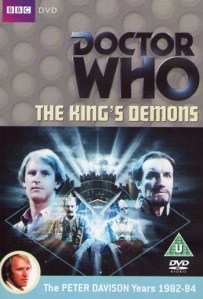

‘THE KING’S DEMONS’
Please feel free to comment on my review.
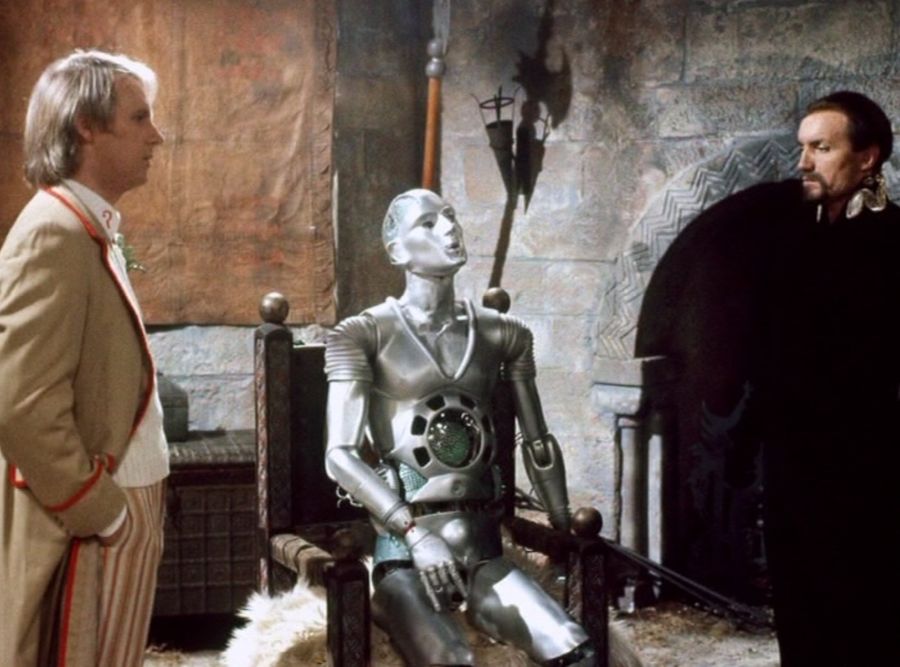
Kamelion as Bad King John and the Master with the Fifth Doctor, Tegan and Turlough



And here we are on what is considered technically the season finale to Season 20 of the classic ‘Doctor Who’ TV series – ‘The King’s Demons’, a two-part story by Terence Dudley. Except, of course, this wasn’t meant to be the season finale as initially planned.
Like Season 17 before it with ‘The Horns of Nimon’ and ‘Shada’, ‘The King’s Demons’ was meant to be the penultimate story in Season 20. Originally, there was going to be a four-part story by Eric Saward to close off Season 20 and it was going to feature the Daleks. 🙂
Yes, that’s right! The Daleks were meant to appear in the 20th anniversary season of ‘Doctor Who’! That would have been exciting! 🙂 And very fitting, considering the Daleks helped to get ‘Doctor Who’ to where it is today with being memorable foes of the Doctor.
The story was originally called ‘The Return’ – sometimes ‘Warhead’. I’m not sure which is the accurate title, to be honest. Regardless, it was part of the original production schedule for Season 20, and it’s a shame the four-part Dalek season finale didn’t occur.
Because of the industrial action that happened at the time in making Season 20, which had affected ‘Terminus’ severely, it had a knock-on effect for the rest of the season, particularly with ‘Enlightenment’ and ‘The King’s Demons’ getting new production dates.
Unfortunately, no production dates could be provided for ‘The Return’ (‘Warhead’). Like I said, it’s a shame the story didn’t get made, as it would have helped to close Season 20 off on a high. Not on a whimper, as I’m sure many would argue ‘The King’s Demons’ did.
Thankfully, ‘The Return’ didn’t suffer like ‘Shada’ did with being completely cancelled. It saw the light of day with being rescheduled for a slot in Season 21’s production schedule. The story became ‘Resurrection of the Daleks’ and as two 45-minute episodes.
But that’s for another time. Incidentally, when originally slotted for Season 20, the story was going to be directed by Peter Grimwade, who previously directed ‘Full Circle’, ‘Logopolis’, ‘Kinda’ and ‘Earthshock’, and he wrote ‘Time-Flight’ and ‘Mawdryn Undead’.
When ‘The Return’ was postponed, Peter Grimwade took members of the production team out for a meal to soften the blow. He also meant to take the producer John Nathan-Turner out for a meal on a separate occasion. This didn’t go down very well, sadly.
JNT felt slighted that he hadn’t been invited to the first meal with members of the production team. Thus, JNT and Peter Grimwade fell out with each other. Grimwade wasn’t allowed to direct more ‘Doctor Who’ stories, including ‘Resurrection of the Daleks’.
This is a shame, as the misunderstanding could have been resolved so easily between JNT and Peter Grimwade. Thankfully, Eric Saward promised that Grimwade could write a third story for Season 21, which ended up being ‘Planet of Fire’. Again, for another time. 🙂
The Daleks, whilst not appearing in Season 20 itself, did appear in the 20th anniversary special that followed after ‘The King’s Demons’ called ‘The Five Doctors’. Or rather one Dalek as it turned out, but that’s something for us to talk about when we get to that tale.
Going back to ‘The King’s Demons’, this happens to be Terence Dudley’s third ‘Doctor Who’ story as a writer. He previously wrote two stories in Season 19 with Peter Davison – ‘Four to Doomsday’ and ‘Black Orchid’ (the latter is my absolute personal favourite story).
He also directed ‘Meglos’ with Tom Baker in Season 18 and wrote the ‘K-9 & Company’ one-off TV special called ‘A Girl’s Best Friend’. For the most part, I’ve enjoyed Terence Dudley’s ‘Doctor Who’ contributions, but ‘The King’s Demons’ is a bit of an exception. 😐
I’ll explain more on what I mean by that as we go through the review, but I find ‘The King’s Demons’ to be the weakest of the three ‘Doctor Who’ stories penned by Terence Dudley. There are other contributing factors to this, which I’ll get into more depth later on.
‘The King’s Demons’ also happens to be the first and only ‘Doctor Who’ story directed by Tony Virgo. Tony Virgo previously directed three episodes of ‘Angels’ in 1982. I’ve checked and apparently, Mark Strickson is in one of the episodes that Tony Virgo directed. 😀
Tony Virgo would go on to direct six episodes of ‘Emmerdale Farm’ in 1985, fifteen episodes of ‘EastEnders’ from 1986 to 1988, and eight episodes of the ‘All Creatures Great and Small’ BBC TV series in Series 5 and 6 from 1988 to 1989, which I’ve seen.
It’s a shame that Tony Virgo didn’t get to direct more ‘Doctor Who’ stories, as from seeing him being interviewed in the ‘Back to Bodiam’ Blu-ray making-of documentary and hearing him in his DVD audio commentary for ‘Part One’, he’s clearly enthusiastic. 🙂
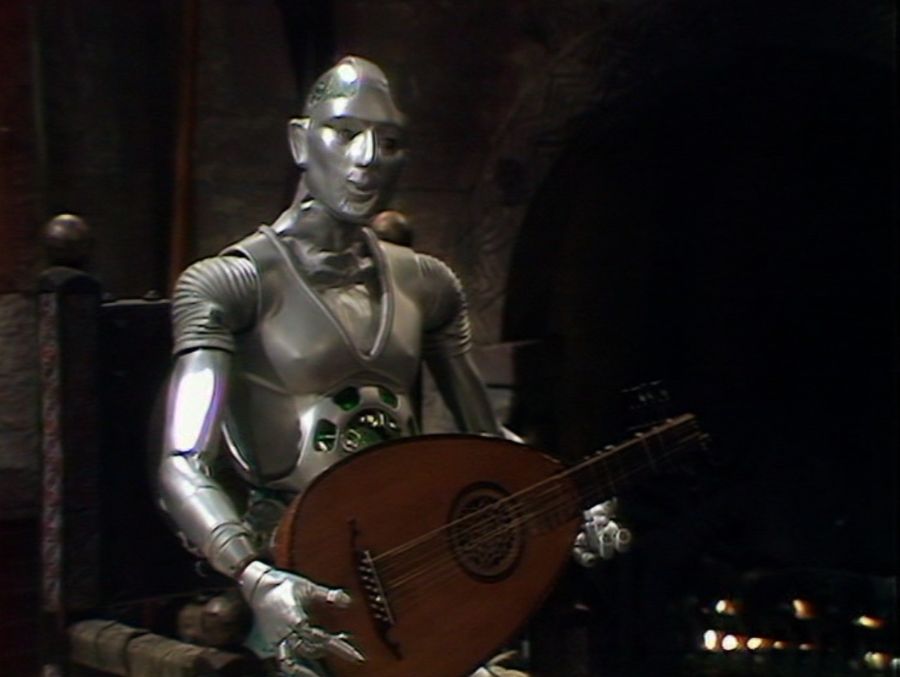
Unfortunately, there were production problems concerning the making of ‘The King’s Demons’, particularly with the introduction of a new robot companion in the form of Kamelion. This is one of the things that I’ll get into more as we go further into the review itself.
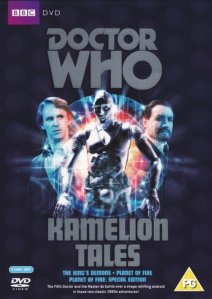
But yes! Kamelion – the robot companion of the Fifth Doctor in ‘Doctor Who’. When I first saw ‘The King’s Demons’ on DVD, it was originally part of the ‘Kamelion Tales’ DVD box set. It contained two TV stories, including ‘The King’s Demons’ and ‘Planet of Fire’. 🙂
It’s very easy to forget Kamelion at times, especially when you consider that this is a ‘Doctor Who’ companion that didn’t work. Not because of a lack of character, although it would’ve helped if we got to know more about Kamelion’s character in ‘Doctor Who’. 😦
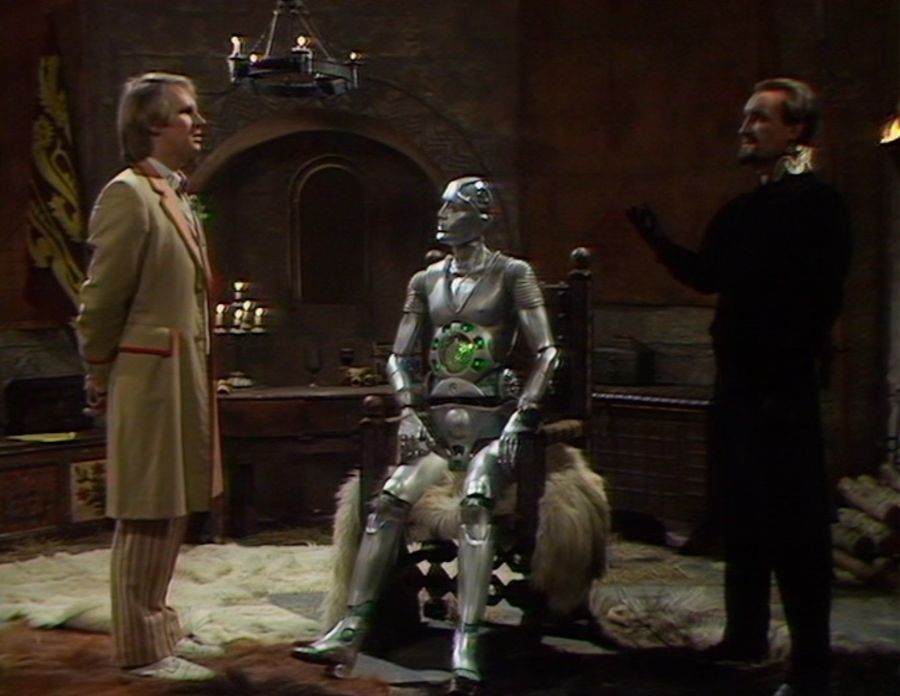
But very sadly, the robotic prop used as Kamelion in the ‘Doctor Who’ stories he was in malfunctioned a lot, causing a lot of behind-the-scenes tensions. Believe it or not, Kamelion was an actual robot that the production team hoped to use in the TV series. 😐
The producer JNT was very convinced that Kamelion could be utilised as a fully-fledged companion, especially with being a potential walking talking robot. Whilst I appreciate JNT’s enthusiasm on that angle, it’s one of the things that could’ve been easily avoided.
There were high hopes of Kamelion being used in the series, but they were sadly dashed. Like I said, this is something I’ll explain more in my updated review of ‘The King’s Demons’ as well as hopefully for when I get to update my review on ‘Planet of Fire’ for Season 21.
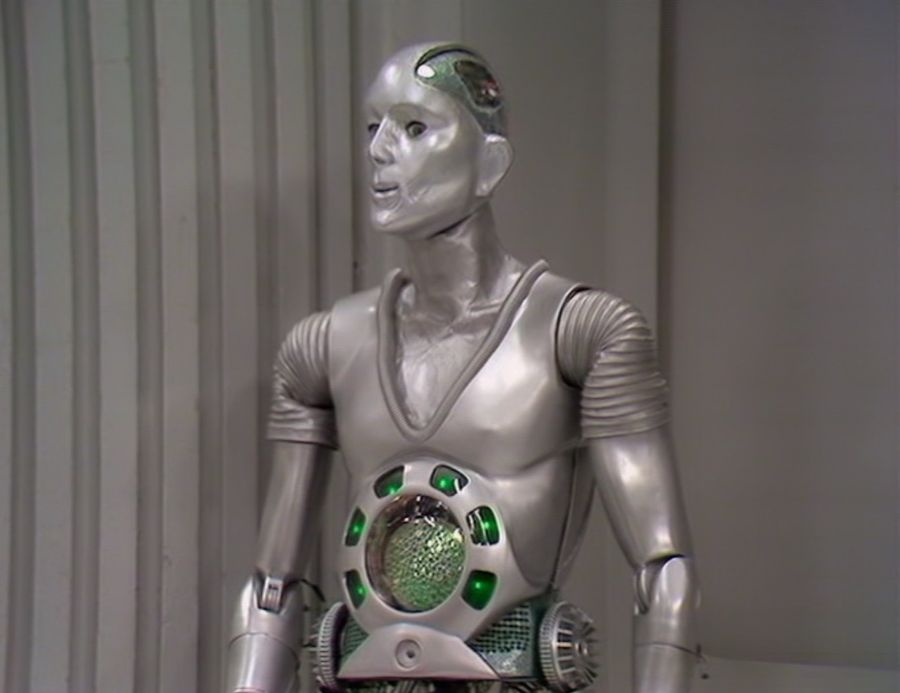
But as I’ve established, Kamelion only appeared in two stories in the classic ‘Doctor Who’ TV series as featured in the ‘Kamelion Tales’ DVD box set. Three if you count Kamelion’s cameo in the story ‘The Awakening’ in Season 21, but that’s for another time.
Essentially, Kamelion has a beginning in ‘The King’s Demons’ and an ending in ‘Planet of Fire’. There have been more stories featuring Kamelion since then, including books, comics and audios. Some of them I’ve yet to check out, and some that I’ve enjoyed. 🙂
This includes ‘Circular Time: Winter’ and ‘The Auton Infinity’. I hope I’ll get a chance to check out ‘Devil in the Mist’ soon as well as stories like ‘I, Kamelion’. But this does beg the question: Is Kamelion worth it as a ‘Doctor Who’ character or is he easily forgotten in the TV show?
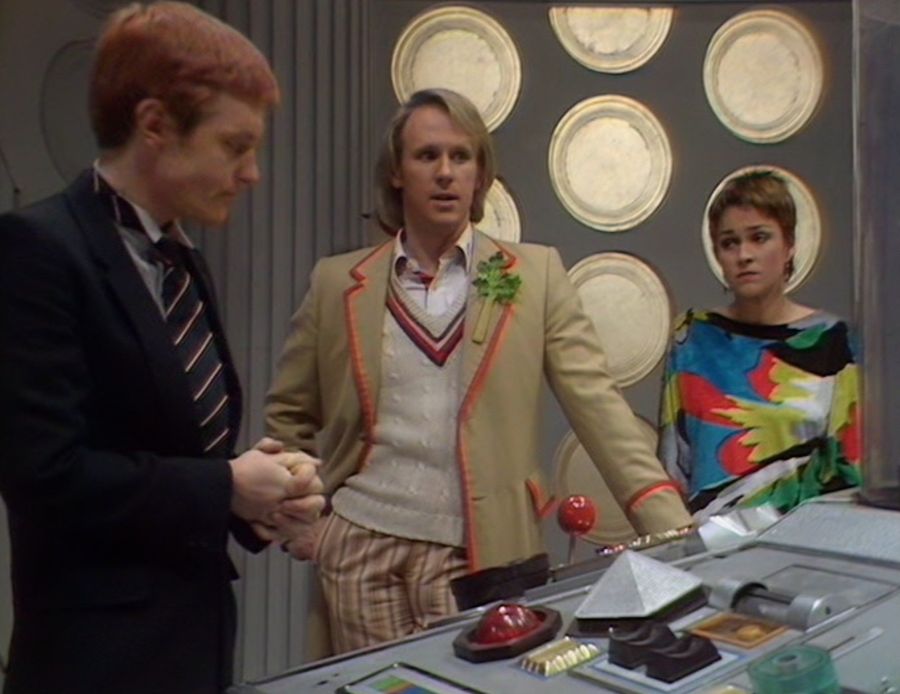
Before we go any further, I’d like to point out that in-between ‘Enlightenment’ and ‘The King’s Demons’, there have been some Big Finish audio stories featuring the Fifth Doctor, Tegan and Turlough reuniting with an older Nyssa. I’ve greatly enjoyed some of those stories.
What I’m getting across is that the Fifth Doctor, Tegan and Turlough have already experienced being with Nyssa again. Not I’m expecting you to know that and it’s likely the older Nyssa stories didn’t occur if we’re to judge by ‘Farewell, Sarah Jane’s standards.
In terms of celebrating the 20th anniversary of ‘Doctor Who’, ‘The King’s Demons’ features the return of the Doctor’s greatest enemy, the Master, as played by Anthony Ainley. Whether the Master’s return is worthwhile in this story is a matter of opinion.
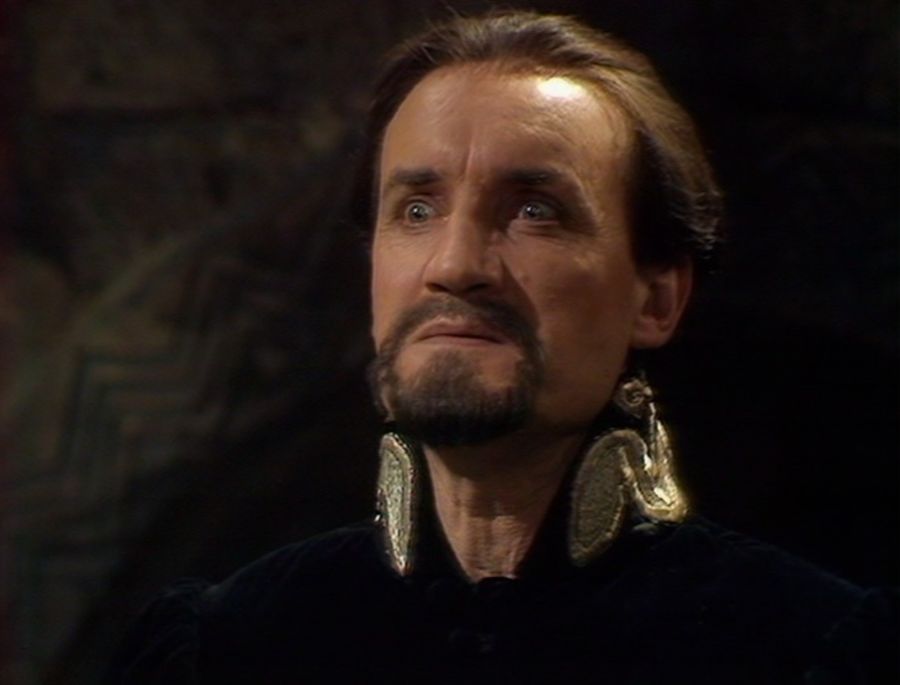
As a story, ‘The King’s Demons’ takes place in Earth’s past during the medieval period of 1215. I can’t say I’m that familiar with medieval history, though it’s interesting to see how Terence Dudley delivers the historical setting throughout this unique two-part story.
He’s clearly done his research in establishing King John and Magna Carta, although it’s a shame it’s not explored enough as one would have liked. If ‘The King’s Demons’ was a four-parter instead of a two-parter, maybe that story’s aspect could have been explored.
There’s certainly a Shakespearean feel to this story, particularly in the performances of the actors as well as how the dialogue is written for the characters. Terence Dudley is going for a more old-fashioned approach when he’s writing characters’ dialogue in 1215.
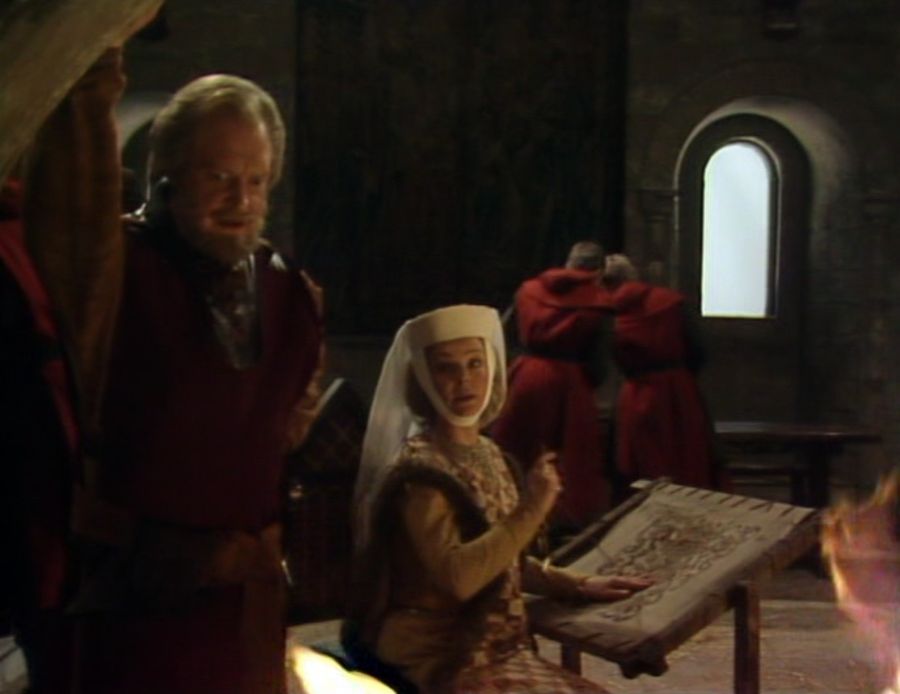
Not that there’s anything wrong with that and I do prefer the way the characters in 1215 speak in ‘The King’s Demons’. It feels more connected to real history as opposed to say in modern TV dramas and films where, quite often, the dialogue isn’t authentic and real.
I mean, if Russell T. Davies and Steven Moffat were writing for characters in 1215, they’re likely to provide more modernisms in a historical story as opposed to writing to what would have been true back then. It wouldn’t be believable as one would expect.
Incidentally, this isn’t like the first time we’ve done medieval history in ‘Doctor Who’. There are stories like ‘The Crusade’ and ‘The Time Warrior’ that deal with medieval history. Very often, the quality of those stories varies in terms of the characters’ dialogue.
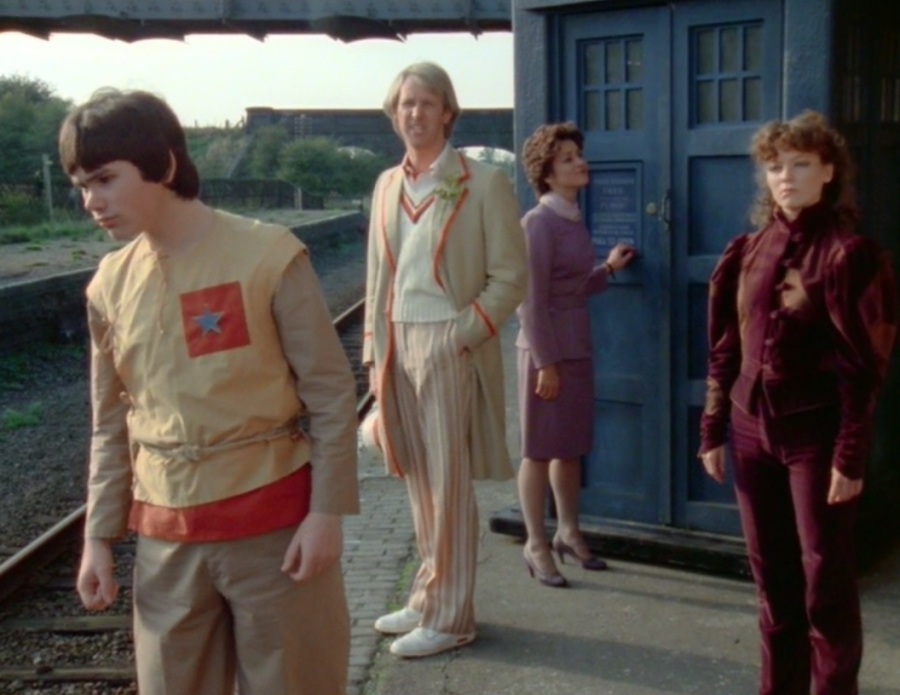
Also, whilst I appreciate Terence Dudley doing a different type of historical setting in ‘The King’s Demons’ with it being set in 1215, I prefer ‘Black Orchid’ more as I’m more familiar with the 1920s and to me, it’s more exciting compared to what happens in 1215.
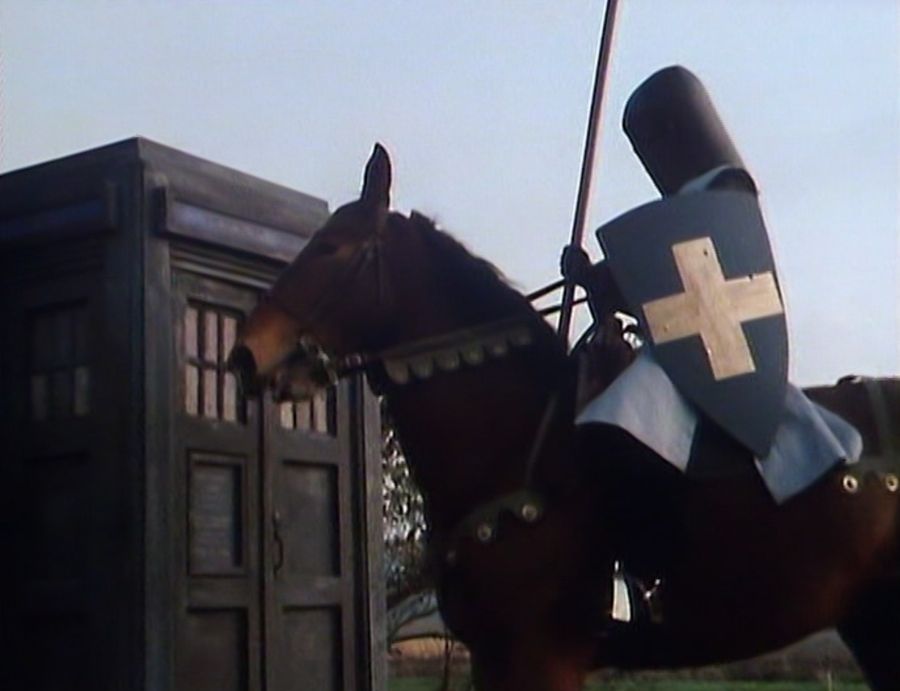
In the story, the TARDIS materialises during a joust between King John’s champion Sir Gilles Estram and Hugh, the son of Sir Ranulf Fitzwilliam. The Doctor is having trouble trying to return Turlough to his home planet, as requested at the end of ‘Enlightenment’.
But yes! The Fifth Doctor, Tegan and Turlough get to meet King John in this story, and at the castle of Sir Ranulf Fitzwilliam. The castle, whilst not named in the TV story, happens to be named Wallingford Castle, according to the Target novelization, I believe.
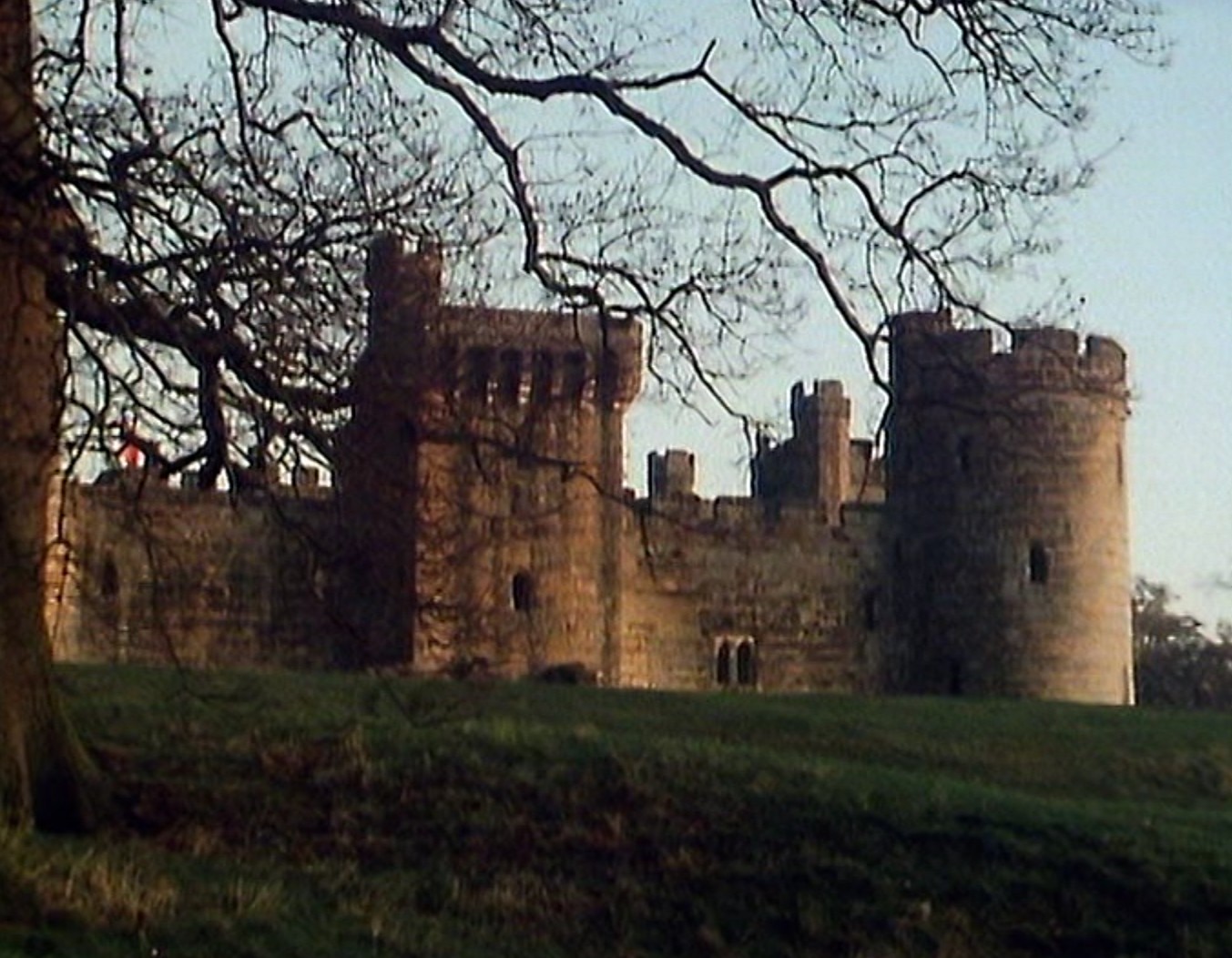
As a filming location, the castle is called Bodiam Castle. The castle looks very impressive, especially when seeing it in the ‘Back to Bodiam’ Blu-ray making-of documentary. It turned out to be the nearest castle to London in serviceable condition.
It makes one want to go and visit it. I’m sure it’s open to the public should you happen to take a trip there in England. It’s a shame we don’t get to see enough of the castle, especially in the two episodes it’s in with having the balance of studio and film footage.
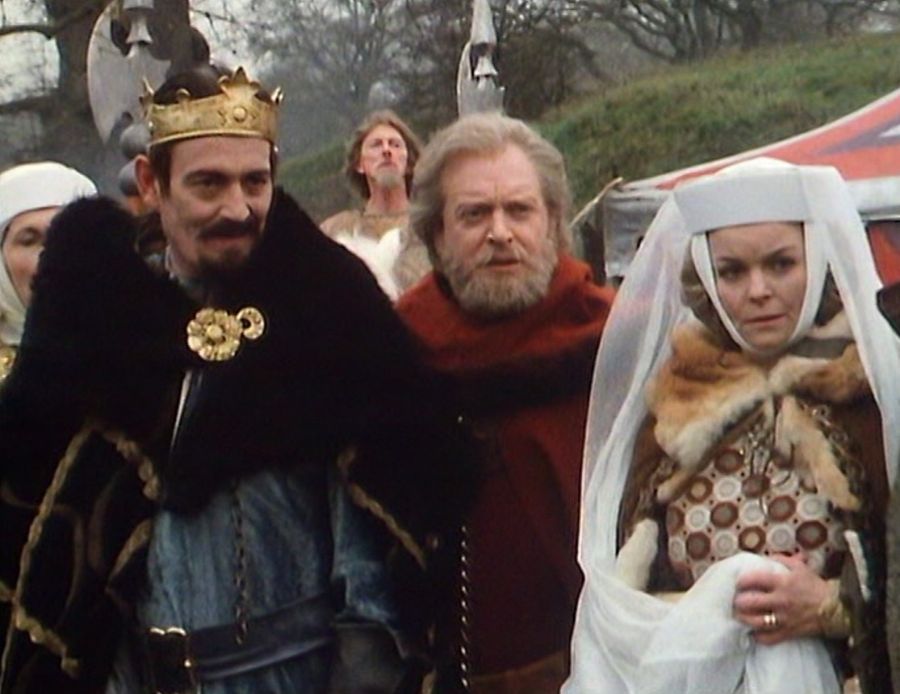
If King John as an historical figure is someone you’re not so familiar with, then this is the basic summary. King John is the brother of Richard the Lionheart, who appeared in the ‘Doctor Who’ TV story ‘The Crusade’ with William Hartnell, as portrayed by Julian Glover.
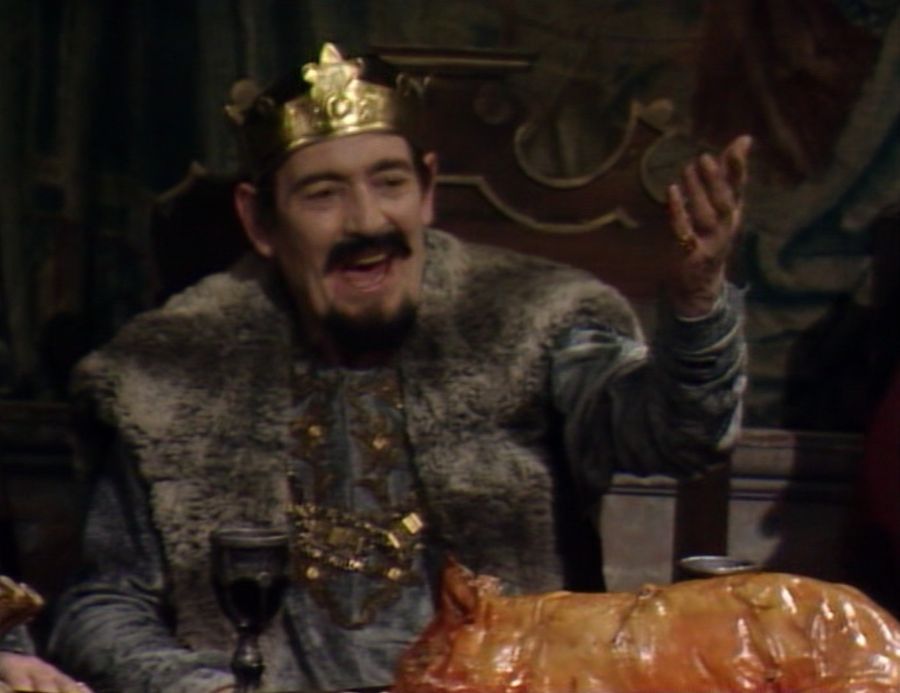
King John acted as King of England whilst Richard the Lionheart was away fighting in the Holy Land (Palestine). I can’t claim to be an expert on King John, but whenever he’s brought up, he’s often considered as being a ‘bad’ king during his time in English history.
Whilst there may be elements of truth in that, King John is more complex as a monarch than one might expect. After all, he signed Magna Carta, which is an essential plot device in this ‘Doctor Who’ TV adventure, which I’ll delve into more shortly in this review. 🙂
If you’re like me, you’re probably familiar with King John being a villain in folklore tales featuring Robin Hood, who stole from the rich and gave to the poor. This is when he’s depicted as one of the villains in the 1973 Disney ‘Robin Hood’ film and seen as a lion. 🙂
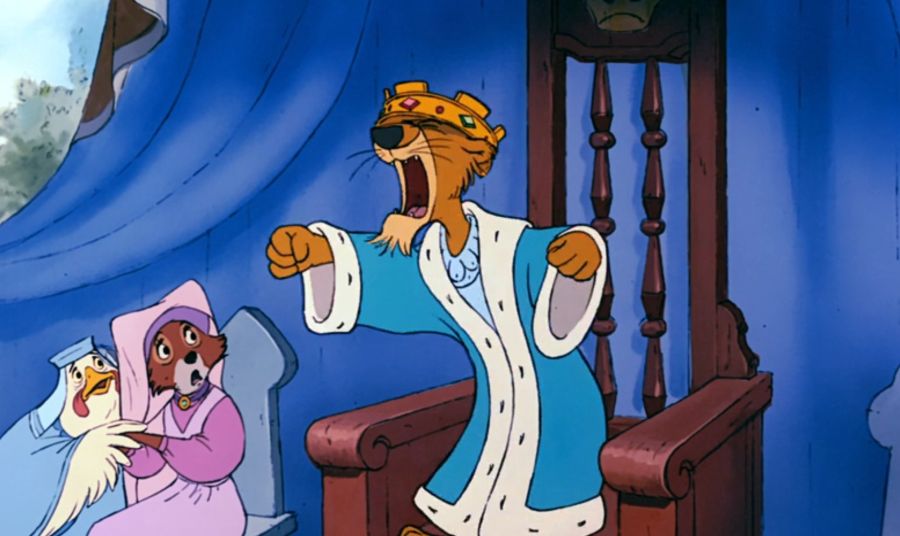
Prince John: I AM KING!!! KING!!! KING!!!
Yeah, that’s it. Actually, it would have been very funny to have seen Peter Ustinov playing King John in ‘The King’s Demons’ as opposed to Gerald Flood who plays him. Yes, it wouldn’t match to how King John would’ve appeared then, but it’s an intriguing thought.
Incidentally, this ‘Doctor Who’ story is one of three instances where we visit the time period connected to Robin Hood. There’s ‘The Crusade’ featuring Richard the Lionheart, ‘The King’s Demons’ featuring King John, and ‘Robot of Sherwood’ featuring Robin Hood.
Yes, Robin Hood isn’t considered an actual historical figure and ‘The Crusade’ and ‘The King’s Demons’ are regarded as truer to English history. But it’s fascinating how ‘Doctor Who’ has come full circle with tales of medieval history and Robin Hood over the years.
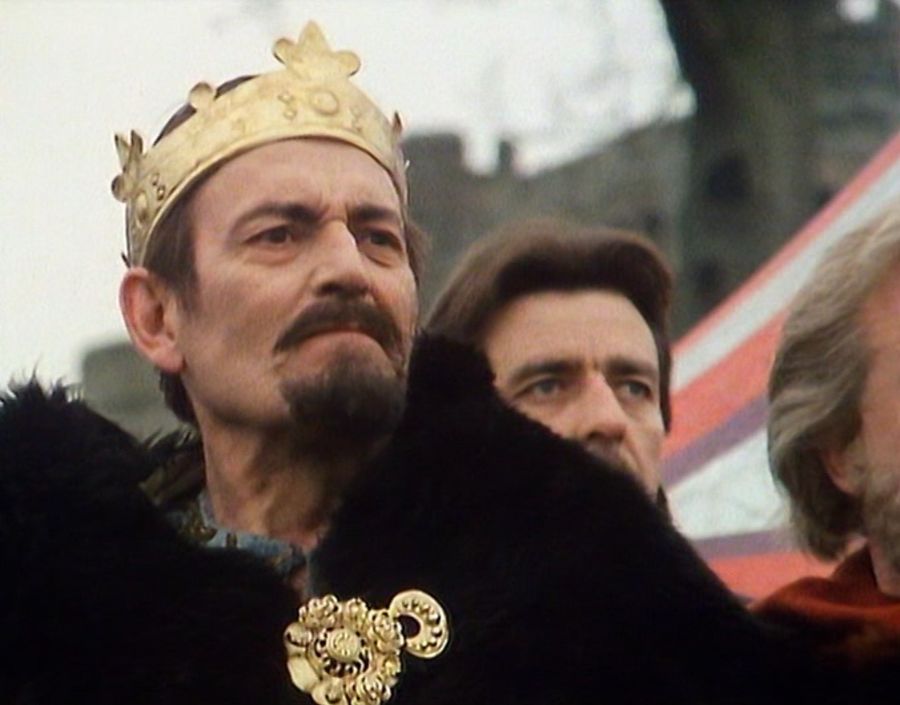
Speaking of Gerald Flood who plays King John in this ‘Doctor Who’ story, I actually enjoyed the performance he gives. He certainly delivers a very fruity and extravagant performance as King John. 🙂 Whether it’s an accurate depiction is a matter for debate. 😐
That certainly seems to be case regarding who King John actually is in this ‘Doctor Who’ story and highlights certain problems with the story’s angle in that area. Again, this is something we’ll address as we go deeper into the review concerning the sci-fi elements.
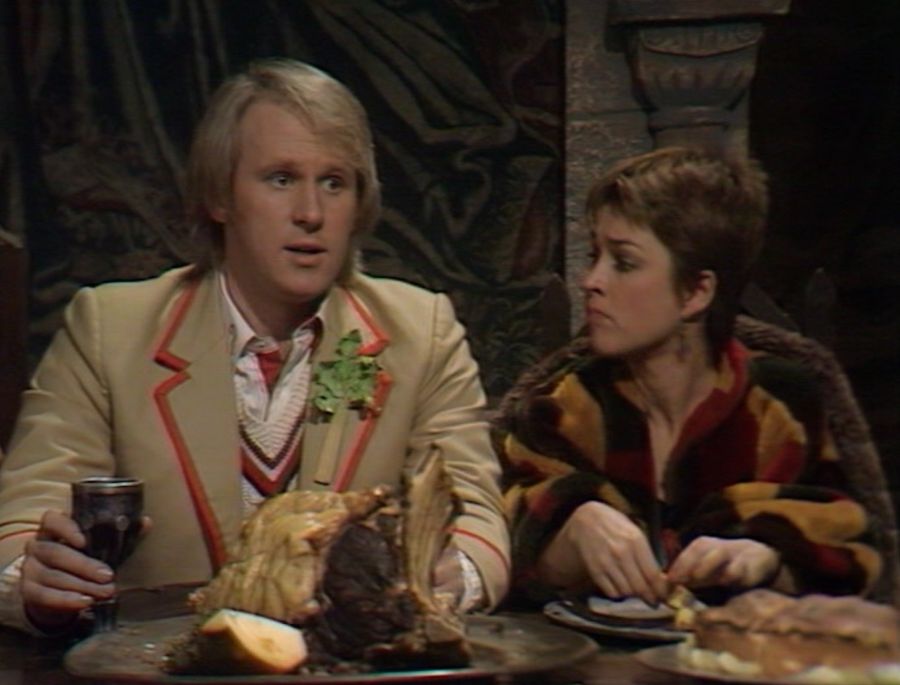
It’s interesting when the Doctor, Tegan and Turlough step out of the TARDIS to be greeted by King John, he calls them ‘demons’ before he invites them to stay at the castle. I’m curious as much as the Doctor is as to why they’re called demons in the story.
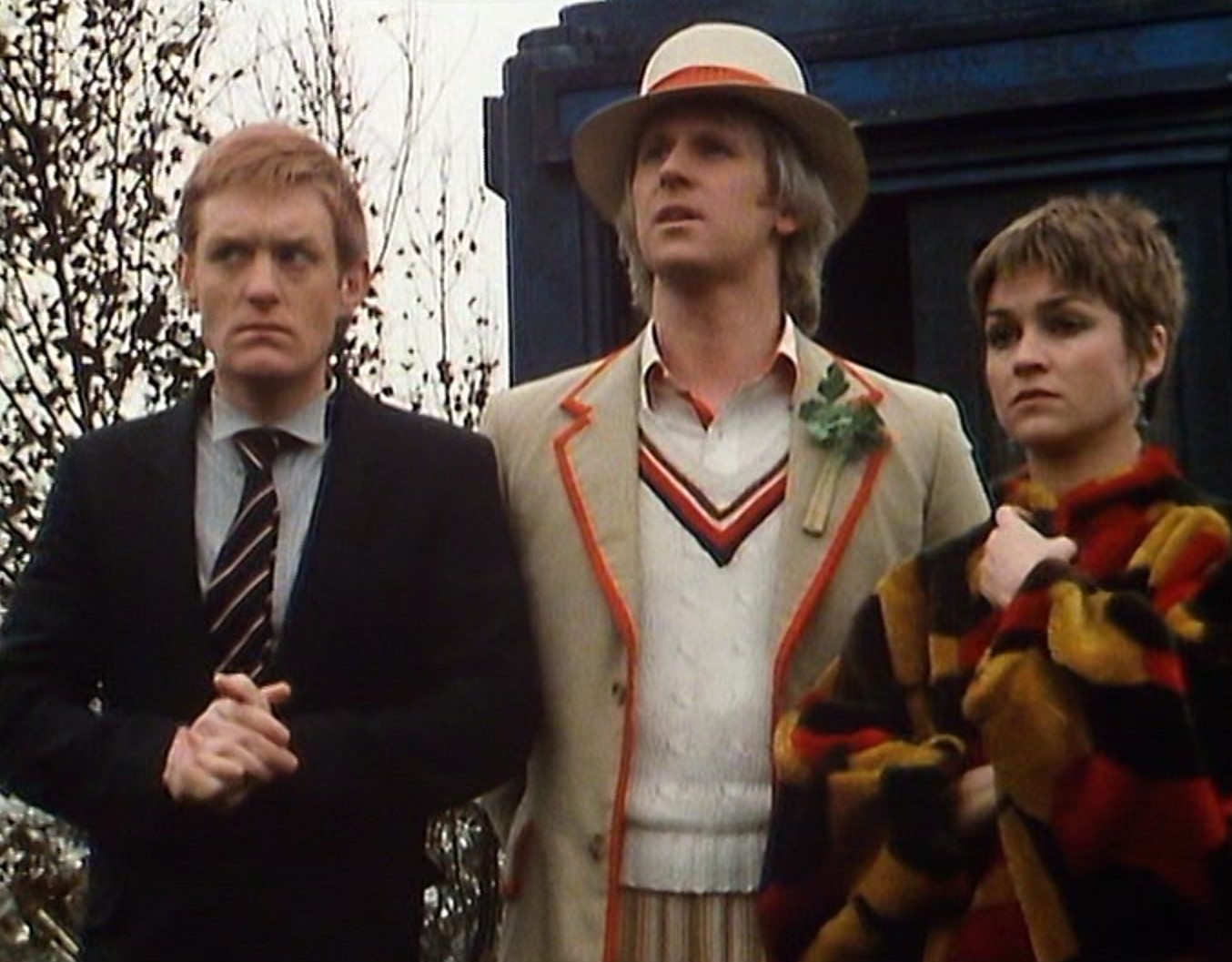
Doctor: Demons? Very odd indeed.
I mean, aren’t ‘demons’ considered bad entities in medieval history? I assumed it to be the case when checking out the Big Finish audio story ‘Castle of Fear’, as the villagers of Stockbridge were terrified of ‘demons’ that turned out to be Rutans invading their castle.
Shouldn’t King John be calling the Doctor, Tegan and Turlough ‘angels’ instead of ‘demons’? In fact, the story would have worked just as well if it was called ‘The King’s Angels’ instead of ‘The King’s Demons’. I don’t quite understand this angle to the story. 😐
I’m sure there’s more to this than meets the eye and maybe the term ‘demons’ is utilised very loosely in the story than one might expect. But it’s just very unusual. I wonder why King John would label our heroes as ‘demons’, as it could likely scare his subjects away.
As the Doctor, Tegan and Turlough stay longer at the castle of Sir Ranulf, the Time Lord suspects that something is going on with King John. This is especially when he discovers that he’s behaving very oddly and it’s troubling Sir Ranulf and his family as a result of that.
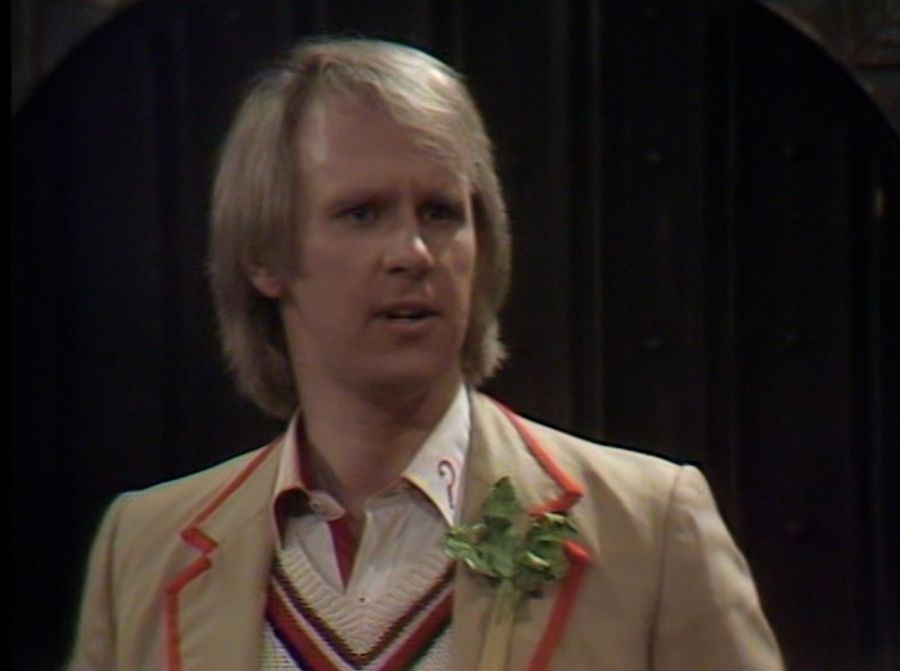
Doctor: There’s something very wrong here.
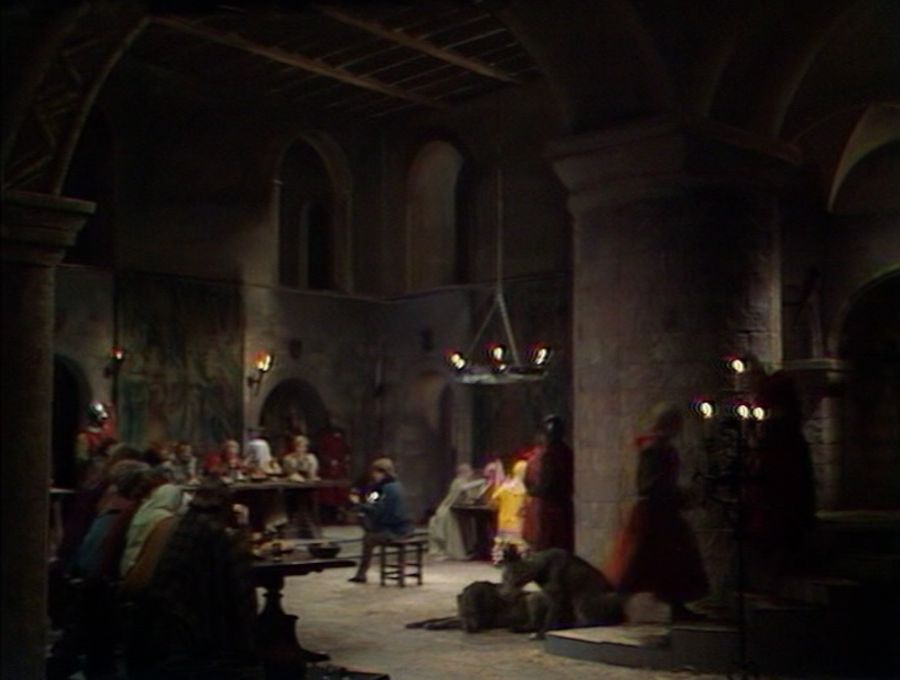
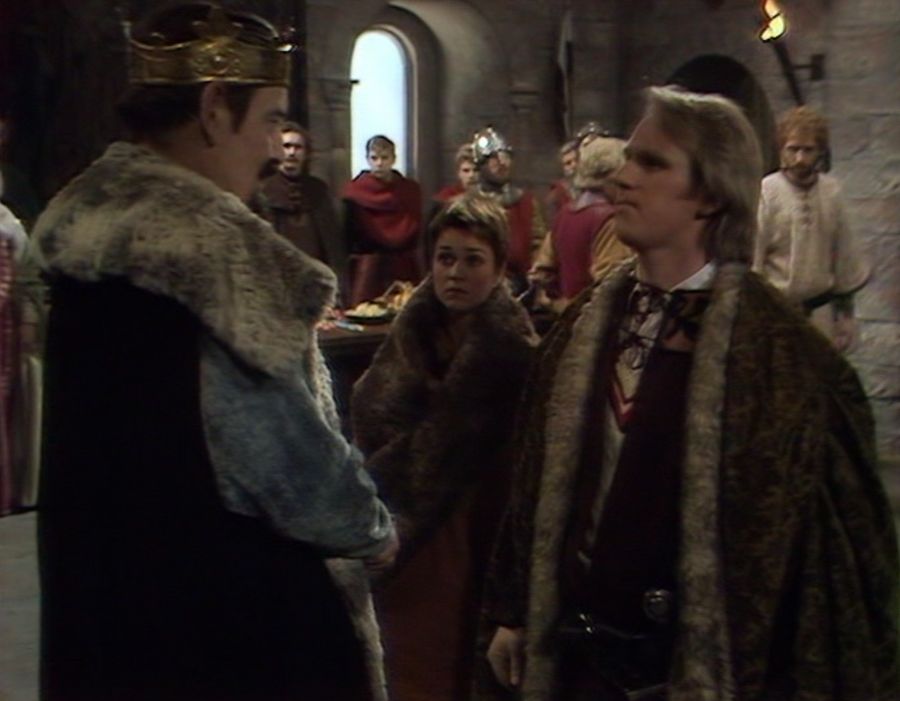
Eventually, the Doctor intervenes once Sir Geoffrey de Lacy, the cousin of Sir Ranulf, is about to be tortured by the King’s champion, Sir Gilles Estram, during a royal banquet. This all leads to a swordfight between the Doctor and Sir Gilles in the banqueting hall. 😮
Once the Doctor has the upper hand, part of the mystery is revealed, as it turns out the King’s champion isn’t his champion at all. Sir Gilles Estram happens to be…the Master. And this is the cliffhanger to ‘Part One’ of the story. Quite a quick reveal for him, right? 😐
Another reason why ‘The King’s Demons’ doesn’t quite work for me as a two-part historical adventure compared with ‘Black Orchid’ is the blend of historical and sci-fi elements not fitting well together. Having it in a four-part structure could have permitted it.
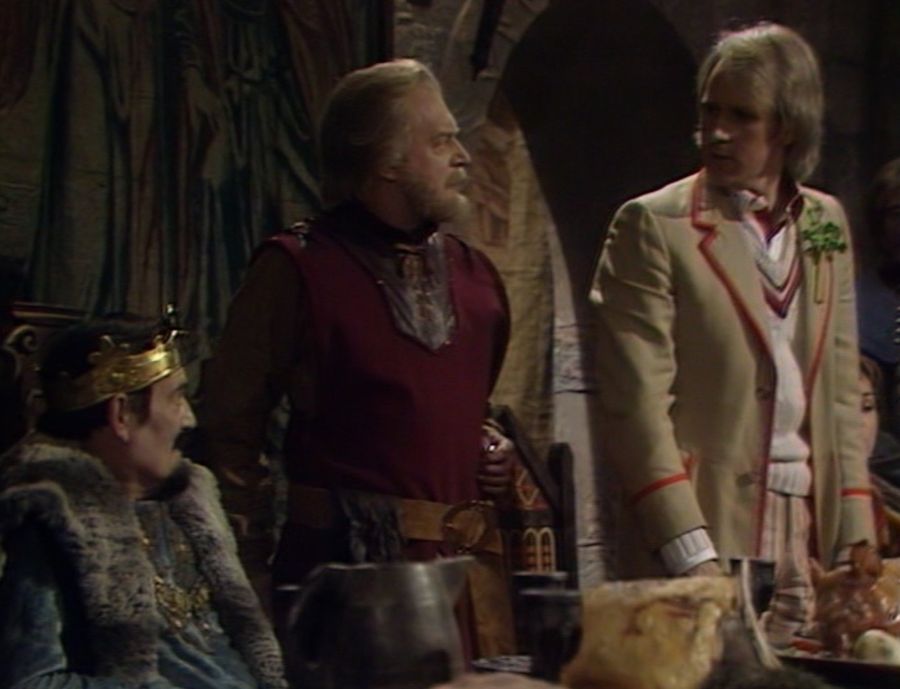
Again, I’m not trying to make out that ‘The King’s Demons’ is a bad ‘Doctor Who’ story by Terence Dudley. Some would argue it’s one of the worst stories in the Peter Davison era. Worse than ‘Warriors of the Deep’. I wouldn’t count it as one of the worst stories in the era.
‘The King’s Demons’ isn’t terrible. It’s just pretty average as a ‘Doctor Who’ story. I quite like this story being set in 1215 as well as featuring a medieval castle, its supporting characters, its knights, the jousting, etc. The ingredients are alright in this TV adventure.
It’s just that the story felt pretty dull at times. There’s a lot to cram into this ‘Doctor Who’ adventure and it didn’t feel like there was enough breathing space to appreciate the characters and their motivations, which made it rather underwhelming for me to watch.
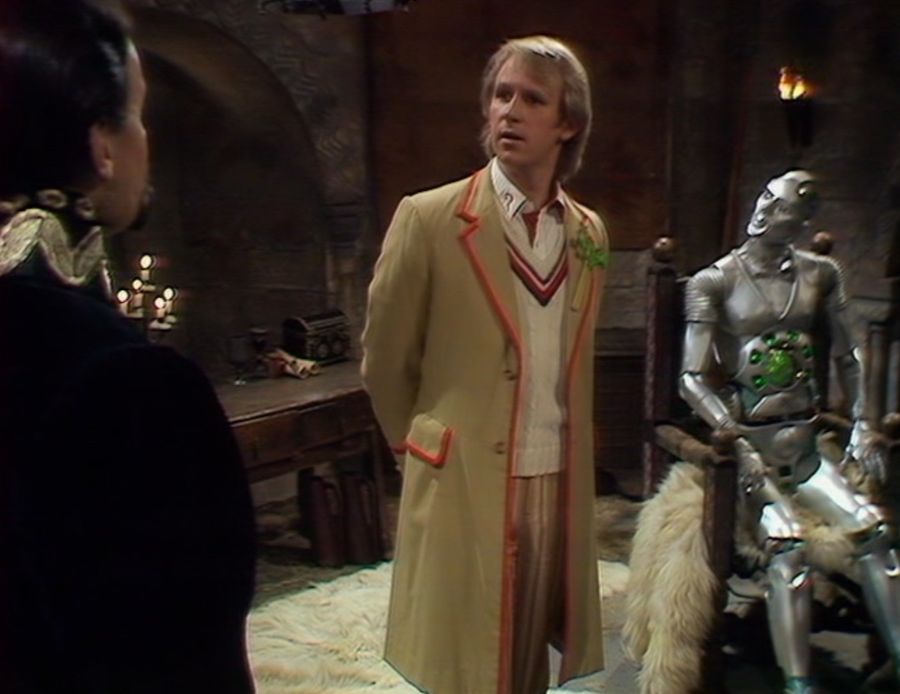
After all, as well as setting the story in 1215, having the Fifth Doctor, Tegan and Turlough meeting King John, and having the Master attempting to overthrow the King so that Magna Carta can’t get signed, Terence Dudley also had to introduce Kamelion. 😐
The sci-fi elements featured in this ‘Doctor Who’ story do muddy the waters a bit. ‘Four To Doomsday’ has a good blend of sci-fi and historical elements featured throughout. I was able to enjoy the story because it was allowed its breathing space in four episodes.
‘Black Orchid’ is more of a pure historical story compared with ‘The King’s Demons’ and only has sci-fi elements when the TARDIS is required. ‘The King’s Demons’ is trying to do too much within two episodes, and it feels like not enough was achieved to tell its story.
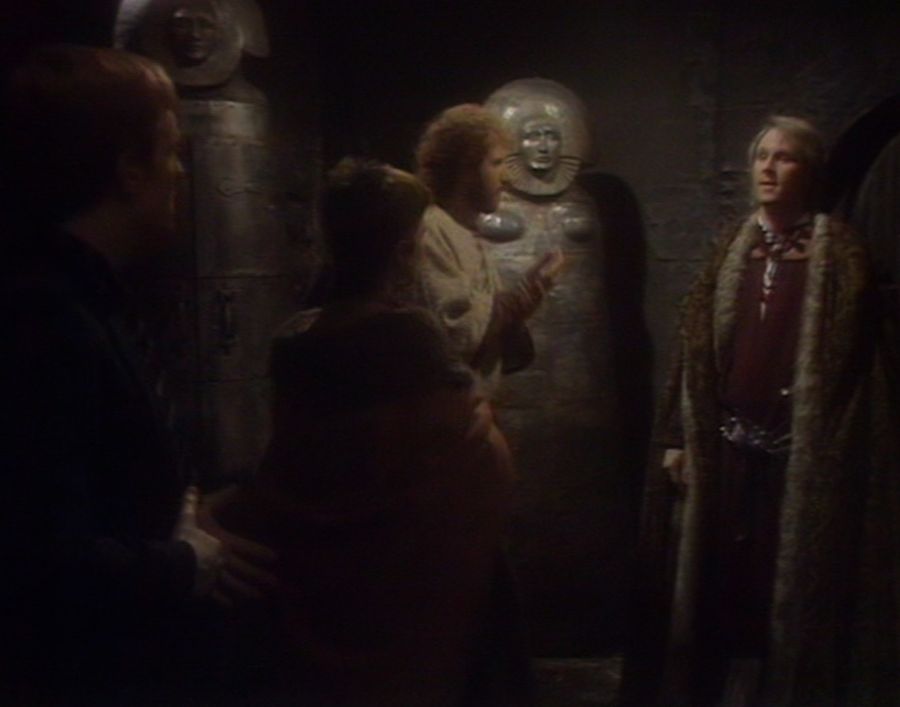
For example, take Magna Carta. What is it? Well, according to my research, Magna Carta is a royal charter of rights agreed by King John of England. It was signed on June the 15th, 1215. ‘The King’s Demons’ occurs on March the 4th, 1215 – about four months before that.
Essentially, the Magna Carta established the principle that the king wasn’t above the law. Everyone, including the king, had to obey it. It guaranteed certain rights to the English people, e.g., the right to a fair trial and protection from arbitrary imprisonment. 😐
Now, I can’t claim to understand Magna Carta, as political history isn’t my thing. There are four surviving original copies of the Magna Carta kept in four locations. Two are at the British Library in London, one at Lincoln Cathedral and one at Salisbury Cathedral. 🙂
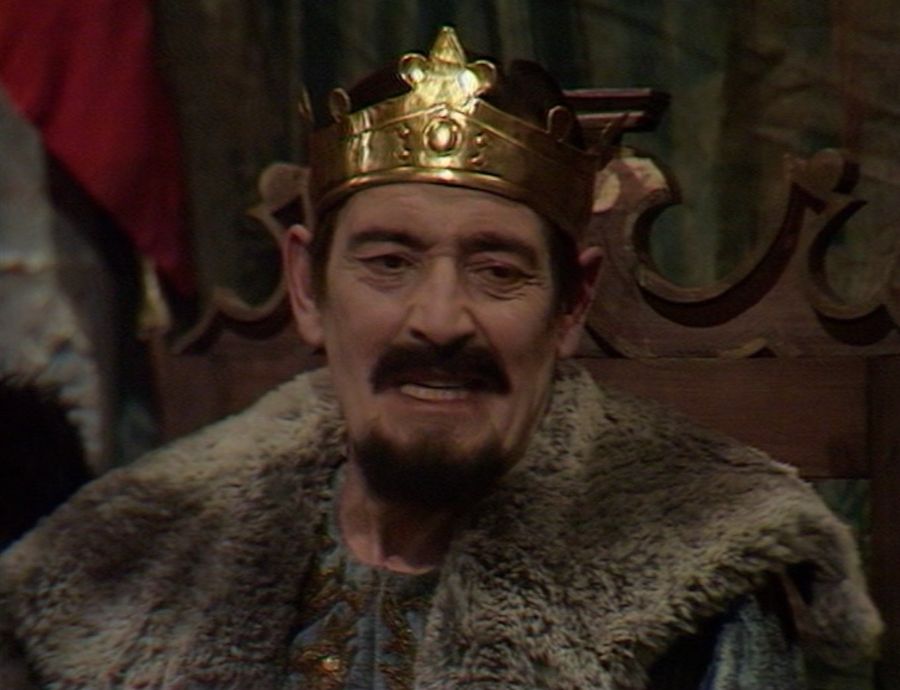
I did see a copy of the Magna Carta in Salisbury Cathedral when I visited the place back in January 2010, though that was a long time ago. And ironically, it was before I saw ‘The King’s Demons’ on DVD to appreciate the significance of Magna Carta in English history.
But the point I’m trying to make is, if ‘The King’s Demons’ wanted us to appreciate the significance of the Magna Carta in English history, especially concerning King John, it would’ve been better to have been told the story in four episodes and not two episodes.
There’s not enough time to get across the importance of the Magna Carta within two episodes because you’re having to contend with the other plot elements involving the Master and Kamelion. That sadly lets the story down as a result when you’re viewing it. 😦
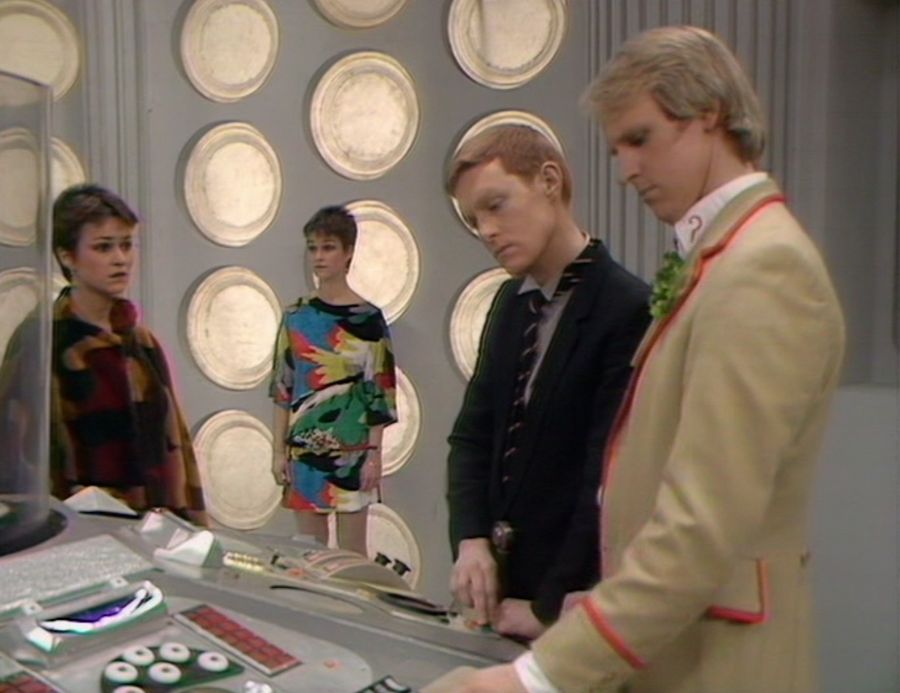
The story’s ending in ‘Part Two’ is rather abrupt and rushed. As soon as you find out King John is actually Kamelion in disguise, and when the Doctor has his mind battle with the Master, it’s all resolved very quickly once the Doctor steals Kamelion from the Master. 😐
It’s not well justified in the story’s conclusion. I think more tension should have been provided. It all seemed too easy for the Doctor to steal Kamelion from the Master, thinking that he wouldn’t be able to stop Magna Carta being signed without Kamelion. 😦
The production team should have realised that they couldn’t tell the story of King John and Magna Carta along with the Master and Kamelion in two episodes. It’s not enough for the story’s historical details and significance to get across to TV audiences watching.
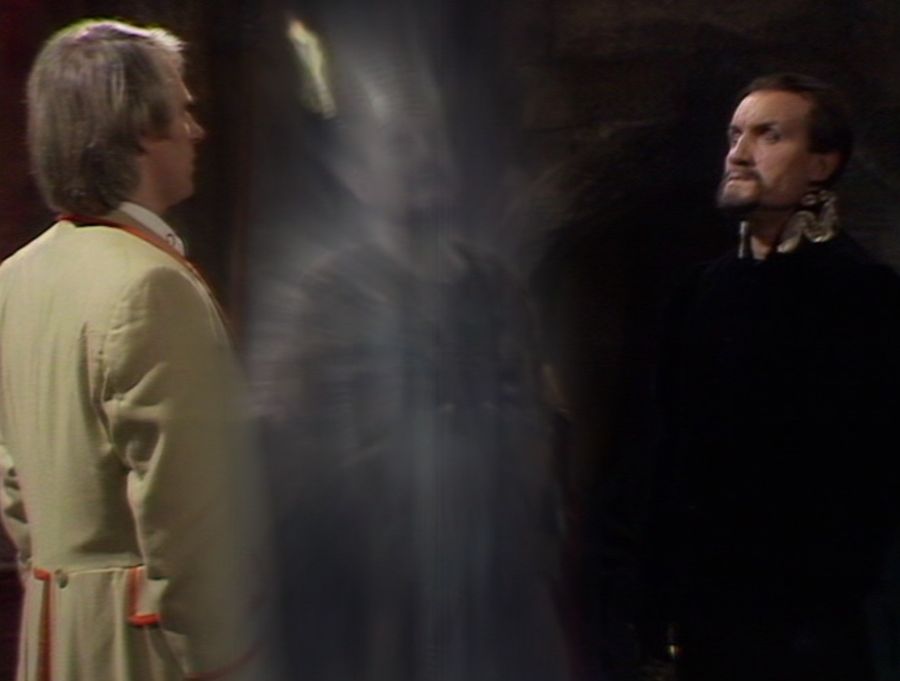
It’s like they ran out of time to tell the proper story of ‘The King’s Demons’ by the end of ‘Part Two’ and like only half of the story is told. It’s sad, but it goes to show how unfulfilling ‘The King’s Demons’ is as a story when you’re watching it from start to finish.
This also isn’t a very good ‘Doctor Who’ story for Anthony Ainley as the Master, following his previous appearances in ‘Logopolis’, ‘Castrovalva’ and ‘Time-Flight’. Doing it a as Master story in two episodes isn’t satisfying and maybe a different villain should’ve been used.
Now that’s not to say Anthony Ainley is awful as the Master in this ‘Doctor Who’ story. On the contrary, as always, he delivers 100% in his performance as the character. He never lets the side down, which is reassuring when watching him in ‘The King’s Demons’.
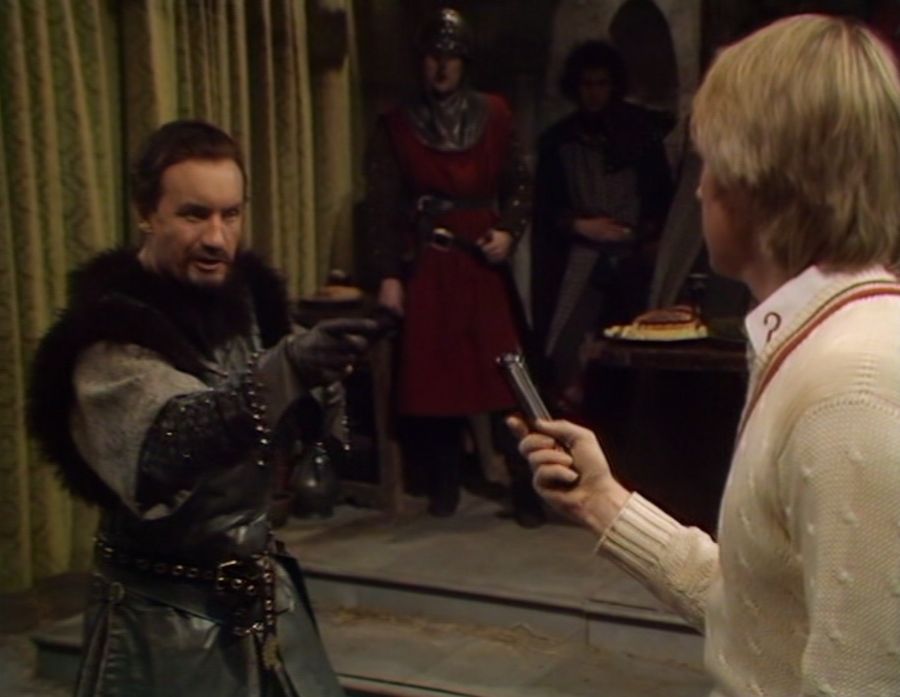
But I did find him slightly underused as a villain in this ‘Doctor Who’ adventure. That’s probably due to the fact he’s not revealed as the Master by the end of ‘Part One’, as he was in disguise as a French knight beforehand and it’s not followed through satisfyingly.
Speaking of which, the Master’s disguise as the French knight Sir Gilles Estram is rather pathetic. In case you didn’t realise it, ‘Estram’ is of course an anagram of ‘Master’. But even if you didn’t realise it, you can clearly see it’s him through the disguise and accent.
When promoting the story in the Radio Times, producer John Nathan-Turner had the role of Sir Gilles Estram credited as being played by an actor named ‘James Stroker’, which is an anagram of ‘Master’s Joke’. This was to conceal the fact that the Master is in this story.
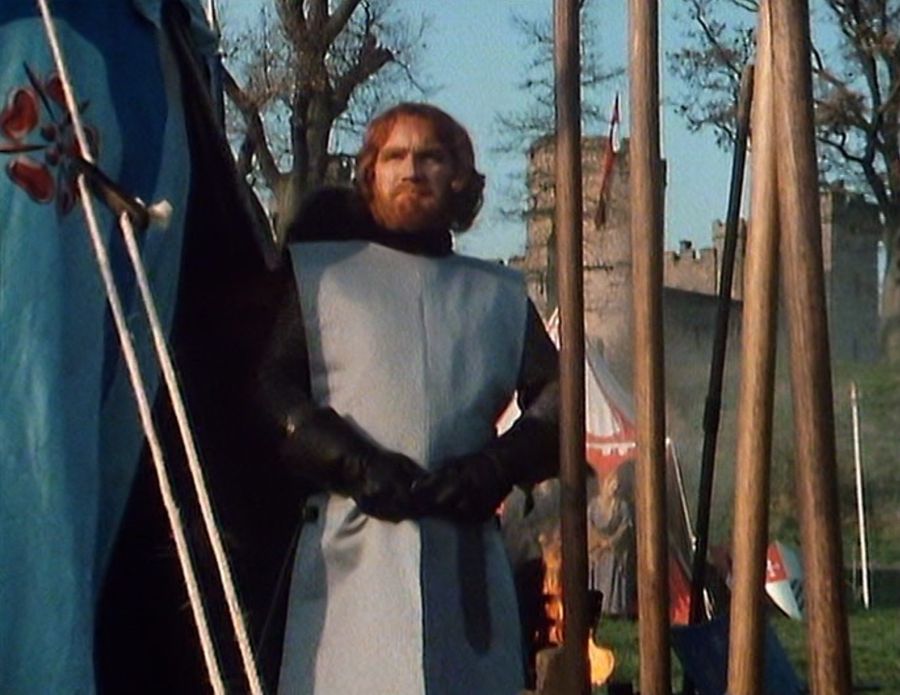
To be honest, I concur with Mark Strickson in the ‘Back to Bodium’ Blu-ray making-of documentary, as I don’t think calling the Master’s disguise ‘Sir Gilles Estram’ and have the actor playing him be ‘James Stroker’ is a big ‘masterstroke’ (pardon the pun) in the long run.
According to Peter Davison in the ‘Back to Bodium’ Blu-ray making-of documentary, producer JNT seemed convinced that Anthony Ainley would be able to fool people with a disguise, thinking that he was an experienced character actor in playing the Master.
The thing is, when Anthony Ainley was disguised as the Portreeve in ‘Castrovalva’ and Kalid in ‘Time-Flight’, he was given quite a lot of make-up to hide the fact that it wasn’t the same actor. Not enough effort is provided to disguise Anthony Ainley is in this tale. 😦
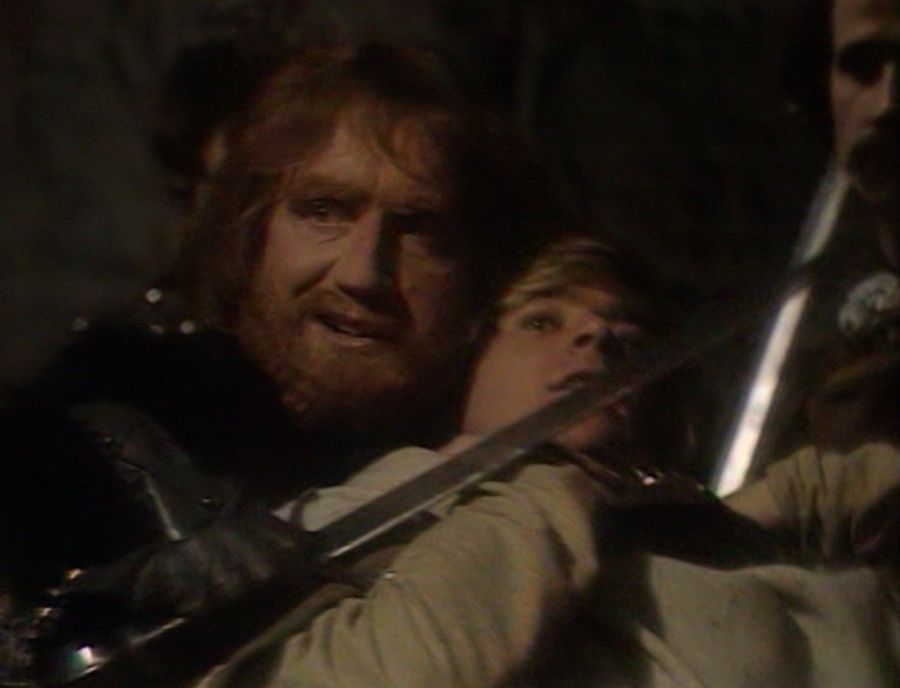
You can put on the long ginger wig all you want, but unless you have Anthony Ainley in prosthetics to hide the fact that he’s the Master in disguise, you’re not going to fool anyone that it’s actually him. You also need to make sure Anthony has a different voice.
I was completely fooled by the fact the Portreeve and Kalid were actually played by Anthony Ainley because he had both different make-ups and different voices to hide his identities. That wasn’t the case when seeing Anthony Ainley as Sir Gilles Estram in ‘Part One’.
It’s actually quite a surprise that the Doctor and Tegan don’t seem to recognise the Master when he’s being Sir Gilles Estram. Surely the voice with the fake French accent would have given it away? I think a rewrite on those scenes should’ve been considered.
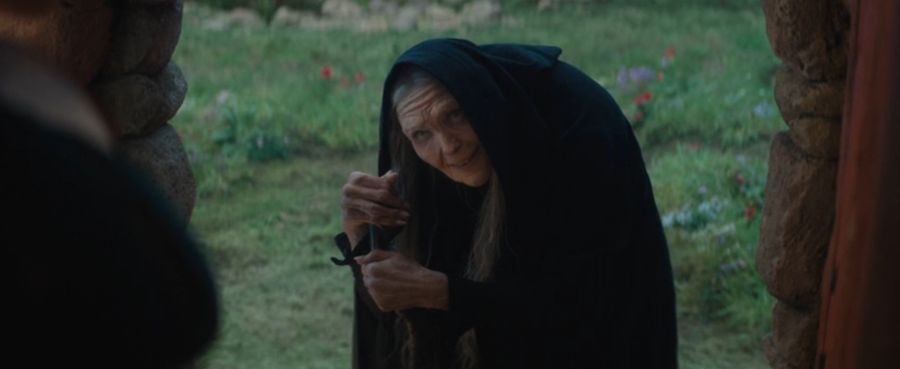
Give the 2025 ‘Snow White‘ film some credit. At least Gal Gadot was given prosthetic make-up and spoke in a different voice when she as the evil Queen was disguised as an old crone trying to trick Snow White to eat a poisoned apple. That’s far more superior to this.
Going back to the point I made about the Master being in disguise not followed through in ‘Part Two’, some would argue that his disguise in ‘Part One’ was rather pointless. Honestly, that’s not the issue. I can sort-of see what the story is trying to do in that regard.
You see, the point of the Master being in disguise in ‘Part One’ is so that he can provide a bad influence on King John when he seems to be acting rather strangely in the presence of Sir Ranulf and his household. That Sir Gilles Estram is the true villain of this TV tale. 😐
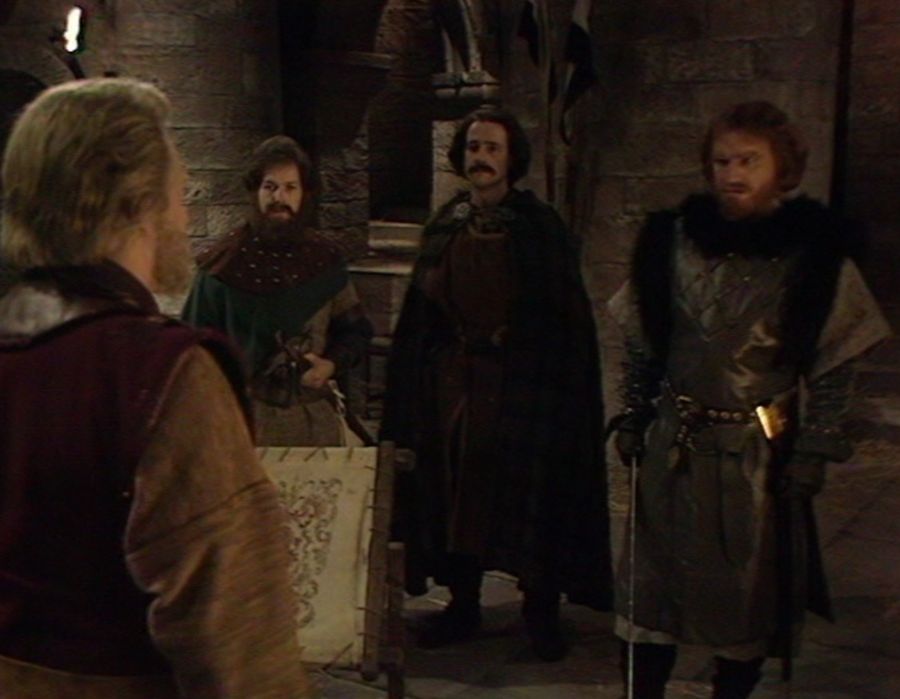
Honestly, I would have been okay with that. If the story was given the option of having the Master keeping the Sir Gilles disguise to keep up the pretence that King John is being influenced by a would-be usurper, perhaps the tension featured would be guaranteed. 🙂
I’m reminded of the Master being inside the Melkur when he attempted to take control of the Source and be the Keeper of Traken in ‘The Keeper of Traken’. Maybe that way, this ‘Doctor Who’ story would be better as a four-part adventure instead of a two-parter as a result.
The problem with the Master being revealed at the end of ‘Part One’ and being himself in ‘Part Two’ is that the Sir Gilles disguise is completely forgotten about. Like, no-one questioned what happened to Sir Gilles when he changed into the Master at the end of ‘Part One’. 😐
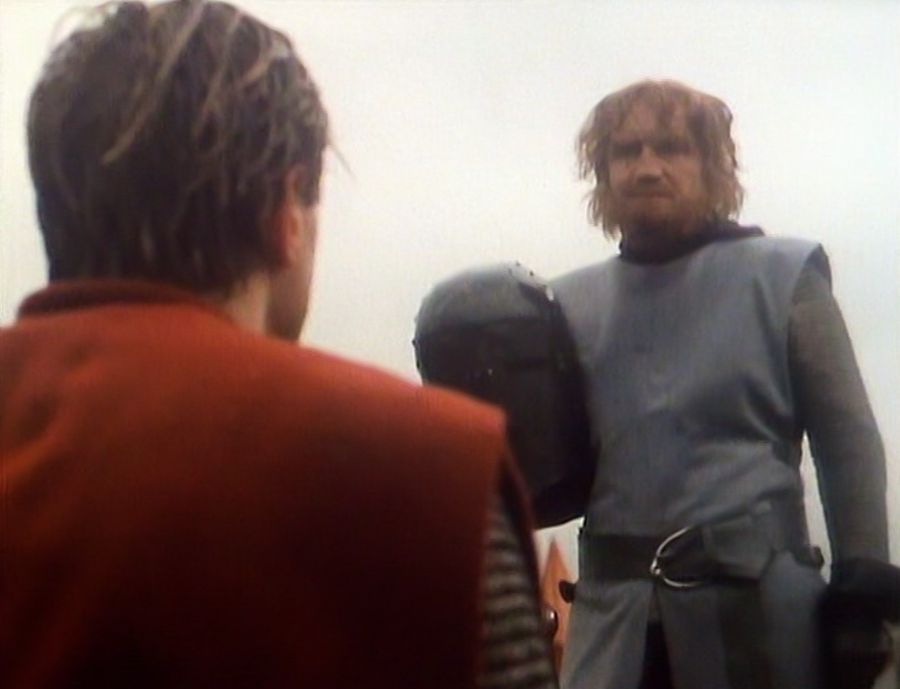
It’s a plot point that’s immediately resolved and not brought up again because the disguise didn’t seem important. Except, wouldn’t it have been better for the Master to keep up the pretence that he’s still Sir Gilles to earn the trust of Sir Ranulf and his family?
I mean, that sort-of happens in ‘Part Two’ when the Master is interacting with Sir Ranulf, Isabella and Hugh, but he’s presenting himself as the Master, not Sir Gilles. He may have dropped the accent, but he could’ve maintained that he’s Sir Gilles Estram to everybody.
It’s just so weird when the Master is walking around as himself and no-one seems to question who he was before. In fact, they don’t even question why he’s called the Master when he introduces himself. They just accept him for who he is in the rest of the story.
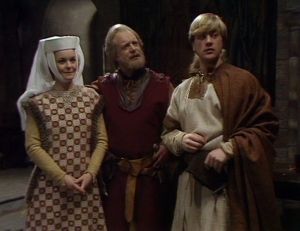
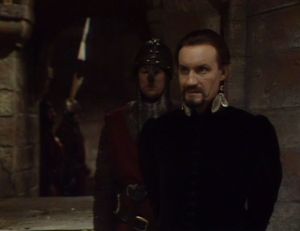
Ranulf: I am most grateful, err…
Master: I am called the Master.
Isabella: I too owe you gratitude.
Just to go back to the disguise thing for a bit, if it was difficult to get Anthony Ainley to look and sound different as Sir Gilles Estram when putting on that disguise, perhaps it would have been a lot better to have had Sir Gilles played by a different actor instead. 😐
After all, the telephone mechanic in ‘Terror of the Autons’ was played by Norman Stanley, not by Roger Delgado. Maybe having Sir Gilles be played by a different actor instead of Anthony Ainley could have made the Master’s reveal in ‘Part One’ satisfying. 🙂
Yes, it would mean less screentime for Anthony Ainley and maybe that’s why you should do the story as a four-parter instead of a two-parter. But at least we’d be convinced that the Master was in disguise in that instance. Not seeing through the disguise in the story.
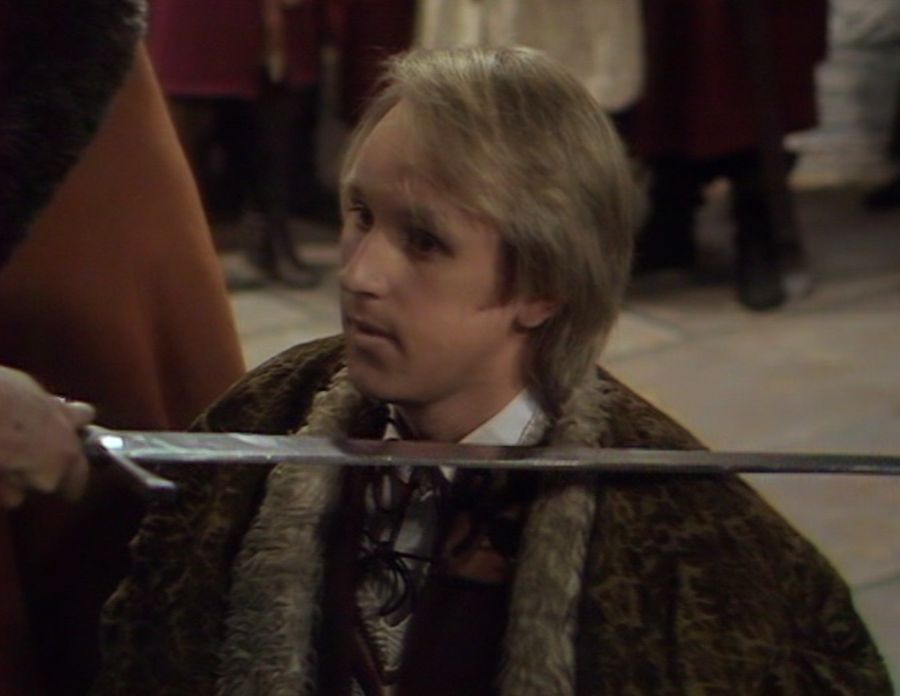
Peter Davison, as always, is great as the Fifth Doctor in this ‘Doctor Who’ adventure. I enjoyed Peter’s energy and enthusiasm throughout this story, and it’s interesting how he gets to deduce very quickly that there’s something wrong with King John and everything.
I quite like the earnestness of Peter’s Doctor when interacting with Sir Ranulf and assuring him that he’s willing to help him and her family with solving the mystery about the King’s odd behaviour. It’s intriguing Peter’s Doctor works out the King isn’t the King. 🙂
At the end of ‘Part One’ and the beginning of ‘Part Two’, Peter’s Doctor gets to do a sword fight with Sir Gilles Estram before he reveals himself as the Master. No doubt, Peter Davison’s Doctor got his sword-fighting skills when he was Jon Pertwee’s Third Doctor. 🙂
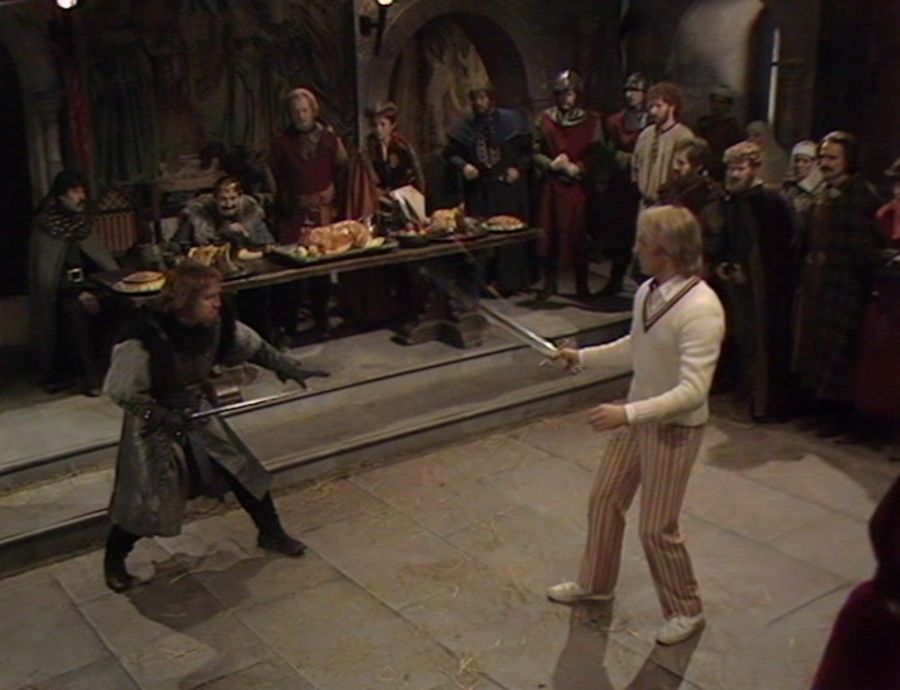
Incidentally, it’s amusing when hearing the behind-the-scenes story that Peter Davison was very keen to do the sword-fighting whilst Anthony Ainley was rather reluctant to do so. That does echo what happened in behind-the-scenes terms with ‘The Sea Devils’. 😀
Jon Pertwee was very keen to do the sword-fighting in ‘Part Two’ of that story whilst Roger Delgado wasn’t so keen when playing the Master. It’s amazing how swordfights between the Doctor and the Master in the behind-the-scenes sense repeat themselves.
Jon Pertwee was keen to do sword-fighting whilst Roger Delgado wasn’t in ‘The Sea Devils’. Peter Davison was keen to do sword-fighting whilst Anthony Ainley wasn’t in ‘The King’s Demons’. Granted, it would’ve been if Anthony Ainley was the Master in that fight.
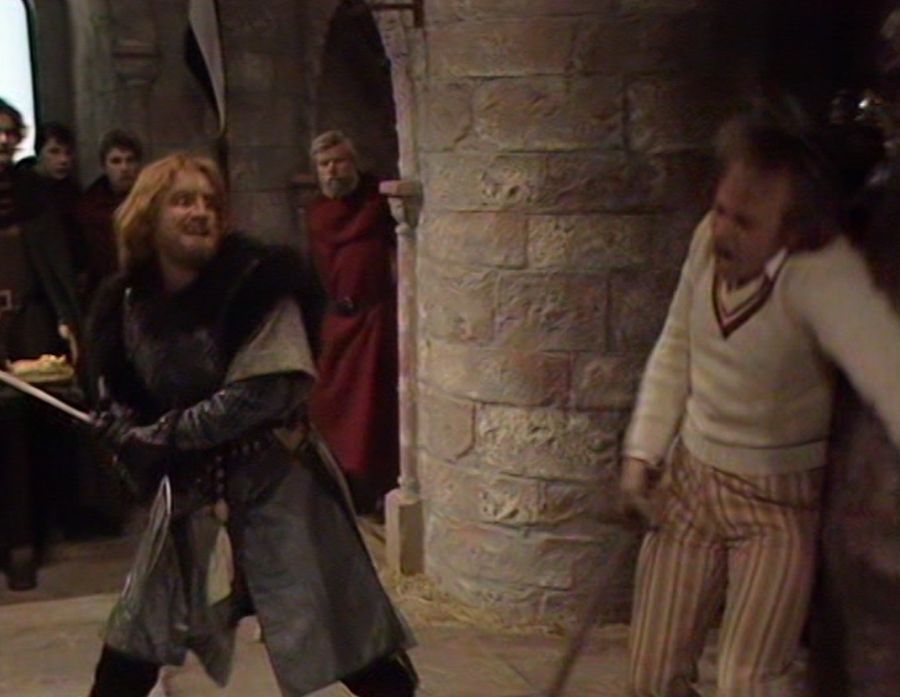
Not as Sir Gilles. But the echo of that behind-the-scenes sword-fighting relationship between Doctors and Masters is extraordinarily similar in both ‘The Sea Devils’ and ‘The King’s Demons’. Peter Davison does seem to be really good swordfighter in that scene. 🙂
It’s interesting how the Doctor often seems to be very good when doing a swordfight. Not just in ‘The Sea Devils’ and ‘The King’s Demons’, but also when he’s Tom Baker in ‘The Androids of Tara’ and when he’s David Tennant in ‘The Christmas Invasion’. Eerie. 😀
‘Robot of Sherwood’ does count, but Peter Capaldi’s Doctor was fighting Robin Hood with a spoon in that. Not with a sword. 😀 I did like it when it was revealed Sir Gilles was the Master all along and I liked the Doctor’s reaction to that moment in ‘Parts One and Two’.
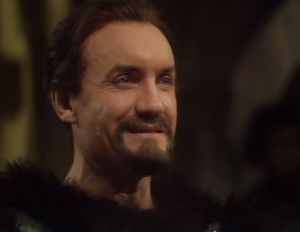
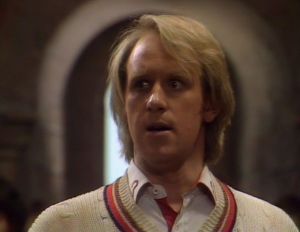
Doctor: You escaped from Xeriphas.
Master: Oh, my dear Doctor, you have been naive.
Doctor: Not at all. You may disguise your features, but you can never disguise your intent.
Master: And you can’t approve.
Doctor: You know I can’t.
Incidentally, I do wonder what the Master was doing in the time he escaped from Xeriphas in ‘Time-Flight’ to meet up with the Doctor again in ‘The King’s Demons’. Yes, he acquired Kamelion, but it’s not fully explained what occurred between those stories.
There will be touches of it in ‘Planet of Fire’ and it’s made clear the Master acquired Kamelion from an invader of Xeriphas. I’ve shed more light on the Master and Kamelion before ‘The King’s Demons’ in my 60th anniversary story called ‘The Thirteen+ Doctors’. 🙂
Say, remember when I said about me preferring the dialogue given to the historical characters in ‘The King’s Demons’? Well, sometimes the dialogue can backfire in the story, especially when it’s given to provide exposition and often in a short space of time.
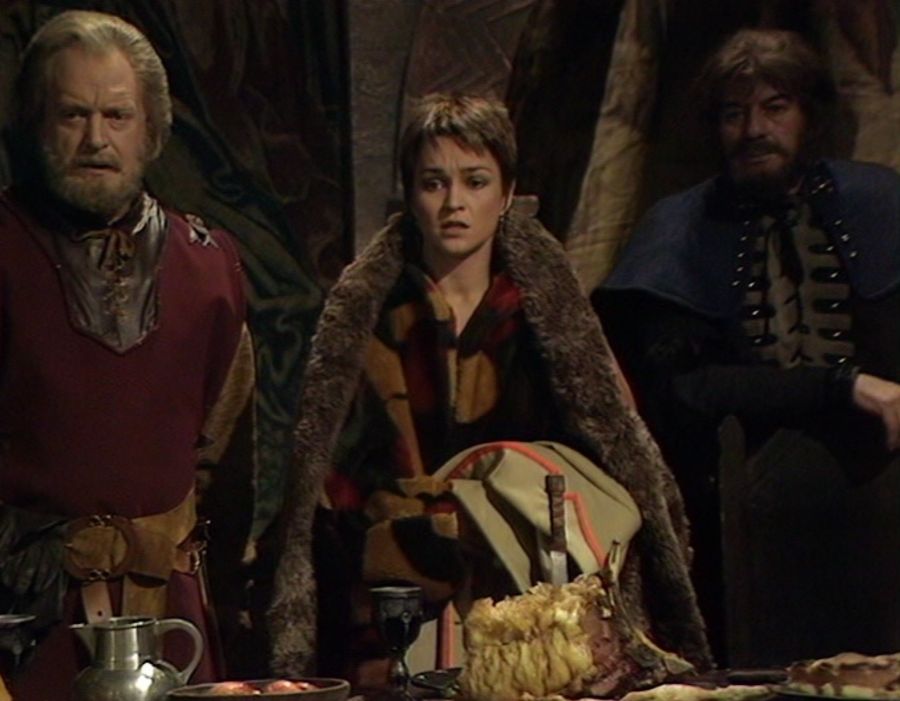
This is the case when Tegan says, “Tissue compression eliminator” before she throws a knife at the Master at the start of ‘Part Two’. She doesn’t immediately react with horror that the Master is back. She’s more concerned about the deadly weapon that he wields.
If more time was given in the episodes and perhaps with extending the episode length from two to four, maybe Tegan’s reaction to the Master’s return in the series could have been provided. It’s just so unusual that she wouldn’t comment about his presence first.
Throughout ‘The King’s Demons’, I’ve found Janet Fielding as Tegan and Mark Strickson as Turlough, the Doctor’s friends, poorly developed. In my original review for this story, I stated that the two whined and complained a lot when they accompanied the Doctor. 😐
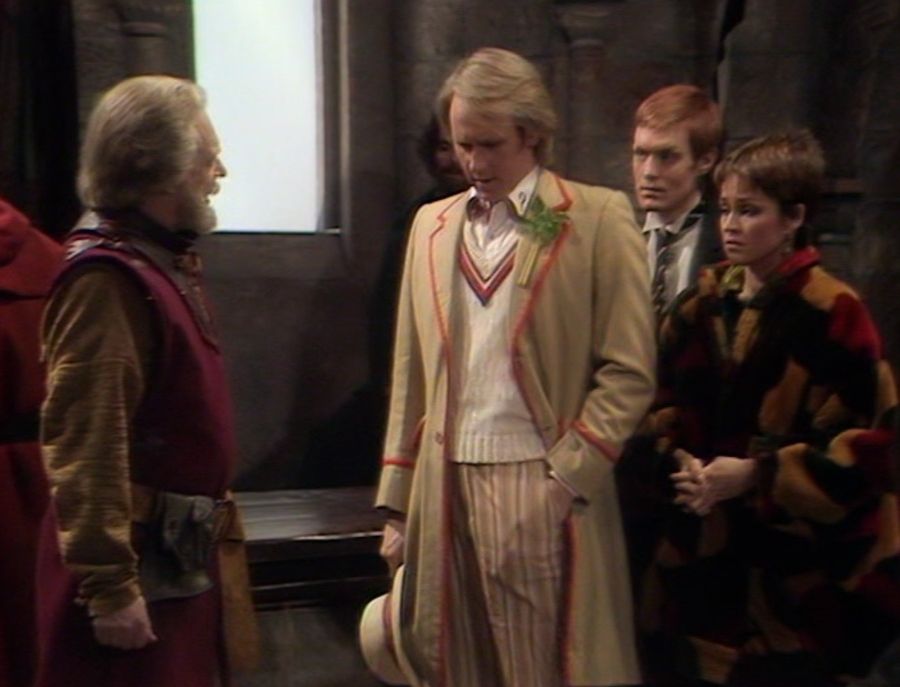
Whilst I do think that’s the case in this story, it’s not really the big issue with Tegan and Turlough. The big issue is that they don’t really do much in this story. There’s not much to say about them to make them stand out, especially in character development terms.
This is a contrast to ‘Black Orchid’ where I felt Nyssa, Tegan and Adric got to shine in that story. This is especially in the cricket scenes and the fancy dress ball scenes, both the TV story and the Target novelization/audiobook, which I have enjoyed over the years.
Here in ‘The King’s Demons’, there’s no sense of Tegan and Turlough enjoying themselves as they visit Sir Ranulf’s castle. That might because England in 1215 isn’t as appealing as England in 1925. This could be why they’re whining and complaining a lot.
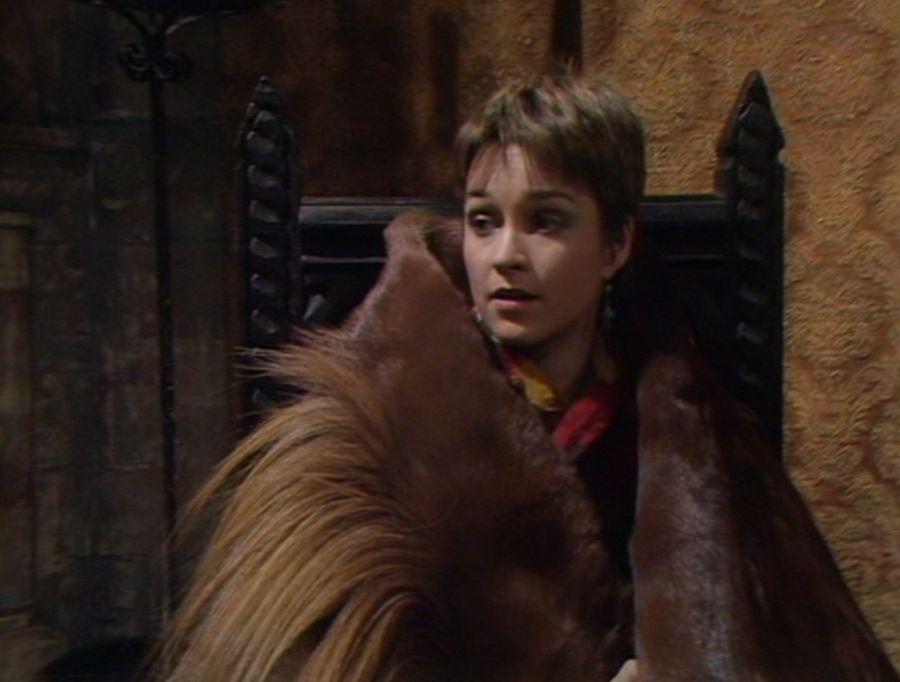
After all, Tegan is rather moody throughout this ‘Doctor Who’ story. She complains about it being too cold and has to put on a lot of furs to keep herself warm. She also seems disinterested about the period of history they’ve visited involving Magna Carta. 😐
This is not the cheerful Tegan from ‘Black Orchid’. This is more the Tegan from ‘Four to Doomsday’ who wasn’t keen to be in on the adventure. Granted, that fits in how Tegan’s journey has been going in Season 20, which has been a disappointment for me. 😦
Tegan’s return in ‘Arc of Infinity’ could have been followed by stories where she’s enjoying being in the TARDIS compared to wanting to get back home to Heathrow Airport in Season 19. But Season 20 is really showcasing her character from Season 19.
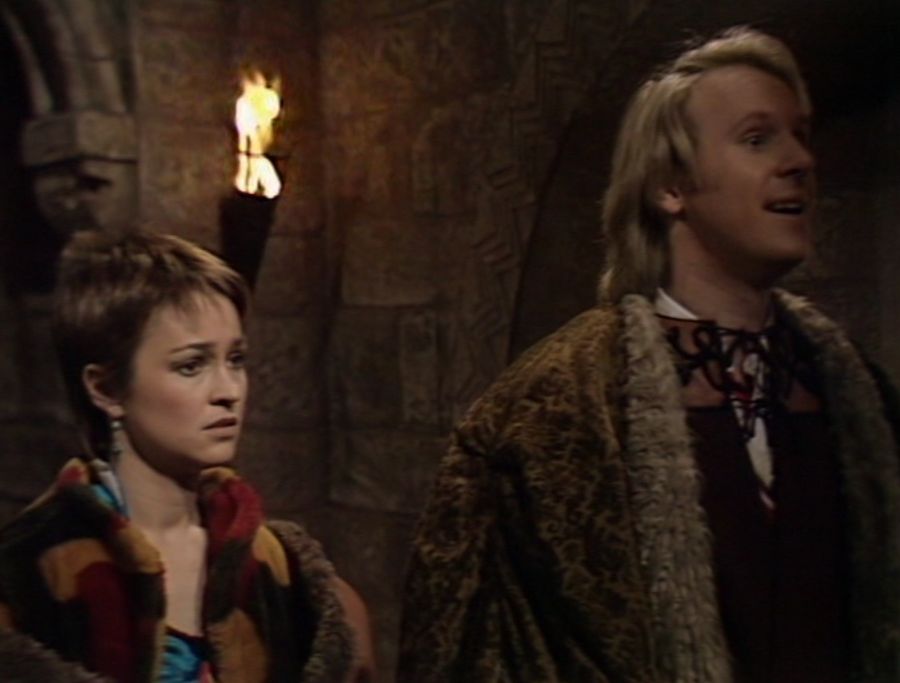
I know Tegan can be a cranky character at times, but surely there must be a sense of enjoyment on her part when she goes on adventures with the Doctor. Granted, she had a terrible ordeal with the Mara in ‘Snakedance’ and she lost her best friend in ‘Terminus’.
Plus, she had her mind violated when interacting with the Eternals in ‘Enlightenment’. But Season 20 could have featured stories where Tegan was enjoying her time in the TARDIS and not be grumpy most of the time whenever the TARDIS landed somewhere. 😐
There’s clearly no sense of a character journey for Tegan throughout Season 20 compared to Season 19. It made sense in Season 19 for Tegan to not wanting to be in the TARDIS before deciding that she likes travelling in the TARDIS before she returned home.
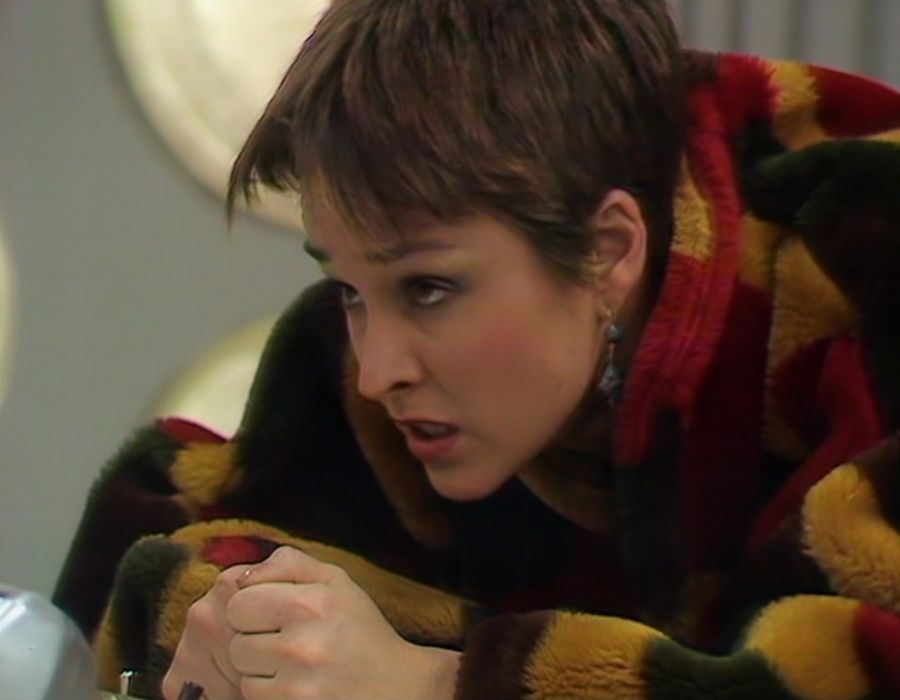
In Season 20, she’s more back to square one in being the companion who doesn’t want to be in the TARDIS. Tegan should have moved on from that. She couldn’t of course because the stories wouldn’t allow her that when she was enduring some pretty terrible ordeals.
This could be the build-up to her decision in leaving the TARDIS in ‘Resurrection of the Daleks’ in Season 21 where she’s had enough and it stops being ‘fun’, but I don’t think the production team had a clear idea on where Tegan was going as a character in the series.
At least in ‘The King’s Demons’, Tegan gets to be with the Doctor for most of the time they spend at Sir Ranulf’s castle. She also supports the Doctor when he’s offering to help Sir Ranulf solve the mystery of why King John is behaving rather oddly in this story.
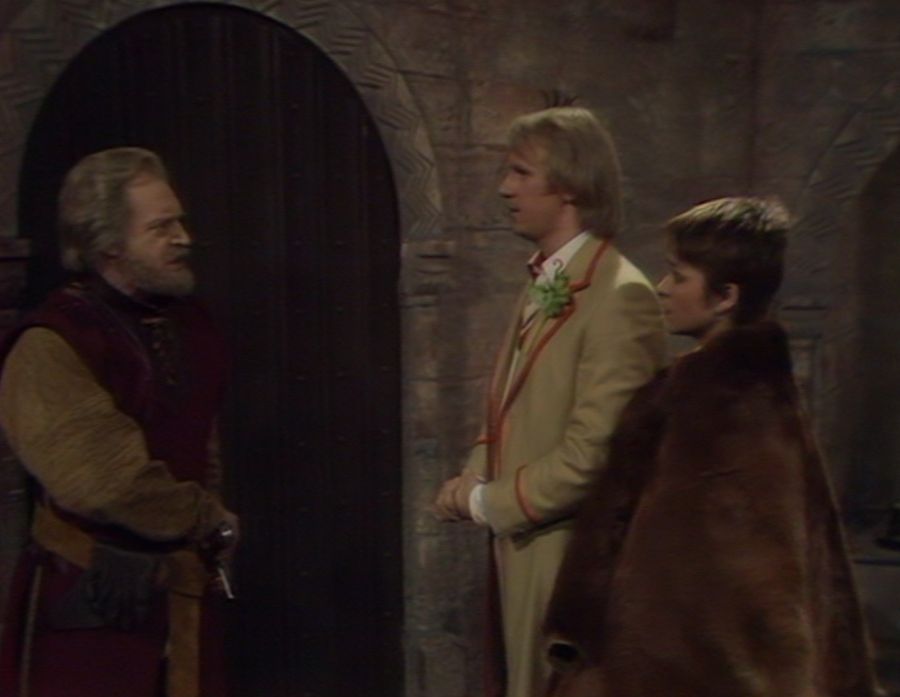
Incidentally, this is the first ‘Doctor Who’ story where we see finally Tegan out of that white tube top outfit she’d been wearing for most of Season 20. In this story, she gets to wear the multicoloured outfit that we’d see her wear in ‘Warriors of the Deep’ and ‘The Awakening’.
It’s brief that we get to see Tegan in that outfit, as she’s mostly in a fur coat and more furs later on in the story, but at least she’s wearing something different. Granted, this is the end of the season, unfortunately, but it’s nice that she gets to wear something different.
Also, Tegan…gets to fly the TARDIS? Huh? What’s going on? Okay, the coordinates were preset by the Doctor when she set the controls, but it’s so unusual. Maybe in the time she’s spent in her return to the TARDIS, the Doctor’s given her some TARDIS piloting lessons.
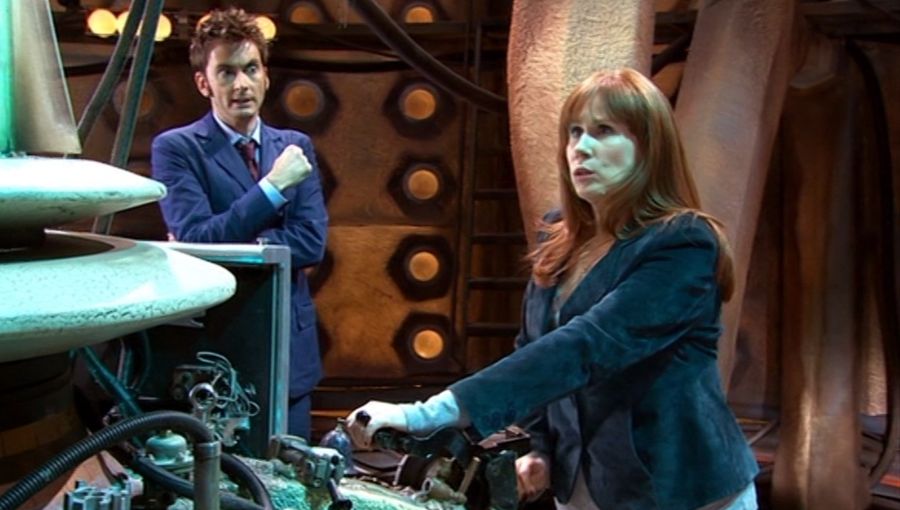
I wish we could have seen that or at least have it explained by either her or the Doctor. At least in ‘The Sontaran Stratagem’, we were given the chance to see the Tenth Doctor giving Donna lessons to pilot the TARDIS before they went off to have a new adventure. 🙂
I think what frustrates me about this is that Tegan doesn’t really do anything when she’s piloting the TARDIS to somewhere…wherever it was supposed to be. We just see her struggling to work out what to do whilst a TARDIS alarm is going off in the background. 😐
Maybe the TARDIS was heading for Event One again, judging from the fact that the sound effect originated from ‘Castrovalva’. The TARDIS scenes featuring Tegan in ‘Part Two’ could have easily been edited out, as they didn’t serve a big purpose in the storytelling.
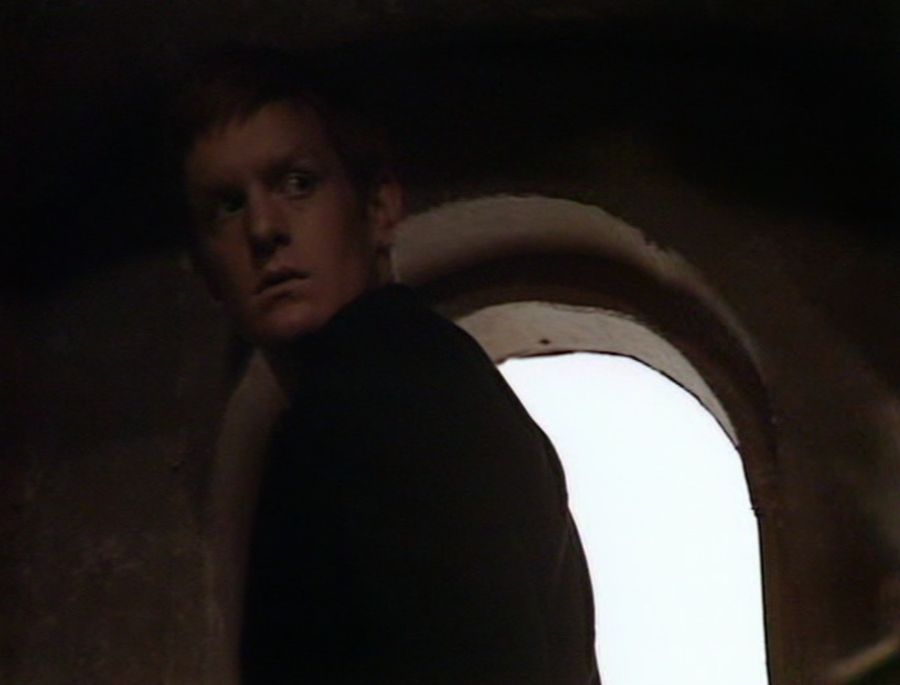
Regarding Turlough, it’s a bit of a struggle to talk about his character in ‘The King’s Demons’. He’s no longer working for the Black Guardian and is no longer trying to kill the Doctor, which is nice. But after a strong introduction in three TV stories, it’s gone downhill.
I wonder if Terence Dudley found it a struggle to write Turlough’s character compared with writing Tegan’s character in the story. Mark Strickson still does well with the material he’s been given, but he must have struggled to find new ways to make Turlough interesting. 😐
As Mark Strickson has indicated in the ‘Back to Bodium’ Blu-ray making-of documentary, Turlough isn’t given many lines to say in this ‘Doctor Who’ story. This is particularly when the focus isn’t entirely on him compared to the previous three stories.
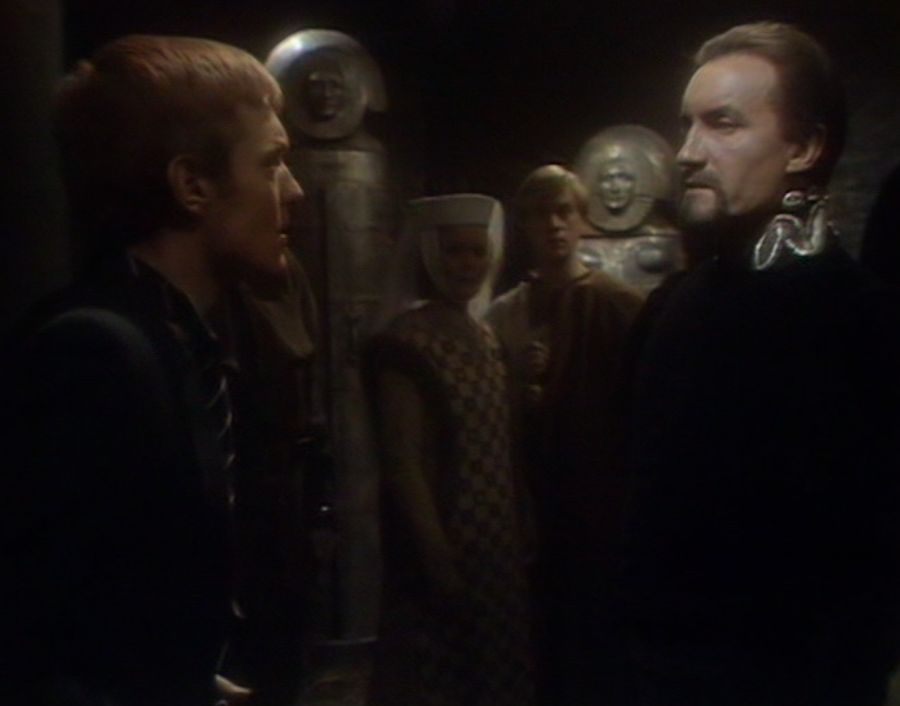
A disappointing aspect about ‘The King’s Demons’ is that even though Turlough gets to meet the Master for the first time, not much of a big deal is made of it. This shouldn’t be surprising considering Turlough meets the Master in only one episode of this adventure.
The Doctor and Tegan know who the Master is already, but for Turlough, he must have been baffled by who he is. He even says so when threatening the Master at sword-point before joining the Doctor and Tegan in the TARDIS after they’ve taken Kamelion inside.
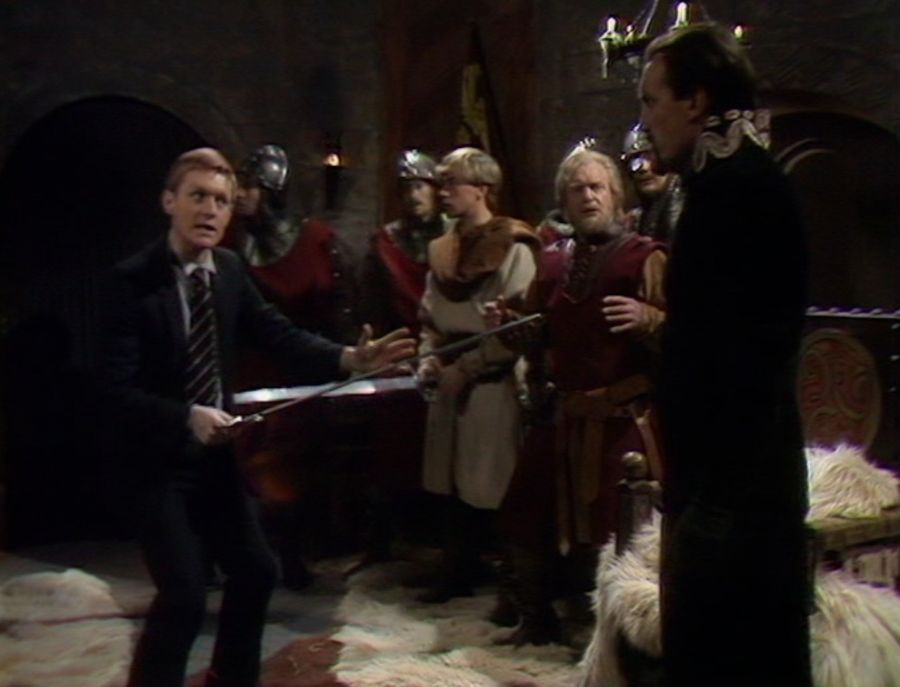
Turlough: I’ve had quite enough of you, whoever you are, so don’t try me too far.
In fact, Turlough does get pretty frustrated throughout this story, especially when he has his life threatened on multiple occasions. This includes when Hugh points a sword at him more than once in this ‘Doctor Who’ story and he increasingly gets fed up with him.
I don’t blame Turlough for being fed up with Hugh. I would be if I had to put up with being constantly accused me for something I didn’t do. Turlough gets to direct that frustration on Hugh when they and Hugh’s mother Isabella are imprisoned in the castle dungeons.
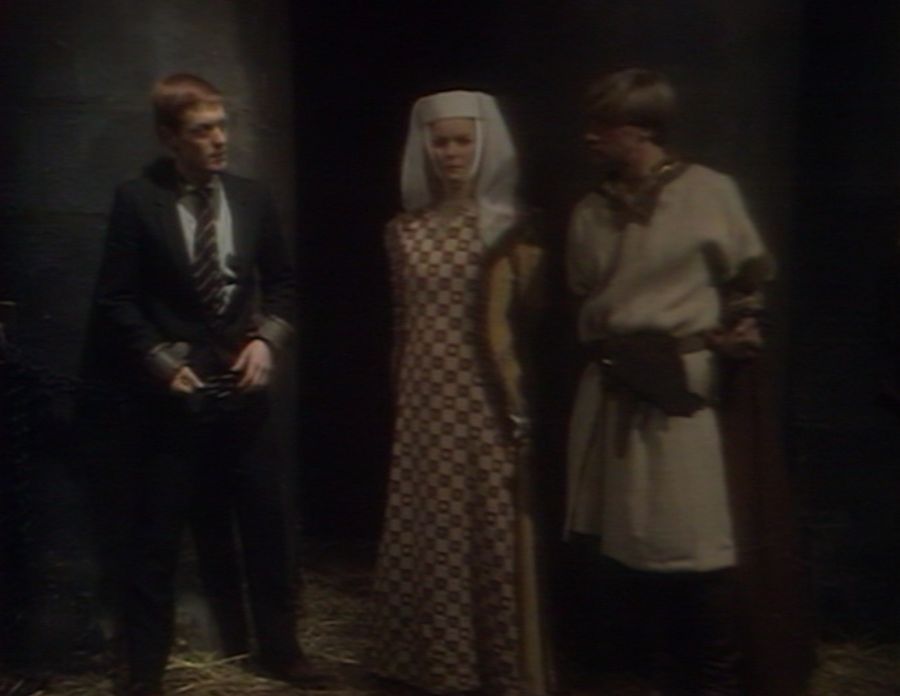
Isabella: Can you not help us?
Turlough: I wish I could.
Hugh: Can you not call on Hell?
Turlough: I could, but then so could you, with a better chance of success, I fancy.
Turlough does get to see Sir Geoffrey de Lacey on his way to London when escaping in ‘Part Two’. Unfortunately, when Sir Geoffrey is shot in the back by an arrow, Turlough is immediately accused for being the cause of Sir Geoffrey’s death, frustrating him more. 😐
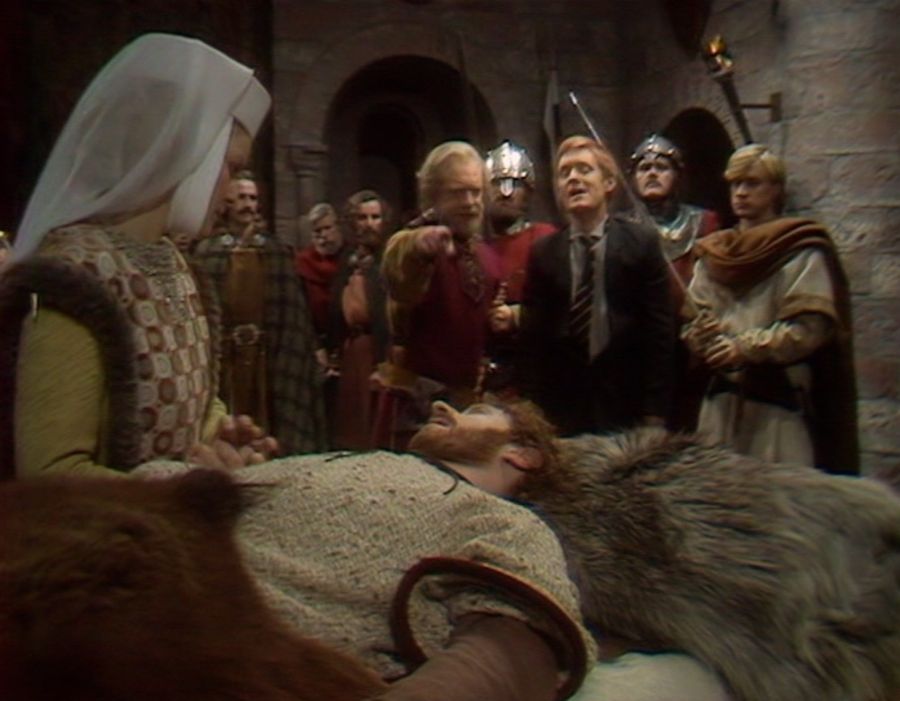
Sir Ranulf: Vile villain! He has slain Sir Geoffrey!
Turlough: I didn’t do it!
Hugh: You will die in torment, catiff!
Turlough: You’re always threatening me, and without the slightest justification!
It’s a decent outing for Turlough and it’s not terrible by any means. But compared to Turlough’s journey in ‘The Black Guardian Trilogy’, it does feel to be a bit of a let-down. The writers after Turlough’s introduction stories did seem to struggle in writing his character.
There would be exceptions in the following season, including ‘Frontios’ by Christopher H. Bidmead and of course ‘Planet of Fire’ by Peter Grimwade, which is Turlough’s final story. But there didn’t seem to be much for Turlough in his later travels with the Doctor.
It was nice of Mark Strickson to share his memories of going to Bodiam Castle when he was a kid in the ‘Back to Bodiam’ Blu-ray making-of documentary. It must have been a joy for him to film a ‘Doctor Who’ story he was in at location he used to go when as a kid.
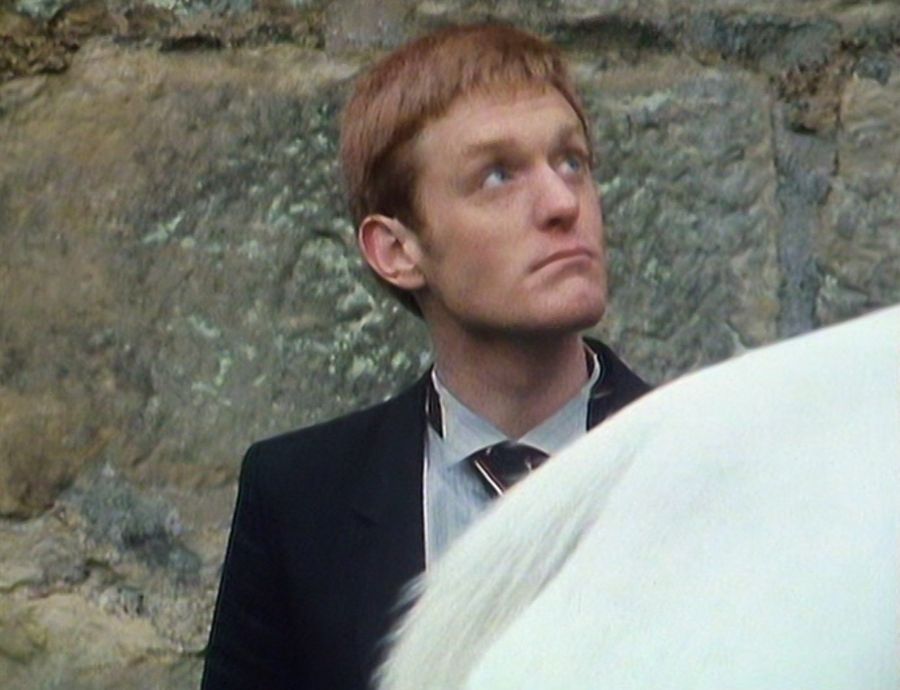
And of course, there’s Kamelion – what ‘The King’s Demons’ is most remembered for. Now to be fair, it’s not a bad idea to have a robot ‘Doctor Who’ companion. It’d been done with K-9 who was a robot dog and it worked amazingly well with a lot of audiences.
The concept of Kamelion was paved with good intentions, especially when you consider this was an actual robot that was supposed to walk and talk with everything being programmed beforehand. Unfortunately, the good intentions subsided and laid waste. 😦
In terms of Kamelion’s design, it looks great. I’m not sure if it’s supposed to be male and female, judging by how the chest looks. But it doesn’t really matter, especially when you consider that Kamelion is supposed to change into any form he wants – male or female.
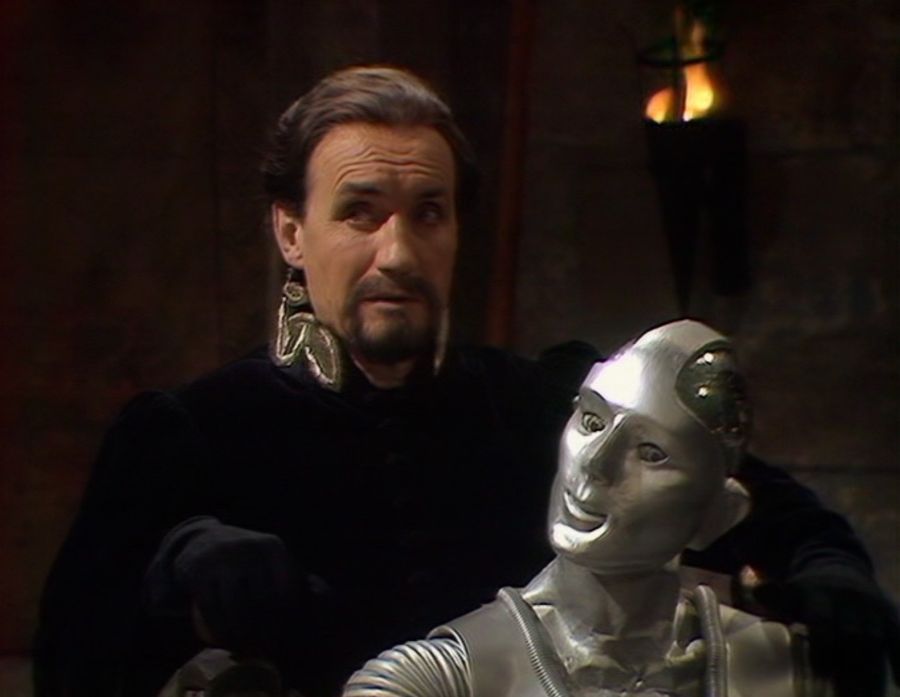
However, the problems were soon clearly evident when it was discovered that Kamelion as a robot prop couldn’t do anything. He couldn’t walk, move or talk like he was supposed to. And there were problems in setting him up, which caused many delays. 😦
The robot prop was designed by Chris Padmore and Mike Power (the latter provided the software for Kamelion. Unfortunately, Mike Power died tragically. According to director Tony Virgo, Mike Power died in a boating accident before ‘The King’s Demons’ was made.
This is contradicted by Chris Padmore in the ‘Kamelion – Metal Man’ featurette where he says Mike Power died shortly after ‘Planet of Fire’ was made. Not sure which is the correct version, but clearly the issues of having Kamelion on set were very self-evident.
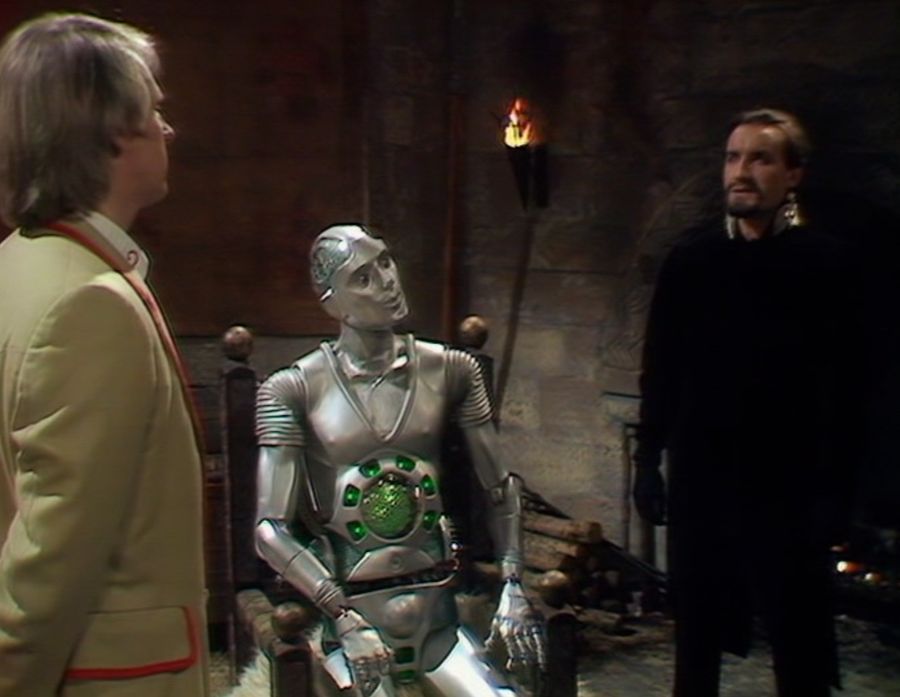
Thankfully, there was a fundamental quality Kamelion had that helped to get the production team out of tricky situations involving the robot prop. Kamelion can shapeshift into any person, providing the revelation that King John isn’t King John at all.
It’s a good way to avoid having painful scenes featuring Kamelion as the robot where he’s supposed to walk, but couldn’t because of mechanical problems. As you may probably notice, Kamelion is mostly sitting down or standing up and not walking at all. 😐
As well as playing King John, Gerald Flood provides the voice of Kamelion. It’s not a bad idea to have Kamelion voiced by the actor playing King John, but it’s such a contrast when watching the adventure, since Gerald Flood plays both characters very differently.
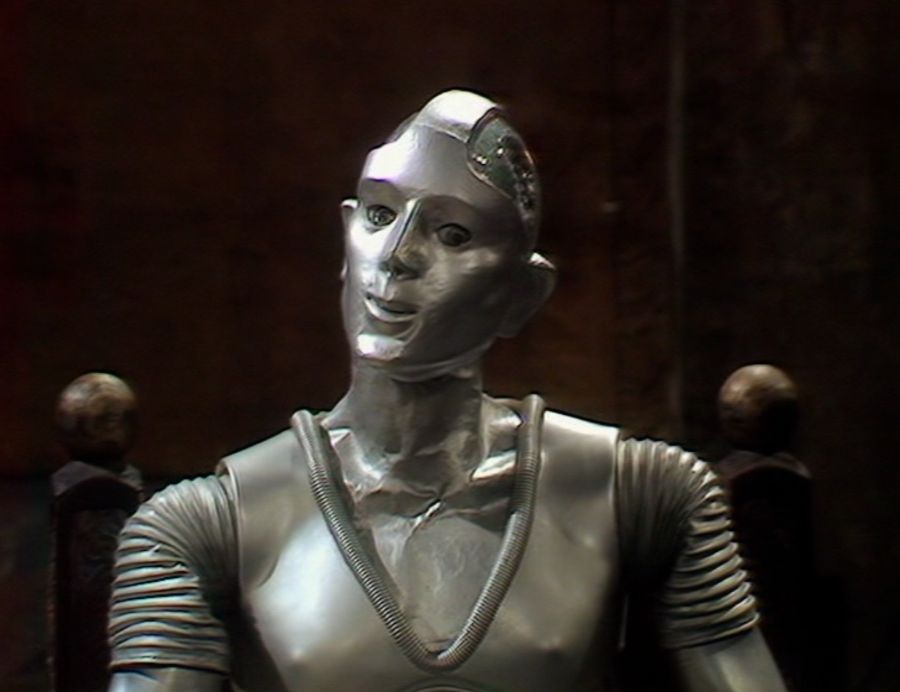
Mind you, this does raise a complication or a plot point that sadly doesn’t make sense. Even Peter Davison pointed this out when interviewed in the ‘Kamelion – Metal Man’ featurette. You see, Kamelion and King John don’t act in the same manner in this story. 😐
You might think that’s an odd thing to say; but think about it. It’s one thing to have Kamelion acting all robotic. It’s another when you see King John full of life and being exuberant, and it doesn’t match to what Kamelion is meant to be like when he’s a robot.
If we saw Kamelion as King John in the story, he would be very stiff and unemotional. Not like the full of life King that Gerald Flood plays in the story. It’s something that wasn’t thought-through when establishing who Kamelion is as a robot character in this.
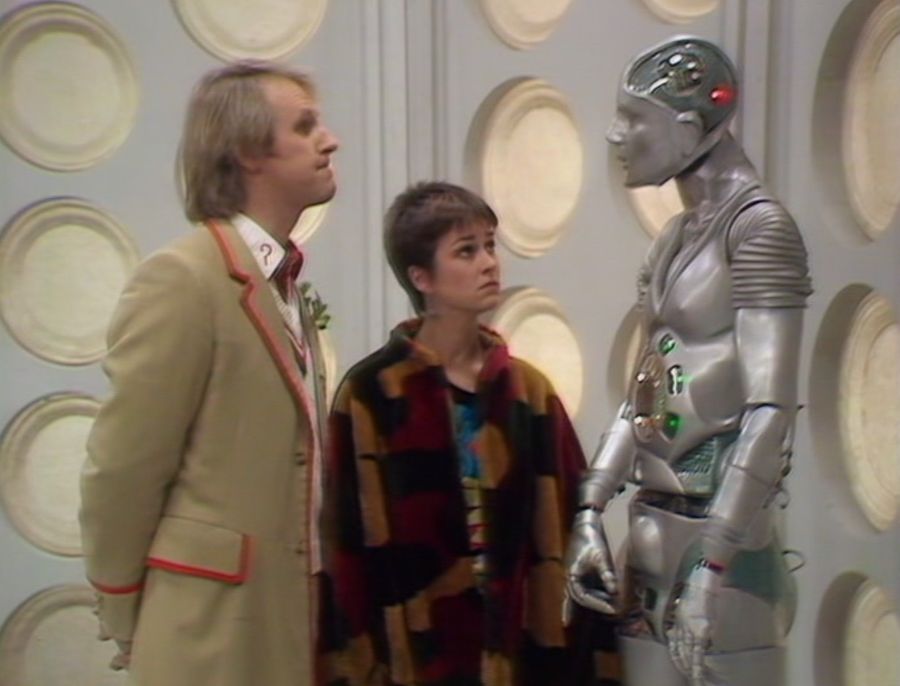
This begs the question, if the robot prop ended up being a problem in behind-the-scenes terms, why didn’t they just have an actor playing the robot and be covered in silver? I mean, actors playing robots in ‘Doctor Who’ has been done before in the series.
The irony of this is that in ‘Planet of Fire’ – Kamelion’s final TV story in ‘Doctor Who’ – we would see an actor covered in silver paint playing Kamelion to establish the fact that he’s a robot. That would’ve worked fine in ‘The King’s Demons’ instead of the robot prop.
Heck, this was before Data was introduced in ‘Star Trek: The Next Generation’, and Brent Spiner had to be covered in silver paint to establish the fact that Data is an android. Surely, Kamelion could’ve been presented in that manner in the series instead.
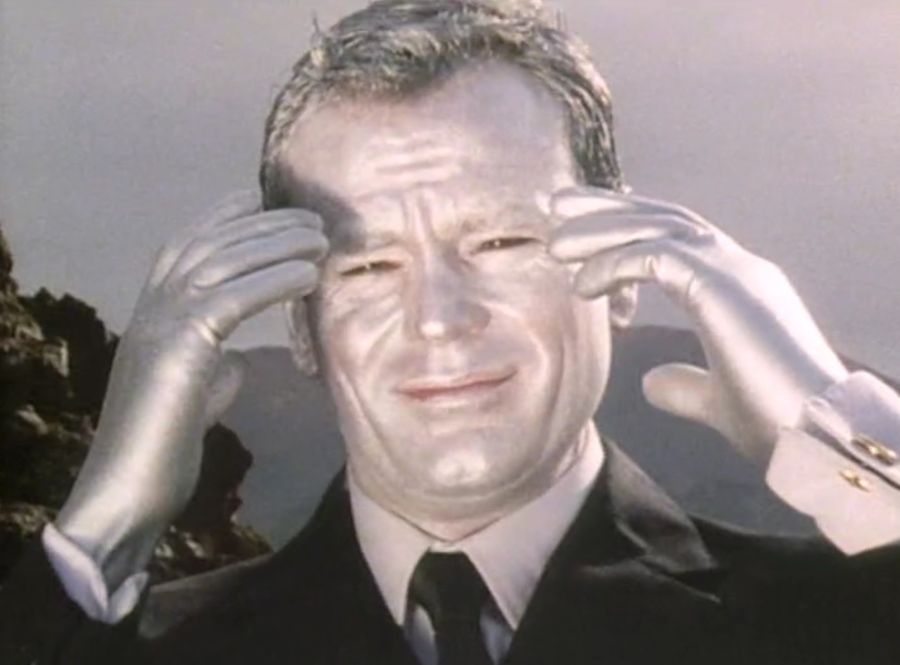
That way, you’re guaranteed the opportunities to use Kamelion more in the TV series as a ‘Doctor Who’ companion. Yes, you’d have to give up using the robot prop, but it would have saved a lot of headaches especially when it came to writing scripts for Kamelion. 😐
But of course, John Nathan-Turner was determined to keep using the Kamelion robot prop without realising the consequences. It strained his relationship with director Tony Virgo due to the delays in getting Kamelion set up with the robot prop not working at all.
This is probably why Tony Virgo wasn’t asked to direct another ‘Doctor Who’ story, which is a shame as it wasn’t his fault that Kamelion didn’t work as intended. I think Tony Virgo did well with the historical aspects of this story as opposed to getting Kamelion to work.
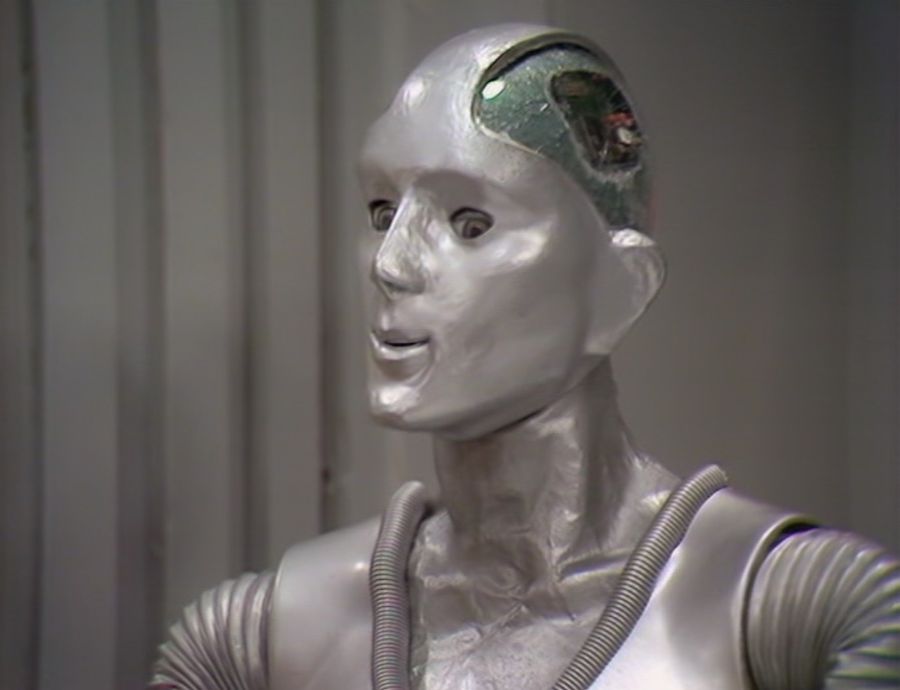
In the end, Kamelion joins the Doctor, Tegan and Turlough, but is mostly confined to the TARDIS and doesn’t get to go out with them. In a sense, this makes Kamelion a wasted opportunity when you don’t do anything with him once you have him aboard the TARDIS.
Thankfully, the Big Finish audios have done more stories featuring Kamelion’s character compared to what the TV series didn’t do with the character. But it’s bizarre to have him brought on as a companion and not use him at all because the robot prop didn’t work. 😐
I did like it when Kamelion was revealed in ‘Part Two’ as the Doctor enters the King’s quarters to find him playing a lute and singing in King John’s voice. I like how Kamelion looks up to greet the Doctor, and how the Doctor goes over to inspect this unique being.
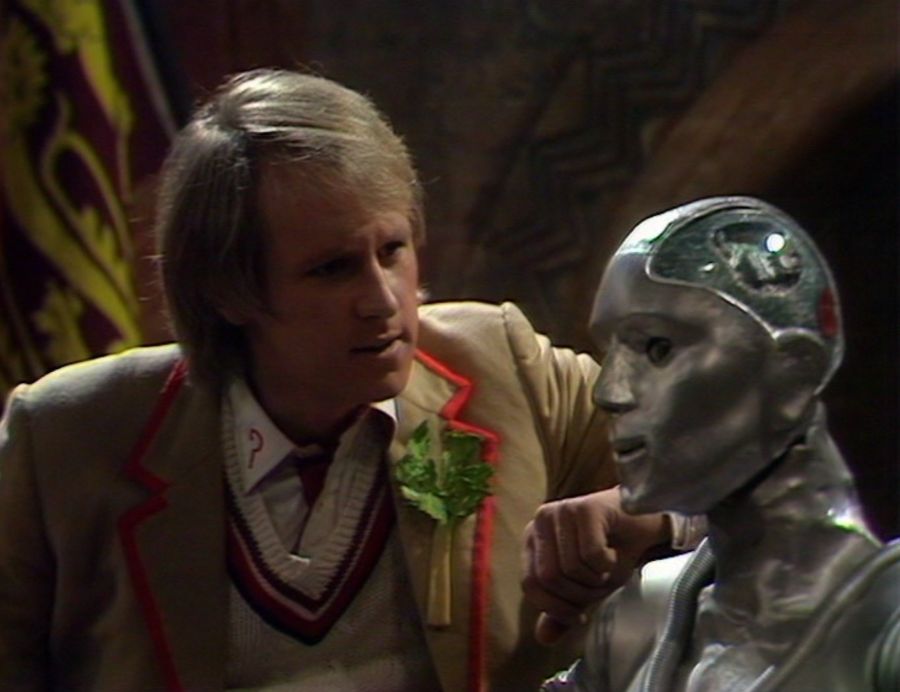
Doctor: Your Majesty seems in need of a doctor.
The story’s guest cast includes Frank Windsor as Sir Ranulf Fitzwilliam. This is Frank Windsor’s first ‘Doctor Who’ appearance, as he would go on to guest star in ‘Ghost Light’ with Sylvester McCoy and Sophie Aldred. I enjoyed him as Sir Ranulf in this adventure. 🙂
It was interesting to see Sir Ranulf troubled by the King’s odd behaviour, especially when his wife Isabella was taken prisoner and his son Hugh’s life was on the line. It’s a shame that Sir Ranulf’s faith in the Doctor is short-lived when he offered help to him in this story.
Isla Blair guest stars as Isabella, Sir Ranulf’s wife. Isla Blair is the wife of Julian Glover (Richard the Lionheart in ‘The Crusade’ and Scaroth in ‘City of Death’). She’s also the mother of Jamie Glover (Ian Chesterton in the docu-drama ‘An Adventure In Space and Time’).
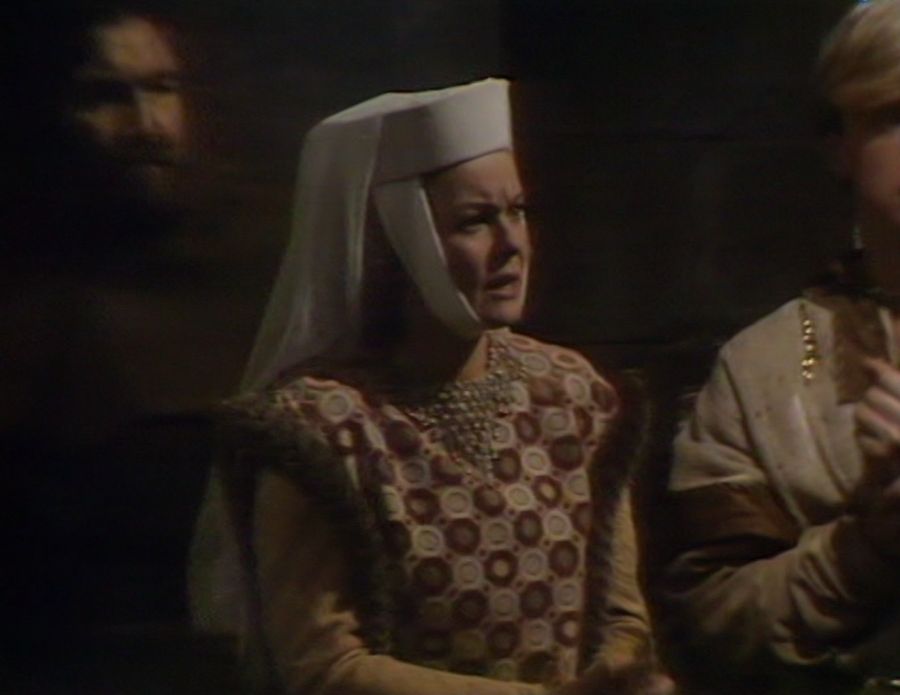
Whilst this is Isla’s only ‘Doctor Who’ TV appearance so far, she’s done some Big Finish audios, including ‘Exotron’ and ‘Donna Noble: Kidnapped!’. There’s not much to say about Isabella’s character, though she does love her husband and her son very much. 🙂
Christopher Villiers guest stars as Hugh, the son of Sir Ranulf and Isabella. This is Christopher Villiers’ first ‘Doctor Who’ story, as he would go on to play Professor Moorhouse in ‘Mummy on the Orient Express’ and played Cacothis in the Big Finish audio story ‘Absolution’.
Hugh does come across as hot-headed, especially when he’s disgruntled at being dishonoured when his life is spared during a jousting with Sir Gilles Estram, thanks to the Doctor’s intervention. He also accuses Turlough a lot and aims a sword at him a lot.
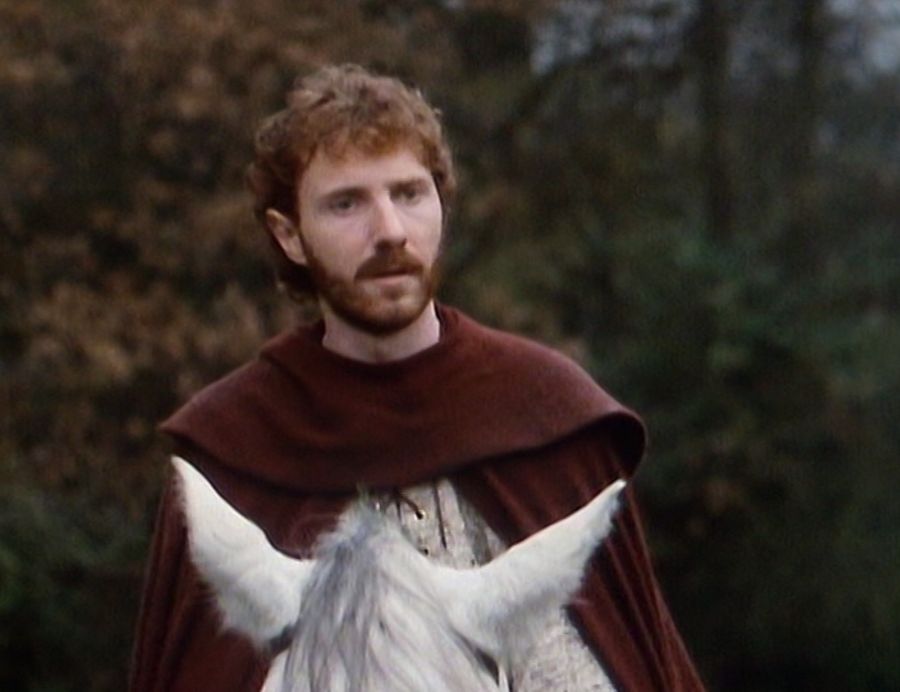
Michael J. Jackson guest stars as Sir Geoffrey de Lacy in this ‘Doctor Who’ story. Sir Geoffrey is an English knight and a cousin of Sir Ranulf. He went to swear the Crusader’s Oath before the real King John in London. He has trouble upon his return to Sir Ranulf. 😐
Sir Geoffrey is arrested by Sir Gilles Estram and taken before the fake King in Sir Ranulf’s castle. Naturally, Sir Geoffrey becomes perplexed by how the King can be in two places at the same time. Unfortunately, Sir Geoffrey gets killed in ‘Part Two’ of this adventure. 😦
There’s a court Jester that appears in ‘The King’s Demons’, played by Peter Burroughs, but I believe he’s only in ‘Part One’ and doesn’t serve the story much. He does stand out in that yellow outfit he wears in the story. There’s also a Lutenist, played by Jakob Lindberg.
The story concludes with the Doctor, Tegan and Turlough taking Kamelion with them in the TARDIS and presumably foiling the Master’s plans, which we don’t see enough of. The Doctor also decides to keep Kamelion in the TARDIS, much to Tegan’s annoyance. 😐
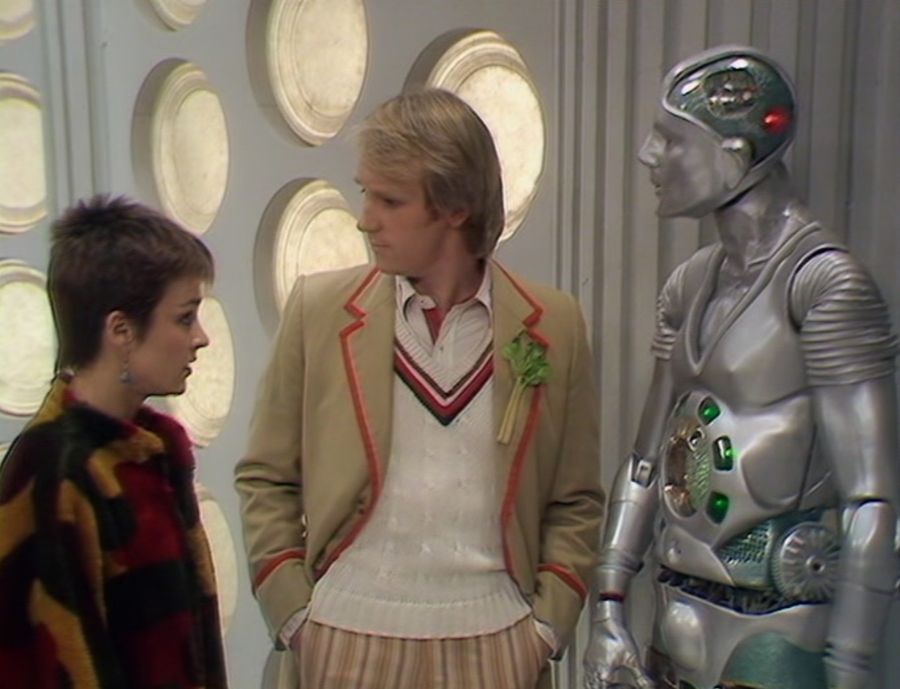
Tegan: He’s a machine, Doctor, just a machine.
A shame Tegan didn’t get to know Kamelion well enough in ‘Doctor Who’. In the TV sense at least. The Doctor, slighted by Tegan’s rude behaviour, threatens to take her home. He had planned on showing her many wonders of the universe, including the Eye of Orion. 🙂
What’s amusing is that had ‘The Return’ or ‘Warzone’ happened as planned in the season finale slot of Season 20, we would have seen the Doctor, Tegan and Turlough hold on for dear life once the TARDIS ended up being caught in the Daleks’ time corridor.
That ending was instead given to ‘Frontios’ once ‘The Return’ was rescheduled and became ‘Resurrection of the Daleks’ in Season 21 instead. For ‘The King’s Demons’ however, the ending was rewritten to lead into the next story, which is ‘The Five Doctors’.
It was fascinating to see Tegan determined to keep the Doctor happy by asking him to take her to the Eye of Orion. It was what he planned to do anyway, as he doesn’t change the coordinates. Incidentally, where did Kamelion go? 😀 Did he vanish or something? 😀
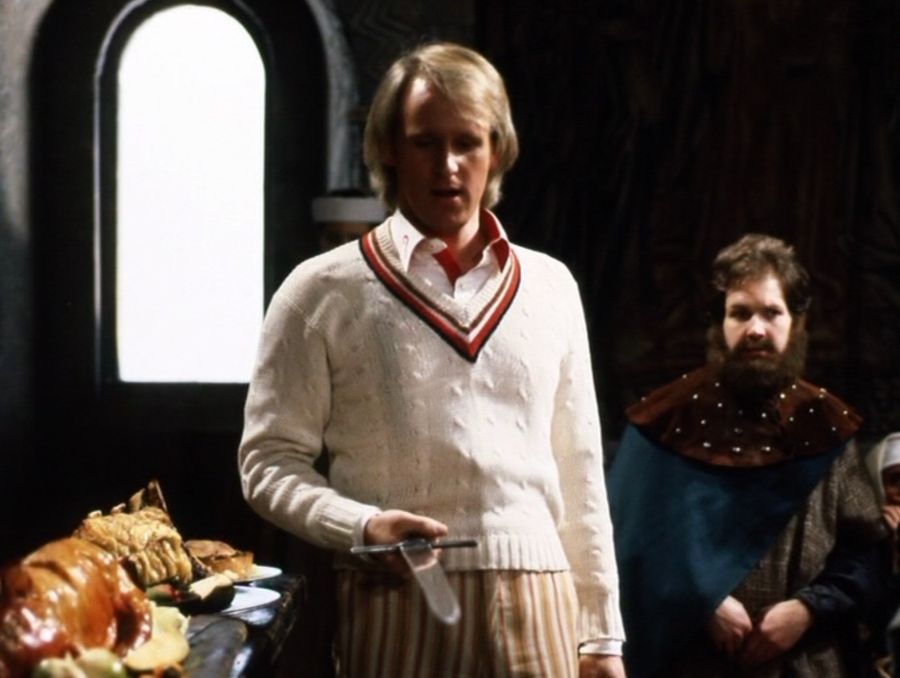
The original DVD special features were as follows. There was the ‘Kamelion – Metal Man’ behind-the-scenes featurette with cast and crew interviews, the ‘Magna Carta’ featurette and a photo gallery of the story. There was a dual mono sound audio mix option for the story, a DVD audio commentary with Peter Davison, Isla Blair and script editor Eric Saward, a DVD audio commentary with director Tony Virgo for ‘Part One’ of the story, and an isolated music option of the story by Jonathan Gibbs to enjoy. There was an info-text commentary option to enjoy, and PDF materials, including a ‘Radio Times Listings’ of the story. There was also a ‘coming soon’ trailer for ‘The Dominators’, starring Patrick Troughton, Frazer Hines and Wendy Padbury.
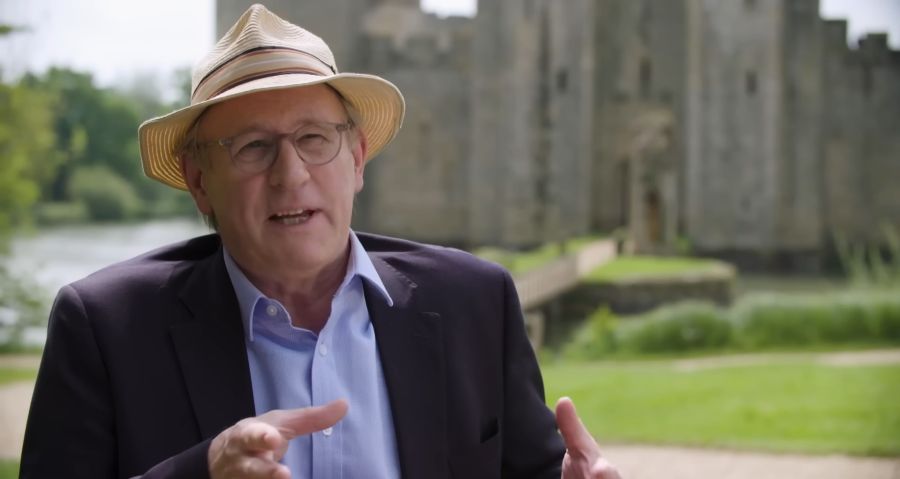
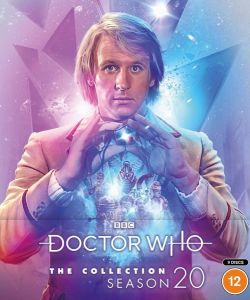
On Disc 6 of the ‘Doctor Who – The Collection – Season 20’ Blu-ray, the ‘Kamelion – Metal Man’ behind-the-scenes featurette, the dual mono sound audio mix option, the two DVD audio commentaries and the isolated music option can be found on there. The ‘Magna Carta’ featurette, the photo gallery and the info-text commentary option have been updated for 2023 on the Blu-ray.
The new special features on Blu-ray include the brand-new ‘Back to Bodium’ making-of documentary with behind-the-scenes cast and crew interviews, and the ‘Behind the Sofa’ feature on ‘The King’s Demons’ with Peter Davison (the Fifth Doctor), Sarah Sutton (Nyssa), Janet Fielding (Tegan) and Mark Strickson (Turlough) as well as Colin Baker (the Sixth Doctor) and Sylvester McCoy (the Seventh Doctor) as well as Katy Manning (Jo) and Sophie Aldred (Ace). There are TV promotion items for Season 20, including a ‘Nationwide’ item with Peter Davison, Jon Pertwee and Patrick Troughton as well as with producer Verity Lambert (taken from ‘The Five Doctors’ 25th anniversary 2-disc Special Edition DVD), a ‘Points of View’ item, a ‘Saturday Superstore’ item with Peter Davison, Janet Fielding and Mark Strickson (which has been updated and extended as well as taken from ‘The Five Doctors’ 25th anniversary 2-disc Special Edition DVD), a ‘Nationwide’ item on the 25th anniversary of the BBC Radiophonic Workshop, a ‘Swap Shop: Star Awards’ item with Peter Davison, and a ‘South East at Six’ item on ‘Doctor Who’ USA conventions. There’s a collection of items on the ‘Doctor Who Celebration at Longleat’ convention, including BBC News item on the convention, a BBC featurette on the convention, a convention panel with Jon Pertwee, a convention panel with Patrick Troughton, conducted by producer John Nathan-Turner, a Third Doctor era convention panel with Jon Pertwee, Nicholas Courtney, Richard Franklin and John Levene, a Season 20 cast convention panel with Peter Davison, Sarah Sutton, Janet Fielding, Mark Strickson, Anthony Ainley and Valentine Dyall, a First Doctor era convention panel with Carole Ann Ford, Nicholas Courtney, Heather Hartnell, who is the wife of William Hartnell, and Anne Hartnell, who is the daughter of William Hartnell, a convention panel with Tom Baker and John Leeson, a photo gallery on the 20th anniversary celebrations of ‘Doctor Who’ at the Longleat convention, and a BBC Radio 2 item by Ed Stewart on the 20th anniversary celebrations of ‘Doctor Who’ at the Longleat convention. There are TV promotion items on ‘All Change’, including a ‘Breakfast Time’ item with Nicola Bryant, a BBC News compilation containing two items announcing Peter Davison’s departure from ‘Doctor Who’ (taken from ‘The Caves of Androzani’ 2-disc Special Edition DVD), a ‘Newsround’ item announcing Peter Davison’s departure from ‘Doctor Who’, a ‘South East at Six’ item with Peter Davison and producer John Nathan-Turner (taken from ‘The Caves of Androzani’ 2-disc Special Edition DVD), a ‘Breakfast Time’ item with Peter Davison and his then-wife Sandra Dickinson, a BBC News item on the announcement of Colin Baker as the Sixth Doctor, and a ‘Breakfast Time’ item with Colin Baker. There’s some Australian convention footage with Janet Fielding, BBC trailers and continuity announcements of the story, and two audio archive items including a BBC Radio Sheffield report on the Blackpool ‘Doctor Who’ exhibition and a BBC Radio interview with Gerald Flood, conducted in March 1983.
On the PDF front, as well as the ‘Radio Times Listings’ of ‘The King’s Demons’, there are production documents, two rehearsal scripts, two camera scripts, studio floorplans, design drawings and a ‘Doctor Who Celebration at Longleat’ PDF. You need a special Blu-ray computer drive for that.
So, ‘The King’s Demons’ isn’t a ‘Doctor Who’ story I regard very highly. Nor do I consider it one of my favourite stories. It’s okay, but it lacks and pace action throughout. The story is also quite rushed in terms of its ending, and I don’t find it to be ‘masterly’ for the Master.
It does provide a decent introduction to Kamelion in the series, but it’s a shame that he ended up being a ‘Doctor Who’ companion that didn’t work. It’s also a shame that ‘The King’s Demons’ ended up being the season finale to Season 20 of the classic TV show. 😦
Had Season 20 ended up with ‘The Return’ or ‘Warhead’ as originally planned, maybe the season could have gone out on a high. ‘The King’s Demons’ is okay to close off the season, but it’s not fantastic. At least it’s made up for in the next story ‘The Five Doctors’.
‘The King’s Demons’ needed to be a four-parter instead of a two-parter to flesh out the story and its characters. There’s a lot being crammed into the story that I don’t think that any writer other than Terence Dudley would have make it work in a two-part structure. 😐
‘The King’s Demons’ is the weakest out of the three stories Terence Dudley has written in the TV series, as I prefer ‘Four to Doomsday’ and ‘Black Orchid’ over this one. But at least he got to novelize the story. I’ve found it to be an improvement over the TV version.
I’m glad Kamelion has been given a legacy outside the two stories he’s been in on TV, including the Big Finish audios. I’ve enjoyed him in stories like ‘Circular Time: Winter’, ‘The Auton Infinity’ and ‘Masterful’. It’s nice that he isn’t forgotten about in ‘Doctor Who’.
Anyway, with the Fifth Doctor, Tegan and Turlough continuing their way to the Eye of Orion and with Kamelion staying in the TARDIS some of the time, it’s time for the ‘Doctor Who’ series to properly celebrate the 20th anniversary and there was plenty to look forward to then.
Not just in terms of ‘The Five Doctors’, but also in the celebrations at conventions like the ‘Doctor Who Celebration at Longleat’ convention that happened in April 1983. Were the celebrations worthwhile? Would they be looked back on with fondness to honour the TV series?
‘The King’s Demons’ rating – 5/10
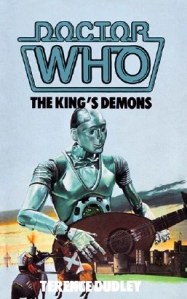
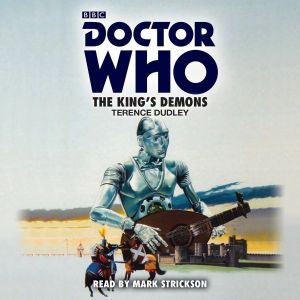
‘DOCTOR WHO – THE KING’S DEMONS’
Please feel free to comment on my review.
Delving Deeper into Sir Ranulf’s Castle
At last! I’ve read and listened to ‘The King’s Demons’ Target novelization/audiobook! 🙂
It’s been a long time since I read a Terence Dudley-penned ‘Doctor Who’ Target novelization and listened to it on audio. Mainly because Terence Dudley only did two ‘Doctor Who’ Target novelizations on stories he wrote. Three if you count ‘K-9 & Company’.
I do own the ‘K-9 & Company: A Girl’s Best Friend’ Target novelization, but it’s taking me a while to get around to reading and hearing it. Hopefully, I will soon. Terence Dudley didn’t novelize ‘Four to Doomsday’, as that adventure was novelized by Terrance Dicks instead.
I’m not sure why Terence Dudley didn’t novelize ‘Four To Doomsday’, as it would have been fascinating to check out the story in prose form in his style. I’m glad he novelized three out of the four stories he wrote for the ‘Doctor Who’ universe before he died in December 1988.
I first came across Terence Dudley’s style of prose writing when checking out the Target novelization of ‘Black Orchid’, which was my first discovery of a ‘Doctor Who’ Target novelization. I greatly enjoyed it with the 4-disc CD audiobook, read by Michael Cochrane.
What stood out for me when checking out the ‘Black Orchid’ Target novelization/audiobook was how Terence Dudley was able to enhance the story and characters, especially in a potential four-part structure instead of a two-part structure. 🙂
With me updating my reviews on the stories in Season 20 of ‘Doctor Who’, based on its Blu-ray box set, I decided to check out ‘The King’s Demons’ as a Target novelization/audiobook, especially as I consider it the weakest of Terence Dudley’s stories.
I wanted to find out how different the Target novelization/audiobook was to the TV version of ‘The King’s Demons’. Does the story work better in prose compared to visual form? Is there something in ‘The King’s Demons’ novelization where I would appreciate it more? 🙂
When I purchased the ‘Black Orchid’ Target audiobook, I listened to it on 4 CDs, which acted as four episodes. When I purchased ‘The King’s Demons’ Target audiobook, I purchased the audiobook via Audible. I read the novelization in print from along with it. 🙂
I was expecting ‘The King’s Demons’ to be an in-depth version of the story in prose form compared to what the TV version gave us. And that is true in a sense, as Terence Dudley does very well with describing characters and their thoughts and motivations throughout.
You’re not short-changed when reading and listening to the story. You’re delving more into the world of 1215 and getting more out of what characters like Sir Ranulf, Isabella, Hugh, Sir Geoffrey, the Master, Tegan, Turlough and the Doctor are thinking throughout the story.
The first review I came across about ‘The King’s Demons’ Target novelization was in Issue #110 of ‘Doctor Who Magazine’ where Gary Russell is very complimentary and shares how the novelization has great character and story development compared to the TV version.
Mind you, the thing I’ve noticed about ‘The King’s Demons’ is how closely Terence Dudley writes the story in the same structure as the TV version. Not that’s a bad thing. It’s just we’re spending more time in certain scenes and aren’t rushing through scenes in the tale.
The story’s ending is also improved upon, which we’ll get to in a bit. I was expecting more new scenes in the story compared to ‘Black Orchid’s Target novelization, which contained brand-new scenes featuring Ann, Lady Cranleigh and Lord Cranleigh compared to the TV version.
Maybe it’s because I don’t know ‘The King’s Demons’ well enough as a story to appreciate the changes in the Target novelization. Although I did re-watch the TV story recently on Blu-ray and I did notice a few new scenes in the ‘Part Two’ section of the story when reading it.
This includes new scenes with Tegan and the Doctor when they’re trying to find the TARDIS after parting company with Turlough and Sir Geoffrey in ‘Part Two’. It’s not plentiful compared to ‘Black Orchid’s novelization, but I was able to notice new scenes in the tale.
Plus, scenes I’m familiar with from the TV story are different in the Target novelization with tweaks of new dialogue added here and there. This includes the Doctor’s confrontation with the Master when he’s revealed at the end of ‘Part Two’. The Doctor’s line of dialogue…
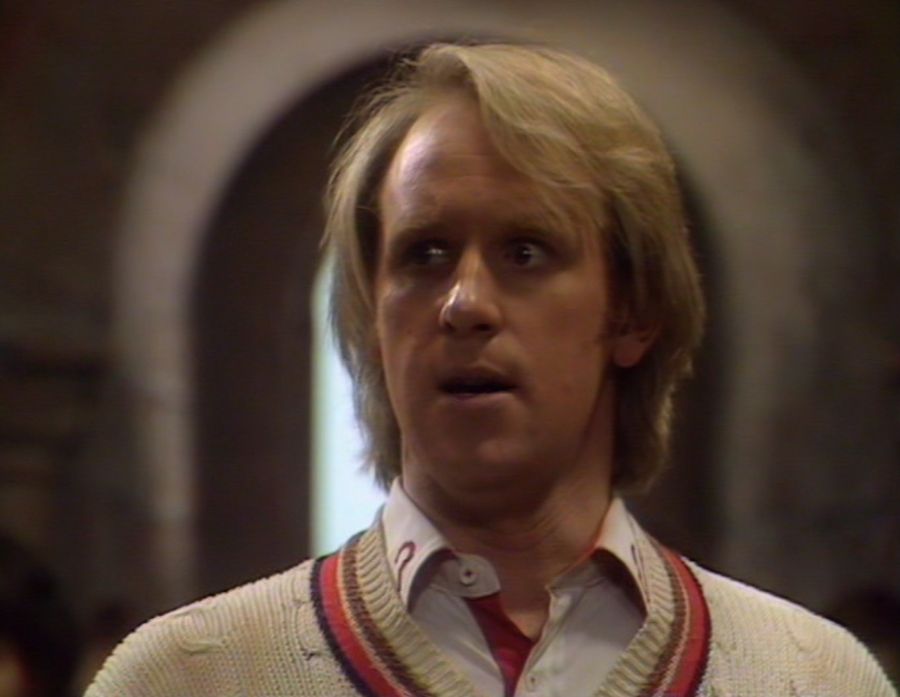
Doctor: You may disguise your features, but you can never disguise your intent.
…isn’t included in the Target novelization, as that’s replaced with “I concede your mastery of disguise, but I’m already onto your little game” in Chapter 6. I think that’s a better line of dialogue compared to what Peter Davison’s Doctor said in the actual TV story.
Don’t get me wrong. It wasn’t a bad line of dialogue, but it’s quite bog-standard for a good guy line to a villain and it feels slightly out-of-place for some reason in the banqueting hall. The amendments to dialogue in the story help to make it sharper when reading it. 🙂
And hearing it, of course. 😀 ‘The King’s Demons’ is divided into 10 chapters – with the first five chapters forming ‘Part One’ and the second five chapters forming ‘Part Two’. As I listened to the audiobook via Audible, I didn’t know where the four-episode breaks would be.
It’s not like ‘Black Orchid’ where I knew where the breaks in a potential four-episode structure would be, thanks to the audiobook being released on 4 CDs in 2008. Reading and listening to ‘The King’s Demons’ had me thinking of the two-part structure instead. 😐
This is probably my first and only time in checking out ‘The King’s Demons’ novelization in print and audio, and whilst I enjoyed the reading and listening experience, I can’t think of the story as a four-parter, as it mostly sticks to the structure that’s in the two episodes.
Incidentally, ‘The King’s Demons’ was published in July 1986 whilst ‘Black Orchid’ was published in February 1987 and ‘K-9 & Company’ was published in October 1987. Thankfully, Terence Dudley didn’t mess up too much on continuity like he did with ‘Black Orchid’. 🙂
In the ‘Black Orchid’ novelization, there was a reference to ‘The King’s Demons’, which took place after that story. Granted, Terence Dudley novelized ‘The King’s Demons’ first before he novelized ‘Black Orchid’, but it’s quite difficult to ignore that continuity error. 😀
Mind you, Terence Dudley did seem to think that the Doctor was still trying to get Tegan back to London Airport (Heathrow Airport, actually), whereas this story is set in Season 20 and Tegan’s not trying to get back home anymore. I’m surprised this plot aspect wasn’t corrected.
This especially noticeable when the Doctor suggests taking Tegan to London Airport at the story’s end, and not to the Eye of Orion. The TV ending where the Doctor, Tegan and Turlough talk to Kamelion and the Doctor pilots the TARDIS to the Eye of Orion is omitted.
Perhaps it was script editor Eric Saward who wrote that ending instead of Terence Dudley, but you’d think the continuity would be kept up to match what’s in the TV story. Then again, these are novelizations and not everything is going to match to what was shown on the TV.
The audiobook is read by Mark Strickson, who plays Turlough in the TV series and the Big Finish audios. I’ve greatly enjoyed Mark’s reading of ‘The King’s Demons’, having met him at conventions and hearing him do audio readings beforehand, especially for Big Finish’s stories.
‘The Companion Chronicle’ story ‘Freakshow’ comes to mind. Granted, Mark Strickson isn’t Michael Cochrane, but I’m pleased it’s an actor who performed a regular character in ‘Doctor Who’ and in this story, as opposed to someone uninvolved in the story being chosen.
I’m thinking of Steven Pacey who read the ‘Terminus’ and ‘Enlightenment’ Target audiobooks. Mark Strickson is clearly enthusiastic when reading the story, and I did like his takes on characters like the Doctor, Tegan, the Master, Sir Ranulf, Isabella, Hugh, Sir Geoffrey, etc.
It was fun to hear Mark’s attempt at a French accent when voicing Sir Giles Estram in the audiobook and of course he does well playing Turlough in the story. Reading the book with Mark Strickson reading the story on audio made it a pretty satisfying experience for me. 🙂
A very notable difference in the Target novelization is that Sir Geoffrey de Lacy isn’t killed as in the TV adventure. Instead, Sir Geoffrey is mortally wounded and still manages to have a heartbeat, which Isabella is able to hear after it was first assumed he was dead. 🙂
Sir Geoffrey’s injuries are also attended to and treated by the Doctor when he gives a phial from the TARDIS containing a cure for his injures. It’s a good way for the Doctor to part with Sir Ranulf, Isabella and family on good terms instead of what occurred in the TV story.
One thing I really like about ‘Black Orchid’ is how the Doctor, Nyssa, Tegan and Adric were able to part company with the Cranleighs on good terms, despite everything that happened with George Cranleigh and his death. This is in both the TV story and novelization. 🙂
It frustrated me that the Doctor, Tegan and Turlough left on a sour note with Sir Ranulf and his family, especially when everything seemed to be rushing towards the story’s end and it became abrupt. I’m happy this was amended in the novelization/audiobook afterwards
This also reminded me of Terence Dudley deciding to keep the Indian tribe leader Latoni alive in the Target novelization as opposed to the TV story where he was killed off. Again, Terence Dudley decided to keep Sir Geoffrey de Lacy alive and not die in the novelization.
It’s an interesting pattern in the Target novelizations of ‘Black Orchid’ and ‘The King’s Demons’ to find characters that died in the TV versions but survived in the Target novelizations, and it does make you wonder why the author didn’t keep them alive in both.
Again, it was interesting to explore more of Tegan’s relationship with the Doctor in the Target novelization compared when there didn’t seem to be much for Tegan to do to stand out in ‘The King’s Demons’. There’s this sense of more antagonism between the two in the book.
I don’t know if that’s considered a good thing or a bad thing, but then, this reinforces my argument that this isn’t the happy Tegan we knew in ‘Black Orchid’, both TV and book/audio. This is the grumpy Tegan that didn’t enjoy adventuring in ‘Four to Doomsday’.
There are times when the Doctor could be a bit patronising to Tegan, especially when he calls her ‘my dear girl’ at times, I believe. I don’t know if Terence Dudley is emulating the First Doctor in those moments, but it doesn’t suit the Fifth Doctor’s youthful persona. 😐
In fact, it makes the Doctor treat Tegan like a child at times, which I don’t think is what is going on in the relationship between the two. It’s good that their relationship is explored in the Target novelization, but some of it doesn’t match to how they’re presented in ‘Black Orchid’.
There’s a moment where Sir Gilles asks Turlough how one can get into the TARDIS. I assumed that Turlough was going to be set free by Sir Gilles and be used to get the TARDIS door open instead of staying being locked up in the dungeon cell with Isabella and her son Hugh.
Sadly, that didn’t happen, which is a shame. Although, it’s good that Turlough gets to help Sir Geoffrey, even to the point where he finds him mortally wounded. Though, it’s a shame we don’t get to have a scene where Turlough is knocked out between Chapters 9 and 10.
Turlough helping a wounded Sir Geoffrey to a barn allows his later claim in the story to make more sense when he says he was trying to help Sir Geoffrey to get to London. All Turlough seemed to do was to send Sir Geoffrey on his way on a horse in ‘Part Two’ of the TV story.
This is without running over to help him once Sir Geoffrey was shot by an arrow. It’s a shame those moments in the Target novelization aren’t in the TV story as one would hope. At least there isn’t laughter behind-the-scenes between Isabella and Sir Geoffrey in this.
Behind-the-scenes, Isla Blair struggled to stop laughing when mourning over the death of Sir Geoffrey in the TV story. I wonder how things would have been done differently if Sir Geoffrey survived in the story. Would Isla Blair still have fits of laughter in making the tale?
It was interesting and insightful from reading and hearing the Target novelization/audiobook how the Doctor attempts to convince Sir Ranulf that King John identifying him as a ‘demon’ is him being confused by stories about the Anjou line being descended from Satan.
I can’t claim to be an historian, but it’s fascinating Terence Dudley blended in his historical research about King John to explain why he identified the Doctor, Tegan and Turlough as ‘demons’ instead of ‘angels’. I wouldn’t have guessed those historical details.
I like it when in the Target novelization/audiobook, Tegan throws a cricket ball at the Master instead of a knife in Chapter 6. Throwing a cricket bat is better than a knife and it suits the Fifth Doctor, especially when taking it out from one of his beige coat pockets. 😀
It also establishes the Fifth Doctor’s love for cricket. It’s a shame that the Fifth Doctor never got to play a game of cricket or taught Sir Ranulf and his family how to play the game in the story. 😦 ‘Black Orchid’ is the only TV story to feature the Fifth Doctor playing cricket.
I found it odd that Turlough recognised the Master, as he recalled the Doctor describing him to him. I wonder when the Doctor found time to do that. Was it during the time when Turlough journeyed with the Doctor and Tegan and they were joined by an older Nyssa?
I mean, it would make sense if we’re to speculate how much happened in the gap between ‘Enlightenment’ and ‘The King’s Demons’. But honestly, I would have preferred Turlough not knowing who the Master is and he soon got to know who he is later in the story.
There’s a gaoler in ‘The King’s Demons’ Target novelization called Cedric. I don’t think he was in the TV story, as he must have been specifically created for the Target novelization. Apparently, Cedric was once Sir Geoffrey’s steward before Sir Gilles gave him the appointment of gaoler.
The sequence of the Doctor encouraging Tegan to take the TARDIS from the Great Hall in Chapter 9 is longer than what’s in the TV story. This is especially when the Doctor and Tegan are playing the roles of ‘demons’ to confuse Sir Ranulf, Hugh and others in the tale.
Had the story been allowed its four-part structure instead of two parts, maybe the comic relief moments with the Doctor and Tegan in trying to get Tegan into the TARDIS would have been provided. It certainly would make the story more cheerful than it makes out to be. 😐
Then again, on reflection, if ‘The King’s Demons’ was presented in four episodes and in the style that Terence Dudley wrote in the Target novelization, perhaps the story would be slow-paced and matching to the style of telling historical TV stories in the William Hartnell era.
This is based on the experience of checking out ‘The King’s Demons’ audiobook on Audible and in chapters, not as four episode-like CDs in the ‘Black Orchid’ audiobook. I don’t know how it’s structured in the CD release, although it was released as a 5-disc set.
Not a 4-disc set like ‘Black Orchid’s Target audiobook. Maybe ‘The King’s Demons’ should’ve been five episodes instead of four as well as instead of two. Whose to say? But again, like I said, would ‘The King’s Demons’ have been slow-paced in four or five episodes instead of two?
I’ve heard it argued that maybe this story would have been best suited for the Meddling Monk from ‘The Time Meddler’ and ‘The Daleks’ Master Plan’. That would be interesting, as I certainly would have liked to have seen the Monk return to the ‘Doctor Who’ TV series.
Sadly, Peter Butterworth died in 1979, but it would have been interesting to see a new actor take on the role and reintroduce the Time Lord character for audiences. I don’t mind it being the Master instead, but you have to wonder what could have been done differently.
I liked it in the Target novelization when the Doctor got to show Sir Ranulf and his group who the fake King John is by making Kamelion transform into the Master before transforming into Tegan. 🙂 The handling of that scene works better in the book than on TV.
You do get a sense that the Target novelizations by Terence Dudley are a way of improving the stories he wrote compared to what’s shown on TV. I would like to see a visual representation of Terence Dudley’s Target books to illustrate how impressive they can be.
Like I said, the story concludes with the Doctor about to take Tegan back to London Airport whereas it should have been the Eye of Orion. It’s also bizarre that Kamelion was forgotten about, as I would have liked those closing scenes in the TV story to be novelized.
But then, Terence Dudley had to write to what he wrote in the TV story and not what was included by Eric Saward as the script editor. I’m sure Mark Gatiss found that when he novelized ‘The Crimson Horror’ and he didn’t include the closing scenes from the TV story.
‘The King’s Demons’ Target novelization/audiobook has been a great gem of ‘Doctor Who’ literature to check out. It’s well-written by Terence Dudley, matching to the style of the ‘Black Orchid’ Target novelization, but personally, it’s not as good as the ‘Black Orchid’ novelization.
Mark Strickson delivers a very good reading of ‘The King’s Demons’ on audio. I’m pleased he got to read the story, as it fits that the reader of the story should be someone who was involved in the making of it. Mark’s enthusiasm throughout the audiobook is very evident.
On reflection, Terence Dudley does well in improving the storytelling in ‘Black Orchid’ and ‘The King’s Demons’ in print form, especially when they were two-part stories on TV. I do appreciate ‘The King’s Demons’ more as a story compared to watching the TV version.
I wouldn’t say it’s won me over about ‘The King’s Demons’ completely. I still regard ‘Black Orchid’ as my favourite out of the three ‘Doctor Who’ stories he’s written. But I’m pleased I’ve been able to experience how good ‘The King’s Demons’ is as a story in its printed form.
I’m glad I’ve completed my experience of Season 20 in Target novelization/audiobook form, especially as most of the stories were Nyssa-related. Plus, it’s been nice for me to check out ‘The King’s Demons’ Target novelization/audiobook as part of my updated Season 20 reviews.
I don’t know when I’ll be checking out the ‘K-9 & Company’ Target novelization/audiobook, but I’m sure I’ll find it a very engrossing reading and listening experience, just as I’ve found the ‘Black Orchid’ and ‘The King’s Demons’ books/audios engrossing. Thank you, Mr. Dudley. 🙂
‘Doctor Who – The King’s Demons’ rating – 8/10
| The previous story
For the Fifth Doctor was For Tegan was For Turlough was For Kamelion was |
The next story For the Fifth Doctor is
For Tegan is
For Turlough is
For Kamelion is
|
| Return to The Fifth Doctor’s Timeline | |
| Return to Tegan’s Timeline | |
| Return to Turlough’s Timeline | |
| Return to Kamelion’s Timeline | |
| Return to The Doctors’ Timelines Index | |
| Return to The Companions’ Timelines Index | |
| Return to Doctor Who Timelines | |
| Return to Doctor Who | |
| Return to Sci-Fi |
 Bradley's Basement
Well it’s certainly no Black Orchid that’s for sure, I completely agree with you Tim this was rushed & needed to be a four parter to flesh the story out, it’s not exactly bad just needed better pacing & stronger character development, maybe you could write a sequel…lol
LikeLiked by 2 people
Hi Simon.
Glad you enjoyed my review on ‘The King’s Demons’.
I’m pleased you agree with me about this story. It needed to be a four-parter to flesh out the story. I must check out the novelization/audiobook of ‘The King’s Demons’ by Terrence Dudley with Mark Strickson to see whether it’s an improvement on the TV story, which I’m sure it is.
I will need to check out the novelization/audiobook first before I write the sequel. 😀
Tim. 🙂
LikeLiked by 1 person
I know of a Kamelion sequel of sorts for Big Finish, with Mark Gatiss’ Unbound Master. I haven’t heard it but I saw the trailer on YouTube.
LikeLiked by 2 people
Hi scifimike,
I think that might be the bonus scene for ‘Masterful’, which they released back in December 2020 on their website here – https://www.bigfinish.com/news/v/exclusive-masterful-scene-revealed – and on YouTube here – https://www.youtube.com/watch?v=Lo57Zo08vgs
I listened to the scene after checking out ‘Masterful’. I believe it’s meant to be a prequel scene for ‘Masterful’ featuring Mark Gatiss as the Unbound Master and Kamelion, voiced by Jon Culshaw.
I enjoyed Jon Culshaw as Kamelion recently in ‘The Auton Infinity’.
Thanks,
Tim 🙂
LikeLiked by 1 person
Hi Tim, and happy Mothers Day.
‘The Kings Demons’ was ok in my opinion, nothing special. The reveal of the Master was rather pointless. I think it would have worked better if it had been established at the beginning of the story that he was Sir Gilles Estram. I agree that Tegan and Turlough were under-developed and whiny in this story. Gerald Flood put in a good performance as King John, as well as Kamelion himself. It’s a shame that Kamelion didn’t appear in any other stories between this one and his final appearance in ‘Planet of Fire’. I hope to listen to ‘I, Kamelion’ soon, and there’s also ‘The Kamelion Empire’.
Out of all of Terence Dudley’s ‘Doctor Who’ scripts, ‘The King’s Demons’ is the weakest, and not very good. That’s a sharp contrast, considering that his other two stories are among my favourite Fifth Doctor tv stories. I hope the Target novelisation is an improvement.
I hope you enjoy my review of ‘The King’s Demons’ when it is published. I will be sharing my thoughts on ‘The Five Doctors’ soon.
Take care, WF92.
LikeLiked by 2 people
Hi WF92,
Hope you enjoyed Mother’s Day. I treated my Mum to a lunch trip at a cafe and a Domino’s Pizza meal in the evening. 😀
I must check out ‘The King’s Demons’ Target novelization/audiobook by Terence Dudley, as I gather it’s much better compared to the TV story. I hope to update my review on ‘The King’s Demons’ someday when it comes Season 20 being released on Blu-ray. I also hope to check out other Kamelion stories such as ‘I, Kamelion’ and the Kamelion audios with the Fifth Doctor, Tegan and Turlough. I’m pleased you agree ‘The King’s Demons’ is the weakest out of the three ‘Doctor Who’ stories Terence Dudley wrote for TV. I’m pleased you agree with me about the Master’s reveal in the story, Tegan and Turlough being whiny, and Gerald Flood being good as King John and Kamelion.
I look forward to your blog review on ‘The King’s Demons’ as well as your thoughts on ‘The Five Doctors’.
Many thanks for your comments.
Tim 🙂
LikeLiked by 2 people
Gerald Flood as both King John and the voice of Kamelion was particularly interesting. As were John Woodnutt as the Duke of Forgill/Broton and Colin Douglas as Reuben and the Rutan voice.
If there’s one thing I learned from The King’s Demons, it’s to find appreciation in even the lacking stories of classic Dr. Who. Any visit into Earth history for the TARDIS team could be significantly adventurous and certainly educational. I quite agree on how its ending was rushed, but I liked how it ended with the lead into the opening of The Five Doctors on the Eye of Orion. And for arguably the one story where Anthony Ainley as the Master could recapture the best Master/Doctor chemistry since Roger Delgado and Jon Pertwee, I can easily give The King’s Demons good points for that. Thank you, Tim, for your review.
LikeLiked by 2 people
Hi scifimike,
Thanks for sharing your thoughts on ‘The King’s Demons’. Thank you for sharing the good points of the story, especially in terms of the TARDIS team visiting a period of Earth’s history, the story’s ending leading into ‘The Five Doctors’, and Anthony Ainley’s Master matching Roger Delgado’s Master in terms of the Doctor/Master chemistry. I hope to revisit ‘The King’s Demons’ properly with an in-depth review based on the potential Season 20 Blu-ray box set as well as check out the Target novelization/audiobook by Terence Dudley, read by Mark Strickson. I enjoyed your comparisons of Gerald Flood voicing Kamelion and playing King John in ‘The King’s Demons’ with John Woodnutt as the Duke of Forgill/Broton in ‘Terror of the Zygons’ and Colin Douglas as Reuben/the Rutan in ‘Horror of Fang Rock’.
Many thanks for your comments.
Tim 🙂
LikeLiked by 1 person
I remember learning about the intended Kamelion scene for Part 1 of The Awakening, which had to be taken out so that the episode could fit into its timeslot. Thankfully G7TV’s redux of The Awakening found a way, limited as it was, to put Kamelion back in the story.
LikeLiked by 2 people
Hi scifimike,
As far as I’m concerned, Kamelion definitely made his cameo appearance in ‘The Awakening’, despite it being cut from the final edit of ‘Part One’ of the story. I enjoy watching the Kamelion scene whenever I get the chance to check out ‘The Awakening’ on DVD.
Many thanks,
Tim 🙂
LikeLiked by 1 person
You’re welcome. There was also Kamelion’s picture on the UNIT billboard in The Day Of The Doctor.
LikeLiked by 2 people
Hi scifimike,
Ah yes. The closest we’ll get to having lots of companions in a ‘Doctor Who’ 50th anniversary TV special. I enjoyed the U.N.I.T. Black Archive billboard scene more than the ‘all thirteen of them’ Doctors appearing at the end of ‘The Day of the Doctor’, especially when Nyssa and Tegan are among the companions in the photos.
Many thanks,
Tim 🙂
LikeLiked by 1 person
Ahhh… Kamelion… The 1980s attempt to capture the success of K9 in the 1970s… Kamelion was, honestly, a great idea executed with some questionable caveats. A shape-shifting companion– Well, that’s Frobisher. Our whifferdill chum takes a bit more from Douglas Adams (‘[…] a perfectly safe penguin!’), but the concept is still sound.
What made Kamelion distinct, however, was his utter lack of intent. A character without motivations of his own. Entirely servile to the thoughts of others. That’s impossible to write in any depth. There must be some underlying characterisation beneath and, curiously enough, I think the closest we come to that might be Planet of Fire.
There, Kamelion mirrors the Fifth Doctor’s politeness, Turlough’s duplicity, and Peri’s headstrong nature. Kamelion’s desire to die is, sadly, perhaps the only explicit thought of his own that we see on television. He marks one of the very few companions explicitly killed — at gunpoint, no less — by the Doctor.
I think Kamelion is a companion that would have lived and died on the chosen premise of the story. There’s a version of Resurrection of the Daleks called Warhead of the Daleks, which replaced Stien with Kamelion and, honestly, it works extremely effectively. Memorably, the Doctor escapes memory extraction by hijacking Kamelion’s brain and using him to destroy the room.
Kamelion reminds me a lot of another companion, actually — Thomas Brewster. Fantastic in his debut story, The Haunting of Thomas Brewster, and always fun in one-off appearances, but the attempt to bring him aboard as a companion — not once but twice — tended to feel strangely underdone.
The trouble is that Kamelion, as a character, has an inbuilt half-life. Either he develops a personality of his own and loses that susceptibility (undercutting the character’s original purpose) or his repeated unreliability results in his destruction (as we eventually saw in Planet of Fire).
Writing around the issues with the prop, would he have made a good companion?
I’m not sure.
Would he have made a good recurring character?
That definitely had some merit.
LikeLiked by 2 people
Hi Wolfie,
Thanks for sharing your thoughts on Kamelion as a ‘Doctor Who’ character. It’s a shame he didn’t turn out the way as intended by producer John Nathan-Turner, and honestly, having him adopt the sort-of ‘TNG’ Data-like/Howard-like appearance from ‘Planet of Fire’ would have been very satisfying compared to him being limited in that robot prop he often came in. Interesting that ‘Warhead’ (the original ‘Resurrection of the Daleks’ story) would have featured Kamelion more prominently instead of Stien. That would have made more sense. I’m surprised Eric Saward didn’t include Kamelion in the Season 21 version of ‘Resurrection’ instead of Stien, but then there might have been behind-the-scenes issues concerning this. I hope I can revisit Kamelion and Thomas Brewster in a future 70th anniversary series, as they have some interesting angles in terms of how they’re developed as ‘Doctor Who’ characters and it’s been fascinating how they’ve been received and interpretated by writers and fans over the years.
Many thanks and Best wishes,
Tim 🙂
LikeLiked by 1 person