
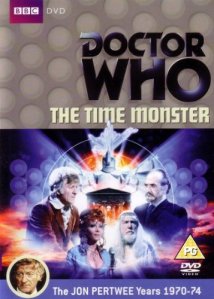

‘THE TIME MONSTER’
Please feel free to comment on my review.
Kronos and the Master with the Third Doctor, Jo and U.N.I.T.
For Richard Franklin
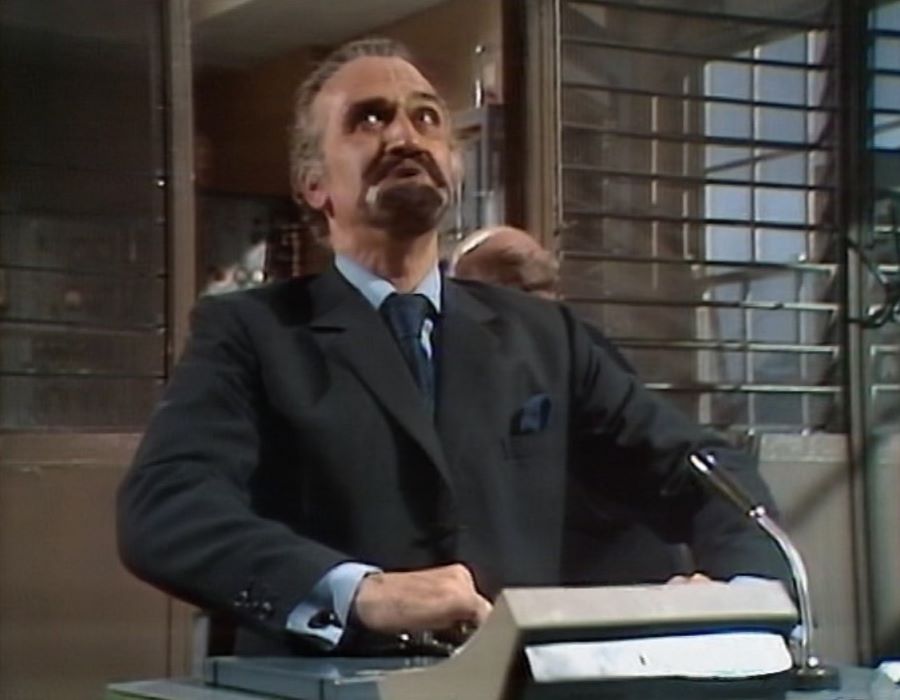
Master: COME, KRONOS!!! COME!!!
Here we are on the season finale of Season 9 of the classic ‘Doctor Who’ TV series. It’s been great revisiting Season 9 in its Blu-ray box set, especially with checking out the five stories each in turn. The last story of Season 9 called ‘The Time Monster’ is a tale that contains a lot of excitement in it. 🙂
This is especially when you consider the concept of Greek legends coming to life in the ‘Doctor Who’ universe. Admittedly, Greek myths have been introduced in the black-and-white days in stories like ‘The Space Museum’ and ‘The Mind Robber’, both having references to Theseus and the Minotaur. 🙂
But this is where we find a certain Greek myth being brought to fore in a more extravagant way and having some basis in being a reality, at least in ‘Doctor Who’ terms. This concept sort-of started in ‘The Dæmons’ where the titular beings were indicated to guide humanity to where they were going.
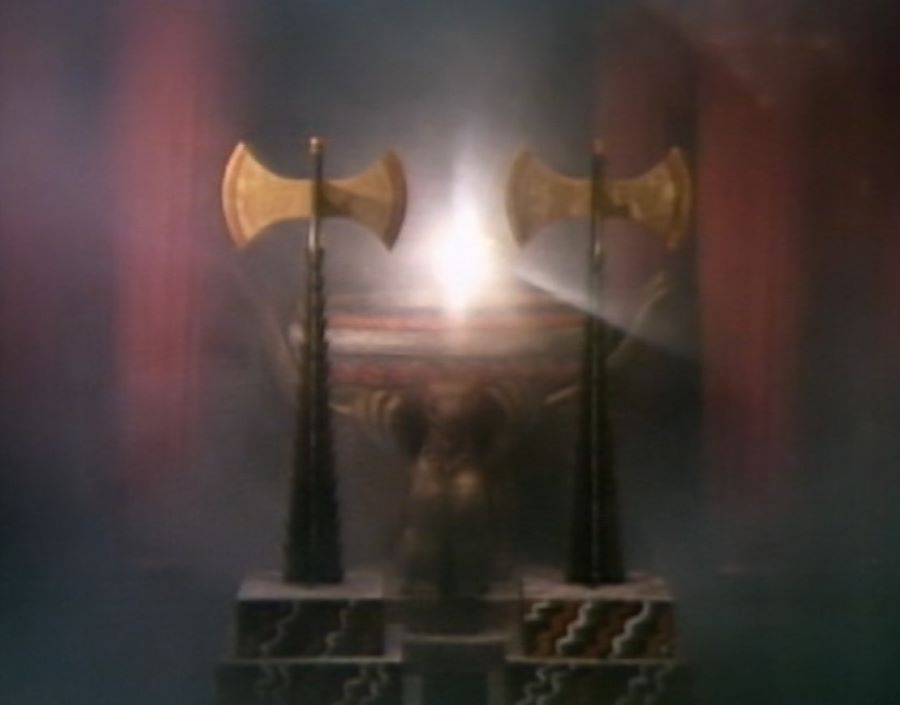
‘The Time Monster’ is a sort-of continuation of that, especially when the producer Barry Letts was keen to have another success with a season finale akin to ‘The Dæmons’. This is especially when he and his co-writer Robert Sloman were working together on the scriptwriting for ‘The Time Monster’.
I don’t think ‘The Time Monster’ is regarded very highly by ‘Doctor Who’ fans. At least, they don’t consider it being as good as ‘The Dæmons’. Me personally, I enjoyed ‘The Time Monster’ more than I enjoyed ‘The Dæmons’, which I hope to explain why as we progress further in this updated review. 🙂
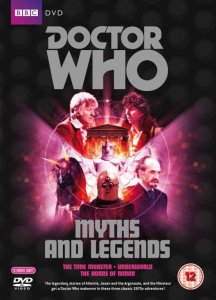
‘The Time Monster’ was originally released in the ‘Myths and Legends’ DVD box set, which I had for my birthday in May 2010. As well as containing ‘The Time Monster’ with Jon Pertwee, the box set also contained the stories ‘Underworld’ and ‘The Horns of Nimon’, both with Tom Baker’s Fourth Doctor.
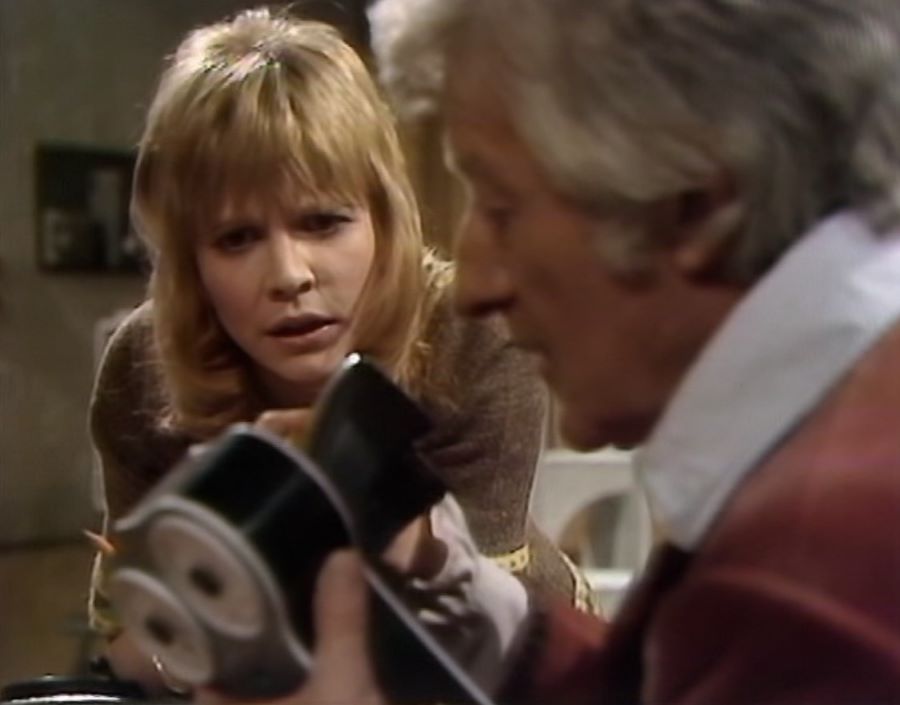
I loved checking out the ‘Myths and Legends’ DVD box set when I had it for my birthday in May 2010. The three ‘Doctor Who’ stories contained in the box set were very intriguing, especially with the influences of Greek myths and legends featured throughout and them being imaginative adventures.
I appreciate that the stories featured in the ‘Myths and Legends’ DVD box set wouldn’t appeal to everyone. This is especially when you consider that the production values in each of the three stories vary, and there’s no denying that the tones for these stories can often be on the verge of comedic.
For me though, the ‘Myths and Legends’ trilogy of ‘Doctor Who’ stories were essential in helping me with being inspired to write certain ‘Doctor Who’ stories that featured the Fifth Doctor, Nyssa and Billy. This includes ‘The Salvador Trilogy’ – the second season in my ‘Fifth Doctor’ series of stories.
‘The Time Monster’ helped with my writing of ‘The Austen Code’, ‘Underworld’ helped with my writing of ‘Junglos 4198’, and ‘The Horns of Nimon’ helped with my writing of ‘Chieftains’ Caves’. It’s a peculiar writing process, but the ‘Myths and Legends’ stories were very inspiring for me back then.
Each of the three ‘Myths and Legends’ stories are unique in style and taste; despite the flaws they have. I’m looking forward to re-examining my thoughts on ‘Underworld’ when it comes to checking out the Season 15 Blu-ray box set. My latest thoughts on ‘The Horns of Nimon’ are already available.
For now though, let’s discuss what I think about ‘The Time Monster’ and how it works as a season finale to Season 9 of the classic ‘Doctor Who’ TV series. Checking out ‘The Time Monster’, whether it’s on DVD or Blu-ray, is always a treat for me, and it was fun to explore the various aspects it has. 🙂
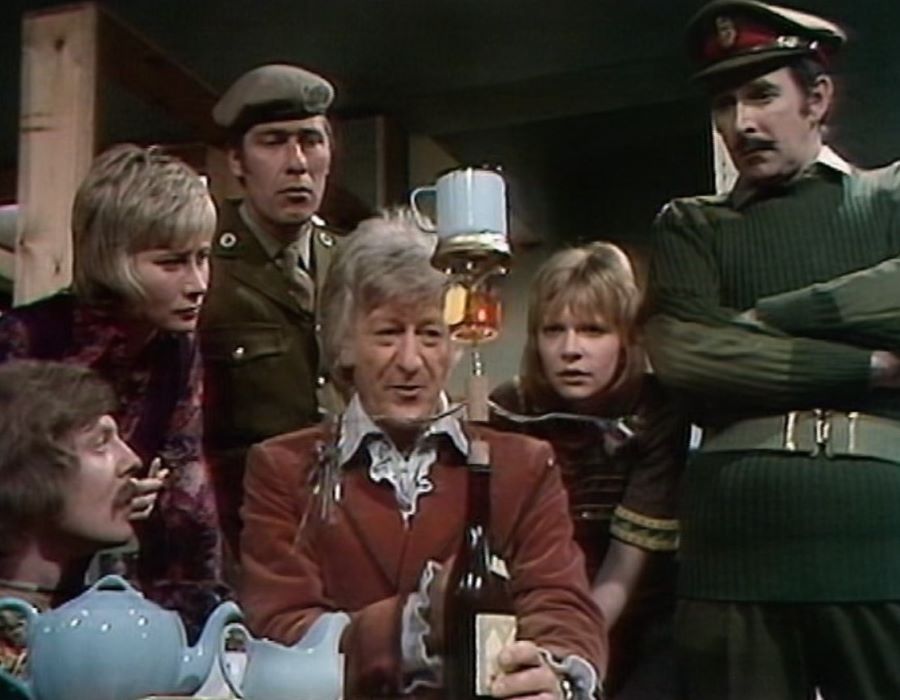
Like I said, ‘The Time Monster’, the first ‘Myths and Legends’ story happens to be a season finale penned by producer Barry Letts and co-writer Robert Sloman. Apparently, they decided not to go with the pseudonym ‘Guy Leopold’, as had been done for Season 8’s season finale – ‘The Dæmons’. 🙂
It’s of course a six-part story as opposed to a five-part story like ‘The Dæmons’. This is one of the reasons why ‘The Time Monster’ works better for me compared to ‘The Dæmons’, as surely that five-part story could have had an extra episode to make it very worthwhile in being Season 8’s finale.
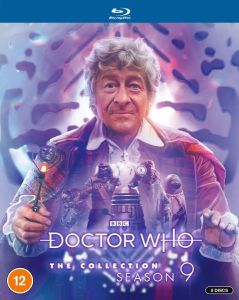
Just to go off on a tangent, the six-part story is on Disc 7 of the Season 9 Blu-ray box set whilst on Disc 8, it contains the DVD versions of the first five episodes of the story. I wonder why the DVD version of ‘Episode Six’ isn’t included on Disc 8 of the Season 9 Blu-ray box set. I find it really bizarre.
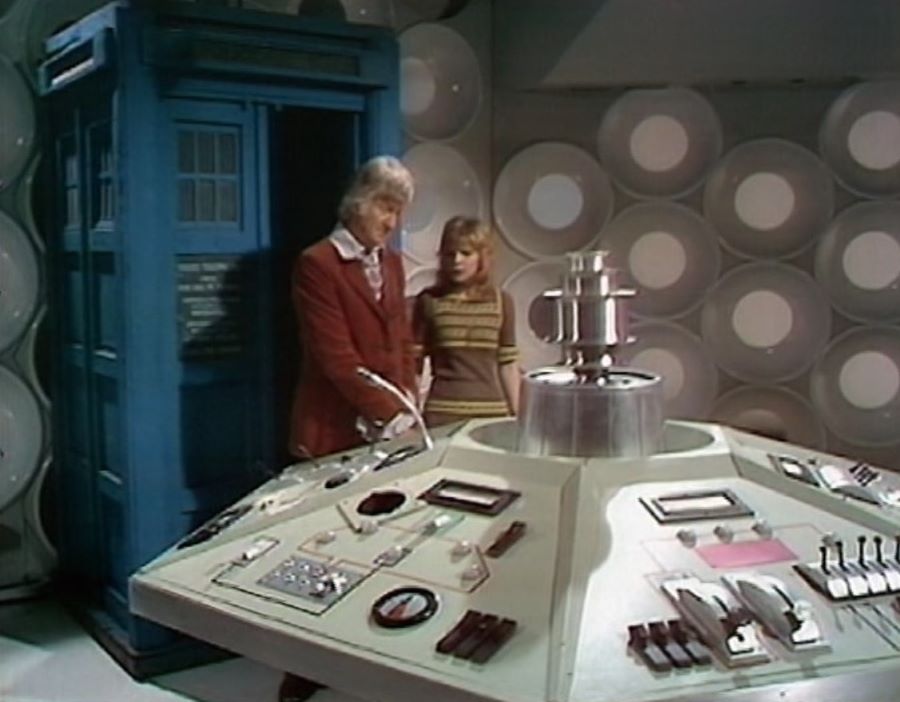
‘The Time Monster’ stars Jon Pertwee as the Third Doctor and Katy Manning as Jo Grant. The story also features Nicholas Courtney as the Brigadier, Richard Franklin as Captain Mike Yates and John Levene as Sergeant Benton. We haven’t seen those three for a long while since ‘Day of the Daleks’.
There’s also the return of Roger Delgado as the Master, who was previously seen escaping from the Doctor and Jo in ‘The Sea Devils’. So, with the Doctor and Jo joined by U.N.I.T. again as well as confronting the Master once more, it feels like a return to the days of the Season 8 stories, right? 😀
It’s intriguing how the Master returns in this story, especially since we had one story in-between ‘The Sea Devils’ and ‘The Time Monster’ – ‘The Mutants’ – that didn’t feature the rogue Time Lord. You’d also have to consider the Master in the Third Doctor segment of the book ‘The Eight Doctors’.
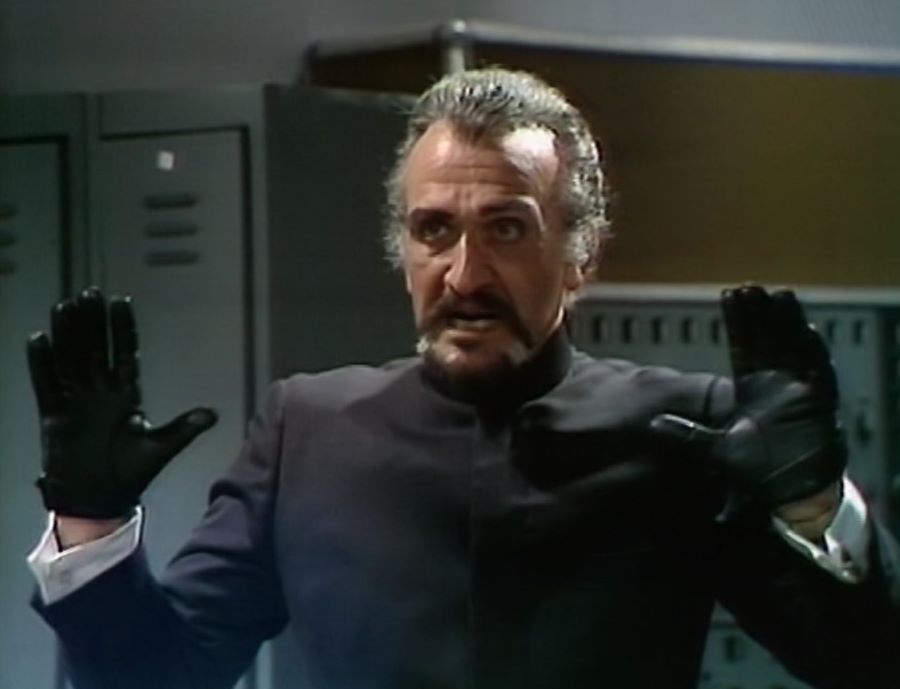
In ‘The Time Monster’, the Master causes trouble when he seeks to utilise the power of Kronos, who in Greek terms happens to be a Titan whilst in ‘Doctor Who’ terms happens to be a time-eater called a Chronovore. It was intriguing to uncover varying aspects about Kronos, the titular ‘time monster’. 🙂
The story begins with the Doctor having a nightmare about the Master and seeing a powerful crystal. The opening shots of the volcano erupting did make me think of the opening shots of ‘Inferno’, the fourth and final story of Season 7. Hmm. I wonder if the editors were reusing clips for that occasion.
When the Doctor wakes up from his ‘pippin’ of a dream… No, seriously! Jo said that in the story!
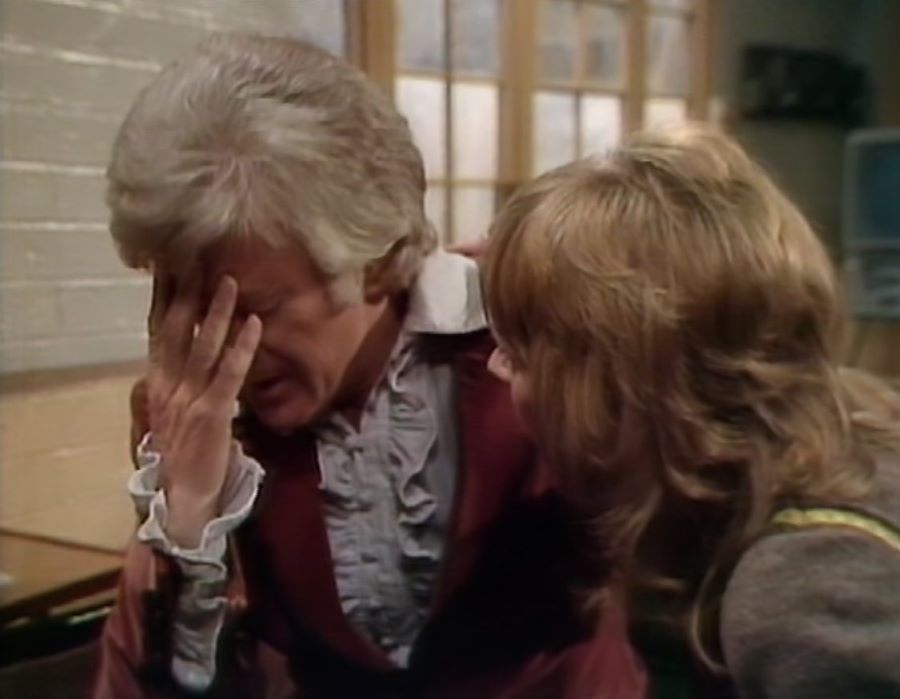
Doctor: Oh. Oh, I must have been dreaming.
Jo: I’ll say you were. A real pippin of a dream.
And it’s only fair of me to reward Jo with a line like that by saying,
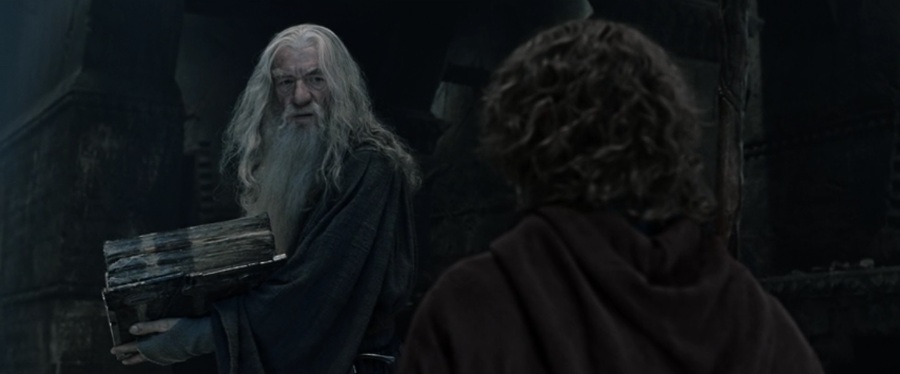
Gandalf: Fool of a took!
Anyway, when the Doctor wakes up, he asks Jo to look for information about any volcanic eruptions or severe earthquakes that have happened recently. It turns out that there have been some new volcanic eruptions in the Thera group of islands, somewhere off Greece. Quite a coincidence, isn’t it?
Mike Yates assists them whilst being duty officer on this occasion. Gradually, the Doctor, Jo and Mike look over a map that confirms the Time Lord’s suspicions about the Master being afoot again. This is especially when the Doctor’s attention gets raised regarding Jo’s remark on wanting a trip to Atlantis.
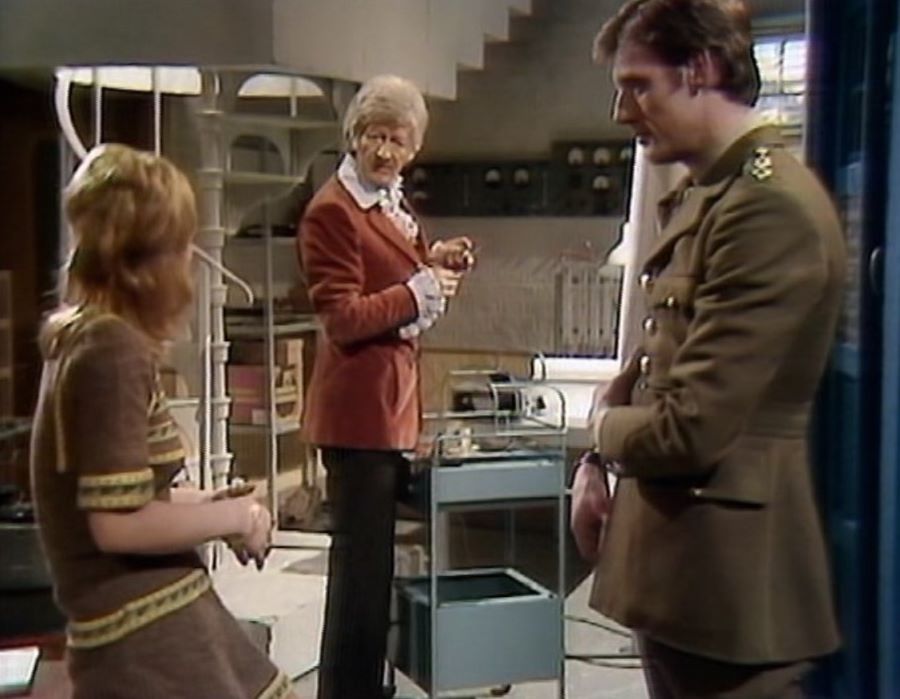
Jo: Here was I, all ready for a nice little trip to Atlantis.
Doctor: What?
Jo: Well, nothing. I was just saying to Mike…
Doctor: (interrupts) Yes, I heard what you said, but you said Atlantis. Why Atlantis?
Jo: Well, that’s what it says in the paper.
It would be remiss of me to point out that this isn’t the first time the Doctor has had to deal with Atlantis. When he was Patrick Troughton, the Doctor visited Atlantis with his friends Polly, Ben and Jamie in ‘The Underwater Menace’ where they had to deal with Professor Zaroff and his madness. 😀
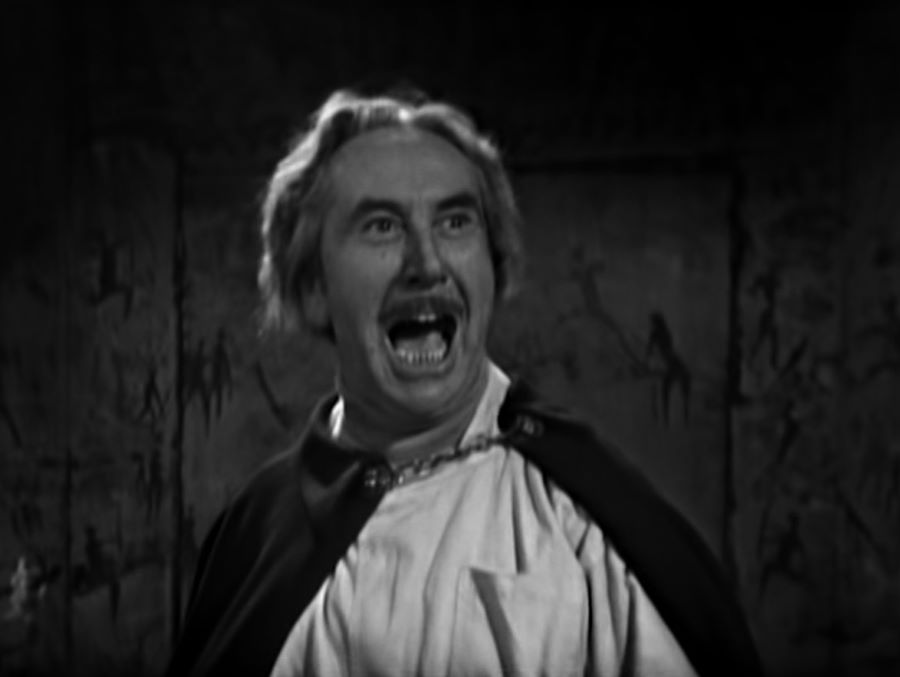
Zaroff: NOTHING IN THE WORLD CAN STOP ME NOW!!!!!
Of course, in that story, the Doctor and his friends visited Atlantis in the 20th century, sometime (presumably) in 1970. This does leads to a continuity error concerning how Atlantis turns out in ‘The Time Monster’ once the Doctor and Jo eventually go back in time to visit the place in its distant past.
But as I’ve grown to appreciate over the years, ‘Doctor Who’ continuity is all over the place and that’s more than just the U.N.I.T. dating conundrum as well as being flexible with characters like Ace, Tegan and Nyssa and their timelines. So, it shouldn’t be a big surprise this would be overlooked here.
I’m sure a way was found for Altantis to be restored, following its destruction by Kronos in ‘The Time Monster’ (more on Atlantis later) before the place resurfaced, thanks to Professor Zaroff’s efforts, in ‘The Underwater Menace’. Quite frankly, it’s not really a thing for a casual or avid viewer to worry about.
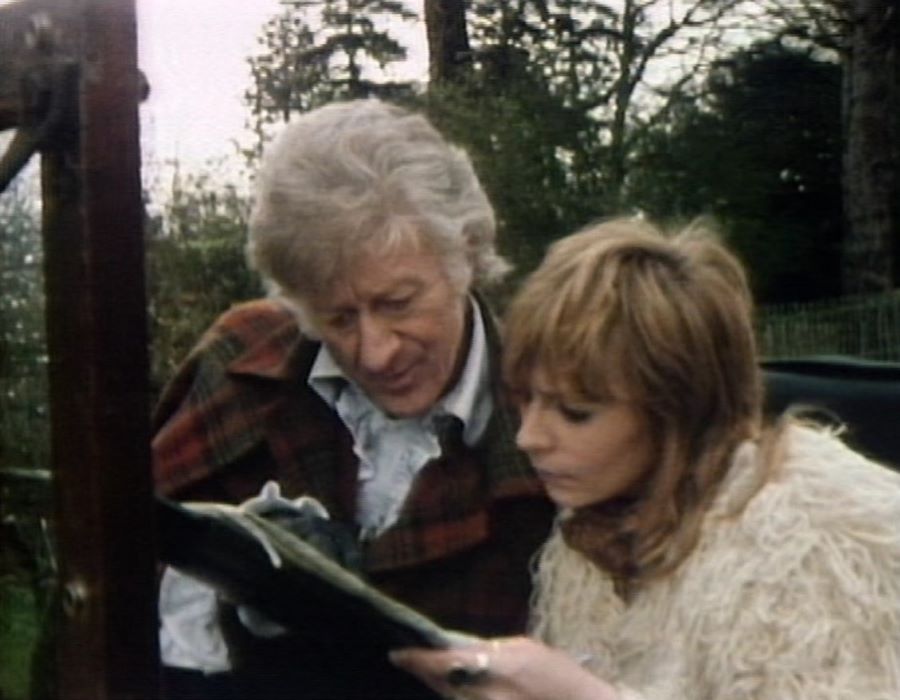
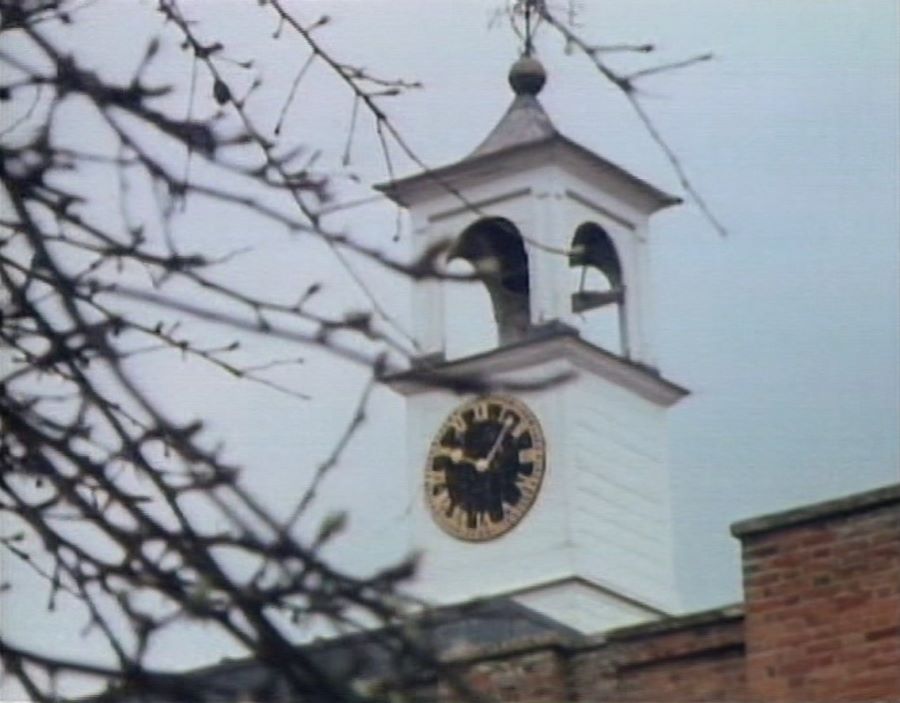
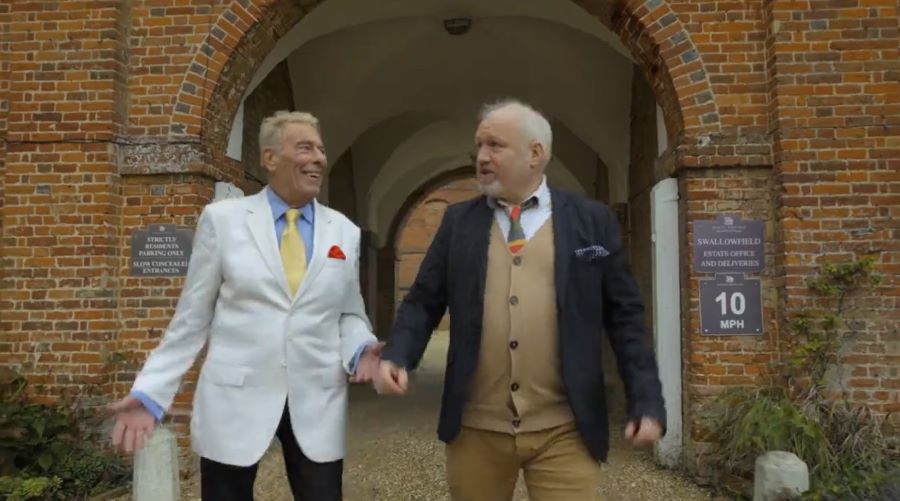
Once the Doctor and Jo have acquired as much information as they can, particularly with the use of the Doctor’s latest time sensor device, it leads to our heroes to locate the Master at the Newton Institute in Wootton, just outside of Cambridge (which is played by Swallowfield Park in Berkshire). 🙂
Earlier in the story, the Master has assumed the alias of Professor Thascales (Thascalos in the Target novelization/audiobook). As I understand it, ‘Thascales’ is inaccurate when it’s printed in online episode guides. According to the Doctor and Jo, ‘Thascales’ is the Greek word for ‘Master’. Incorrect.
It should be ‘Thascalos’, which is the Greek word for ‘Master’. Plus, everyone in the TV story says ‘Thascalos’ instead of ‘Thascales’. I don’t know if this was a spelling error when first printed in the ‘1973 Doctor Who Radio Times Special’ and it unfortunately got taken in subsequent episode guides.
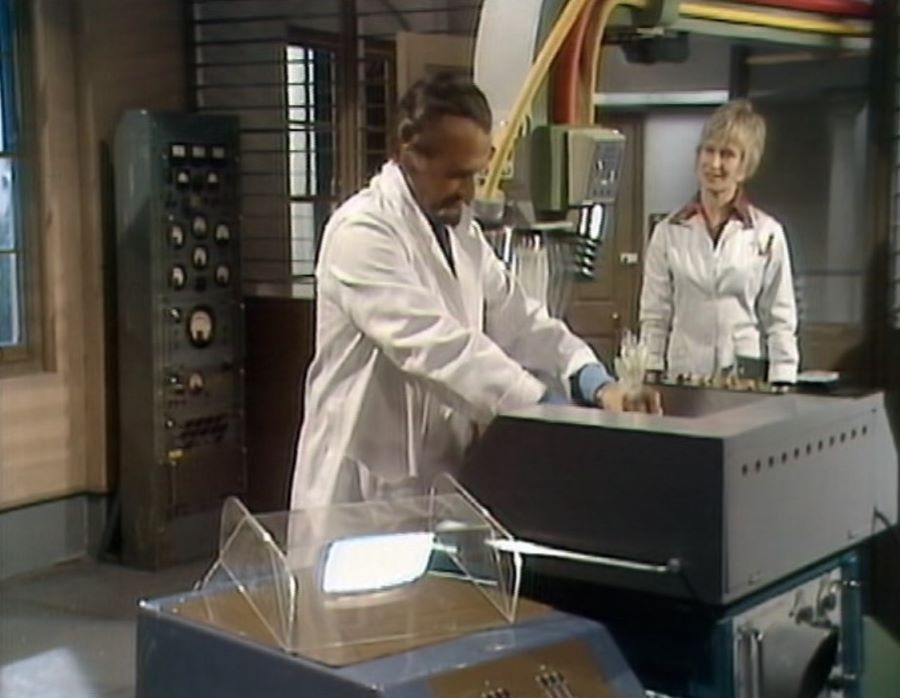
This isn’t a huge thing to deal worry. I’m glad it was corrected by script editor Terrance Dicks when he novelized ‘The Time Monster’ in 1986. And as long as people say it correctly as opposed to it being misspelt in official episode guides, it should be easily a thing to put a blind eye to in the long-run.
Anyway, Professor Thascalos and his colleagues at the Newton Institute are working on doing some time experiments, using the latest TOMTIT device. TOMTIT stands for Transmission of Matter Through Interstitial Time. Now, I’m sure the abbreviation isn’t meant to be rude when hearing it. 😀
But it’s unfortunate to hear it said like that by characters like the Brigadier, Mike Yates and Dr. Percival. I mean, thankfully, it hasn’t caused an outrage, especially in current times, but I can imagine people raising their eyebrows at the mention of TOMTIT being said, which frankly is quite amusing. 🙂
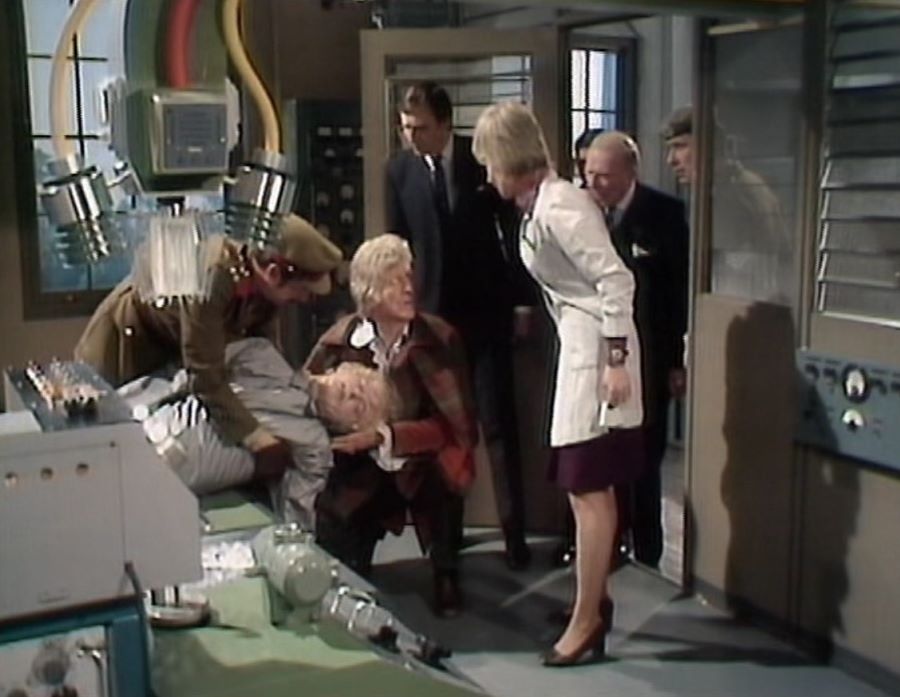
After running a series of tests and providing an actual demonstration to Dr. Cook, his aide Proctor, Dr. Percival and U.N.I.T. personnel, including the Brigadier and Sergeant Benton, things go haywire, especially when the Master’s determination to summon the mighty Kronos is too much to be asked for.
Undeniably, there’s quite a bit of Greek influence featured throughout this ‘Doctor Who’ story, especially concerning Kronos and the Great Crystal when summoned forth by the Master. It’s enhanced more when the Doctor and Jo follow the Master to Atlantis in the story’s last two episodes.
But to borrow a quote from Jo,
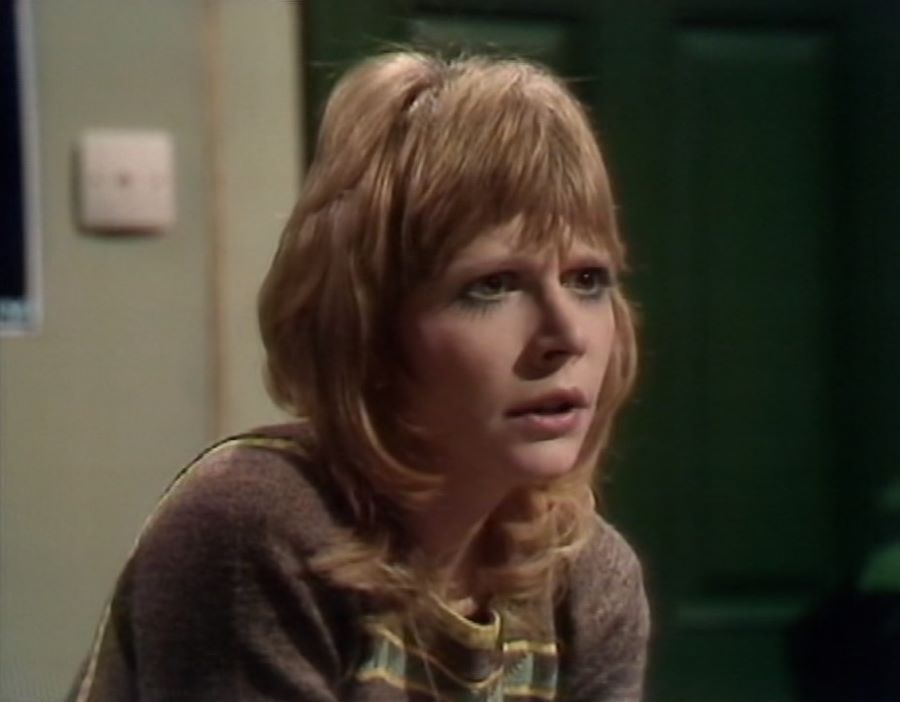
Jo: But what is Kronos? Or should I say who?
Essentially, in Greek mythology, Kronos (sometimes called ‘Cronus’ or ‘Cronos’) was the leader and youngest of the first generation of Titans. Apparently, Kronos overthrew his father Uranus and ruled the mythological Golden Age until he was overthrown by his son Zeus and imprisoned in Tartarus. 😐
I can’t recall if Kronos was mentioned in the Big Finish audio story ‘Tartarus’ featuring the Fifth Doctor, Nyssa and Tegan and introduced Marc. It doesn’t matter since Kronos wasn’t a major part of that audio story, unlike the BBC book ‘The Quantum Archangel’, featuring the Sixth Doctor and Mel.
From what I’ve seen in an episode of ‘Horrible Histories’, Kronos apparently ate his children except for Zeus, who poisoned his drink to sick out the children he ate. I’m not exactly sure how accurate that is and, apparently, Greek mythology is often shrouded in mystery and variations over the years.

The Kronos featured in this ‘Doctor Who’ story is very different compared to how say history and even ‘Horrible Histories’ interprets him. In the ‘Doctor Who’ universe, Kronos is one of a race called Chronovores – time eaters. Beings that can exist outside space and time and presumably in the Void.
Again, depending on how other ‘Doctor Who’ stories like ‘The Quantum Archangel’ interpret him, Kronos is seen as a raging monster with flapping wings that seems to be uncontrollable, especially when the Master summons him, and he often appears in bright light when he’s devouring people. 😐
Apparently, producer Barry Letts wasn’t happy with the approach that director Paul Bernard made with visualising Kronos in the TV story. I can see where Barry Letts is coming from on that front, especially as there are occasions when Kronos can appear to be silly once he’s flapping about a lot. 😐
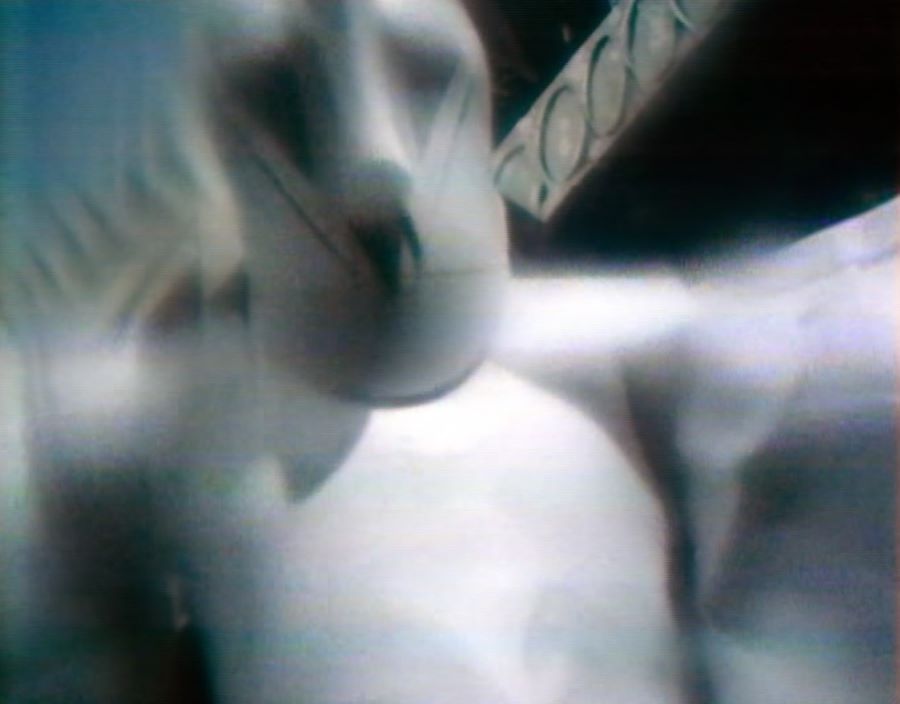
Sometimes, Kronos in that form can be quite intimidating, especially when he shrouds people like Percival and the Doctor with his feathers and devours them. But it’s easy to see that it’s a man in a suit and I can imagine the poor actor Marc Boyle having to cope with the limitations of his character.
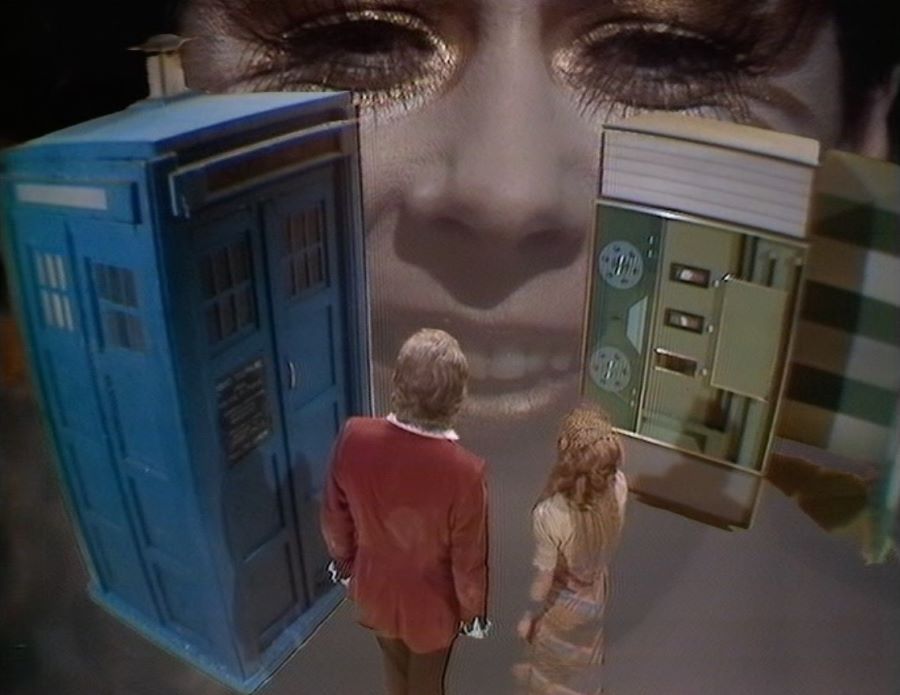
Kronos can also appear as the face of a woman, played by Ingrid Bower, in the story’s final episode. I wish that aspect of Kronos had been explored more in the story, as it’s so easy to think of Kronos as a big white flapping bird man, who shrieks and squawks a lot when he attacks and devours people. 😐
The story’s director Paul Bernard previously directed ‘Day of the Daleks’ in Season 9 and he would go on to direct ‘Frontier In Space’ in Season 10. I can imagine him being frustrating for Barry Letts to work with, especially when Paul Bernard didn’t take on the suggestions made to improve on the tale.
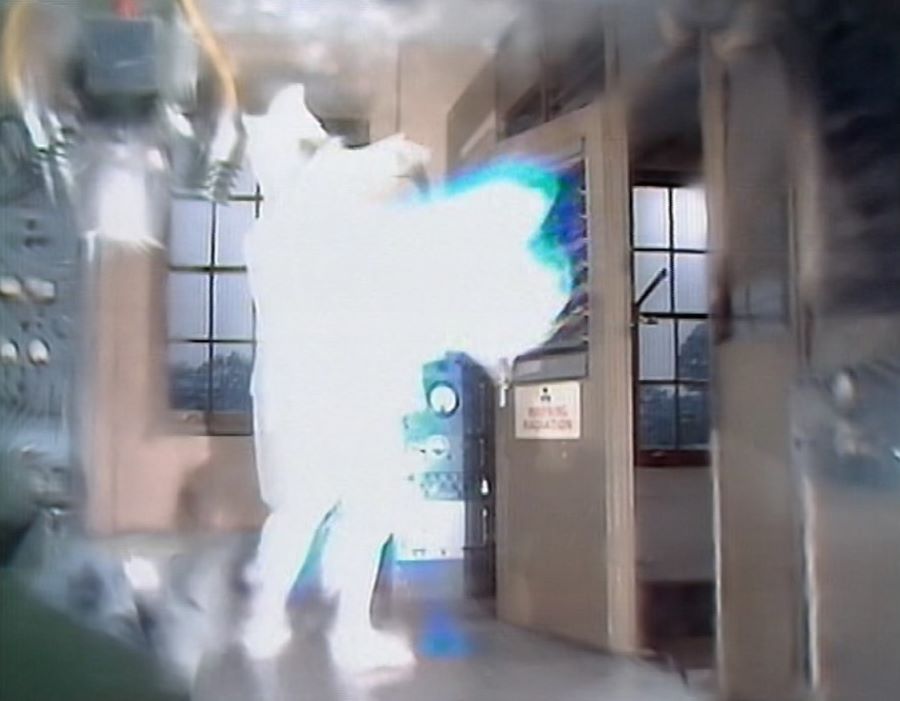
I would have been fine with Kronos appearing in a blue light and almost like he was in flames, as suggested by Barry Letts. That would have made the story better and made Kronos a more intimidating presence than he was in the TV story. Unfortunately, Paul Bernard wasn’t keen on that.
I’m glad Barry Letts and Paul Bernard sort-of made-up years later regarding how the two didn’t always see eye-to-eye in terms of making the ‘Doctor Who’ stories Paul Bernard directed. It’s a pity there isn’t a Special Edition version of ‘The Time Monster’ on Blu-ray as was for ‘Day of the Daleks’. 😦
Same goes for ‘Frontier In Space’ too. ‘The Time Monster’ is the second writing collaboration between Barry Letts and Robert Sloman, following their work together on ‘The Dæmons’ under the ‘Guy Leopold’ pseudonym. They later wrote the stories ‘The Green Death’ and ‘Planet of the Spiders’.
It’s a shame Barry Letts didn’t direct all the stories he co-wrote with Robert Sloman, as they were assigned to directors like Christopher Barry, Paul Bernard and Michael E. Briant. Thankfully, Barry Letts would later get his chance to direct ‘Planet of the Spiders’ as the final Jon Pertwee era story. 🙂
Whilst the story contains Greek mythology and the action taking place in Atlantis is in the story’s final two episodes, there’s also an influence of Buddhism featured in this ‘Doctor Who’ story. The Buddhism element was something instigated on the part of producer Barry Letts, which is intriguing.
I like how Barry Letts shared his Buddhists views through his writing with Robert Sloman in this ‘Doctor Who’ story without it being too preachy or getting in the way of the storytelling. It’s something that he would revisit when he and Robert Sloman did ‘Planet of the Spiders’ in Season 11.
I can’t claim to be an expert on Buddhism, nor do I know much about Barry Letts being a Buddhist as well as having liberal political views. But being a Christian myself, I can home in onto some of the spiritual aspects featured in stories like ‘The Time Monster’ and ‘Planet of the Spiders’ with intrigue.
I don’t think the Buddhism themes in stories like ‘The Time Monster’ and ‘Planet of the Spiders’ match to what Christopher Bailey would incorporate in stories like ‘Kinda’ and ‘Snakedance’ with his Buddhist philosophy. But it’s fascinating to find the various layers about Buddhism in ‘Doctor Who’.
The Buddhism element in ‘The Time Monster’ resonates in ‘Part Six’ when the Doctor relates to Jo a story about him meeting a hermit on a mountain on Gallifrey. Ironically, that hermit would appear in Jon Pertwee’s final story as the Third Doctor – ‘Planet of the Spiders’ – which is very poetic in a sense.
A criticism made by Peter Davison, Sarah Sutton and Janet Fielding about Jon Pertwee’s Doctor in the ‘Behind the Sofa’ item for ‘The Time Monster’ is the observation that his Doctor tended to be quite sharp and that there weren’t so many gentle moments for him. I don’t quite agree with that. 😐
Admittedly, Jon Pertwee’s Doctor tended to be quite serious compared to Patrick Troughton’s Doctor, as we would later see in the next story of the series – ‘The Three Doctors’. Arguably, on certain occasions, he has to be sharp in order to acquire the information he needs to save humanity.
I concur that Jon Pertwee’s Doctor could be quite rough when it comes to demanding information from an elderly Stuart Hyde about who he saw when he aged quickly and it happened to be Kronos. If I rewrote the scene, I would have had his Doctor be a little more gentle and not so rough with Stuart.

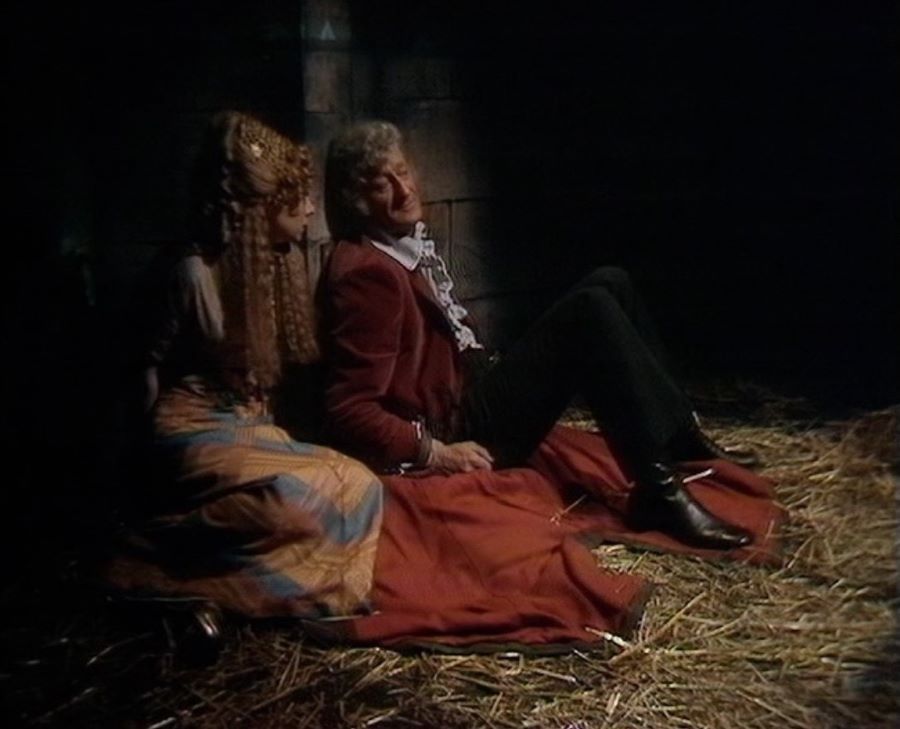
But it can be argued that Jon’s Doctor had his gentler side, and this is certainly the case in the quiet scene he has with Jo when they’re chained up in Atlantis and talking about the hermit on the mountain. There was also a gentle scene featured between the Third Doctor and Jo in ‘The Sea Devils’. 🙂
It’s the scene where Jon’s Doctor reflects on the fact he and the Master used to be good friends before they became enemies. This is when he and Jo visited him at the prison before he escaped to ally with the Sea Devils. So, I wouldn’t say that the Third Doctor was totally devoid of gentle moments.
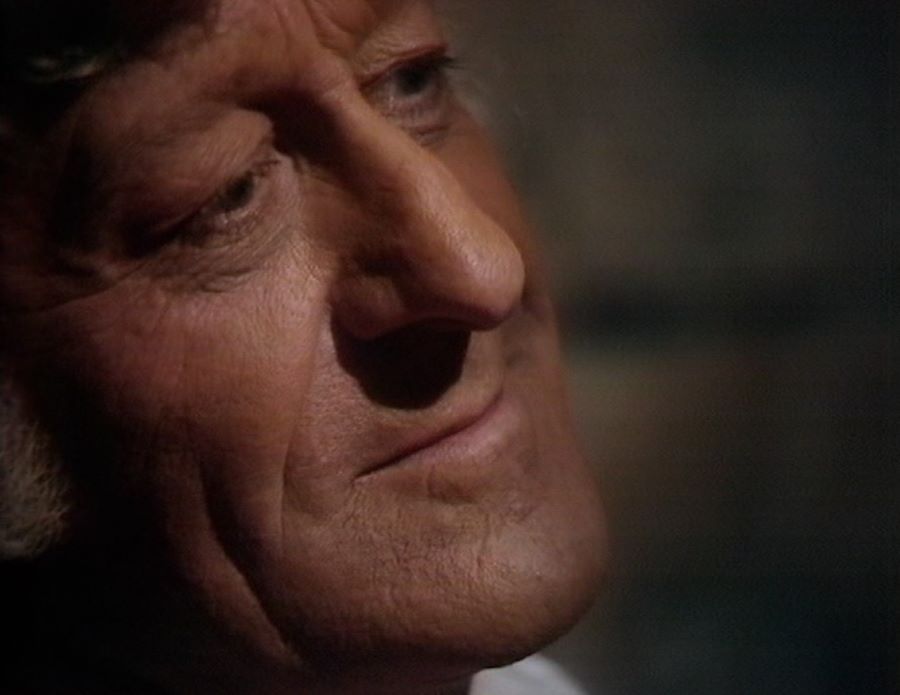
I like how in ‘The Time Monster’, Jon’s Doctor relates to Jo how the hermit talked to him about ‘the secret of life’, which turned out to be a daisy. It might be something that’s not entirely comprehensive, but the image, as described by Jon Pertwee in the scene, seems and feels beautiful.
Doctor: Yes, that was the daisiest daisy I’d ever seen.

Thirteenth Doctor: Oh, the blossomiest blossom.
I included that line of dialogue said by Jodie Whittaker’s Doctor from ‘The Power of the Doctor’ because it was intriguing to hear from Toby Hadoke in the ‘Time and Atlantis’ making-of documentary how Jon Pertwee’s daisy line got echoed in an interview with the author Dennis Potter.
Apparently, when Dennis Potter was dying of cancer in July 1994, he commented on a blossom and said it was ‘the whitest, frothiest, blossomiest blossom that there ever could be’. I found it astonishing how Toby Hadoke compared Jon Pertwee’s ‘daisy’ line to Dennis Potter’s ‘blossom’ line.
At the time of watching of ‘The Power of the Doctor’, I didn’t get what Jodie’s ‘blossomiest blossom’ line was all about before she regenerated. Now I know the background to that line, it’s nice that Chris Chibnall included it to establish a connection between ‘daisiest daisy’ to ‘blossomiest blossom’.
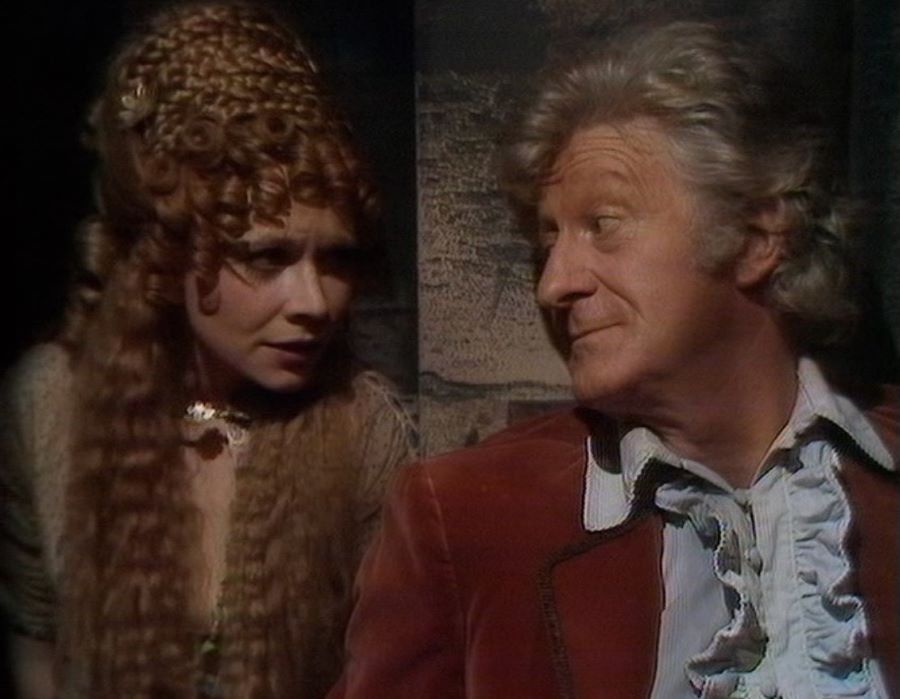
When revisiting these classic ‘Doctor Who’ stories on Blu-ray, especially through its latest Blu-ray exclusive special features, you appreciate more of the connections between the classic TV series and the new TV series than ever before. It provides enlightenment to the things you’ve seen countless times.
Whilst the spiritual aspects of ‘The Time Monster’ are invigorating to take from watching it, they’re often mixed with plenty of scientific concepts and terminology that can be pretty complex when you’re watching the story. This is especially concerning how time works in ways some don’t perceive.
I quite like the idea of interstitial time and the moments of ‘between now…and now’, as Sergeant Benton explains astonishingly well to the Brigadier. But I’m not sure I fully understand the concepts when described by Professor Jim Al Khalili in the ‘Between Now…and Now!’ making-of documentary.

Then again, the entertainment value is still present in the story regardless of whether you understand the concepts or not. Most of the science and time-related stuff is dealt with in ‘Episodes One to Four’ of the story whilst Atlantis and the Greek mythology are handled in ‘Episodes Five to Six’.
Some would probably find that jarring when watching the story, especially when it takes a while for us to get to Atlantis in the story’s last two episodes. But I think the build-up to the Doctor and Jo’s visit to Atlantis as well as the Master’s is well-handled, as I mostly enjoyed everything surrounding it.
To add extra thoughts about Jon Pertwee as the Third Doctor, in my opinion, he’s superb in this ‘Doctor Who’ adventure. I’ve enjoyed his interaction with Jo Grant and I’ve especially enjoyed how he handles matters when confronting the Master and stopping his scheme with unleashing Kronos. 🙂
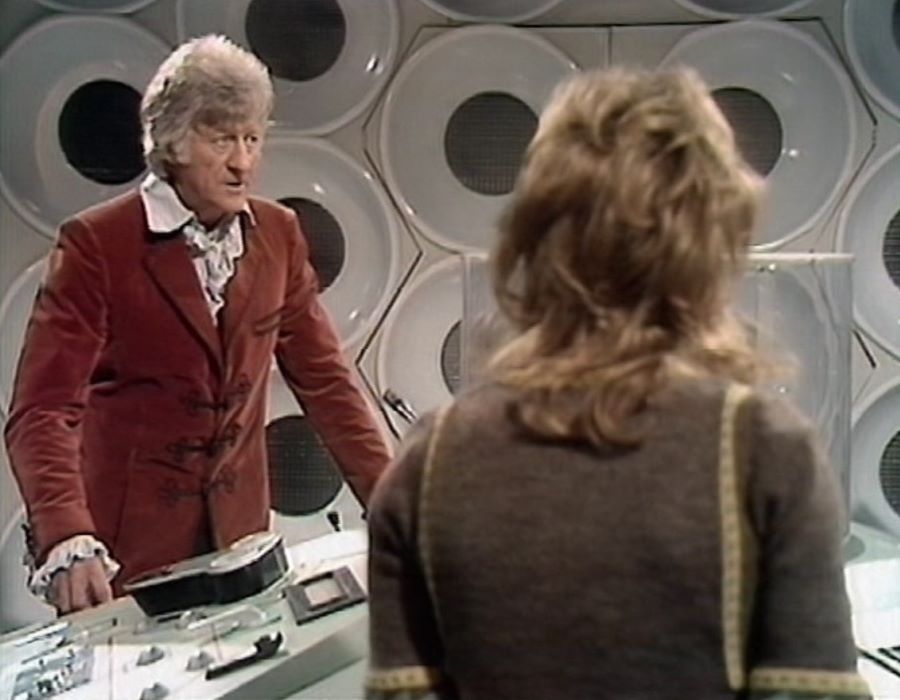
As well as the serious and gentler moments featuring his Doctor, there’s also the funnier moments to take away from this story. I enjoyed it when Jon Pertwee’s Doctor was speaking English, but backwards, whilst he tried to communicate with the Master, especially as it came out-of-nowhere. 🙂
I also enjoyed it when the Doctor attempted to explain to Jo why his TARDIS and the Master’s were inside each other. It’s something that predated Christopher H. Bidmead’s ‘TARDIS within TARDIS’ concept in ‘Logopolis’. Very much like that idea, I’m not sure I entirely comprehend how it all works.
It was funny when the Doctor used a red cape to attract the Minotaur, as if he were in a bullfight, whilst trying to save Jo in the labyrinth where the Great Crystal of Kronos is kept. I found Peter Davison, Sarah Sutton and Janet Fielding’s reactions to that very funny in the ‘Behind the Sofa’ item.
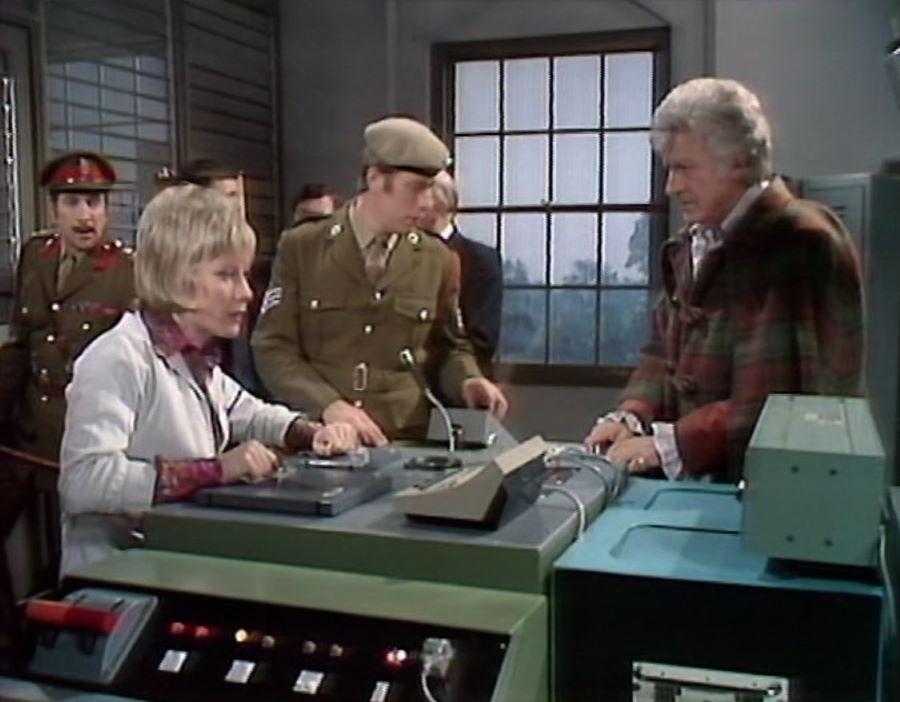
I also found it funny when Peter, Sarah and Janet reacted to the Doctor saying “Reverse the polarity” in the story like he did in ‘The Sea Devils’. Although he doesn’t say “Reverse the polarity of the neutron flow” this time. He says, “Reverse the temporal polarity”, which still counts in this instance.
Katy Manning is equally wonderful as Jo Grant in this ‘Doctor Who’ story. I enjoyed her determination to stick with the Doctor, especially when they go off to visit Atlantis in the TARDIS. There’s a suggestion there’s a kind of flirtatious relationship going on between the Doctor and Jo. 😐
I’m not sure if I’m willing to go that far in terms of defining the Doctor and Jo as a TARDIS duo, mainly because ‘Doctor Who’ stories in the classic TV series didn’t delve into those areas compared to the new TV series. I mean, romance and sex scenes weren’t really a thing in the classic TV show. 😐

I like how Jo has developed as a ‘Doctor Who’ companion by this point in the TV series. Even though she claims to be ‘exceedingly dim’, she can pick things up in her time with the Doctor, particularly when understanding what the Doctor’s time sensor device is, and saying it’s a ‘TARDIS sniffer-outer’. 😀
I’m a fan of her brown outfit and yellow boots in the 1970s segment of the story. I’m not a fan of her Atlantean outfit, particularly with the huge wig she wears. Jo makes a daring sacrifice in the confrontation between the Doctor and the Master, which does echo something from ‘The Dæmons’.
In that, Jo was willing to self-sacrifice herself to Azal when he was about to kill the Doctor in that story. I feel that Jo’s act of self-sacrifice is more effective in ‘The Time Monster’ compared to ‘The Dæmons’, especially in tampering with the controls of the Master’s TARDIS to cause the Time-Ram.
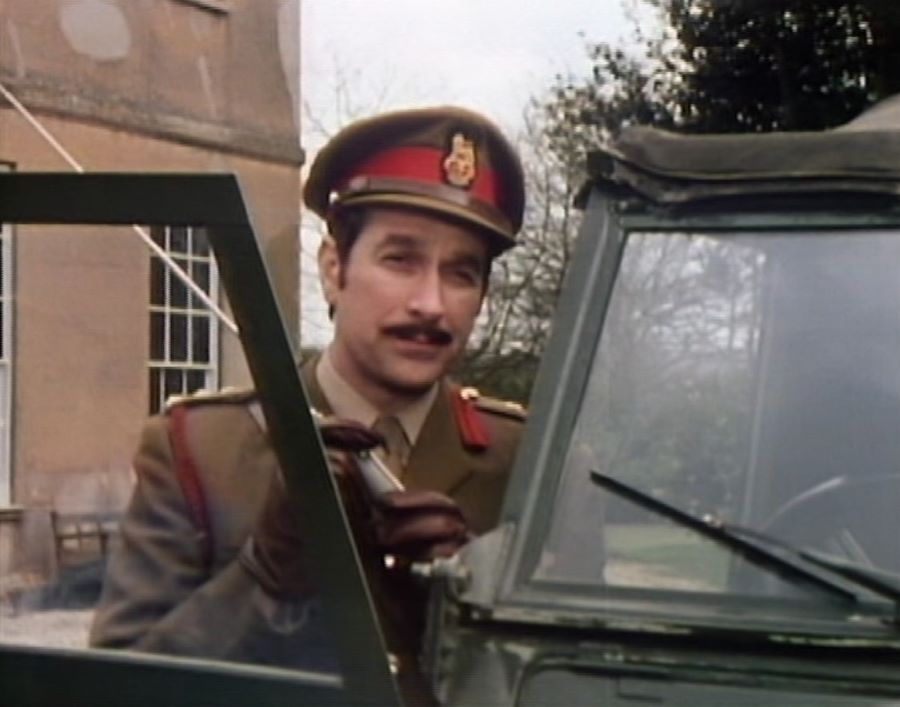
Nicholas Courtney is equally great as the Brigadier in this ‘Doctor Who’ story. Mind you, I think he can quite impatient at times, which is something that’s brought to attention in the DVD audio commentary. It occurs once the Brigadier has been running during a time field caused by the Master.
Him, Sergeant Benton and Dr. Ruth Ingram. Which, now I think about it is quite odd. I mean, Benton and Ingram seem like themselves when the Doctor rescues them from the time field. But the Brigadier gets edgy and impatient, especially when the Doctor sets up a peculiar time experiment. 😐
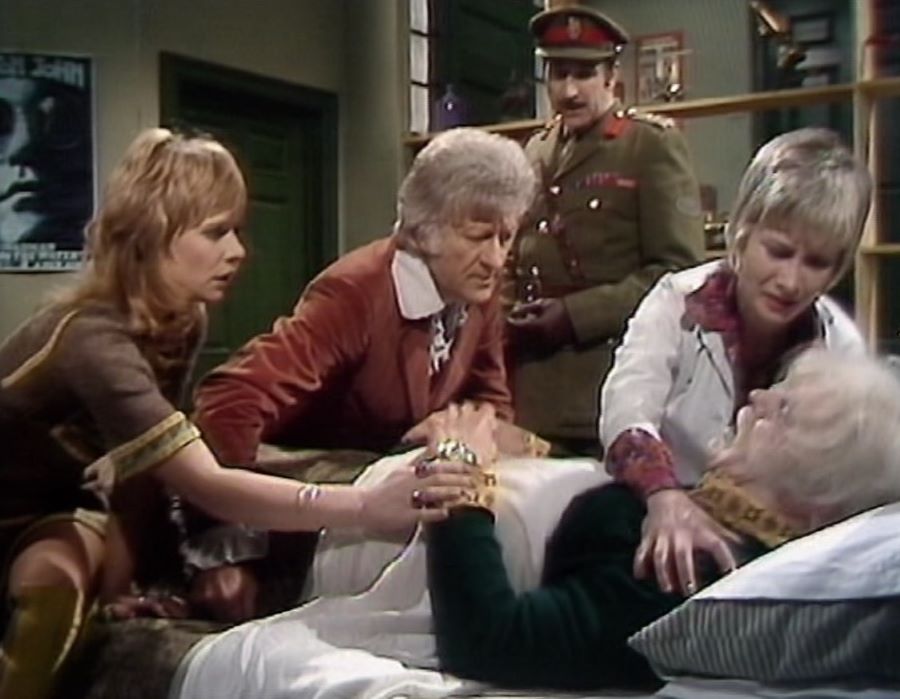
He also accuses Mike Yates of drinking when he and his U.N.I.T. men are on their way to the Newton Institute and are attacked by a knight on horseback and by Roundheads. Um, after all, they’ve been through, the Brigadier is sceptical about odd things occurring as well as the Doctor’s explanations? 😐
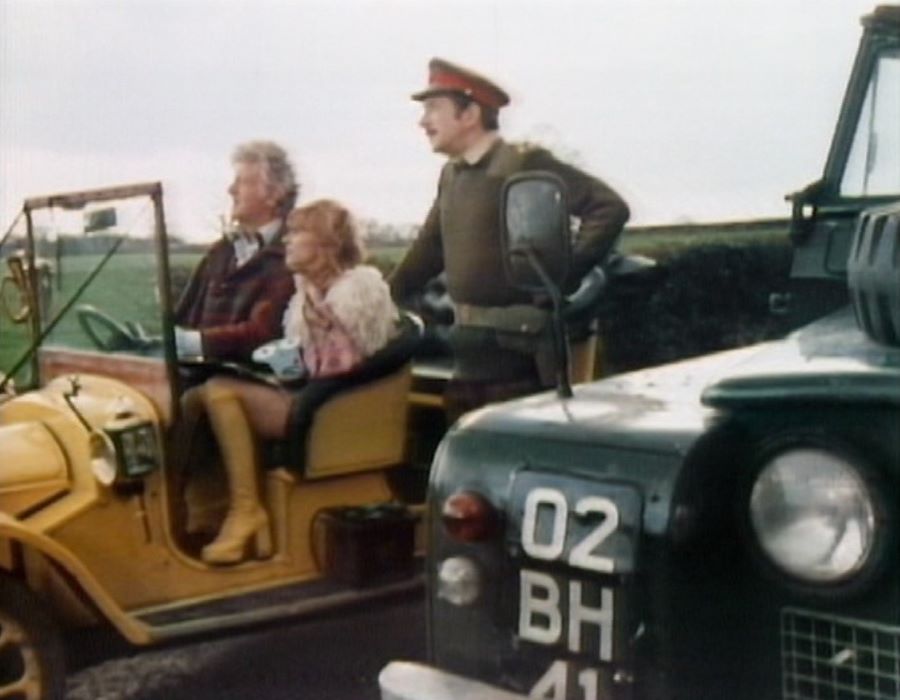
What with the Brigadier having fought Yeti, Cybermen, Autons, Silurians, Axons, Bok and Daleks, he gets impatient and sceptical when odd things occur for him and others in ‘The Time Monster’? I liked it when the Brigadier callled for Mike Yates by his first name once a WWII bomber plane hit him and his men. 🙂
Roger Delgado is terrific as the Master in this ‘Doctor Who’ adventure. I like how when he’s disguised as Professor Thascalos at the Newton Institute, he’s in a business suit, matching to what Anthony Ainley would wear in ‘Planet of Fire’ as well as John Simm’s look in ‘The Sound of Drums’. 🙂
The evil persona that Roger Delgado delivers in his performance as the Master matches well with charm and wit. This is especially when he’s interacting with Dr. Ruth Ingram and Stuart Hyde, as he expresses his superior and patronizing tone whilst he attempts to be charming and friendly to them.
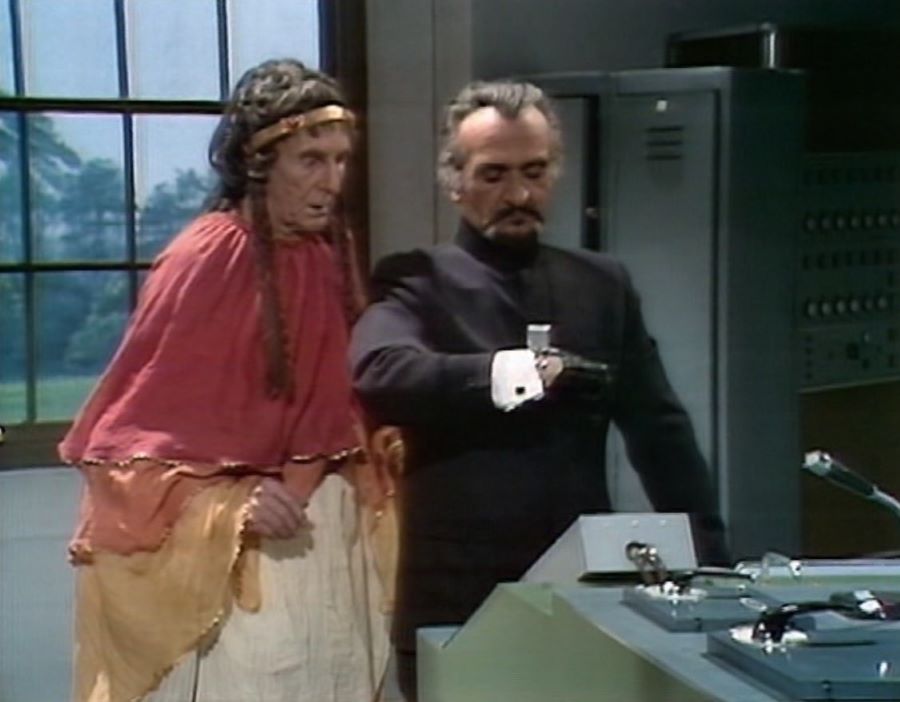
It’s fascinating how the Master is convinced that he can control Kronos when he summons him, especially when he holds the the Seal of the High Priest in his hand, provided by Krasis. However, it’s pretty clear that the Master isn’t in full control of Kronos as he thinks when unleashing him at times.
I found it amusing and tense when Jo responds to what the Master did to the Doctor by summoning Kronos to devour him and have him end up in the time vortex by saying it was ‘cruel’ and ‘wicked’. The Master replies, “Thank you, my dear” before he releases her in the TARDIS into the time vortex.
Richard Franklin is pretty good as Captain Mike Yates in this ‘Doctor Who’ story. Admittedly, he doesn’t appear much in ‘The Time Monster’, as he’s like in the first four episodes. When he does appear though, his scenes are quite nice to watch and I like how he gets to have a bit of action here.
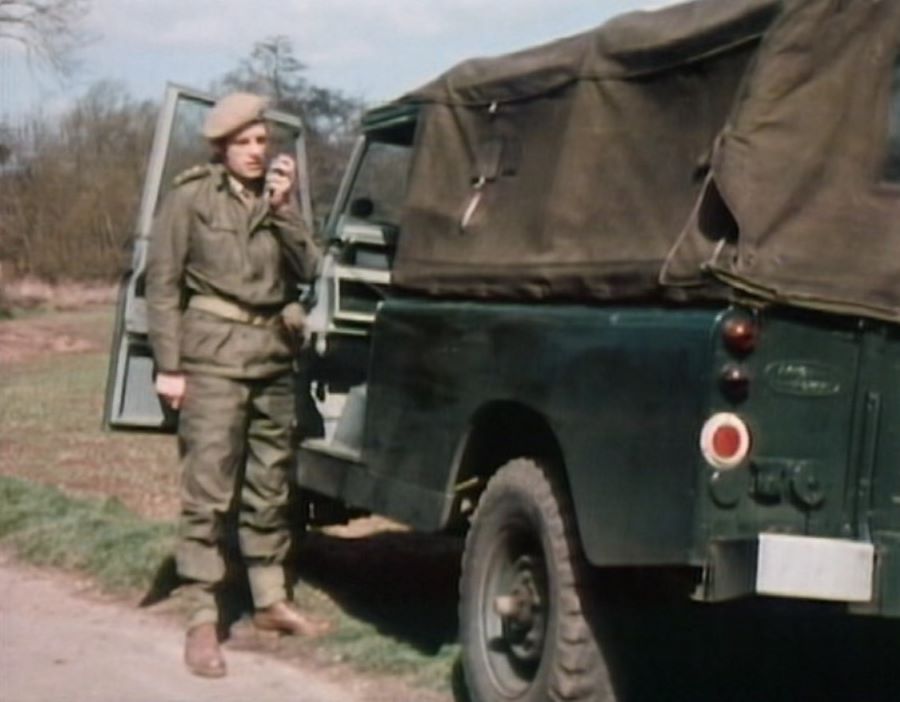
This is particularly when Mike and his U.N.I.T. troops are caught up in the Master’s time attacks on their way to the Newton Institute. This includes confronting a knight on horseback, Roundheads attaching them and a WWII bomber plane hitting them, which includes the TARDIS carried in a truck.
I wonder if this is where it started for Mike Yates in terms of his downward journey from U.N.I.T. After all, he was ordered to go to hospital following the WWII bomber plane attack. He only appeared in one story in Season 10 – ‘The Green Death’ – and decided to be a cover agent in that. 😐
I’m sure the expanded media stories, including the Big Finish audios, might counteract that, but still. The shock of being attacked by a WWII plane before being affected by the B.O.S.S. computer in ‘The Green Death’ could sow the seed for what would later happen to Mike in ‘Invasion of the Dinosaurs’.
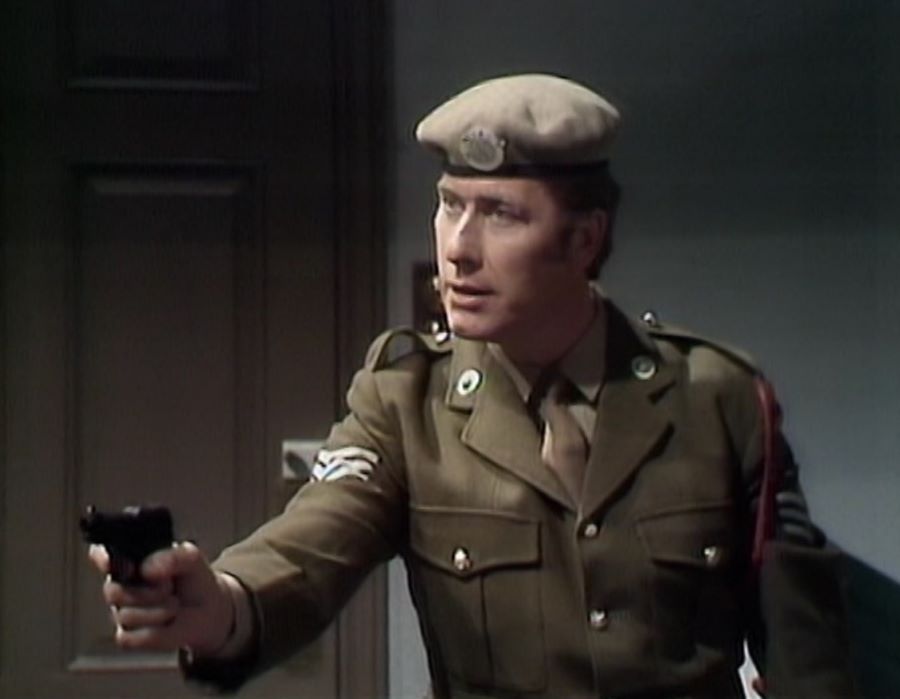
Arguably, John Levene as Sergeant Benton gets some of the best scenes in this ‘Doctor Who’ story. I like that he has an active role in the story, particularly when Benton is suspicious of a phone call that he gets from Dr. Percival about the Brigadier wanting to see him, since he’s to guard the science lab.
He gets in through the back window to trap the Master and Percival once they enter and comes up behind him. I like that Benton sees through the trick laid on him and gets to have one up on the Master, even if it’s for a fleeting moment, since the Master manages to knock him out in the story. 😐
I also liked it when Benton gets to have scenes with Ruth and Stuart when they attempt to outwit the Master before he and Krasis escape in the TARDIS for Atlantis. When the Brigadier and his U.N.I.T. forces are stuck in a time field, Ruth, Stuart and Benton do all that they can to set them free.

I found it funny when Benton de-ages and becomes a baby, due to Ruth and Stuart’s tinkering. It’s sad that according to John Levene in the DVD audio commentary, the baby that played Baby Benton – Darren Plant – tragically died after his first birthday. This is especially for a cute, amusing moment.
Just to go off on a tangent, I’m annoyed that Benton’s scenes weren’t included in the ‘Behind the Sofa’ item for ‘The Time Monster’. It makes it very unfulfilling for me when I want to see people like Peter Davison, Sarah Sutton and Janet Fielding react to ‘The Time Monster’ as a story in its entirety. 😦
The story’s guest includes Wanda Moore as Dr. Ruth Ingram. Ruth is a fascinating character in this story, especially when she’s depicted as someone with feminist views and can be quite sparky. Sometimes, her feminist attitude can be rather belligerent when she wants to be in control of things.
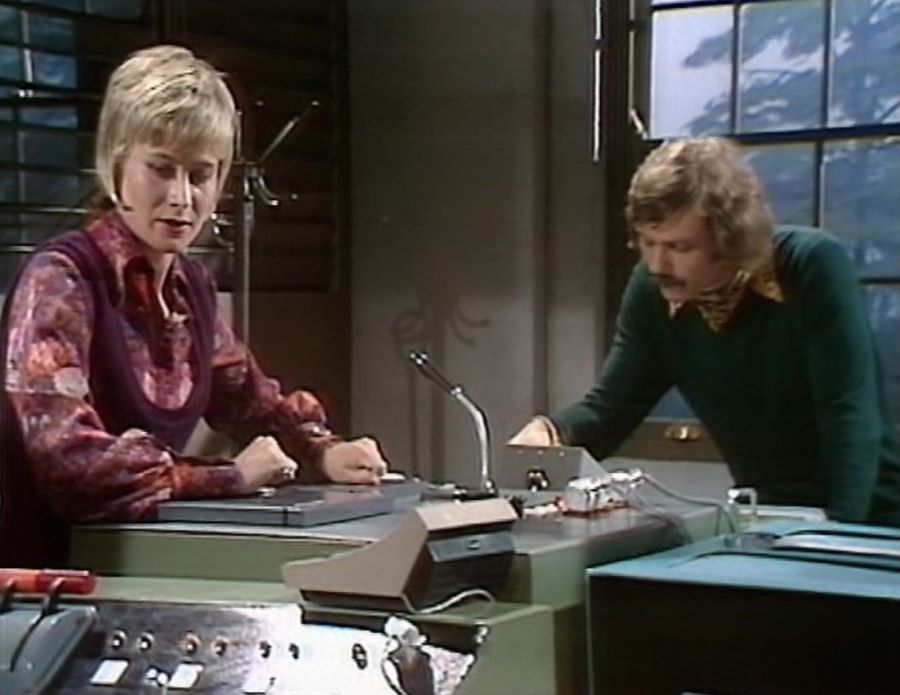
Ian Collier guest stars as Stuart Hyde, the second scientist who works with Dr. Ruth Ingram on the TOMTIT project. This happens to be Ian Collier’s first ‘Doctor Who’ story, as he would go on to play Omega in the stories ‘Arc of Infinity’ and ‘Omega’. I enjoyed him as Stuart Hyde in this TV adventure.
John Wyse guest stars as Dr. Percival, who unfortunately becomes the Master’s assistant for a short time in the story’s first three episodes. It’s intriguing how Percival becomes an easy victim for the Master to control in this story. It’s also unfortunate he got swallowed up by Kronos in ‘Episode Three’.
Donald Eccles guest stars as Krasis, the High Priest of Poseidon in Atlantis that the Master manages to summon from long ago to appear in the 20th century. I’ve also seen Donald Eccles in a BBC TV production of ‘Emma’, which was when I was writing and working on ‘The Austen Code’ as a story. 🙂
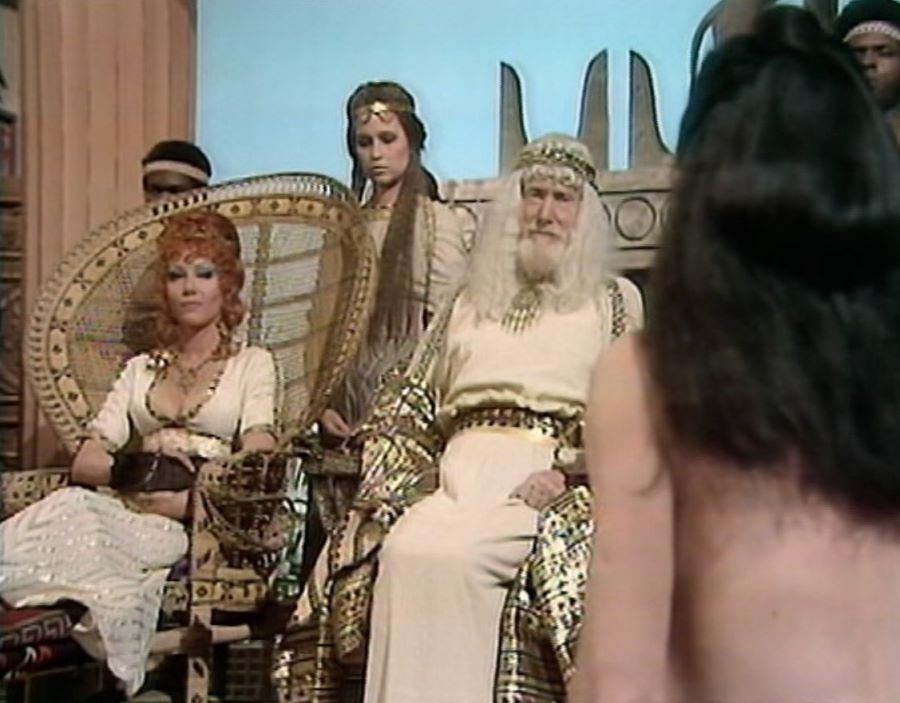
George Cormack guest stars as Dalios, the King of Altantis in this ‘Doctor Who’ story. Interestingly, George Cormack would later return to play the hermit that the Doctor mentions to Jo in ‘Planet of the Spiders’ named K’anpo. I like how George Cormack plays Dalios with such grace and dignity here.
With him is Ingrid Pitt as Queen Gallelia, who seems to take a shine to the Master when he makes his appearance in Atlantis. Gallelia appears only in the last two episodes of this ‘Doctor Who’ story. After ‘The Time Monster’, Ingrid Pitt would go on to play Dr. Solow in the TV story ‘Warriors of the Deep’.
Aidan Murphy guest stars as Hippias, a member of King Dalio’s council in Atlantis who was once in love with Gallelia. There’s also Susan Penhaligon as Lakis, Gallelia’s handmaiden. For me, Susan Penhaligon later played Shayla in the Big Finish audio story ‘Primeval’ with Peter Davison and Sarah Sutton.
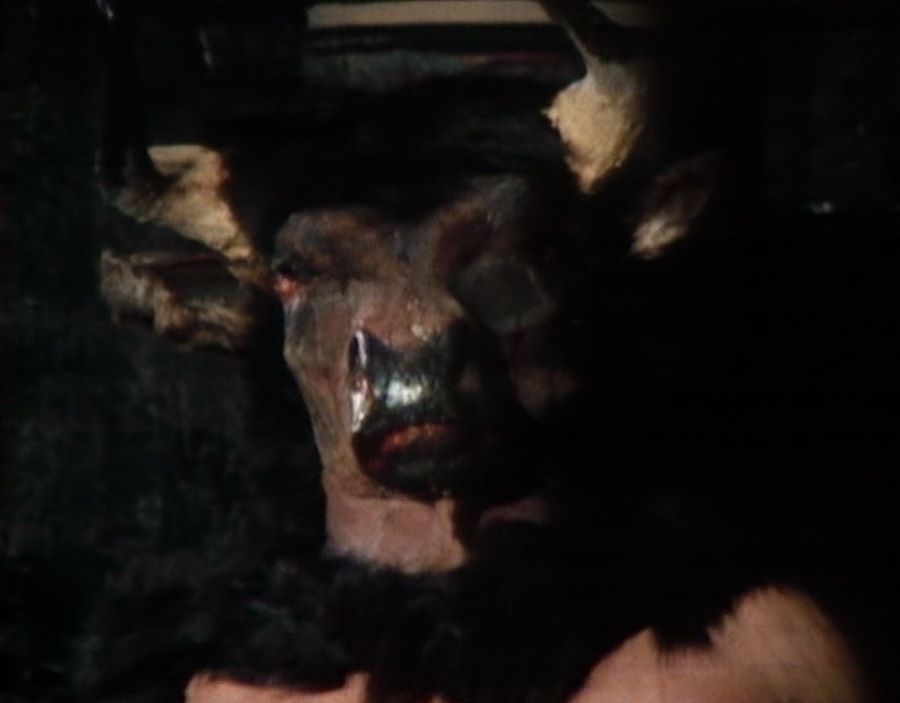
And there’s David Prowse who plays the Minotaur in this ‘Doctor Who’ story. Funnily enough, David Prowse would go on to play Darth Vader in the original ‘Stars Wars’ film trilogy. It’s amazing that David Prowse was in ‘Doctor Who’ before he went on to become famous and be Darth Vader’s body.
There’s also Neville Barber as Dr. Cook and Barry Ashton as Proctor, Dr. Cook’s assistant. There’s Terry Walsh as the window cleaner in ‘Episode One’. Greg Powell played the knight on horseback in ‘Episode Three’. Dave Carter plays a Roundhead officer and George Lee plays a farmworker in the story. 🙂
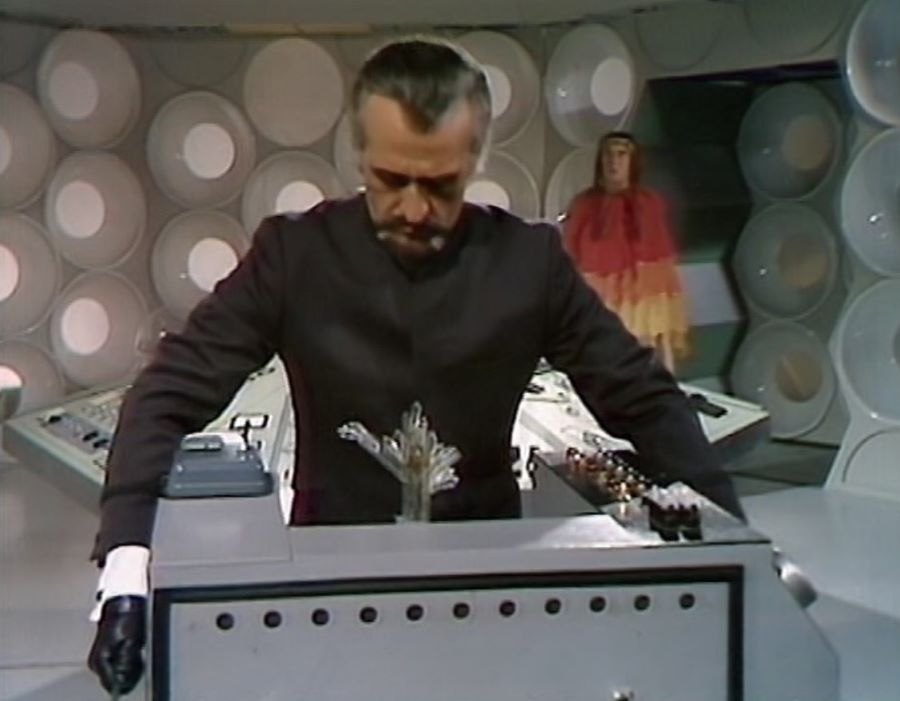
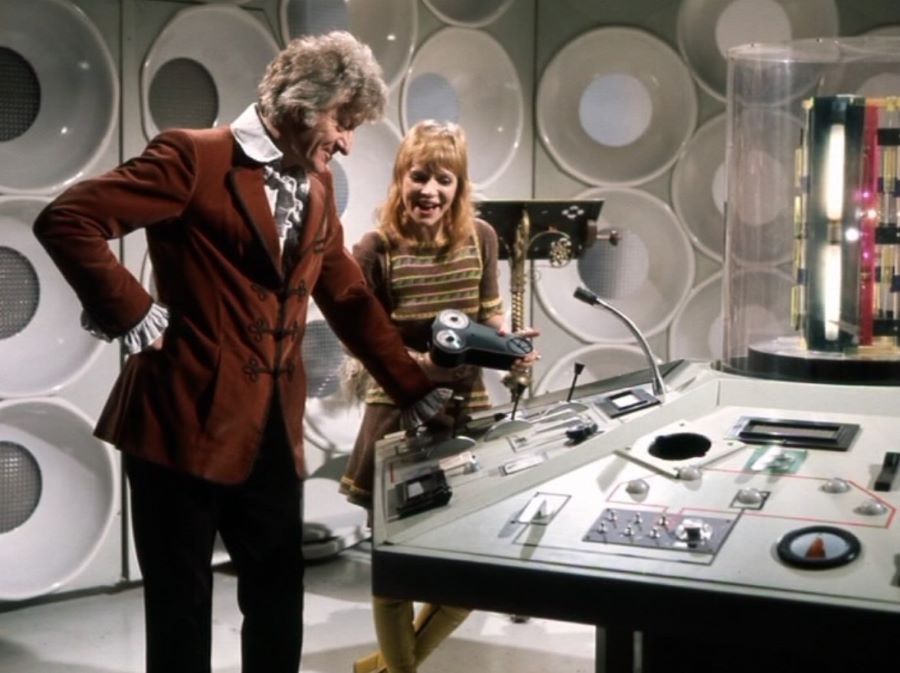
By the way, the story features interiors designs for the Doctor and the Master’s TARDISes with the roundels looking like dish bowls. I don’t mind the TARDIS interiors featured in ‘The Time Monster’, as they can be quite snazzy in appearance. It’s such a pity those TARDIS interiors weren’t very popular.
I quite like the scenes where we see Bessie with the super-drive. It might seem ridiculous, especially once the Doctor uses it when he and Jo are in the car, but it’s quite a fun idea. I’ve at least included the super-drive in ‘The Matter of Reality’, the third ‘Zorbius’ story, featuring the Third Doctor and Jo.
The story concludes with the Master escaping and the Doctor and Jo returning to the Newton Institute where Ruth and Stuart manage to free the Brigadier and his forces from their ‘frozen’ state. Benton is also retorted to being an adult, although he’s embarrassed when he finds himself ‘naked’.

The original DVD special features were as follows. There was the ‘Between Now…and Now!’ making-of documentary with behind-the-scenes cast and crew interviews, which looked into the science of ‘The Time Monster’. There was the ‘Restoration Comparison’ featurette, which looked into the ‘before and after’ picture restoration of ‘The Time Monster’ on DVD. There was a photo gallery of the story, a dual mono sound audio mix option for the story and an audio commentary with John Levene, Susan Penhaligon, producer Barry Letts, production assistant Marion McDougall, writer Graham Duff, writer Phil Ford, writer Joseph Lidster and writer James Moran, moderated by Toby Hadoke. There was an info-text commentary option to enjoy, PDF materials, including a ‘Radio Times Listings’ of the story, and a ‘coming soon’ trailer for ‘The Creature From The Pit’, starring Tom Baker, Lalla Ward and K-9 (now available on Disc 2 of the Season 17 Blu-ray box set of ‘Doctor Who’, containing ‘City of Death’).
On Disc 7 of the ‘Doctor Who – The Collection – Season 9’ Blu-ray, the ‘Between Now…and Now’ making-of documentary, the dual mono sound audio mix option and the DVD audio commentary can be found on there. The photo gallery and the info-text commentary option of the story have been updated for 2023 on the Blu-ray.
The new special features on Blu-ray include the ‘Behind the Sofa’ feature on ‘The Time Monster’ with Katy Manning (Jo) and director Michael E. Briant as well as Peter Davison (the Fifth Doctor), Sarah Sutton (Nyssa) and Janet Fielding (Tegan) as well as Wendy Padbury (Zoe) and Sophie Aldred (Ace). There’s a ‘Nationwide’ item on the BBC Special Effects Exhibition, broadcast on the 7th of December 1972, and there are BBC trailers and continuity announcements for the story.
On the PDF front, as well as the ‘Radio Times Listings’ of ‘The Time Monster’, there are production documents, six camera scripts as well as three of director Paul Bernard’s scripts and Paul Bernard’s TARDIS sketches. You need a special Blu-ray computer drive for that.
On Disc 8 of the ‘Doctor Who – The Collection – Season 9’ Blu-ray, the ‘Restoration Comparison’ featurette can be found on there.
The new special features on Blu-ray include the DVD versions of ‘Episodes One to Five’ of ‘The Time Monster’ to enjoy, which are presented in standard definition. There’s the brand-new making-of documentary ‘Time and Atlantis’, presented by Toby Hadoke and featuring behind-the-scenes cast and crew interviews. There’s the ‘On the Waterfront’ sketch with Jon Pertwee, which was broadcast in May 1989, ‘The Panopticon Archive’ panel interview with Ingrid Pitt and script editor Terrance Dicks from 1992, and a ’50th Anniversary Archive’ interview with Richard Franklin. There’s also the studio clocks compilation for Season 9.
For me, ‘The Time Monster’ is an imaginative story from the Jon Pertwee/Third Doctor era of ‘Doctor Who’. I know it might not be considered one of the best stories that’s favoured highly by the ‘Doctor Who’ fandom, but I found it very colourful to watch and I have enjoyed seeing it on DVD and Blu-ray.
Arguably, the story could have required a bigger budget to do it justice, and perhaps if the director Paul Bernard had listened to producer Barry Letts’ suggestions on improving Kronos as the titular ‘time monster’, maybe the tale could have had more credibility and not turned out looking so silly. 😐
This is sometimes a problem with certain season finales in the classic ‘Doctor Who’ TV series, as the production teams spend a lot of time early on in a season before they run out of the budget by the season’s end. I can imagine the mad rush needed for a season to be out on time to satisfy the BBC. 😐
Despite that, I enjoyed the creativity and imagination featured in ‘The Time Monster’ as a ‘Doctor Who’ story and I enjoyed how Jon Pertwee as the Doctor and Katy Manning as Jo carried the story forward. They’re certainly a highlight for me, especially with revisiting ‘The Time Monster’ on Blu-ray
To sum up Season 9 of the classic ‘Doctor Who’ TV series overall, it’s certainly been a creative and imaginative season that’s full of variety. This is thanks to the fact that the Doctor got to visit a couple of planets off Earth compared to how he was often stuck on Earth in exile during Seasons 7 and 8. 😐
There are also the signs that U.N.I.T. isn’t playing an important role in the ‘Doctor Who’ TV series compared to how things were in Seasons 7 and 8. In Season 9, there are only two stories where U.N.I.T. is featured – ‘Day of the Daleks’ and ‘The Time Monster’. In hindsight, this is quite a contrast.
Jon Pertwee’s Doctor gets to cope without U.N.I.T. in three stories of the season. Judging by how the non-U.N.I.T. stories turned out, ‘The Curse of Peladon’ is a very intriguing sci-fi interpretation of Britain in the 1970s joining the European Union with Peladon about to join the Galactic Federation. 🙂
‘The Sea Devils’ has been fascinating in showcasing the Doctor and Jo working with the Royal Navy to confront a deadly threat in the Sea Devils and the Master. And ‘The Mutants’ is an underrated exploration of showcasing an ‘apartheid’-like Earth Empire with concepts about mutation thrown in.
In all three non-U.N.I.T. stories, the Third Doctor and Jo have coped and work well as a TARDIS duo when visiting alien planets far away from Earth and very often in the future. Season 9 showcases the Doctor and Jo’s relationship as a Doctor and companion at their best compared to how Season 8 did.
Yes, there was the story ‘Colony In Space’ where the Doctor and Jo didn’t have U.N.I.T. to help them in Season 8, but most of that season was about the Doctor, Jo and U.N.I.T. as opposed to just being the Doctor and Jo. There would be more of the Doctor and Jo’s relationship to explore in Season 10.
In terms of having favourite stories out of Season 9, I’d rank ‘Day of the Daleks’ and ‘The Sea Devils’ highly. With ‘Day of the Daleks’, it’s more influenced by what I’ve seen in the Special Edition version with the enhanced Dalek voices and CGI effects to make the story compelling and pretty worthwhile.
‘The Sea Devils’ is particularly gripping for me, especially as it explores the Doctor and the Master’s adversarial relationship as well as being a follow-up to ‘Doctor Who and the Silurians’. It’s also fun to be out on the sea for a change compared to being stuffed up inside U.N.I.T. HQ in Jon Pertwee’s era.
‘The Time Monster’ rounds off the season quite well, especially with featuring the Doctor and Jo being assisted by U.N.I.T. this time. It’s also very fitting that we start the season with a contemporary story in ‘Day of the Daleks’ and finish the season off with a contemporary story in ‘The Time Monster’.
This would be repeated in the last two seasons of Jon Pertwee’s era, although ‘The Time Warrior’ and ‘Invasion of the Dinosaurs’ are switched around in Season 11, with the first story mostly taking place in Earth’s medieval past and ‘Invasion of the Dinosaurs’ being the present-day U.N.I.T. story. 🙂
It’s so evident that the Jon Pertwee era was getting more away from Earth. I like how producer Barry Letts and script editor Terrance Dicks experimented with the approach of having the Time Lords assigning the Doctor missions to planets far away from Earth to provide the TV show more variety. 🙂
Season 9 has been an enjoyable ‘Doctor Who’ classic TV season to check out, both on DVD and Blu-ray. I’ve enjoyed revisiting the five TV stories in Season 9 with Jon Pertwee and Katy Manning. It’s also been great to revisit them in their ‘Behind the Sofa’ features with certain favourite contributors.
Whilst the Doctor continues to be stuck on Earth, thanks to the Time Lords, there’s the chance he’ll be given another mission by them to be off Earth and not help U.N.I.T. all the time with their problems. But of course, change was on its way, as the classic TV series was about to celebrate its 10th anniversary.
‘The Time Monster’ rating – 7/10
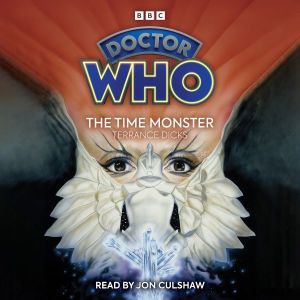
‘DOCTOR WHO – THE TIME MONSTER’
Please feel free to comment on my review.
The Search for the Crystal of Kronos Begins
For Terrance Dicks
This has been a satisfying and enjoyable ‘Doctor Who’ Target novelization/audiobook! 🙂
In late 2018, I’d been reading and listening to a couple of Target novelization/audiobooks featuring Jon Pertwee’s Third Doctor. They were on ‘The Curse of Peladon’ and ‘The Sea Devils’. I stress that I found the two stories very enjoyable in novelization/audiobook form.
However, I was disappointed with the changes made to the stories in novelization/audiobook form. The novelizations/audiobooks for those two Jon Pertwee stories were unsatisfying and unfulfilling, especially as the endings seemed to be rushed.
Certain moments I like from the TV versions of the two stories are omitted, like the Doctor and the Master’s sword fight in ‘The Sea Devils’. Jo Grant tended to be written out of character, depending on how Brian Hayles and Malcolm Hulke did the tales in book form.
Would things be better in ‘The Time Monster’ Target novelization/audiobook? Well, thankfully, yes, as I enjoyed reading the Target novelization by Terrance Dicks. And yes! Terrance Dicks is the reason why this ‘Doctor Who’ Target novelization made me happy. 🙂
Here, he writes a faithful Target novelization of the Season 9 TV finale. It’s what I expect when it comes to reading a ‘Doctor Who’ story by Terrance, whether it’s a novelization or an original story. I know the goods are being delivered when he provides a coherent story.
I’ve also enjoyed checking out the audiobook reading by Jon Culshaw whilst revisiting the Target novelization in 2024. I didn’t know who would read the audiobook. It could have been either Katy Manning, Richard Franklin or John Levene when released in March 2023.
I’m happy it’s Jon Culshaw, as he’s able to deliver the voices of the Third Doctor and the Brigadier superbly when reading the story on audio. I don’t think the voices provided for Jo and the Master are as good as the Doctor and the Brigadier’s, but they’re still enjoyable
Originally, ‘The Time Monster’ was a six-part adventure by Robert Sloman and producer Barry Letts. Terrance Dicks has mostly kept to what was in the original TV story, although sadly, the fourth, fifth and sixth episodes are condensed somewhat in the final six chapters.
This is a shame, but nothing felt at all lost in the reading and listening experiences. Not much is changed apart from a few tweaks here and there. I’ve seen ‘The Time Monster’ more than once to appreciate how the story matches in both TV and novelization form. 🙂
The story is divided into 15 chapters. Quite surprisingly, Terrance Dicks didn’t go for the approach of making this an 18 chapter book for ‘The Time Monster’ to make the equivalent of three chapters for each episode in the six-parter, which I sort-of did expect.
Maybe this was Terrance Dicks’ way of saying that the story could have worked better if it was a five-parter instead of being a six-parter, much like how ‘The Dæmons’ is a five-parter and not a six-parter. Mind you, ‘Episode Four’ of the story seemed to have a lot of padding.
This is especially when the Doctor and Jo were following the Master and Krasis in their TARDIS and soon the two TARDISes were locked in a Time Ram. Terrance Dicks could have stretched that out in the Target novelization if he wanted to, but he ultimately didn’t.
There’s still the arguing scene between the Doctor and the Master as well as the scene where the Doctor speaks English backwards being kept for the Target novelization. I’m very pleased they weren’t lost in the TV story’s process of being novelized in Target form.
But the need for those scenes being stretched out isn’t required and, in a sense, that is what the writing style of Terrance Dicks is all about in the book. The chapters themselves aren’t necessarily long and are kept to a certain length that’s easy for children to enjoy. 🙂
It’s easy to forget that the target audience (no pun intended) of these ‘Doctor Who’ books is for children. Other authors like Ian Marter and Terence Dudley are obliged to be in-depth with their novelizations, but Terrance Dicks is spot-on in writing stories for children.
‘The Time Monster’ book itself was published in 1986, 14 years after the original TV story was transmitted in 1972. Wow! It took that long to get ‘The Time Monster’ novelized into book form whereas other Jon Pertwee stories were novelized in the 1970s. I’m surprised.
What took them so long? 😀 In terms of the changes made to the TV story in the Target novelization, well, there’s not much to go on. As I said, Terrance Dicks keeps true to what was in the original TV scripts by Robert Sloman and Barry Letts. I quite appreciate that. 🙂
Mind you, there’s quite a small number of alterations made here and there. For example, in the book, the Master speculates how Rassilon used the time-scoop on Gallifrey when using the TOMTIT device to summon soldiers of the past to attack Mike Yates and his men.
This is when Mike Yates’ U.N.I.T. convoy is delivering the Doctor’s TARDIS to the Newton Institute. This was so intriguing to discover, as it wasn’t long after Terrance wrote ‘The Five Doctors’ for TV in 1983. I’m sure ‘Doctor Who’ fans were quite excited by the reference. 🙂
To include a reference to the 20th anniversary TV special in a novelization based on a Jon Pertwee TV adventure made before that happened is quite ironic. I guess Terrance is entitled to make liberties when novelizing ‘The Time Monster’ into a Target novelization. 🙂
The Master also speculates how he got on well with Dr. Percival’s predecessor before he had him killed and used Percival as his assistant. This makes me wonder. Why did the Master kill Percival’s predecessor if he got on very well with him. It’s never explained here.
Did Percival’s predecessor break the Master’s hypnotism? It’s likely to be the case. Plus, how was the Master able to get into the Newton Institute in the first place so he could install the TOMTIT device? These details aren’t explored, even in Target book/audio form.
Apparently, a few minor spelling changes are made to some of the characters in the story. For example, the Master’s alias of ‘Thascales’ becomes ‘Thascalos’ in the novelization. As established in my updated Blu-ray review, ‘Thascalos’ is more accurate than ‘Thascales’.
For other spelling changes, Percival becomes Perceval whilst Miseus becomes Mysesus. Don’t worry if you don’t know who Misesus/Myseus is. I don’t think he was an important character in the story at all. Of course, these are spelling changes I honestly didn’t notice.
When we’re introduced to the Master in the Target novelization, he’s not revealed to be him in the first chapter. He’s mostly referred to as Thascalos when he’s first working with Ruth and Stuart. It’s only when he hypnotises Perceval that he’s revealed to be the Master.
For the rest of the book, he’s called the Master. I found that to be a nice build-up in revealing that Thascalos was actually the Master in book/audio form compared to the TV story. It’s an approach only in the first chapter, but it works well in the Target novelization.
I’m surprised they didn’t utilise this trick in the TV version. Terrance clearly saw the trick being missed. It reminds me of the build-up to whether Frodo and Sam were dead in ‘The Lord of the Rings: The Return of the King’ in book form following the Mouth of Sauron scene. 🙂
In the ‘Episode Two’ cliffhanger section of the book where Krasis appears to the Master and Perceval in the TOMTIT laboratory, the sequence where he disappears from the temple in Atlantis is omitted. This occurred the start of ‘Episode Three’ of the TV story too.
How come that scene from ‘Episode Two’ with Krasis leaving Atlantis is omitted in the Target novelization/audiobook? I suppose it was a scene probably not needed in the TV story and it was clearly realised that this was the case by the time we got to ‘Episode Three’. 😐
Perhaps the scene was included in the TV story to make-up for a 25 minute or so episode run-time. Maybe Terrance Dicks didn’t like the scene when it was first written, and he saw it unworthy to be included. Which is fair, though it’d better to have it for completion’s sake.
In the ‘Episode Six’ section of the story, Lakis enters King Dalios’ chamber to deliver the message about Jo being in trouble with the Minotaur. In the novelization/audiobook, she’s not dragged out by the guards as depicted in the TV version, which I do prefer quite frankly.
This is especially considering the King isn’t ignoring Lakis in that scene. In fact, why didn’t Dalios stop the guards from taking Lakis away in the TV version when she entered the chamber? Clearly, Dalios clearly wanted to know what troubled Lakis when she came in.
Yet, the guards were determined to take her out. Dalios should have given a royal command to his guards to prevent her from leaving. Perhaps they were against Dalios, especially as he was later beaten up and thrown into a prison cell with the Doctor and Jo.
The Brigadier seemingly irritable and impatient in the ‘Episode Three’ segment of the story sort of makes sense in the Target novelization. Just sort of. 😐 It’s after the Brigadier’s been taken out of the time field and running in slow motion that he gets irritable and impatient.
It might also explain why the Brigadier was sceptical about Mike Yates and his men fighting medieval knights and Roundheads on their way to the Newton Institute. Perhaps being in the time field affected his mind somewhat, as the Brig wouldn’t be very sceptical.
This is especially concerning alien things in the series so far, as wouldn’t meeting the Yeti, the Cybermen, the Autons, etc, make him realise that things didn’t make sense in ‘The Time Monster’ story. It’s something probably unexplored and wasn’t considered enough.
There’s an alteration where the Brigadiers addresses Yates as ‘Mike’ following the V1 bomb explosion at the end of the ‘Episode Three’ segment of the story. This doesn’t happen in the book, which I found rather bizarre, especially when hearing the audiobook.
I wonder why Terrance didn’t have the Brigadier shout for ‘Mike’ in that scene. It was a poignant moment! I know it wasn’t included in the recap in ‘Episode Four’ of the story in TV form, but surely that’s a moment that’s very significant and worthy to be included in book form.
It demonstrates how the Brigadier cares about his U.N.I.T. men. To have him call ‘Mike’ instead of ‘Yates’ in the ‘Episode Three’ cliffhanger is very touching. I think Terrance should have kept the moment in the Target novelization instead of have it omitted entirely.
The scene descriptions and set-ups in the Target novelization are very well done by Terrance. It’s something he does remarkably well for his ‘Doctor Who’ Target novelizations as well as writing for the Third Doctor era characters, since he knows them very well here.
The climactic scenes featuring Kronos destroying Atlantis are pretty effective in the book. It’s also clear that the Master is unable to control the monster once he grows bigger and becomes powerful than ever. Kronos becomes bigger than before in the dramatic climax.
Galleia freeing the Doctor so that he can chase after the Master in his TARDIS with Jo as his prisoner is also very effective in the book. There’s more dialogue between Galleia and the Doctor compared to what’s presented in the TV story, especially in the Kronos chaos.
The book ends with everything returning to normal. The Brigadier and his U.N.I.T. men are free from their time trap, the TOMTIT device is destroyed after Ruth and Stuart use it, and Benton is restored to being an adult whilst stark-naked and asking what’s been happening.
Nobody laughs at Benton’s nakedness though. The story ends with the Doctor thinking that what Benton asked was ‘a very good question’. Maybe people like the Doctor, Jo, Ruth, Stuart and the Brigadier should have reacted in shock once they saw Benton naked.
‘The Time Monster’ Target novelization/audiobook by Terrance Dicks is satisfying. I enjoyed reading and hearing the story in book/audio form from beginning to end and found it better than ‘The Curse of Peladon’ and ‘The Sea Devils’ novelizations/audiobooks.
Terrance Dicks has remained true and faithful to the original TV scripts in his novelization of the story, and I like how Jon Culshaw reads the story in audiobook form. It’s been nice to revisit the Target novelization with the audiobook after revisiting the story on Blu-ray. 🙂
The story in novelization/audiobook also allows you not to be distracted by any dodgy visual effects that were present in the TV story. Kronos can be intimidating, threatening and powerful when the Master summons him from the Great Crystal in book and audio. 🙂
You also get to engage with characters such as the Third Doctor, Jo and U.N.I.T. members like the Brigadier, Mike Yates and Benton and appreciate their journeys. This is especially when you consider this as the finale to Season 9 of the classic TV show, which I quite like.
‘Doctor Who – The Time Monster’ rating – 9/10
| The previous story
For the Third Doctor was
For Jo was
For the Brigadier was
For Mike Yates was
For Benton was
For the Master was
|
The next story
For the Third Doctor is
For Jo is
For the Brigadier is
For Mike Yates is
For Benton is
For the Master is
|
| Return to The Third Doctor’s Timeline | |
| Return to Jo’s Timeline | |
| Return to The Brigadier’s Timeline | |
| Return to Mike Yates’ Timeline | |
| Return to Benton’s Timeline | |
| Return to The Master’s Timeline | |
| Return to The Doctors’ Timelines Index | |
| Return to The Companions’ Timelines Index | |
| Return to The Monsters’ Timelines Index | |
| Return to Doctor Who Timelines | |
| Return to Doctor Who | |
| Return to Sci-Fi |
 Bradley's Basement
A fair balanced assessment on this 6 parter Tim, i felt the ambition is in this story but lacks the budget to do it justice, it needed some location filming for Atlantis not be confined to the studio the budget restrictions let it down somewhat but it’s still a entertaining watch nevertheless.
A excellent informative review Tim.
LikeLiked by 2 people
Hi Simon.
Glad you enjoyed my review on ‘The Time Monster’.
Yes this story needed a bigger budget to do it justice. This is sometimes the problem with classic series stories as finales in ‘Doctor Who’. The production team spends a lot early on in a season before they run out towards the end.
I enjoyed the imaginativeness of this adventure and I enjoyed how the Doctor and Jo carried the story forward. I especially found them the highlight whilst re-watching the story for this review.
Tim. 🙂
LikeLiked by 1 person
Great review on the Target novel Tim, it looks well this gets a brilliant adaption with stronger story arc & narrative but Curse Of Peledon & Sea Devils don’t.
There’s more depth to the story than seen in the transmitted episodes & i easily pictured Atlantis differently than what was shown on tv & Kronos feels more of a threat in the novel.
I like that in the novel the Brig is more caring & you feel his respect for Yates & Benton it adds warmth to the character.
Just a few tweaks here & there make the novel all the better in storytelling.
LikeLiked by 2 people
Hi Simon.
Glad you enjoyed my review on the Target novelization for ‘The Time Monster’.
I really pleased this one was faithful to the original TV scripts, thanks to Terrance Dicks’ writing when he novelized the story. It’s a shame ‘The Curse of Peladon’ and ‘The Sea Devils’ novelizations don’t seem to have that same quality of being faithful to the original TV scripts with their endings being abrupt and many scenes omitted or truncated.
Interesting how you saw Altantis pictured differently in the novelization as well as finding Kronos more of a threat in the novelization. It’ll be interesting to see how this novelization will be given an audiobook reading someday.
Yeah I suppose the book does at least have the Brig showing care and respect for Mike Yates and Benton as he did in the TV version. I just think the Brig calling Yates ‘Mike’ at the end of the ‘Episode Three’ section should have been kept in from the TV story into the book.
Overall, ‘The Time Monster’ novelization is very good and it’s thanks to Terrance Dicks for that.
Many thanks for your comments, Simon.
Tim. 🙂
LikeLiked by 1 person
The Time Monster has quite an odd structure, all in all. It’s quite pacey and reasonable in our scenes at Cambridge, but once we move to Atlantis, there’s a deliberate attempt to slow down the action. Almost like we leave the world of tele-scripts and go to the world of stageplays (which might have been deliberate).
It’s a very reactive story. I get the distinct impression that it’s actually meant to be the Master’s tale, rather than the Doctor. He gets all the agency. Some of the best scenes of the piece are for Delgado. The Doctor and Jo, meanwhile, spend either a lot of time waiting or catching up to the Master.
Ironically, despite that approach, we get one of the most essential scenes for the Doctor’s character in the show’s history. The daisiest daisy. The Doctor’s moment of almost Buddhist Enlightenment when they’re young. I’d argue it sums up the approach of the Letts/Dicks era to the character extremely elegantly.
It also provides us with something that’s become a quintessential touchstone of how modern Doctor Who views time-travel. We’re introduced, quite definitively, to the realm of the time vortex. Pictured as a night-struck maelstrom, populated by creatures beyond our imagining, but not too far removed from that of ancient myth.
Is The Time Monster a good story?
Well… It’s not as lean as, say, Underworld, but there is a sense that once Greek mythology steps in, a certain substance to the story steps out. This doesn’t necessarily have to be — as seen with Hades — but it is a repeated trap that Doctor Who will continue to fall into as the years go on. In retrospect, it could’ve been told in four episodes.
Is The Time Monster an influential story?
Mythologically, looking at its portrayal of the Doctor and the ideas seeded within it (TARDISes locked in combat, ancient horrors that transcend Space, threats to causality itself, tampering with damaged Time, etc.)… The Time Monster may just be one of the cornerstones of the programme. Certainly in our perceptions of how time-travel works in Doctor Who.
LikeLiked by 2 people
Hi Wolfie,
Thanks for sharing your thoughts on ‘The Time Monster’. I like how you’ve identified how pacy the story is in the first four episodes compared to the last two episodes, which, as you’ve described, have a stage feel to them. I also like how you’ve identified the impression is given that this is almost a Master-driven story as opposed to the Doctor and Jo being the ones driving the story.
The ‘daisiest daisy’ scene in ‘Episode Six’ with the Doctor and Jo is quite a rare one where it’s mostly quiet and character-driven compared to the rest of the story which has things moving at a frequent pace. I also like how you’ve pointed out how ‘The Time Monster’ has become influential in future stories of the TV series, both classic and new, particularly with how the time vortex is introduced and how a TARDIS within a TARDIS concept is started. I look forward to when I get to update my review on ‘Underworld’ and explore how a Greek myth in sci-fi terms is handled more directly compared to how ‘The Time Monster’ does things with Greek myths including Atlantis, Kronos and the Minotaur.
Best wishes,
Tim 🙂
LikeLiked by 1 person
For the first story I saw with Roger Delgado as the Master, this is a fond memory. It was shortly afterwards that I learned more about Atlantis in school which was fitting. Thank you, Tim, for your review.
LikeLiked by 2 people
Hi scifimike,
Very pleased you have fond memories of ‘The Time Monster’ featuring Roger Delgado as the Master. Also very pleased you were able to learn more about Atlantis in school from watching this ‘Doctor Who’ story.
Many thanks for your comments.
Tim 🙂
LikeLiked by 1 person