
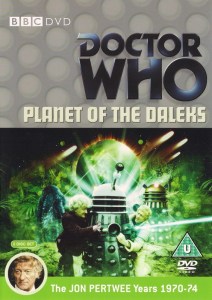
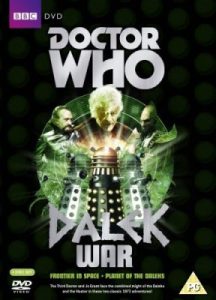

‘PLANET OF THE DALEKS’
Please feel free to comment on my review.
The Rumble in the Jungle with the Third Doctor and Jo


The second story of the ‘Dalek War’ story arc in Season 10 of ‘Doctor Who’ is ‘Planet of the Daleks’. This is a six-part adventure by Terry Nation. Yes! Terry Nation returns to write the Daleks once more in another adventure with the Doctor after a long absence. He last wrote for the Daleks in the 1960s.
His return to writing for the Daleks again in ‘Doctor Who’ was in time to celebrate the show’s 10th anniversary. Mind you, this wouldn’t have happened if it weren’t for one thing. In the previous season, Season 9, a Dalek story was made beforehand to open the season called ‘Day of the Daleks’.
That story was by Louis Marks, not Terry Nation. Upon the announcement of their return in Season 9, Terry Nation contacted the production team of producer Barry Letts and script-editor Terrance Dicks to inform them they had featured the Daleks without his permission and they were his property.
Whoops! Thankfully Terry Nation was amiable and understanding. Through a placatory lunch, Barry Letts and Terrance Dicks negotiated with Terry Nation to include the Daleks in ‘Day of the Daleks’. They also invited him to write a Dalek tale for the next season. Thus ‘Planet of the Daleks’ was born!
I found ‘Planet of the Daleks’ to be a great Dalek adventure when I first saw it on DVD back in 2009. Directed by David Maloney, it does feature many Terry Nation elements from previous Dalek stories. It also resembles the first Dalek story that was made back in 1963-64. But we’ll get into this aspect later on.
Anyway, ‘Planet of the Daleks’ follows directly after the events of ‘Frontier In Space’. The Doctor and Jo get inside the TARDIS and they’re taken to the planet Spiridion, as directed by the Time Lords through the Doctor’s telepathic contact with them. There, the Daleks are to unleash a deadly threat!
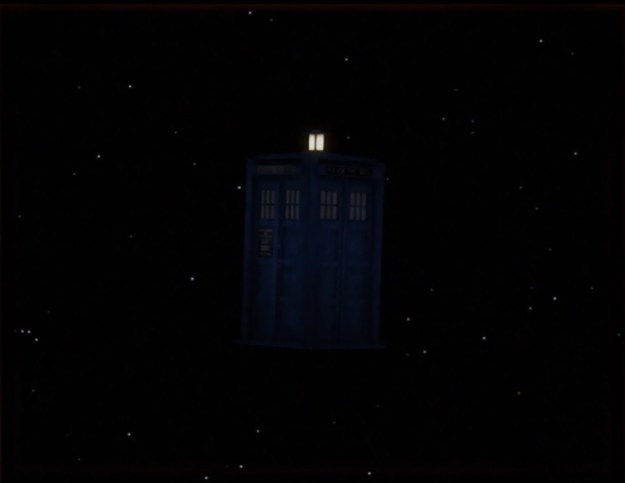
On the planet Spiridon, the Doctor and Jo meet a group of Thals led by a man called Taron. Like the Doctor and Jo, the Thals are on this mission to stop the Daleks too. It turns out that the Daleks have a hidden army inside an icy mountain. The army is massive! Can our heroes stop the Daleks in time?
I did enjoy this Dalek story very much. Mind you, it doesn’t live up to the build-up in ‘Frontier In Space’. Not that’s a bad thing. But it did make the Earth-Draconian war only a small part of the Daleks’ plans and not a big one as we were led to believe in the previous tale. This was disappointing.
This is why I think ‘Frontier In Space’ and ‘Planet of the Daleks’ should’ve been penned by just one writer or at least have Malcolm Hulke and Terry Nation in collaboration together to interconnect the two stories together. By which, the significance of the Dalek threat gets well-justified across the universe.
It’s surprising that wasn’t considered especially for a 12 episode epic with two stories linked to each other in Season 10. It’d been done before when Terry Nation co-worked on ‘The Daleks’ Master Plan’ in Season 3. How come it wasn’t the case in dealing with ‘Frontier In Space’ and ‘Planet of the Daleks’?
Despite the issues I have with the ‘Dalek War’ story arc in Season 10, that didn’t spoil my enjoyment in watching ‘Planet of the Daleks’. Terry Nation does return to write the Daleks at their best. And as I said before, many familiar ideas from the first Dalek TV story get reused for ‘Planet of the Daleks’. 😀
These ideas include the return of the Thals as well as escaping the Daleks from captivity; unleashing a deadly bacteria; Rebec inside a Dalek echoing Ian Chesterton inside a Dalek; the Daleks working in a underground city and Jo falling in love with a male Thal called Latep like Barbara did with Ganatus.
Some might view this as a bad thing with Terry Nation rehashing an old plot he used for a previous story he did. This is usually the case with many Terry Nation-penned stories whether it’d be ‘Doctor Who’ or not. Me personally, I’m okay with it since it befits the show’s 10th anniversary celebrations.
In many respects, ‘Planet of the Daleks’ is not an exact re-telling of ‘The Daleks’. Far from it! For one thing, the story takes place on the planet Spiridion, not Skaro. Also the Thals volunteer for action in their mission whereas the first Dalek story showed them to be pacifists and pretty reluctant to fight.
The story also introduces the invisible Spiridons and the Daleks attempting to use their invisibility techniques to their advantage. The use of freezing cold liquid ice gets used to kill the Daleks as well as to freeze up a Dalek army deep down below the underground Dalek base. They’re very inspirational ideas!
It is a challenge to come up with fresh ideas especially for a new Dalek story when required to write it in a short amount of time. But to give Terry Nation credit, he’s had plenty of writing experience, especially in the ITC field of TV shows. His style of writing also suited the Jon Pertwee era pretty well.
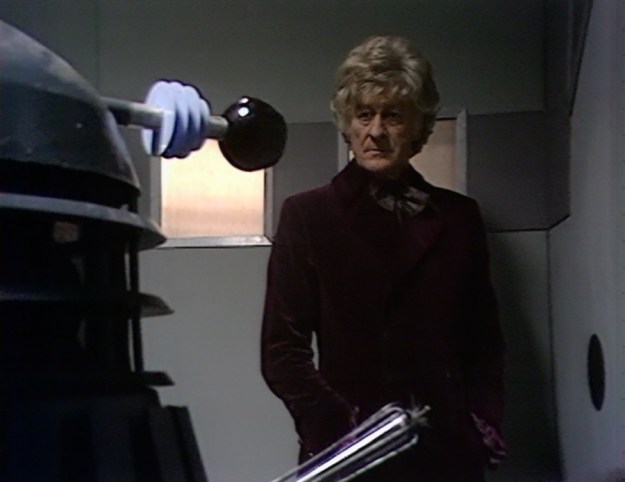
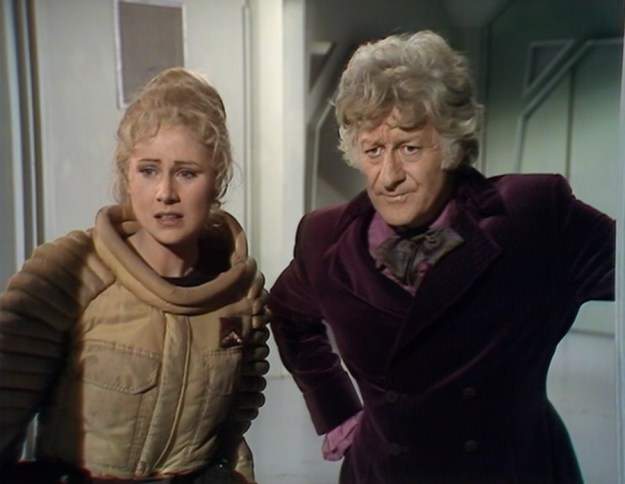
Jon Pertwee is pretty enigmatic as the Doctor in this TV adventure. He starts off with a fever after he got shot in the previous story. But he does come out of it pretty well and I liked his first scene with the Thals. The Doctor tells them how he first met them once on Skaro and he tries to gain their trust.
Even though the Daleks aren’t Jon Pertwee’s favourite monsters, I liked how his Doctor manages to deal with them in dangerous situations. I liked the Doctor’s scenes with Jo and how he interacts with Taron, the Thal Leader. The Doctor’s speech at the end of the story was inspirational and reassuring.
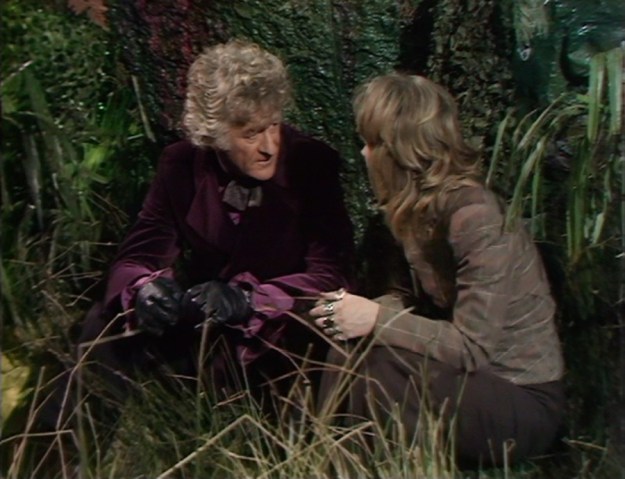
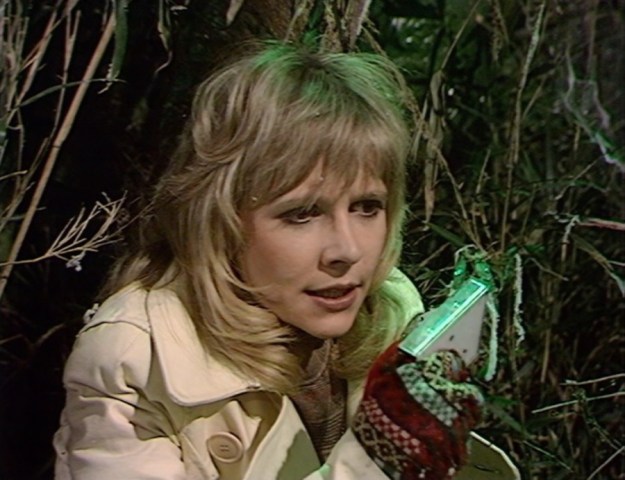
Katy Manning is wonderful as Jo Grant in this story. Jo spends a lot of time separated from the Doctor as she tries to get help for him on Spiridon. I did like how she talked into that cassette log, describing what was going on. I became anxious for her when she got infected with a deadly disease.
Thankfully though, she gets saved by an invisible Spiridon called Wester and I liked her scenes with him since she makes friends with him. I also liked the relationship she formed with Latep, the young Thal male who fell in love with her. It was sad that Jo turned Latep down to return with him to Skaro.
It was great to see the Thals again in this ‘Doctor Who’ story. In many respects, the Thals represent the goodness that was once on Skaro. That’s how Terry Nation envisaged them when he first wrote for them in the first Dalek story. I really liked how the Doctor interacted with them in this adventure.
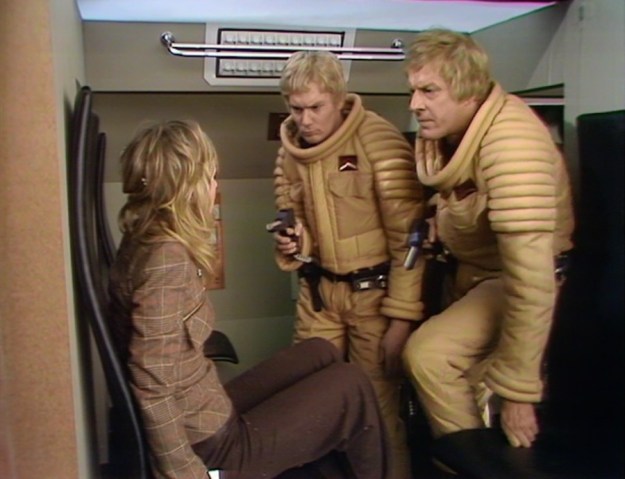
It’s interesting some of the Thals don’t feel brave as they should be when they volunteered for the mission to stop the Daleks on Spiridion. It’s clear they didn’t know what they’d gotten themselves into. The Thals want a quiet life. Despite not feeling brave, the Thals do fight on valiantly regardless!
Bernard Horsfall guest stars as Taron, the leader of the Thals in this adventure. Bernard has been in ‘Doctor Who’ before. He was in ‘The Mind Robber’ and ‘The War Games’ with Patrick Troughton. He’d later do ‘The Deadly Assassin’ with Tom Baker and the Big Finish story ‘Davros’ with Colin Baker.
I enjoyed Bernard’s performance as Taron in ‘Planet of the Daleks’. Taron comes across as a reluctant and cautious leader. The Thals’ original leader got killed upon landing on Spiridon. He’s unsure about the decisions he has to make to stop the Daleks and he relies on the Doctor to help him.
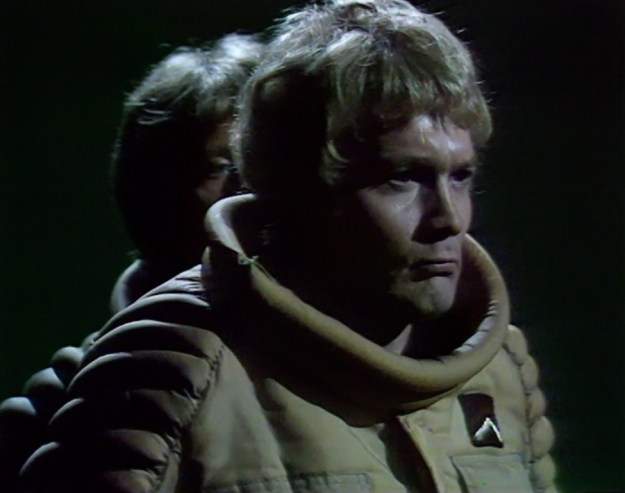
Prentis Hancock guest stars as Vaber, an aggressive Thal man. Like Bernard Horsfall, Prentis has been in ‘Doctor Who’ too. He was in ‘Spearhead From Space’ beforehand and he would later appear in ‘Planet of Evil’ and ‘The Ribos Operation’. He’s more well-known as Paul Morrow from ‘Space: 1999’.
In this story, Vaber wants to stop the Daleks instantly with the three bombs the Thals have brought along with them. Vaber questions Taron’s authority and leadership at every opportunity. He finds his methods slow, wanting to get in the action to defeat the Daleks as soon as possible rather than later.
Tim Preece guest stars as Codal, the Thal scientist amongst the group. I enjoyed Tim Preece’s performance as Codal, bringing this honesty to the character. I liked that first scene Codal has with the Doctor when locked up in a Dalek prison cell they’re in. They talk about courage and bravery in that.
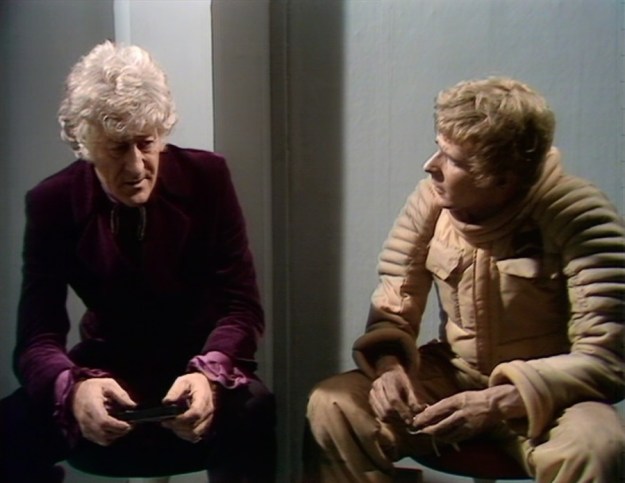
Codal happens to be a clever Thal scientist and he shares his scientific interest with the Doctor. This is especially when discovering more about the Daleks and the Spiridons’ invisibility. Despite Codal’s keen scientific interest, he isn’t keen about being on Spiridion and is scared stiff about the Daleks.
Jane How guest stars as Rebec, the female Thal member of the group on Spiridon. She joins Taron, Vaber and Codal along with other Thal members by the end of ‘Episode Two’. She happens to be Taron’s lover. Taron isn’t especially pleased when Rebec arrives as he feels he’ll be distracted by her.
I don’t find Rebec to be a poor character as many seem to criticise her for. I found her an interesting character and Jane How plays her well. Rebec seems to be brave on the mission she embarks upon with Taron and the others. It’s a pity she was the one who got chosen to be inside that empty Dalek.
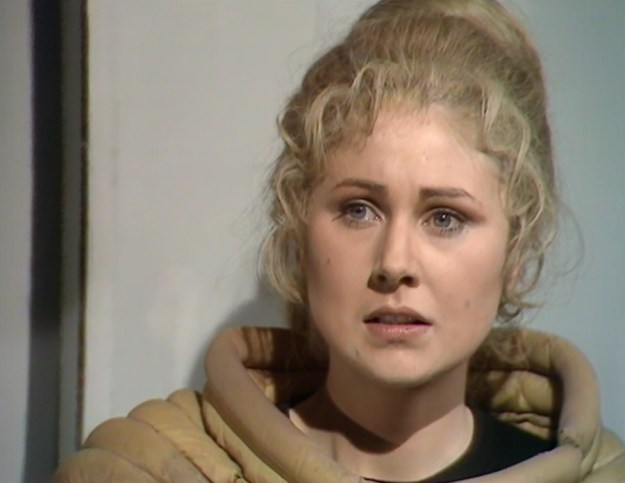
There’s Alan Tucker as Latep, the young male Thal who falls in love with Jo Grant. I liked the scenes between Latep and Jo in the story. I found them sweet, especially when they seemed to form a connection. The way Latep shared his feelings to Jo in ‘Episode Six’ was very touching to watch here.
There’s also Hilary Minster…General Von Klinkerhoffen!!!…as Marat in this adventure! Yes! Hilary Minster would later go on to star in the BBC sitcom ‘Allo ‘Allo’ after this. It’s amazing to see him so young in this. Sadly, Marat only appears in ‘Episode Three’ as he makes a heroic self-sacrifice.
The Daleks are great to watch in this TV adventure. It was interesting how the Daleks tried to master the Spiridons’ power of invisibility and that they have a Dalek army hidden underneath an ice volcano. I enjoyed ‘Episode One’s cliff-hanger, especially in CGI form, where that Dalek was revealed.
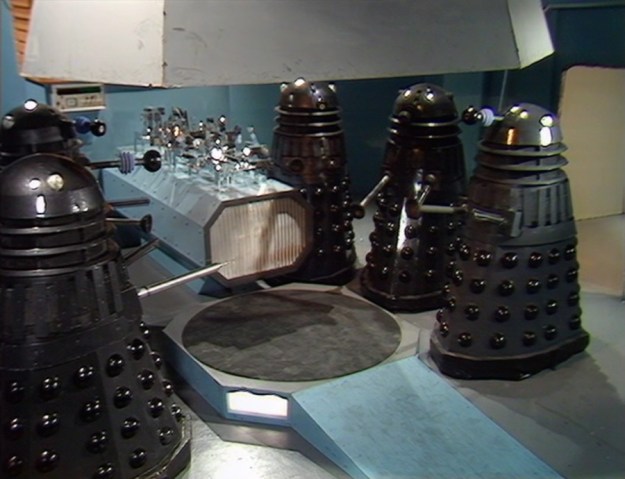
I also enjoyed the scenes where the Doctor, Jo and the Thals got two Daleks and pushed them into an icy cold river to make them die instantly. It’s revealed that the Daleks are vulnerable to sub-zero temperatures. It gives the Doctor and the Thals the advantage when they sneak into the Daleks’ city.
It was pretty exciting to see the ice volcano erupting and spewing out rivers of ice to freeze up the Dalek army underneath the Dalek base. The Dalek army gets swallowed up by the ice volcano’s icy waters. It’s impressive to see that sequence both in the original form as well as CGI form on Blu-ray.
The voices for the Daleks are provided by Michael Wisher and Roy Skelton. Michael Wisher previously played Kalik in ‘Carnival of Monsters’ and would go on to play Davros in ‘Genesis of the Daleks’. Roy Skelton (Zippy from ‘Rainbow’) previously did Dalek voices in ‘The Evil of the Daleks’. 😀
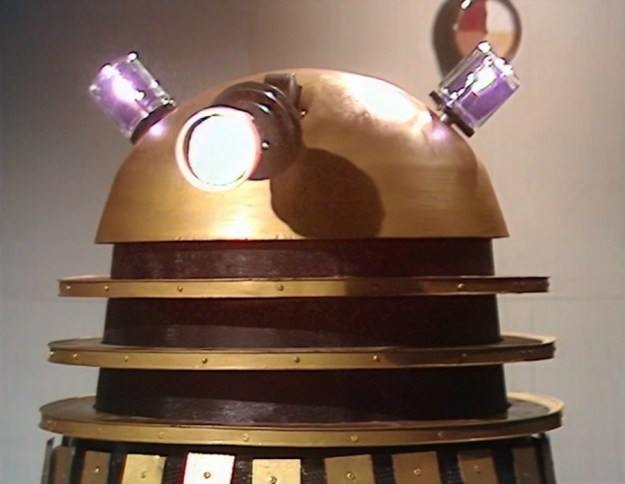
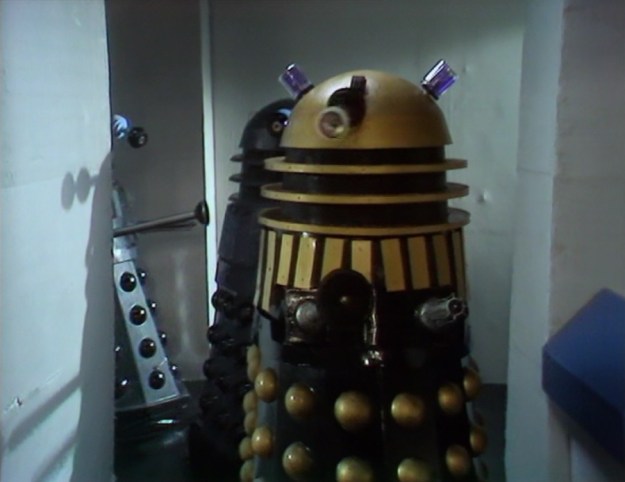
In this story, a special gold Dalek makes an appearance. This is the Dalek Supreme, who is a member of the Dalek High Council. The gold Dalek Supreme looks very impressive. I got to see the Dalek Supreme from ‘Planet of the Daleks’ on display at the ‘Regenerations 2011’ convention in Swansea!
Sadly the purple lights on the top of its domed head are out of synch whenever it speaks. This is due to the operator inside the Dalek who didn’t time it right switching the lights on at the same time the lines were read. The Dalek Supreme gets angry once one of the Daleks fails him, killing him instantly.
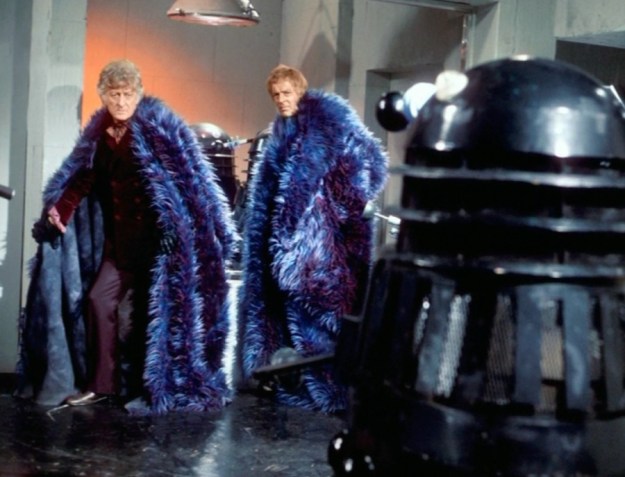
The invisible Spiridons are the natives of their planet and they work for the Daleks. I found it tense when Spiridons were about and you couldn’t see them because they’re invisible. Some wear purple furry overcoats to keep them warm during cold weather and they end up looking like purple Yetis. 😀
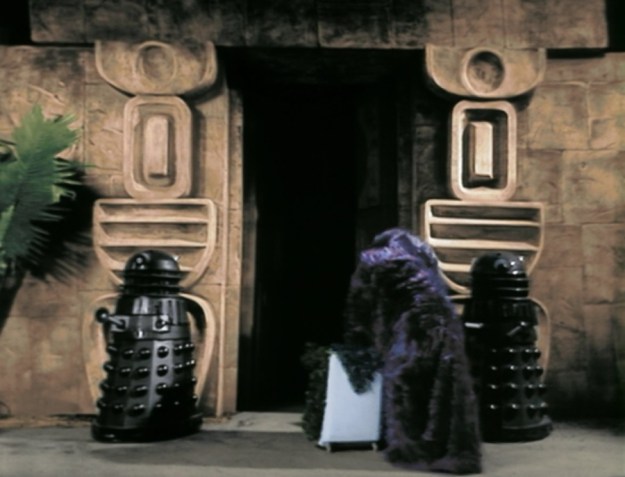
Roy Skelton also guest stars as Wester, one of the Spiridons who saves Jo from her deadly disease in the adventure. Wester is against the Daleks as he helps Jo and her friends to stop the Daleks in their plans. He makes this sacrifice to stop the Daleks unleash their bacteria to destroy all life on Spiridon.
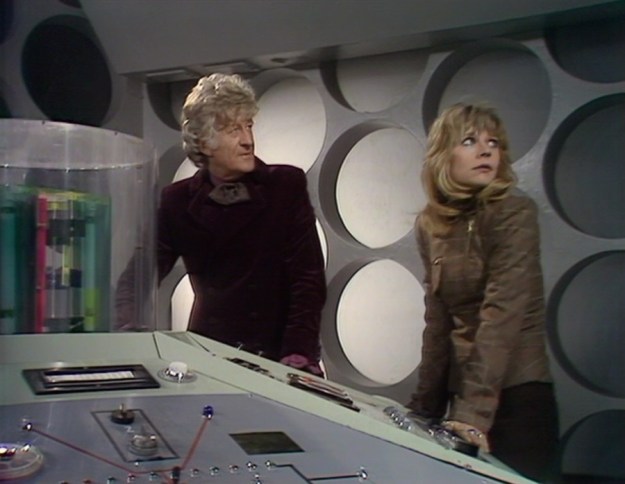
The story concludes with the Doctor and Jo in the TARDIS. The Doctor offers Jo many other planets to visit in the universe. But Jo wishes to see only one planet and that’s Earth. Earth in her home time! The Doctor happily agrees. Are you sure about this, Jo? There might be giant maggots there! 😀
The original DVD special features were as follows. There was a mono sound audio mix option for the story and a DVD audio commentary with Katy Manning, Prentis Hancock, Tim Preece, producer Barry Letts and script editor Terrance Dicks. There was also an info-text commentary option to enjoy.
There was the ‘Perfect Scenario: The End of Dreams’ documentary that focused on the socio-political aspects of ‘Planet of the Daleks’ and the making-of documentary called ‘The Rumble in the Jungle’. There was also the ‘Multi-Colourisation’ restoration featurette that focused on the colourisation of ‘Episode Three’ and there was the ‘Stripped For Action – The Daleks’ documentary that looks into the comic book adventures of the Daleks. There was also a ‘Blue Peter’ item; a photo gallery of the story and PDF materials, including ‘Production Design Drawings’ and a ‘Radio Times Listings’ of the story. There was also an Easter Egg that happened to be a commentary extra for ‘Episode Three’ of the story.

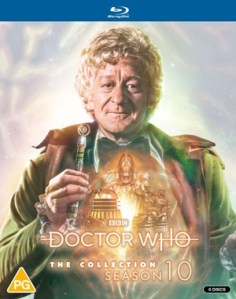
On Disc 4 of the ‘Doctor Who – The Collection – Season 10’ Blu-ray, the mono sound audio mix option for the story; the DVD audio commentary; ‘The Rumble In The Jungle’ making-of documentary; the ‘Multi-Colourisation’ restoration featurette; the ‘Stripped For Action – The Daleks’ documentary; the ‘Blue Peter’ item, the ‘Radio Times Listings’ PDF, and the commentary extra for ‘Episode Three’ of the story can be found on there. The info-text commentary option; the ‘Perfect Scenario: The End of Dreams’ documentary and the photo gallery of the story have been updated for 2019 on the Blu-ray.
The new special features on Blu-ray include the updated CGI effects option for the story to enjoy. There’s also the ‘Behind the Sofa’ feature on ‘Planet of the Daleks’ with Katy Manning (Jo Grant); Richard Franklin (Mike Yates) and John Levene (Sgt. Benton) as well as new series producer Phil Collinson; new series writer Joy Wilkinson and new series writer Pete McTighe. There’s also BBC trailers and continuity announcements for ‘Planet of the Daleks’ and a ‘coming soon’ DVD trailer for ‘The Green Death’, starring Jon Pertwee, Katy Manning, Nicholas Courtney, Richard Franklin and John Levene (taken from the ‘Spearhead From Space’ Blu-ray). There’s also a brand-new 5.1 surround sound audio mix option for the story to enjoy.
On the PDF front, as well as the ‘Radio Times Listings’ and the ‘Production Design Drawings’ of the story, there are also production documents and scripts of the story. You need a special Blu-ray computer drive for that.
I found ‘Planet of the Daleks’ to be an enjoyable and satisfactory conclusion to the ‘Dalek War’ story arc in Season 10 of ‘Doctor Who’. I especially enjoyed this six-part Dalek adventure with Jon Pertwee as the Doctor and Katy Manning as Jo Grant. Those two deliver standout performances for me here.
In many respects, ‘Dalek War’ has been a great ‘Doctor Who’ story arc to enjoy with Jon Pertwee’s Doctor and Katy Manning’s Jo Grant. It’s a shame that the build-up that was promised in ‘Frontier In Space’ doesn’t get properly resolved in ‘Planet of the Daleks’ since many of us can speculate on that.
Despite that issue, ‘Frontier in Space’ and ‘Planet of the Daleks’ are great TV adventures to watch. They showcase some of the best action adventures to be found in Jon Pertwee’s era of ‘Doctor Who’ from the 1970s. If you’re a fan of this era as well as Jon Pertwee’s Doctor, you cannot go wrong here.
But as with many great eras of ‘Doctor Who’, certain things have to come to a conclusion. The tragic death of Roger Delgado as the Master was the first sign of the Jon Pertwee era coming to a close. The second sign was on its way as Katy Manning’s departure from ‘Doctor Who’ on TV was signalled.
‘Planet of the Daleks’ rating – 9/10
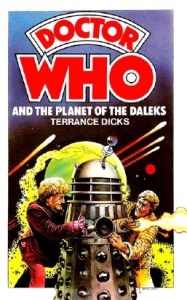
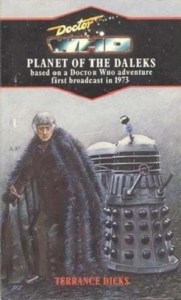
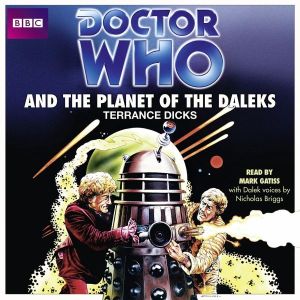
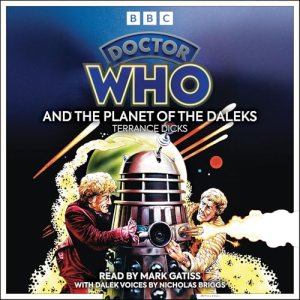
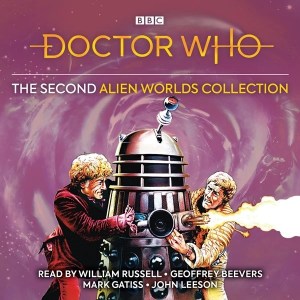
‘DOCTOR WHO AND THE PLANET OF THE DALEKS’ (BOOK)
Please feel free to comment on my review.
Revisiting Spiridon with Terrance Dicks and Mark Gatiss
For Terrance Dicks
Here we are on the Target novelization – ‘Doctor Who and the Planet of the Daleks’! 🙂
It’s taken me a while to get around to checking this out, but I’m pleased I’ve been able to complete my exploration of the ‘Dalek War’ saga in the Third Doctor era of ‘Doctor Who’ in book and audio form. This all began with ‘Doctor Who and the Space War’ back in 2017.
In hindsight, the ‘Dalek War’ saga in Season 10 of the classic TV series containing ‘Frontier In Space’ and ‘Planet of the Daleks’ isn’t the most effective saga. That’s not to say the stories aren’t enjoyable and compelling, since I’ve definitely found them to be so.
But what’s sort-of frustrating about the ‘Dalek War’ saga is how the two stories don’t really connect in narrative terms. You start off in ‘Frontier In Space’ with the impending war of Earth and Draconia ultimately about to face off the Daleks, set up well by Malcolm Hulke.
But somehow that’s not followed through in ‘Planet of the Daleks’ by Terry Nation. Now I wouldn’t necessarily blame Terrance Dicks as the script editor on that regard, because the priority of the TV series was to get the scripts on time and the productions to be made.
With that said, I would have liked there to be a follow-up on both stories to find out how they connect together, particularly when the Time Lords directed the Doctor’s TARDIS to the planet Spiridon after he and Jo dealt with the Master and the Daleks in ‘Frontier In Space’.
I’m sure there are follow-up stories that resolve the ‘Dalek War’ questions lingering from the TV stories, including books and audios. At this point, I’ve yet to check them out. If anyone can point me in the right direction, I’ll be very happy to check out those stories. 🙂
When it comes to talking about the Target novelization of ‘Planet of the Daleks’, the expectation is that you hope it’ll match to the plot of the TV story. And in many respects, it does do that. Terrance Dicks does a great job translating Terry Nation’s scripts to prose.
But it’s not exactly a match when comparing the Target novelization to the TV story. For one thing, some of the story is condensed and a lot of padding is taken out. This shouldn’t be quite a surprise since the Target novelization itself is based on a six-part TV adventure.
And these ‘Doctor Who’ novelizations are meant for a young audience, which Terrance Dicks keeps in mind when writing it. But with how ‘Doctor Who’ novelizations have evolved over the years – both classic and new – I would have preferred an expansive version.
The Target novelization was published in October 1976, about three years after the TV story was transmitted from April to May 1973 on BBC One. I received the 1992 edition of the Target book when I purchased it from Amazon. It contains cover art by Alister Pearson.
The story itself is divided into 12 chapters. Now, usually 12 chapters cover four episodes of a four-part story. Chapters 1 to 3 cover ‘Part One’, Chapters 4 to 6 cover ‘Part Two’, Chapters 7 to 9 cover ‘Part Three’ and Chapters 10 to 12 cover ‘Part Four’. It’s the tradition.
For this though, the 12-chapter structure is different. Chapters 1 to 2 cover ‘Part One’, Chapters 3 to 4 cover ‘Part Two’, Chapters 5 to 6 cover ‘Part Three’, Chapters 7 to 8 cover ‘Part Four’, Chapters 9 to 10 cover ‘Part Five’, and Chapters 11 to 12 cover ‘Part Six’. Hmm.
It’s not unwelcome, but it’s very unusual. I would have preferred it if ‘Planet of the Daleks’ had 18 chapters instead of 12 chapters to allow each of the six episodes to have three chapters dedicated to them. But I imagine that Terrance had to work a certain word count.
An interesting aspect of the Target novelization is the unabridged audiobook that comes with it. The audiobook is read by Mark Gatiss, who is well-known in ‘Doctor Who’ circles for being a writer and an actor. He’s performed certain roles and written certain stories. 🙂
He was Professor Lazarus in ‘The Lazarus Experiment’ and the Captain in ‘Twice Upon a Time’. He’s penned TV episodes such as ‘The Unquiet Dead’, ‘The Idiot’s Lantern’, ‘Victory of the Daleks’, ‘Night Terrors’, ‘Cold War’ and ‘The Crimson Horror’ – just to name a few. 😀
Mark Gatiss has also been in plenty of TV and film productions over the years. The recent one I’ve seen him in was ‘Mission: Impossible – The Final Reckoning’. It’s funny, but I can’t get away from him whenever I see a TV or film production that’s not ‘Doctor Who’-related.
I believe Mark Gatiss requested specifically to read ‘Planet of the Daleks’, as it must be one of his favourite ‘Doctor Who’ stories and he’s a fan of the Jon Pertwee era. After all, he did write ‘Last of the Gaderene’, a Third Doctor BBC book adventure which I’ve read and heard.
I enjoyed checking out the Target novelization of ‘Planet of the Daleks’ with the 2013 unabridged audiobook read by Mark Gatiss. I purchased the audiobook as a download via Audible. I enjoyed checking out the 12 chapters of the story over the course of 12 days.
I can’t say Mark Gatiss does exact recreations of the characters like the Doctor, Jo, Taron, Vaber, Rebec, Marat and Latep. His voice for Wester is pretty enjoyable, although considering Roy Skelton played that character, how come Nick Briggs didn’t play Wester?
Nicholas Briggs provides the voice of the Daleks in the ‘Planet of the Daleks’ audiobook, as expected, which is great. It’s nice to hear Nick Briggs voice the Daleks in certain moments of the story. The audiobook isn’t filled with so many Daleks scenes as expected.
This is because of the condensing of the story, and I imagine a lot of scenes were condensed together as one. I’m thinking of when the gold Dalek Supreme arrives and he exterminates the Expedition Leader, as that’s done in two scenes on TV instead of one.
Because ‘Planet of the Daleks’ is a follow-up to ‘Frontier In Space’, you’d expect the Target novelization version of the story to follow that in line with ‘The Space War’ novelization. Sadly, certain details aren’t carried forward from ‘The Space War’ into ‘Planet of the Daleks’.
Most specifically, the cliffhanger ending from ‘Frontier In Space’ is put in at the beginning of the ‘Planet of the Daleks’ novelization. This is somewhat different in ‘The Space War’ novelization where Malcolm Hulke decided not to include that cliffhanger ending at all. 😐
Now admittedly, it’s been a while since I’ve read and heard ‘The Space War’, but from the information I found on TARDIS.Wiki and from re-reading of my review on ‘The Space War’, it’s obvious the end of ‘The Space War’ and the start of ‘Planet of the Daleks’ don’t match.
In ‘Planet of the Daleks’, Jo states in the TARDIS log that the Doctor was injured in a Dalek ambush. That’s not the case in the TV version of ‘Frontier In Space’, where the Doctor was injured in a confrontation with the Master and the Ogrons as soon as the Daleks departed.
In the cliffhanger ending for ‘Frontier In Space’, Jo helped the injured Doctor into the TARDIS. That doesn’t happen in ‘The Space War’ novelization, as it omits the Doctor being injured whereas the ‘Planet of the Daleks’ novelization has him injured. This is confusing.
Also, the first scene of the ‘Planet of the Daleks’ novelization opens with him and Jo already inside the TARDIS. I’m reminded of the ‘Four To Doomsday’ and ‘Kinda’ Target novelizations. In ‘Four to Doomsday’, it didn’t end with Nyssa fainting on the TARDIS floor.
Yet in ‘Kinda’, Nyssa is somewhat ill without any explanation. And Terrance Dicks wrote both those novelizations. Granted, Terrance was probably working to the scripts of those stories and perhaps Nyssa didn’t faint in the original ending for ‘Four to Doomsday’ itself.
But it surprises me that Terrance didn’t follow up what Malcolm Hulke established in ‘The Space War’ novelization where the Doctor didn’t get injured at the end of that story. Or perhaps there was a lack of communication between the two authors on those counts. 😐
After all, ‘The Space War’ was published in September 1976 whilst ‘Planet of the Daleks’ was published in October 1976. I do wonder if any readers would be confused as to why the Doctor was injured in ‘Planet of the Daleks’ if they continued from ‘The Space War’. 😐
Apparently, in the Target novelization of ‘Planet of the Daleks’, the Spiridons are said to have a formed a civilisation which later collapsed. This makes them not dissimilar to the Exxilons that appeared in ‘Death to the Daleks’, the Dalek story that followed on after ‘Planet’.
I did wonder what Barry Letts was on about when he said Terry Nation tended to sell his Dalek stories more than once to the ‘Doctor Who’ production office. With the Spiridons and the Exxilons being similar in terms of civilisations, I’m starting to see what he meant.
In the Target novelization, the Daleks have saturated the Spiridon forests with deadly rays, which crushed Spiridon resistance to the occupation. That’s not evident in the TV story, since the planet Spiridon seemed to contain many lush jungles and vegetation throughout.
But this would explain why the Spiridons would succumb to the Daleks after most of their planet is destroyed. Had the TV story established that, it’d explain more of the Spiridons and their relationship to the Daleks, since Wester is the only Spiridon against the Daleks.
It’s established in the Target novelization that the gold Dalek Supreme is the second-in-command of the Dalek Emperor. It’s not just an envoy of the Dalek Supreme Command. It contrasts to Latep’s description of it as ‘very special’ and ‘one of the Supreme Council’.
The Daleks are described as ‘silver’, not ‘grey’ in the Target novelization. Honestly, I prefer the Daleks being ‘silver’ or ‘bronze’ as opposed to ‘grey’ or ‘dark black’, since it makes them stand out more. Plus, it matches pretty well to the 1960s design they originally had.
In the scene between the Doctor and Codal in their prison cell, Codal shares he volunteered for the Thal mission to Spiridon, as he was the only scientist young and fit enough. It contrasts to what he stated in the TV story where his entire section volunteered.
Quite frankly, I wish that scene was longer in the Target novelization, as it’s one of my favourites in the TV version of ‘Planet of the Daleks’. I found it a well-written scene and well-performed between Jon Pertwee and Tim Preece as their characters when I saw it. 🙂
In the scene where Rebec tells Taron about the Dalek army already being on Spiridon, Vaber is present instead of having to go and look for other survivors like Marat and Latep. Not sure if that’s an improvement in the novelization compared to what’s in the TV story. 😐
The ice volcanoes featured in ‘Planet of the Daleks’ are referred to as ‘icecanos’ in the Target novelization. Honestly, that works fine, and perhaps it would’ve saved Jon Pertwee a lot of tongue-twisters if he said ‘icecano’ instead. Or perhaps not. What do you think?
In the scene where the Doctor spray-paints an invisible Dalek at the end of Chapter 2, it’s Vaber who joins him, not Taron. Not sure why that change occurred in the Target book. How come the Doctor wasn’t joined by Taron, Vaber and Codal to spray-paint a Dalek? 😐
In the scene where Wester opens the container for the Daleks’ virus in their laboratory, he removes his robes before releasing the virus. This makes the scene interesting, as the Daleks didn’t expect it when Wester opened the virus container whilst invisible all the time.
It’s not revealed that Wester becomes visible when he dies, which makes me wonder. Were the Spiridons ever invisible to begin with or is invisibility a part of their being? At least, the Doctor and Taron spare Wester some last thoughts once they hear about his death. 🙂
I like how at the end of the story, the Doctor and Jo are given anti-fungus suits by the Thals so that they can recover the TARDIS. This makes sense, considering that Taron, Vaber and Codal wore anti-fungus suits when they were rescuing the Doctor from inside the TARDIS.
In the TV story, the Doctor and Jo are in their clothes and not wearing any protection against the plants spitting venom at them. It’s lucky that the Doctor and Jo weren’t infected once they got back inside the TARDIS and made their return journey to Earth as far as I’m concerned. 🙂
In the closing moments of the story, the Doctor is the one who shows the planet Earth to Jo on the TARDIS scanner screen, whereas in the TV version, it’s Jo who switches on the scanner screen to show Earth. I prefer the TV version of that scene rather than the book version.
No disrespect to Terrance Dicks, but it works better to have Jo be the one to point out to the Doctor that she wants to go back home instead of the Doctor trying to cheer her up with a return journey to Earth. This reinforces why Jo turned down Latep to stay with him on Skaro.
‘Doctor Who and the Planet of the Daleks’ has been a very enjoyable Target novelization to check out. Terrance Dicks novelizes Terry Nation’s story decently. I would have liked it as 18 chapters instead of 12, but it serves its purpose in matching mostly to the TV version.
It’s also been nice to read and hear the story with Mark Gatiss being the narrator of the unabridged audiobook, along with Nicholas Briggs as the voice of the Daleks. I’m glad I’ve completed my journey with checking out the ‘Dalek War’ saga in prose and audio form.
‘Doctor Who and the Planet of the Daleks’ rating – 8/10
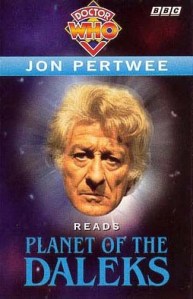
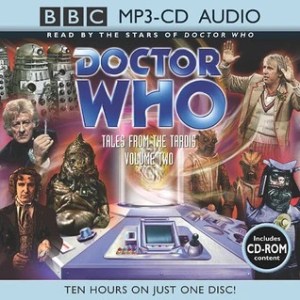

‘DOCTOR WHO AND THE PLANET OF THE DALEKS’ (AUDIO)
Please feel free to comment on my review.
Revisiting Spiridon with Jon Pertwee
To be fair to the 2013 unabridged audiobook read by Mark Gatiss, it feels more complete.
I’ve checked out the 1995 abridged audiobook of ‘Doctor Who and the Planet of the Daleks’ read by Jon Pertwee, as part of the ‘Tales From The TARDIS: Volume Two’ collection on Audible. I’m so glad I’ve completed my novelization/audiobook experience.
I previously listened to the 1995 abridged audiobook of ‘Doctor Who and the Curse of Peladon’, also read by Jon Pertwee, as part of the ‘Tales From The TARDIS, Volume One’ collection. It’s been very fascinating to uncover what these abridged audiobooks are like.
Granted, they weren’t going to cover everything that was included in the original novelizations compared to the recent unabridged audiobooks. But it makes me wonder why they did abridged audiobooks to begin with, as it was a different time in the 1990s. 🙂
Having read and listened to the 2013 unabridged audiobook read by Mark Gatiss recently as well as knowing ‘Planet of the Daleks’ inside-out as a TV story from multiple viewings, I’m able to pick up what was omitted in Jon Pertwee’s reading of the story in the audiobook.
It’s not an altogether complete and satisfying experience, but I appreciate actors like Jon Pertwee, Peter Davison and Colin Baker giving their time to do these abridged audiobook readings of the ‘Doctor Who’ stories they appeared in to provide fans the enjoyment they crave.
‘Planet of the Daleks’ is an intriguing choice of a ‘Doctor Who’ story for Jon Pertwee to read. This is particularly when you consider Jon Pertwee isn’t a fan of the Daleks himself. It also derives from the fact that ‘Planet of the Daleks’ is the second story of the ‘Dalek War’ saga.
This reinforces my argument about the ‘Dalek War’ saga featuring ‘Frontier In Space’ and ‘Planet of the Daleks’ not being an effective saga in ‘Doctor Who’. ‘Planet of the Daleks’ does feel more standalone as an adventure rather than being linked to ‘Frontier In Space’.
When I listened to the abridged ‘Planet of the Daleks’ audiobook on Audible, I heard it over the course of two nights. ‘Planet of the Daleks’ is presented as two 45-minute tracks in the ‘Tales From The TARDIS: Volume Two’, which is a contrast to ‘The Curse of Peladon’.
‘The Curse of Peladon’ abridged audiobook was presented in one track despite it being a story divided into two halves on audio. Not that’s a huge complaint, but I’m wondering why ‘Planet of the Daleks’ got divided into two tracks compared to ‘The Curse of Peladon’.
It’s also amazing how much was contained in each half lasting for 45 minutes. Mostly, the first three episodes of the story can be heard on Side A whilst the last three episodes can be heard on Side B. There’s not much of a cliffhanger moment in the abridged audiobook.
Also, the Delia Derbyshire theme music is used for the openings of Sides A and B whilst the Peter Howell theme music from the 1980s is used as the closing theme for the audiobook. This is a regular pattern in the abridged audiobooks of ‘Doctor Who’ of the 1990s.
To talk about the omissions for a bit, this includes quiet scenes like the Doctor and Codal’s prison scene, Jo’s semi-romance with Latep and the romance going on between Taron and Rebec. Whilst they’re not major parts of the story, it’s a pity they’re not included.
Wester also seems to have been forgotten about in Side B of the story, as the bacteria weapon utilised by the Daleks plot isn’t included in the abridged audiobook. Meaning we don’t have the heroic death of Wester stopping the Daleks from using the bacteria weapon.
Jon Pertwee provides a very good reading of ‘Planet of the Daleks’, but I’m not annoyed he said ‘Tals’ instead of ‘Thals’ and that he kept calling Spiridon as ‘Spiri-don’ instead of ‘Spiro-don’ as in the TV story and the unabridged audiobook. I’m very perplexed by that.
Apparently, it’s not just Matt Smith who had problems saying names of ‘Doctor Who’ planets correctly like when he mispronounced Metebellis III in ‘Hide’. The Dalek voices provided by Jon Pertwee are interesting, but they’re not a match to how Nicholas Briggs does them.
A noticeable omission in the audiobook is the closing scene between Jon Pertwee’s Doctor and Jo Grant in the TARDIS when they’re about to head back to Earth. Everything seems to be rushed, although the Doctor does tell Taron not to glamourise war by the end.
I’m glad I’ve heard the abridged audiobook of ‘Doctor Who and the Planet of the Daleks’ read by Jon Pertwee. Like ‘The Curse of Peladon’ abridged audiobook, it’s not a satisfying listening experience, but it was good fun to hear Jon Pertwee’s take on reading the story. 🙂
It’s good Jon Pertwee read these abridged audiobooks of ‘The Curse of Peladon’ and ‘Planet of the Daleks’ before he sadly passed away in 1996, a year later. No doubt, ‘Doctor Who’ fans cherish the abridged audiobooks to honour Jon Pertwee’s legacy and memory.
‘Doctor Who and the Planet of the Daleks’ (Audio) rating – 7/10
| The previous story
For the Third Doctor was For Jo was For the Daleks was |
The next story
For the Third Doctor is For Jo is For the Daleks is
|
| Return to The Third Doctor’s Timeline | |
| Return to Jo’s Timeline | |
| Return to The Daleks’ Timeline | |
| Return to The Doctors’ Timelines Index | |
| Return to The Companions’ Timelines Index | |
| Return to The Monsters’ Timelines Index | |
| Return to Doctor Who Timelines | |
| Return to Doctor Who | |
| Return to Sci-Fi |
 Bradley's Basement
My favourite Dalek story of the Third Doctor era, it’s a wonderful action adventure that is paced well over 6 episodes.
The recoluring of episode 3 is seamless you wouldn’t have known this was originally survived in only black & white.
Brilliant review of the Dalek War set & it’s special features Tim.
LikeLiked by 2 people
Thanks for your comments on my DVD review for ‘Planet of the Daleks’, Timelord Simon.
I’m pleased this is your favourite Dalek story of the Third Doctor era. I can’t decide between ‘Day of the Daleks’ and ‘Planet of the Daleks’ as I think they’re both very good. I can’t say the same about ‘Death to the Daleks’, I’m afraid.
I enjoyed the action adventure in ‘Planet of the Daleks’ too and enjoyed the Doctor and Jo’s interaction with the Thals in this one.
Yes, I had no idea that Episode Three was once black-and-white and is now colourised. My Dad couldn’t notice the difference when we were re-watching the story recently on DVD, as you say it does seem seamless.
Thanks again, Timelord Simon. Glad you enjoyed my reviews on the two stories from the Dalek War box set and its special features.
Tim. 🙂
LikeLiked by 1 person
Great review Tim.
I have to say that I prefer ‘Planet of the Daleks’ over ‘Frontier in Space’. Maybe both stories would have been better off with the same writer or as a 12-parter. Nonetheless, this story was really good. Maybe ‘Frontier in Space’ is wrapped up in the Big Finish audio ‘Conspiracy in Space’.
It was great to see the Thals back, especially since Terry Nation was their creator. I liked that they worked with the Doctor and Jo to defeat the Daleks. I also liked the Daleks themselves, the film and model work, and the action. I actually didn’t notice any romance between Jo and Latep until their final scene together. I liked it when Jo kindly declined to come back to Skaro with him and instead stay in the Tardis/on Earth. My only gripe was the scene where the Doctor went down into the Dalek hold to retrieve the bomb. How did none of the Daleks notice him? In fact I believe he was in the eyeline of one of them.
The ‘Behind the Sofas’ with Katy Manning, John Levene, Richard Franklin, Phil Collinson, Pete McTighe and Joy Wilkinson are really good. I hope to check out the novelisation eventually which I assume you haven’t experienced. Onto ‘The Green Death’ next and possibly some of Season 11. I shall be watching parts 3 and 4 of ‘Spearhead from Space’ on Forces TV tonight and sharing my thoughts on it tomorrow.
P.s. have you had a chance to check out my review of ‘Time and the Rani’?
Take care, WF92.
LikeLiked by 2 people
Hi WF92,
Glad you enjoyed my review on ‘Planet of the Daleks’. I’ve yet to check out ‘Conspiracy In Space’. There’s a lot of Big Finish audios for me to check out. Hopefully I’ll check out more Third Doctor audio adventures by Big Finish soon in the future.
Yeah with the Doctor going into the Dalek hold to retrieve the bomb, I assume the Daleks were still waking up as they’d been cyrogencially frozen for a long time before they became frozen again by the ice volcano. It’s lucky the Doctor didn’t get crushed when he went back into the Dalek hold with so many Daleks seemingly about to bury him.
Glad you’re enjoying the ‘Behind the Sofa’ items on Season 10 so far. It’s been a while since I’ve seen them. I’ve not checked out the ‘Planet of the Daleks’ novelization/audiobook yet. Hopefully I will soon when the time comes. Hope you enjoy ‘The Green Death’ next as well as Season 11 and ‘Spearhead From Space’.
Many thanks for your comments.
Tim 🙂
LikeLiked by 2 people
A Dalek story not written by Terry Nation could be interesting for how other writers were able to build on his creation. But it was still good to see him return with his style of Dalek story writing. Even with questionable examples like Destiny Of The Daleks. Planet Of The Daleks for its clearly intended homages to the very first Dalek story, particularly the return of the Thals, may earn a fair share of praise from fans for that much. I thought that the invisible Spiridons were among the interestingly new aliens to populate the 3rd Doctor’s era. Prentis Hancock who has recently passed away makes one of his most memorable guest appearances (alongside Salamar in Planet Of Evil) as Vaber. And so does Bernard Horsfall as Taron.
With Jon Pertwee’s anti-war wisdom in the end, I can always give this story good points for that. And after all, for a Dalek story, it’s especially very brave. Thank you, Tim, for your review.
LikeLiked by 2 people
Terry Nation scripts were often where Doctor Who‘s script editors got their moment to shine.
Nation was superb at writing taut thrillers. The 39 Steps in Space or the equivalent tale. His concepts were often visually bold, narratively striking and appealed to a very commonplace idea of science fiction. His work wouldn’t have seemed out of place in the pages of Eagle‘s Dan Dare (see: Davros and the Mekon).
Nation was also a prolific writer. He could be found in episodes of The Saint, The Champions, The Persuaders, Department S, and The Avengers. Not counting his own series, like Blake’s 7 or Survivors. The trade-off of that, of course, was that he wrote precisely to the brief and no more. He wasn’t a writer to gild the lilly and, for better or worse, the results can be seen as much in Doctor Who as anywhere else.
Putting Planet of the Daleks and Destiny of the Daleks side-by-side… I’m struck by how easy it is to tell where Douglas Adams takes over in the latter, and how hard it is to see Terrance Dicks’s contributions to the former. A script editor’s role is to be invisible. If you can see the seams where they’ve added material, they haven’t succeeded. That said, between Adams and Dicks, Dicks had a much stronger affinity for the tone of Nation’s work than Adams did.
(I mean… Poor Douglas has the significance of leading Nation to ban use of the Daleks. Nation felt Adams had sent them up. It wasn’t until 1984, with significant oversight from Nation himself, that the Daleks were able to return in force.)
Amazing to think that ‘Episode Four’ of Planet of the Daleks was originally scripted to end with the massacre of the Thal expedition. That’s another borrowed element from The Daleks. Just as vicious as its predecessor. However, in Planet of the Daleks, that would have left the Doctor and Jo with only Wesker. The infiltration of the Dalek City would’ve seemed a lot more fraught in that version of the story. It’s almost like an inversion of The Daleks. Alone, then with the Thals. Beginning with the Thals, then alone.
‘Episode One’ would have also included a number of revisions from Terrance Dicks to link the story with Frontier in Space. I wonder how much of the wounded Doctor storyline is Dicks and how much is Nation? It’s difficult to say.
LikeLiked by 2 people
Hi scifimike, Hi Wolfie,
Thanks for sharing your thoughts on ‘Planet of the Daleks’. I find it fascinating when hearing people say there are similarities between this story and the first ‘Daleks’ story, as that would be fitting considering ‘Planet of the Daleks’ takes place in ‘Doctor Who’s 10th anniversary season. With that said, I try my best not to match the two, as I know a ‘Doctor Who’ story needs to stand on its own and be distinct from its predecessor. Then again, Terry Nation was known for repeating scripts for TV shows, not just for ‘Doctor Who’ but also for ‘The Saint’, as I discovered from watching a behind-the-scenes documentary one of ‘The Saint’ DVDs years ago.
In terms of comparing ‘Planet of the Daleks’ to ‘Destiny of the Daleks’, yes, you can tell the Douglas Adams’ humour is more at the forefront compared to Terry Nation’s more tension-driven writing. I wouldn’t say having Douglas Adam-humour in a ‘Doctor Who’ is a bad thing, but it mustn’t take the focus of a ‘Doctor Who’ story. It’s what happened in ‘The Creature From The Pit’, ‘Nightmare of Eden’ and ‘The Horns of Nimon’ where humour had more focus compared to what the authors of those tales had in mind.
Going back to ‘Planet of the Daleks’, I had no idea there was originally going to be a massacre of the Thal expedition in the story. I’m glad that didn’t happen, as that would have reminded me of Temmosus’ unfortunate death in the first ‘Daleks’ story, making the matching of both tales more evident. I did like that Jo and Latep’s semi-romance in ‘Planet of the Daleks’ matched to Barbara and Ganatus’ semi-romance in ‘The Daleks’, even if both weren’t explored to a great degree and they ended with the companion leaving their semi-lover behind.
I had no idea who the Mekon was, but looking him up and finding out he’s from the ‘Dan Dare’ Eagle comics and that Davros was partially inspired by the Mekon in terms of similarities is fascinating. Thanks for sharing that, Wolfie.
It’s sad that Prentis Hancock has passed away recently, as I’ve enjoyed his ‘Doctor Who’ appearances including ‘Planet of the Daleks’ as well as ‘Spearhead From Space’, ‘Planet of Evil’ and ‘The Ribos Operation’. I’m very pleased the Third Doctor’s anti-war speech at the end of ‘Planet of the Daleks’ is included in both Target novelization audiobooks, including the unabridged audiobook read by Mark Gatiss and the abridged audiobook read by Jon Pertwee, as having that speech omitted would have taken away the point of the story itself.
Many thanks and Best wishes to you both.
Tim 🙂
LikeLiked by 1 person