‘THE GREATEST SHOW IN THE GALAXY’
Please feel free to comment on my review.
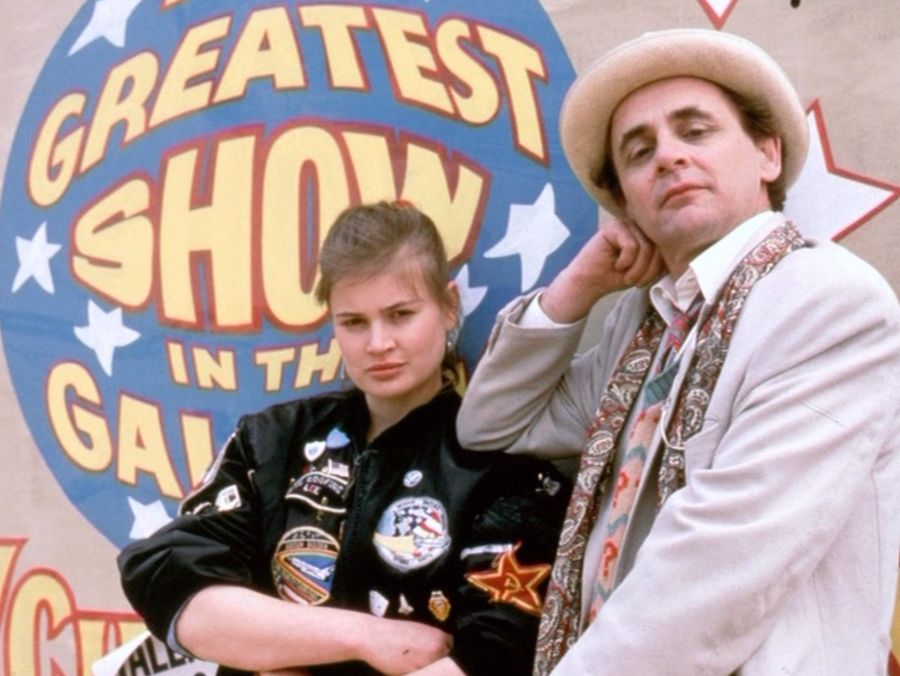
The Psychic Circus with the Seventh Doctor and Ace


See? I said I’d re-use ‘The Psychic Circus’ song for my updated Blu-ray review on ‘The Greatest Show in the Galaxy’ after including it in my review for the Big Finish audio story ‘The Psychic Circus’. Hopefully, I’ve been able to put this song into everyone’s heads. 😀
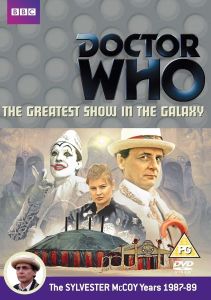
Well, everyone! We’ve finally come to it! Here we are on the final story in Season 25 of the classic ‘Doctor Who’ TV series. This is ‘The Greatest Show in the Galaxy’, a four-part adventure by Stephen Wyatt. It’s the TV story that closed off the 25th anniversary season.
Now, for a long while, I’ve considered this as one of the weakest stories in Sylvester McCoy’s era of ‘Doctor Who’. Matching it in the same category as ‘The Happiness Patrol’ and ‘Ghost Light’, where the story itself wasn’t so exciting, despite its intriguing concepts.
In my original DVD review of the story, I’ve called it ‘the weirdest show in the galaxy’. It’s not a story that I go back to repeatedly like I’ve done with many of the Peter Davison era adventures. I know it won over many people, but it’s not my cup of tea of a ‘Doctor Who’.
With that said and having it watched it multiple times over the years, I’ve appreciated ‘Greatest Show’ more than ever. I wouldn’t consider it a great ‘Doctor Who’ story to finish Season 25 on, but it has been fascinating to revisit it, and I do understand it better.
It helps that I rewatched it during the Covid-19 pandemic in 2020 to get a sense of what to expect when listening to ‘The Psychic Circus’ audio drama, which is essentially a sequel/prequel to ‘Greatest Show’. I paid more attention when seeing the story on DVD.
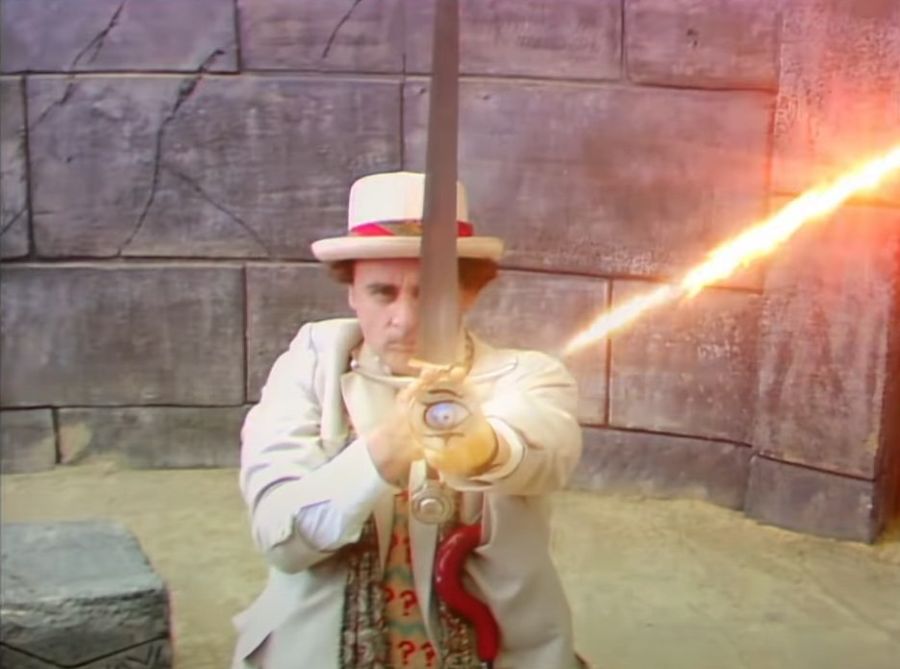
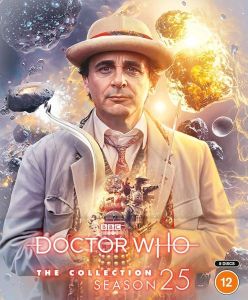
For this review, I revisited ‘Greatest Show’ in its extended Special Edition version in the Season 25 Blu-ray box set. Granted, only ‘Parts One and Three’ are extended compared to ‘Parts Two and Four’, but it helped with seeing the extra scenes to flesh out the story.
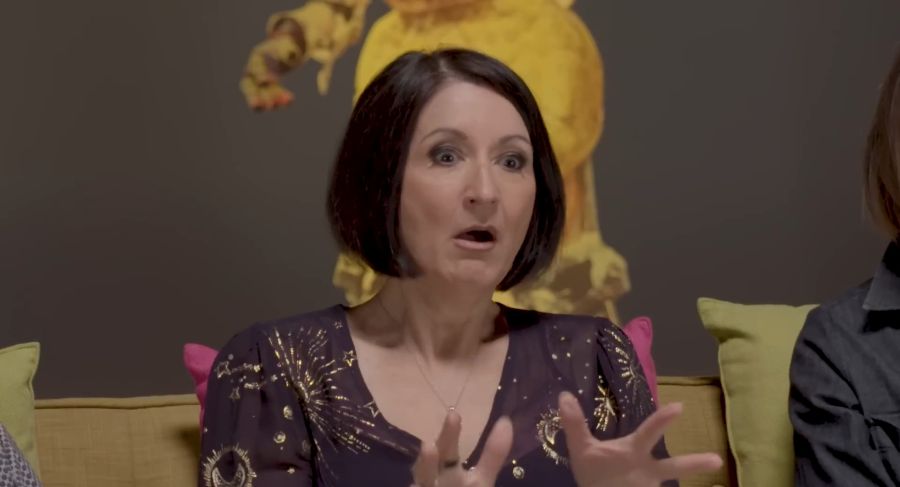
It’s also been interesting to watch ‘Greatest Show’ through the ‘Behind the Sofa’ item, particularly with Janet Fielding, Wendy Padbury and Sarah Sutton, as they gave the story high praise in viewing it compared to me. I’m glad they had a good time seeing the story.
Does that greatly alter my opinion about ‘Greatest Show’? Do I think this story is a worthy finale to Season 25 of the classic TV series? Well, um…err…no. I can’t quite back down from my opinion about ‘Greatest Show’ in finding it an underwhelming instalment.
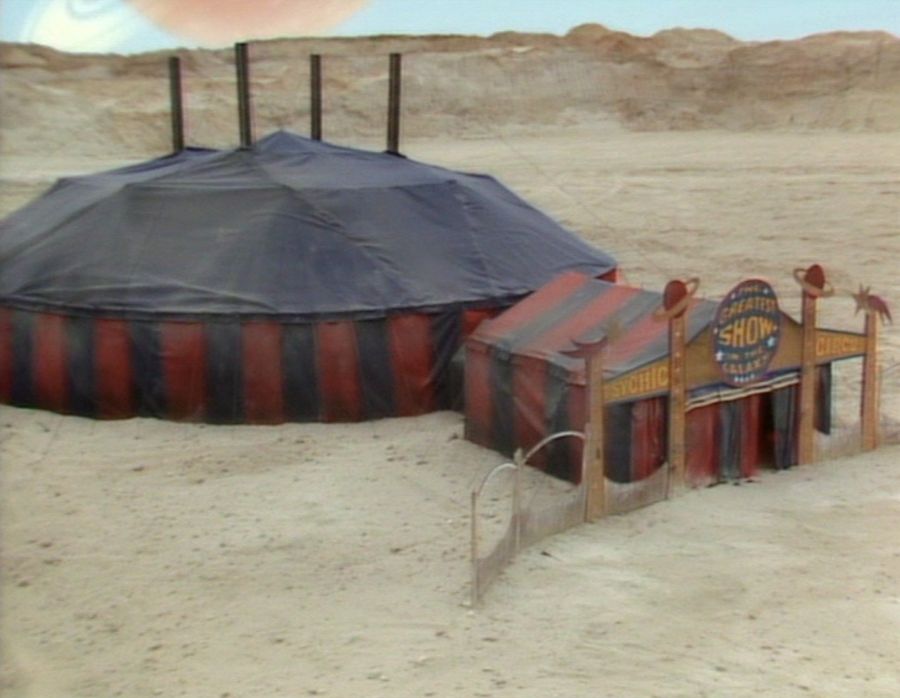
‘Greatest Show’ is better than ‘The Happiness Patrol’, but I wouldn’t say it excited me compared to ‘Remembrance of the Daleks’ and ‘Silver Nemesis’, which had more connections to ‘Doctor Who’s past in celebrating the TV show’s 25th anniversary then. 😐
In terms of story ranking, ‘Remembrance’ comes up 1st for me. ‘Silver Nemesis’ is 2nd, ‘Greatest Show’ is 3rd and ‘Happiness Patrol’ is 4th. I found the Daleks and Cybermen stories more fulfilling as anniversary celebrations compared to the other two TV stories.
I wouldn’t blame script editor Andrew Cartmel, since he was commissioning the scripts at the time. I’m sure he had his own sense of priorities in terms of how ‘Doctor Who’s 25th anniversary was to be celebrated when working with producer John Nathan-Turner.
I hope to elaborate more on why I don’t regard ‘Greatest Show’ so highly compared to others. I also hope to share what I enjoyed from watching the TV story, since there have been some enjoyable and fascinating aspects of the story to take away from viewing it. 🙂
I think on first viewing the story via DVD back in 2012, I was baffled as to what was going on. That’s probably what got me in finding it so underwhelming. But in viewing the story more than once, I’ve gained more clarity on how ‘Greatest Show’ was to be played out. 🙂
Despite me not considering ‘Greatest Show’ to be a favourite of mine from the Sylvester McCoy era of ‘Doctor Who’, I found the performances of the cast very good. I’m sure the cast had fun with the characters they played. It clearly shows when seeing it on screen.
The production history of ‘Greatest Show’ has also been intriguing to uncover when viewing the story on DVD and recently on Blu-ray. ‘Greatest Show’ had a troubled behind-the-scenes journey to be shown on TV screens, which I’ve found enlightening. 🙂
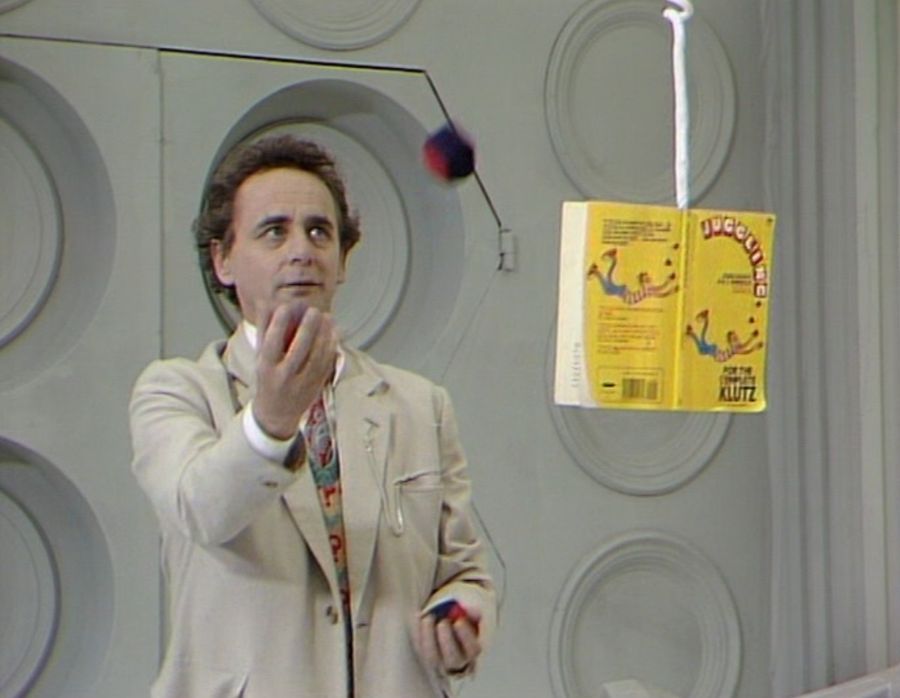
First things first though, let’s talk about the story. In ‘Greatest Show’, the Doctor and Ace receive ‘junk mail’ in the TARDIS. ‘Greatest Show’ might also be considered one of the rare occasions in Season 25 where we get to see the Doctor and Ace inside the TARDIS.
And in a brightly lit console room too. 😀 In the following season, we see Ace and the Seventh Doctor in a dimly-lit TARDIS in the story called ‘Battlefield’. I know Andrew Cartmel wasn’t that keen about having TARDIS scenes in his tenure as the script editor.
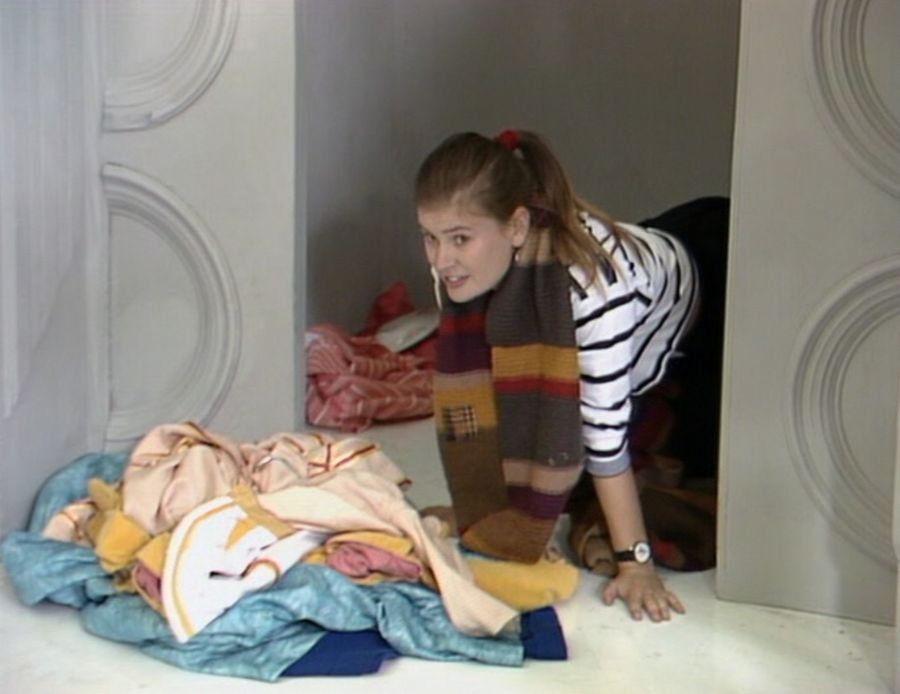
But it’s nice when we get to see Sylvester McCoy as the Doctor and Sophie Aldred as Ace having TARDIS scenes in stories like ‘Greatest Show’ and ‘Battlefield’. It gives us a chance to see their domestic lives compared to seeing them in the thick of the action. 🙂
It was quite funny to see Ace’s reaction to the ‘junk mail’ robot when it appears in the TARDIS. I’m not sure how ahead of its time this story was when it came to predicting how we still get junk mail today, but having a robot be ‘junk mail’ is amusingly intriguing.
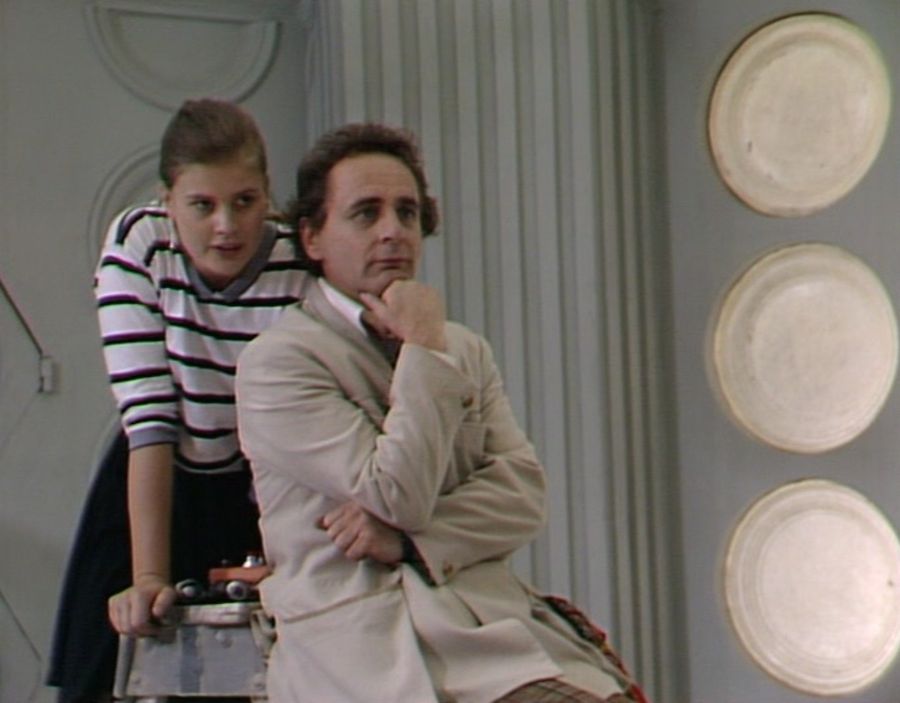
Ace: No, I don’t believe it. Junk mail. Used to get loads of this stuff through the letterbox and now we’re being bombarded with it inside the TARDIS.
Doctor: Yes, junk mail gets everywhere.
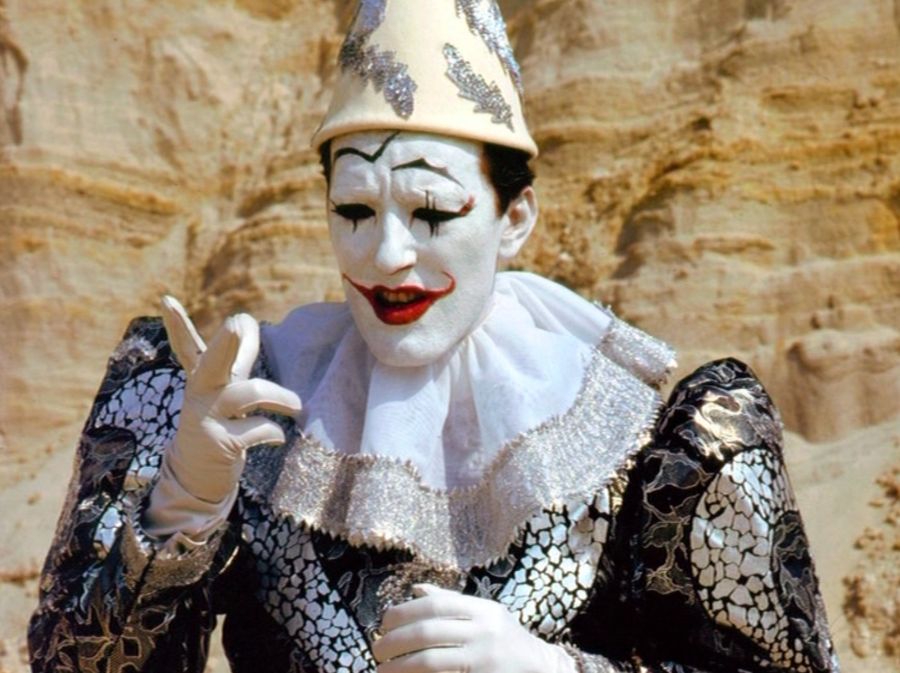
Anyway, this particular ‘junk mail’ invites the Doctor and Ace to the Psychic Circus, which happens to take place on the planet Segonax. Ace is put off by the invitation, since she doesn’t like circuses and clowns. This is a very fascinating thing about Ace.
Up until this point, Ace has been a go-lucky and gutsy teenage girl who loves to blow stuff up and she never shies away from a dangerous situation. But here, we see Ace share one of her fears. That being clowns. Something I’m sure many can easily relate to.
I recall a time where I used to be afraid of clowns as a little kid before getting to overcome my fears when attending more circuses. It’s the white face and their red lips that puts you off. Sometimes, it doesn’t come across as funny but rather scary indeed. 😐
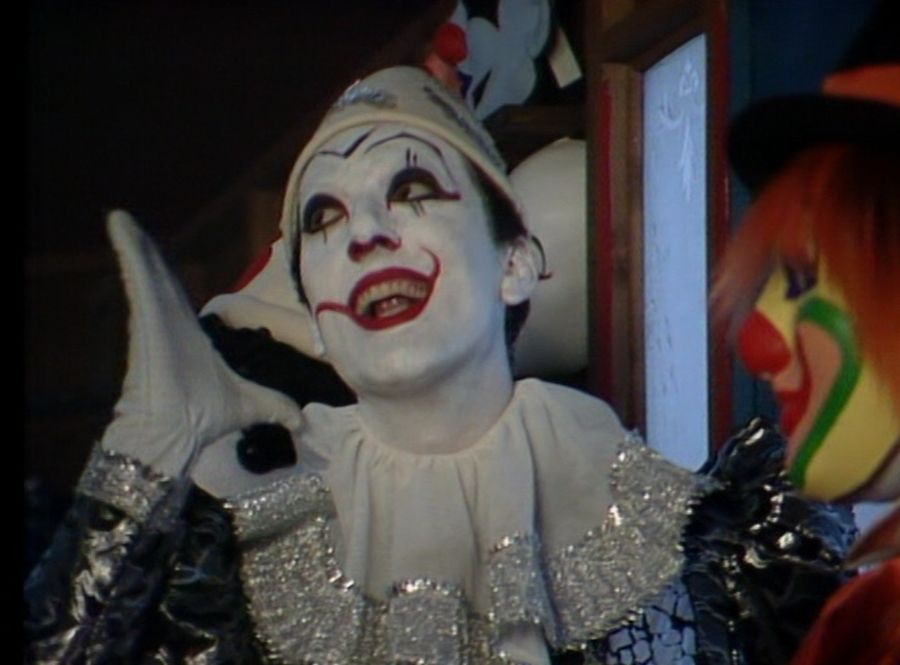
It’s a concept that’s been utilised in a variety of ways. Not just in ‘Doctor Who’, but in other movies and TV shows. Most specifically, the Joker – a Batman villain – comes across as a clown that can be funny but can also be scary for the audiences to react to.
This isn’t the first time that scary clowns have been utilised in ‘Doctor Who’. It’s been in stories like ‘The Celestial Toymaker’ which featured clowns. I’m glad it was explored again in ‘The Sarah Jane Adventures’ story ‘The Day of the Clown’, which I’ve seen on TV.
Despite Ace’s reluctance to visit the Psychic Circus, the Doctor encourages her to accompany him, as he pilots the TARDIS to the planet Segonax. It’s interesting how the Doctor prompts Ace to face her fears, especially when he gets curious about the circus.
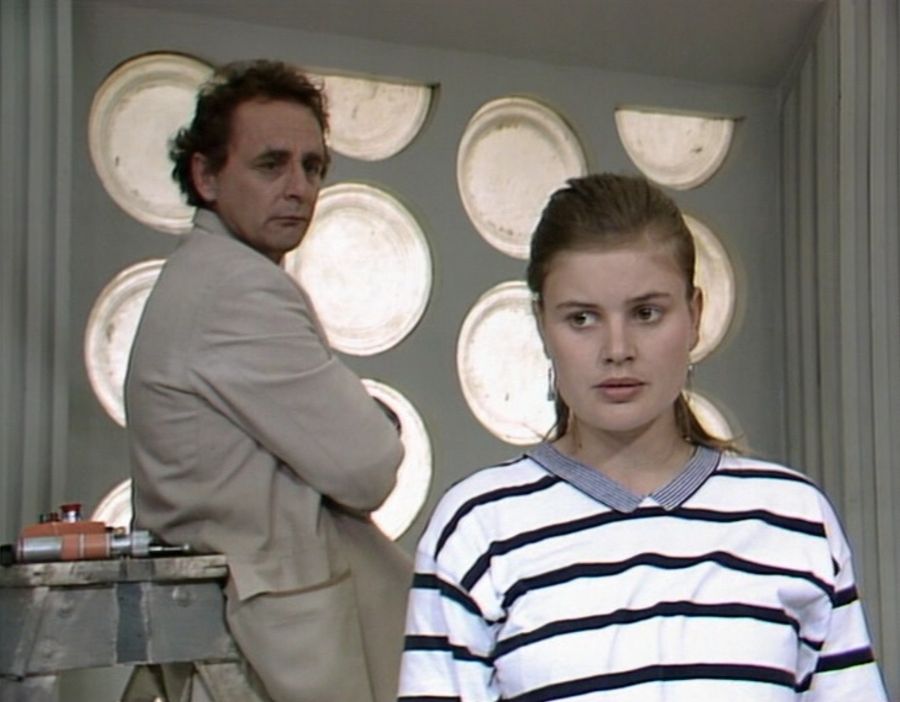
This is something that would be continued in future stories of Season 26, including ‘Ghost Light’, ‘The Curse of Fenric’ and ‘Survival’, where Ace goes on a journey to face her past, present and future fears. It’s something that continues beyond the TV series. 🙂
This is in the Big Finish audios, the books, the comics and so forth. It signifies what the Doctor and Ace’s relationship is about, as it’s more than the Doctor taking his friend on adventures in Space and Time, as he’s educating her on how to combat her worst fears.
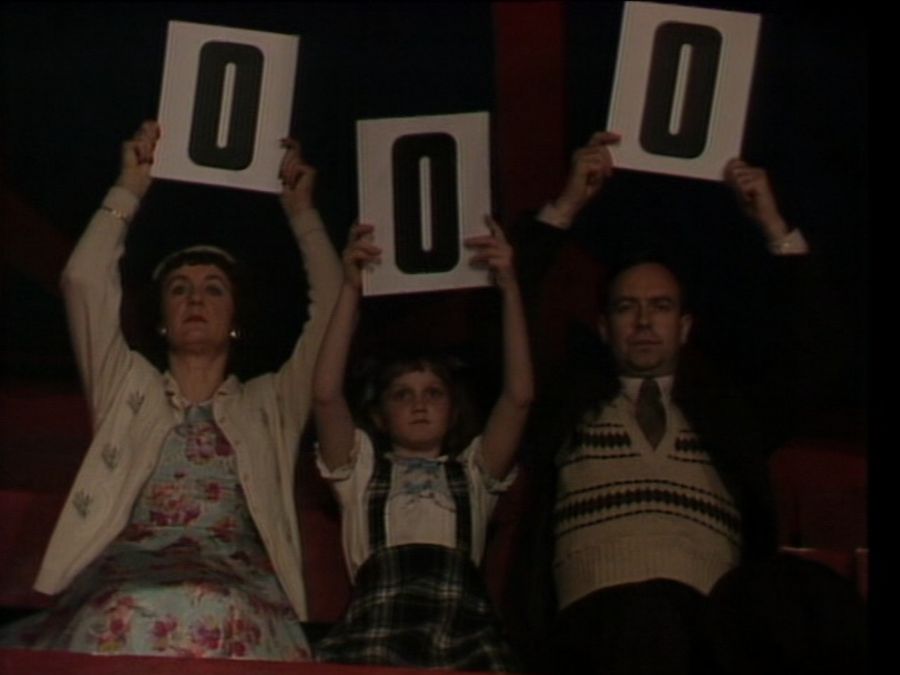
When the Doctor and Ace end up on Segonax, they discover something sinister within the Psychic Circus itself. This is especially when the circus is surprisingly empty, with only an audience of three that watch the acts whenever they come on during the story. 😐
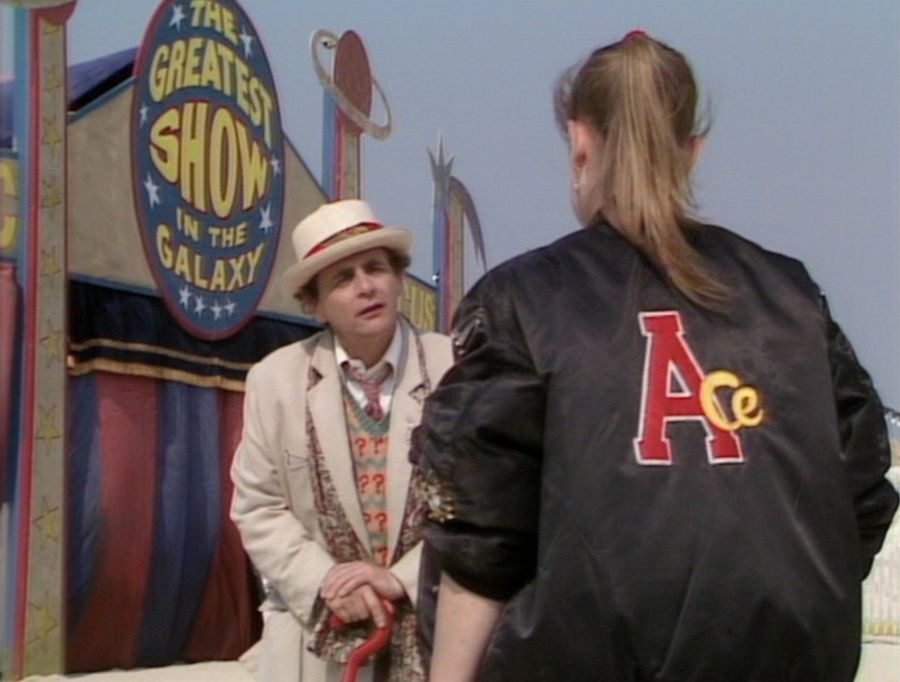
As the Doctor and Ace uncover more about what’s going on, they find out that all isn’t as it seems. The circus is being manipulated for a certain audience, and certain entertainers and stagehands like the Chief Clown are involved in something very deadly.
Finding allies as best as they can, the Doctor and Ace need to uncover what’s happening in the Psychic Circus and combat the deadly threat within. Will the Doctor outwit his deadliest opponents, especially as the emphasis is all about entertainment?
Like I said, this ‘Doctor Who’ adventure is by Stephen Wyatt. In Season 24, Stephen Wyatt previously penned ‘Paradise Towers’, the second story of Sylvester McCoy’s first season as the Doctor. I enjoyed ‘Paradise Towers’ more than I enjoyed ‘Greatest Show’. 🙂
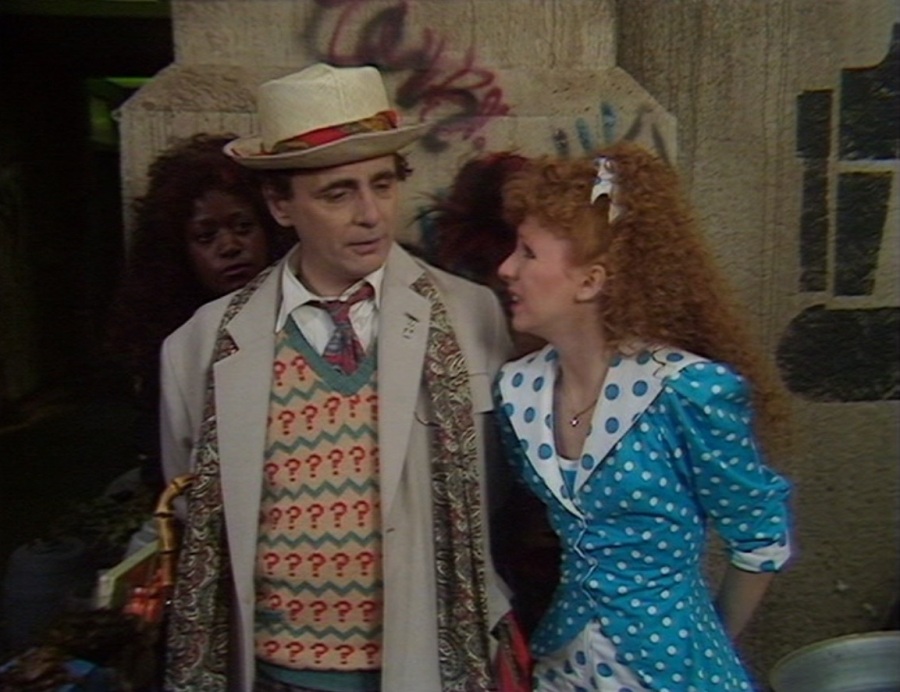
And I know that ‘Doctor Who’ fans don’t rate ‘Paradise Towers’ highly compared to me, but the thing I appreciate about Stephen Wyatt’s writing is he manages to blend in some intriguing concepts with elements of humour – both in the TV adventures he’s written. 🙂
I’m pleased Stephen Wyatt later got to write another ‘Doctor Who’ story in the form of the Big Finish audio story ‘The Psychic Circus’. Not only did he write it as a sequel/prequel to ‘Greatest Show’, but he included elements of ‘Paradise Towers’ in it. 🙂
I do agree with Stephen Wyatt and Andrew Cartmel that ‘The Greatest Show in the Galaxy’ is a terrible title for a ‘Doctor Who’ story. That was producer JNT’s decision, not theirs. Honestly, it would have been better to have called this story ‘The Psychic Circus’.
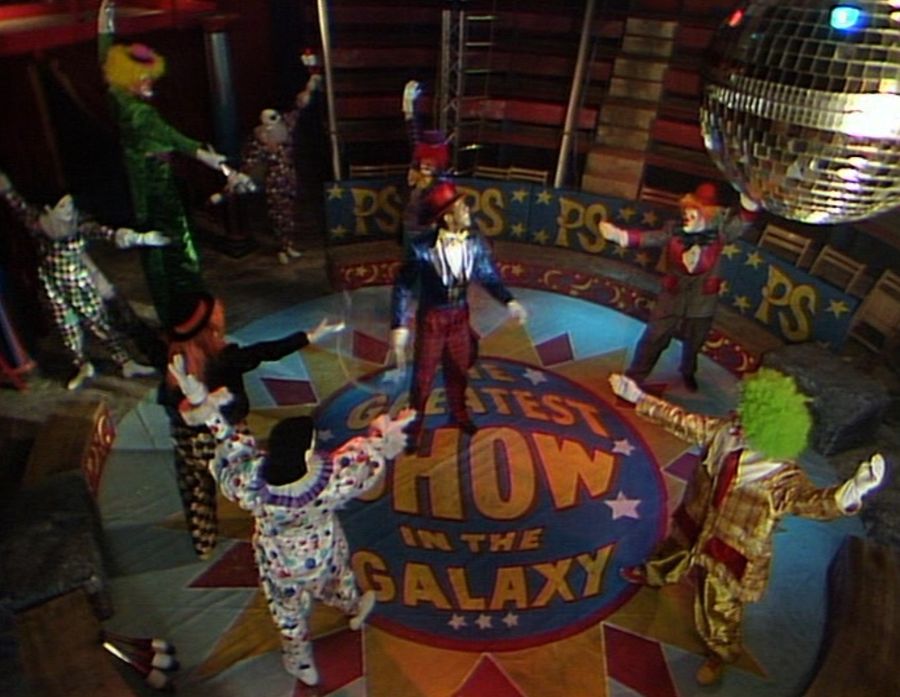
Also, when ‘The Greatest Show in the Galaxy’ happens to be a circus called the Psychic Circus, it’s something that wouldn’t really get me excited. No disrespect to circuses, but I wouldn’t really rate a circus in being in the category of ‘the greatest show in the galaxy’.
If I had my way, I would have preferred something more high-tech and futuristic instead of a run-down circus featuring clown, acrobats and a ringmaster. Granted, some clowns are robots and there are robot Bus Conductors appearing in this ‘Doctor Who’ TV story. 😐
But it’s not really the sort of thing that should give it the WOW!!! factor when showcasing it around the galaxy. Maybe to some non-Earthers, a circus would be considered ‘the greatest show in the galaxy’. But as an Earth dweller, it’s ‘run of the mill’.
And maybe that’s the point of this story. The fact that the circus has been so overused, especially when providing its entertainment on entities that thrive on being entertained, it makes it so drab and unexciting when being shown on screen. It’s open to discussion.
From viewing the story recently, I believe there’s more focus in ‘Greatest Show’ compared to ‘Paradise Towers’. This is especially when the comedy’s not over the top. There’s a fine balance between the comedy and drama along with the spooky elements.
The fact that this story was to do with playing on the minds and such, especially with it being about the Psychic Circus, is something that give its eeriness and being unnerving. It’s something I wasn’t initially keen on when I viewed this story for the first time.
It’s why I didn’t enjoy it so much compared to viewing ‘Paradise Towers’. But in viewing it more than once and especially with the backstory provided in ‘The Psychic Circus’ on how everything was set up in this story, the concepts have weight when analysing them.
Most specifically, I’ve been able to gain a clearer idea on who the story’s real enemies are and what it was that made the Psychic Circus work in ‘Greatest Show’, at least. This is when the Gods of Ragnarok are revealed, which I’ll delve into more later in the review.
I will say this, the story’s design and the atmosphere of the Psychic Circus inside a tent are pretty good throughout this adventure. This is especially considering the behind-the-scenes issues this story faced, which I’ll get onto more as we go further into the review.
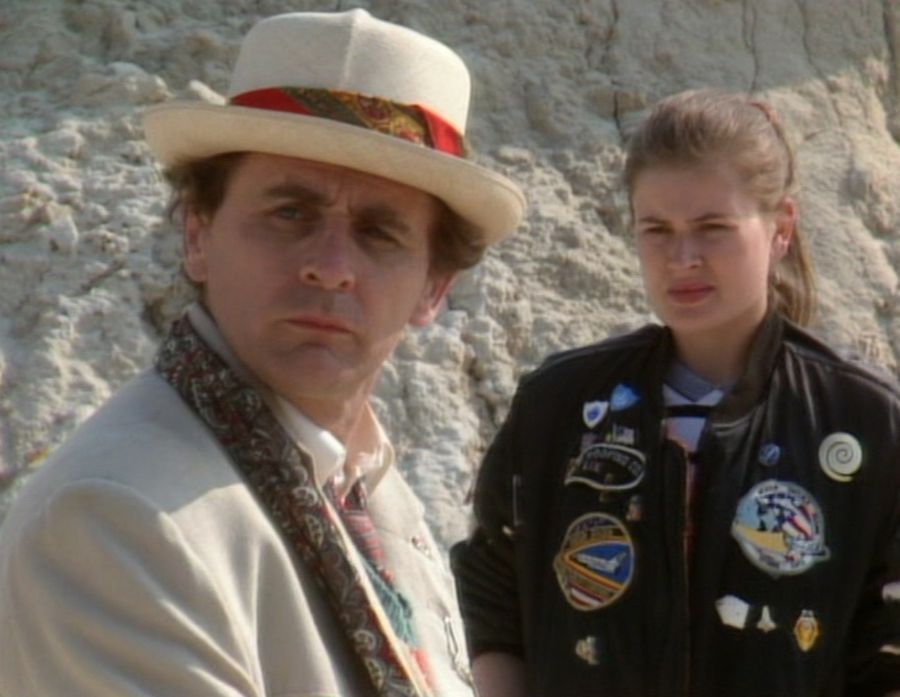
Over the years, I’ve met and chatted to a few of the stars featured in ‘Greatest Show’ at conventions. As well as having my Season 25 Blu-ray cover signed by Sylvester McCoy at ‘Happy Who Year’ in Epsom in January 2025, I’ve met Dee Sadler at a convention.
She played Flowerchild in ‘Greatest Show’. I met Dee at the ‘Time Warp’ convention in Weston-super-Mare in July 2014. I had a photograph of Dee as Flowerchild signed by her. I shared with her how I felt about this story. She sympathised with my feelings on it.
Dee claimed she didn’t fully understand the story either, which is interesting. Then again, she only appeared in ‘Part One’, so, it’s not like she had a full-blown appearance in this story. I’ve also met Jessica Martin, who played Mags in the TV story, at a convention.
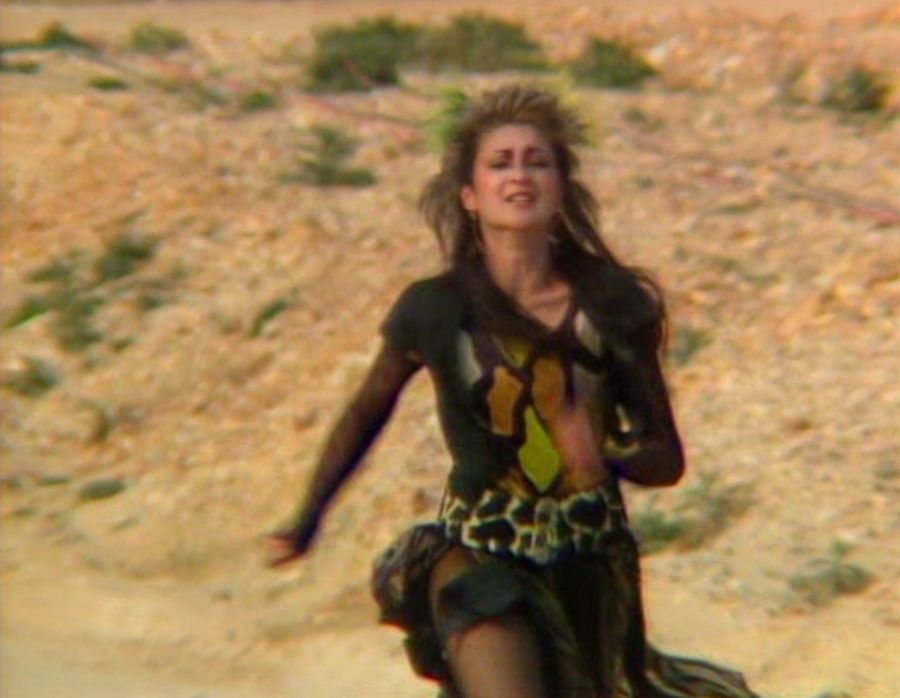
This was at the ‘London Comic Con Winter’ in November 2024, where she signed a copy of her ‘Greatest Show in the Galaxy’ artwork for me. It was fascinating chatting to Jessica at the comic con, since she does comic book work more than acting these days.
I don’t know if this ‘Doctor Who’ story was meant to be the second instalment of Season 25, but I believe it was the second made in terms of production. ‘Remembrance’ was first, then ‘Greatest Show’, and then it was ‘Silver Nemesis’ and ‘Happiness Patrol’ after.
I say this because there’s a continuity error concerning Flowerchild’s earring that Ace finds in ‘Part One’. If you look closely in ‘The Happiness Patrol’ and ‘Silver Nemesis’, there are shots of Ace wearing Flowerchild’s earring before she has it in ‘Greatest Show’.
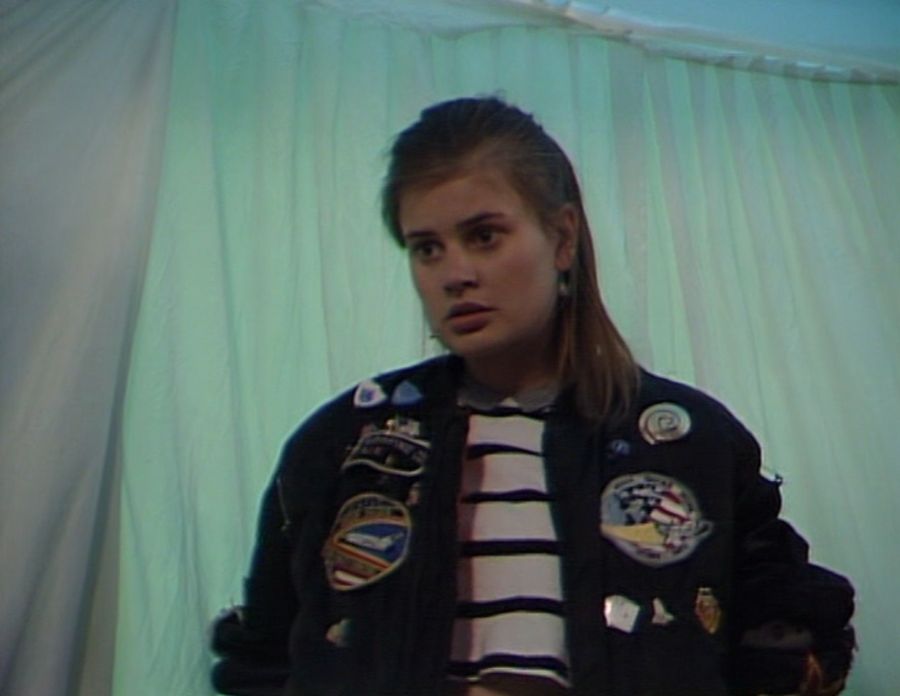
I’m not too worried about that continuity error, as there’s bound to be a timey-wimey reason involved. I’m just surprised no-one noticed that error when making ‘Happiness Patrol’ and ‘Silver Nemesis’ after making ‘Greatest Show’. Sophie Aldred didn’t notice. 😐
Like I said, ‘Greatest Show’ was a troubled production that was originally meant to be filmed on location first and then in the studio afterwards. That’s often the case with making TV productions, and the location filming worked out well for the cast and crew. 🙂
Unfortunately, when it came to doing the studio work, a disaster happened at BBC Television Centre. The BBC studios were infected with asbestos. This happens to be a harmful disease from building materials. Not sure if asbestos is still a thing nowadays. 😐
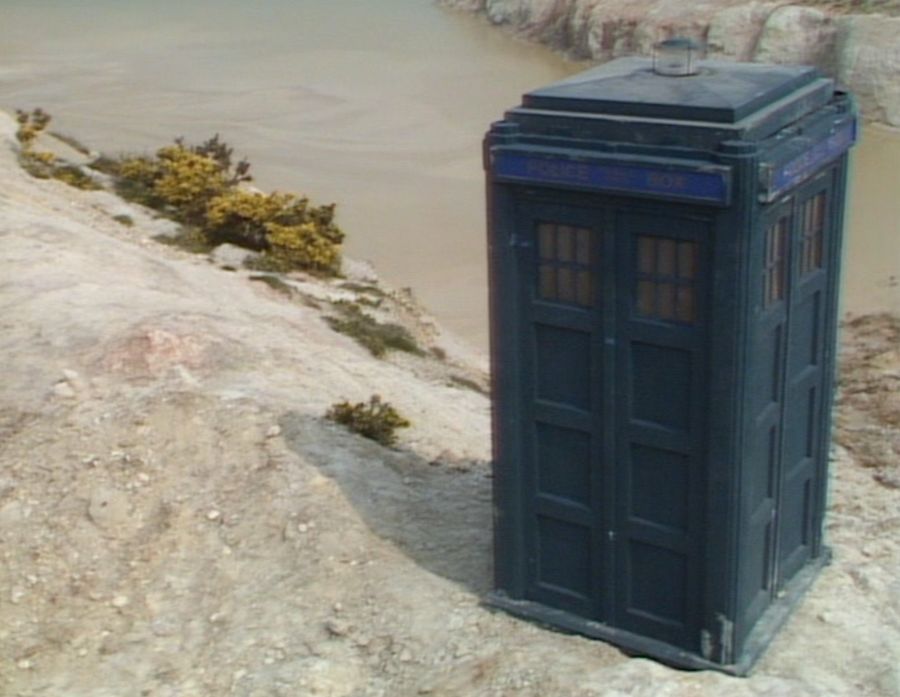
Regardless, it meant production of ‘Greatest Show’ had to be suspended and it seemed like the story would be cancelled with no studio work done. This is something that understandably would have unsettled cast and crew, as the location work went so well.
‘Greatest Show’ could have easily ended up being another ‘Shada’, where most of the filming work had been done and only some chunks of studio filming was recorded. It could have easily ended up being a legacy ‘Doctor Who’ story not shown for the TV. 😐
Thankfully, the producer John Nathan-Turner wouldn’t be beaten. He was determined that ‘the show must go on’ regardless of what limitations they had to work with. But how could they continue making ‘Greatest Show’ with the BBC studios being out of bounds?
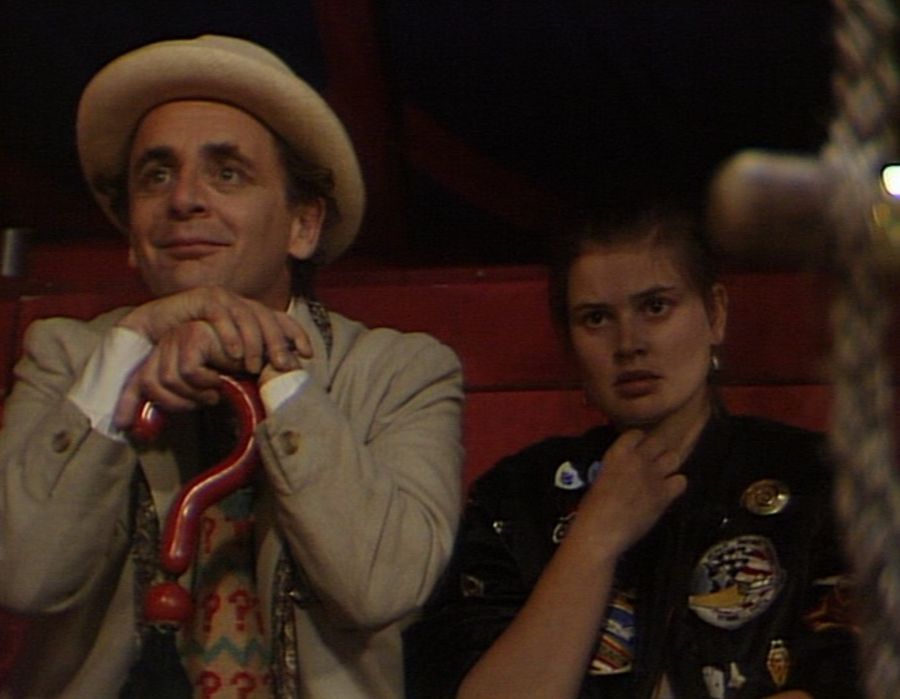
Fortunately, most of the story is set inside a tent at a circus. Therefore, the production team had to find a means where they could film the story outside whilst being inside a tent. They soon found a car park at BBC Elstree studio which suited their requirements.
The production team completed the rest of the story by filming all the interior scenes set inside a tent in a huge car park. I have to commend the producer JNT’s efforts in getting this story finished, despite having lost lots of time due to the ‘asbestos’ incident.
And this was during the making of Season 25 where ‘Silver Nemesis’ and ‘Happiness Patrol’ were yet to be completed in that production order. It’s that kind of determination that goes to show how much passion there is in terms of making ‘Doctor Who’ for the TV.
Something I found amusing in terms of making ‘Greatest Show’ inside a tent in a car park at BBC Elstree studios. Naturally, there are bound to be interruptions, particularly with planes flying overhead and outside noises that could disrupt the production process.
On one of those occasions, a fire alarm occurred, and everyone had to be outside in the car park. And it was on this occasion where the ‘Doctor Who’ cast met up with the ‘Allo, ‘Allo’ cast. I find that incredibly amusing, especially having seen ‘Allo, ‘Allo’ lately. 😀
I’ve seen production photos of Sylvester McCoy interacting members with the ‘Allo, ‘Allo’ cast, including Vicki Michelle. I’m surprised a comic relief special featuring Sylvester McCoy as the Seventh Doctor meeting the ‘Allo, ‘Allo’ cast didn’t happen on TV screens.
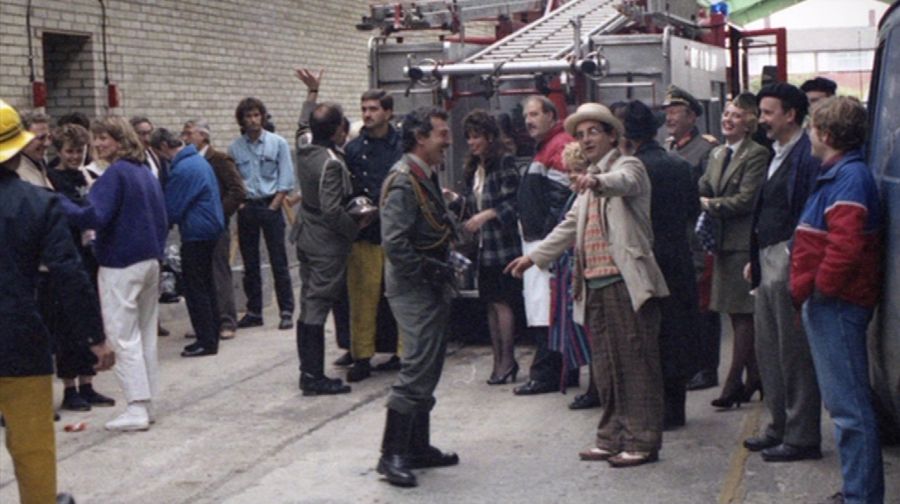
It’s an example of where disasters happening at the main BBC studios can lead to some unusually unexpected and wonderful moments of the ‘Doctor Who’ cast nearly crossing over with another TV show that has nothing to do with sci-fi and it’s pretty worthwhile. 🙂
This ‘Doctor Who’ story is a good one to showcase Sylvester McCoy as the Seventh Doctor. It’s a very good opportunity to illustrate how mysterious he can be, especially when he’s investigating the Psychic Circus and uncovering the Gods of Ragnarok.
The Doctor is intrigued by what’s going on with the circus when he and Ace visit it on the planet Segonax. He senses a strange evil that’s occurring when he and Ace are making their way to the Psychic Circus in ‘Part One’. I found that fascinating when viewing the story.
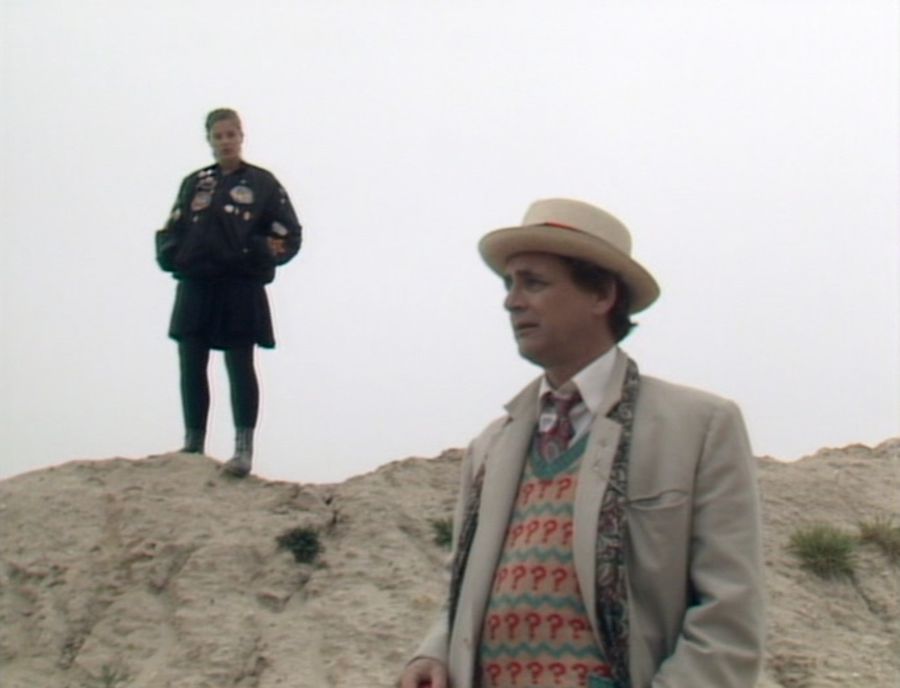
Doctor: Something evil’s happened here. I can feel it.
Ace: To do with the circus?
Doctor: Who knows.
As ever, the Doctor is determined to solve the mystery and put an end to the terror that’s emanating from the Psychic Circus. I greatly enjoyed Sylvester McCoy’s performance because of that, and he gets to show off his ‘magic act’ and tricks throughout the story.
This is in ‘Part Four’ of the story where the Doctor confronts the Gods of Ragnarok in their Dark Circus, which takes place in another dimension, I believe. I like how the Doctor is initially defiant towards them before performing his stand-up to distract them.
As well as playing the spoons in the TARDIS, the Doctor gets to show off ‘magic’ tricks to the Gods of Ragnarok in ‘Part Four’, including producing eggs from his mouth and dancing with a rope and doing the rope trick. It’s where Sylvester gets to be wacky a bit. 😀
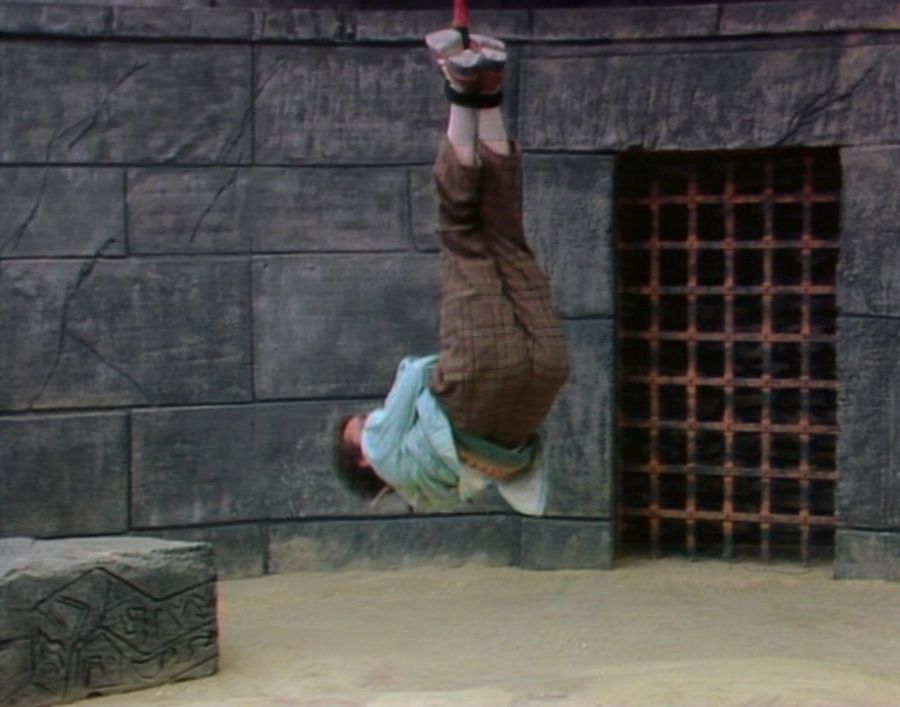
He even shows off how to get himself out of a straitjacket in Harry Houdini style. Where did he get that straitjacket from? Did he have it in one of his jacket pockets? He must have, unless he created it out of thin air. It would account for the ‘sword of Excalibur’, I guess.
I mean, how did the Doctor manage to get that sword out of thin air? I suppose I could ask Sylvester at a convention, but that might mean him unveiling too many secrets if him claiming to be of ‘the magic circle’ in the ‘Behind the Sofa’ item is to be believed. 😀
I like how Sylvester’s Doctor forms a connection with Jessica Martin as Mags, making her a one-off companion in some respects. He even gets to reason with her when she’s in her werewolf-like state in ‘Part Four’. His defiance at Captain Cook is so spellbinding.
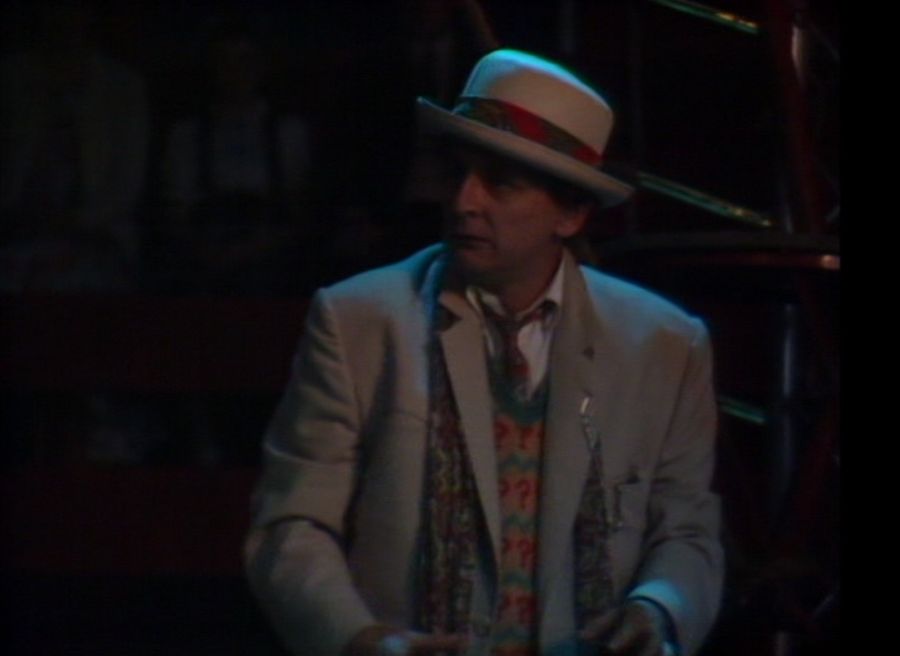
Doctor: Captain Cook!
Captain Cook: What?
Doctor: You’re not only a scoundrel and a meddling fool, but you’re also a crushing bore.
Ooh!!! Harsh! 😀 Sophie Aldred is equally amazing as Ace in this ‘Doctor Who’ adventure. Ace’s fear of clowns is something that I believe everyone can relate to. It’s fascinating she doesn’t find them funny, as she finds them scary when she sees them. 😐
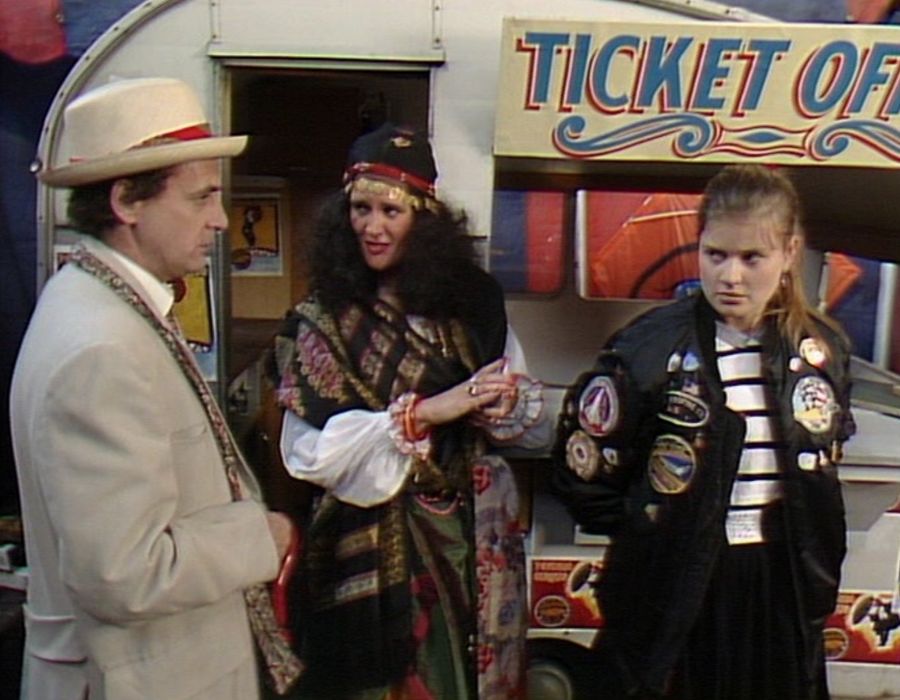
It was funny when the Doctor and Ace walked into the Psychic Circus to be greeted by Morgana, only for Ace to start walking out and the Doctor pulls her back with his umbrella. Ace gets quite pouty whilst the Doctor is friendly and introducing themselves.
That moment where Ace sees the Chief Clown watching her is tense and you can understand why she’s so afraid of clowns. At least she’s able to stand up to and get away from the Chief Clown when he enquires where she acquired Flowerchild’s earring.
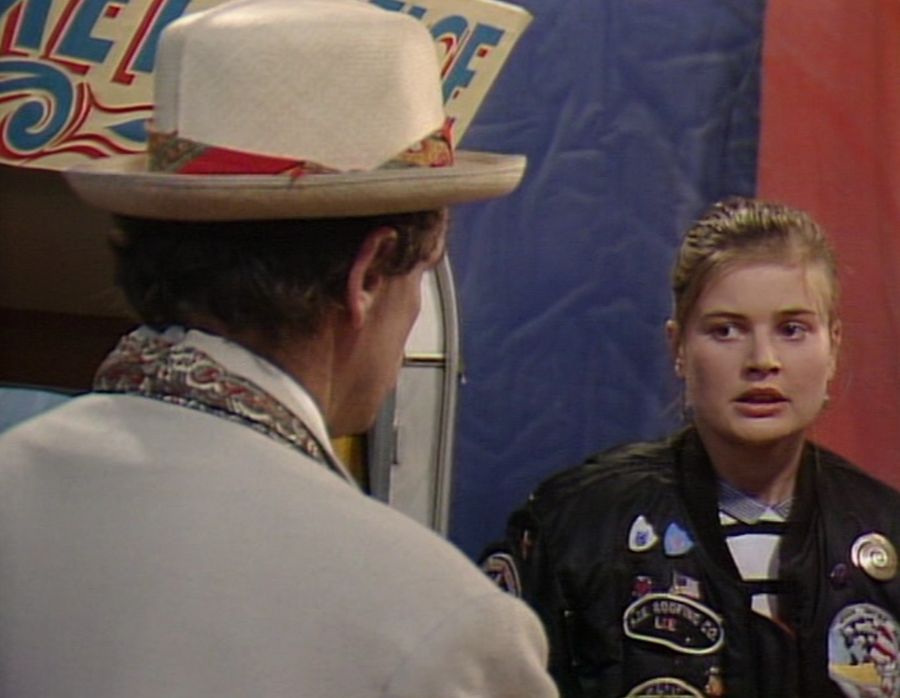
It was fascinating to see how Ace got to confront her fears in this adventure when meeting up with clowns, including the robot ones. She’s resourceful in avoiding the Chief Clown and his lot, including her using Flowerchild’s earring to break through a tent wall.
I like it when Ace meets Bellboy in ‘Parts Two and Three’ and she does her best to connect with him. She even gets to connect with Deadbeat before he gets his memories back and becomes Kingpin again. Ace tackling a robot bus conductor is a thrill to see. 🙂
This ‘Doctor Who’ story happens to be a rare occasion where Ace doesn’t get to use her Nitro-9, since her explosives were hidden away in a rucksack and the Doctor hid her rucksack in the TARDIS. It’s nice Ace gets to be resourceful without resorting to Nitro-9.
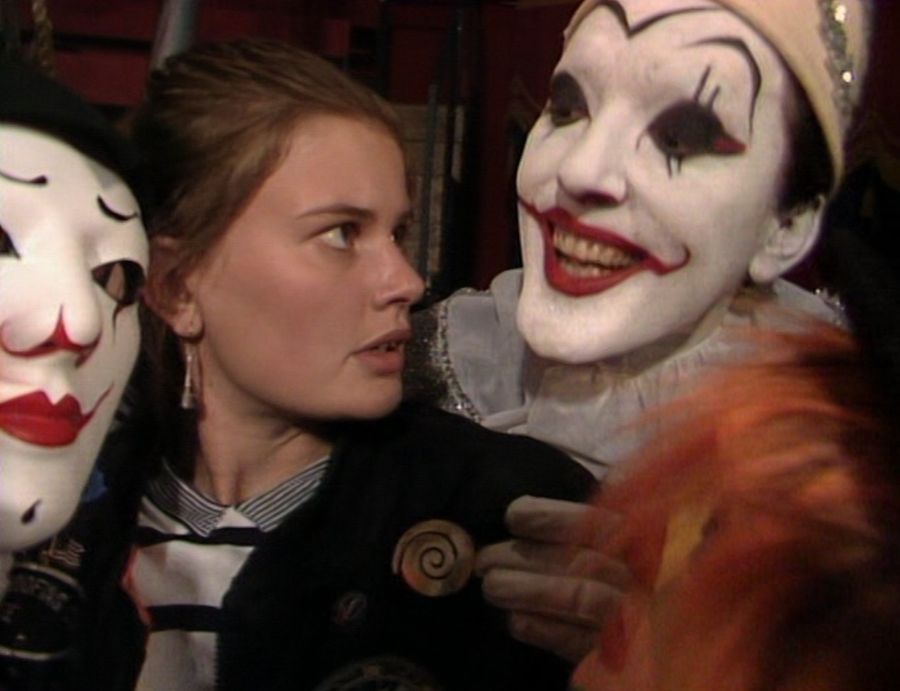
Ace is separated from the Doctor in ‘Part Two’ of the story before she gets to reunite with him in ‘Part Three’. She too gets to find things out for herself about what’s going on with the circus, and I like how she teams up with Kingpin and Mags in ‘Part Four’ of the story.
Ace is given a remote control by Bellboy to control the robot that attacked her, the Doctor and Mags in ‘Part One’. In ‘Part Four’, Ace uses the remote to have the robot to gun down the clowns, including the Chief Clown. Not sure if they were killed or stunned.
The story’s guest cast includes T.P. McKenna as Captain Cook. This was the first time I’d seen T.P. McKenna in anything. I know he’s been in other things that I’ve seen over the years. He was in the ‘Miss Marple’ TV story ‘A Caribbean Mystery’, starring Joan Hickson.
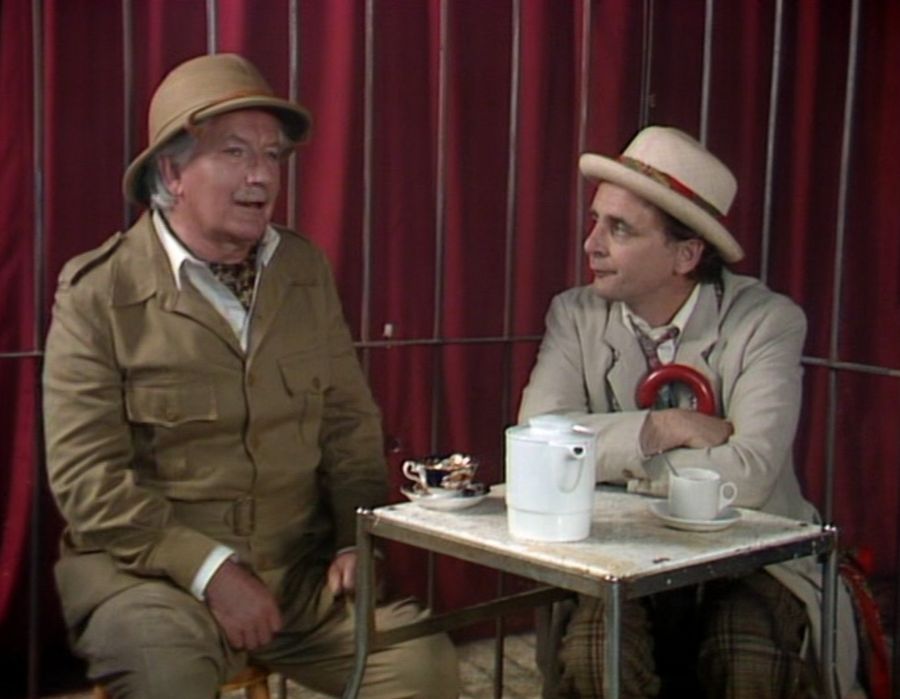
He’s been in an episode of the ‘Partners in Crime’ TV series with Francesca Annis and James Warwick, as well as three episodes of the ‘All in Good Faith’ TV series with Richard Briers. He’s been in episodes of ‘The Avengers’, ‘The Saint’ and ‘Blake’s 7’ too. 🙂
Captain Cook, as a character, has been fascinating to watch in ‘Greatest Show’. Initially, I didn’t quite understand his motives when watching him in the story. He starts off being comedic-like, especially when boring everyone with his recollections of his adventures.
As the story progresses, he comes across as very malicious and selfish, wanting power for himself when coming across the Psychic Circus, which he seems to know quite a lot about. He does get killed off by Mags in the story, but does come back as a zombie later.
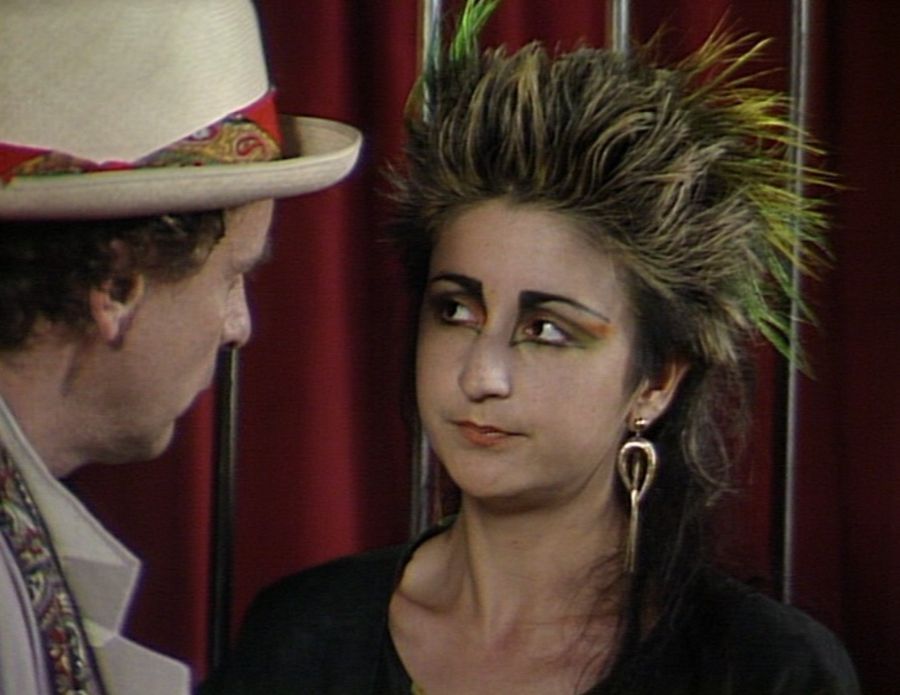
Jessica Martin guest stars as Mags in this ‘Doctor Who’ adventure. She comes from the planet Vulpana and is a rather unusual companion of Captain Cook’s. You could almost say that Mags and Captain Cook are parallels to the Seventh Doctor and Ace in this story.
I like Jessica’s performance as Mags in this ‘Doctor Who’ story, since she comes across as a pleasant person who quite often protests against Captain Cook’s villainy. She often sides with the Doctor and helps him when trying to uncover the Psychic Circus’ mystery.
But as the story progresses, it turns out Mags is hiding a terrible secret. By blue moonlight, she transforms into a terrible werewolf-like creature. It was quite tense to see that happen at the end of ‘Part Three’ and at the beginning of ‘Part Four’ in the story.
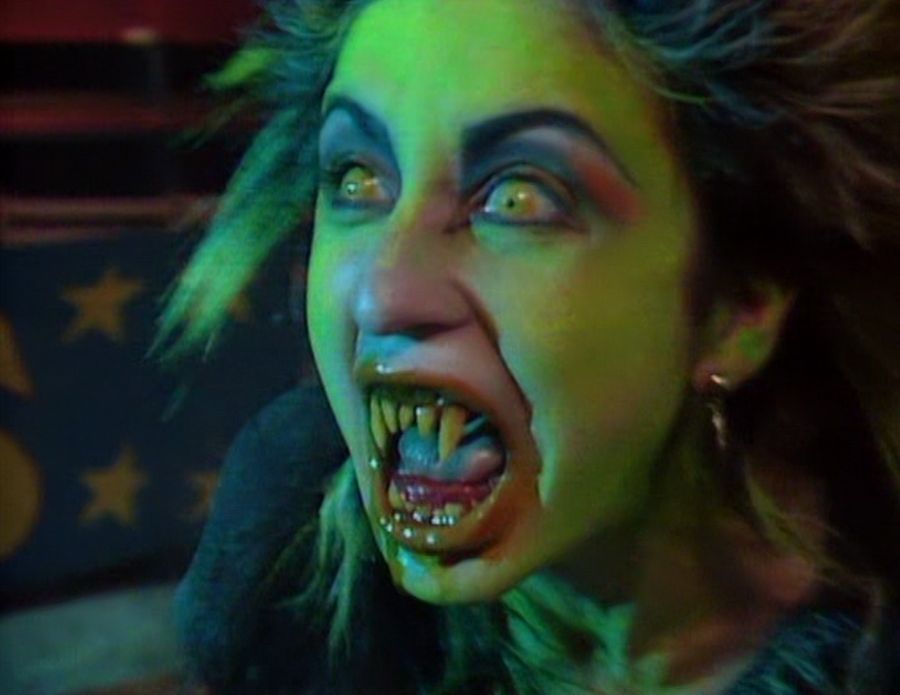
Mags has become popular over the years, thanks to Jessica Martin’s enthusiasm when playing the character. So much so that Mags has returned to ‘Doctor Who’ in the Big Finish audios with Jessica Martin playing her in a trilogy of stories with Sylvester McCoy.
Ian Reddington guest stars as the Chief Clown in this ‘Doctor Who’ story. I’ve seen Ian Reddington before, as he would go on to appear in ‘Coronation Street’ in the 2000s. I’ve seen ‘Corrie’ episodes with him in them. He’s also appeared in ‘EastEnders’ in the 1990s. 🙂
After doing ‘Greatest Show’, Ian Reddington went on to play Nobody No-One in the Big Finish audio story ‘A Death in the Family’. He reprised the role of the Chief Clown on audio in ‘The Psychic Circus’ by Big Finish and in ‘Children of the Circus’ by AUK Studios.
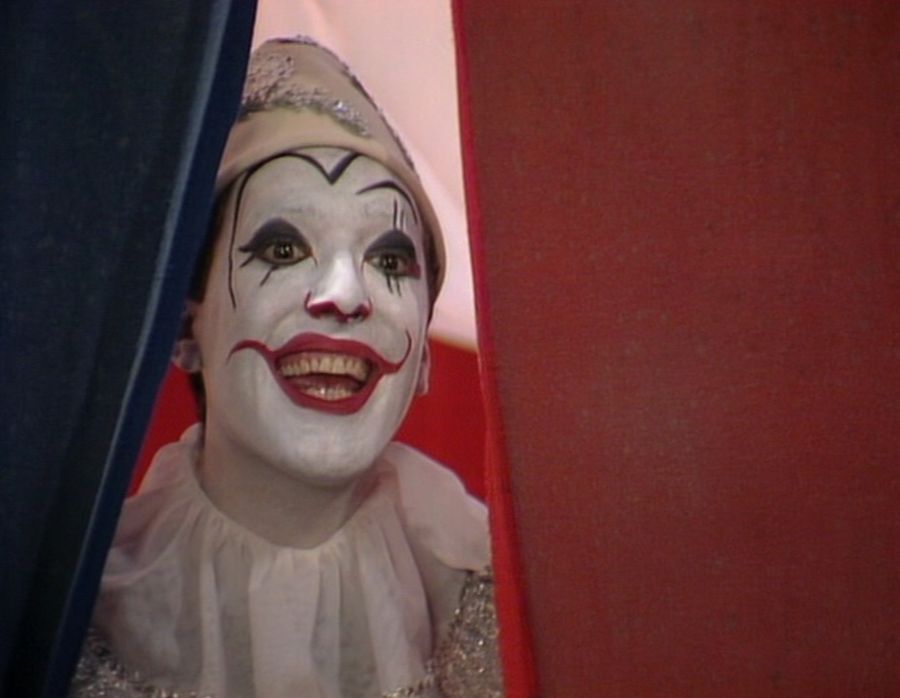
I enjoyed Ian’s performance as the Chief Clown in ‘Greatest Show’. On the surface, he has a cheery smile, which he puts on for show. Underneath however, he’s a rather evil person. It’s not clear what the Chief Clown’s motives are when watching him in the tale.
But it’s clear he’s succumbed to the unsettling atmosphere provided by the Gods of Ragnarok when they’re demanding to be entertained. I enjoyed the relish that Ian puts into his performance as the Chief Clown, as he ranges from being happy to very menacing. 🙂
On a side note, I did feel for Ian Reddington when he had his accident behind-the-scenes with the metal cage door crashing down onto his head whilst making the story. Ouch! Thankfully, no permanent damage was caused and at least Ian survived to tell the story.
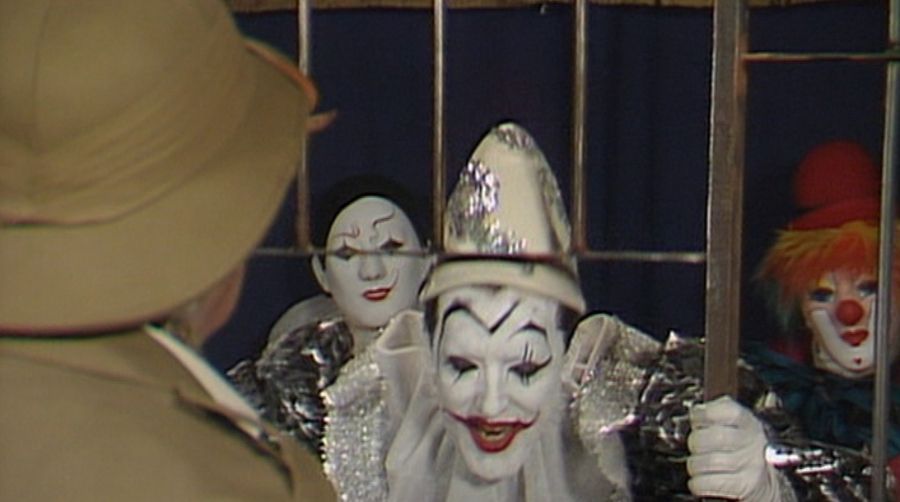
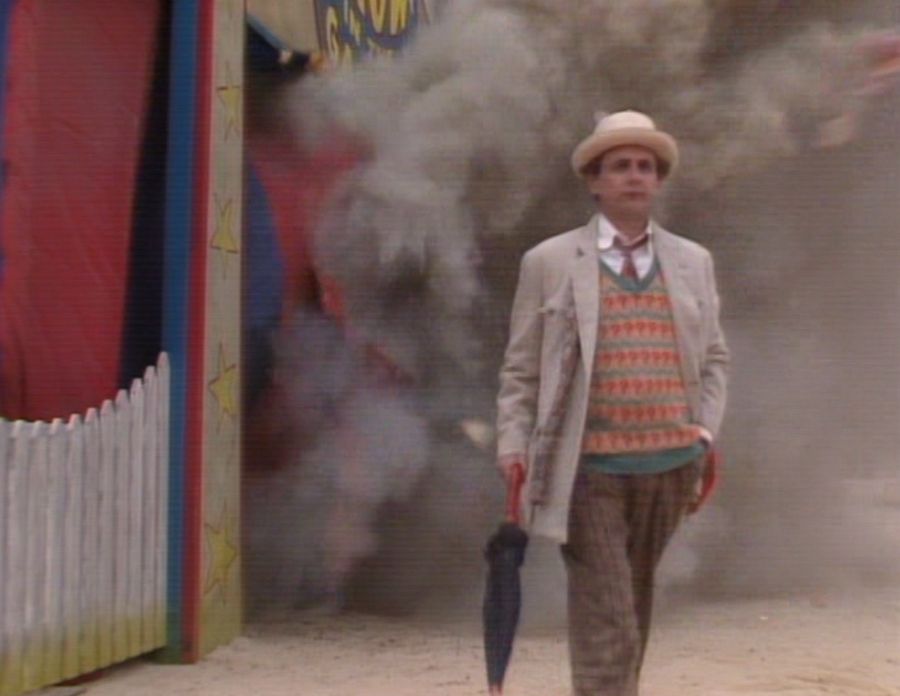
It’s also amazing to see how many amazing explosions occurred for the actors to cope with. This included the robot Bus Conductors exploding as well as Sylvester McCoy’s Doctor walking out of the circus tent only for it to explode behind him. Pretty impressive!
The story’s guest cast also includes Ricco Ross as the Ringmaster and Deborah Manship as Morgana, who work at the Psychic Circus. It was fascinating to see these two characters portrayed on screen, as they’re keeping themselves alive in the circus. 😐
Ricco Ross’ take on the Ringmaster is enjoyably fascinating, since when he’s in the ring, he speaks in rhymes in a sort of rap to introduce every act that comes on. When not in the ring, the Ringmaster gets anxious when things seem to go out of control in the circus.
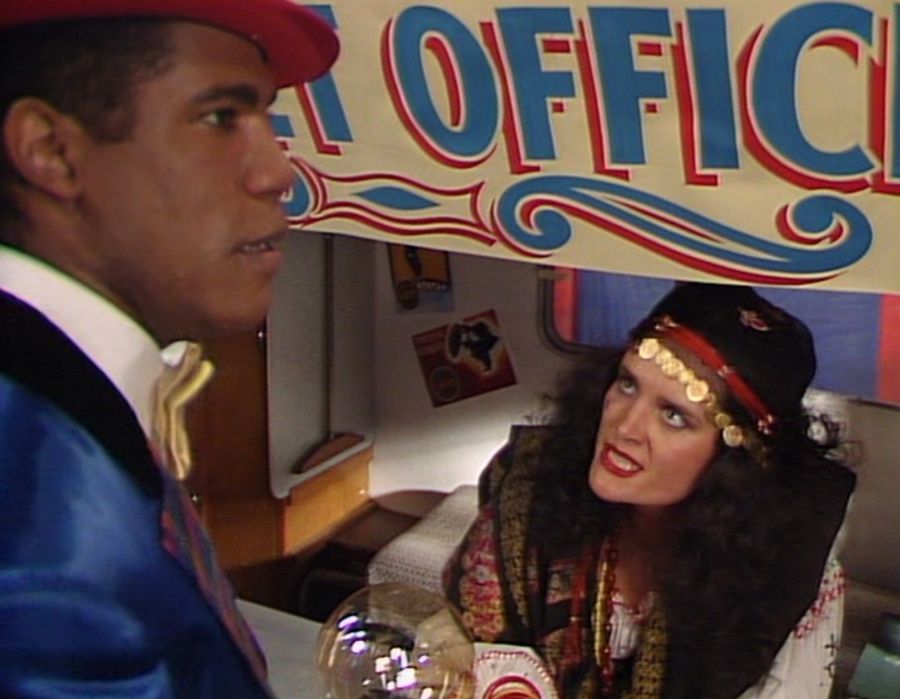
Morgana sells tickets at the entrance of the circus tent and happens to be a fortune teller. Though the Doctor and Ace don’t get given tickets when they go inside. I don’t know if it’s me, but Morgana seems to put on a different accent when welcoming visitors.
The Ringmaster and Morgana meet an unfortunate end when they fail to please the Gods of Ragnarok in ‘Part Four’. This is when the Chief Clown and his robot clowns put the Ringmaster and Morgana into two large wicker baskets and the two vanish forever. 😮
Daniel Peacock guest stars as Nord, who auditions for the Psychic Circus. He likes to call himself ‘Nord, Vandal of the roads’. He’s a pretty rude and violent individual, who drives a large, five-wheel motorcycle. He seems eager to audition for the Psychic Circus.
Why he’s eager, it’s never explained. Perhaps he should’ve thought better, since he gets killed off in ‘Part Two’. 😮 Oh, and he likes eating greasy-looking burgers whilst driving his motorcycle. Ugh! 😐 Also, when demanding a clown to direct him to the Psychic Circus…
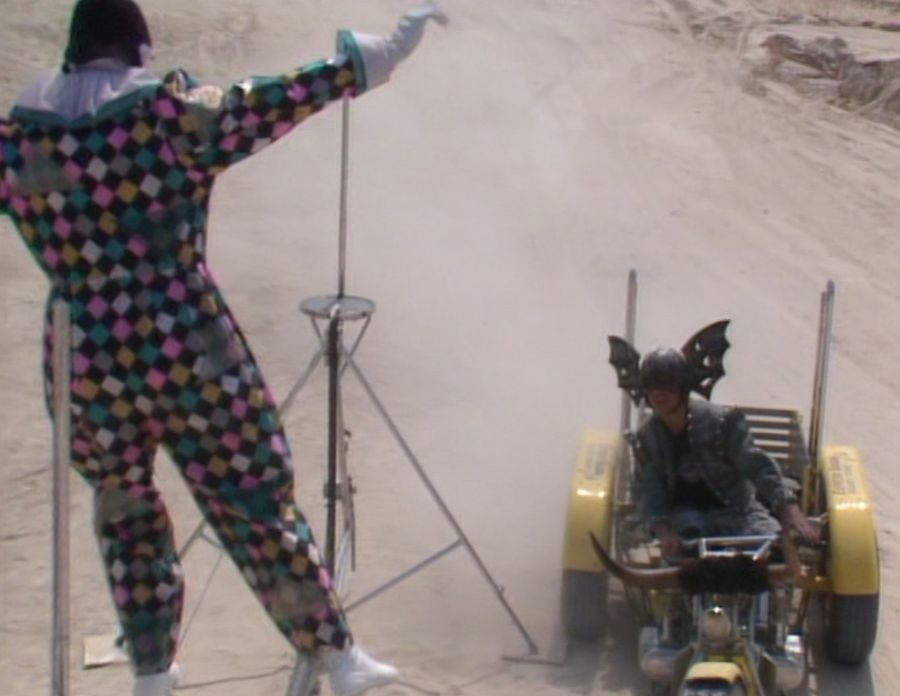
Nord: OI! WHITE-FACE! WHITE-FACE! WHERE DO I PARK FOR THE GIG AT THE PSYCHIC CIRCUS?
I don’t know if it’s me, but does that sound a bit racist? 😀 Gian Sammarco guest stars as Whizz Kid (Unfortunate name – In fact, many of these characters don’t have proper names. Just like the Caretakers in ‘Paradise Towers’ aren’t given proper names in this story).
Whizz Kid happens to be the biggest fan of the Psychic Circus. Apparently, Whizz Kid was created as a parody of ‘anally retentive, obsessive fans’. I feel that Whizz Kid wasn’t treated very well in this tale. He seemed pleasant enough and didn’t do anything wrong.
It’s so unfortunate that he got killed off in ‘Part Three’. He didn’t have much character development throughout this adventure. He didn’t even get to meet the Doctor and Ace. He just came to see the Psychic Circus, being a big fan of theirs, and is killed off. Harsh!
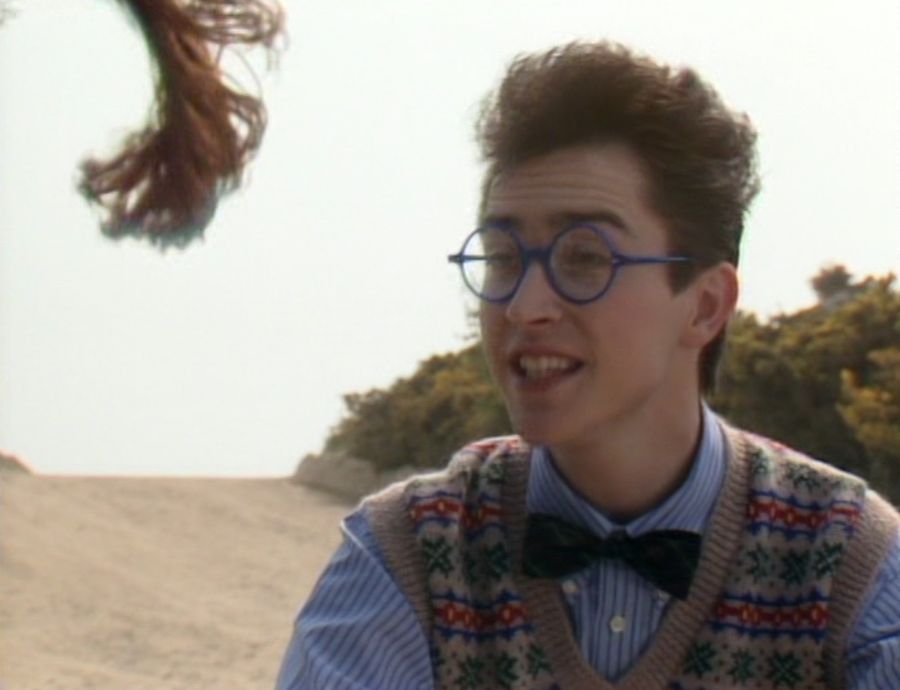
Incidentally, Gian Sammarco is well-known for playing Adrian Mole in the two series ‘The Secret Diary of Adrian Mole, Aged 13¾’ in 1985 and its sequel ‘The Growing Pains of Adrian Mole’ in 1987. Not that I’m expecting you to know that, as I’ve not seen those two shows.
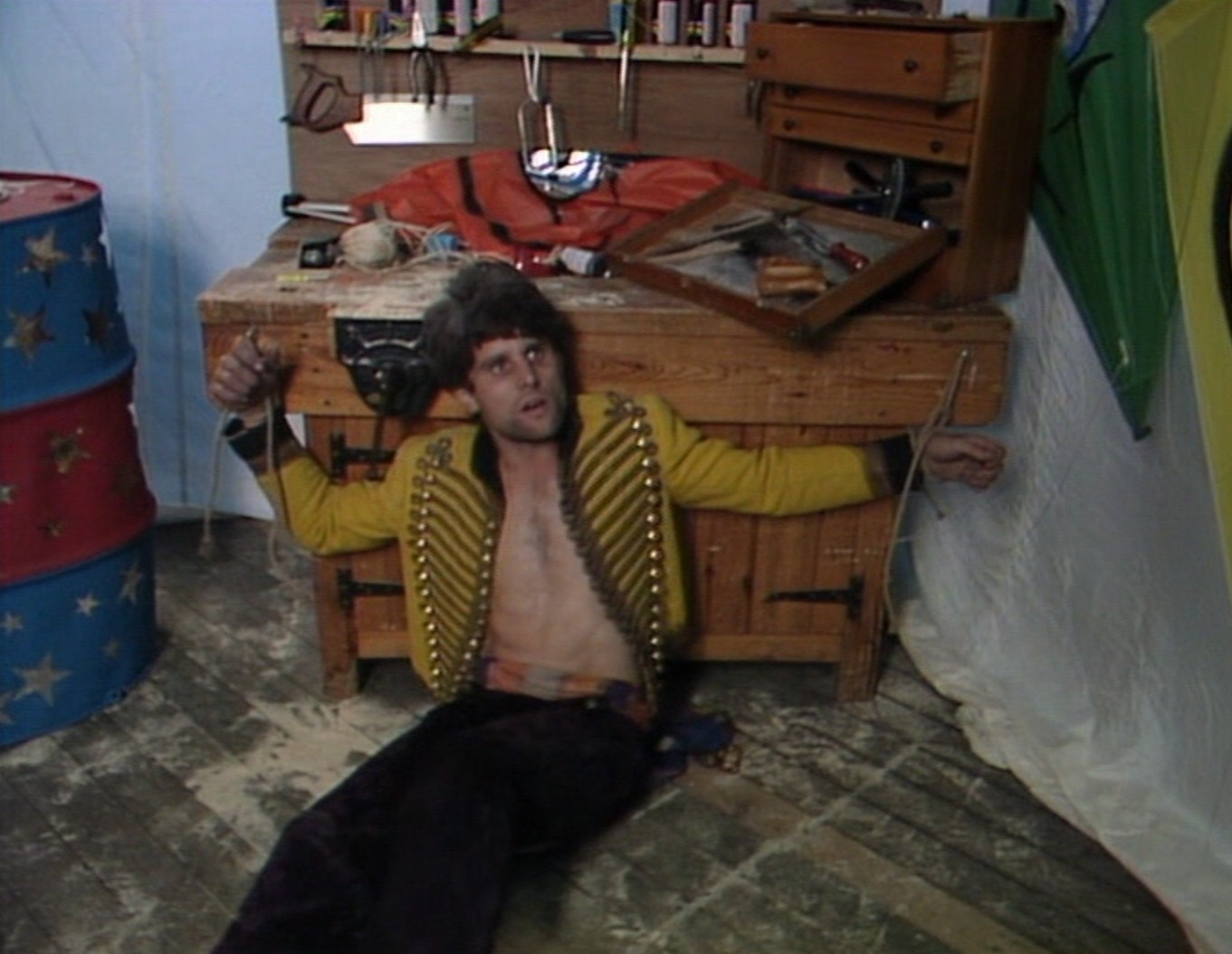
Christopher Guard guest stars as Bellboy. He worked at the Psychic Circus before he and Flowerchild rebelled against the way things were being done at the circus, and they ran away. 😐 Bellboy’s specialty at the circus was to build and to repair the robot clowns.
In real life, Christopher Guard is the older brother of Dominic Guard (Olivr in ‘Terminus’). As well as an actor, Christopher Guard is a musician and artist. He provided lyrics and music for ‘The Psychic Circus’ music video with him, Jessica Martin and T.P. McKenna. 🙂
That music video is included on ‘The Greatest Show’ DVD as well as on Disc 7 of the Season 25 Blu-ray box set containing ‘Greatest Show’. I enjoyed ‘The Psychic Circus’ music video more than ‘Greatest Show’ as a story itself. Funny how that happens, isn’t it?
Dee Sadler as Flowerchild is Bellboy’s lover, I believe. It’s not a relationship that’s explored much in too much detail, especially as she gets killed off by a robot bus conductor in ‘Part One’ – How unfortunate. But I liked the kiss she gave Bellboy in this story.
Outside of ‘Doctor Who’, Dee Sadler has been in the ‘All Creatures Great and Small’ 1990 Christmas Special ‘Brotherly Love’ where she played a potential love interest of Peter Davison as Tristan’s. Dee Sadler has more screen time in that compared to this. 😀
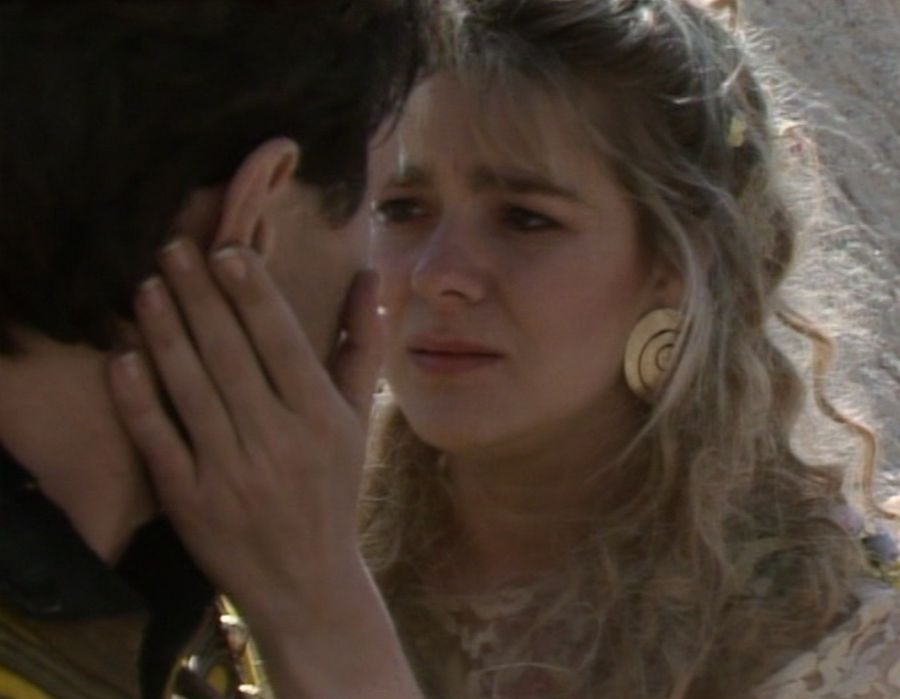
Chris Jury guest stars as Deadbeat, who turns out to be one of the founding members of the Psychic Circus named Kingpin. And no, that’s not the Spider-Man version of Kingpin, which I joked about in my review for ‘The Psychic Circus’ audio story by Big Finish.
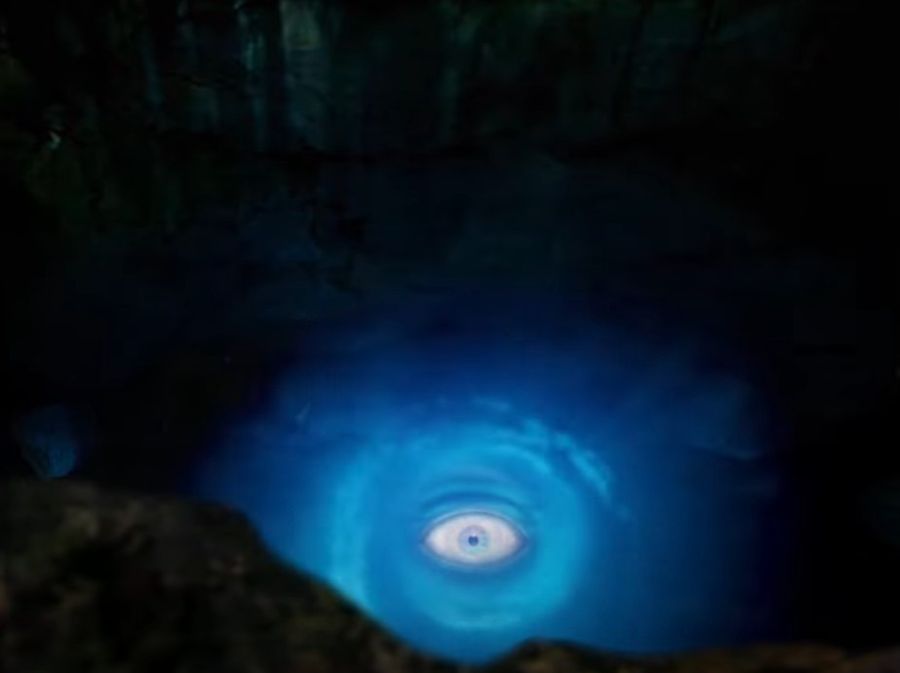
It was interesting to see how Deadbeat was unravelled in this ‘Doctor Who’ story. He starts being simple-minded before it’s revealed he lost his memory. He had to take out a small blue eye from a box and put it on his medallion in order to get his memories back.
The events building up to his memory loss are unveiled in ‘The Psychic Circus’ audio story by Big Finish, of course. Another major guest star in this story is Peggy Mount as the Stallslady, who I enjoyed. She’s only in ‘Parts One and Four’ of the story, apparently.
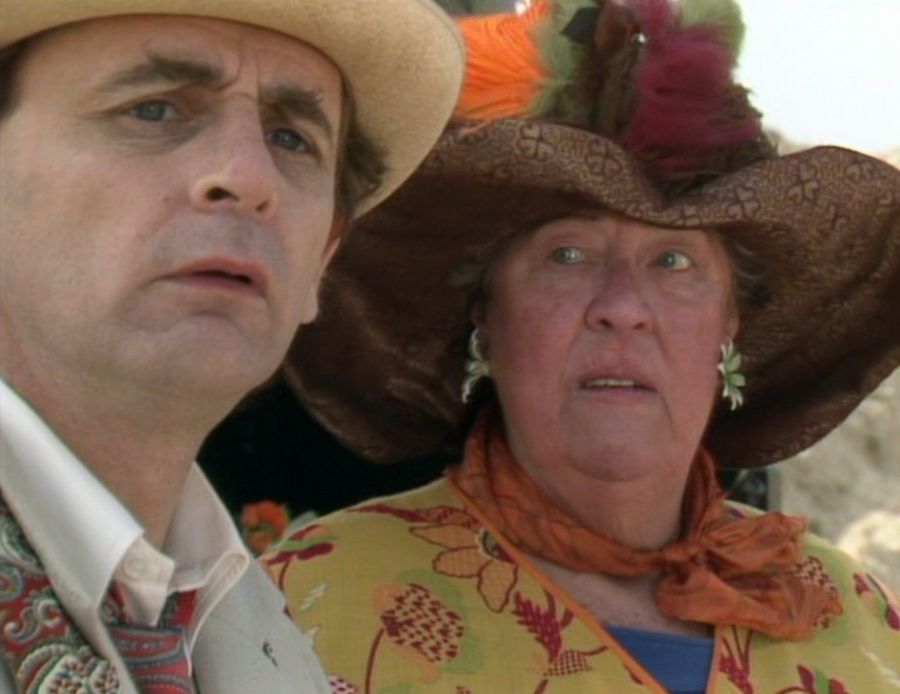
Peggy Mount has been in comedy TV shows such as ‘George and the Dragon’ with Sid James and ‘You’re Only Young Twice’, featuring an episode with Daniel Hill from ‘Shada’ in it. Peggy Mount as the Stallslady is so disapproving of the Psychic Circus on Segonax.
She calls everyone who goes to or works at the Psychic Circus ‘wierdos’. 😀 Incidentally, this isn’t the first time that Peggy Mount has met the Doctor. Don’t believe me? Apparently, in one of the ‘George and the Dragon’ episodes, it features Tom Baker in it. 🙂
The story’s guest cast also includes Dean Hollingsworth as the robot Bus Conductor. I believe Dean Hollingsworth played two robot Bus Conductors in this. There was one in ‘Part One’ and it got blown up. There was also one in ‘Part Four’ and it got blown up too. 😀
I’d like to think the robot Bus Conductors are what inspired the Kerblam men in ‘Kerblam!’, as the impression of that seemed to be given in ‘The Psychic Circus’ audio drama by Big Finish. I’m sure ‘Kerblam!’s writer Pete McTighe enjoyed this ‘Doctor Who’ story. 😀
Dean Hollingsworth also provided the voice of the circus advertisement as well as the advertising satellite or ‘junk mail’ robot that infiltrated the TARDIS in ‘Part One’. It’s good that Dean Hollingsworth got more to do than just play two robot Bus Conductors in this.
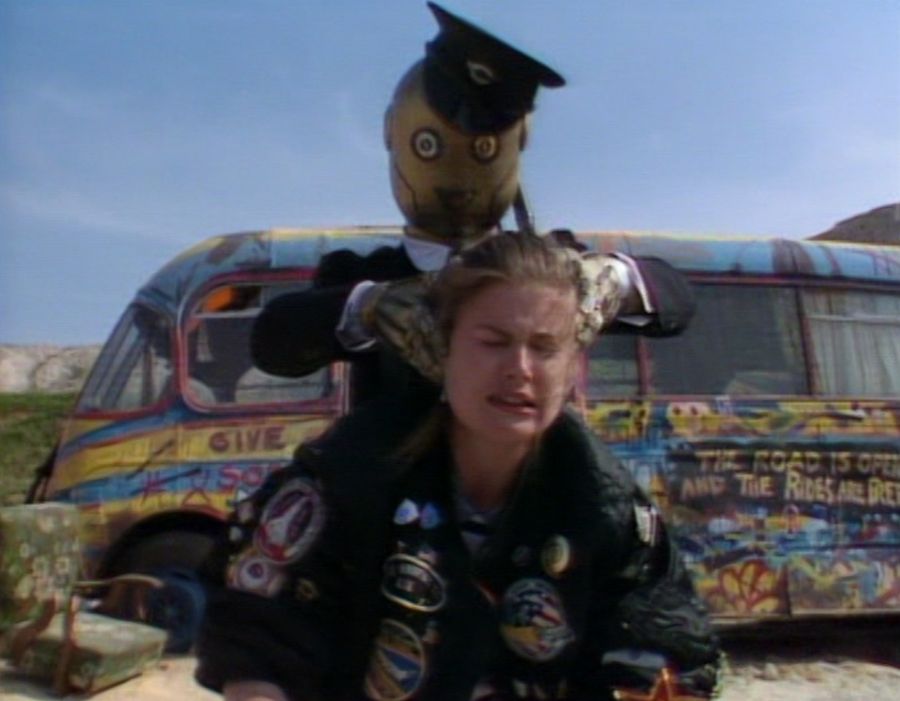
One of the Robot clowns featured in this ‘Doctor Who’ story is played by Hugh Spight. Hugh Spight was a Dalek operator for the TV story ‘Remembrance of the Daleks’ earlier in Season 25. It’s nice to know Hugh Spight got more than one role to play in Season 25.
In terms of the audience members featured in the Psychic Circus, they’re a very peculiar bunch. When the Doctor and Ace enter the Psychic Circus in ‘Part Two’, it just happens to be a trio – a father, a mother and a daughter – who are watching the circus. 😐
David Ashford guest stars as the Dad, Janet Hargreaves guest stars as the Mum and Kathryn Ludlow guest stars as the Little Girl. It’s revealed in ‘Part Four’ of the story that the family trio are the Gods of Ragnarok in human form. This leads me to ask questions.
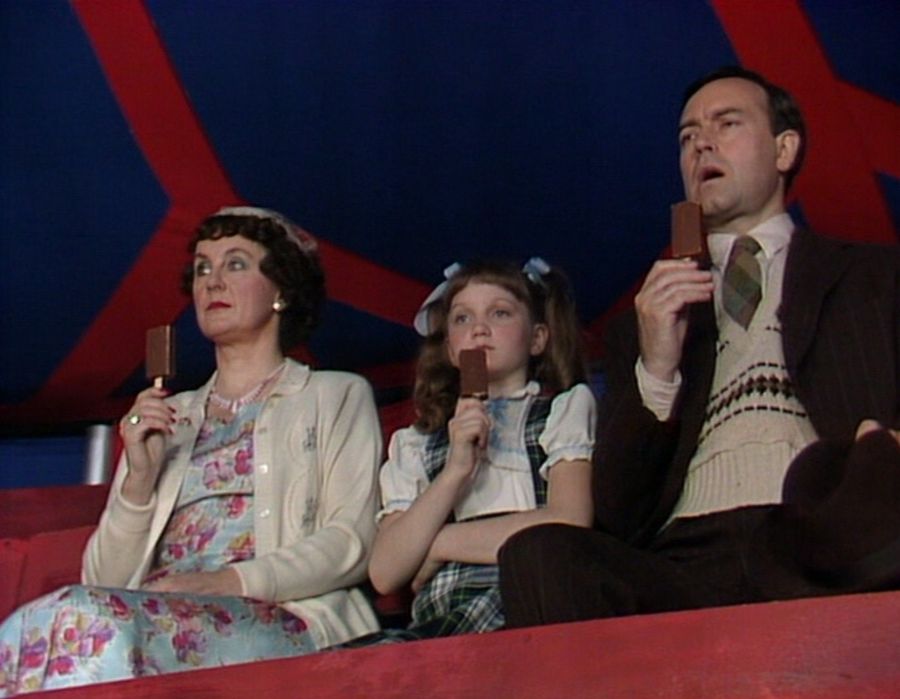
Why is it just three Gods of Ragnarok watching the Psychic Circus, both in our world as humans and in their world as stone beings? How come it wasn’t more than three Gods watching the circus itself. The Gods of Ragnarok set-up doesn’t make a lot of sense. 😐
I mean, when people visit the Psychic Circus on Segonax, wouldn’t they think it was strange that it was just three people sitting in the circus. Couldn’t there have been more Gods of Ragnarok to fill in all the empty seats whilst watching the acts being performed?
Granted, the lack of many attendees in narrative terms could be justified in that not many people would be interested in going into the Psychic Circus. Hence, why I feel that having a circus being called ‘the greatest show in the galaxy’ doesn’t really amount a lot.
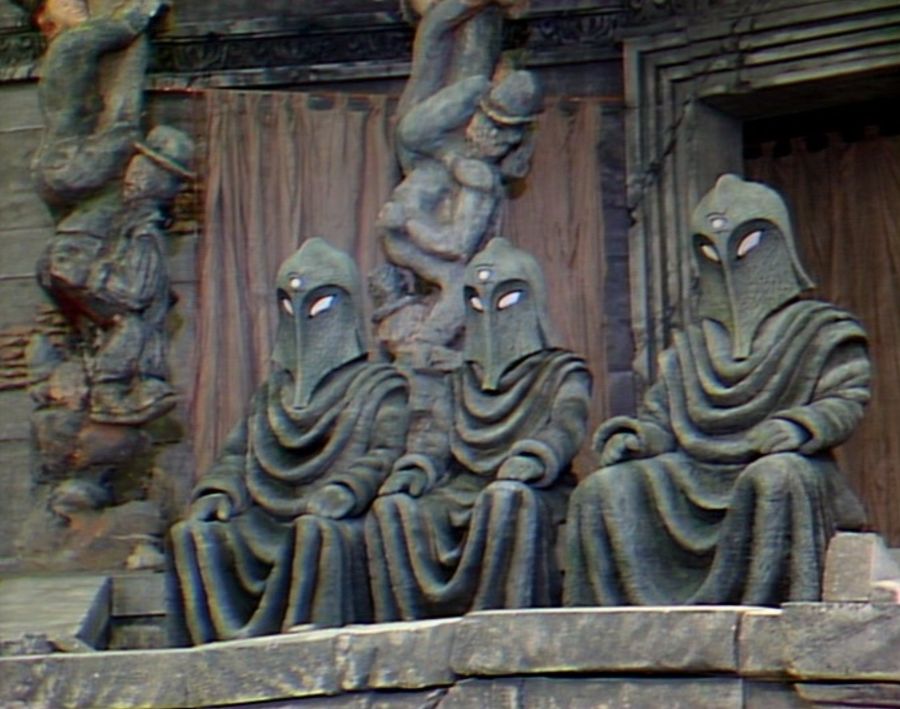
But my point stands. Why is it just three Gods of Ragnarok when it could have been more? You don’t need to have every God of Ragnarok be speaking parts? You could have the main three Gods be speaking ones and have the rest be silent for the rest of the story.
The Gods of Ragnarok, both in human and stone form, are very cruel when wanting to be entertained. When they find the ones in the ring aren’t giving them the entertainment they crave, they easily vote them down and have them killed on the spot, which is harsh.
When Captain Cook entertains them with Mags being turned into a werewolf-like creature and attacking the Doctor in the ring, the Gods of Ragnarok are immediately impressed and give the act a high rating. Later, they crave more of the same kind of act.
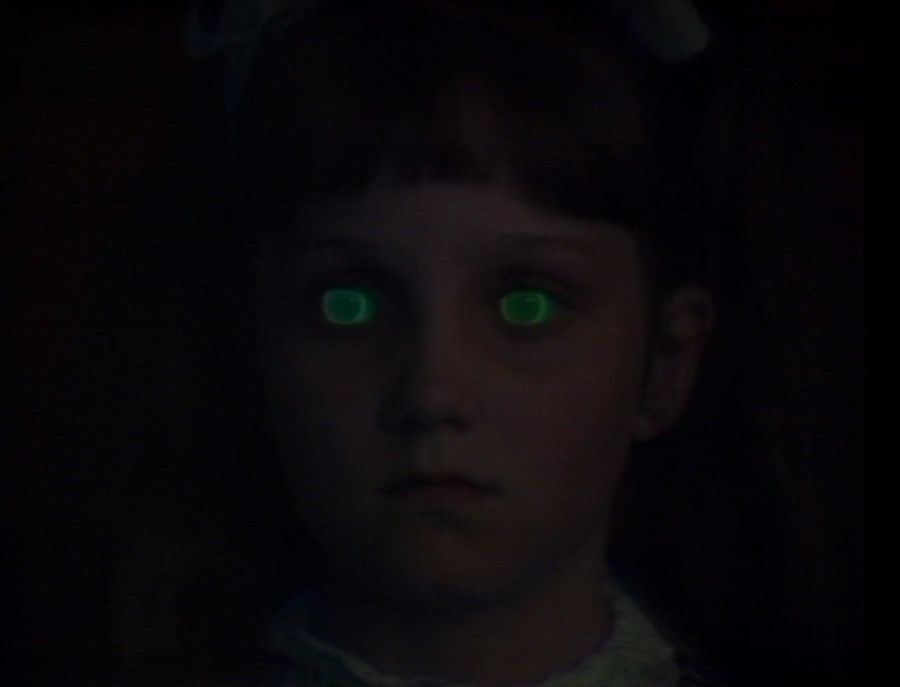
Their human forms also have green glowing eyes, which is quite disturbing. Mind you, I’m not sure that’s reflected in the stone versions of the Gods of Ragnarok when the Doctor visits them in their Dark Circus. Or maybe it is and I’m not seeing it properly in the tale. 😐
In the Dark Circus, the Gods of Ragnarok in stone form look very foreboding and menacing indeed. They force the Doctor to entertain them or he’ll die. They’re very critical when he performs his acts for them, as they seem to know he’s playing for time.
I’m not exactly why the Gods of Ragnarok are easily bored and crave entertainment all the time. Then again, the same can be said for the Eternals in ‘Enlightenment’. As well as the Toymaker in the TV, audio, book and comic adventures when wanting to play games.
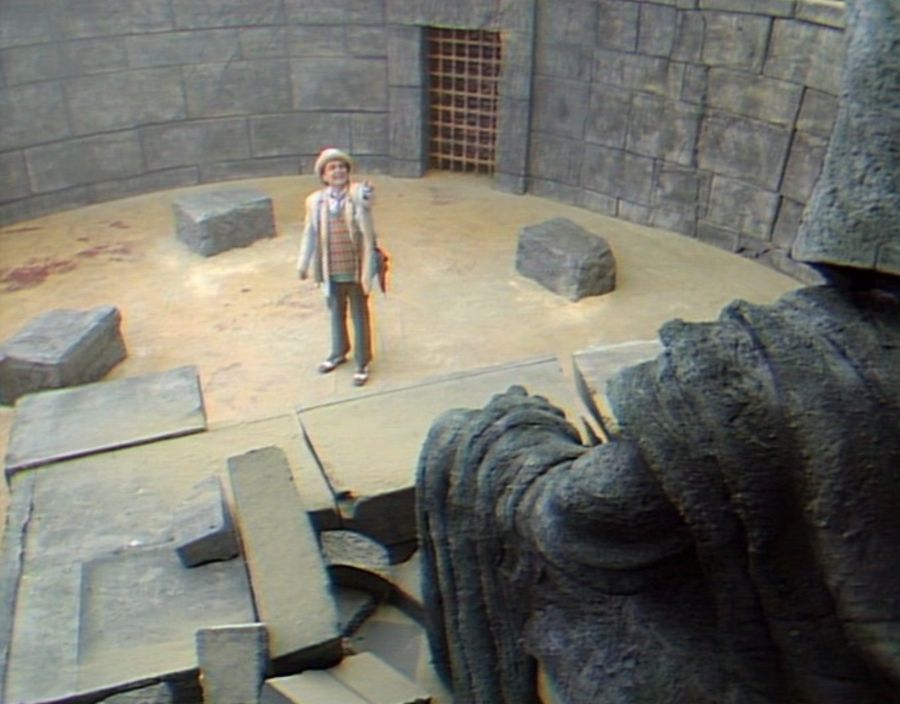
I wish more time was explored in terms of who the Gods of Ragnarok are and where they come from. If I understand it correctly, they’re the ones who created the Land of Fiction in ‘The Mind Robber’, according to the Virgin New Adventures book called ‘Conundrum’.
I don’t think there’s a connection between the Gods of Ragnarok and ‘Thor: Ragnarok’ from the ‘Marvel Cinematic Universe’. Then again, the Gods of Ragnarok do have a Viking-like style to them when the Doctor faces them in their Dark Circus in ‘Part Four’.
Apparently, the Little Girl in its stone God form is played by Lorna McCulloch in this ‘Doctor Who’ adventure. So, does that mean that David Ashford and Janet Hargreaves played the Dad and Mum in their stone God forms too? Please correct me if I’m wrong. 🙂
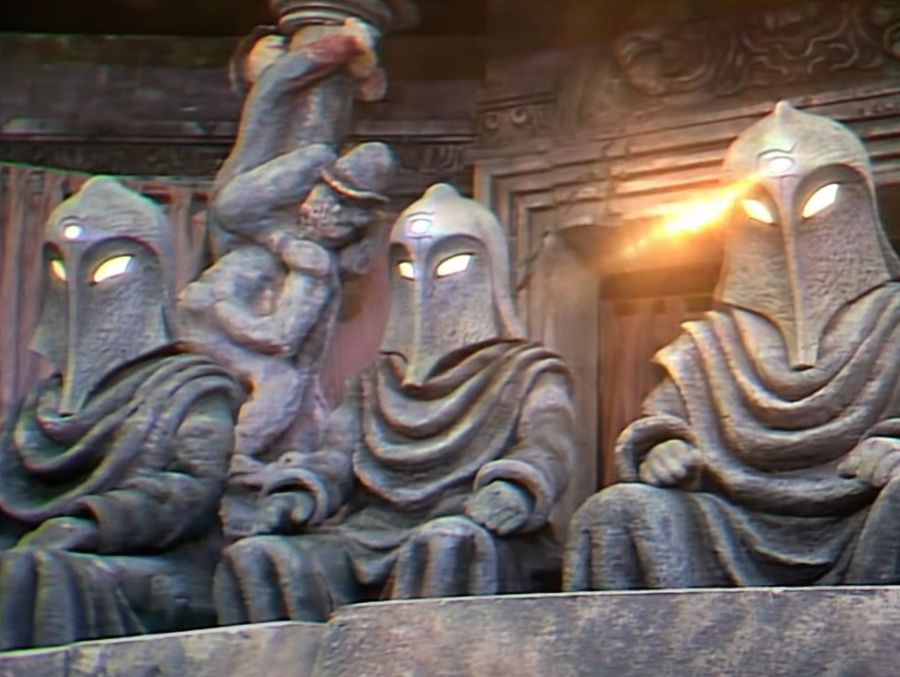
The voice for the Little Girl in its stone God form is provided by the story’s director Alan Wareing. This happens to be Alan Wareing’s first ‘Doctor Who’ story as a director. He would go on to direct ‘Ghost Light’ and ‘Survival’ in the Season 26 of the classic TV series.
In spite of all the production problems that went on into making this ‘Doctor Who’ story and putting it together under immense pressure, I’m pleased director Alan Wareing kept his cool. He does praise producer John Nathan-Turner’s efforts in getting the show to go on.
Thankfully, the Doctor gets to defeat the Gods of Ragnarok by using the medallion provided for him by Ace, Kingpin and Mags to reflect the Gods’ blasts of power back onto them. The Dark Circus temple collapses and the Doctor escapes via the main tent.
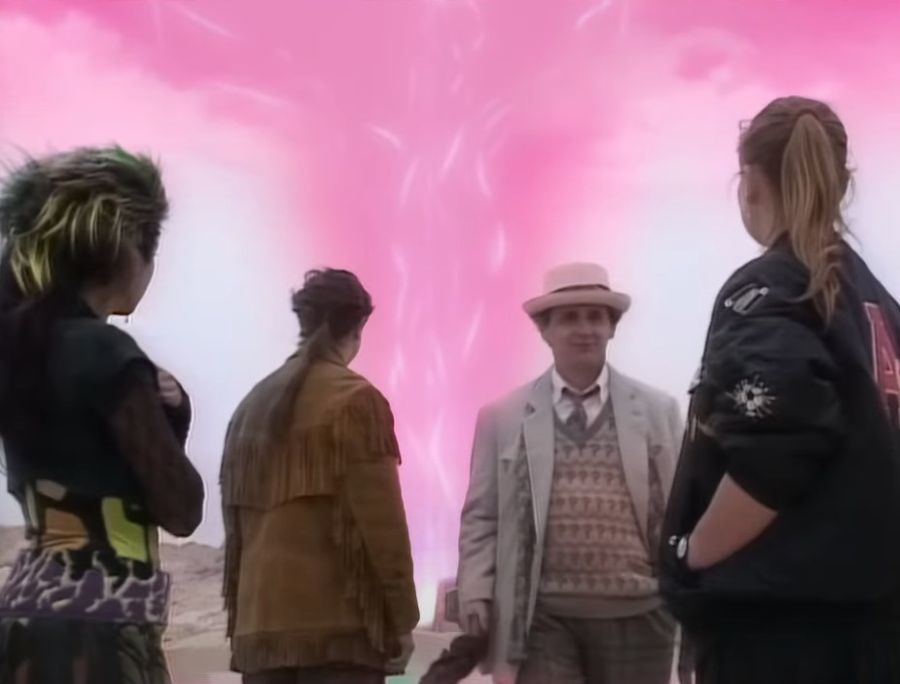
The story concludes with the Doctor regrouping with Ace, Mags and Kingpin. Kingpin and Mags decide to reclaim the circus and take it to a new planet to start it anew. Mags even considers doing an act as a werewolf in the circus and she’s encouraged by the others.
Kingpin invites the Doctor and Ace to join him and Mags in their new circus, but the Doctor declines, as he and Ace say their goodbyes. He says they’ve ‘got other galaxies to travel’ and apparently, he finds ‘circuses a little sinister’. I believe you on that, Doctor. 🙂
Whilst ‘Greatest Show’ continues in the Big Finish audios in adventures such as ‘The Psychic Circus’ as well as the Mags audio trilogy, including ‘The Monsters of Gokroth’, ‘The Moons of Vulpana’ and ‘An Alien Werewolf in London’, there’s another audio drama.
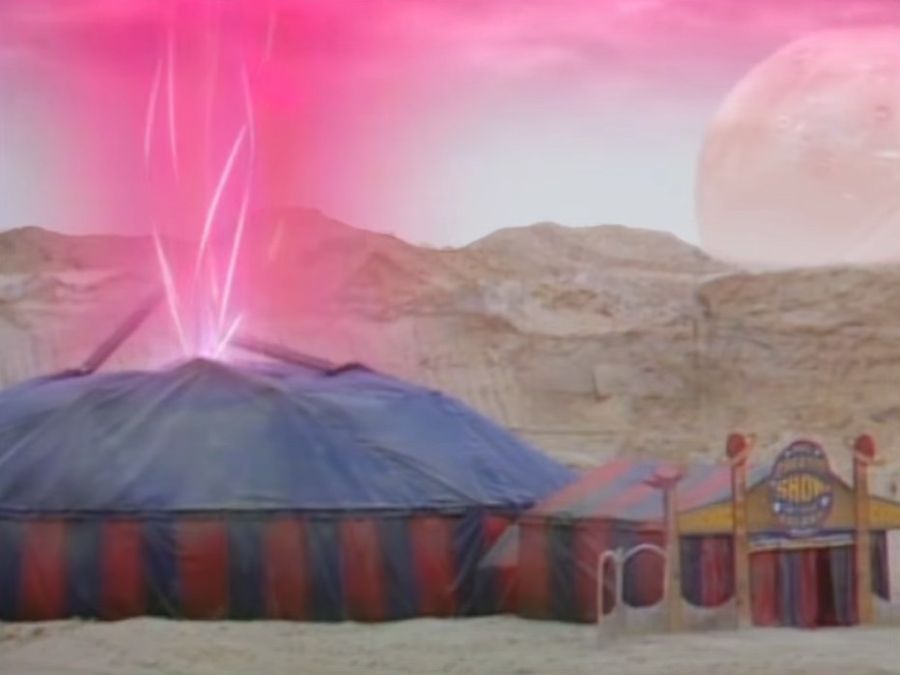
That story happens to be ‘Children of the Circus’ by AUK Studios, which was released in December 2023 to celebrate the 35th anniversary of the broadcast of ‘Part One’ of ‘Greatest Show’. I’ve mentioned it before in it having Ian Reddignton as the Chief Clown.
But it also features Christopher Guard as Bellboy, Dee Sadler as Flowerchild, Ricco Ross as the Ringmaster, Jessica Martin as Mags, Chris Jury as Deadbeat, Deborah Manship as Morgana, Gian Sammarco as Whizz Kid, Daniel Peacock as Nord and more.
Sylvester McCoy and Sophie Aldred happen to be in ‘Children of the Circus’ too, but as the Doctor and Ace, I believe. Apparently, it’s a narrative sequel following on from the events of ‘Greatest Show’. It’s even got its own novelization, which is pretty astounding.
Whilst I’m not a huge fan of ‘Greatest Show’ as a ‘Doctor Who’ story, it’s amazing to find how it’s continued its legacy in audio, both Big Finish and non-Big Finish. I’m pleased ‘Greatest Show’ has had its legacy as well as its fans in order to keep its longevity going.
The original DVD special features were as follows. There was the making-of documentary called ‘The Show Must Go On’, featuring behind-the-scenes interviews with the cast and crew. There were deleted and extended scenes from the story to enjoy, the ‘Lost in the Darkness’ models featurette, and ‘The Psychic Circus’ music video, which was presented in two audio options, including a dual mono sound audio mix option and a 5.1 surround sound audio mix option. There was the ‘Remembrance Demo’ – a selection of two scenes from ‘Remembrance of the Daleks’ rescored by Mark Ayres as a demonstration to work on the TV show’s incidental music. That was also presented in two audio options, including a dual mono sound audio mix option and a 5.1 surround sound audio mix option. It’s now included on Disc 1 of the Season 25 Blu-ray box set containing the original TV version of ‘Remembrance of the Daleks’. There was ‘Tomorrow’s Times – The Seventh Doctor’ presented by Anneke Wills (which is now included on Disc 6 of the Season 26 Blu-ray box set containing ‘Survival’). There was a ‘Victoria Wood Sketch’ that is a comedic take on ‘Doctor Who’ itself, and there was a photo gallery of the story. There was a dual mono sound audio mix option for the story, a 5.1 surround sound audio mix option of the story, an audio commentary with Sophie Aldred, Jessica Martin, Christopher Guard, writer Stephen Wyatt, script editor Andrew Cartmel and composer Mark Ayres, moderated by Toby Hadoke, and an isolated music option by Mark Ayres to enjoy. There was an info-text commentary option to enjoy, PDF materials including a ‘Radio Times Listings’ of the story and the ‘Visual Effects designs and storyboards’ of the story, and a ‘coming soon’ trailer for ‘Planet of Giants’, starring William Hartnell, William Russell, Jacqueline Hill and Carole Ann Ford. There was an interesting Easter Egg extra to look out for on the first page of the DVD special features, which happens to be a couple of BBC continuity announcements interrupted by ‘The Psychic Circus’ music video, which…I’m not sure if that was a real thing on TV or not. 😀
On Disc 7 of the ‘Doctor Who – The Collection – Season 25’ Blu-ray, the original four-part 1998 TV version of the story, ‘The Show Must Go’ making-of documentary, the deleted and extended scenes, the ‘Lost in the Darkness’ models featurette, the ‘Victoria Wood Sketch’, the dual mono sound audio mix option, the 5.1. surround sound audio mix option, the DVD audio commentary and the isolated music option can be found on there. ‘The Psychic Circus’ music video in its two audio options and the DVD Easter Egg have been combined into one feature on the Blu-ray disc. The photo gallery and the info-text commentary option have been updated for 2024 on the Blu-ray.
The new special features on Blu-ray include viewing the story in two options in the PLAY ALL section. You can view it in its original four-part TV version, or you can view it as the Special Edition version with the extended Special Edition versions catered for ‘Parts One and Three’. There are also options to view ‘Parts One and Three’ individually in their original TV versions or in their extended Special Edition versions. There’s also a brand-new CGI effects option for the original four-part 1998 TV version of the story. I recommend checking out the Special Edition version of the story by switching on the CGI effects option and the 5.1. surround sound audio mix option. This is so if you want to experience the four-part story in all its glory by watching the Special Edition versions of ‘Parts One and Three’ together with ‘Parts Two and Four’ in their CGI effects option and 5.1. surround sound audio mix option switched on. There’s the ‘Behind the Sofa’ feature on ‘The Greatest Show in the Galaxy’ with Sylvester McCoy (the Seventh Doctor), Jessica Martin (Mags) and Sophie Aldred (Ace) as well as Janet Fielding (Tegan), Wendy Padbury (Zoe) and Sarah Sutton (Nyssa) as well as Bonnie Langford (Mel) and Nicola Bryant (Peri). There’s a mute compilation of model footage, and there’s ‘The Big Bang Theory’ special effects featurette with new TV series special effects supervisor Danny Hargreaves (taken from the ‘Dragonfire’ DVD). There’s a ‘Knock Knock’ item with Sophie Aldred, BBC trailers and continuity announcements of the story, and a ‘coming soon’ trailer for ‘Battlefield’, starring Sylvester McCoy and Sophie Aldred (taken from ‘The War Machines’ DVD). There’s also a ‘coming soon’ trailer for the Season 26 Blu-ray box set, starring Sylvester McCoy and Sophie Aldred (including ‘Battlefield’, ‘Ghost Light’, ‘The Curse of Fenric’ and ‘Survival’). There’s also an audio archive item, which is a ‘Round Midnight’ interview with Sylvester McCoy, conducted in December 1988.
On the PDF front, as well as the ‘Radio Times Listings’ of ‘The Greatest Show in the Galaxy’, there’s a ‘BBC Ariel Newspaper’ item containing coverage on the BBC Television Centre asbestos incident. There are design drawings and studio plans, production documents, four draft scripts, four rehearsal scripts, camera script editing notes, and four camera scripts. I believe the ‘Visual Effects designs and storyboards’ of ‘The Greatest Show in the Galaxy’ have been updated as ‘visual effects design sketches’ on the Blu-ray disc.
On Disc 8 of the ‘Doctor Who – The Collection – Season 25’ Blu-ray, the new special features include ‘Doctor Who: The Collection Escape Room – Team Seventh Doctor’, featuring Sylvester McCoy, Sophie Aldred and Bonnie Langford and hosted by Emily Cook, which I enjoyed watching. There’s the ‘Doctor Who and the Collectors: Part Three – The 1980s’ documentary with Emily Cook, some location and OB footage from the making of the story to enjoy, the ‘Tomorrow’s World’ 1998 Christmas Quiz with Sylvester McCoy and an ‘Open Air’ item. There’s a ‘Panopticon Archive’ panel interview with Sylvester McCoy and Sophie Aldred, and there’s a ‘Manopticon 2’ panel interview with Sylvester McCoy and Sophie Aldred.
‘The Greatest Show in the Galaxy’, in my mind, is one of the strangest and most unusual ‘Doctor Who’ stories ever to be featured in the classic TV series as well as in the Sylvester McCoy/Seventh Doctor era in general. I don’t consider it one of my favourites.
With that said, and having seen it multiple times, I’ve been able to gain more clarity on what the story’s about and what it’s trying to aim for. It wasn’t an instant hit for me when I saw it for the first time on DVD back in 2012, but I’ve grown to appreciate the story more.
I’m sure this ‘Doctor Who’ adventure won over many fans and that it’s considered one of their favourites, but I can’t really side with that opinion, as it’s not for me. I’m willing to consider it an okay-sort of story, but I wouldn’t be immensely excited by it from seeing it.
I’m pleased I’ve been able to see it more over the years, especially with checking out ‘The Psychic Circus’ audio drama by Big Finish, as I don’t think listening to that story would have been fulfilling without seeing the TV story first, as that’s what it’s based from.
It’s also been nice to see the story in its extended Special Edition version, even though only ‘Parts One and Three’ are given the extended Special Edition treatment. I would’ve preferred all four episodes to be extended, but at least the CGI effects option is worthwhile.
I’ve also greatly enjoyed seeing the story via the ‘Behind the Sofa’ item and I’ve enjoyed Janet Fielding, Wendy Padbury and Sarah Sutton’s reaction to it. They seem to regard it very highly and I’m glad they had a good time watching the highlights of the certain story.
I appreciate the story had behind-the-scenes issues, including the asbestos incident at BBC Television Centre. Filming some of the story in a tent in a car park must have been challenging, and Ian Reddington being hit by a metal cage door can’t have been fun either.
The story seems slow at first and that’s probably why I couldn’t take to it initially, as I wanted to get the story to get going. I’m pleased that producer John Nathan-Turner had the drive and determination to get this adventure completed to avoid cancellation.
As for Season 25 of the classic ‘Doctor Who’ TV series, it’s arguably a marked improvement over what came before in Season 24. The comedic elements were toned down and Sylvester McCoy was able to find his Doctor by the time Season 25 finished. 🙂
The season showcases the best of Sylvester McCoy and Sophie Aldred’s relationship as the Seventh Doctor and Ace. Yes, they would get better in Season 26 too, but this is a happier season compared to that season, and the chemistry they have is pretty evident.
It helps that this happens to be the 25th anniversary season of ‘Doctor Who’ and I’m glad they had two stories in that season to celebrate the occasion, including ‘Remembrance of the Daleks’ and ‘Silver Nemesis’. I consider them to be huge highlights.
Without ‘Remembrance’ and ‘Silver Nemesis’ being included in Season 25, I wouldn’t have considered this to be the 25th anniversary celebration of ‘Doctor Who’ on TV. It’s good the season included Daleks and Cybermen for Sylvester McCoy’s Doctor to face. 🙂
Out of the two stories, I regard ‘Remembrance’ more highly as a 25th anniversary celebration story compared to ‘Silver Nemesis’, the actual 25th anniversary story. Both stories are entertaining in their own way, but ‘Remembrance’ has a lot more focus in it. 🙂
Whilst ‘Remembrance’ has only the Daleks for the Doctor to deal with, ‘Silver Nemesis’ has the issue of three villains, including the Cybermen, the Neo-Nazis and Lady Peinforte. Even then, the Cybermen are quite sidelined in the story, which I feel is a shame.
With that said, ‘Silver Nemesis’ does top it for me above ‘The Happiness Patrol’ and ‘The Greatest Show in the Galaxy’. ‘Greatest Show’ is better than ‘Happiness Patrol’, but I don’t regard the two stories being worthy celebrations of the 25th anniversary itself. 😐
Possibly because they weren’t considered as 25th anniversary celebration stories when they were commissioned, unless I’m missing something. ‘Greatest Show’ is weird and fascinating to watch, but I found it baffling on first watch and rather slow in progression.
‘The Happiness Patrol’ is rather dull and whilst I appreciate the political themes that its trying to get across with opposing Thatcherism, the worldbuilding doesn’t make sense to me. It’s not helped when the story features a nonsensical liquorice allsorts monster. 😀
I’m glad Janet Fielding, Wendy Padbury and Sarah Sutton share my opinion about ‘The Happiness Patrol’ when they saw this story in its ‘Behind the Sofa’ item. I’m pleased I’m alone on this, although I appreciate ‘The Happiness Patrol’ has its fans out there. 🙂
Season 25 is essentially where the Seventh Doctor is starting to find ground on what he’s capable of as a character, especially with Andrew Cartmell as the script editor wanting to make him dark, manipulative and mysterious, which I find fascinating.
Had the classic ‘Doctor Who’ TV series continued beyond Season 26, maybe this arc of the Seventh Doctor being mysterious and guiding Ace on a journey to face her fears would have been explored further. This is especially if the series continued in the 1990s.
But of course, sadly, that’s not what occurred. Despite ‘Doctor Who’ starting to find new ground and possibly be good again, especially in the next season, it would soon face what could possibly be its ‘final end’. Would the next season finish the classic TV series on a high?
‘The Greatest Show in the Galaxy’ rating – 5/10
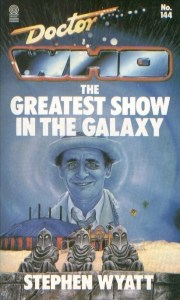
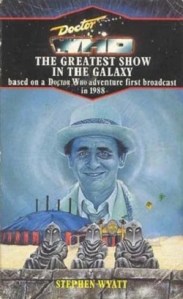
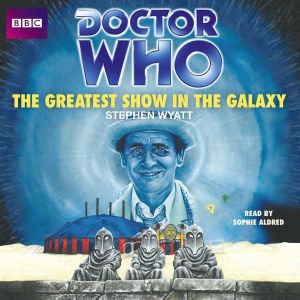
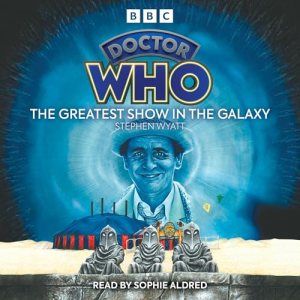
‘DOCTOR WHO – THE GREATEST SHOW IN THE GALAXY’
Please feel free to comment on my review.
Exploring the Psychic Circus in Book and Audio Form
This is my first experience of a ‘Doctor Who’ Target novelization by Stephen Wyatt! 🙂
I’ve made it no secret that I’m not exactly a huge fan of ‘The Greatest Show in the Galaxy’ as a ‘Doctor Who’ story in Sylvester McCoy’s era. I’m sure the story has its fans and I don’t want to dissuade people from checking out this story, as it does have its fascinating moments.
But I wouldn’t say this is a story I would go back to repeatedly like other ‘Doctor Who’ stories in the TV series – both classic and new. It’s only checking out ‘The Psychic Circus’ audio story by Big Finish and revisiting the TV story on Blu-ray that I’ve seen it more than once.
With all that said, I’ve gained a bit more in terms of understanding ‘The Greatest Show in the Galaxy’. The first time in checking it out can be puzzling, but the more times you view the story, it’s easier to get a grasp of what’s going on in understanding character journeys.
This might apply to when I get to check out the Target novelizations/audiobooks of ‘The Happiness Patrol’ and ‘Ghost Light’, which have been baffling for me as ‘Doctor Who’ stories to check out. I’m slowly working my way to checking out every Target novelization. 😀
Incidentally, ‘Greatest Show’ is the first time I’ve checked out a Target novelization by Stephen Wyatt before getting to check out ‘Paradise Towers’. I did wonder if I was ever going to check out the ‘Paradise Towers’ Target novelization first before ‘Greatest Show’s.
Don’t get me wrong, I’m glad I’ve checked out ‘Greatest Show’s first and hopefully, I’ll be checking out ‘Paradise Towers’ sometime in the future. It’s just, I have more enthusiasm for ‘Paradise Towers’ as a ‘Doctor Who’ story compared to my enthusiasm for ‘Greatest Show’.
The good thing about checking out novelizations of a ‘Doctor Who’ story as well as a movie is to uncover aspects of a story you’ve never discovered before compared to seeing it on screen or hearing it on audio. That’s what I hoped to uncover regarding ‘The Greatest Show’ book.
The Target novelization for ‘Greatest Show’ was published in December 1989. That’s like one year after the TV story was shown from December 1988 to January 1989. The book was reprinted in 1991. Both 1989 and 1991 editions have the same artwork by Alister Pearson.
I came across ‘The Greatest Show’ Target novelization in its 1991 edition when I was shopping in Cardiff. It was at The Television and Movie Store in St. David’s Shopping Centre. Knowing I was going to update my Season 25 reviews, I had to purchase the book. 😀
‘The Greatest Show’ Target novelization comes with an unabridged audiobook, which was released in August 2013. The audiobook is read by Sophie Aldred, who plays Ace in the TV series and the Big Finish audio stories. I’ve greatly enjoyed Sophie’s reading of this story.
Obviously, because Sophie was involved in the TV story, she’s able to project the characters’ voices in the book as they would have sounded on screen. It was fun to hear Sophie’s take on various characters from ‘Greatest Show’, as she has a lovely reading voice.
Sophie is able to put across Sylvester McCoy’s Scottish tones when voicing his Doctor in ‘The Greatest Show’ audiobook. This is no surprise to me, of course, since I’ve heard her voice the Seventh Doctor in the ‘Destiny of the Doctor’ audio story called ‘Shockwave’.
I enjoyed Sophie’s take on Mags as a character. Mind you, there are times where Mags could sound quite aggressive when getting angry with Captain Cook in the story. Speaking of which, it was fascinating to hear how Sophie voiced Captain Cook with an Irish accent. 🙂
Looking up T.P. McKenna’s Wikipedia profile, he was Irish in real life. I didn’t pick up on that when watching ‘Greatest Show’ on DVD and Blu-ray and certainly not when I saw him in a ‘Miss Marple’ TV story with Joan Hickson as well as episodes of ‘All in Good Faith’.
It’s quite amusing when Sophie voices Captain Cook with an Irish accent, as there were times where I did wonder whether he was Father Ted instead. 😀 I’m sure that wasn’t intentional on Sophie’s part, but it’s what it came across as for me when hearing the audiobook.
The Target novelization is divided into 12 chapters with an Overture at the beginning and a Coda at the end. The Overture is basically the opening scene where the Ringmaster enters the circus ring and does his spiel, just like how it was presented in the TV story’s opening.
The Coda is basically the last scene between the Doctor, Ace, Mags and Kingpin where they see the destruction of the Psychic Circus tent and Kingpin invites the Doctor and Ace to join the new Psychic Circus when they’re about to leave. It’s pretty straightforward indeed.
In fact, in terms of how Stephen Wyatt translated ‘Greatest Show’ from the TV scripts into book form, the story is about the same in the novelization when matching it to the TV story. I was able to follow the story easily when reading and hearing the Target novelization.
There are of course subtle differences between the novelization and the TV story it’s based on. But it was quite easy to get into the story, knowing what scene was coming next, especially from revisiting the story on Blu-ray recently, which assisted me a lot, really.
Considering that the Target novelization is divided into 12 chapters, you’d think that Stephen Wyatt would structure the story in a similar manner to how Terrance Dicks novelized a ‘Doctor Who’ story. This is considering ‘Greatest Show’ is a four-part TV story.
You’d expect Chapters 1 to 3 to cover ‘Part One’, Chapters 4 to 6 to cover ‘Part Two’, Chapters 7 to 9 to cover ‘Part Three’, and Chapters 10 to 12 to cover ‘Part Four’. But that’s not what happened when checking out the novelization, which I found rather fascinating.
‘Part One’ is mainly in the Overture and Chapters 1 to 4 with the last scene overlapping into Chapter 5. ‘Part Two’ is Chapters 5 and 6 as well as the first half of Chapter 7. ‘Part Three’ is the second half of Chapter 7, all of Chapter 8, and most of Chapter 9 in the book.
And ‘Part Four’ is the end of Chapter 9 and the rest of the book in Chapters 10 to 12 and the Coda. It’s clear that Stephen Wyatt didn’t end any of the chapters with the cliffhangers that were in the TV story. It makes me wonder how he tackled ‘Paradise Towers’ as a book.
Let’s talk about what’s different in the Target novelization compared to the TV story it’s based on. Apparently, Ace does manage to find her rucksack in the TARDIS in the story’s beginning. But it turns out there isn’t any Nitro-9 in it. I assume the Doctor hid the stuff. 😀
This isn’t a major change in the story in book form compared to the TV version, but I wonder if Stephen Wyatt made the change in the story to allow Ace to at least find her rucksack before learning there’s no Nitro-9 in it. It’s a plot point that doesn’t go anywhere.
Both in TV and in book form. I mean, there’s no resolution to it, especially when Nitro-9 doesn’t get used in the story. I guess it’s meant to demonstrate that Ace can cope without resorting to Nitro-9 in one story. Maybe this was part of the character journey she was on.
That resorting to explosives all the time isn’t the best way to solve things, as the Doctor tries to teach Ace. It echoes when the Fourth Doctor tries to teach Leela to be less savage when telling her off for using her knife to kill. It doesn’t get that much attention though. 😐
I mean, Ace gets to use explosives again in stories like ‘Battlefield’ and ‘The Curse of Fenric’, so, it’s not like Ace learning not to use explosives in ‘Greatest Show’ amounted to much. I might be wrong, but it’s intriguing this plot element wasn’t followed up in a future story.
Apparently, there was more dialogue between the Doctor and Ace when the ‘junk mail’ robot approached the TARDIS. The Doctor believed the TARDIS defences will stop it. I can’t recall if that’s included in the Special Edition version of ‘Part One’ of the story.
I mean, I’ve not seen that version on Blu-ray very often and I’ve not seen the ‘deleted and extended scenes’ special feature on DVD very often, but it’s a shame the dialogue isn’t in the original story. It would have explained how the ‘junk mail’ robot got into the TARDIS easily.
With me stating I’ve not seen the Special Edition version of the story very often and not seen the ‘deleted and extended scenes’ of the story very often, apparently, the novelization does contain material that was scripted and/or filmed, but isn’t included in the story’s final edit.
This includes dialogue for the robot in the desert where it first begs to be released and then threatens the Doctor, Ace, Captain Cook and Mags. The scene where Cook and Mags part company with the Doctor and Ace after their encounter with robot is kept in the book.
The scene where Cook and Mags run into the Doctor again at the bus is included as well as the suggestion that Bellboy was electrocuted as punishment is in the book. At least it gets explained that Bellboy was being electrocuted by the Gods of Ragnarok in ‘Part One’.
There’s also Ace attempting to use Nord’s motorbike outside the circus being included in the book, which wasn’t in the TV story. And there’s Ace telling Kingpin that she’s glad he stopped singing once he stops being Deadbeat, which wasn’t included the TV story at all.
The exploration of Bellboy as a character is fascinating, especially when the book explores how his happy life of being in the Psychic Circus is over with Flowerchild now dead. It establishes why Bellboy is depressed and unwilling to save himself in ‘Part Three’.
A little annoyance I have with Stephen Wyatt’s writing is how he doesn’t give some characters actual names. Bellboy, Flowerchild, the Chief Clown, the Ringmaster and the Whizzkid must’ve had other names. They can’t have been called those names, originally.
At least when Terrance Dicks wrote the ‘Meglos’ novelization, he gave the Earthling the name of George Morris. Same for ‘The Horns of Nimon’, where the Pilot is named Sekkoth and the Co-Pilot is named Sardor. It seems a bit unfair regarding ‘The Greatest Show’. 😐
I’m sure the same applies to ‘Paradise Towers’ where the Chief Caretaker isn’t given a name as well as the Deputy Chief Caretaker. But surely the Rezis and the Kangs are given proper names. 😐 Well, the Kangs’ names are debatable, but you get what I’m saying, right?
Some short scenes and dialogue are omitted or skimmed over in the text of the Target novelization. This includes Cook being found alone in the cage in ‘Part Two’ of the story. Plus, the Ringmaster silencing Mags’ scream is omitted in the book, which I find peculiar.
By omitting the scream, it means that Ace hearing the screaming outside the circus before it suddenly stops is unexplained. I mean, you’d have to see the TV story to find out what it means, but in terms of the book alone, it’s very odd having it omitted from the text.
Although, saying that, the Ringmaster silencing Mags’ scream in the TV story isn’t really explained and, frankly, it only happens once. If more people saw entertainers in the ring being disintegrated by the Gods of Ragnarok, more scream-like reactions would happen.
Maybe that’s why there’s only three audience members in the form of the mother, daughter and father watching, Many audience members would have screamed their heads off by witnessing the torture moments and the Gods of Ragnarok would have wiped them out.
But it emphasises my point on why this arrangement in the Psychic Circus for the Gods of Ragnarok to be endlessly entertained is rather bizarre if no pretence is being put up to encourage more people to come to the circus. And why there are only three Gods watching.
Captain Cook’s development as a character is interesting in the book compared to the TV story. This is especially when he starts off being a bore in recounting his adventures on previous planets before it’s unveiled he has a dark purpose to visit the Psychic Circus.
A subtle change in the novelization is when Mags points out to Cook that they didn’t run from the Psychic Circus, as he ignores her instead of dismissing the point she makes. It adds why Cook is quite keen to stay to uncover the power that the Gods of Ragnarok have.
It’s established in the Target novelization that Cook is being controlled by the Gods of Ragnarok to stop Ace, Mags and Kingpin when they try to give the medallion to the Doctor in the Dark Circus. I’m pleased that’s established, as it wasn’t clear in viewing the TV story.
An extra scene is included in the Target novelization where the Whizzkid meets the Chief Clown and asks him, the Ringmaster and Morgana for their autographs. In terms of the Whizzkid being ‘a parody of obsessive fans’, I can see why some would find him annoying.
Basically, what’s happening is that the Whizzkid is dominating the conversation and not letting the ones he’s a fan of concerning the Psychic Circus to speak. He’s more or less saying what he admires about them and doesn’t ask them questions in a friendly manner.
Oh, to be fair, he’s nice enough, but it’s not a level where he’s letting characters like the Chief Clown, the Ringmaster and Morgana speak for themselves. He’s stating what he knows of the Psychic Circus already and he’s showing off how a big fan he is of the circus.
I’d like to think I’m not like that and I can at least have a down-to-earth conversations with the ‘Doctor Who’ stars I meet at conversations like Sarah Sutton, Peter Davison, Sophie Aldred and Millie Gibson. I’d like to think that I’m not being overbearing like the Whizzkid.
I would’ve preferred the Whizzkid to be more relatable as a fan rather than being obsessive and overzealous. It’s something that I think Russell T. Davies tried to do when he wrote ‘Love & Monsters’ and ‘Lux’. Whether they represent fans well enough is debatable.
There are more details given of the Doctor’s final performance in the Dark Circus, including fire-eating and a bed of nails. These aspects of the Doctor’s final performance aren’t included in the final TV story, and I wonder if any of them were in the original scripts.
Something I noticed in terms of difference between the TV story and the novelization is the scene where the Ringmaster and Morgana are put into baskets by the clowns and they disappear forever in ‘Part Four’. The novelization handles that differently compared to TV.
In the novelization, the Ringmaster and Morgana are put into two magic boxes instead. When the clowns open the magic boxes, smaller boxes are revealed inside in each. When they open those up, more smaller boxes are revealed. Then one more set. Then one more.
In the last two smaller boxes, the Ringmaster and Morgana vanish completely. That change in the novelization did put me in mind of the ‘Learn with Sooty’ video ‘Have Fun with Numbers’ where Matthew Corbett had a parcel containing small boxes one after the other. 🙂
‘The Greatest Show in the Galaxy’ Target novelization/audiobook has been enjoyable. It was fascinating to read and hear this ‘Doctor Who’ story compared to viewing it on the TV. It’s very easy and engaging, both in terms of reading the book and hearing the audiobook.
I enjoyed Sophie Aldred’s reading of the story when hearing it on Audible. Checking out these ‘Doctor Who’ Target novelizations has been refreshing, especially when discovering new insights from the author who wrote the original story for TV to novelize it in prose form.
I can only imagine what the ‘Paradise Towers’ Target novelization/audiobook will be like and, hopefully, I’ll be checking it out sooner than later. ‘Greatest Show’ isn’t really a ‘Doctor Who’ story I regard very highly and it’s unlikely I’ll be revisiting it again very soon.
With that said, having seen the TV story more than once and checking out ‘Greatest Show‘ in novelization/audiobook form, I’ve gained more understanding of it compared to my initial viewing. It’s not one of my favourite stories, but its entertainment value is valid.
‘Doctor Who – The Greatest Show in the Galaxy’ rating – 7/10
| The previous story
For the Seventh Doctor was
For Ace was
|
The next story
For the Seventh Doctor is
For Ace is
|
| Return to The Seventh Doctor’s Timeline | |
| Return to Ace’s Timeline | |
| Return to The Doctors’ Timelines Index | |
| Return to The Companions’ Timelines Index | |
| Return to Doctor Who Timelines | |
| Return to Doctor Who | |
| Return to Sci-Fi |
 Bradley's Basement
I like this one although i can see where you’re coming from Tim, there was lot of behind the scenes dramas on this story which very nearly didn’t get made & it’s one of those stories which starts off slow but gets better as it goes on.
Excellent review Tim, detailed & informative.
LikeLiked by 2 people
Thanks Timelord Simon.
Glad you enjoyed my review on ‘The Greatest Show in the Galaxy’.
I couldn’t take to this story when I first saw it. But I’ve enjoyed watching it and found a little easier to understand after seeing it for the third time. I can appreciate this story had behind-the-scenes problems such as the asbestos thing at BBC Television Centre and filming in a tent inside a noisy car park. Poor Ian Reddington, when he got hit by a metal cage door on the head according to the making-of documentary. Ooh, that must have hurt!
Yes, the story did seem slow at first and that’s probably why I couldn’t take to it as I wanted to get into the story more and it seemed to lack pace at first in the first episode. But I’m glad JNT had the drive and determination to get this story completed and avoid cancellation.
Thanks for your comments, Simon. Very pleased you enjoyed my review on this story.
Tim. 🙂
LikeLiked by 1 person
I’d say, in terms of past history, The Greatest Show in the Galaxy is one of the best remounts that the JNT era did. The decision to film it on location brings it a production quality that really elevates it among its peers.
Alan Waring’s direction doesn’t hurt either. He doesn’t get discussed among his ’80s peers as much as Graham Harper or Fiona Cumming, but his style brought a definitive depth to Survival and, especially, Ghost Light. My favourite shot of his has to be ‘The Hanged Man’ Tarot card being drawn behind the Doctor’s back, which he smiles at.
‘Would you like to see the future?’
‘Not just yet…’
Doctor Who broadly abandoned metatextuality after The Trial of a Time Lord, but The Greatest Show in the Galaxy sees a subtle return to it. A freewheeling flower-child community exploited and abused by slovenly stone-faced masters to the point of creative and productive exhaustion. No parallels to real-world happenings here, m’yes *adjusts tie, nervous*…
It’s striking how much Season 25 bites its thumb at its biggest opponents. White supremacy gets a battering in both Remembrance of the Daleks and Silver Nemesis. Margaret Thatcher is directly satirised in The Happiness Patrol. And The Greatest Show of the Galaxy targets the series’ BBC masters directly. Alan Moore’s The Ballad of Halo Jones was a strong tonal influence according to Andrew Cartmel, but there’s more than a hint of 2000 A.D.‘s satirical legerdemain here.
Much like Destrii and her uncle Jodafra in the Eighth Doctor DWM comics, Mags and Captain Cook feel like a nasty mirror held up to Ace and the Doctor. The wolf-girl and the cat-girl? The manipulative schemer and the cosmic chess master? The Captain and Mags’s relationship feels like inadvertent foreshadowing of the fallout that would occur between the Doctor and Ace in Love and War. A prod at how exploitative the Seventh Doctor could be in his vigilantism.
Whizz Kid, on the other hand, is very much a product of 1988. He’s regarded with disdain, impatience and, at times, disgust by the characters he meets, but… There’s a tragic air to his final fate as part of the Circus. He stands before the Gods of Ragnarok and admits that this is the happiest day of his life. To be in the Circus he’s admired for so long. Only to be used, killed and discarded. (Notably, he never meets the Doctor.)
It’s the kind of story that sits in the twilight of the programme’s original run. Unlike Paradise Towers that feels like it could’ve been done with even the Second Doctor (high-rise construction was a hot-button topic in the ’60s)… The Greatest Show in the Galaxy is embedded in that late ’80s ennui. Not fatalistic, but free to explore tragedy. Not cruel, but free to explore injustice. The Doctor’s final defeat of the Gods could easily have drawn the stage curtains on Doctor Who entirely. A last bon mot to the self-serving attitude of the programme’s would-be assassins.
It would last another year. With renewed confidence. But this would be, broadly speaking, the final undebatable ‘future’ story of Doctor Who‘s classic run. From The Daleks to The Greatest Show in the Galaxy. Both about crumbling worlds, but curious how much had changed.
LikeLiked by 2 people
Hi Wolfie,
Thanks for sharing your thoughts on ‘The Greatest Show in the Galaxy’. It’s amazing to find how there are many complexities to a ‘Doctor Who’ story, especially in the time it was made and how it affects the current climate today. I wouldn’t consider this a favourite of mine, but I do appreciate the complexities of the tale under its surface, especially from reading and hearing other people’s opinions of the production.
Alan Wareing deserves the credit of putting this story together under exceptional circumstances and being able to film it all on location. It’s no surprise he returned to direct two more stories in Season 26 with ‘Ghost Light’ and ‘Survival’. The mirroring of the Doctor and Ace against Captain Cook and Mags is fascinating to see in the TV story and whilst I have issues concerning Whizz Kid in terms of how fandom is represented, it’s fascinating how it’s depicted in this story to the point of it being a deliberate parody of fandom.
Many thanks for your comments.
Tim 🙂
LikeLiked by 1 person
In that sense, The Greatest Show in the Galaxy is something of an exorcism for Doctor Who. This happens from time to time. A story that ties together all the series’ pre-existing baggage and leaves it behind. Love and War definitively pushed Doctor Who forward into the 1990s. Out went Ace, in came Benny. Directly before that is Nightshade, a story about the lethality of wallowing in nostalgia. It’s no mistake one story comes before the other.
Whizz Kid is broadly emblematic of how the science fiction nerd was thought of at the time. Genre fiction has always faced a battering from external quarters. Romantic fiction was seen as laughable by sexists. Horror fiction was seen is depraved by puritans. And high fantasy even had the misfortune to be labelled once as Satanic by panic-merchants. Pick a genre. Each one has been labelled as cringeworthy by the Mary Whitehouses and Michael Grades of their medium.
What happened in the interim was the internet. Abruptly, a number of under-represented voices — often from minorities, if you look at science fiction, in particular — suddenly had a say. They had a voice, a means of communicating with one another, and the ability to create communities not bound by geography or the post. It became viable. Moreover, when it pierced Hollywood sectors, it became profitable.
Commercial ventures and companies are often apolitical because they will go where the money goes. Money talks. When The Avengers: Infinity War, a film that is undeniably science-fiction, becomes one of the highest grossing pictures of all time… Money screams. When those fandoms are so loud, so prominent, so profitable, it becomes foolish to discredit them.
But we’re not in 2025. We’re in 1988. When Doctor Who has narrowly escaped cancellation, but at the cost of its previous lead actor. Television ratings — a more important metric for then, than now — are at the lowest they’ve been for some decades. This is a programme kicking against the water to stay afloat. Possibly at the most niche it has ever been. Is 1988 Doctor Who for the obsessive fan who collected ‘all the posters’ as Whizz Kid did?
The answer seems to be no. There’s a deliberate effort to try and cater to that complex storytelling. We’re not going ‘Look, Susan!’ as in Attack of the Cybermen anymore. Stopping the narrative to acknowledge a piece of continuity. It’s still there, Remembrance of the Daleks is proof of that, but behind those nods, the intent has changed dramatically. The 1963 setting of that story has far more to do with paralleling the racial violence of humanity and the Daleks, than any overt nod to the past.
Whizz Kid strikes close to home because he’s a stereotype. Someone who had ‘all the posters’, but hadn’t necessarily seen the ‘shows’ for themselves. Someone led by fan perception over actual viewing experience. A knock to a portion of Doctor Who‘s potential viewership and a way of addressing it directly. It’s not one-for-one, but the model for Whizz Kid feels not entirely unlike the 16-year-old Chris Chibnall who criticised the programme on television at the time.
I think what gives it depth is that Whizz Kid isn’t played as an entitled snob. He’s a lot closer to a Professor Peabody, than a Comic Book Guy. Clueless, naive and giddy with excitement. In an era where being excited about something was deeply uncool. It could’ve been a lot crueller than it ultimately was. Mags even comments to the Captain that he sent ‘that poor boy to his death’. He stands less as a criticism of fandom — as his role is simply to die — and maybe more a note about how the Gods (and the Circus, by extension) chews up and spits out even those who adore their work.
Come to think of it, is Whizz Kid also a possible stand-in for someone like Matthew Waterhouse?
LikeLiked by 1 person
Thanks for your latest comments, Wolfie.
Hmm. I wouldn’t like to compare Matthew Waterhouse to Whizz Kid as much as I wouldn’t like to compare Adric to Romulus and Remus in ‘The Twin Dilemma’. But it can’t be denied that the parallels are there.
What sort-of frustrates me about Whizz Kid as a character is that he’s not really given a journey throughout ‘Greatest Show’. He’s in the story, as you say, to simply die, despite his enthusiasm for the Psychic Circus and expressing his admiration for it and its members, only to be killed off by the Gods of Ragnarok in ‘Part Three’. If Whizz Kid had been given a proper journey for development, especially in having a chance to meet the Doctor and Ace in this story, maybe his naivety and blind admiration for the circus could be tested and he’d be a lot more layered compared to how he ends up in the story.
But of course, things were done differently in 1988 and character development, even for supporting characters, wasn’t considered a major priority. That’s part of the reason why I’m not so keen on ‘Greatest Show’ as a ‘Doctor Who’ story, especially when it selects certain characters like Mags and Kingpin to go on certain journeys whilst other characters aren’t so lucky like Whizz Kid and to an extent for villains like the Chief Clown.
Yes, Ian Reddington plays him well and the Chief Clown is scary, but there’s not much in terms of exploration for his character and why he ended up being obedient to the Gods’ cause. At least on screen and in print for ‘Greatest Show’. It’s been a while since I heard ‘The Psychic Circus’ audio story, but I’m sure there was a little exploration for how he succumbed to the will of the Gods of Ragnarok in that.
Best wishes,
Tim 🙂
LikeLike
I can understand the Chief Clown. The nature of terror is that it remains broadly unexplained. You clarify and humanise it, and it stops being frightening by familiarity.
The Chief Clown’s characterisation is informed very much by the people around him. He was ‘a good clown once,’ according to Bellboy and where the rest of the Circus resisted, the Chief Clown simply ‘gave in’ and, from his perspective, intends to ‘claim his prize’.
He’s another willing collaborator, which Seasons 24 to 26 were quite particular about dissecting. Beyus and Faroon in Time and the Rani, Ratcliffe and Mike in Remembrance of the Daleks, Priscilla P in The Happiness Patrol, Commander Millington in The Curse of Fenric, Midge in Survival, and so on. There’s quite a lot of complicit evil in this era and an examination of that.
The Chief Clown is, fundamentally, a poseur. He doesn’t believe in the hippie ideology of the original Circus and that’s why he was so easy to corrupt. He saw the power of the Gods of Ragnarok and switched sides.
There’s a touch of narcissism to him, as well. He greets every death of a colleague with a flourish and a smile. Policing their movements until they’re no longer entertaining to the Gods. Whether or not he was a good clown, he didn’t seem to be a good person. He revelled in the death where it discomforted others (Morgana, for instance).
With Whizz Kid… Isn’t it funny that — among the ‘volunteers’ — Nord doesn’t receive the same level of examination? He’s just as much a victim of the Circus. Vandal of the Roads. Experienced biker. Heavyweight lifter. Dustbin for jokes. But then, he’s not someone that the audience would ordinarily identify themselves with. That changes the emphasis somewhat.
LikeLiked by 1 person
Hi Wolfie,
Many thanks for sharing your additional thoughts on the Chief Clown, Whizz Kid and Nord. I quite like that notion of the Chief Clown definitely being a ‘good clown’ once, but not necessarily a good person. The audition process for potential circus performers like Nord and Whizz Kid is peculiar when you think about it. But then, those two nor anyone else knew what they were letting themselves in for regarding the Gods of Ragnarok. Captain Cook, perhaps, considering he claimed he sought their power in the story.
Best wishes,
Tim 🙂
LikeLike