
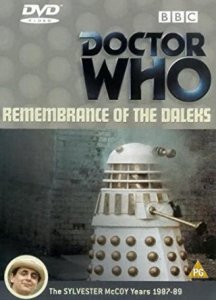
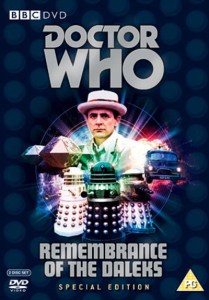

‘REMEMBRANCE OF THE DALEKS’
Please feel free to comment on my review.
Nostalgia and the Daleks with the Seventh Doctor, Ace and Counter-Measures


Here we are! Celebrating 25 years of ‘Doctor Who’! 🙂
As I checked out and revisited Season 20 of the classic ‘Doctor Who’ TV series in its Blu-ray box set to celebrate the show’s 20th anniversary, it’s very fitting I’d be checking out and revisiting Season 25 of the classic ‘Doctor Who’ TV series in its Blu-ray box set next.
This of course is to celebrate ‘Doctor Who’s 25th anniversary at the time the season was made in 1988. It’s also Sylvester McCoy’s second season as the Seventh Doctor, following a rocky start in Season 24. He’s joined by Sophie Aldred as his new friend Ace.
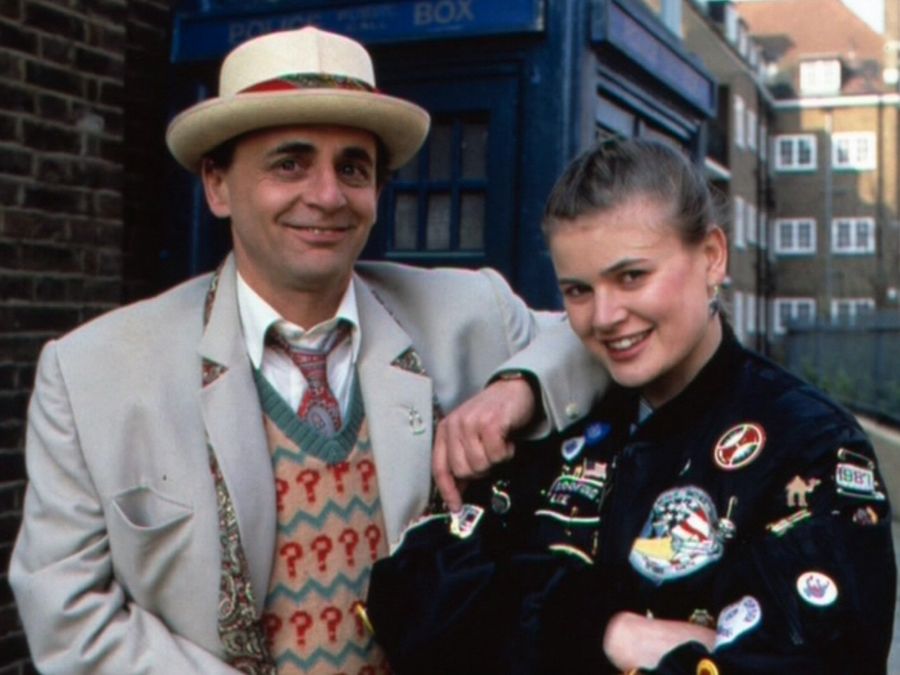
The Season 25 Blu-ray box set was released in October 2024. It’s taken me a while to get around to checking out the Blu-ray box set with having previous classic ‘Doctor Who’ seasons on Blu-ray to check out, but I’m glad I’ve been able to revisit the season at last.
In a change of direction in terms of advertising the Season 25 Blu-ray box set, it was decided not to have a mini-episode to accompany the Blu-ray trailer. The Blu-ray trailer for Season 25 simply advertised the season and the Blu-ray extras that accompanied it.
According to Pete McTighe – the writer and executive producer of ‘The Collection’ Blu-ray box set trailers – it was decided to take a rest from doing any more mini-episodes, since they were ‘a lot of work’ and it was thought to have a ‘breather’ from doing more. 😐
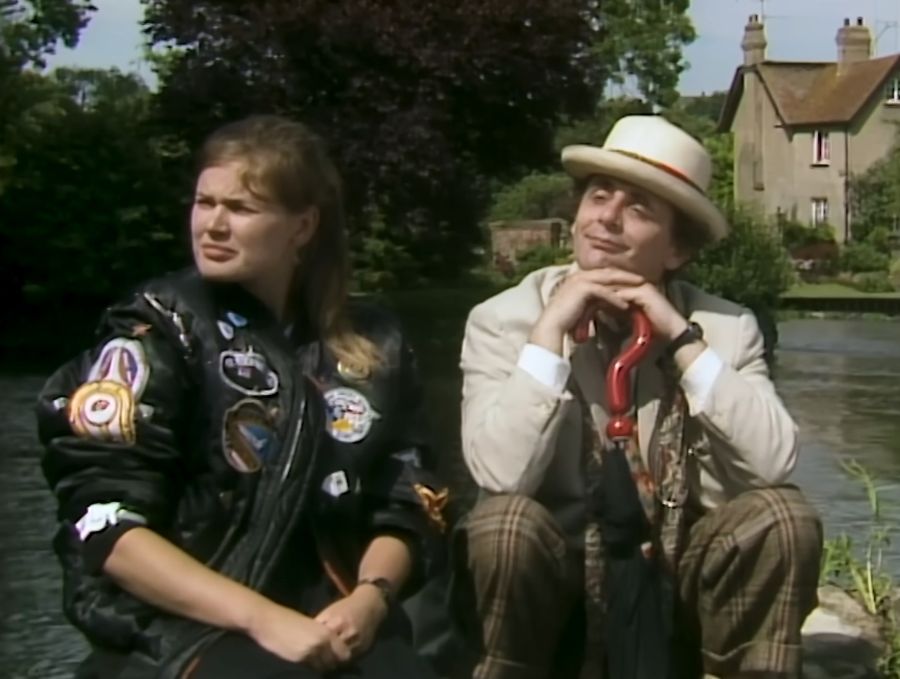
The latest mini-episode produced for ‘The Collection’ Blu-ray box set range was ‘The Final Battle’, starring Louise Jameson as Leela for the Season 15 Blu-ray box set. Thus, no mini-episode featuring Ace and the Seventh Doctor is in the Season 25 Blu-ray trailer.
This is sad, as I hoped there’d be more mini-episodes to enjoy where the post-TARDIS lives of ‘Doctor Who’ characters were depicted. Nyssa could have been in a trailer for the Season 16 Blu-ray box set where she and K-9 got assigned the quest for the Key to Time.
But hey, at least the trailers are made to promote the seasons and their exclusive Blu-ray extras, including the ‘Behind the Sofa’ items, which is the important thing. As long as I know there are trailers that announce the Blu-ray box sets on YouTube, then I’m happy.
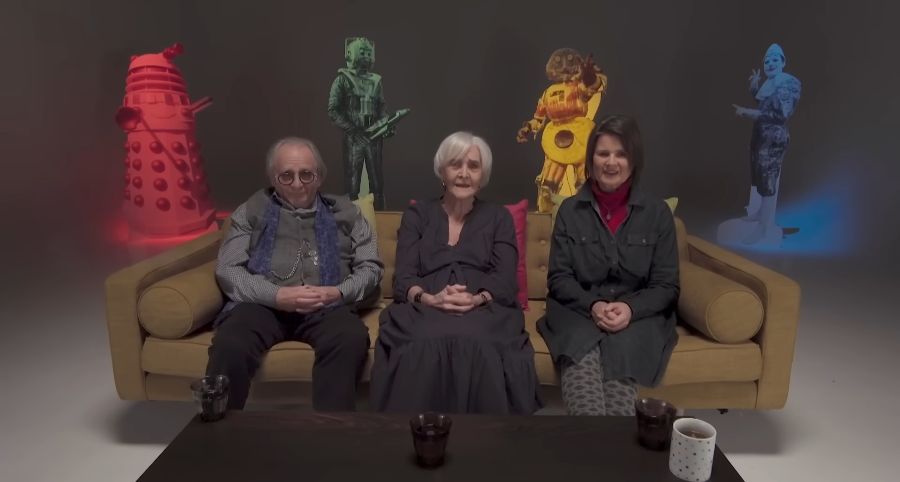
An interesting thing that caught my attention about the ‘Behind the Sofa’ items for Season 25 is who’s on board for them. There’s Janet Fielding, Wendy Padbury and Sarah Sutton, which made me happy, as well as Bonnie Langford and Nicola Bryant, which is also great.
Sylvester McCoy and Sophie Aldred are also on board for the ‘Behind the Sofa’ items, but they have different guests joining them for each of the four stories in the season. There’s Karen Gledhill, Sheila Hancock, Mark Hardy and Jessica Martin, which is good. 🙂
No matter how the ‘Behind the Sofa’ items are presented, I was looking forward to revisiting the stories in the Season 25 Blu-ray box set and find out whether my opinion on them has changed or not. Are the Season 25 stories better than I recall them being for?

I hoped so, especially considering there are Special Edition versions for the stories, which feature extended edits of the tales as well as brand-new CGI effects scenes. I’m basing my updated reviews on the Season 25 TV stories on the Special Edition versions.
I’ve had my booklet for the Season 25 Blu-ray box set signed by Sylvester McCoy when I saw him at ‘Happy Who Year at the Playhouse’ at Epsom Playhouse in Epsom, January 2025. It was so good to have the booklet signed before checking out the Blu-ray box set.
The Blu-ray box set of Season 25 of the classic ‘Doctor Who’ TV series is an 8-disc set and contains four stories. There’s ‘Remembrance of the Daleks’, ‘The Happiness Patrol’, ‘Silver Nemesis’ and ‘The Greatest Show in the Galaxy’. All four stories have two discs to them.
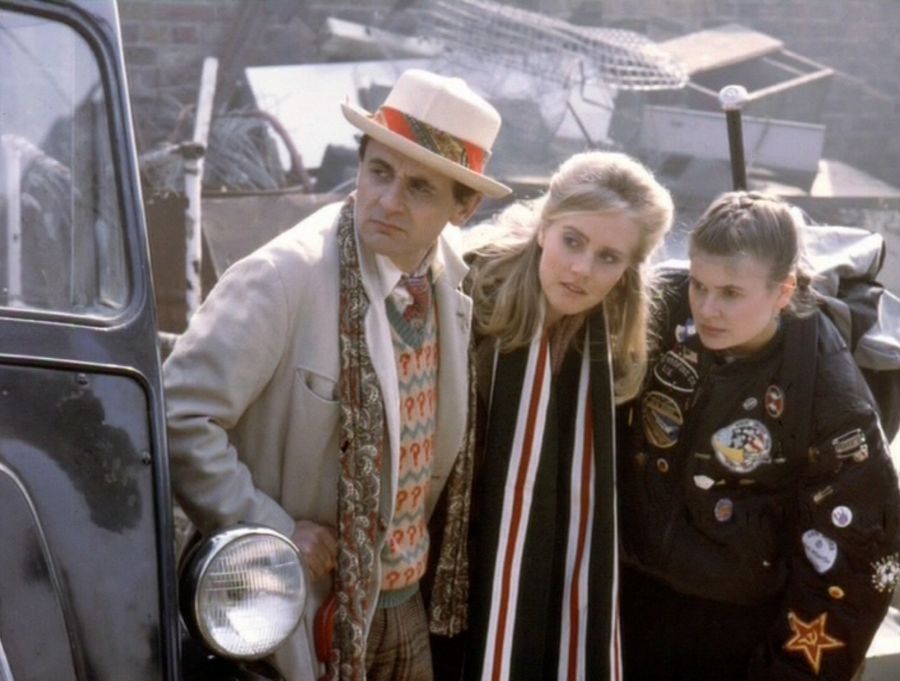
As I’ve established, Season 25 is the 25th anniversary season of ‘Doctor Who’. At the time in 1988, ‘Doctor Who’ was quite fragile. The show was under scrutiny by the BBC following ‘The Trial of a Time Lord’ in 1986 and Sylvester McCoy’s first season in 1987. 😐
There was a division of opinion about how Season 24 had been presented. Fans weren’t very happy with the pantomime direction the TV series had been going in, following the complaints of Season 22 that caused the TV show to go on an 18-month hiatus in 1985.
This wasn’t helped much when the BBC decided to schedule ‘Doctor Who’ on weekdays and up against ITV’s schedule of showing ‘Coronation Street’ at the same time. I’m not sure on the ratings, but I believe ‘Doctor Who’ didn’t fare well against ‘Corrie’ on ITV1. 😐

With all these criticisms circulating around ‘Doctor Who’s uncertain future, it wouldn’t stop producer John Nathan-Turner and his production team in making the show as good as it could be. Thankfully, they found ways to improve the series in the stories they told.
This is especially thanks to script editor Andrew Cartmel, who I believe found his footing when it came to doing Season 25. Season 24 was a rocky hurdle to get through, but by this point, Andrew Cartmel was getting an idea of what he wanted to do with the show. 🙂
Most specifically, he wanted to bring back an element of mystery to Sylvester McCoy’s version of the Doctor, which he believed had been lost somewhat in previous eras. The Doctor often seemed ‘a victim of fate’ as opposed to being able to ‘control his destiny’. 😐
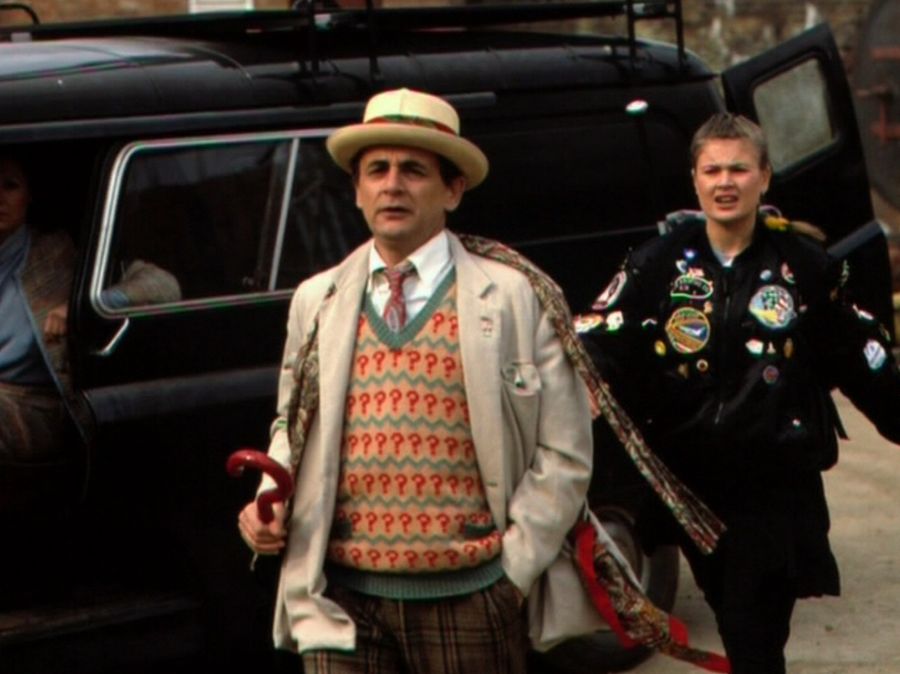
This is something that’s labelled as ‘the Cartmel Masterplan’. I’m not sure how far this direction was to go on for, particularly when you consider Sylvester McCoy’s era was curtailed by the end of 1989, but it was a very fascinating approach by Andrew Cartmel.
I’m not sure if it’s something I would have done myself if I was in change of ‘Doctor Who’, but the prospect of bringing back a sense of mystery to the Doctor and making him a master manipulator of events is a quite bold and radical one as you think about it.
With regards to how the 25th anniversary of ‘Doctor Who’ was celebrated in Season 25, it’s not a match to how things were done in Season 20. In Season 20, elements of the TV show’s past were included in every story before the build-up to ‘The Five Doctors’ itself.
For Season 25 however, as far as I’m concerned, only two stories have connections to the TV show’s past in celebrating its 25-year history whilst the other two stories were probably commissioned by Andrew Cartmel before the 25th anniversary was thought of.
Now that’s not to say Season 25 is expected to be big in terms of celebrating a landmark year in the TV show’s history. I don’t recall the 15th anniversary, the 35th anniversary, the 45th anniversary and the 55th anniversary being celebrated in any high regard on TV.
But it’s interesting that there are two specific stories containing links to the TV show’s past as opposed to all of the four stories in the season. One story is more deliberate to celebrate 25 years of the show compared to the other, but we’ll get to that another time.
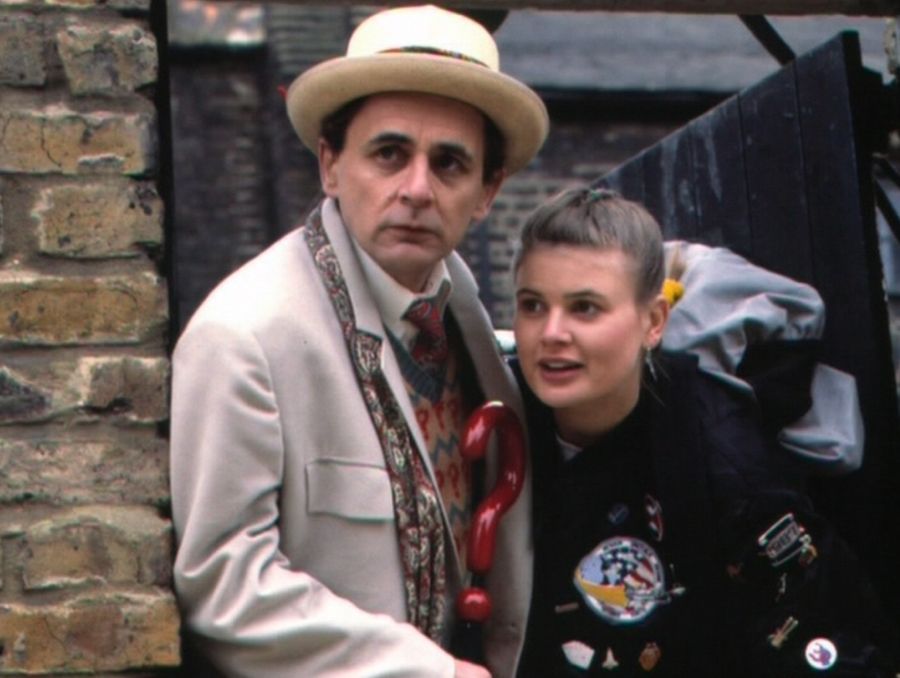
Considering how ‘Doctor Who’ was celebrated back then for its 25th anniversary amidst the trials and tribulations it endured, does Season 25 hold up very well throughout? Do I consider two or all the four stories in Season 25 as highly regarded in the classic show?
Let’s find out! 🙂 The season begins with the four-part story ‘Remembrance of the Daleks’ by Ben Aaronovitch. Ben Aaronovitch is a newcomer to the ‘Doctor Who’ TV series under Andrew Cartmel as script editor. And he makes an impressive debut with this TV story. 🙂
‘Remembrance of the Daleks’ is one of my favourite Dalek stories in the classic ‘Doctor Who’ TV series. I also consider it the best story out of Sylvester McCoy’s era altogether. It’s fortunate for me that I checked out this story first on DVD before seeing the others. 🙂
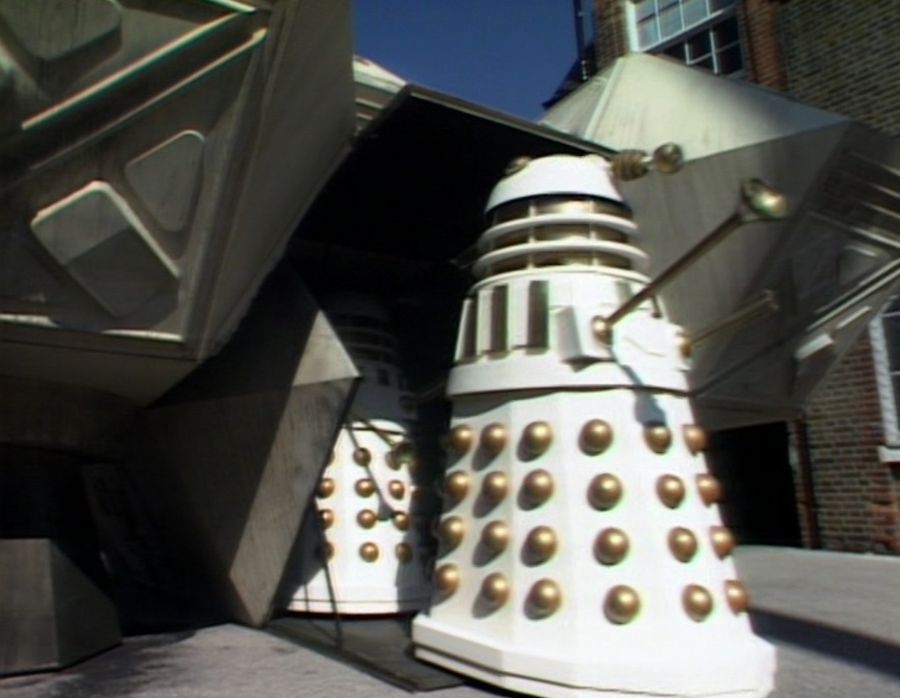
I purchased the original 2001 DVD in the summer of 2007. I purchased it along with ‘The Mark of the Rani’ and ‘Revelation of the Daleks’ on DVD. I was getting to know ‘Doctor Who’ at the time, especially in the classic TV series after checking out the new TV show.
I cherish fond memories from watching ‘Remembrance of the Daleks’ on its 2001 DVD. I greatly enjoyed watching it for the first time, especially since it was my first encounter with Sylvester McCoy as the Seventh Doctor and his companion Sophie Aldred as Ace. 🙂
It’s also a story that maintained my interest throughout. I didn’t have any issues in checking it out, as I was able to get the story and understand it from beginning to end. Of course, I’ve seen it more than once and I’ve gained more story details over the years.
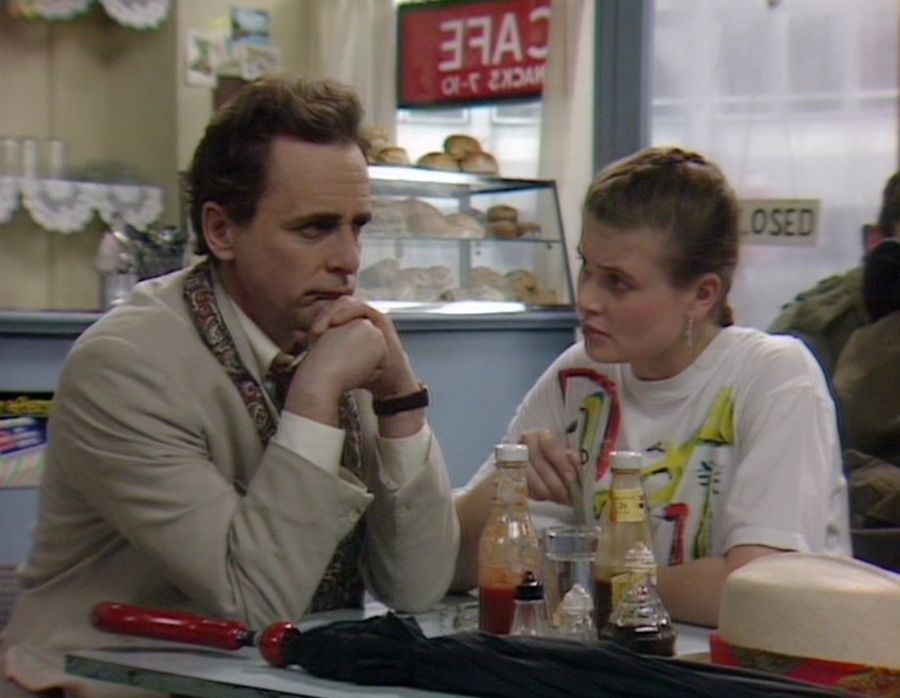
Since purchasing it in 2007, I’ve had the original 2001 DVD cover of ‘Remembrance of the Daleks’ signed by Sylvester McCoy and Sophie Aldred. I met the two stars for the very first time at the ‘London Film & Comic Con’ in Earl’s Court, London in July 2011. 🙂
I’ve also had the original DVD cover signed by Terry Molloy (who plays Davros in the story – more on that later) at ‘celebrate 50 – The Peter Davison Years’ in Chiswick, London, April 2013. And I’ve had the DVD cover signed by script editor Andrew Cartmel.
That was at the ‘Time Warp’ convention in Weston-super-Mare in July 2014. I’m lucky in having my original DVD cover signed by four people over the years. Of course, ‘Remembrance’ has been re-released a few times over the years, but I still feel very lucky.
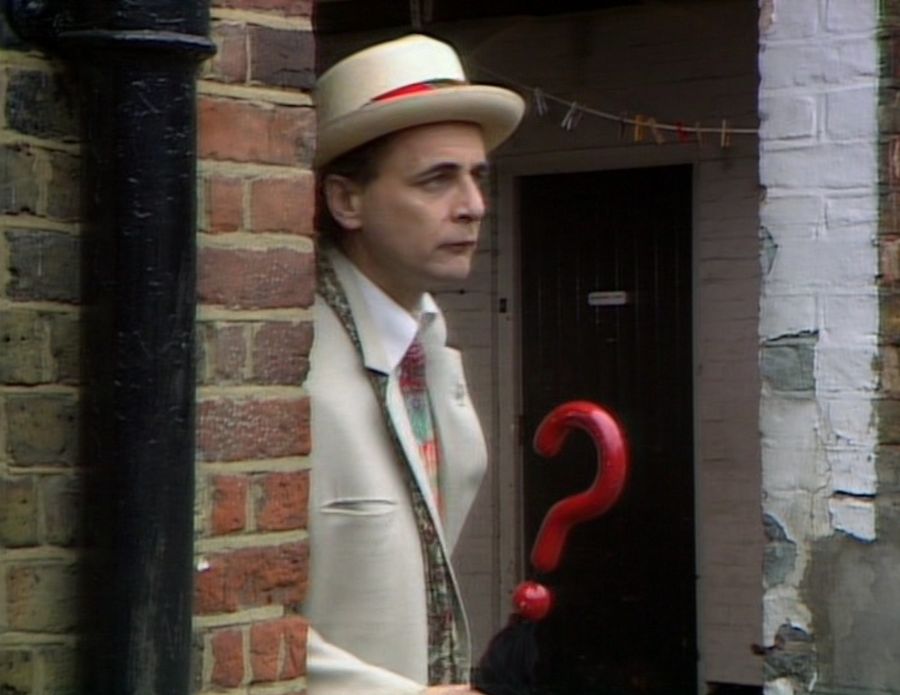
As well as being re-released in the Season 25 Blu-ray box set in 2024, ‘Remembrance of the Daleks’ has had its own 2-disc Special Edition DVD release in 2009, containing more special features than the 2001 DVD, including the ‘Davros Connections’ documentary. 🙂
This is following on from when ‘Remembrance’ was released in ‘The Complete Davros Collection’ on DVD in 2007, containing Davros’ five classic TV stories and Big Finish audios such as the ‘I, Davros’ mini-series, ‘Davros’, ‘The Juggernauts’ and ‘Terror Firma’.
A thing to note is that ‘Remembrance’ starts with a pre-titles scene. It’s rare to find pre-titles scenes in classic ‘Doctor Who’ stories. In Season 19, ‘Castrovalva’ had a repeat of Tom Baker’s regeneration into Peter Davison from ‘Logopolis’ before the opening credits.
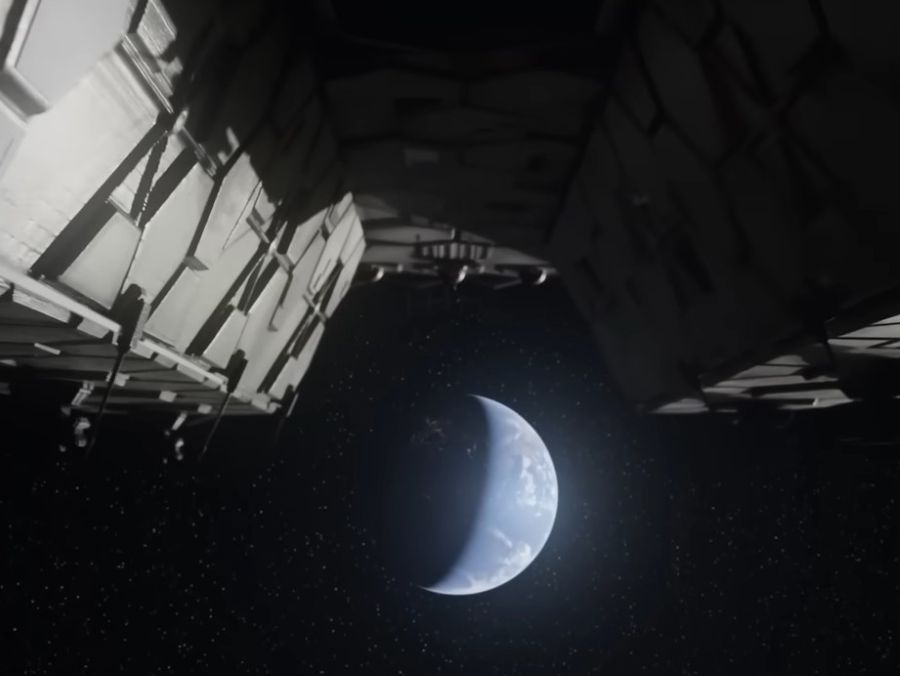
In Season 24, ‘Time and the Rani’ began with a pre-titles scene. For ‘Remembrance’, we have an image of the planet Earth and a Dalek mothership approaching. The original version of the pre-titles scene is great, but the Special Edition CGI version is impressive.
This four-part story takes place in November 1963. In fact, this is a return to where ‘Doctor Who’ began, as this TV adventure takes place in Shoreditch, London and we return to Coal Hill School, which is a place Susan, the Doctor’s granddaughter, went to.
That was in the first ever ‘Doctor Who’ story called ‘An Unearthly Child’ with William Hartnell as the First Doctor. It’s great this ‘Doctor Who’ story gets to revisit that time and place, especially with this as the first story of the 25th anniversary season of the series.
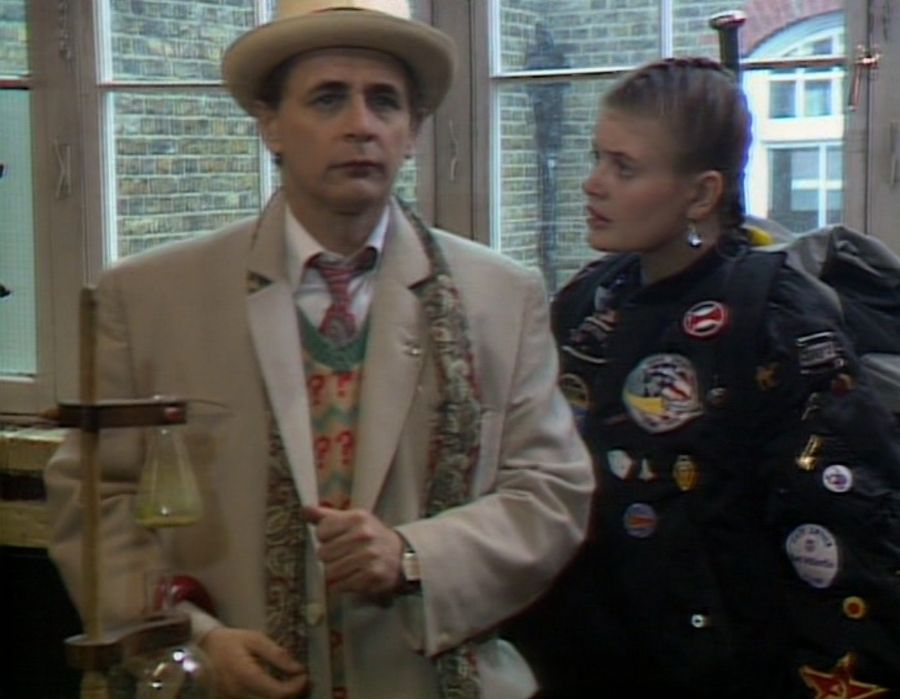
You could almost say that ‘Remembrance of the Daleks’ is the definite 25th anniversary story of ‘Doctor Who’ as opposed to ‘Silver Nemesis’, which is the official 25th anniversary story of the series. This is especially as it’s set in the year the TV show began.
Years later, Big Finish applied the same approach with doing their 1963 Trilogy of ‘Doctor Who’ audios stories, including ‘1963: Fanfare For The Common Men’, ‘1963: The Space Race’ and ‘1963: The Assassination Games’, which I find very fascinating indeed.
As well as being a story where we first met Susan as the Doctor’s granddaughter, ‘An Unearthly Child’ is also where Ian and Barbara came across and stumbled into the TARDIS in 76 Totter’s Lane before they got whisked off for adventures in Space and Time.

There’s not so much of a follow-up to that, as Susan, Ian and Barbara don’t get mentioned. Although there are traces of ‘An Unearthly Child’ to be found in the story, including the return to 76 Totter’s Lane in the story, which I found very fascinating to see.
There’s also Ace picking up the history book of ‘The French Revolution’ which Susan read in ‘An Unearthly Child’. Except it’s not same cover and Ace is reading it in the chemistry lab as opposed to the history room. Unless of course, that’s a different book.
The First Doctor is also mentioned in terms of being described as ‘an old geezer with white hair’ by Martin the undertaker at the funeral parlor. In this story, the Seventh Doctor returns to Shoreditch, London to collect something that he’d left behind, which we’ll get to shortly.
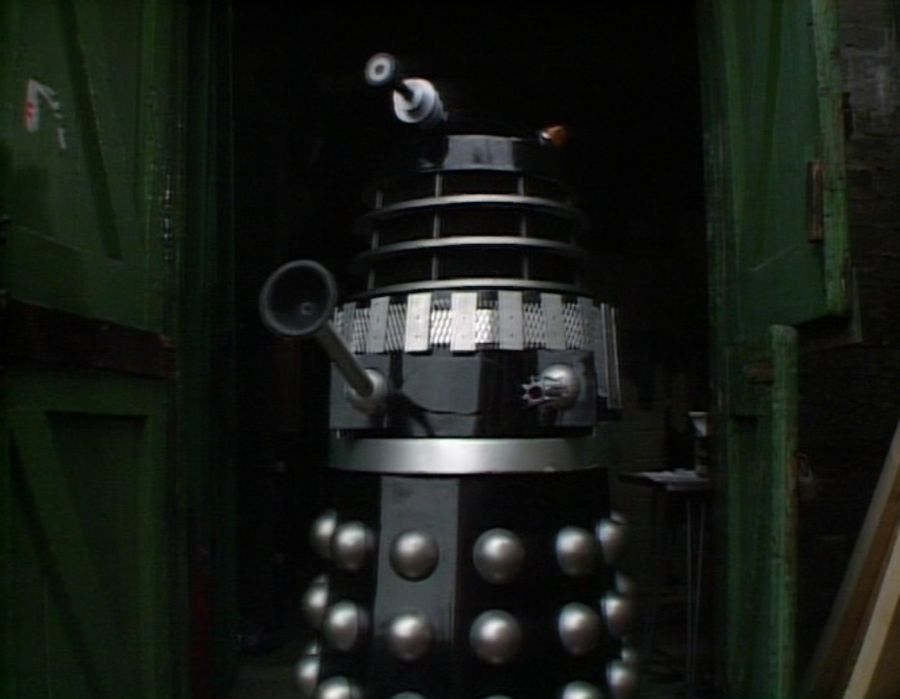
With that said, it’s interesting the Daleks are waiting in Shoreditch, London in November 1963 and are wanting the same thing as the Doctor (more or less). How the Doctor knew he was being followed by the Daleks to London in 1963 isn’t explained, but it’s intriguing.
With the Daleks appearing in this story, there are references to previous Daleks stories in the classic TV series like ‘The Dalek Invasion of Earth’, ‘Planet of the Daleks’, ‘Genesis of the Daleks’ and ‘Revelation of the Daleks’. I saw some of these stories before this one.
You’d have to be a keen ‘Doctor Who’ advocate to know what the Doctor is talking about when he’s explaining the Daleks to Ace. Mind you, I don’t think that should be too much to worry about since the story isn’t bombarded with too many continuity references.
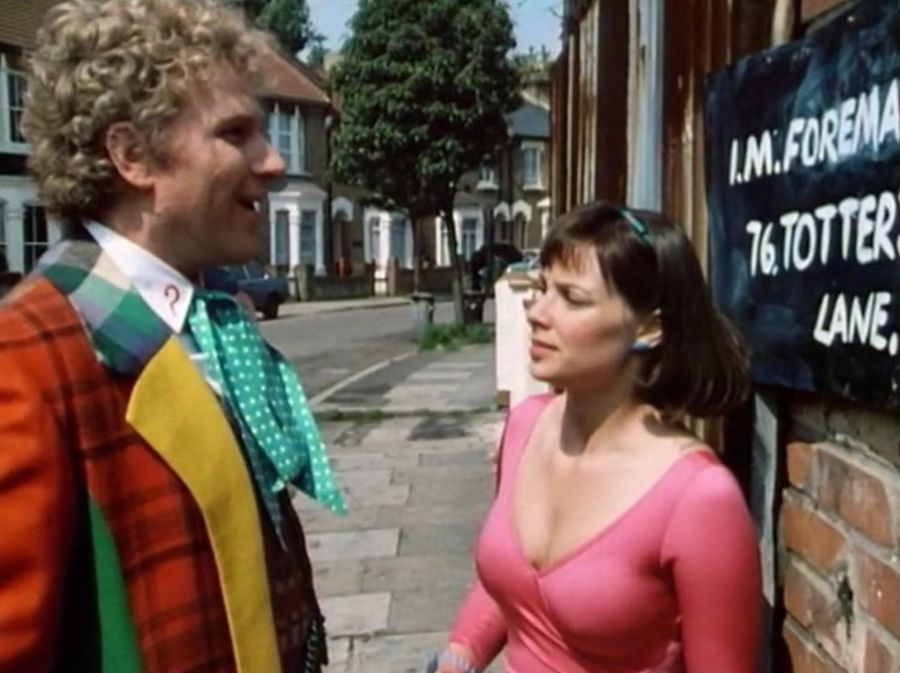
It’s not like ‘Attack of the Cybermen’, where the continuity references were rather bloated in their presentation. Plus, 76 Totter’s Lane is used more effectively in ‘Remembrance’ as opposed to ‘Attack of the Cybermen’, especially with it being set in 1963.
There are also references made to the Yeti from ‘The Web of Fear’ as well as the Zygons from ‘Terror of the Zygons’. I enjoyed Ace’s reaction to the Doctor telling her about these incidents, as she had no idea those events occurred when she was growing up on Earth.
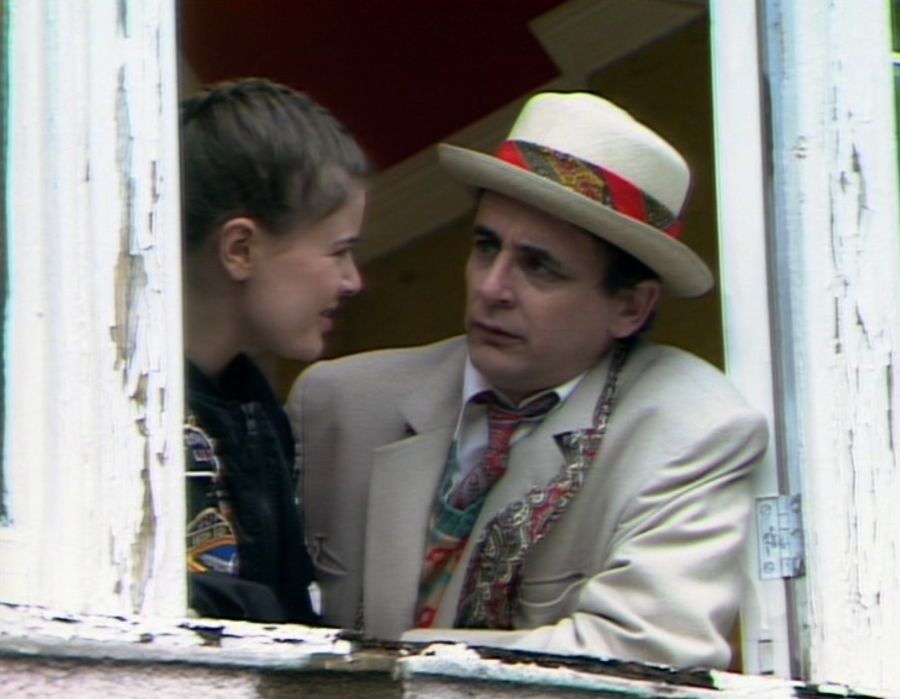
Doctor: Do you remember the Zygon gambit with the Loch Ness Monster? Or the Yetis in the Underground?
Ace: The what?
I wonder if many young viewers would get those references when watching ‘Remembrance of the Daleks’ for the first time on TV in 1998, unless their parents told them about them. Like I said, you’d have to be a keen ‘Doctor Who’ advocate to know. 😀
There are also references to Omega, who appeared in ‘The Three Doctors’ and ‘Arc of Infinity’ in the classic TV series. Or rather his ‘hand’ is referred to mostly, especially when it appears in ‘Remembrance’ itself. The Hand of Omega happens to important in this story.
In ‘Remembrance’, as established, the Seventh Doctor has come to London, Earth in November 1963 for a spot of unfinished business. He’s come to pick up and retrieve the legendary Hand of Omega, which is the remote stellar manipulator for the Time Lords. 😐
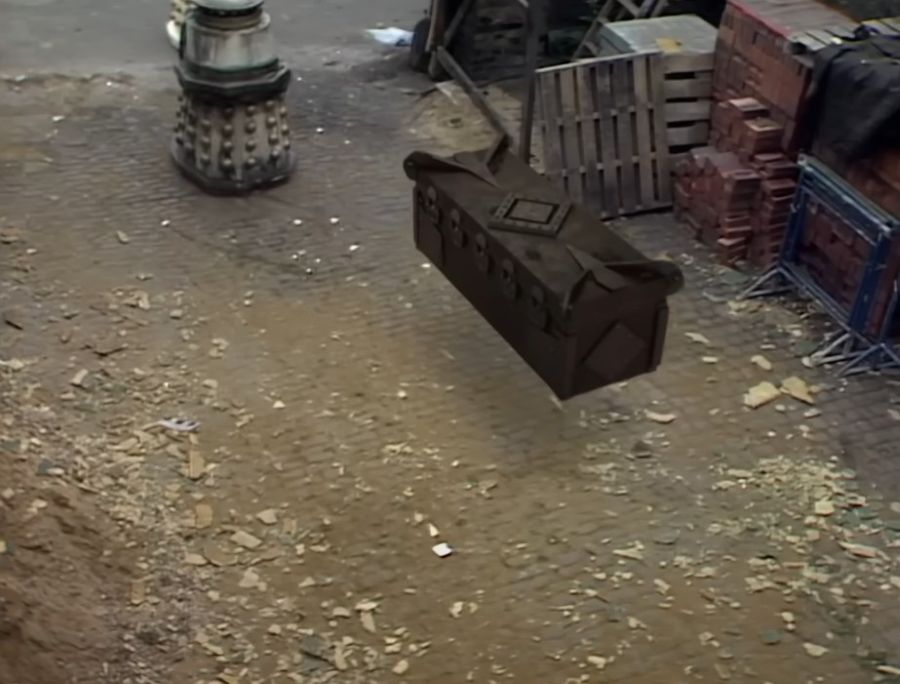
It’s interesting that the Hand of Omega is introduced in this ‘Doctor Who’ story, considering it hasn’t been mentioned in previous Omega stories. Also fascinating the First Doctor left the Hand of Omega behind before he, Susan, Ian and Barbara left Earth.
The Hand of Omega isn’t what you’d expect, as it appears in the form of a coffin or a casket when the Doctor picks it up from a funeral parlor. One would expect it to be shaped like an actual hand instead of a casket. Unless there’s something in the casket.
But hey, at least, the Hand of Omega seems to make its stellar engineer more dignified and in keeping with what had been established before in ‘The Three Doctors’ and ‘Arc of Infinity’. Not like with what would occur later on in ‘Wish World’/’The Reality War’ lately.
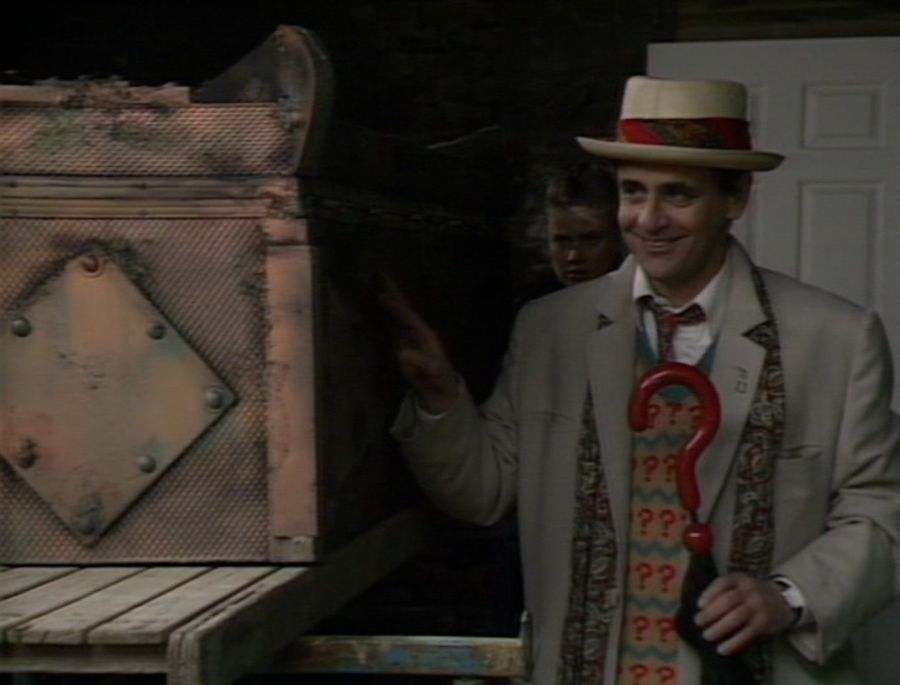
Whilst picking it up, the Doctor intends to use the Hand of Omega to sort out the Daleks when they come for it. Again, how the Daleks know about the Hand of Omega is a mystery. Did they come across knowledge of the Hand in some random Time Lord file? 😐
This ‘Doctor Who’ story is where we get to see the Seventh Doctor being manipulative. Possibly for the first time ever in the TV series, considering the previous season – Season 24 – had him act more as a clown and not a master chess player in the series. 😐
The story also has a feeling of 1960s nostalgia about it. I really how the writer Ben Aaronovitch delivers his story, particularly scenes set in the café in the day and at night as well as at Coal Hill School. I also liked hearing some 1960s music in the background.
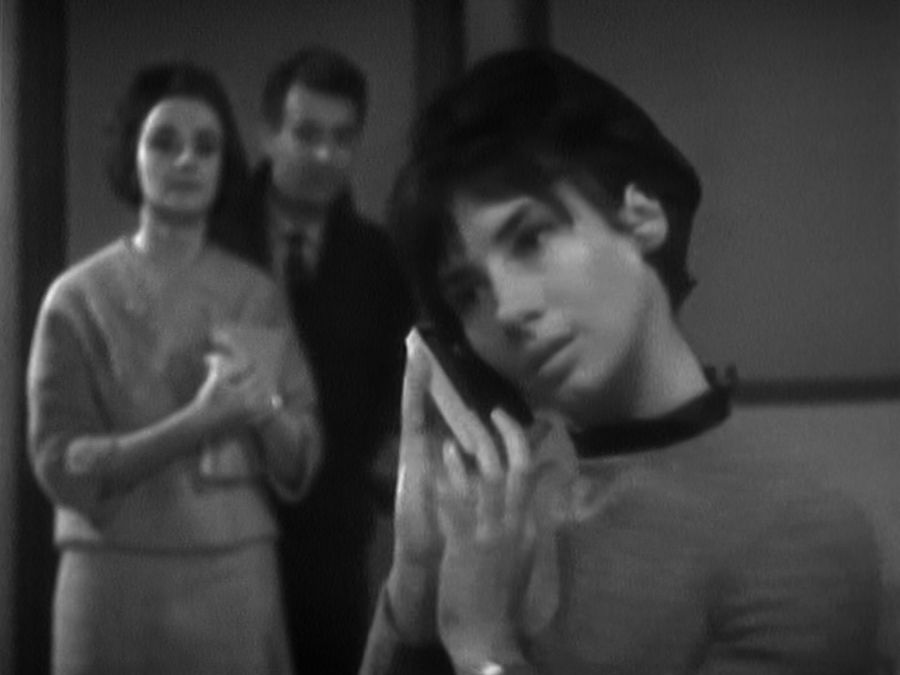
The Common Men music tune from ‘An Unearthly Child’, which Susan played on her transistor radio is included in the Special Edition version of the story. It makes me think of the audio story ‘1963: Fanfare For The Common Men’ with the Fifth Doctor and Nyssa.
Seeing the story being set in 1963 does make me want to travel back in time and visit that period of history. The 1960s do seem to be relaxing and straightforward. I’d probably want a cup of tea and four bacon sandwiches like Ace does in the story itself. 😀
However, there is the dark side of the 1960s to consider, especially when Ben Aaronovitch depicts the socio-political themes in the story such as racism and prejudice. This isn’t just with the Daleks, but also with the humans and their bigotry here.
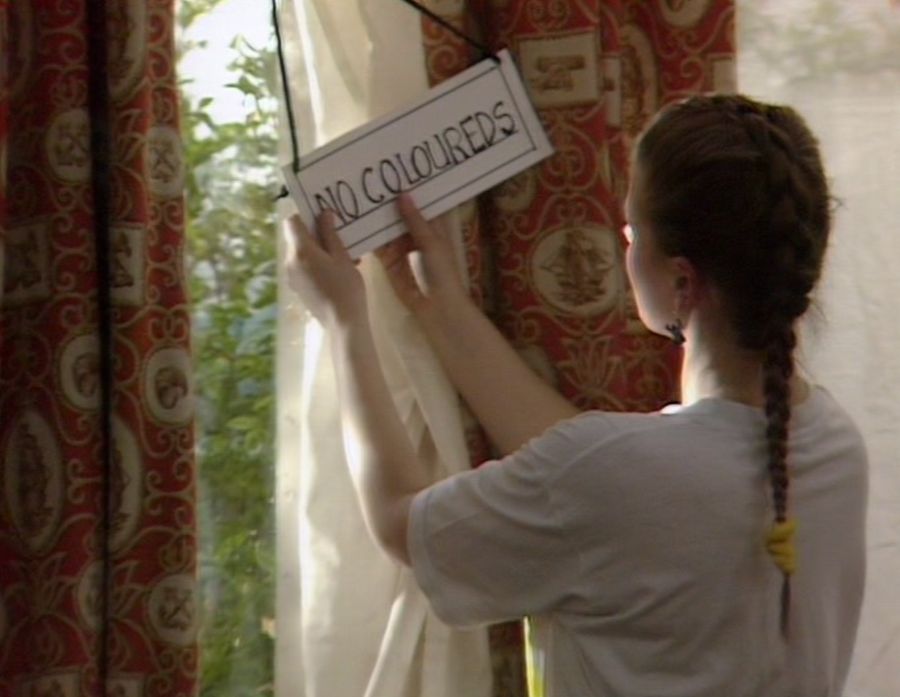
This is noticeable when Ace comes across a No Coloureds sign on the window of Mike’s mum’s boarding house. It was considered for that moment to be cut from the story, but Sylvester McCoy was keen for it to be included, since it adds to the themes of the tale.
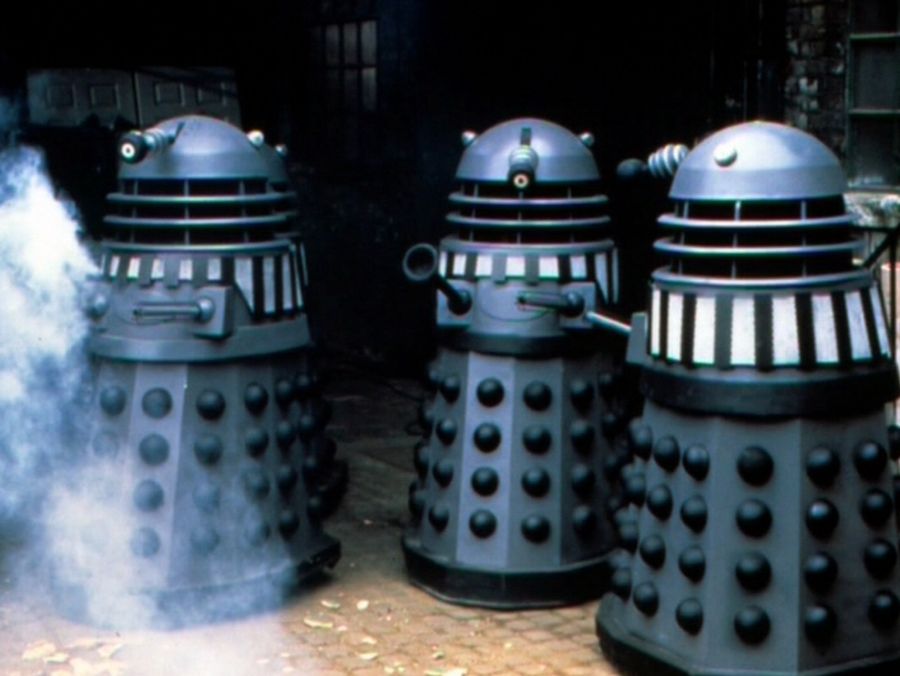
London 1963 is where the Doctor sets the stage for his showdown for the Daleks. As well as that, two Daleks factions get to have their battleground in London. This includes the white Imperial Daleks and the black Renegade Daleks as they battle for supremacy.
The two Daleks factions in ‘Doctor Who’ have appeared before in ‘Revelation of the Daleks’ where there were white humanised Daleks helping Davros on Necros before they were attacked by the black Daleks that were from Skaro and more of Kaled origins.
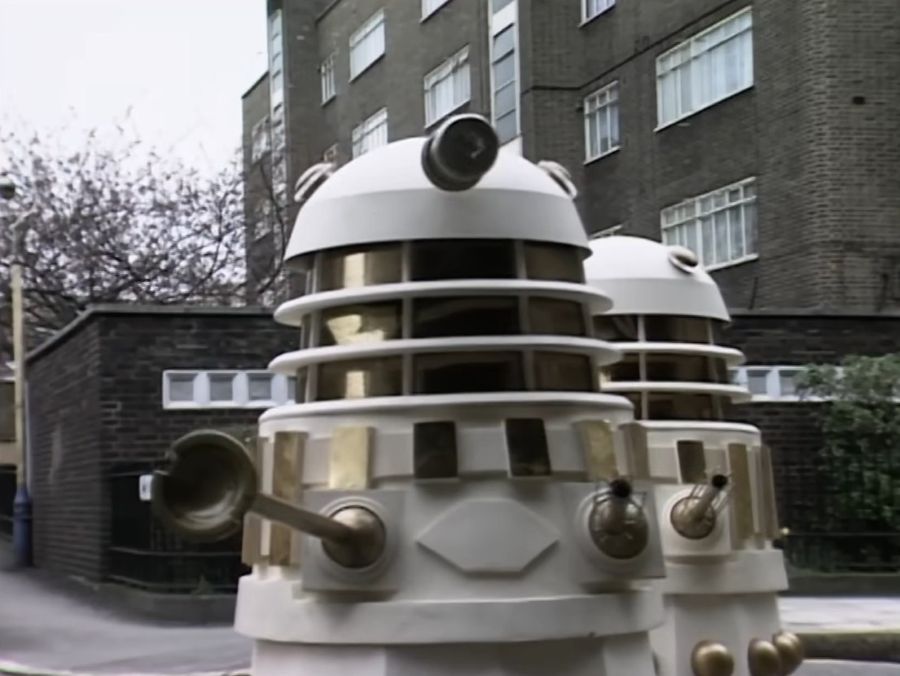
The white Imperial Daleks storyline has also been explored in the audio adventure ‘The Juggernauts’ featuring the Sixth Doctor, Mel, Davros, the Daleks and the Mechanoids. That story occurs between ‘Revelation’ and ‘Remembrance’, which I’ve enjoyed hearing.
Something I just realised is that because the Seventh Doctor’s manipulative nature derives from chess, we have the white Imperial Daleks and the black Renegade Daleks fighting each other as if they were like white and black chess pieces on a chessboard. 🙂
Interesting connection that and something I didn’t realise before until now. I can’t claim to know how to play chess and I find it a complex game anyway, but it’s fascinating to spot these links especially in connecting to how the Seventh Doctor works as a character.
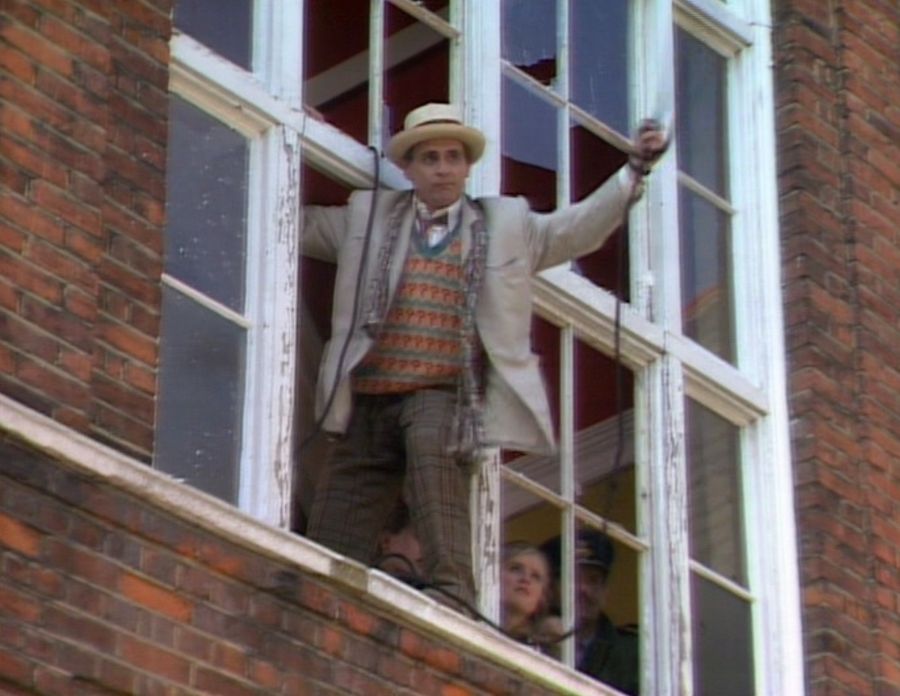
Speaking of which, Sylvester McCoy impressed me as the Seventh Doctor when I saw him for the first time in the ‘Doctor Who’ TV series via ‘Remembrance’. Initially, his Doctor seems to be quite a whimsical character that tends to hang in the background. 🙂
But as I watched more of this story as well as the rest of his TV stories and listened to the Big Finish audios of ‘Doctor Who’, it turns out that he often has a secret agenda and tends to be more proactive than other Doctors, which is so fascinating to watch indeed.
There’s also the hint that Sylvester McCoy’s Doctor is ‘far more than just another Time Lord’. That’s from a scene between him and Davros, which was cut from the story’s transmitted final edit. Thankfully, it’s included in the Special Edition version of the story.
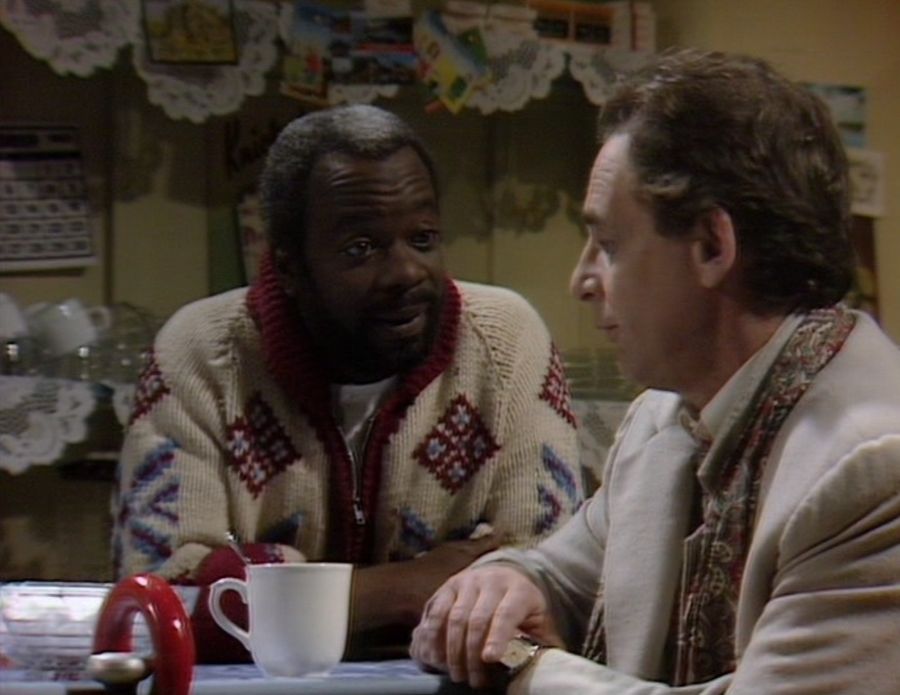
I really like the café scene between the Doctor and the Jamaican café employee, whose name is John in the credits and is played by Joseph Marcell. Half of the scene is in the transmitted version of the TV story, but it’s included in full in the Special Edition version.
It’s a really sweet scene and it defines Sylvester’s Doctor well when he’s contemplating about saving the world. Interestingly, the scene takes place at night and that’s like the only scene to feature John as a character. We don’t see John in any more café scenes. 😐
I’ve had the pleasure of meeting Sylvester McCoy at conventions over the years. As well as ‘Doctor Who’, he’s been in ‘The Hobbit’ film trilogy where he played Radagast the Brown, which I’ve enjoyed, and seem to watch it every year with ‘The Lord of the Rings’. 😀
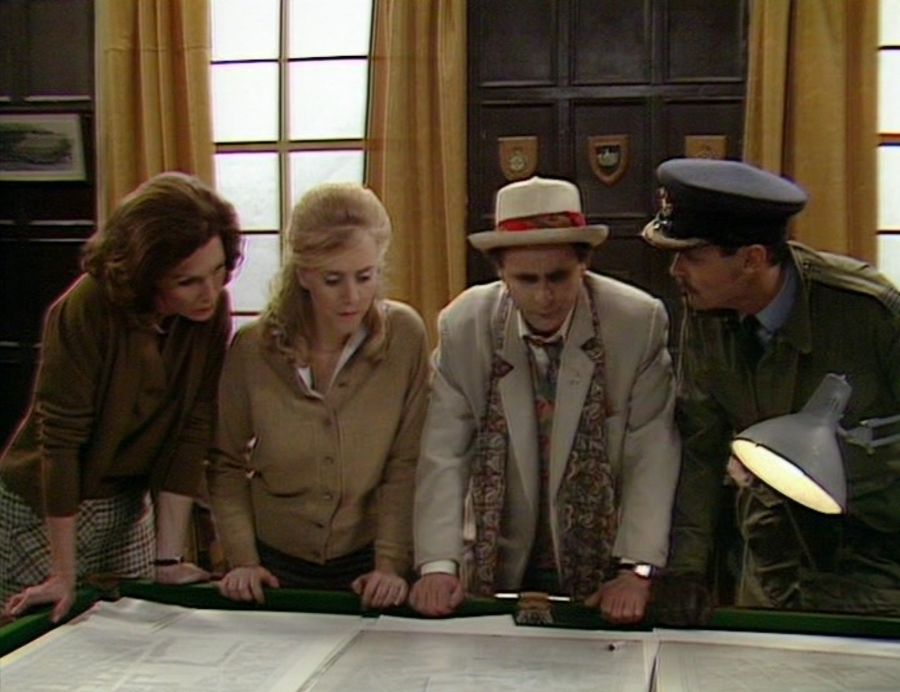
I’ve had the chance to chat to Sylvester about his work in ‘Doctor Who’ as well as ‘The Hobbit’ film trilogy. It’s amazing to think that I’ve seen and met Sylvester in person at conventions as well as see him in the TV show and hear him in many Big Finish audios. 🙂
Sophie Aldred also impressed me when I saw her as Ace for the first time in ‘Doctor Who’. I immediately liked Ace when I first saw her, as she seems cool and feisty as well as being very compassionate. She’s certainly different in terms of being a companion. 🙂
This is of course Sophie’s second ‘Doctor Who’ story following her debut in ‘Dragonfire’, although this is her first proper story as a companion. I enjoyed it when Ace played her so ‘out of time’ boom box in 1963 and she got to beat up a Dalek with her baseball bat. 🙂
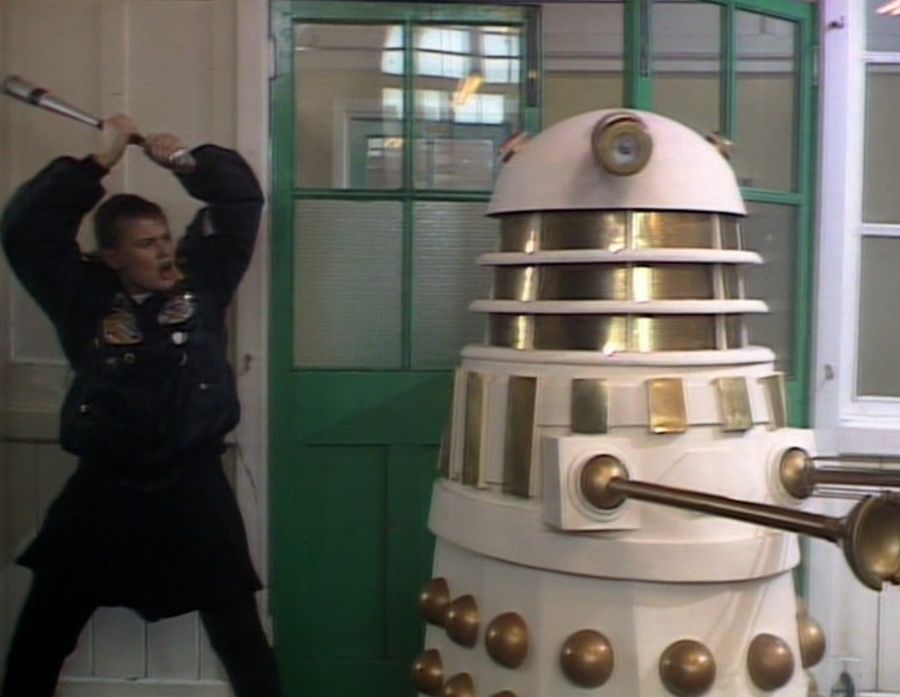
A baseball bat filled with the power of the Hand of Omega! 😮 It’s a defining moment for Ace’s character and it’s followed by an amazing moment where Ace smashes through a window to escape. 🙂 I like how Ace gets on well with Sylvester’s Doctor in this TV story. 🙂
I especially enjoyed the scenes where Ace tries to get information out of him about what the Hand of Omega is and how he plans on allowing the Daleks to have it. I found it very funny when the Doctor and Ace bickered in a van when they tried to get somewhere.
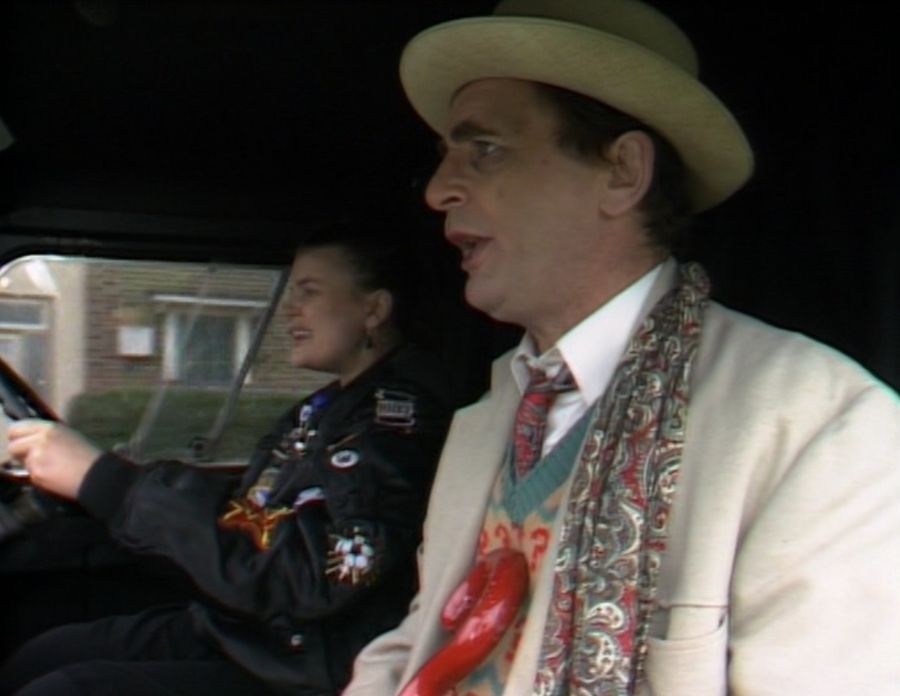
Doctor: Left here.
Ace: When were they left here?
Doctor: No. Turn left here.
Ace: Oh, right.
Doctor: No, left! You’ve missed the turning!
Ace: What turn? Where?
Doctor: Why don’t you concentrate on where you’re going?
It’s a nice piece of comedy business between the two in ‘Part One’, made even funnier when they go under a bridge and they switch places after Ace tells him “If you don’t like it, you drive”. You can tell Sylvester and Sophie get on so well with each other from that.
I’ve also met Sophie Aldred at conventions and have become good friends with her in the same way I’ve become good friends with Sarah Sutton. She’s very nice to talk to. It was fascinating to hear her say ‘Remembrance’ is her first proper story as a companion.
‘Remembrance’ is certainly a story that demonstrates Ace’s potential as a ‘Doctor Who’ companion in being able to ‘drive’ the plot forward. It’s like a precursor to the new TV series where Rose is developed as a ‘Doctor Who’ companion, which is a nice parallel. 🙂
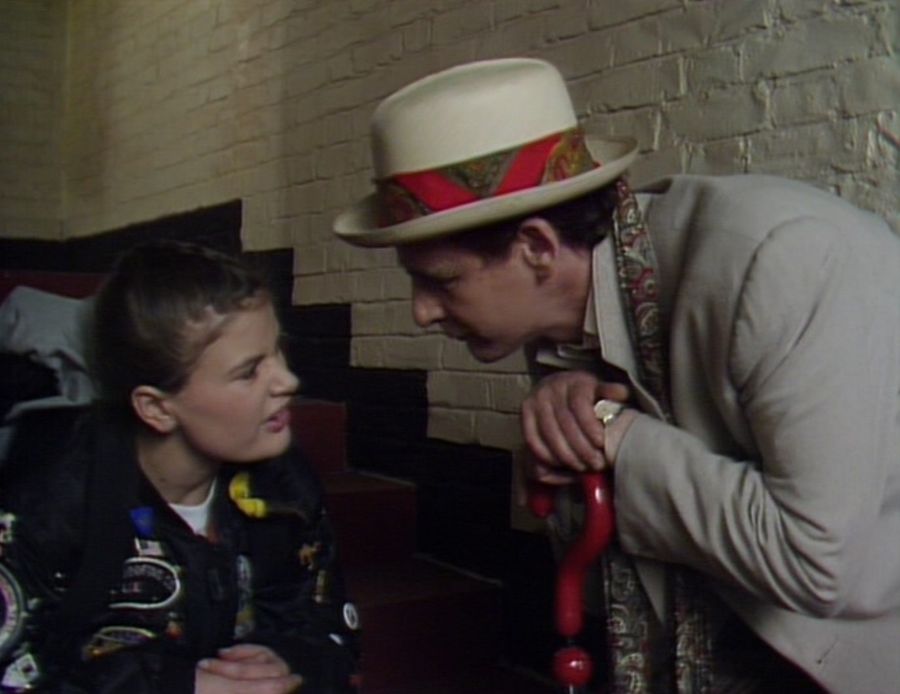
Over the years, I’ve written some fan-fiction stories featuring the Seventh Doctor and Ace, which I’ve shared on ‘Bradley’s Basement’. This includes the Short Trip story ‘The Space Car’ and ‘The Game of Delta’, which is the seventh story in the ‘Zorbius’ series. 🙂
I’ve also included Ace in ‘The Robots of Lonmar’ and I’ve included the Seventh Doctor and Ace in ‘The Five Doctors at Christmas’, ‘The Prime Factor’ and ‘The Thirteen+ Doctors’. I’m so pleased I’ve written these stories featuring the Seventh Doctor and Ace.
In this story, we’re introduced to the Counter-Measures team. Or is it the Special Incursions Counter-Measures Unit? Anyway, the Doctor utilises the Counter-Measures team’s support in thwarting the Daleks. The team has become popular over the years. 🙂
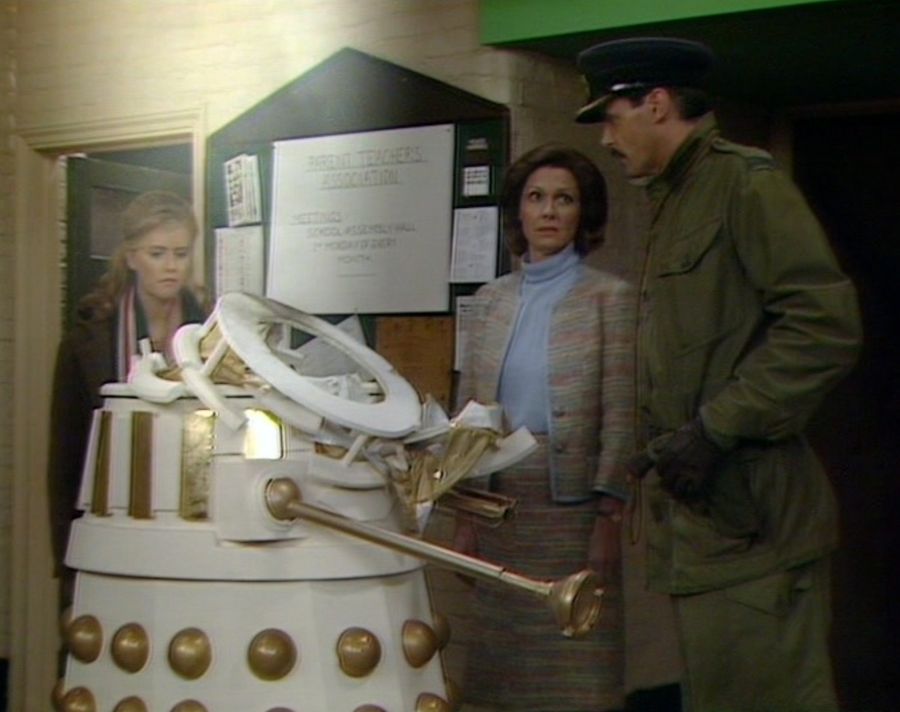
This includes Simon Williams as Group Captain Ian Gilmore, Pamela Salem as Professor Rachel Jenson and Karen Gledhill as Allison Williams. After ‘Remembrance’, the Counter-Measures team have had their spin-off audio series by Big Finish, which is amazing.
Before ‘Doctor Who’, Simon Williams became well-known for playing James Bellamy in the BBC TV period drama series ‘Upstairs, Downstairs’, co-created by Jean Marsh, from 1971 to 1975. I’ve not seen that series much nor do I recall Simon Williams being in it. 😐
I enjoyed Simon Williams’ performance as Group-Captain ‘Chunky’ Gilmore. Apparently, the nickname ‘Chunky’ came from the gun Gilmore used in the story, known only to Simon Williams and Sylvester McCoy. The Doctor calls him ‘Chunky’ in the story. 😀
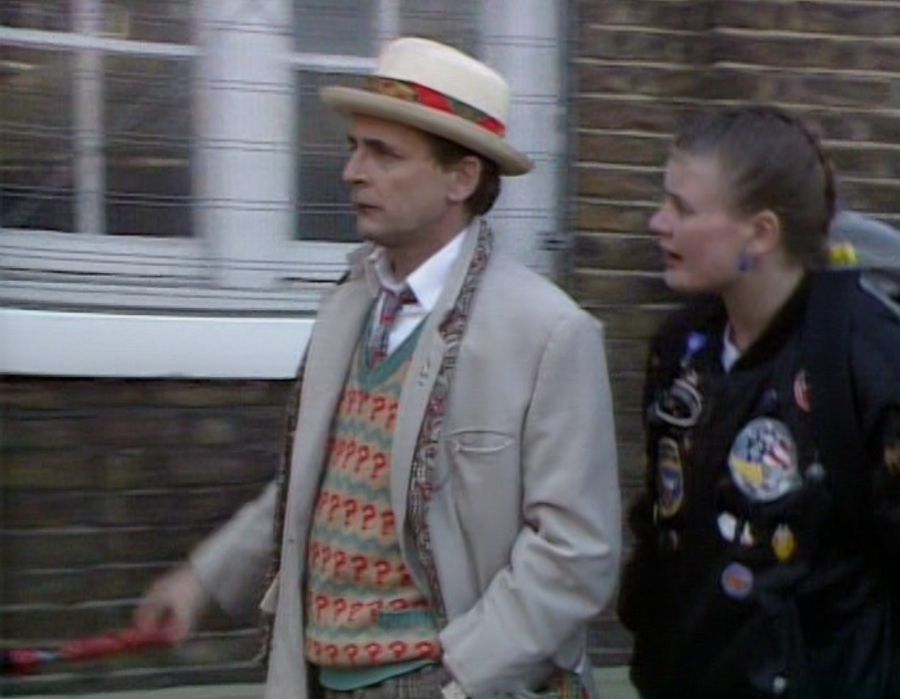
Ace: If this place is so out of the way of the action, what are we doing here?
Doctor: Keeping an eye on Group-Captain Chunky Gilmore. Although why his men call him Chunky, I’ve no idea.
In some respects, Gilmore is like the Brigadier as a character, especially when he seems sceptical about what’s going on, yet he gradually puts his trust in the Doctor. It was funny when the Doctor mistakenly called him a ‘Brigadier’. Gilmore had to correct him. 🙂
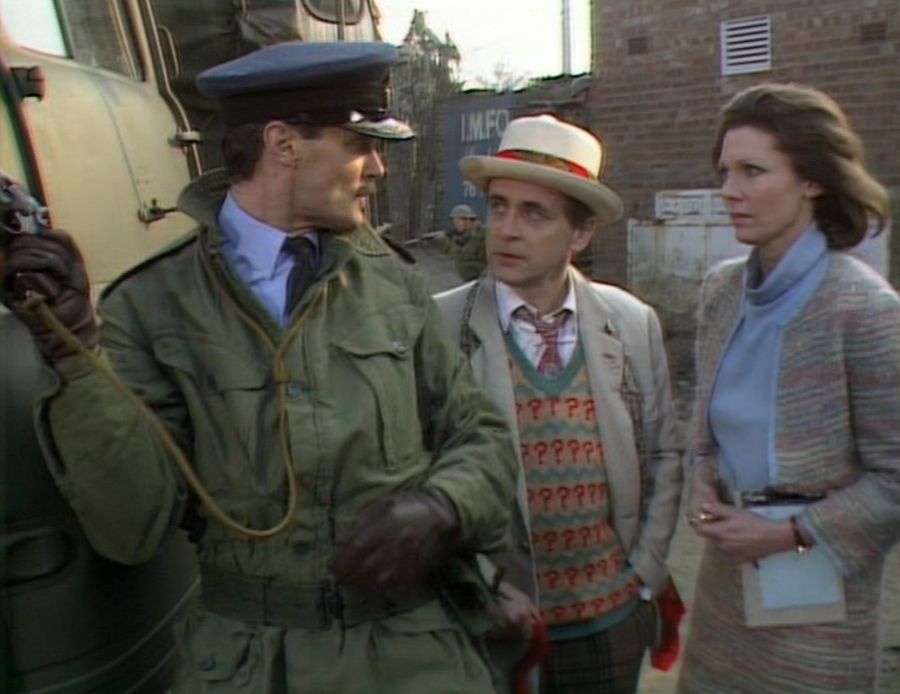
Doctor: Listen to me, Brigadier.
Gilmore: Group-Captain! Group Captain Gilmore!
As if everything depended on the Doctor getting Gilmore’s army rank right. 😀 Mind you, Gilmore should have been glowing at the compliment the Doctor was giving him, as surely Brigadier is higher than Group-Captain. 😐 Perhaps it wasn’t the right time to be glowing.
Pamela Salem has been in ‘Doctor Who’ before. Before ‘Remembrance’, she played Toos in ‘The Robots of Death’ with Tom Baker. She also provided one of the voices of Xoanon in ‘The Face of Evil’. I’ve also seen her in an episode of ‘Ever Decreasing Circles’.
I like the character Pamela Salem plays in Rachel Jensen, as she’s a scientist who gets to challenge the Doctor on his scientific knowledge concerning the Daleks and the gadgets he has. I enjoyed that first meeting between Rachel and the Doctor in the van. 🙂

You could say there are traces of Liz Shaw in Rachel Jenson, especially in her relationship with Gilmore, as there’s friction and she claims to come from Cambridge. Liz Shaw told the Brigadier she got dragged from Cambridge in ‘Spearhead From Space’.
There’s also an element of Barbara Wright in Rachel Jenson, particularly with the hairstyle, the clothes she wears and the intelligence in her mannerisms. She does get frustrated at times when she and Allison aren’t put to good use in their scientific skills. 🙂
Speaking of Allison, I’ve met Karen Gledhill in real-life at ‘Timey-Wimey 1’ in Brighton in November 2014 when she and Hugh Ross (who also stars in the ‘Counter-Measures’ audio series) were sponsored guests by Big Finish. It was nice meeting Karen back then.
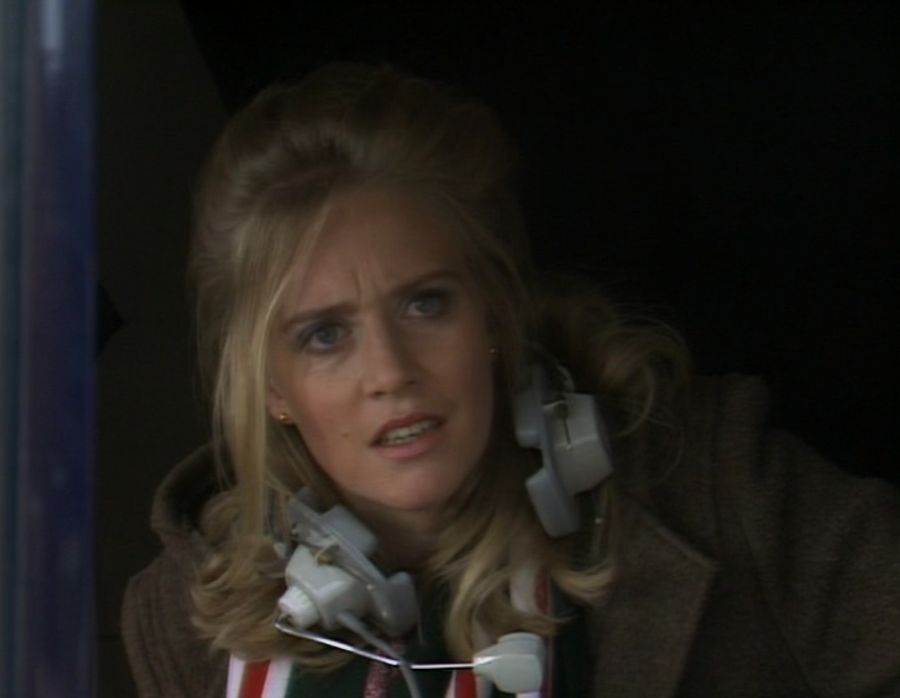
Allison Williams comes across as a very nice character. It’s clear that she and Rachel Jensen get on well working together when having to run around after Gilmore and his men in thwarting the Daleks. There’s not really much to say about Allison as a character.
That gets explored more in the ‘Counter-Measures’ audio series by Big Finish. She’s shocked when she hears of the death of one of the soldiers killed in 76 Totter’s Lane from Mike. 😐 Allison does beat up one Dalek inside its casing with Ace’s baseball bat. 😀
Honestly, I enjoyed that moment. as it was fun to see and it looks like Karen Gledhill is enjoying herself a little too much with beating up the Dalek inside its casing. Although, according to the ‘Behind the Sofa’ item, Karen was concerned about hurting the puppeteer in the Dalek casing. 😀
Also, in the Counter-Measures team is Dursley McLinden as Sergeant Mike Smith. Mike becomes Ace’s first love interest when she fancies him. I like how their friendship develops and it’s clear Sophie Aldred and Dursley McLinden got on well with each other.
Sadly, Ace gets let down and betrayed by Mike, as his true colours are revealed when he’s working for Radcliffe who in turn is working for the Renegade Daleks. Those scenes of Ace being hurt by Mike and telling him to ‘shut up’ were painful and very heartwrenching.
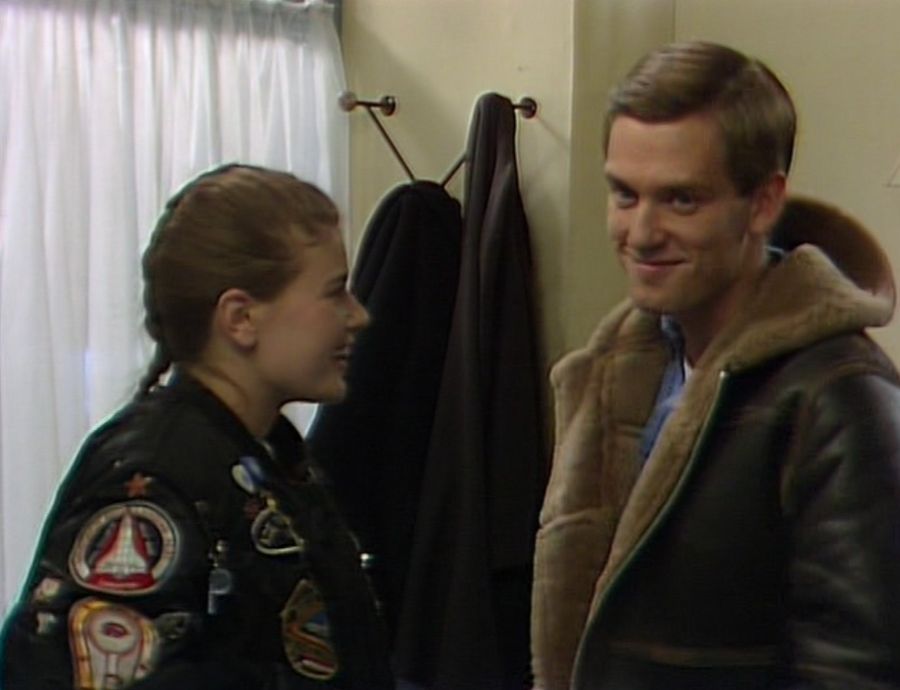
Regarding the actor Dursley McLinden, I found it sad to hear that he died at the age of 30 in 1995. He fell ill in 1988 and was diagnosed with HIV/AIDS in 1990. I didn’t know Dursley was gay, and it was eye-opening from seeing the ‘Looking for Dursley’ documentary.
I’m pleased that Dursley McLinden happened to be a ‘Doctor Who’ fan when he was a kid, which involved ‘playing Daleks’. 😀 It’s fitting that he appeared in ‘Remembrance of the Daleks’ and that he’s well-remembered for guest starring in a well-loved classic story.
In terms of the rest of the guest cast, there’s George Sewell as Ratcliffe. There’s also Harry Fowler as…well, Harry, the café owner. 😀 And there’s Jasmine Breaks as the little schoolgirl controlled by the Renegade Daleks. I found her pretty scary in this adventure.
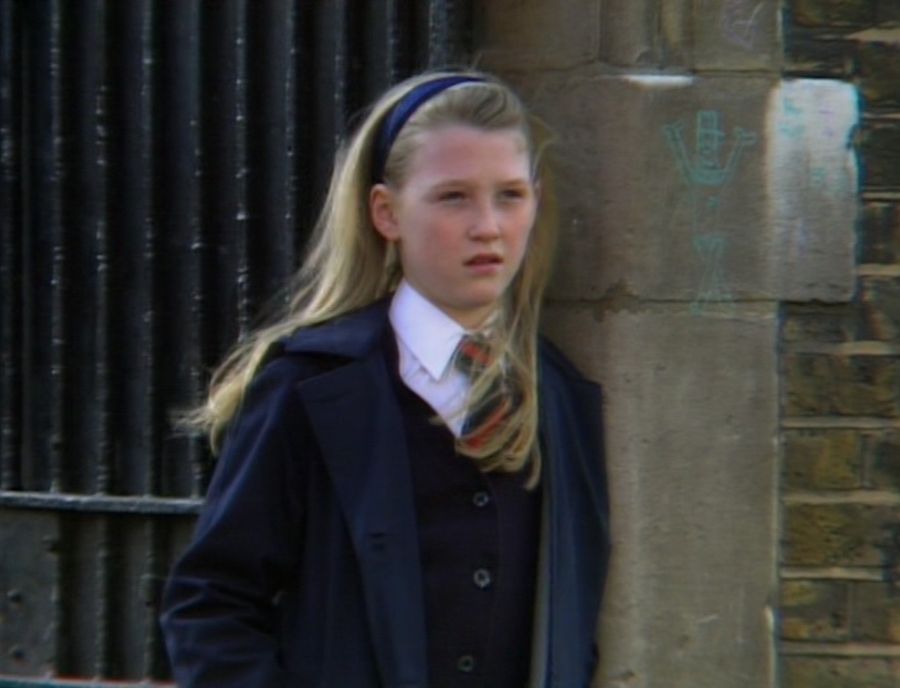
I wonder how the Daleks acquired the little schoolgirl, as it’s never explained. She even controls a Dalek battle computer. It’s amazing, according to Sophie Aldred in the ‘Behind the Sofa’ item, that Jasmine Breaks became a ‘Strictly Come Dancing’ producer.
The story also features Michael Sheard as the Headmaster, who is under the control of the Imperial Dalek faction and unfortunately gets killed off in ‘Part Two’ of the story. Michael Sheard has appeared in several ‘Doctor Who’ stories before and after this story.
Before ‘Remembrance’, Michael Sheard was in stories like ‘The Ark’, ‘The Mind of Evil’, ‘Pyramids of Mars’, ‘The Invisible Enemy’ and ‘Castrovalva’. He later did a Big Finish audio story with Paul McGann’s Eighth Doctor called ‘The Stones of Venice’ before his death in 2005.
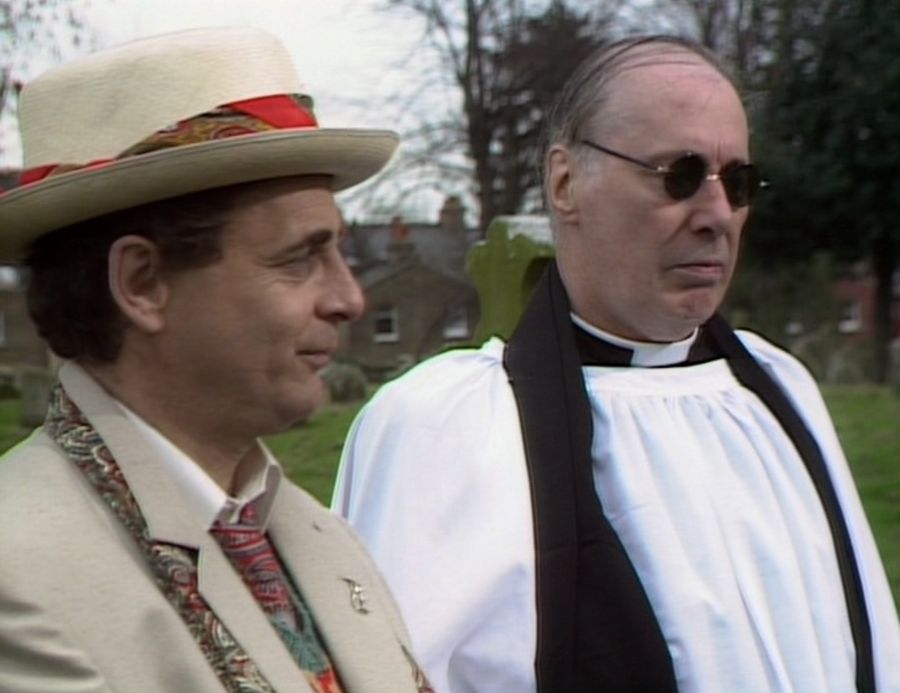
Peter Halliday guest stars as a blind vicar in this story. Peter Halliday was in ‘Doctor Who’ stories like ‘The Invasion’, ‘Doctor Who and the Silurians’, ‘The Ambassadors of Death’, ‘Carnival of Monsters’ and ‘City of Death’ before he appeared in ‘Remembrance’.
Whilst not named in the TV story, Michael Sheard as the Headmaster is later given the full name of Harvey Parson whilst Peter Halliday as the blind vicar is given the name Parkinson. This is through short stories and the Target novelization of this TV adventure.
William Thomas guest stars as Martin, the undertaker who looks after the Hand of Omega in the funeral parlor in ‘Part Two’. William Thomas later guest starred in the new TV series episode ‘Boom Town’ and he’s played Gwen Cooper’s dad Geraint in ‘Torchwood’.

The Daleks are very impressive in this ‘Doctor Who’ adventure. There are big gun battles and explosions everywhere between the white Imperial and black Renegade Dalek factions. The Special Weapons Dalek on the Imperial side is incredibly terrifying here. 😀
It has a big-armoured cannon and causes big explosions by blowing Renegade Daleks in one shot. I imagine a lot of complaints were made about the explosions that occurred in London when the story was being made in 1988. Michael Bay would want that Dalek. 😀
This ‘Doctor Who’ story is also the first time we have a Dalek levitating and getting over stairs, which had been a weakness of the Daleks in the TV series up until that point. It had been mentioned by the Fourth Doctor in ‘Destiny of the Daleks’ they couldn’t levitate. 😀
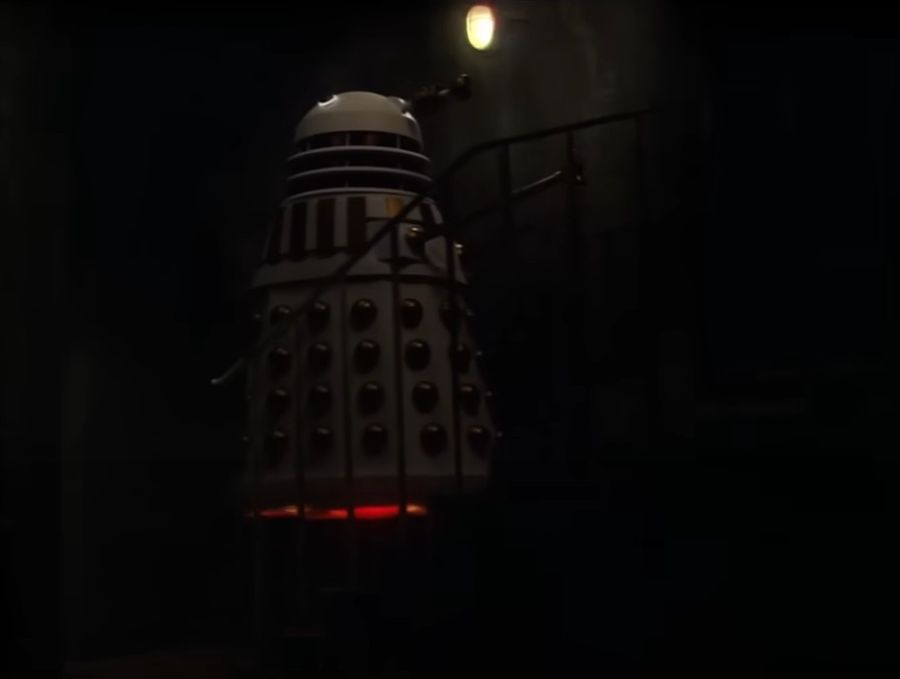
It’s easy to think that the Daleks managed to beat getting over stairs in the new TV series episode ‘Dalek’ when ‘Doctor Who’ returned in 2005. But of course, ‘Remembrance’ did it first and it made for one gripping cliffhanger at the end of ‘Part One’ of the TV story.
Sylvester McCoy has said himself he’s very pleased that he’s been able to face the Daleks in his era on TV, as that completes his Doctor. That should apply to any actor who’s played the Doctor in ‘Doctor Who’ in that they have to face the Daleks at some point.
Paul McGann sadly didn’t get to encounter Daleks in ‘The TV Movie’, but thankfully, that’s been made up for in the Big Finish audio stories he’s been in. Ncuti Gatwa hasn’t faced the Daleks in his TV era either, and I hope he’ll face them in the Big Finish audios soon.
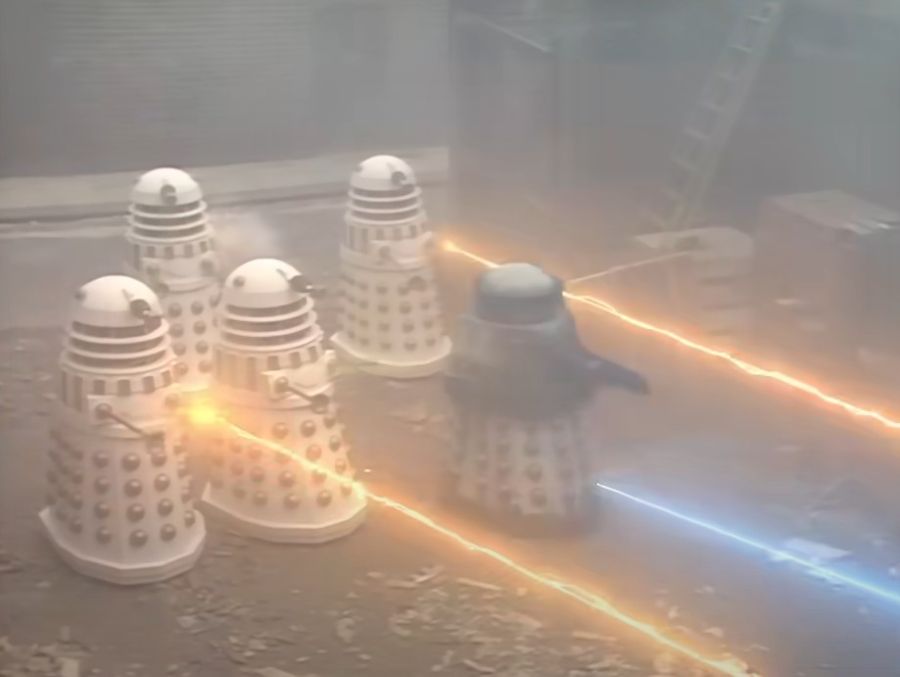
The Daleks are operated by Hugh Spight, John Scott Martin, Tony Star and Cy Town. They’re also voiced by Roy Skelton, Royce Mills, Brian Miller and John Leeson. Yes! John Leeson, who usually voices K-9 in ‘Doctor Who’, gets to voice some Daleks in this story. 🙂
Incidentally, in the transmitted version of the story, John Leeson also read as an announcer for BBC TV that a new science-fiction TV series was about to begin. This is of course a meta-joke to say that it’s ‘Doctor Who’, which I found quite funny when I saw it.
Mind you, it’s not included in the Special Edition version of the story, which is a shame. Then again, it makes sense, as ‘Doctor Who’ being shown in November 1963 at 5:15 in the evening would have meant it was dark outside. Instead, it’s clearly daytime outside.
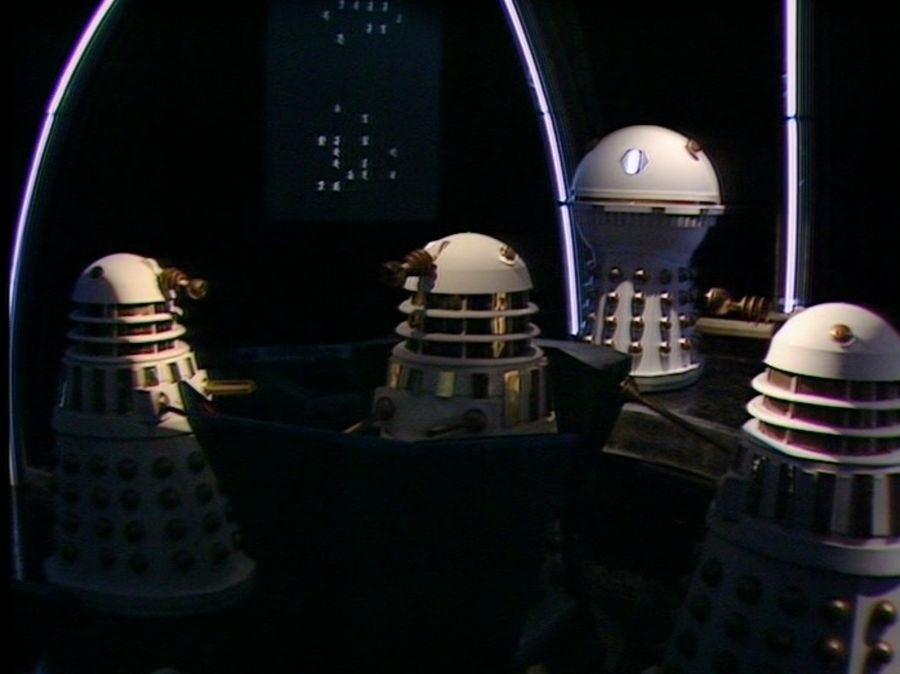
There’s an Emperor Dalek that appears in this story. This isn’t like the Emperor Dalek in ‘The Evil of the Daleks’. Nor is it like the Emperor of the Daleks in ‘The Parting of the Ways’. It almost matches to the gold Emperor Dalek that often appeared in the TV Century 21 comics.
It took me by surprise when I saw the actual reveal of the Emperor Dalek in ‘Part Four’, as it turned out to be Terry Molloy as Davros. Beforehand, he’d been credited as ‘Roy Tromelly’. And that’s the longest for Davros to be revealed in a ‘Doctor Who’ story then. 🙂
I enjoyed Terry Molloy’s performance as Davros in this story. When I chatted to him about being in ‘Remembrance’, Terry shared the challenges of working in the Emperor Dalek casing, as it must have been demanding, especially with the Davros make-up on.
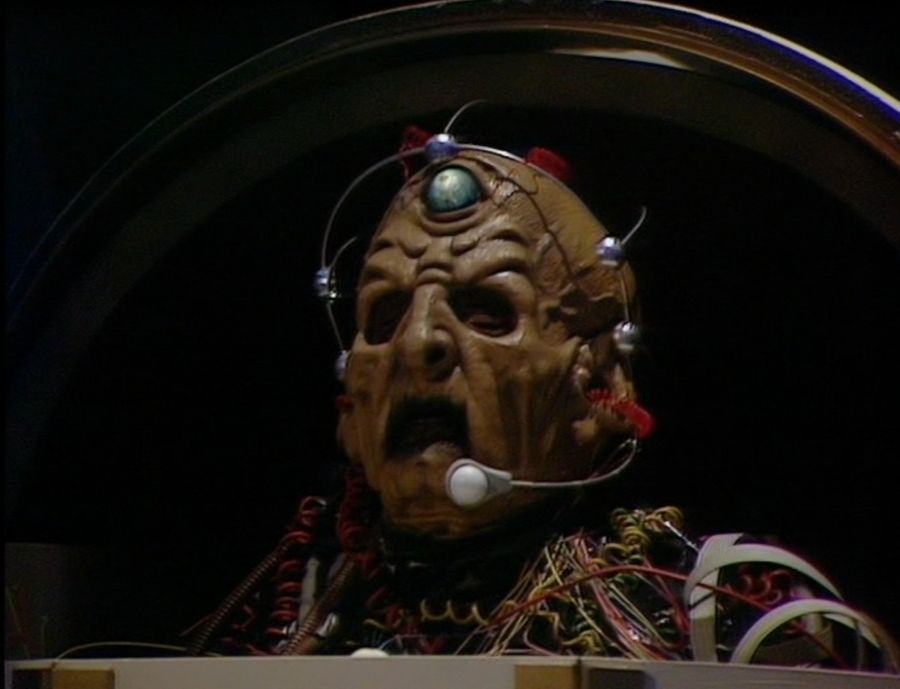
Even though he’s revealed in ‘Part Four’ of the story, Davros does get to escape in an escape pod when the Dalek mothership is about to blown up by the Hand of Omega. Clearly, Davros has no consideration for his Dalek minions when leaving them to die. 😀
Incidentally, Skaro gets destroyed by the Hand of Omega. This contradicts later ‘Doctor Who’ stories like ‘Asylum of the Daleks’ and ‘The Magician’s Apprentice’/’The Witch’s Familiar’ where Skaro is clearly not destroyed. But hey, wibbley-wobbly, timey-wimey.
The story ends with Mike Smith getting killed off by Jasmine Breaks as the schoolgirl. Thankfully, the Doctor talks the black Supreme Dalek to death, telling it has no purpose anymore, causing it to self-destruct, which breaks the connection with the schoolgirl. 🙂
There’s a funeral for Mike Smith, which presumably takes place days after the events of the Dalek incident. The Doctor and Ace slip away quietly, contemplating on whether they did good in their endeavours. I like how the story closes on that quite sombre note.
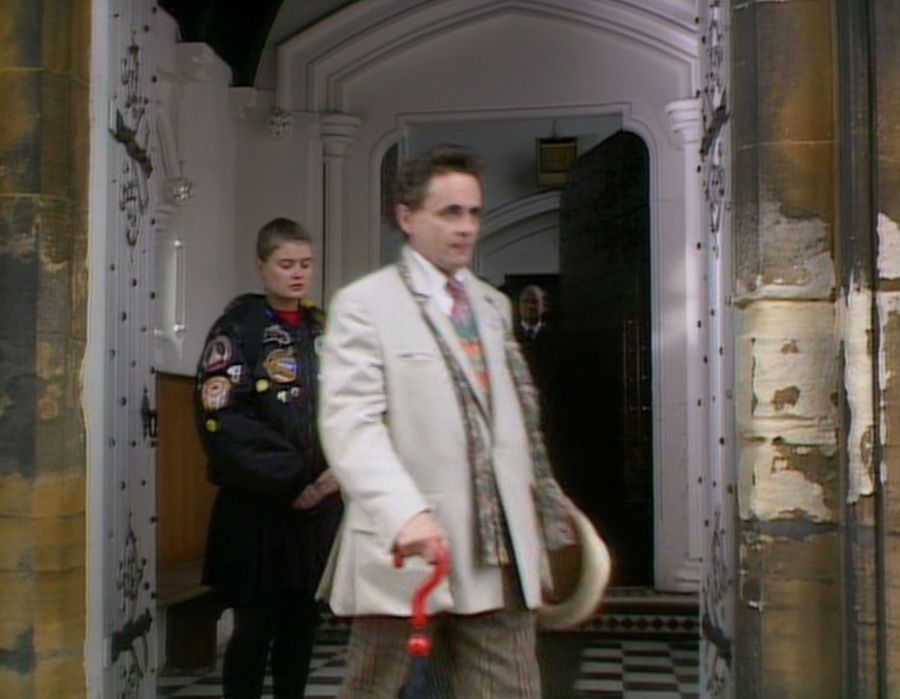
Ace: We did good, didn’t we?
Doctor: Perhaps. Time will tell. It always does.
Incidentally, this ‘Doctor Who’ story was directed by Andrew Morgan, who previously directed ‘Time of the Rani’ in Season 24. Andrew found ‘Remembrance of the Daleks’ a happier directing experience compared to ‘Time and the Rani’, which is pretty good thing.

The original DVD special features were as follows. There was the making-of documentary called ‘Back to School’, featuring behind-the-scenes interviews with the cast and crew. There was the behind-the-scenes featurette called ‘Remembrances’ with the cast and crew sharing their first memories of ‘Doctor Who’ and how ‘Remembrance of the Daleks’ referenced the TV show’s past. There were deleted and extended scenes from the story to enjoy with introductions given to them by Sylvester McCoy and Sophie Aldred. There were outtakes from the story, and two multi-angle sequences, including Ace beating up a Dalek and Daleks blasting through a gate. There was a dual mono sound audio mix option for the story, a 5.1 surround sound audio mix option for the story, an audio commentary with Sylvester McCoy and Sophie Aldred, and an isolated music option by Keff McCulloch to enjoy. There was an info-text commentary option to enjoy, BBC trailers and continuity announcements of the story, a photo gallery of the story and a ‘Radio Times Listings’ PDF of the story.
There was also the special 2007 documentary called ‘Davros Connections’, which chronicles the history of Davros in the classic TV series and the Big Finish audios and how they’re all connected. There are behind-the-scenes interviews with David Gooderson, Terry Molloy, Peter Miles, audio producer/director Gary Russell, director Ken Grieve, writer/script editor Eric Saward, writer Ben Aaronovitch, writer Gary Hopkins and writer Joseph Lidster. The documentary is narrated by Terry Molloy.
On Disc 1 of the ‘Doctor Who – The Collection – Season 25’ Blu-ray, the original four-part 1988 TV version of the story, the ‘Back to School’ making-of documentary, the ‘Remembrances’ featurette, the deleted and extended scenes, the outtakes, the dual mono sound audio mix option, the 5.1 surround sound audio mix option, the audio commentary and the isolated music option can be found on there. The info-text commentary option, the BBC trailers and continuity announcements and the photo gallery have been updated for 2024 on the Blu-ray. The two multi-angle sequences have been updated into an ‘action coverage’ compilation item.
The new special features on Blu-ray include a brand-new CGI effects option for the original four-part 1988 TV version of the story to enjoy, and the ‘Behind the Sofa’ feature on ‘Remembrance of the Daleks’ with Sylvester McCoy (the Seventh Doctor), Karen Gledhill (Allison) and Sophie Aldred (Ace) as well as Janet Fielding (Tegan), Wendy Padbury (Zoe) and Sarah Sutton (Nyssa) as well as Bonnie Langford (Mel) and Nicola Bryant (Peri). There’s model footage for the story, and there are promotion and TV appearance items, including the Season 25 Press Trailer (taken from the ‘Silver Nemesis’ DVD), a ‘Kilroy’ item, a ‘Daytime Live’ item on the BBC Radiophonic Workshop, a ‘Why Don’t You…?’ item, an ‘Open Air’ item, a ‘Take Two’ item, a ‘Breakfast Time’ item, a ‘Blue Peter’ item, a ‘Points of View’ item, and a ‘Daytime Live’ item on the 25th anniversary of ‘Doctor Who’. There’s the ‘Remembrance Demo’, which is a selection of two scenes from ‘Remembrance of the Daleks’ rescored by Mark Ayres as a demonstration to work on the TV show’s incidental music, taken from ‘The Greatest Show in the Galaxy’ DVD and it can be seen in a dual mono sound audio mix option and a 5.1 surround sound audio mix option.
On the PDF front, as well as the ‘Radio Times Listings’ of ‘Remembrance of the Daleks’, there are production documents, five rehearsal scripts, the camera script, set design drawings, the studio floor plan and set model, production office mailout information, the Season 25 notes by script editor Andrew Cartmel for new writers, the Season 25 BBC Enterprises sales sheet, and the Season 25 BBC television play synopses. You need a special Blu-ray computer drive for that.
On Disc 2 of the ‘Doctor Who – The Collection – Season 25’ Blu-ray, the ‘Davros Connections’ documentary can be found on there. The new special features on Blu-ray include the four-part Special Edition version of the story, featuring new CGI effects and some of the deleted and extended scenes from the story, and it can be seen in a dual mono sound audio mix option and a 5.1 surround sound audio mix option. There’s the ‘Looking For Dursley’ documentary about Dursley McLinden with Toby Hadoke, there’s some location footage and some studio footage from the making of the story to enjoy, and there’s the Season 25 Blu-ray trailer.

‘Remembrance of the Daleks’ is a great ‘Doctor Who’ story with a strong plot involving the Daleks and it has a fantastic setting in Shoreditch, London in 1963. I found it a good story that introduced me to Sylvester McCoy as the Seventh Doctor and Sophie Aldred as Ace.
It’s also a terrific way to celebrate 25 years of the TV show’s history along with ‘Silver Nemesis’ in 1988. It may not be the official 25th anniversary story in ‘Doctor Who’, but it has all the elements with it being set in 1963 where the TV show began as well having the Daleks.
I enjoyed revisiting this ‘Doctor Who’ story to celebrate 50 years of the TV show in 2013 as well as 60 years in 2023. I will always hold very fond memories of watching ‘Remembrance of the Daleks’ in the years to come and I’m sure many fans will do too. 🙂
It’s a shame that clips of the First Doctor, Susan, Ian and Barbara from ‘An Unearthly Child’ weren’t included at the beginning of ‘Remembrance of the Daleks’ to set up what’s going on in the story. It’s also a pity that no direct references to those characters were made. 😦
Despite that, I’m pleased the production team at the time made this story for Sylvester McCoy’s Seventh Doctor and Sophie Aldred as Ace, especially as it’s part of the 25th anniversary celebrations and it’s the first TV story of the penultimate season of the classic TV series.
It’s a story that showcases the Seventh Doctor well in terms of how manipulative and devious he can be compared to his clownish persona in Season 24. I also like how this story forms part of Ace’s character journey that was so prevalent in Seasons 25 and 26.
I’m very pleased I’ve revisited ‘Remembrance of the Daleks’ on Blu-ray recently via its Special Edition version, containing new CGI effects as well as some of the deleted and extended scenes reinserted in the story. It made the revisit of this TV story very complete.
It’s good ‘Remembrance of the Daleks’ is regarded very highly by the fans, and it’s definitely my favourite out from the Seventh Doctor era. I also like that we get to meet the Counter-Measures team. I’m happy they’ve had their own audio spin-off series since.
‘Remembrance of the Daleks’ rating – 10/10
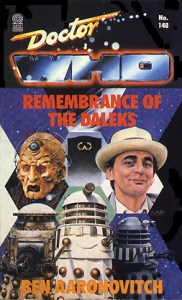
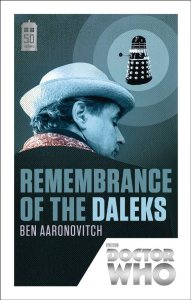

‘DOCTOR WHO – REMEMBRANCE OF THE DALEKS’
Please feel free to comment on my review.
More Daleks To Remember


I’ve read and listened to the Target novelization/audiobook of this ‘Doctor Who’ story! 🙂
‘Doctor Who – Remembrance of the Daleks’ has been an amazing read and listen. I’ve enjoyed reading this novelization of the story whilst listening to the audiobook read by Terry Molloy with Nicholas Briggs as the Daleks in the background. Who could ask for more? It’s a superb Daleky treat for me indeed.
I’ve had my CD sleeve notes of the ‘Doctor Who – Remembrance of the Daleks’ audiobook signed by Terry Molloy at the ‘Regenerations 2016’ convention in Swansea, September 2016. I recall Terry saying to me that he enjoyed reading the ‘Remembrance of the Daleks’ audiobook and he shared his memories on doing the TV story.
The Target novelization was originally published in 1990, two years after the TV story was transmitted in 1988. The story is divided into 23 chapters with a prologue at the beginning. The audiobook has the story spread across 5 audio CDs. The novelization/audiobook enables you to immerse yourself further into the story.
The book was re-released in 2013 as part of the 50th anniversary series of ‘Doctor Who’ books to celebrate the Seventh Doctor era. This is unusual since the book series mostly featured original BBC book stories. Instead, for the Seventh Doctor era, they had a Target novelization of one of the best TV stories ever reprinted.
‘Remembrance of the Daleks’ has been a great ‘Doctor Who’ book to read and I really love the story. It’s the definitive Seventh Doctor adventure for TV. I’ve re-watched the story on DVD and Blu-ray and have enjoyed the special features, which helps to enhanced the reading and listening experiences of the Target novelization/audiobook.
The Target novelization is by Ben Aaronovitch, who wrote the original TV story. Here, Ben develops and expands the scope of the story in greater detail, as it’s longer compared to early Target novelizations of the range. The ‘Remembrance’ book became the inspiration for the ‘New Adventures’ book series by Virgin Publishing in the 1990s.
For the 2013 reprint, there’s a brand-new introduction provided by Ben Aaronovitch, as he talks about adapting his TV scripts into book form and the challenges of transferring from script into prose. I like the introductions to the reprinted ‘Doctor Who’ books for the 50th anniversary, as the authors get to reflect on their writing experiences.
I immensely enjoyed hearing the audiobook narrated by Terry Molloy whilst reading the Target novelization. Terry is a superb narrator, as he provides a variety of voices for many characters in the story as well as Davros. I especially enjoyed his interpretation of Sylvester McCoy’s Seventh Doctor, making him sound Scottish and sharp.
I was quite surprised that Terry was the narrator of this audiobook, since Davros doesn’t appear until the climax of the TV story and he was mostly encased as the Emperor Dalek. However, Terry’s clear narration is very good for the story and there are moments where Davros’ presence is felt throughout the story in book and audio form.
Nicholas Briggs provides the Dalek voices in this ‘Doctor Who’ audiobook for the Target novelization. The Daleks aren’t very chatty as I expected them to be in the novelization compared to the TV story. Despite that, Nick Briggs does the Dalek voices well as always, and he provides a variety of edge and menace in how the Daleks speak.
As I’ve mentioned earlier, the changes from the TV story into the novelization are that Ben Aaronovitch adds more detail to the scope of the story and the characters in ‘Remembrance’. He adds more to the Doctor’s character, making him more mysterious, and he adds more information about the Daleks and their history.
In the book, there’s a prologue featuring a scene from ‘An Unearthly Child’. This is the scene where the First Doctor walks into the junkyard at 76 Totter’s Lane to find Susan in the TARDIS. This scene sets up the story of ‘Remembrance of the Daleks’ so beautifully and it hints about the Hand of Omega.
There are some new scenes featured in the novelization. These include a few deleted scenes from the original TV story and some new scenes written especially for the book. There were two scenes from the deleted and extended scenes item of the DVD that I expected to find in the book, but sadly they weren’t featured. 😦
The scene that I was looking forward to very much in the novelization was the extended café scene between the Doctor and the Jamaican café employee named John, who serves him a mug of tea. The scene was changed from being in the café to a London dock. It has the same dialogue from the transmitted story, but it was very disappointing.
I was also looking forward to the extended scene featuring the Doctor and Davros, where the Doctor tells Davros that he’s ‘far more than just another Time Lord’. That scene isn’t included in the novelization, which got me very annoyed, as I consider that to be a crucial scene important for the Seventh Doctor’s character.
But there are new scenes featured in the book that I really liked. More was developed on the history of the Hand of Omega. We have scenes between three Time Lords, including Omega, Rassilon and ‘the other’. ‘The other’ becomes important to the Doctor when featured in the ‘New Adventures’ book series.
In the ‘Part One’ cliffhanger scene where the Dalek is pursuing the Doctor and Ace up the stairs, the Dalek makes its entrance by crashing through a wall. This is different in the TV story, as the Dalek just appeared instead of crashed through a wall. In the book, it’s a very dramatic and effective entrance.
I enjoyed the relationship developed between Ace and Mike. Ace’s infatuation with Mike is touched upon and there’s an interesting change when Mike visits Ace in her bedroom. It was equally gut-wrenching in the book as it is in the TV story when Mike’s true colours are revealed and Ace is so angry.
The themes of racism are well-written in the novelization. I like how Ben Aaronovitch enhances the characters’ perceptions on these themes with Mike and Radcliffe as well as the Daleks. It emphasises the main point of the story, especially when Ace discovers the NO COLOUREDS sign in the window of Mike’s mother’s boarding house.
I liked the development of the Counter-Measures team, including Gilmore, Rachel and Allison. I like how their characters’ histories are touched upon, including Rachel’s. Gilmore gets called ‘Chunky’ by his men and Allison writes a censored letter to her boyfriend Julian in the final chapter of the novelization.
These additions featured in the Target novelization about the Counter-Measures team are what inspired Big Finish to create their own spin-off series called ‘Counter-Measures’. It was interesting to discover in the novelization that the Counter-Measures group inspired the U.N.I.T. organisation to be created years later.
A new character is introduced in the book called Kadiatu Lethbridge-Stewart. She’s a descendant of Brigadier Lethbridge-Stewart and she writes a report of the Counter-Measures team originating the U.N.I.T. organization. Kadiatu would later feature properly in the ‘New Adventures’ book series.
I liked how the Daleks are developed in the story, as their internal characteristics are explored as well as their evil, race-hatred clashing with their mechanical workings. Many fans would say that this book became the inspiration for the new TV series of ‘Doctor Who’ when it concerns the Daleks and the Doctor.
In the book, the Special Weapons Dalek is called ‘the Abomination’. It was interesting and disturbing to read more about the creation of the mutant creature inside the Special Weapons Dalek. Great emphasis is made about the Abomination getting madder when it mutates and the other Daleks fear it.
The battle scenes depicted in the novelization between the two Dalek factions – the Imperials and the Renegades – are greatly developed. Ben Aaronovitch describes the battle scenes in more detail compared to the TV story and he does well with depicting the battle strategies made on both sides of the two Dalek armies in battle.
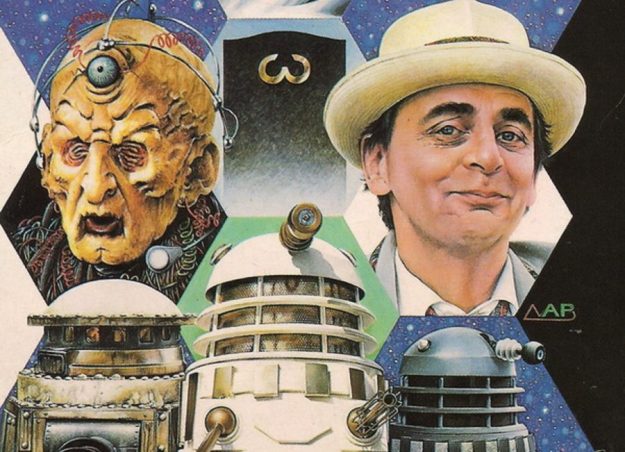
‘Doctor Who – Remembrance of the Daleks’ has been a great Target novelization/audiobook to read and listen to. I’ve enjoyed checking out the novelization whilst hearing the audiobook read by Terry Molloy. ‘Remembrance’ is one of my favourite ‘Doctor Who’ stories and I’m pleased I’ve read and heard the Target novelization/audiobook to enhance my appreciation of it.
‘Doctor Who – Remembrance of the Daleks’ rating – 9/10
| The previous story
For the Seventh Doctor was
For Ace
|
The next story
For the Seventh Doctor is
For Ace is
For Counter-Measures is |
| Return to The Seventh Doctor’s Timeline | |
| Return to Ace’s Timeline | |
| Return to The Counter-Measures Timeline | |
| Return to The Doctors’ Timelines Index | |
| Return to The Companions’ Timelines Index | |
| Return to The Allies’ Timelines Index | |
| Return to Doctor Who Timelines | |
| Return to Doctor Who | |
| Return to Sci-Fi |
 Bradley's Basement
Tim this is epic reviewing on another level my friend, this is lord of the rings epic reviewing, WOW i thoroughly enjoyed both reviews on this excellent story, i like how you compare both versions & i wish some of those scenes in the novel/audiobook were in the actual episodes.
I like that the novel fleshes out the Doctor more & gives more backstory to his adventures battling the daleks & the opening monologue with Susan about the hand of omega was a great scene.
My only issue with this adventure is why the extended version wasn’t included on DVD when the vhs video version was the extended version it’s the same with Silver Nemesis & yet Battlefield & Fenric get extended cuts.
A awesome, detailed, informative, helpful review.
LikeLiked by 2 people
Hi Simon.
Glad you enjoyed my two reviews on ‘Remembrance of the Daleks’. ‘Lord of the Rings’ epic reviewing? I’m looking forward to re-watching ‘The Hobbit’ and ‘The Lord of the Rings’ movie trilogies sometime soon. 😀
Very pleased you like how I’ve compared both the TV versions and the novelization/audiobooks of ‘Doctor Who’ stories in my reviews. I seem to have reviewed ‘Doctor Who’ novelizations quite a lot lately. I’m currently reading the ‘Warriors’ Gate’ novelization at the moment. I enjoy comparing the novelizations/audiobooks to the TV versions of ‘Doctor Who’ stories, as they allow me more insight into the stories in ways I never considered. I hope I’ll get to read the novelizations of ‘Rose’, ‘The Christmas Invasion’, ‘The Day of the Doctor’ and ‘Twice Upon A Time’ when they come out.
Glad you like the additional scenes in the book for ‘Remembrance of the Daleks’ and that the book fleshed out the Doctor more. I too wish some of those scenes in the book were in the TV story. It would have been good if they had some clips of the First Doctor and Susan from ‘An Unearthly Child’ at the beginning of ‘Remembrance of the Daleks’ to set up what’s going on in the TV version.
I didn’t know there was an extended version of ‘Remembrance of the Daleks’ on VHS. I knew about ‘Silver Nemesis’ but not ‘Remembrance’. Yeah it would have been great if they did extended versions of ‘Remembrance’ and ‘Silver Nemesis’ on DVD like they did with ‘Battlefield’ and ‘The Curse of Fenric’. One wonders why the DVD makers never did that.
Thanks for your comments, Simon. Glad you found my ‘Remembrance of the Daleks’ helpful, informative and detailed as well as awesome. 😀
Tim. 🙂
LikeLiked by 1 person
Evening Tim
I really do need to see this story as i believe it is often billed as one of the best Dalek stories. I would really like to see the scene where Ace beats up the Dalek with a baseball bat.
I have actually seen a few of the guest stars in this story elsewhere such as Michael Sheard (The Empire Strikes Back, Auf Wiedersehen Pet, Indiana Jones and the Last Crusade) and Joseph Marvell (The Fresh Prince of Bel-Air).
LikeLiked by 2 people
Hi ML.
I’m surprised you’ve not seen this story yet. I think you’d really enjoy it as ‘Remembrance of the Daleks’ is definitely one of my favourites from the Sylvester McCoy era. Yes, Ace beating up a Dalek with a baseball bat was a lot of fun. 😀
It is amazing that a number of guest stars like Michael Sheard, Simon Williams and Pamela Salem are recognisable in other productions when thinking about their ‘Doctor Who’ appearances.
Thanks for your insight. Hope you’ll get to see ‘Remembrance’ soon.
Tim. 🙂
LikeLiked by 1 person
All the blockbuster elements for Dr. Who in the 80s could finally come full circle for the classic series closure starting with Remembrance Of The Daleks. Understanding why it was necessary for the 7th Doctor to become deviously manipulative in his methods for defeating evil, and how Ace for her human morality had to take issue with it and most especially in The Curse Of Fenric, Sylvester’s explosive dialogue when facing Davros is certainly the first spark for the Doctor’s “Oncoming Storm” reputation. But it can often make me more nostalgic for the not-so-harsh characteristics of previous Doctors. For a 25th Anniversary season and just before the final season, the long time it would take to bring Dr. Who back with even better preparing for this new Doctor-ish nature was just and with all the post-Time-War conflicts being a most dramatic focal point. Thank you, Tim, for your review.
LikeLiked by 2 people
Hi scifimike,
Thanks for sharing your thoughts on ‘Remembrance of the Daleks’. I’m pleased the production team at the time did this story for Sylvester McCoy’s Doctor and Sophie Aldred’s Ace, especially with it being part of the 25th anniversary celebrations and being the first of the penultimate season of the classic TV series before it ended in 1989. It’s a story that showcases Sylvester’s Doctor well in terms of how manipulative and devious he can be and I like how the story forms part of Ace’s character journey that was prevalent in Seasons 25 and 26, almost matching to how the character journeys of companions in the new TV series are presented, especially in the 2005-2010 RTD era.
Many thanks for your comments.
Tim 🙂
LikeLiked by 1 person
In more ways than one, too.
Andrew Cartmel is on the record for using Alan Moore’s graphic novels as a source of inspiration for his approach to ‘Doctor Who’. With particular mention to ‘The Ballad of Halo Jones’. Tonally, we’d see the influence of Halo and the Hoop in stories like “Paradise Towers”. Its constructed language is reminiscent of Hoopspeak and the off-kilter setting isn’t too far removed from 2000 A.D. and its satire with a lurid smile. “Remembrance of the Daleks”, in that context, feels to me like Ben Aaronovitch’s answer to “Watchmen”.
The serial does for ‘Doctor Who’ what Moore’s deconstruction did for Silver Age superheroes. He pulled them apart, neurone by neurone, and saw how their psychology could be mapped onto the environment of the world that readers were actually living in. The 1963 of “Remembrance of the Daleks” isn’t a Zemeckis-style fantasy where the streets are spotless and everyone speaks like its an episode of ‘Blue Peter’. It’s a complex setting that’s not afraid to show a little ugliness on humanity’s part. Radcliffe and his followers were very real analogues of what was happening in London at the time. The Doctor’s contempt for humanity, a stark inversion of his marvelling in “The Ark in Space”, makes a lot of sense when the reality of history is right in your face. It’s another bit of lovely blue-collar perspective that Cartmel’s era repeatedly injects over its three years.
What’s interesting is that there’s a real undercurrent of rebellion to “Remembrance of the Daleks”. Characters spark because of differing viewpoints. Differing ideals. Picture “Attack of the Cybermen”, only a couple years ago, and its depiction of Lytton, crime and the brutality of such existences. The human characters were not depicted with any particular warmth or comradery. In fact, they were fairly homogenous. Now, contrast that with Group Captain Gilmore’s team. As much as the serial pays homage to the First Doctor’s era, there’s a strong vein of the Letts/Dicks Third Doctor era on display here. They’re not UNIT. Professor Rachel Jensen is an amalgam of Dr Liz Shaw and Barbara Wright, as much as Gilmore is of the Brigadier and Ian Chesterton. But they could easily be. A lot more so than some of UNIT’s official stand-ins later seen in “The Seeds of Doom” and similar. That’s good characterisation. An homage with a wink that can say something new about something old.
Ace is depicted as an active player. Far more so than any previous companion during the JNT era, actually. Her closest analogue would perhaps be Leela from the Fourth Doctor’s middle era. Someone who engages with the more violent aspects of the programme, so the Doctor needn’t have to. A bit like the dynamic between Richard Burton and Clint Eastwood in ‘Where Eagles Dare’. One talks, the other shoots. As first impressions go, we get a really nice sense of Ace as a person. Her morality is front-and-centre. She doesn’t, I notice, mention to the Doctor that she left the house because of what she found in the window… But it’s pretty evident that’s why. We will see a lot of well-written mileage out of the character hereafter. Rarely is she wasted.
And the Doctor himself? Well, funny thing… The fuming bitterness he demonstrates here was present from his first recognition of the Rani. The Seventh Doctor hasn’t changed that much in that regard. What we begin to see, something not quite addressed in previous stories, is a new, unique sort of melancholy. Probably best exemplified in his talk in the cafe. There was a concerted push to make the character more mysterious. More alien. Where the Sawardian approach was to make him more brutish, the Cartmel approach is a lot more Mercurial. Does the Doctor take himself more seriously? That’s up for debate. There’s certainly a more grave attitude to the events around him. People suffer and die, are expected to suffer and die, and that upsets him. As distant as he feels, there’s a new connection here between the Doctor and our guest cast. He’s involved in the world, not just passing through it. That speaks to the much broader strengths of this particular era.
After a hiccuping Season 24, we have a story that knows what it wants to say, how to say it, and has a production team that is capable of doing so. The programme has shown it can get back on its feet and do even better than it has before. How? Well… Remember the hypnotised Chin Lee from “The Mind of Evil”? The first Pertwee story to really engage with the 1970s and have something to say about phobias? “Remembrance of the Daleks”, with its hypnotised schoolgirl, has something to say. Something about 1987 that it’s using 1963 as a medium to present to its audience. We fought against fascism then, we fought against it now. Whatever its shape; Dalek or Radcliffe, fiction or fact. The view to the past is a comment on the present.
‘Doctor Who’ is now a part of the world again and not just passing through it.
LikeLiked by 2 people
Hi Wolfie,
Thanks for sharing your thoughts on ‘Remembrance of the Daleks’. I enjoyed your insight into this story. I’ve not read any of Alan Moore’s comics like ‘The League of Extraordinary Gentlemen’ and ‘Watchmen’, though I’ve heard things about them. Interesting how you label this story as Ben Aaronovitch’s answer to ‘Watchmen’. I also like how you highlight some of the characters, particularly the Counter-Measures team in being combinations of characters from 1963 and U.N.I.T. – with Rachel Jansen being a combination of Liz Shaw and Barbara and Group-Captain Gilmore being a combination of the Brigadier and Ian. I enjoyed your insight into Ace and the Seventh Doctor as characters and how the approach to the TV show in the Andrew Cartmel era as script editor is very different to how Eric Saward did things in his era.
Many thanks for your comments.
Best wishes,
Tim 🙂
LikeLiked by 1 person
Remembrance of the Daleks is one of my favorite Doctor Who serials.I love the reference to Bernard Quatermass and the British Experimental Rocket Group. They are also mentioned in Planet of the Dead. In my headcanon the First Doctor was the scientific advisor to Quartmass in the founding stages of the British Experimental Rocket Group similar to the role he later played in UNIT. 🤣
LikeLiked by 2 people
Hi Zack,
Thanks for sharing your thoughts on ‘Remembrance of the Daleks’. I’m pleased this is one of your favourite ‘Doctor Who’ stories. Interesting how you mention the references to Quatermass and such. I’ve not seen any ‘Quatermass’ serials myself and it’s intriguing how you’ve concluded that the First Doctor was the scientific advisor to Bernard Quatermass in the British Experiment Rocket Group and how it led him to being a member in U.N.I.T. I probably should check out the ‘Quatermass’ serials someday. 😀
Many thanks,
Tim 🙂
LikeLiked by 2 people
Here’s a lovely little detail: The fourth and final televised ‘Quatermass’ serial, penned by Nigel Kneale and broadcast in 1979 by Thames Television, had a familiar executive producer — Verity Lambert.
That version of the character (played by John Mills) shows up as Professor Bernard “-ermass” in “The Dying Days” at the very end of the VNAs. Among a plethora of other cameos to influences on and around ‘Doctor Who’ in the 1990s. That final serial is set roughly around the time of that novel, but tonally, I’d say it has a lot in common with the restlessness of “Nightshade”.
LikeLiked by 2 people
Hi Wolfie,
Thanks for letting me know about the ‘Doctor Who’ details connected to the ‘Quatermass’ serials. Ah, interesting that the fourth and final ‘Quatermass’ serial in 1979 was executive produced by Verity Lambert. Her experience of producing ‘Doctor Who’ must have helped a lot with being involved in that serial. 🙂 Hmm. Interesting the Professor Bernard character from the 1979 serial shows up in ‘The Dying Days’ VNA book. I’ve yet to check out that story as well as the ‘Nightshade’ book (I’ve heard the audio adaptation of that story only once).
Many thanks,
Tim 🙂
LikeLiked by 2 people
I think you would enjoy it. Unfortunately, the first story, The Quatermass Experiment, is missing from the BBC archive ( why does that sound familiar? 🤣). It was remade. After that is the imaginary named Quartermass 2 followed by Quartermass and the Pit. That is followed by the radio serial The Quartermass Memoirs. I watched them all on YouTube.
LikeLiked by 2 people
Hi Zack,
Thanks for letting me know about the ‘Quatermass’ serials on YouTube. Hopefully I’ll check them out soon.
Best wishes,
Tim 🙂
LikeLiked by 2 people