

‘THE SEEDS OF DEATH’
Please feel free to comment on my review.
Ice Warriors and T-Mat with the Second Doctor, Jamie and Zoe
The Ice Warriors are back to cause trouble in their second TV outing in ‘Doctor Who’!
I can’t remember exactly when in the late 2000s, but my Dad went on conference trips to London when at work. He would come back and get me new classic ‘Doctor Who’ stories on DVD for me to enjoy. One was the original 2-disc DVD of ‘The Seeds of Death’ featuring Patrick Troughton’s Doctor.
I enjoyed ‘The Seeds of Death’ very much, although I was disappointed by the quality of special features provided on the original 2-disc DVD edition. The original DVD release of ‘The Seeds of Death’ was in 2003. It is amazing how much time has changed since that first DVD release of the six-parter.

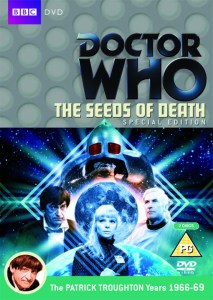
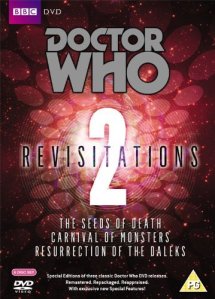
Now I have the 2-disc Special Edition DVD of ‘The Seeds of Death’ which was released in 2011 as part of the ‘Revisitations 2’ DVD box set that also features ‘Carnival of Monsters’ with Jon Pertwee and Katy Manning as well as ‘Resurrection of the Daleks’ with Peter Davison, Janet Fielding and Mark Strickson. The new DVD has those original DVD special features as well as some new additional ones.
‘The Seeds of Death’ is a six-part story originally by Brian Hayles, who created the Ice Warriors in their first TV story called…um, ‘The Ice Warriors’. These ‘Doctor Who’ monsters became so popular in the first outing, both by the production team and the public, that it was natural they’d come back.
Brian Hayles was originally going to do a different ‘Doctor Who’ story featuring the Ice Warriors compared to ‘The Seeds of Death’. That would have been ‘Lords of the Red Planet’ which featured the Ice Warriors on Mars. Sadly it didn’t happen, though the tale got made onto audio by Big Finish.
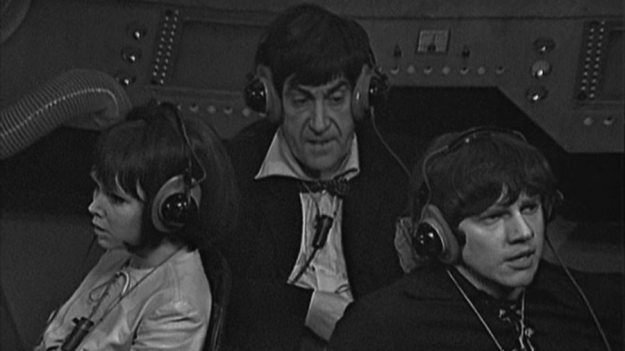
When Brian Hayles wrote ‘The Seeds of Death’ for TV instead, there were some production issues regarding the story. Script editor Terrance Dicks decided to rewrite most of the story from ‘Episode Three to Six’ without Brian Hayles consent, though Terrance has profusely apologised to Brian for it.
‘The Seeds of Death’ takes place in the late 21st century. It depicts an Earth that has become totally dependent on T-Mat. T-Mat can teleport people and medicines around the world in an instant. The idea sounds very sound and good for a future scenario, but there are no rockets used in this setting.
The T-Mat system then breaks down which cripples the Earth. The cause of this is at the relay station on the Moon. Little known fact: this story was transmitted in the same year Apollo 11 landed on the moon. This relay station has been taken over by the Ice Warriors who intend to invade planet Earth.

The Ice Warriors intend to use seed pods to spread a deadly fungus on the planet Earth. They’ve hijacked T-Mat in order to achieve this. The Doctor, Jamie and Zoe come to Earth at this time and travel in a rocket to get to the Moon to sort out the Ice Warriors. Will they get to defeat these foes?
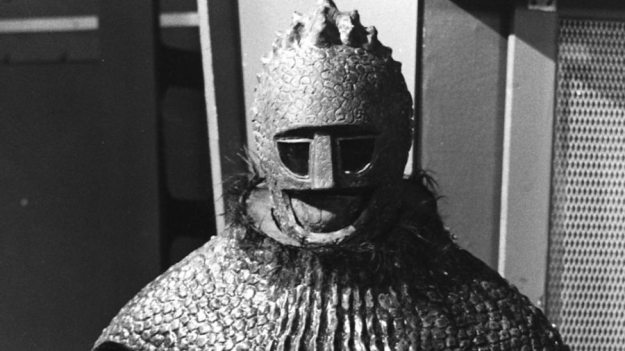
I have to be honest with you. I’m not a big fan of the Ice Warriors as a ‘Doctor Who’ monster. Don’t get me wrong, I have enjoyed their stories and it is fun that they are the Martians of the ‘Doctor Who’ universe. But I’m not as excited about them as other fans are. They also hiss and breathe a lot.
It’s just as well that I saw ‘The Seeds of Death’ first before any other Ice Warriors story in the TV series. It was slow starting at first, but then it got exciting by the time we got to the last four episodes of the story. It may have to do with Terrance Dicks’ rewrites, no disrespect to Brian Hayles.

The tension builds up well when the Doctor and his companions are trying to stop the Ice Warriors on the relay station when on the moon. The Ice Warriors’ invasion for Earth becomes clearer when they spread the seed pods across varying cities on the planet, creating foam-like fungus everywhere.
Patrick Troughton excels as the Doctor in this story. I like how he balances both the comedy and drama of his performance in the character. He can be funny when he’s running away from the Ice Warriors. But he can also be so serious and cunning when he confronts the Ice Lord Slarr in the tale.
The Doctor unfortunately gets knocked by a seed pod when he holds one in his hand and he’s absent for most of ‘Episode Four’. Fortunately he comes back into the fold and helps to save the day. I like when he gets anxious for Jamie and Zoe and he tries to reach them at the Weather Bureau building.
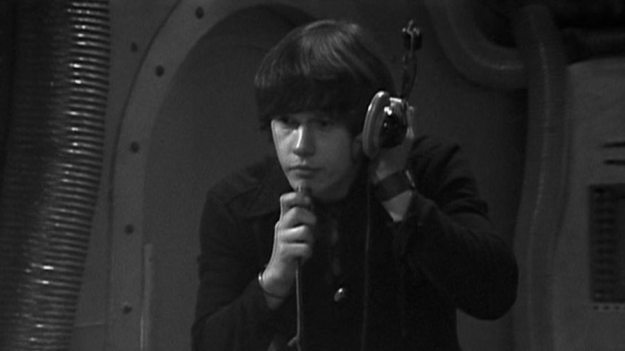
Frazer Hines is equally great in this ‘Doctor Who’ adventure as Jamie. There are times when Jamie’s out of his depth, especially when he’s in a futuristic setting. But Jamie is determined to help out and is fiercely loyal to the Doctor and Zoe, especially as they go into space in a rocket towards the Moon.
I liked it when Jamie gets to distract an Ice Warriors by jumping right in front of him and running away in order for Zoe to get to the Weather Bureau door to let the Doctor in. I also liked it when Jamie decides to go up to the Moon via T-Mat and he helps save the Doctor by fighting Ice Warriors.
Wendy Padbury is lovely as Zoe in this adventure. I’ve met Wendy and Frazer at conventions and find them to be really nice people. Zoe clearly demonstrates her skills as a companion in this story, especially when she gets to be smart. She even has her own cliff-hanger at the end of ‘Episode Four’.

There’s a moment when Zoe lets the Doctor into the Weather Bureau and he’s covered in foam-like fungus stuff. The scene was filmed at Ealing Studios. Wendy couldn’t help it. She simply laughed once she saw Patrick Troughton enter in and he’d slipped onto the floor. We forgive you, Wendy. 😀
The Ice Warriors are led by Alan Bennion as Ice Lord Slaar. Slarr is a different type of Ice Warrior compared to the others, as he’s sleeker and agile in design. He also seems pretty ruthless and merciless as are the other Ice Warriors, played by Steve Petters, Tony Harwood and Sonny Caldinez.
On Earth, there’s Ronald Leigh Hunt as Commander Radnor. He’s in charge of the T-Mat operations that take place in the UK reception area. Radnor is a fiercely determined, good-hearted man who wants to see T-Mat functioning again, sort out the mess with the Ice Warriors and to save the Earth.

There’s also Louise Pajo as Gia Kelly, the manager of T-Mat Earth Control in London. Miss Kelly is pretty, young woman who is fiercely efficient in her job. She knows her stuff in T-Mat and shows no-nonsense. She also has this charm about her and clearly on the good side when sorting out trouble.
There’s also Philip Ray as Professor Eldred. Eldred is an old rocket scientist, who’s dismayed about Earth being dependent on T-Mat and not using rockets. He’s called in to help which he grudgingly adheres to. Eldred mostly helps on Earth once the seed pods begin to attack the planet in an instant.
The cast also includes Terry Scully as Fewsham, a weak man who helps the Ice Warriors and betrays his people, simply because he wants to live. There’s also Ric Felgate as Brent; Harry Towb as Osgood; Christopher Coll as Phipps; Hugh Morton as Sir James Gregson and John Witty as the Computer Voice.
The DVD special features are as follows. On Disc 1 of the 2-disc Special Edition DVD, there’s a commentary with Frazer Hines, Wendy Padbury, director Michael Ferguson and script editor Terrance Dicks. There’s also an info-text commentary to option to enjoy and a ‘coming soon’ trailer for ‘Planet of the Spiders’, starring Jon Pertwee and Elisabeth Sladen.
On Disc 2, there’s the making-of documentary, ‘Lords of the Red Planet’, with behind-the-scenes cast and crew interviews. There’s also ‘Sssowing the Ssseedsss’ which features interviews with Sonny Caldinez and Alan Bennion who played the Ice Warriors as well as make-up designer Sylvia James. There’s also ‘Monster Masterclass’ with director Michael Ferguson and the ‘Monsters Who Came Back For More!’ featurette with Nicholas Briggs and ‘Doctor Who Magazine’ assistant editor Peter Ware. There’s also a photo gallery of the story and the ‘TARDIS-Cam No. 6’ CGI model sequence. There’s also PDF Materials including a ‘Radio Times Listings’ of the story. There’s also an Easter Egg to look for on this which is a behind-the-scenes look of the DVD commentary with Frazer Hines, Wendy Padbury, Michael Ferguson and Terrance Dicks. It focuses on Wendy’s laughter in the story.
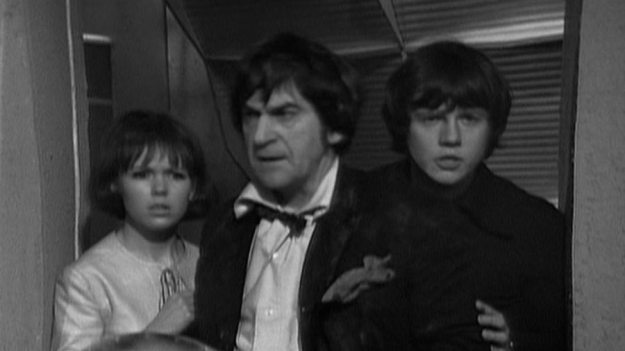
‘The Seeds of Death’ is a very enjoyable ‘Doctor Who’ story with the Ice Warriors and featuring Patrick Troughton, Frazer Hines and Wendy Padbury as the Doctor, Jamie and Zoe. I’m glad I saw this. The Ice Warriors might not be my favourites, but I gained personal enjoyment of this adventure.
‘The Seeds of Death’ rating – 8/10
| The previous story
For the Second Doctor was For Jamie was For Zoe was |
The next story
For the Second Doctor is For Jamie is
For Zoe is
|
| Return to The Second Doctor’s Timeline | |
| Return to Jamie’s Timeline | |
| Return to Zoe’s Timeline | |
| Return to The Doctors’ Timelines Index | |
| Return to The Companions’ Timelines Index | |
| Return to Doctor Who Timelines | |
| Return to Doctor Who | |
| Return to Sci-Fi |
 Bradley's Basement
One of my favourite Second Doctor stories, i loved the build up this adventure, i agree the Ice Warriors hiss a bit too much but Pat, Frazer & Wendy share such a great chemistry together & are all given something meaningful to do.
Awesome review Tim, summed up perfecty mate.
LikeLiked by 2 people
Hi Simon.
Glad you enjoyed my review on ‘The Seeds of Death’. Glad you enjoyed the build-up to this adventure and that you enjoyed the Second Doctor, Jamie and Zoe in it and the chemistry they have together.
The Ice Warriors have grown on me as a ‘Doctor Who’ monster and I’ve enjoyed them in the Big Finish audios they’ve been in. I wouldn’t mind giving the Ice Warriors a try in writing them in one of my ‘Doctor Who’ stories someday.
Tim. 🙂
LikeLiked by 1 person
Great review Tim.
I decided to watch ‘The Seeds of Death’ on Britbox in preparation for ‘God of War’ from the ‘Forty 1’ box set. I really enjoyed checking it out. Pat Troughton as the Doctor, Frazer Hines as Jamie and Wendy Padbury as Zoe are an excellent Tardis trio. It was tense when the Doctor got shot by one of the Ice Warriors and when he was trapped outside the weather base with the seeds before Zoe let him in. I laughed along with Zoe when the Doctor managed to get in covered in what looked like bubble bath. I loved Zoe’s cliff-hanger as well.
My favourite guest character from this story was Gia Kelly played by the late Louise Pajo. I’m glad this was my introduction to the Ice Warriors. I did find their hissing annoying at times, but I still enjoyed them. Interesting that Sonny Caldinez played one of them a year or so after playing Kemel in ‘The Evil of the Daleks’. I hope to one day watch the original ‘Ice Warriors’ story as well as the Peladon duology, ‘Empress of Mars’ and listen to ‘Lords of the Red Planet’ and other Ice Warrior Big Finish audios.
I hope to check out ‘Snakedance’ on Britbox over the weekend. I’m still preparing my review of ‘Arc of Infinity’. I’ve started using Britbox to check out ‘The Brittas Empire’ starring Chris Barrie which I’m enjoying so far.
Take care, WF92.
LikeLiked by 2 people
Hi WF92,
Glad you enjoyed my review on ‘The Seeds of Death’. Thanks for sharing your thoughts on the story and the characters. Glad you enjoyed the story on Britbox. I’m hoping to get around to hearing the ‘Forty’ box set soon and do a quick review on it in February.
I hope you’ll enjoy more Ice Warrior stories in future. Interesting that ‘The Seeds of Death’ is your introduction to the Ice Warriors. I believe it was my introduction to the Ice Warriors too. 😀
Looking forward to your thoughts on ‘Snakedance’. Glad you started watching ‘The Brittas Empire’. I’ve reviewed that series already. Glad you’re enjoying it so far. I’ve looked on Britbox and I see that the first five seasons are up. There should be seven. Hopefully the last two seasons will be uploaded to Britbox soon.
Many thanks for your comments.
Tim 🙂
LikeLiked by 2 people
As with any recurring alien monster villainy in the Whoniverse, which story you may circumstantially see first (either for the classic or modern series) affects how you view other stories. In my case with the Ice Warriors, it was The Monster Of Peladon. Not the most profound first impression. But thankfully I found much better regard for their original villainy thanks to seeing The Seeds Of Death on VHS (a serendipitous mix-up at the time with The Seeds Of Doom). As with the Zygons and the Silurians, they have become redeeming with all the Doctor’s regards for peace finding easier footholds.
Gia Kelly was indeed a good example of female empowerment for sci-fi TV in the 60s. And Fewsham was a most memorable example of how even the weakest of characters can find their strength when needed. For all the controversial human dramas of the sci-fi space age, The Seeds Of Death can remind us that even for our future evolution beyond the Earth, some human flaws and frailties may persist. But all in all, one of the best stories to end Patrick Troughton’s era on. Thank you, Tim, for your review.
LikeLiked by 2 people
Hi scifimike,
Thanks for sharing your thoughts on ‘The Seeds of Death’. Glad you enjoyed my review.
It’s interesting how monsters like the Ice Warriors, Silurians and Zygons have turned out in terms of having more facets about them instead of being standard lumbering monsters that attack people and are thoroughly evil. Not something you’d find in Daleks, Cybermen and, to an extent, the Sontarans, that are often rigid in approach in terms of villainy. It matches to the Klingons and Romulans in ‘Star Trek’ who often have more aspects to their villainy compared to the Borg and the Jem’Hadar that are more rigid in terms of approach as villains.
Thanks for sharing your thoughts on Gia Kelly and Fenshaw as characters in the story as well as how the future is presented in ‘The Seeds of Death’. I hope Season 6 will get a Blu-ray box set release soon, as it’ll be good to revisit ‘The Seeds of Death’ and update my review on it with extra thoughts on the story and characters.
Many thanks for your comments.
Best wishes,
Tim 🙂
LikeLiked by 1 person
The Jon Pertwee era was pretty pioneering in that regard. It predicted the more… I don’t want to say “humanised”. I have problems with that term here. The more… Empathic writing of alien species when it came to science-fiction of the 1990s onward.
The idea that individuals shape the narrative as much as whole cultures themselves was David Whitaker’s original approach in William Hartnell’s era. It wasn’t until Season 3 that the idea of “monsters” and “villains” really took over. It’s ironic, actually. When the programme went to colour, they went back to basics which meant… more complex views of “the Other” than the series was known for at the time.
The Silurians, for instance, were originally envisioned as a comment on immigration, but to a modern eye, they look especially palpable as stand-ins for indigenous societies wiped out by colonisation. It becomes difficult to see such a people as inherently evil when they stand-in for a Cherokee Indiginous American or a Pitjantjajara First Nations Australian. Indeed, the Brigadier’s orders at the end of The Silurians look a lot like ethnic cleansing…
The Daleks stood in for Nazi fascism and Cold War nuclear fears. The Cybermen stood in for utilitarianism and probably fears of Soviet communism. The Sontarans stood in for colonialism and ultranationalism (hence, Jingo Linx). These have broadened and evolved, but remained largely the same.
The Daleks now stand in for fascism, authoritarianism and systemic abuse as a whole (i.e. With particular emphasis on the Daleks using the rules of a society to destroy it). The Cybermen also discuss attacks on body autonomy (i.e. My body, my choice). The Sontarans are also now a stand-in for manifest destiny.
For the Ice Warriors… It’s difficult to find a one-for-one analogue to compare them with. In their first appearance, they feel like a stand-in for the stereotypes of the Nordic Viking. Their brutality is quite striking, even for the more militant Patrick Troughton era, and have no qualms about shooting down unarmed opponents. Especially scientists. The body count all round is shockingly high.
It’s a chicken and egg thing… For my part, I think I was much more aware of the Ice Warriors from broader expanded universe material. Things like Red Dawn, Transit, The Bride of Peladon, Legacy, and so on. Stories that operated under a much wider view of what Martian culture and society could be.
I believe I also watched The Curse of Peladon first, so to go from Izlyr to Slaar was quite interesting. It’s like going from the grandson to the grandfather. In the context of Izlyr’s time, Martians like Slaar would have been viewed as atavistic terrorists. Hardliners. In Slaar’s own time, he’d have probably been a war hero, if not for the Doctor.
I really love this story. It’s a well-plotted invasion with a strong sense of worldbuilding both among its characters and its use of technology.
Miss Gia Kelly and Zoe are both used extremely well. I remember being surprised by Zoe’s cold-bloodedness when she decides, on her own volition, it’d be best to kill the Ice Warriors in the base with heat. I really like this era’s archetype of the intelligent woman who gets to do stuff and that the script doesn’t cheapen that.
Fewsham feels like a character from Eric Saward’s era. Like Richard Mace, like Stein, like Turlough… The sympathetically-portrayed coward. Predicting the appeal of a character like Vila from Blake’s 7 by a wide margin. I love that his final act of defiance is something he only achieves from the courage he gains in trying to save Zoe. He must have known his defiance would kill him in the end, but he still did it. Bravo.
It’s also the first of two scripts that begin, as written by Brian Hayles, and conclude as written by Terrance Dicks. The Seeds of Death is one. The Monster of Peladon is the other. There’s a particular moment where one episode definitively shifts from one writer to the other in a recap of current events. Can you spot it?
It’s a time-zone I would really like to revisit at some point. Commercial transmats, ancient rocketry, Moonbases, artificial weather control stations, solar collectors…
LikeLiked by 2 people
The most individualized alien monsters of the Whoniverse like Broton, Styggron, Scaroth and the Terileptil leader were always most interesting. I can understand issues with the term ‘humanized’ because, quite realistically, not needing to be human to still qualify as a person is what makes all these non-human characters in our sci-fi and fantasy all the more appealing. Even if they still for whatever reasons have to be the villains. So it was consequently very intriguing when few shows like Blake’s 7 and Sapphire & Steel could dispense with outwardly non-human villainies. With all that the actors playing the otherworldly villains, with or without makeup or masks, were talented enough to personalize the villains with, Jon Pertwee’s era was indeed most important to bring a most essential seriousness to Doctor Who which, even with how fantastical the franchise is now, might still sufficiently endure.
As for likeable or sympathetic ‘cowards’ in our fictional shows, Vila, Arnold Rimmer and Richard Mace naturally earn points for shares of humorous relief. In Fewsham’s more serious case, with plenty of questionability of how somebody like him would be seen fit to have his job in the first place, he was certainly the easiest character to focus on in our hopes that he should and would somehow be redeemed. It was the same with Stien whose heroic death in the end was cheered greatly for when I first saw that scene at a Doctor Who convention. Pex in Paradise Towers may tend towards the stereotypical kind of coward. But his quite redeeming ending with “Pex Lives” graffitied on the wall was still most heartfelt.
LikeLiked by 2 people
It’s that old argument of nature and nurture. Lords of the Red Planet tackled it quite well with Zaadur, whose hatred for the unaugmented Martians went beyond contempt into a visceral disgust. She was revolted by their supposed inferiorities and that revulsion governed a lot of what happened with her character.
(John Dorney did a fantastic job. To me, she feels like a more acutely written version of Chessene from The Two Doctors.)
The villains you’ve described I think all possess that same contempt for humanity. Bob Holmes typically wrote neurotic, controlling personalities as his villains. Robert Banks Stewart adds a certain haughty contempt for others, as well, with writing Broton. Balancing the Zygon’s admission that he misjudged the Doctor’s cleverness when he’s electrocuted with Broton’s enraged, but what he sees as civilised ultimatum to the Doctor back in London. Civilised superiority to his lessers; i.e. anyone who isn’t a Zygon. Scaroth is very similar.
The Terileptil Leader is much closer to the neurotic and controlling Phantom-like personalities of Robert Holmes’s script. Rather than taking everything in stride, the Leader tends to act rashly, impulsively and with barely restrained aggression. He has that wonderful line to Mace: “So much pride in something so stupid!” The same contempt as with Broton is there, but there’s an added pathos, as well. The Leader seems genuinely moved that the Doctor would offer to help him. We never find out what the Terileptil was sentenced for, though. The Doctor is an ex-criminal himself, so his hand-waving of that detail is quite interesting for both characters.
Styggron’s conquest of Earth feels not too dissimilar from Styre’s experiments against the colonists in The Sontaran Experiment. An opportunity to test out his fascinating new toys. The whole scheme is reminiscent of the legendary KGB training villages of the era (Mission: Impossible would tackle that subject matter in the decade prior). What makes him distinctive is his sadism. Guy Crayford is as much a toy as the androids are. It’s a naked bit of nastiness that drives the character throughout the narrative.
Bringing that back around to Slaar… The Ice Lord Slaar is a bit interesting because he’s both always in control and under pressure to succeed. The killings on Moonbase feel like an efficient way to keep personnel under control. The Ice Warriors operate through terror tactics and expediency. Everything is done without gloating, without any sense of megalomania, and they feel like they are well-experienced in these invasion operations. In retrospect, there is a glimmer of Hans Gruber and his men from the original Die Hard there.
Fewsham, I think, acts precisely how someone in those circumstances would act. It’s a blind spot in modern science-fiction, but this is prior to the wave of military sci-fi that grew from Aliens. We expect everyone to be combat trained and to work under battle conditions. The people on Moonbase, though, they’re scientists and technical specialists, not soldiers. Their courage is a remarkable exception, probably not the expected rule.
Fewsham feels like the weak link in the team — especially after getting chewed out by Osgood — and his characterisation feels as though it comes from a lack of confidence. What’s particularly satisfying with his arc is that he seems to be a source of disappointment to those around him. Osgood, Kelly, even the Doctor, all seem to think he can be better than he is, and breeze past him when he’s not.
When Fewsham finally rises to meet that challenge, starting with protecting Zoe, he ends up being singularly instrumental in halting the Martian invasion. At the cost of his own life. Exactly as Fewsham thought it would be. However, if not for his lack of bravery, he’d never have made it that far. It’s an interesting end for the character. It’s almost like something from Combat.
Pex is interesting because he feels very much like the little boy pretending to be all grown up. No different from the Kangs. But unlike the Kangs, he’s been almost entirely on his own. I know they wanted a typical Hollywood action hero look for him, but I kind of like that the clothes and demeanour all feel two sizes too big to fit. It’s endearing.
Stein is a bit tricky because he’s essentially two characters bundled into one–the real!Stein and the Dalek!Stein. The real!Stein has all the characterisation that makes him pop. Soft, nervous and eager to be out of the whole situation. When Galloway is shot, he doesn’t go and find him, he mournfully slinks off into the dark… But he does have the presence of mind to warn the Doctor, Tegan and Turlough about the soldiers in the warehouse, so he’s not necessarily self-serving.
The Dalek!Stein is far more confident, narrow-focused and, well… Curiously, he’s the one that sets Lytton on the path that the Daleks might do him over. So, also not entirely loyal, either. The two halves of Stein, the conditioned and unconditioned sections of his brain, are pitted against one another until the original Stein wins out. He’s predominantly the one we see in control until that final sacrifice. I like to think that the two parts of Stein became one by the end. The Daleks killed their conditioned version and the version that slammed his body against the self-destruct was “our” Stein.
LikeLiked by 2 people
Hi scifimike, Hi Wolfie,
Thanks for sharing your latest thoughts on ‘The Seeds of Death’ and on the various monsters/villains in ‘Doctor Who’. It’s always a challenge when deciding what counts as good ‘Doctor Who’ villains and monsters, especially when you don’t want them to be over-the-top and considered two-dimensional. I like that the Ice Warriors have found a footing in TV stories and other mediums like audios and books to make them more complex than they already are. ‘The Curse of Peladon’ is a good example of that as well as ‘Lords of the Red Planet’, which I’ve not heard in a long time but still consider to be good.
Fenshaw’s character development from a coward to being self-sacrificing is fascinating, as he starts off with trembling with fear, saying “I want to live!” to defying the Ice Warriors by exposing their invasion plans to everyone listening, saying, “Every word has bee heard on Earth!” And it took an amount of courage to save Zoe from the Ice Warrior about to attack her at the end of ‘Episode Four’ leading into ‘Episode Five’.
Just to go off on a tangent, I’m saddened the Terileptils haven’t made a return to ‘Doctor Who’, as I would like them to make a return and see how they would be handled in a modern sense with new technology and costume design as well as enhancing their characters and exploring their love for art, beauty and war. It’s a shame the Terileptil Leader wasn’t given a name like Linx was in ‘The Time Warrior’ so that audiences could identify with him more. The Ice Warriors have been given names in their TV stories, why not the Terileptils?
Many thanks and best wishes,
Tim 🙂
LikeLiked by 1 person