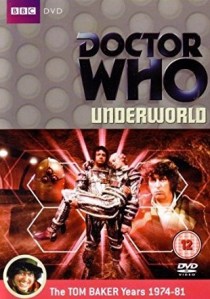
‘UNDERWORLD’
Please feel free to comment on my review.
The Quest is the Quest with the Fourth Doctor, Leela and K-9
It’s time for us to check out the fifth story in Season 15 of the classic ‘Doctor Who’ TV series. It’s also the penultimate story in the season and this is where the Graham Williams era of ‘Doctor Who’ truly comes into its own. For you see, this is the first story where Robert Holmes isn’t involved in it at all. 🙂
Beforehand, Robert Holmes was the script editor of the first three stories of Season 15 and he wrote ‘The Sun Makers’, the fourth story of the season. Here, this is where Anthony Read finally takes over as script editor and puts his own mark on it in matching to Graham Williams’ direction for the TV show.
Robert Holmes would return to write two more stories for ‘Doctor Who’ in the 1970s, including ‘The Ribos Operation’ and ‘The Power of Kroll’ for ‘The Key to Time’ season. He also wrote more stories in the 1980s under the John Nathan-Turner/Eric Saward tenure of the series, but that’s for another time.
‘Underworld’ is where we get to see what the Graham Williams/Anthony Read era of ‘Doctor Who’ is going to be like from now on in the rest of Season 15 and the whole of Season 16. We see what direction the TV show will go in compared to how Philip Hinchcliffe and Robert Holmes handled things.
Beforehand, Philip Hinchcliffe and Robert Holmes were inspired by movies to tell the ‘Doctor Who’ stories they wanted to tell in their era of the TV series. ‘Planet of Evil’ had elements of ‘Dr. Jekyll and Mr. Hyde’ as well as ‘The Forbidden Planet’ and ‘The Brain of Morbius’ was inspired by ‘Frankenstein’.
‘The Deadly Assassin’ was also inspired by ‘The Manchurian Candidate’. Of course, most of these were based on original works of literature by authors like Robert Louis Stevenson, Mary Shelley and Richard Condon, but it was the movie adaptations of these classic stories that inspired Hinchcliffe and Holmes.
For Graham Williams and Anthony Read, they decided to go further back in terms of classic literature and legends for inspiration on their ‘Doctor Who’ stories. ‘Underworld’ is a fitting example, as it takes its cue in terms of basing its story on the Greek myths and legends from long ago, which is invigorating.
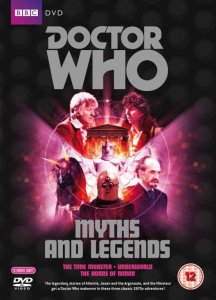
The first time I saw ‘Underworld’ was when it was originally released as the second story in the ‘Myths and Legends’ DVD box set trilogy. The first story was ‘The Time Monster’ starring Jon Pertwee’s Third Doctor and the third and final story was ‘The Horns of Nimon’ starring Tom Baker as the Fourth Doctor.
As I’ve indicated in my updated ‘Time Monster’ review, the ‘Myth and Legends’ collection of ‘Doctor Who’ stories isn’t something that would appeal to many ‘Doctor Who’ fans. This is especially when you consider the production values these stories have. This is the case for ‘Underworld’, unfortunately.
But I still like checking out these ‘Myths and Legends’ stories in ‘Doctor Who’ when I can. I certainly enjoyed them when I first saw them on DVD back in May 2010 as a birthday present. ‘Underworld’ is arguably the weakest of the three stories in the collection, but I was inspired from watching it on DVD.
I’ll explain more about that later in the review as we go through the story. ‘Underworld’ is a four-part adventure by Bob Baker and Dave Martin. This is their second contribution to Season 15 of ‘Doctor Who’ with the first story being ‘The Invisible Enemy’ where they introduced the new character of K-9.
Gosh, the Bristol Boys are busy. 😀 In ‘Underworld’, the Fourth Doctor is painting (Painting what exactly, I don’t know) and Leela is playing around the console for a bit. The TARDIS reaches the edge of the cosmos, which is all black, and K-9 informs the Doctor and Leela that there’s a spacecraft nearby.
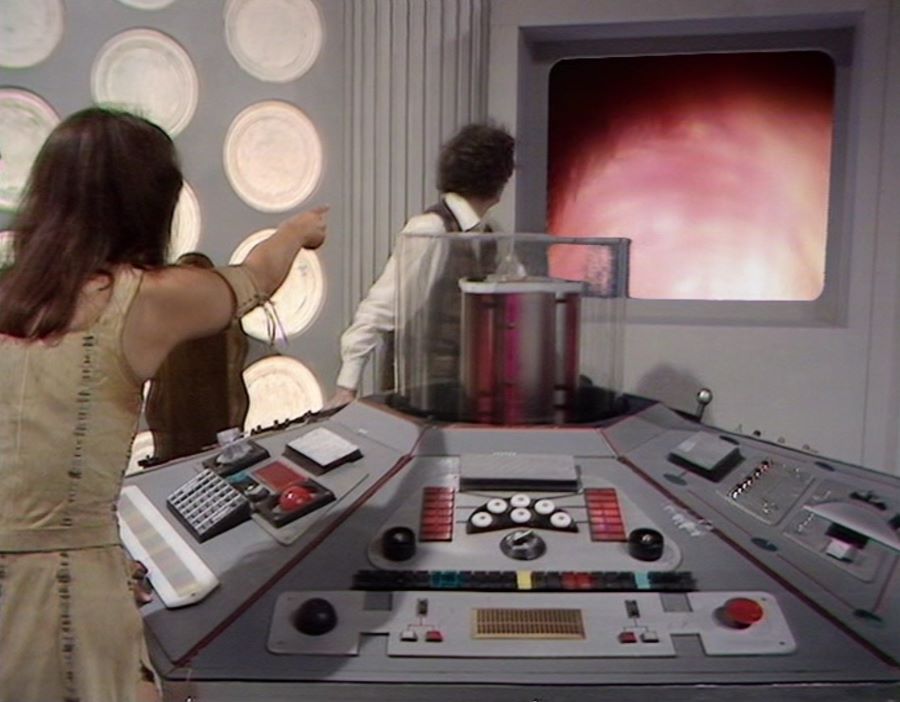
They’re also about to head into a spiral nebula. They manage to escape and the TARDIS lands inside the spaceship, which happens to be the R1C. The R1C is a Minyan ship belonging to the Minyans of Minyos. Gosh, I wonder if Tom Baker found that a tongue-twister of a line of dialogue when he said in the story.
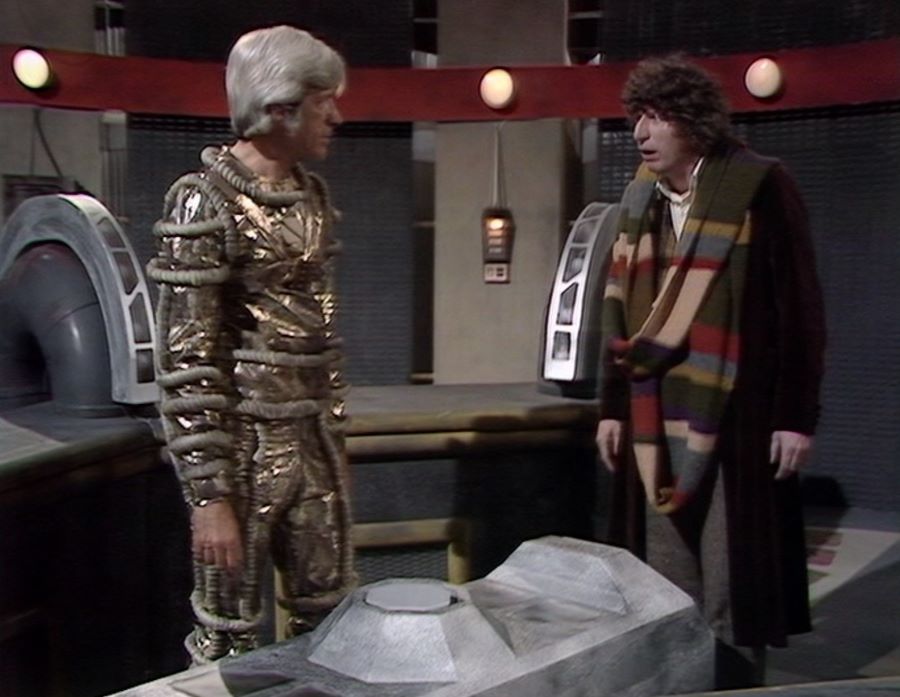
The R1C is captained by Jackson of Minyos. Jackson leads his band of heroes who are on a quest to recover the Minyan race banks containing the future of their civilisation, which is on board the lost ship called the P7E. The Doctor, Leela and K-9 offer their help to Jackson and his brave band of heroes.
Apparently, the Minyans of Minyos are connected to the Time Lords somewhat, especially when Jackson and his crew hear the TARDIS materialisation sound effect, and they check their records to discover it’s the technology of the gods. Yes, it seems the Minyans regard the Time Lords as their gods.
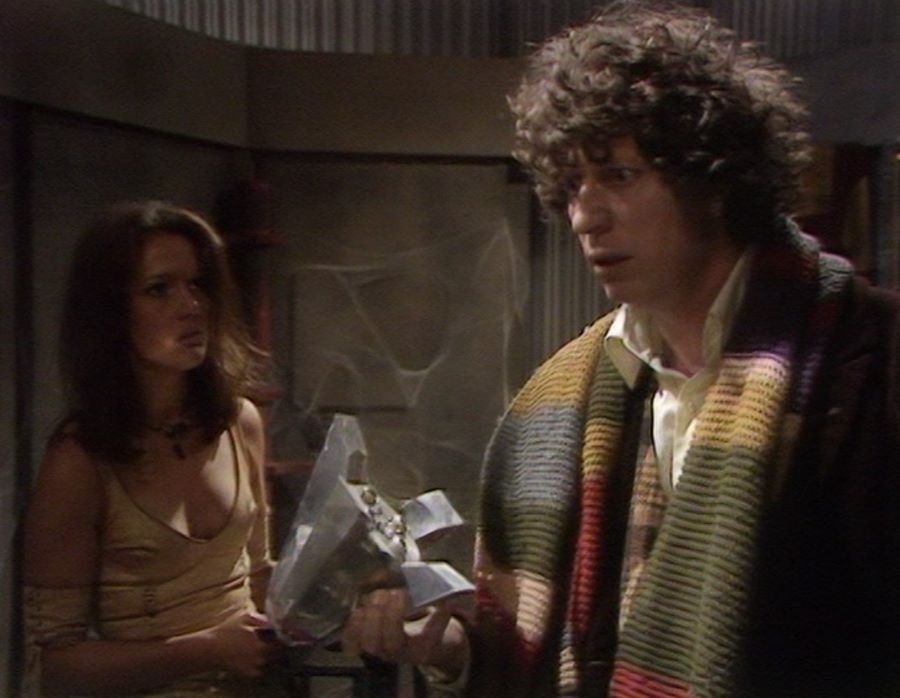
This is what led the Time Lords to start their policy of non-intervention, according to the Doctor. Despite being regarded as gods when the Time Lords gave the Minyans medical and scientific aid; better communications and better weapons, civil war occurred. This caused the planet to be split apart.
Now, I sort-of did something similar in one of my ‘Doctor Who’ stories called ‘The Prime Factor’ where the Time Lords originally gave the Prime Factor weapon to the people of Cybeross. I’d forgotten about what occurred between the Minyans and the Time Lords when I wrote ‘The Prime Factor’ at that time.
But it’s interesting how these connections are made, and it gives more background in making the Time Lords not as perfect in their god-like status as they claim to be. It heightens to what’s established in ‘The Deadly Assassin’ with the Time Lords as a flawed society with their power that’s used or misused.
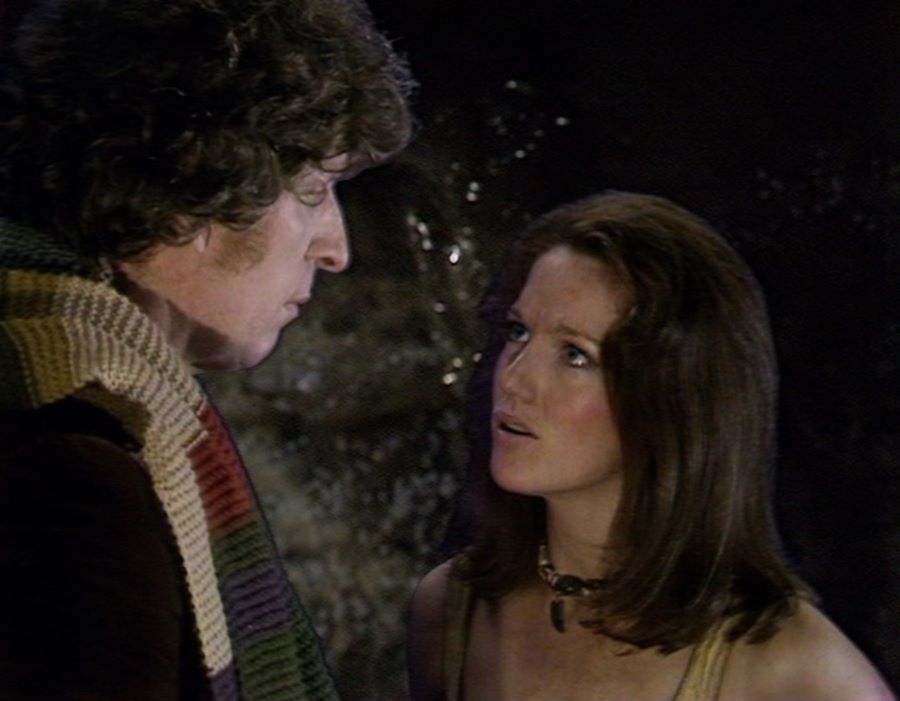
Like I said, ‘Underworld’ is a weak story both in the ‘Myths and Legends’ DVD collection of ‘Doctor Who’ and in Season 15 of the classic TV series. Now I’m not saying that the story is awful. Far from it. There’s a good source of inspiration that would have made ‘Underworld’ very fascinating to check out.
It’s just unfortunate that the production values of ‘Underworld’ are rather poor and on the cheap side, especially when you consider that this story was made towards the end of the season and an inflation was a huge issue in the late 1970s. I’ll address more on the cheap aspect of this story later in this review.
Let’s talk about the good aspects of this ‘Doctor Who’ story for a bit. Apparently, ‘Underworld’ is an intriguing science-fiction take on the Greek legend of ‘Jason and the Argonauts’. So, this would probably be called ‘Jason and the Astronauts’ instead. 😀 This is a concept that I like and appreciate. 🙂
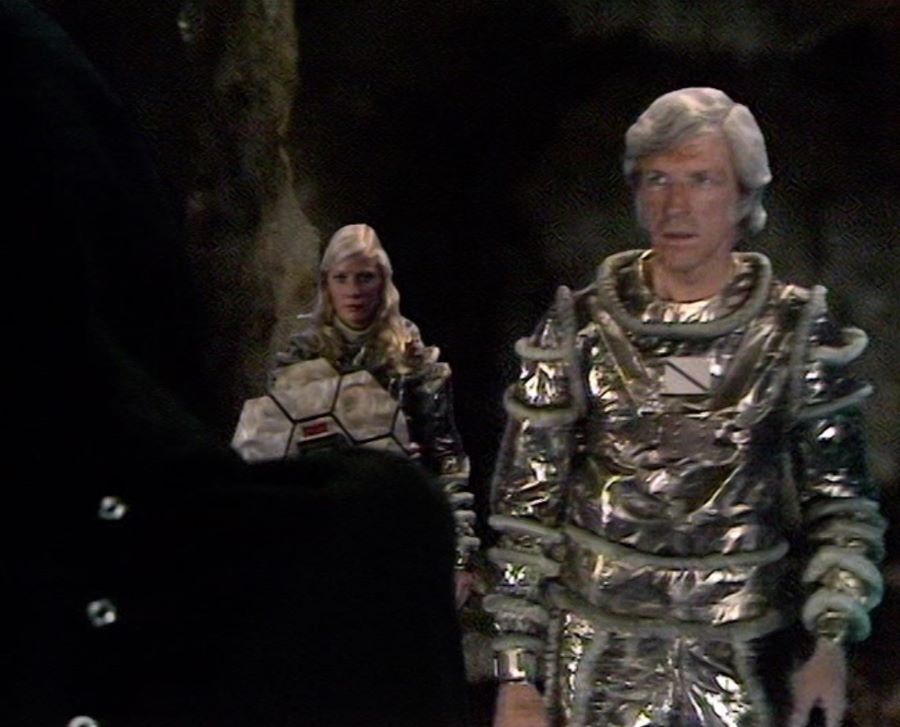
I’ve not come across any film adaptations of ‘Jason and the Argonauts’ before. I know some were made, including the 1963 film with stop-motion animation skeletons, if I’m correct. When it comes to Greek myths and legends on film, I’ve seen the films ‘Clash of the Titans’ and ‘Wrath of the Titans’. 🙂
Those are the 2010 and 2012 films. But my knowledge on Greek mythology isn’t as great as I’d like it to be. I might have referenced Greek myths a few times in my ‘Doctor Who’ stories, including the second episode of ‘The Coins of Deno’ called ‘The Greek Horror’, which has Greek mythological creatures.
That comes from checking out the ‘Groovy Greeks’ segments of the BBC ‘Horrible Histories’ TV series. 😀 But it’s intriguing how Bob Baker and Dave Martin put together this story based on the Greek legend of ‘Jason and the Argonauts’ in order to win over Anthony Read who became the script editor then. 🙂
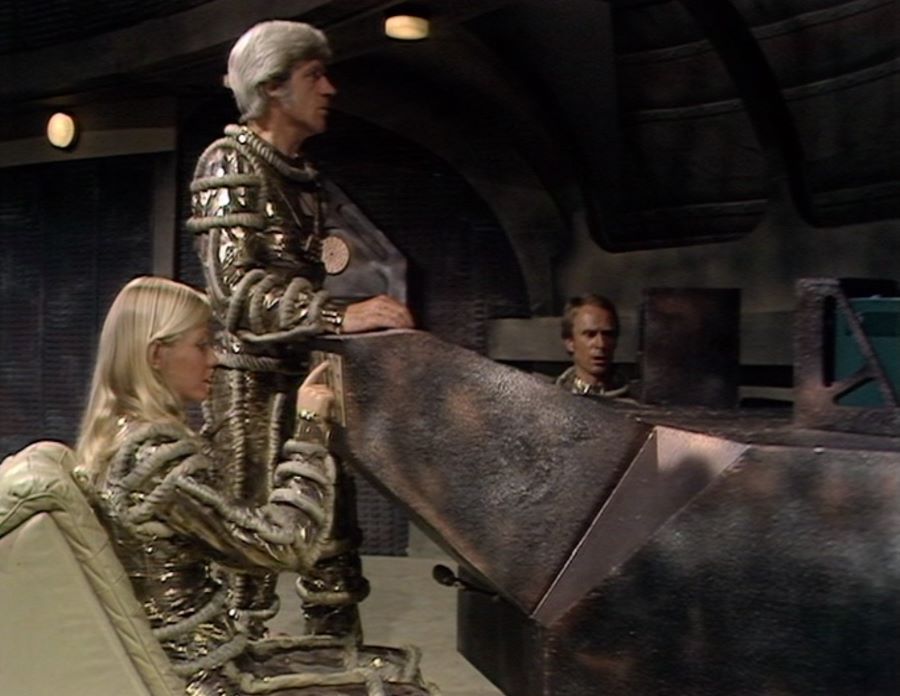
The making-of documentary ‘Into the Unknown’ on the ‘Underworld’ DVD provides a summary of the ‘Jason and the Argonauts’ story, which was interesting to check out in comparing it to how it turns out in the ‘Doctor Who’ story. This is certainly with some of the character names based on Greek myth. 🙂
Jackson of course is based on Jason himself. Even the Doctor calls Jackson ‘Jason’ by the time the story comes to an end. I’m surprised Jason wasn’t Jackson’s first name in the story. Or maybe it was and it wasn’t clarified properly in the story. Even Leela became puzzled by the Doctor calling Jackson ‘Jason’.
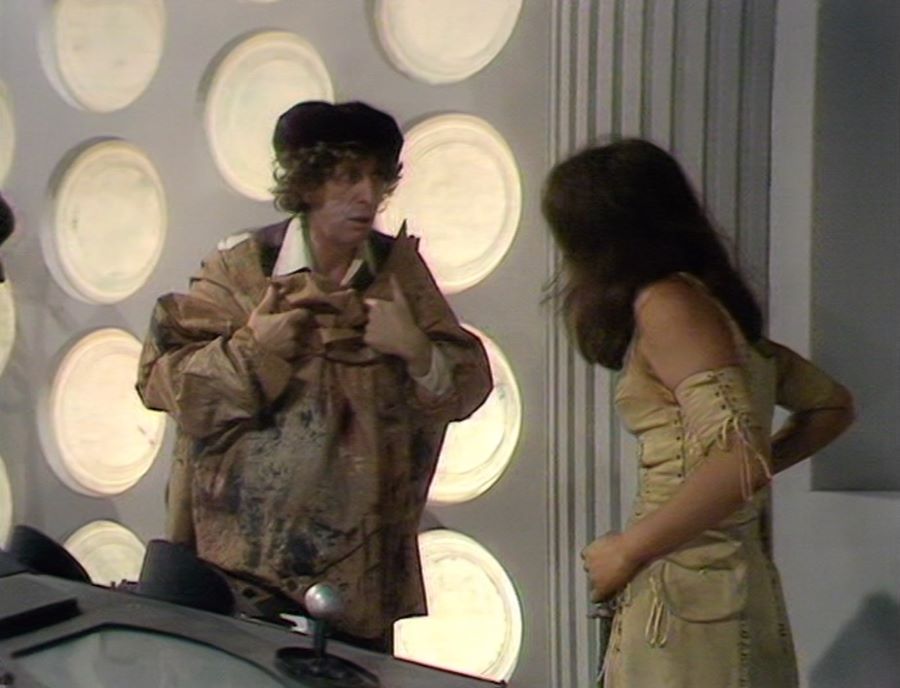
Leela: Why did you call him Jason?
Doctor: Who?
Leela: Jackson.
Doctor: What? I called Jackson ‘Jason’?
In the original ‘Jason and the Argonauts’ legend, Jason was on a quest to search for the Golden Fleece that hung on a tree at ‘the end of the world’ in Colchis. There are certain parallels in the original Greek legend in the ‘Doctor Who’ story with Jackson and his band of heroes recovering the Minyan race banks.
And if that wasn’t clear enough, the Minyan race banks are gold, much like the Golden Fleece in the original ‘Jason and the Argonauts’. Jackson’s team players also have names similar to their ‘Argonauts’ counterparts if you know where to search for them in the ‘Into the Unknown’ making-of documentary.
Herrick happens to be an analogue of the Greek hero Heracles (or more widely-known under his Roman name Hercules. Interesting 😀 ). Orfe happens to be an analogue of the Greek hero named Orpheus, who was one of the Argonauts that had the ability to calm down wild animals with his music.
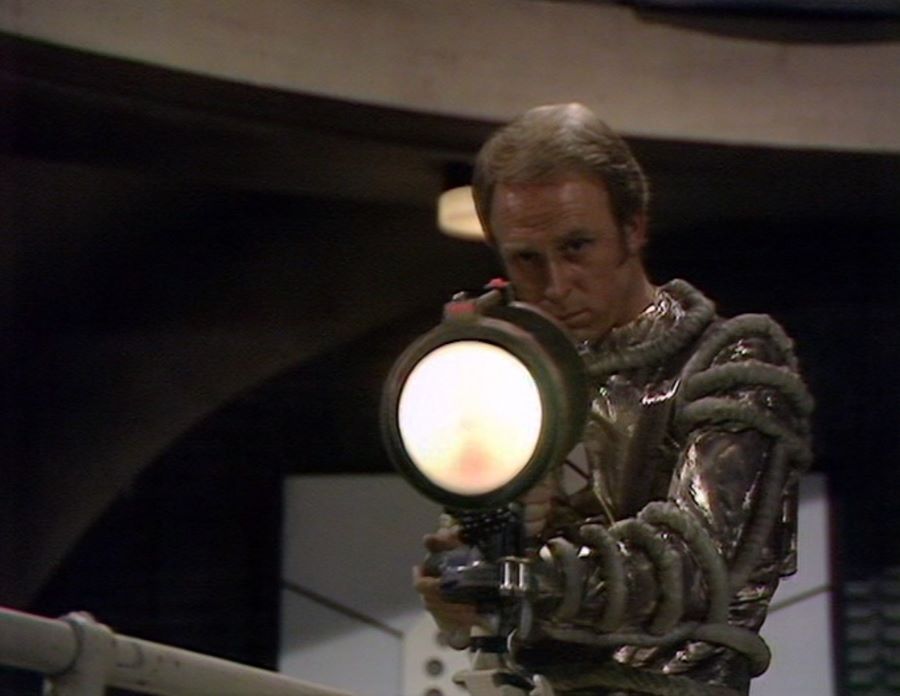
In ‘Underworld’, Orfe has a pacification gun to calm people down. 😀 Tala happens to be an analogue of the Greek heroine called Atalanta, who was one of the Argonauts in some versions of the myth. There are probably more Argonauts in the Greek myth compared to the four depicted in ‘Underworld’.
The P7E ship that Jackson and his team are looking for is based on the Greek goddess called Persephone who was imprisoned in the underworld in ‘Jason and the Argonauts’, I believe. The Trogs who are on the P7E planet are loosely based upon the Greek tribe cave dwellers called the Troglodytes.
And the Oracle supercomputer that’s aboard the P7E ship is loosely based on the Oracle featured in the Greek myth of ‘Jason and the Argonauts’. Sometimes the details of these Greek myths can be sketchy, especially in comparing what’s similar and what’s different in the original and adapted stories.
I’m sure Bob Baker and Dave Martin knew how the Greek myth worked out in its original form, and it was fascinating to see it depicted in the ‘Doctor Who’ story. Whether viewers would get the ‘Jason and the Argonauts’ references whilst seeing it is another matter. I personally found myself entertained.
It also works on an educational value, especially when you’re trying to share the story to those who are unfamiliar with the Greek myth. Granted, it’s only revealed by the Doctor at the story’s end what it was all about, but I quite like how the sci-fi angle attempts to deliver an intriguing version of the tale.
It certainly inspired me with how I wrote my ‘Doctor Who’ story ‘Junglos 4198’, the second story of ‘The Salvador Trilogy’, with it being inspired by ‘Treasure Island’ by Robert Louis Stevenson. It was my sci-fi take on the story with elements of ‘Spider-Man’ and ‘The Lord of the Rings’ thrown into the mix.
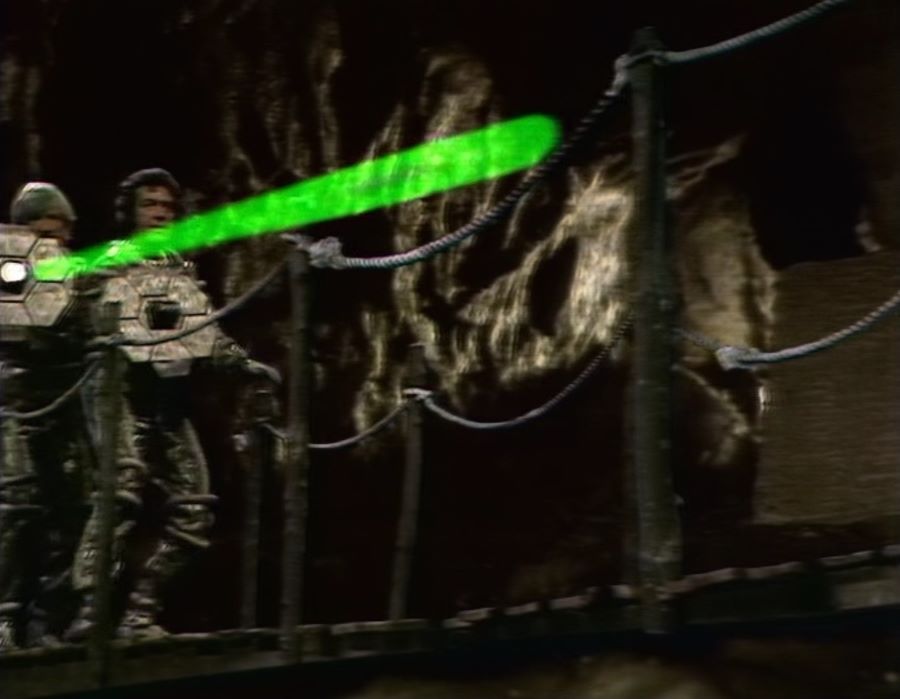
I revealed by the story’s end through the Fifth Doctor that the young boy Jason Drodo was almost similar to Jim Hawkins from ‘Treasure Island’, but it was an intriguing endeavour to keep the ‘Treasure Island’ references up like how ‘Underworld’ tries to keep the ‘Jason and the Argonauts’ references up.
It’s also intriguing how Bob Baker and Dave Martin had the story mostly taking place inside a planet-like structure where the P7E is buried. This, of course, leads to an issue regarding how ‘Underworld’ was made as a ‘Doctor Who’ story, making it one of the most troubled productions made in the series.
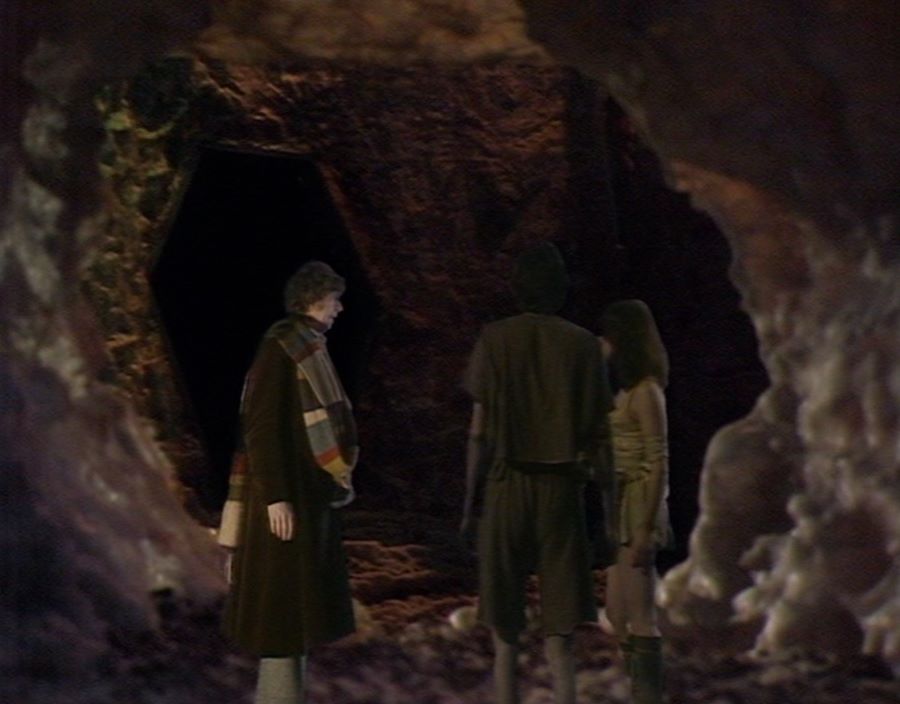
You see, the story itself was filmed in the BBC studio (BBC Television Centre at the time) and there was only one set built for the story. The set was used for the R1C spaceship and was redressed for the P7E spaceship interior design. A good example of using one set for two locations featured in the story.

What does that say about the rest of the story? Well, for the most part, when we’re inside the planet-like structure containing the P73, the story takes place inside a lot of cave structures. It’s cave corridors one after the other. Sometimes it’s often the same cave corridor that our characters are walking in. 🙂
But this isn’t one set design of a cave corridor. Oh no! You see, ‘Underworld’ employs the technology of Colour Separation Overlay (CSO) for short. Essentially, the actors would act against a blue screen and there would be a model effects shot added to the actors in a scene during the story’s recording. 😐
Nowadays, we take blue screen and green screen visual effects techniques for granted, particularly when it’s used in movies for digital effects as well as for photos when attending a convention and you wish to have a shot with your favourite ‘Doctor Who’ star against a TARDIS console room backdrop. 🙂
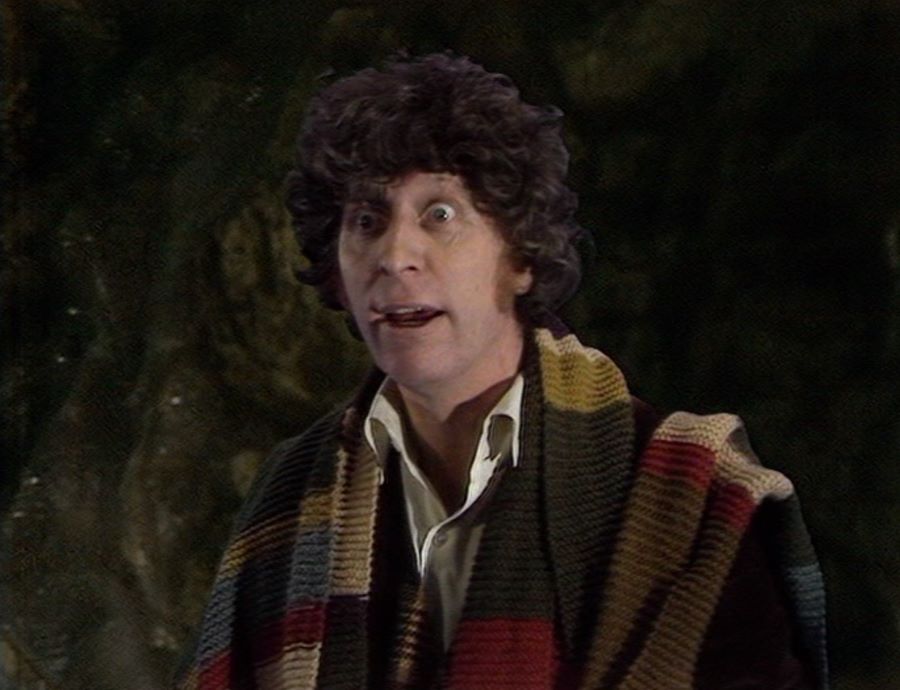
Back then in 1977 and 1978, the CSO method was very time-consuming and hard work for the actors, particularly when it hadn’t used so much up until that point. CSO had been used in ‘Doctor Who’ before, particularly in the Jon Pertwee era when producer Barry Letts wanted to try out new things. 🙂
You can see the CSO effect being used in ‘Doctor Who’ stories like ‘Carnival of Monsters’, ‘The Green Death’ and ‘Planet of the Spiders’. Very often, the technique would be used to film a scene that wasn’t able to be done on location or to mix in actors against a model shot for a particular scene in a story. 🙂
Before ‘Underworld’, the CSO method was used very predominantly in the 1973 TV production of ‘Alice Through The Looking Glass’, starring Sarah Sutton. In that, Sarah and the cast were acting against a blue screen while illustrated backdrops were used to create the scenes they were in whilst recording.
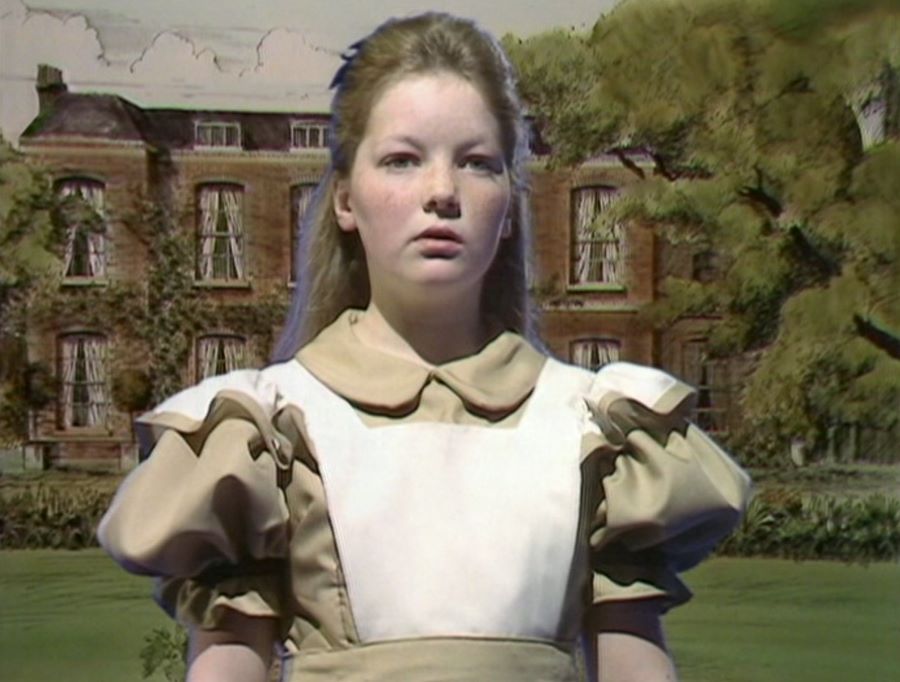
Here in ‘Underworld’ however, the CSO method was used to create sense of realism in the story, as the Doctor, Leela, K-9 and others had to be in real caves instead of illustrations. Plus, ‘Underworld’ is a longer TV story in four episodes compared to ‘Alice Through The Looking Glass’ as a television movie.
It must have been very brave for the ‘Doctor Who’ production team to employ the CSO method in that way for ‘Underworld’ and I must commend the story’s director Norman Stewart for giving it his best shot with trying to effectively use CSO. But it’s a method that wasn’t without problems and hardships.
Before ‘Underworld’, Norman Stewart was a production assistant on ‘Doctor Who’ stories like ‘The Daleks’, ‘Planet of Giants’, ‘The Web Planet’, ‘The Savages’, ‘The Underwater Menace’, ‘Day of the Daleks’ and ‘The Invisible Enemy’. CSO was also used for ‘The Invisible Enemy’ under Norman Stewart.

Seeing the potential for CSO in ‘Doctor Who’ through ‘The Invisible Enemy’, Graham Williams must have also seen the potential in Norman Stewart being a director. Norman was invited to direct ‘Underworld’ on the understanding he could handle the very daunting aspects of using CSO in the story.
Thankfully, ‘Underworld’ wasn’t Norman Stewart’s only ‘Doctor Who’ as a director as he went on to direct ‘The Power of the Kroll’ in ‘The Key to Time’ season the following year. Whilst that story was better in terms of a production compared to ‘Underworld’, that wasn’t without its problems either. 😐
I’ve seen bits and pieces of the raw studio recordings of ‘Underworld’ and could tell it was challenging to utilise the CSO approach in the story. Tom Baker must have found it very hard-going and I can imagine him ranting away about the delays in making this ‘Doctor Who’ TV adventure work altogether.

I wouldn’t blame Tom in that regard if he found it tedious to making ‘Underworld’ through the CSO approach. I also wouldn’t blame him for being impatient, since I’m sure many of the cast, including Alan Lake who played Herrick in the story, I believe, were finding it tedious work to make ‘Underworld’.
In some respects, as a viewer, it does make ‘Underworld’ very hard to watch as a ‘Doctor Who’ story, as very often the CSO effect can be grating at times. Very often, it’s often the same cave-like corridor some characters are in and you can tell certain shots are being repeated throughout the TV adventure.
There’s a sequence where you see the Doctor, Leela and a character called Idas going down a gravity well-like tunnel to get to the P7E spaceship centre of the planet, which makes a nice change from seeing a cave-like corridor. But then, you can also spot the dodgy CSO effects playing up in that regard.
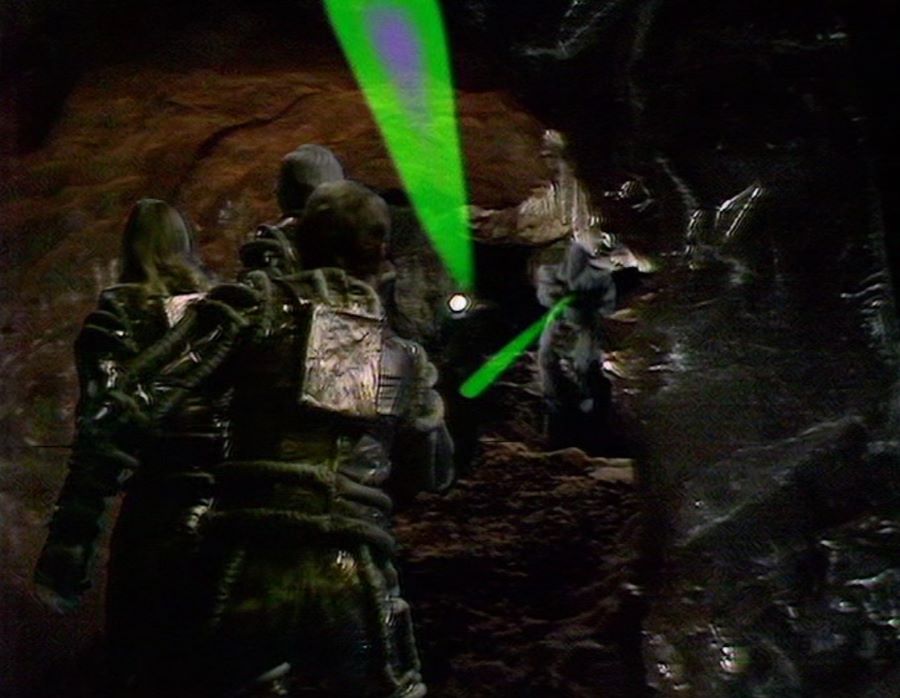
Yeah, the CSO effects are dated by this stage and I don’t think a CGI effects option could save it on Blu-ray. It must be why it’s not included in the Season 15 Blu-ray box set of ‘Doctor Who’. Even when watching ‘Alice Through The Looking Glass’ quite recently, I can see the CSO effects being quite dodgy.
Sometimes, there are shots where the CSO effects work very well if you’re trying not to look too hard at them. I don’t blame the production team for trying their best in using this technology, as it must have been very challenging for the BBC to get convincing visual effects back then compared to today. 😐
It also must have hurt the ‘Doctor Who’ production team when at the same time ‘Underworld’ was made, the first ‘Star Wars’ movie ‘A New Hope’ was released at cinemas. As I understand it, producer Graham Williams, script editor Anthony Read and Tom Baker went to the cinema to watch ‘Star Wars’.

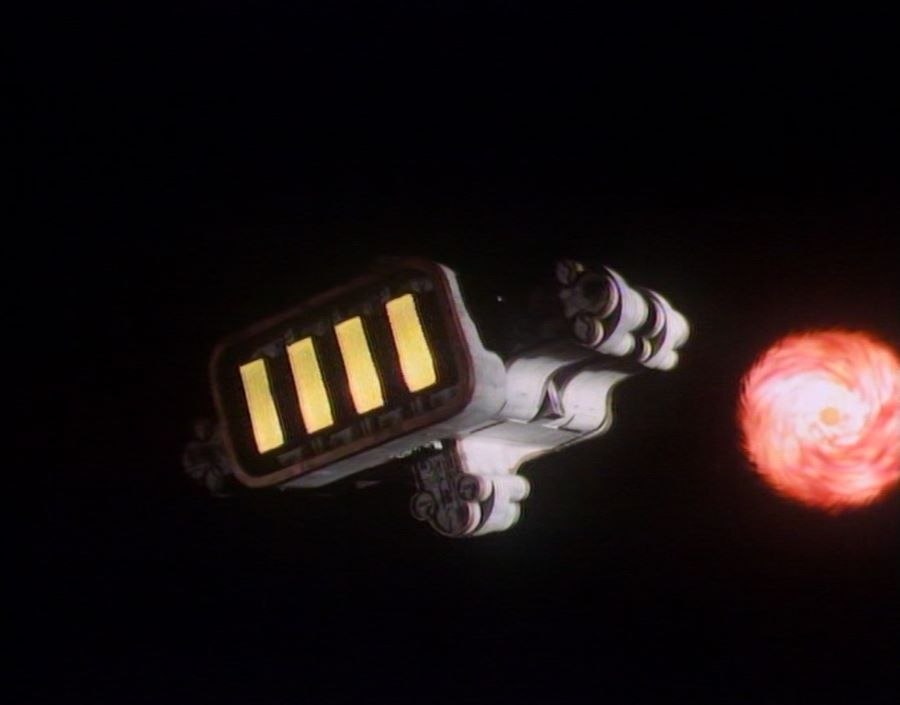
Anthony Read and Tom Baker were impressed by the film, but Graham Williams was dismayed that the production values were better in the ‘Star Wars’ movie compared to what they were doing in ‘Doctor Who’. Fortunately, some impressive exterior spaceship shots were produced in ‘Underworld’.
An aspect of ‘Underworld’ being made on the cheap side was presumably that an attempt was made to give ‘The Invasion of Time’, the season finale, more money in terms of the budget it required. That’s something that’s not unreasonable and makes sense in that regard when producing the season finale.
I mean, we should be thankful that ‘The Invasion of Time’ didn’t end up looking so cheap like ‘Underworld’ seemed to be. Well, for the most part anyway. Otherwise, we would have had a season finale looking like ‘Time-Flight’ and ‘The Twin Dilemma’, which were season finales made in the 1980s.

Tom Baker delivers a superb performance as the Fourth Doctor in this ‘Doctor Who’ adventure. Like I said, Tom Baker must have found it a challenge to make ‘Underworld’ on the production values it had. He seemed to cope okay, and you can see it in some of the raw behind-the-scenes studio footage.
In terms of the character, well, there’s the revelation he makes to Leela that the Time Lords and the Minyans crossed paths with each other, and it was intriguing to see and hear his stance on it. When Idas asks the Doctor if he’s a god, he claims not to be, which is intriguing, considering he’s a Time Lord.
I don’t think ‘Underworld’ has Tom Baker’s Doctor stand out much in terms of a character, especially when the drive is more on Jackson and his team’s quest. Some of his one-liners can be amusing, particularly when Leela asks about the Trogs eating ‘processed rock’ and he mentions about Blackpool.
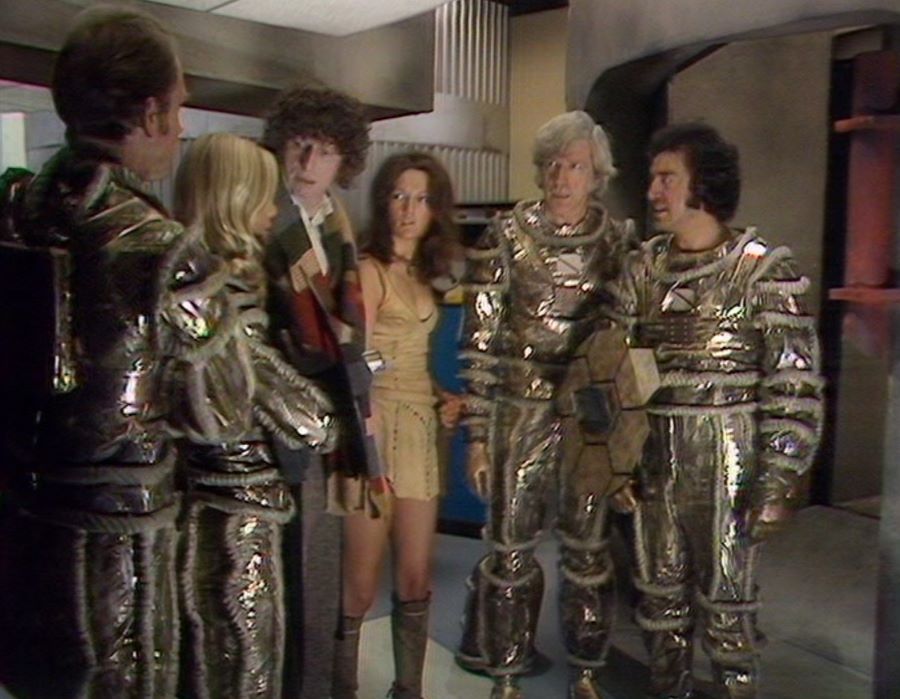
It was amusing when Toby Hadoke in the ‘Behind the Sofa’ item for ‘Underworld’ remarked that Tom Baker’s “Oh, get on with it!” was something that the actor would have probably said during the behind-the-scenes making of the story. Perhaps that “Oh, get on with it!” line was not in the original script.
Louise Jameson is equally good as Leela in this ‘Doctor Who’ adventure. Like Tom Baker’s Doctor, Leela doesn’t have a strong outing in ‘Underworld’. This is probably where Leela is losing her momentum as a character under Anthony Read as the script editor compared to when she was under Robert Holmes.
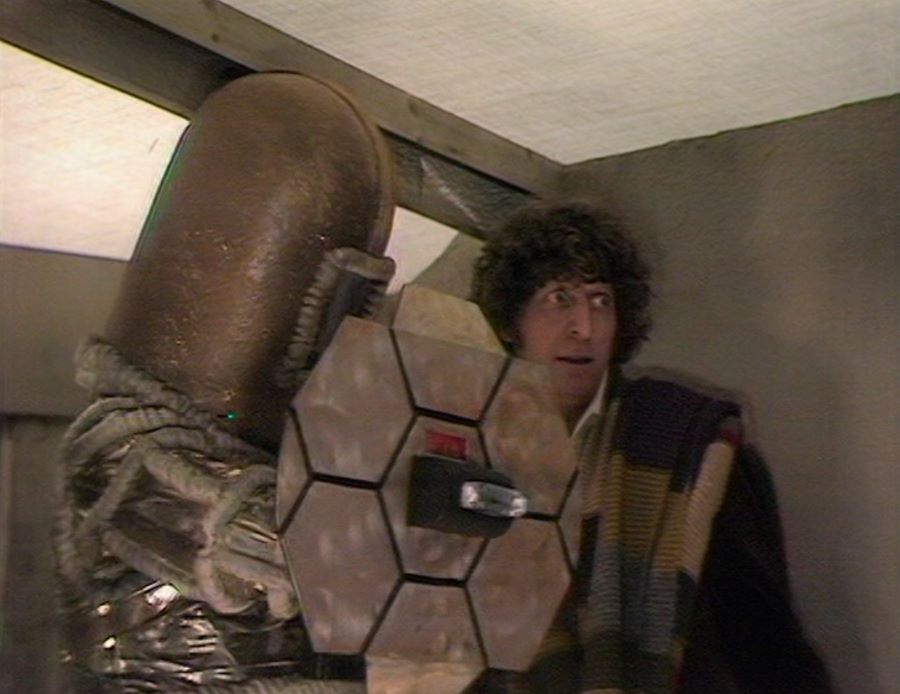
She has her good moments, particularly when she’s so feisty and gun-ho. This is especially when she uses the shield-gun she finds in the cargo hold of the R1C ship once she, the Doctor and K-9 end up there via TARDIS in ‘Part One’. I also enjoyed those deadpan humourous moments featuring Leela. 😀
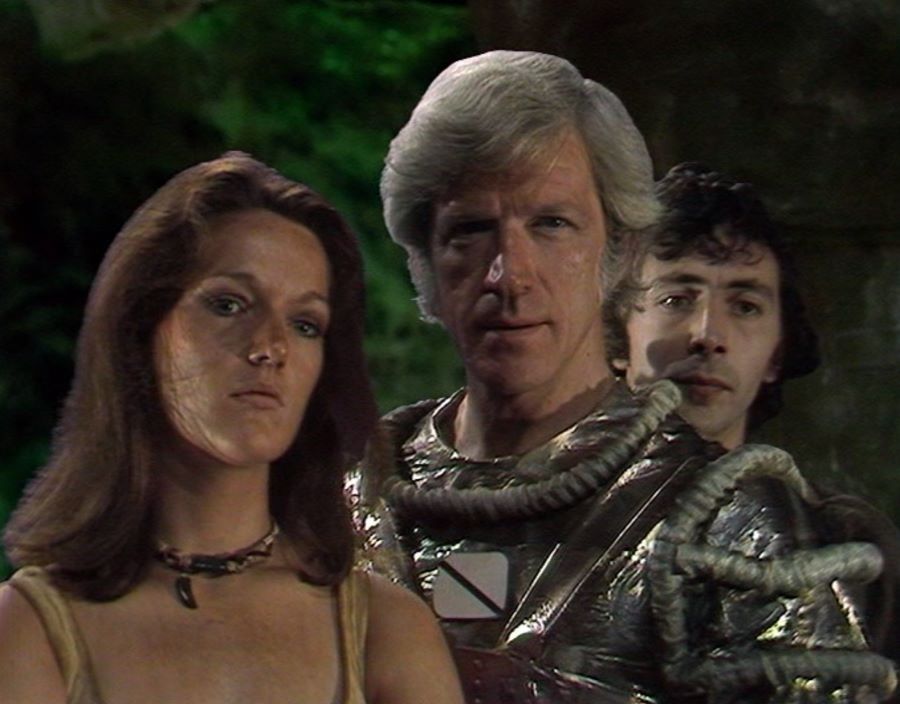
This includes when Idas points at the ceiling of the R1C ship and asks if it’s the sky, and she replies, “That is the roof.” It’s also funny when Orfe uses the pacification gun on her and she becomes all happy and says that Orfe has a ‘beautiful name’. I’m sad the two never got together in this TV story. 😀
She does get angry when Leela realises Orfe used the pacification gun to calm her. I was like Sarah Sutton in the ‘Behind the Sofa’ item when she reacted to Leela about to strike Idas with her knife once finding him aboard the R1C ship. Leela doesn’t need to strike first and ask questions later with a knife. 😐
K-9, voiced by John Leeson, is quite good in this ‘Doctor Who’ adventure. He gets to help navigate the R1C spaceship when the Doctor, Leela, Jackson and his crew are journeying out of and through a spiral nebula. He also informs everyone of the ship’s exterior mass increasing with asteroids crushing them.
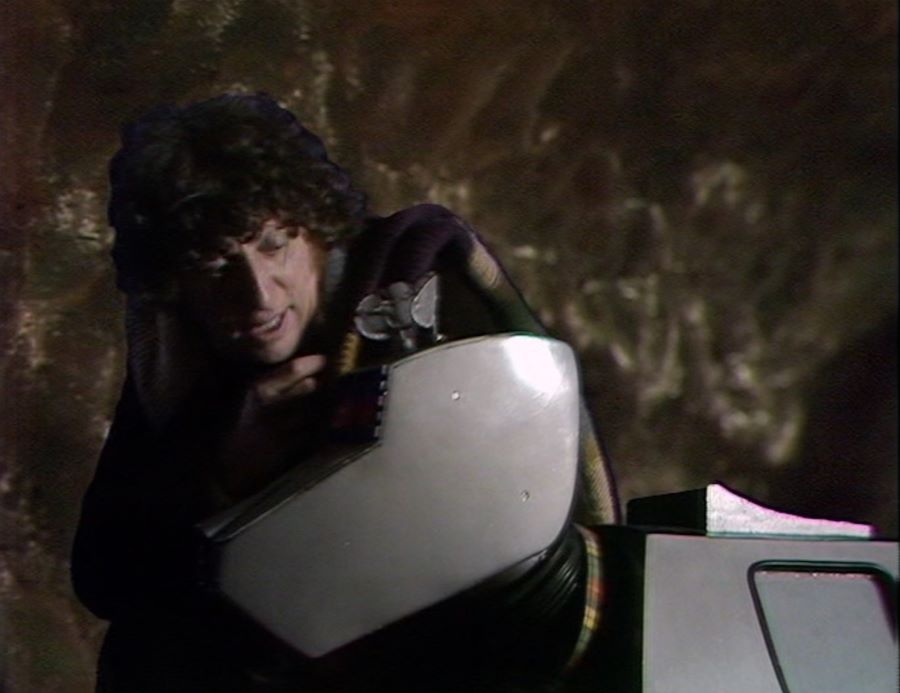
There are also moments that K-9 has in the story where he uses his nose laser, particularly on breaking through a cave wall so that the Doctor, Leela and Idas could get out of the fix they’re in. I think it’s fair to say that K-9 is more functional in this ‘Doctor Who’ story than having a character-driven journey. 😐
That’s not to say he’s handled badly in the story. The writers of this story are Bob Baker and Dave Martin, and they created him in ‘The Invisible Enemy’. But very often, K-9 is relaying important information to characters about what’s happening in the story, particularly to the Doctor in the TARDIS.
I think the Doctor can be a little mean-spirited to K-9 in this story, especially in ‘Part One’ where K-9 tries to tell the Doctor and Leela they’re ‘not alone’ and that they’re ‘not the first’. The Doctor tells K-9 to ‘shut up’ at points. It’s funny when K-9 said “Negative” about the Doctor’s theory on Greek myths.

Doctor: Perhaps those myths are not just old stories of the past, you see, but prophecies of the future. Who knows? What do you think, K9?
K-9: Negative.
Doctor: What did he say?
Leela: Negative.
James Maxwell guest stars as Jackson, the leader of the Minyans aboard the R1C spaceship. It was interesting to see Jackson as a leader in this ‘Doctor Who’ story, especially as he expresses how tired and weary he is, since he and his crew have been on this quest of theirs for a very long time, apparently.
I don’t know if that’s the way James Maxwell was told to play him or if he comes across as bored in the story, but I don’t think there’s much to say regarding his character, considering ‘Underworld’ isn’t a story that explores a lot on the characters and how deep their motivations are regarding their quest.
Clearly Jackson is dedicated to seeing the quest fulfilled. It’s unusual he doesn’t realise that the Trogs are the descendants of the P7E crew when the Doctor and Leela bring them aboard the R1C spaceship. Jackson also doesn’t allow the Doctor and Leela to join him and his crew on the quest in ‘Part Two’. 😐
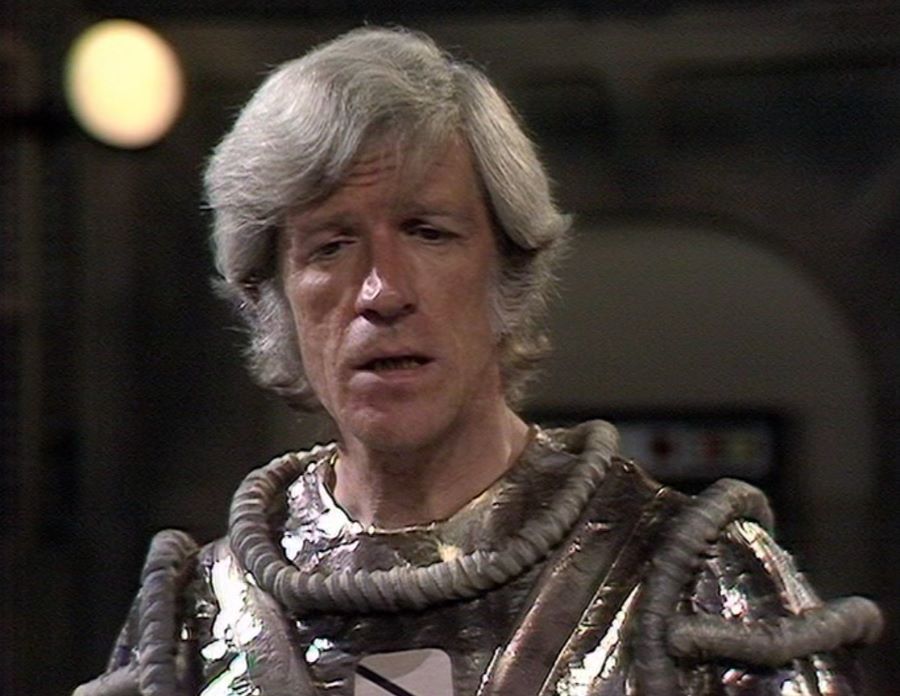
Jackson and his crew also keep saying “The Quest is the Quest!” a lot in this ‘Doctor Who’ story. I find that amusing as a catchphrase. I’m glad that Colin Baker, Sarah Sutton and Janet Fielding picked up on it when watching the story in the ‘Behind the Sofa’ and they often said it in many variations. So funny. 😀
Alan Lake guest stars as Herrick, who for me is the most interesting member of Jackson’s crew. He’s very eager for battle and is determined to fight and defend to the last, even to the point of self-sacrificing himself when he gets gunned down by the P7E guards and he gets taken away for questioning. 🙂
Apparently, Alan Lake was married to Diana Dors at the time this ‘Doctor Who’ story was made. Not that I’m expecting you to know that. I certainly didn’t. Apparently, Diana Dors was a blonde bombshell back then. Much in the style of Marilyn Monroe, according to my Dad, which I found intriguing to hear.
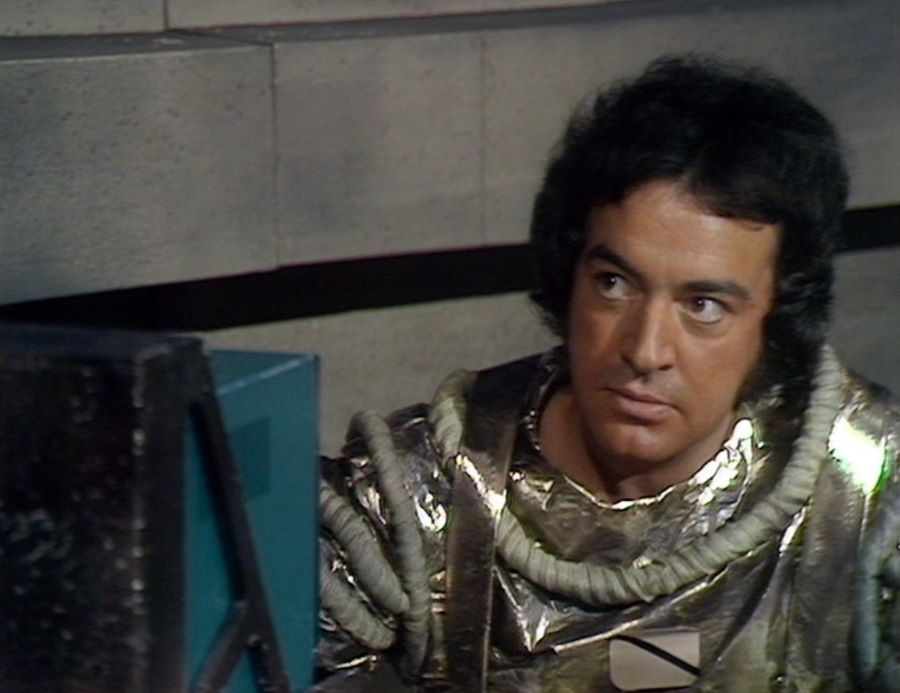
The reason why I find Herrick interesting as one of Jackson’s crew is because he seems to have a grudge against the Time Lords whom the Minyans considered as gods. He certainly isn’t pleased to see the Doctor once the Time Lord enters the R1C spaceship’s bridge and he immediately attacks him.
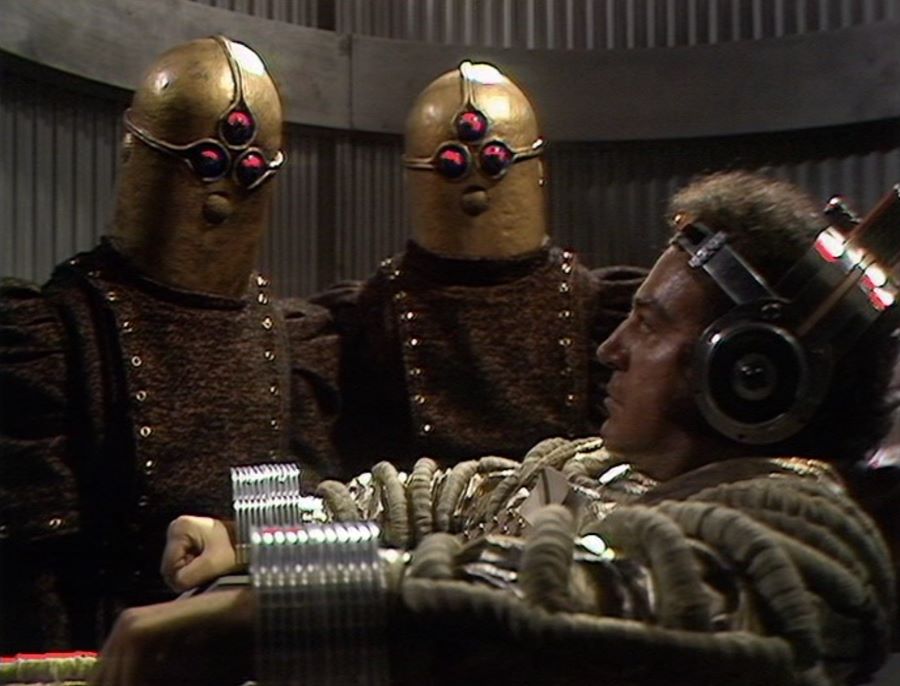
Herrick is also the one who gets captured and taken for questioning, as well as sees the highly evolved Seers with their metallic faces when he gets tortured. Why he should be tortured like that when he’s telling the truth is not very clear. Also, Herrick gets given the fake race banks that turn out to be bombs.
Jonathan Newth guest stars as Orfe, who fires the pacification gun on Leela and Herrick when they become aggressive. There’s not much to say about Orfe’s character in this story, although he’s clearly a very loyal member of Jackson’s crew and it’s interesting he has the weapon to calm people down. 🙂
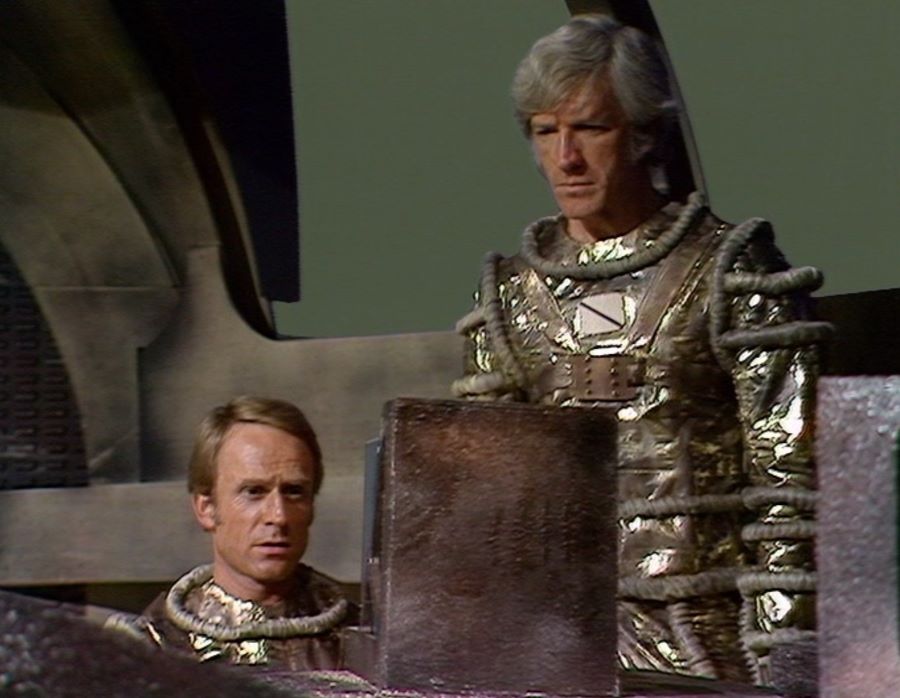
Orfe is the one who looks up for the information regarding the TARDIS sound effect and being related to what the Minyans call their ‘gods’. I know I joked about Orfe and Leela being perhaps a couple once he used the pacification gun on her, but it’s lucky he didn’t get stabbed by Leela once she was herself.
Also, Orfe had his arm around her at one point in the story after Leela said he has ‘a beautiful name’. 😀 As far as I’m concerned, Orfe gets the spotlight in ‘Part One’ of ‘Underworld’. I can’t recall him having a huge role to play in ‘Parts Two, Three and Four’. He didn’t stand out for me in those episodes.
Jonathan Newth was the only ‘Astronaut’ interviewed for the ‘Into the Unknown’ making-of documentary. Sadly, James Maxwell passed away in 1995 and Alan Lake passed away in 1984, not long after ‘Underworld’ was shown in 1978. I assume Imogen Bickford-Smith is still alive at the time of this review.
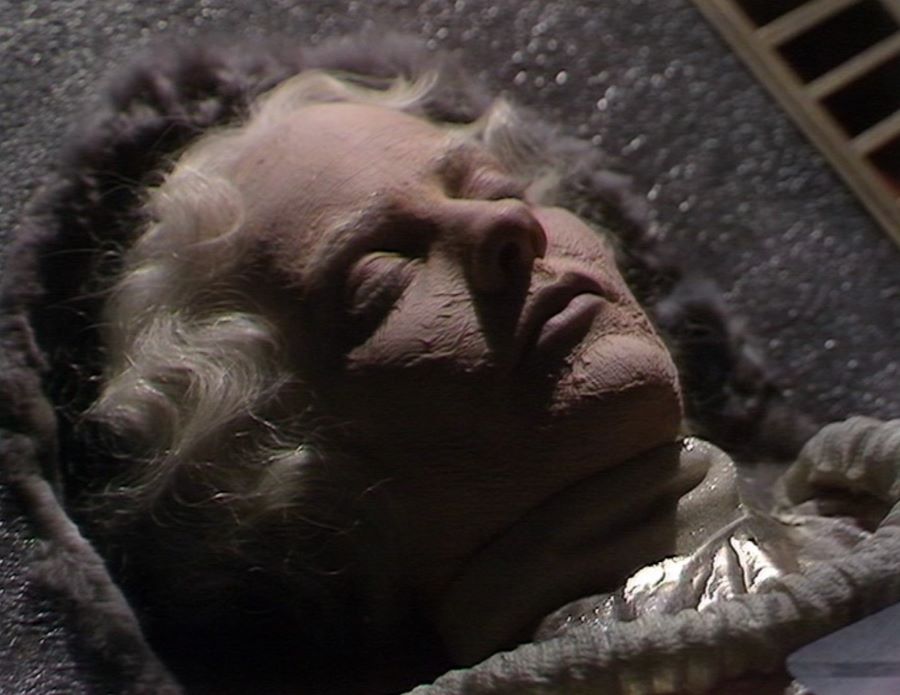
Speaking of which, Imogen Bickford-Smith guest stars as Tala, the only female crewmember of the R1C spaceship. Incidentally, Imogen guest stared in the ‘Fawlty Towers’ episode ‘The Psychiatrist’ where she played Mr. Johnson’s girlfriend. She didn’t have any lines to say in that compared to this. 😦
I’ve also seen her in one of the ‘Miss Marple’ TV stories with Joan Hickson called ‘The Moving Finger’. I think she had dialogue to say in that compared to her ‘Fawlty Towers’ episode. 😀 When we first see Tala in ‘Underworld’, she’s very old and withered, and she blacks out, causing the ship to go off-course.
Thankfully, she’s put in a regeneration chamber to recover, and she’s rejuvenated into her younger self with flowing blonde hair. It’s amusing to see that in the ‘Doctor Who’ story, although I don’t think her character is that great. Very often, she doesn’t have lots of dialogue to say in some of the episodes.
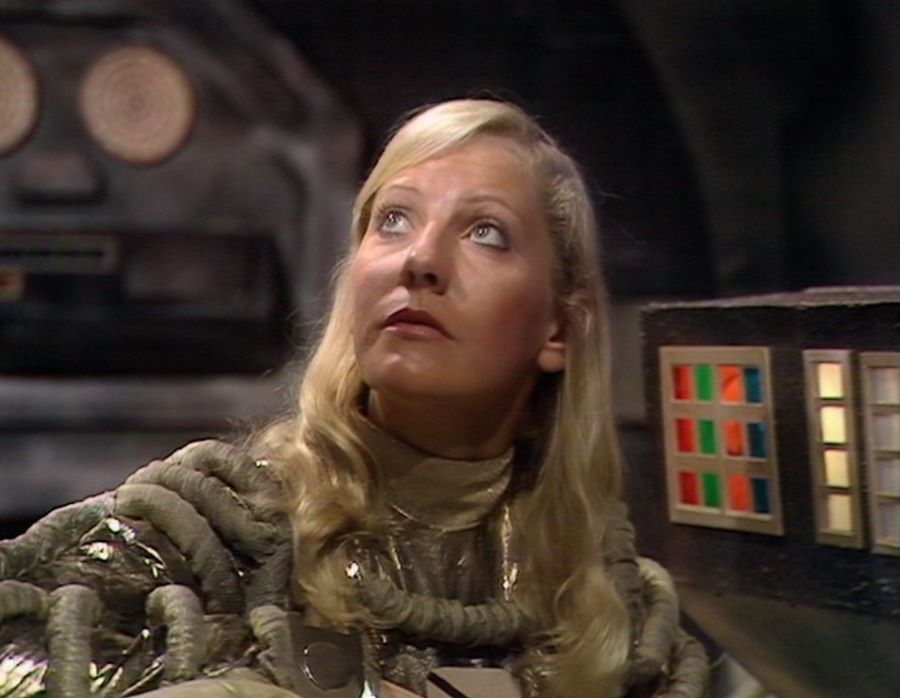
She’s calm and quietly-spoken, but that’s about it. I would’ve liked to have known more about her and what her stance on the quest was compared to Jackson, Herrick and Orfe. Scenes between Tala and Leela would’ve been welcome too. It’s such a shame she seems to be more a pilot that says functional dialogue.
The story’s guest cast also includes the Trogs, who are the slave-like natives of the P7E planet. There’s Norman Tipton as Idas, a Trog that helps the Doctor, Leela and K-9 when uncovering information about the Underworld they’re in, including looking over a map and Idas identifying something called a ‘tree’.
There’s James Marcus as a guard called Rask, Godfrey James as a guard called Tarn, and Jimmy Gardner as Idmon, Idas’ father, who gets arrested for an attempted rebellion. Apparently, according to Toby Hadoke in the ‘Behind the Sofa’ item, Jimmy Gardner was in another ‘Doctor Who’ story called ‘Marco Polo’.
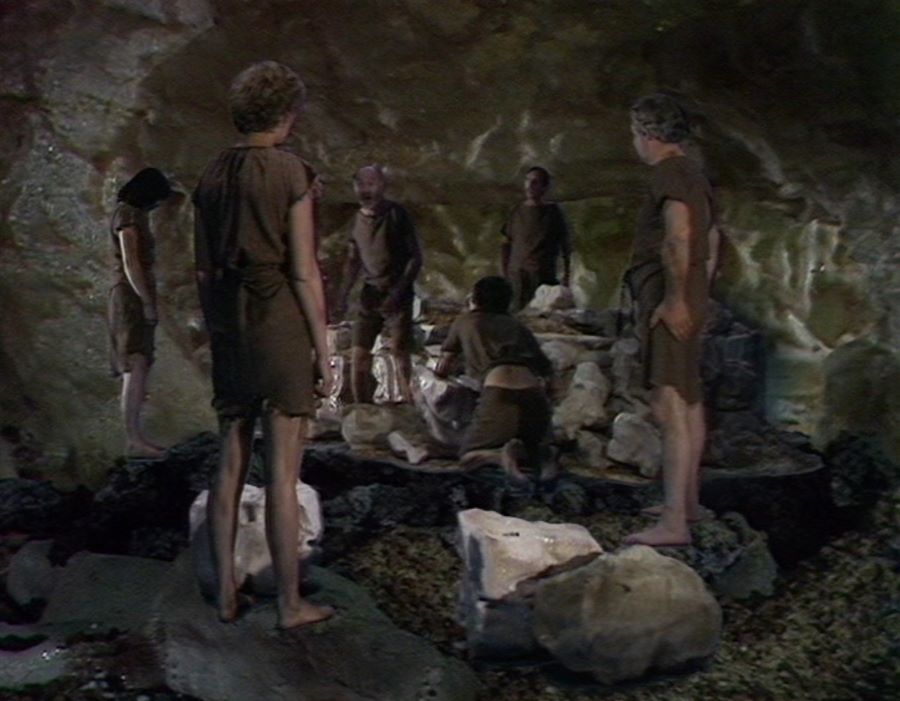
There’s Jay Neill as a guard called Klimt, Frank Jarvis as the Seer called Ankh and Richard Shaw as the Seer called Lakh. Richard Shaw has been in ‘Doctor Who’ before, having played Lobos in ‘The Space Museum’ and Cross in ‘Frontier In Space’. Frank Jarvis has also had his fair share of ‘Doctor Who’ stories.
He was a corporal in ‘The War Machines’ and after ‘Underworld’, he played Skart in ‘The Power of Kroll’. There’s Stacey Tendeter as Naia, a female Trog in the story. It’s interesting that Naia was the only female Trog that got to talk in this story. And there are Trog children that appear in this story too.
The megalomaniac computer aboard the P7E ship called the Oracle is voiced by Christine Pollon. It’s fascinating the Oracle was ‘the keeper’ of the race banks for the Minyans, but wasn’t willing to give it over to Jackson and his crew. It accepts its fate once the fake race banks which are bombs are returned.
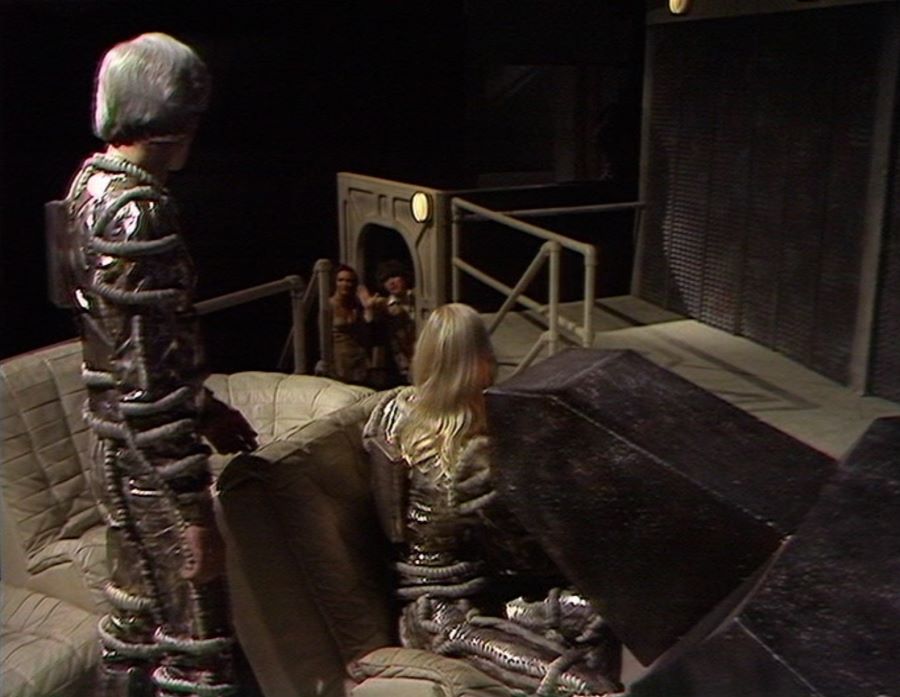
In the end, Jackson and his crew have the Minyan race banks and they make their return journey to Minyos II with the Trogs on board. The Doctor calls Jackson ‘Jason’ before he, Leela and K-9 leave in the TARDIS to continue their travels. And for the Doctor to continue painting…whatever it he was painting.
And Leela gives K-9 a kiss once the Doctor’s stormed out following K-9 saying “Negative” about his assumption that the Greek myths are prophecies of the future. I’m getting a sense Leela has a more emotional connection to K-9 than the Doctor has with him. A possible foreshadowing for the next story?
The original DVD special features were as follows. There was the making-of documentary ‘Into the Unknown’ with behind-the-scenes cast and crew interviews. There was ‘Underworld – In Studio’, which features some behind-the-scenes studio footage of the making of ‘Underworld’, including the CSO studio filming. There was a photo gallery of the story, a dual mono sound audio mix option for the story, and an audio commentary with Tom Baker, Louise Jameson and co-writer Bob Baker. There was an info-text commentary option to enjoy, PDF materials, including a ‘Radio Times Listings’ of the story, and a ‘coming soon’ trailer for ‘The Creature From The Pit’, starring Tom Baker, Lalla Ward and K-9 (now available on Disc 2 of the Season 17 Blu-ray box set of ‘Doctor Who’, containing ‘City of Death’).
On Disc 5 of the ‘Doctor Who – The Collection – Season 15’ Blu-ray, the ‘Into the Unknown’ making-of documentary, the ‘Underworld – In Studio’ behind-the-scenes studio footage, the dual mono sound audio mix option and the DVD audio commentary can be found on there. The photo gallery of the story and the info-text commentary option have been updated for 2024 on the Blu-ray.
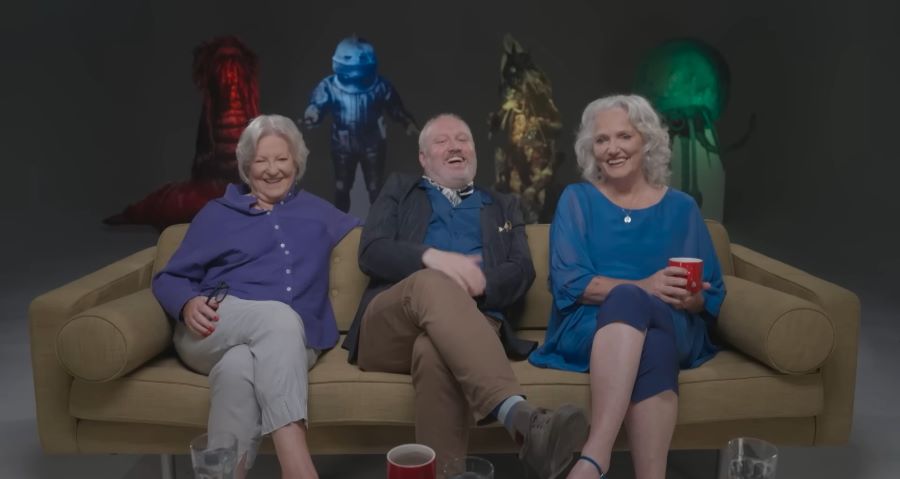
The new special features on Blu-ray include the ‘Behind the Sofa’ feature on ‘Underworld’ with Louise Jameson (Leela), fan and critic Toby Hadoke and Betsan Roberts, wife of the late director Pennant Roberts as well as Colin Baker (the Sixth Doctor), Sarah Sutton (Nyssa) and Janet Fielding (Tegan) as well as Katy Manning (Jo) and Matthew Waterhouse (Adric). There’s some expanded behind-the-scenes studio footage of the making of ‘Underworld’, some ‘Doctor Who’ exhibition rushes with Tom Baker, BBC trailers and continuity announcements of the story, and a ‘coming soon’ trailer for ‘The Invasion of Time’, starring Tom Baker, Louise Jameson and K-9 (taken from ‘The Five Doctors’ 25th anniversary 2-disc DVD set).
On the PDF front, as well as the ‘Radio Times Listings’ of ‘Underworld’, there are production documents, four camera scripts, a studio floor plan and Mitch Mitchell’s video effects storyboards. You need a special Blu-ray computer drive for that.
In my opinion, ‘Underworld’ is a brave experiment of a ‘Doctor Who’ story when it’s trying to be a sci-fi take on the Greek legend ‘Jason and the Argonauts’. I found it intriguing to watch and it’s interesting how Bob Baker and Dave Martin put it together in terms of the writing and adapting the Greek legend.
However, I felt dissatisfied by the mundane use of the CSO method to achieve the visual effects of the TV story. Granted, it was something that hadn’t been tried before at that great extent, but the viewing experience felt sluggish and it was a relief to come to the end of the story and to be out of those caves.
It would have been good if this ‘Doctor Who’ story was wider in scope and budget compared to what it ended up as. Again, the concept of ‘Underworld’ is good, especially when you’re learning about the ‘Jason and the Argonauts’ story, even if many interpretations of the tale have been done over the years.
But frankly, ‘Underworld’ as a ‘Doctor Who’ story felt stale, and I’m saddened it wasn’t as great as it could have been. Thankfully, ‘Underworld’ isn’t the season finale of Season 15 of ‘Doctor Who’. And this is where we’re about to go off into something bolder and more imaginative in the next adventure.
So, let’s check out the season finale of Season 15 of ‘Doctor Who’ called ‘The Invasion of Time’ and…

Timelord007: (interrupts) Hey!
Tim is startled and he looks to his right to see Timelord007 glaring at him.

Tim Bradley: (surprised) Timelord007? What are you doing here? How did you even get here?
Timelord007: (dramatically suspicious) I have my ways…
Tim Bradley: (realises) You used my secret password to get on here, didn’t you?
Timelord007: (laughs) Of course, I did.
Tim Bradley: Drat! I knew those passwords wouldn’t last long beyond three months.
Timelord007: What do you think you’re doing, Tim? How dare you do your updated review on ‘The Invasion of Time’ without me!
Tim Bradley: I thought…I thought you might have been busy with your Letterboxd reviews.
Timelord007: Whatever gave you that idea?
Tim Bradley: I don’t know, it’s just…I haven’t been in touch with you lately and I thought maybe you wouldn’t have had the time to help me update my review…
Timelord007: (interrupts) Our review, Tim!
Tim Bradley: Alright, our review on ‘The Invasion of Time’.
Timelord007: That still doesn’t mean you couldn’t have asked me to help you. I’m always happy to answer your emails.
Tim Bradley: Yeah, but…haven’t you fallen out with ‘Doctor Who’ lately?
Timelord007: The recent stuff, yes, but Tom Baker is always a winner for me. You can’t beat good old Tom! He’s the best and my favourite Doctor of all time, you know.
Tim Bradley: Speaking of, I’ve noticed you’ve only reviewed one ‘Doctor Who’ story on Letterboxd, which is ‘The Invasion of Time’. What else have you reviewed on your site? 1980s action films and horror movies?
Timelord007: It’s very important for me to share my thoughts on those films, Tim.
Tim Bradley: (scoffs) Oh yeah, and it was very important of you to share your anger and frustration on ‘Thor: Love and Thunder’.
Timelord007: That movie is horrendous, Tim, and you know it! Besides, how many reviews have we done apart from the original ‘Invasion of Time’ review you’re going to update? ‘Star Wars: Return of the Jedi’, the three Kelvin timeline ‘Star Trek’ films, ‘Avengers: Infinity War’, ‘Avengers: Endgame’…
Tim Bradley: Not to mention those ‘Strange Love’ discussions we did on ‘The Keeper of Traken’, ‘Logopolis’ and ‘Castrovalva’. Some of those reviews we did with others, by the way.
Timelord007: The point I’m making is you can’t update ‘The Invasion of Time’ review on your blog without adding my extra thoughts on the story. So, I’m going to stick around whilst we’re revisiting that season finale and make sure you do it right with everything you and I say on it.
Tim Bradley: Excuse me, what makes you think I would agree to that?
Timelord007: (challengingly) Why would you update your reviews on classic ‘Doctor Who’ stories to begin with? Apart from the lavish Blu-ray box sets being churned out every year.
Tim Bradley: (struggles to think) Well, um…
Tim thumps his chest with his fist.
Tim Bradley: The Quest is the Quest!
Timelord007: Don’t ‘Underworld’ me, Tim.
Tim Bradley: Okay.
Timelord007: Besides, when have you ever turned a good friend like me down?
Tim tries to argue back, but then thinks about it. Timelord007 has made a good point.
Tim Bradley: (to audience) So, let’s check out the season finale of Season 15 of ‘Doctor Who’ called ‘The Invasion of Time’ and see whether it stands up well today compared to back then.
Timelord007: (uses an epic voice) Next time on ‘Bradley’s Basement’…
Tim Bradley: (interrupts) Oh, do be quiet!
Timelord007: I was only trying to help.
‘Underworld’ rating – 5/10
| The previous story
For the Fourth Doctor was
For Leela was
For K-9 Mk I was
|
The next story
For the Fourth Doctor is
For Leela is
For K-9 Mk I is
|
| Return to The Fourth Doctor’s Timeline | |
| Return to Leela’s Timeline | |
| Return to The Timelines of K-9 | |
| Return to The Doctors’ Timelines Index | |
| Return to The Companions’ Timelines Index | |
| Return to Doctor Who Timelines | |
| Return to Doctor Who | |
| Return to Sci-Fi |
 Bradley's Basement
Did you watch the raw footage outtakes with Tom occasionally ranting? Lol it makes for some funny moments.
Again another well assessed balanced review, the budget took a knock during Graham Williams era so story’s in this season suffer form a lack of polish, i think the story is quite good it just lacked the budget to do it justice.
LikeLiked by 2 people
Hi Simon.
I did see some of the raw footage of the studio recordings of ‘Underworld’. I can imagine Tom occasionally ranting whilst making this story. I wouldn’t blame him if he found it tedious to make this story on CSO and got impatient.
Glad you enjoyed my review on this story. I would have liked this story to be wider in scope and budget compared to what it actually ended up being. It’s a great concept to base the story on ‘Jason and the Argonauts’. But in the end this story felt stale and I’m afraid wasn’t as great as it could have been.
Thanks for your comments.
Tim. 🙂
LikeLiked by 1 person
That Timelord 007 chap he’s a strange fellow some say he’s crazy others eccentric but he makes great points & his reviews he never stays away from the truth & says what he thinks.
I’m glad he’s re-reviewing The Invasion Of Time with you 😂😂😂
LikeLiked by 2 people
Hi Simon,
Trust Timelord007 to interrupt me when I was getting near the end of my ‘Underworld’ review. 😀 What will happen in our updated review of ‘The Invasion of Time’. Looking forward to finding out tomorrow. 🙂
Best wishes,
Tim 🙂
LikeLiked by 1 person
I’m a bit surprised I haven’t written anything here before. Oh, well. I’ll remedy that now…
Sometimes the quality of the story is in its translation.
Underworld is another Doctor Who attempt at exploring an adventure inspired by Greek myth. The Fourth Doctor will meet Prometheus in “Olympus” and be present as he steals the spark of life from Zeus (for the DWM comic, The Life Bringer), but this is the first mythos-inspired tale on television since The Time Monster.
Curiously, this link has been with the programme since its very beginning. The First Doctor, during Marco Polo, will cry: “By Olympus!” at a catastrophe. It’s an interesting insight into potentially where Lucarotti might have thought the Doctor came from at the time (or where he’d been).
Underworld, however, will be the last Doctor Who meets Greek myths story on television and not unjustifiably. You can see the ambition, immediately. To attempt a tale like Jason and the Argonauts, which conjures 1950s stop-motion and sweeping set pieces. Tom Baker’s role in The Voyage of Sinbad may have played a part in inspiring the tale.
Unfortunately, Underworld has its problems. I’m not going to talk about the production problems because they’re largely obvious. Rampant inflation. No sets. Limited props. It’s difficult to tell how much of the Doctor’s agitation belongs to the character and how much of it is actor Tom Baker. The Fourth Doctor is particularly bad-tempered here.
Making it more difficult is that Underworld is also one of the leaner stories of Season 15. Image of the Fendahl suffers from a redundant third episode taken up by a red herring. Underworld has episodic recaps so long they stretch into minutes at a time, but only scape past 20-minutes apiece. (I have the Target novelisation and it’s the thinnest of potentially 100+ books.)
And that’s because… There’s actually not a lot here. Underworld seems to have fallen into the trap of many Star Wars imitators of the era and used archetypes. The problem, of course, is that archetypes must be expanded or they become cliches and many of Doctor Who‘s cliches are on display here. As well as those employed in the Greek myths.
What’s a particular shame is the core concept — something that other writers since Underworld took and ran with. Particularly in the Gallifrey series. This is the first time that we get definitive confirmation that Gallifrey had an empire. Something they divested — much like Britain — but, nevertheless, a part of their history.
The Minyans, therefore, sit as an allegory for countries and colonies abandoned after the dissolution of the British Empire. In a post-Cold War setting, we can even make a comparison with former Eastern Bloc countries after the Soviet Union’s dissolution. Later stories elaborating on Minyos (like Gallifrey‘s The Inquiry or the Omega comics) would not paint a benevolent image of the Time Lords.
Minyos is one of Gallifrey’s mistakes. The civilisation they single-handedly ruined by pretending to be the Gods that Herec speaks of. It’s the first given reason why the non-intervention policy of the Time Lords is in place (outside of maintaining historical continuity). It’s a very post-colonial idea.
Regretfully… The story doesn’t do anything with that idea. Given that Bob Baker and Dave Martin gave us The Mutants — a scathing commentary on apartheid and racial extermination — it’s strange to see that missing here.
This would have been an excellent opportunity to show how history is interpreted, reinterpreted and misinterpreted. Especially given that the Doctor himself doesn’t seem too well informed on the Minyans. It’s easy to see the Third Doctor jumping at the chance to learn more, prove his masters wrong, but the Fourth Doctor seems barely interested. It’s a genuine shame.
Particularly given the ending of the story with Jason taking the race-bank, but failing to see the value of the lives left behind to die on P7E. It’s a very Time Lord view. The irrelevance of the so-called “primitives”. It takes the Doctor, a fallen member of the Minyans own oppressors, to point out Jason’s folly. That would be a wonderful moment of realisation, if acknowledged.
It feels very much like Underworld wanted to be Ulysses 31. A series that I heartily recommend if you want to see what the Old Times of Gallifrey might have looked like.
There’s a good story in here about the folly of empires and the dangers of repeating the same mistakes, but it’s lost among following the old patterns. In retrospect, The Invasion of Time could easily have eaten Underworld‘s budget without too much sacrifice.
All the more damning now that we have modern translations of The Odyssey, The Illiad and many of these Grecian tales. Translations which now paint a far less black-and-white view of these antique stories.
Sometimes, the quality of the story really is in the translation…
LikeLiked by 2 people
Hi Wolfie,
Thanks for sharing your insight about this ‘Doctor Who’ story. I had to look up on Tardis.wiki about ‘The Life Bringer!’ to understand what the context of the story was with the Fourth Doctor and K-9 meeting Prometheus and Zeus in Olympus. A clear indicator that I need to do more reviews on the ‘Doctor Who’ comics featuring the Fourth Doctor. 😀 Also, I didn’t realise the First Doctor said “By Olympus” in ‘Marco Polo’. I need to revisit that story someday. 😀
It’s a shame about ‘Underworld’ as a sci-fi take on ‘Jason and the Argonauts’ would have been great if more had been provided in terms of the budget and we had more variety in terms of settings other than being inside a lot of cave-like corridors supported by modelwork using CSO. Some of the ideas you’ve shared on how the story could have been better are good, particularly the idea of Jackson and his crew going on a journey to realising that the Doctor is not exactly like the ‘gods’ they came to worship and were oppressed by, especially when the Doctor tells Jackson that the Trogs are a part of the Minyan race. I find it a chore to check out ‘Underworld’, especially when you find, as you’ve mentioned, the recaps take up a lot of the episodes’ run time and there’s not much story to tell because of that.
I’m intrigued but also disheartened about what to expect regarding the ‘Underworld’ novelization/audiobook, as ideally, the novelization should improve a story and take out what are considered weakenesses. I’m not sure how Terrance Dicks novelized ‘Underworld’ and maybe there is a surprise or two to look forward to in the story’s novelization form. Knowing Terrance Dicks though, he’ll probably do a straight-forward novelization of the TV story rather than add anything new to it. We’ll have to wait and see when I get around to doing a review on the Target novelization by Terrance Dicks and the audiobook read by Louise Jameson with John Leeson as the voice of K-9.
Many thanks for your comments.
Best wishes,
Tim 🙂
LikeLiked by 1 person
Out of the classic Doctor Who stories that were visually overshadowed during the great wave of Star Wars, quite imaginably Underworld suffered most. Though even if its CSO was quite obvious, I always found my personal fascination for seeing how actors can act around that effect. Thus making the obviousness of an effect somewhat more appreciable. Of course Underworld could still benefit from the tradition of how the Whoniverse could adapt previous sci-fi/fantasy works like Jason & The Argonauts into its stories. But after B.O.S.S. and Xoanon, perhaps the Oracle didn’t shine particularly well at a point where we all had our fill of villainous computers. Even with HAL, Colossus and Demon Seed’s Proteus still inspiring a great deal, some areas for Whoniversal adaptability may tend to run dry. Personally I found the silo-headed, three-red-eyed beings to more fascinating. So Underworld is a prime example of how each Doctor Who story despite any of its drawbacks can have something subjectively appealing for fans. Thank you, Tim, for your review.
LikeLiked by 2 people
Hi scifimike,
Thanks for sharing your thoughts on ‘Underworld’. It’s a shame that this ‘Doctor Who’ story suffered in its production values and it’s a shame the Oracle computer wasn’t as effective in terms of design and being a villain, especially when protecting the Minyan race banks from those like the Doctor, Leela, Jackson and his crew. I enjoyed the story for its basis in in being a sci-fi take on Jason and the Argonauts, which I’ve not come across in its film interpretation yet. I’ve yet to check out the Target novelization/audiobook by Terrance Dicks, but it should be interesting to uncover how the story works in prose compared to how it’s presented in a visual sense.
Many thanks,
Best wishes,
Tim 🙂
LikeLiked by 1 person
Actually, on the subject of megalomaniacal computers: Underworld feels like it may have been robbed of many of its best moments by its proximity to The Face of Evil.
Ordinarily, I would say… Wouldn’t it have been fascinating if the Oracle suffered as one of the Lotus Eaters? A machine that had undergone a form of dementia and regressed to Minyos’s civil war days. That would explain its hostility to the Doctor and, perhaps, the spacefaring Minyans look a lot like the Gallifreyans…
But then, of course, we saw the multiple personality disorder of Xoanon achieved so effectively on Mordee. The only moment of characterisation that stands out in Underworld is the Oracle’s resignation at the end of the story. For such a one-note, tyrannical tin box, its acceptance of destruction — feeling that it has earned that fate — stands out.
And that’s problem. Many parts of Underworld, the inhabitants of the P7E and so on, aren’t written as characters to explore. No, they’re obstacles to overcome. Xoannon was so effective because Boucher used it as a critique of godhood. “You are made in the image of God,” says one. Well, that’s one view. The Face of Evil inverts it and instead says, well, actually: “God is made in an image of you.” Hence, the Sevateem, the Tesh, and even the Doctor, whose mind drives “God” mad.
(I particularly like that the Tesh meet their “God”, bona fide — and reject him. Utterly. Because he’s not their idea of God. “God” himself is irrelevant to their religion. They just need his image. So, they try to kill him, instead. It’s wonderful dark comedy. Boucher was always terribly clever…)
Regrettably, the Oracle doesn’t hold a same place in the narrative for the people of the Underworld. Leela should feel a kinship. This should remind the Doctor quite strongly of Mordee. Unfortunately, it’s all paper-thin ciphers. Even the idea of the Oracle, the One True God (“thou shalt worship none before me”, etc.), being challenged by the Doctor — allegedly from the Minyans’ Gods, like Chronos before Zeus — isn’t explored.
Wouldn’t it have been terribly interesting if they went the Foundation route? The Oracle and the Seers already know the future. The Oracle has predicted it. In order to see it through, however, the computer needs the Trog society to be shaped a particular way.
When an outside influence — the Doctor and Jackson’s crew — come into the “Prophecy”… They stuff everything up. Purely by their outside presence. That would give the Oracle reason enough to try and eliminate them beyond “for the evulz, yeah.”
LikeLiked by 2 people
Hi Wolfie,
Thanks for your insight on comparing the Oracle in ‘Underworld’ to Xoanon in ‘The Face of Evil’. It’s a real shame that the connection isn’t made between the two and it would have strengthened Leela’s character in terms of what she remembers in her upbringing with her people, the Sevateem, and with worshiping the super-computer. It’s a huge missed opportunity and you can tell that Robert Holmes isn’t the script editor anymore when he would have remembered these aspects from ‘The Face of Evil’ to be put into ‘Underworld’, compared to Anthony Read who wasn’t really into the character of Leela and didn’t have any involvement in ‘The Face of Evil’.
‘Underworld’ does feel very plot-driven instead of character-driven and this is especially when we don’t get to know more about characters like Orfe and Tala, who should have had more interaction with Jackson and Herrick as well as the Doctor and Leela instead of simply saying functional dialogue for the benefit of the audiences watching. It’s like the production team wanted the story to be told as swiftly as possible and for everyone to ‘get on with it’, as the Doctor would say, especially when the pressure was there for the story to be made on CSO, which would have drained everyone’s spirits and made the story underwhelming as a result, unfortunately.
A saddening missed opportunity indeed. I’d like to think the Target novelization/audiobook by Terrance Dicks can salvage what could have been used as great character development in ‘Underworld’, especially as Terrance also novelized ‘The Face of Evil’ beforehand, but I would need to check out both novelizations to find that out.
Many thanks,
Tim 🙂
LikeLiked by 1 person