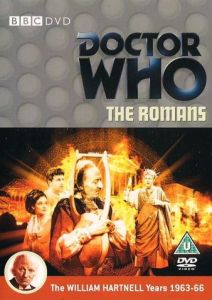
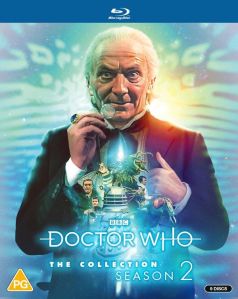
‘THE ROMANS’
Please feel free to comment on my review.
Nero in Rome 64 A.D. with the First Doctor, Vicki, Ian and Barbara
For William Russell
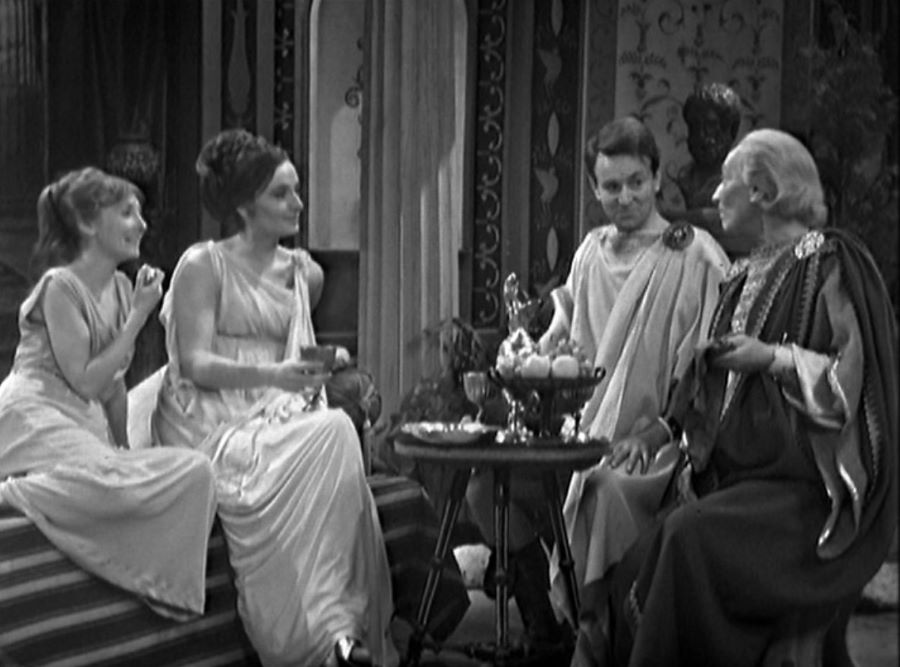
We now come to one of the highlights of Season 2 of classic ‘Doctor Who’ for me, which is the four-part story called ‘The Romans’. This is my favourite ‘Doctor Who’ story from the William Hartnell era. There’s no irony in that. I absolutely love checking out this ‘Doctor Who’ story whenever I watch it. 🙂
‘The Romans’ is an historical adventure with a comedy flavour filled throughout. It serves the best of William Hartnell as the First Doctor as well as William Russell as Ian, Jacqueline Hill as Barbara and Maureen O’Brien as Vicki. I enjoyed their journeys in this TV story and how the comedy is played out.
This isn’t something everyone will agree on. I’ve seen the ‘Behind the Sofa’ item for ‘The Romans’ on Blu-ray, and whilst Maureen O’Brien, Peter Purves, Carole Ann Ford, Janet Fielding, Wendy Padbury, Sarah Sutton, Bonnie Langford and Sophie Aldred don’t rate the story highly, I respect their opinion.
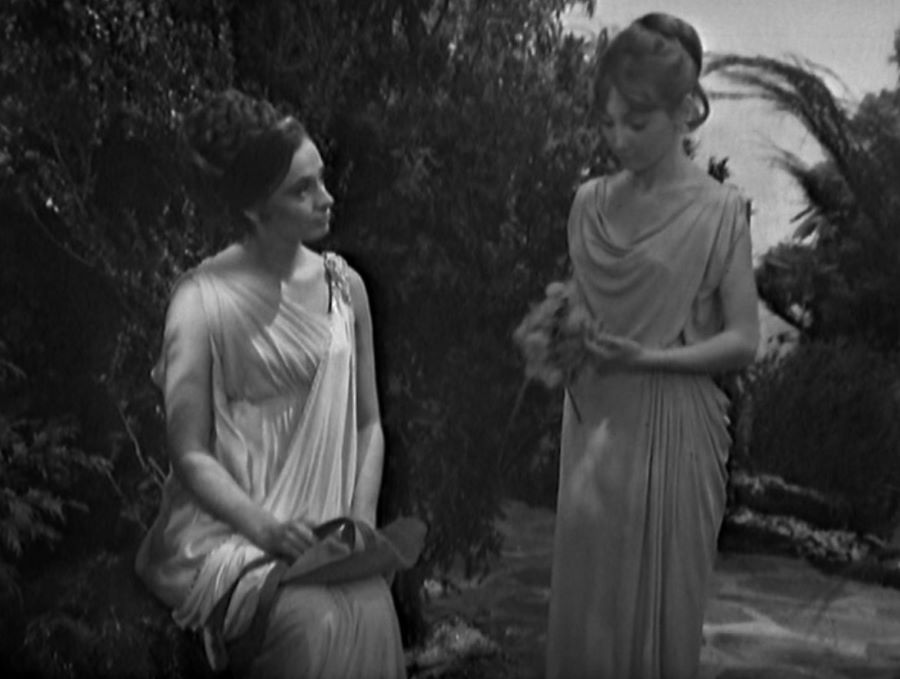
For me, this ‘Doctor Who’ story was one of the inspirations for me in writing my second ‘Fifth Doctor’ story called ‘The Space Hotel’ along with ‘The Pirate Planet’ and ‘Fawlty Towers’. I don’t want to shake off the nostalgic memories I have of watching ‘The Romans’ when writing that story. 🙂
I appreciate that very often ‘Doctor Who’ comedies don’t agree with everyone. Whilst ‘City of Death’ is a ‘Doctor Who’ story I regard highly, there’s no doubt that Season 17 of the classic ‘Doctor Who’ TV series is mixed at best, especially with the humour injected by Douglas Adams as its script editor.
Whilst I regard ‘Paradise Towers’ and ‘Delta and the Bannermen’ fondly for their creative ideas, I don’t deny that Season 24 is a very divisive season, considering the many comedic and pantomime elements injected throughout. The same can be said about some recent ‘Doctor Who’ stories on TV.
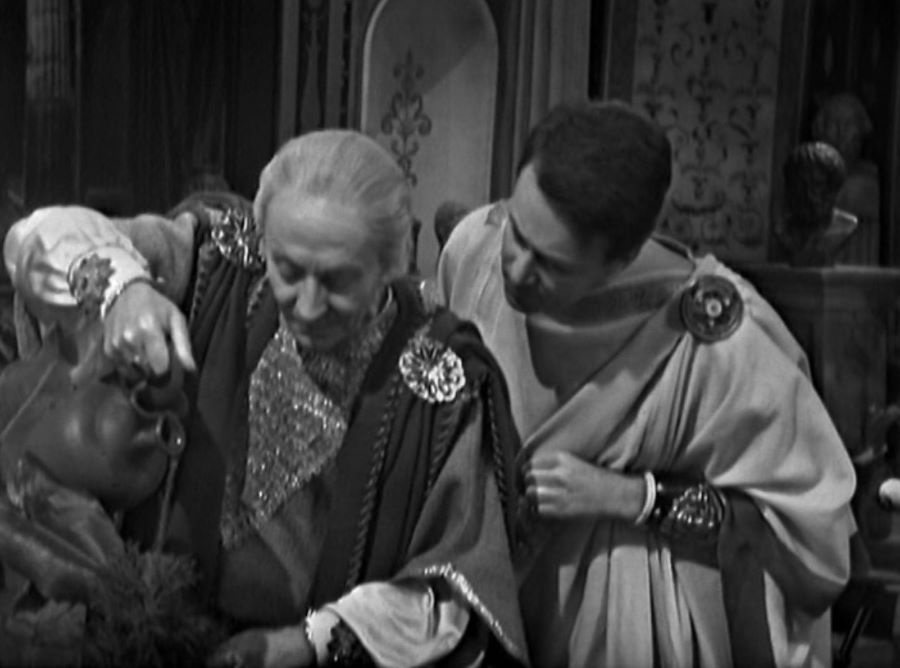
Comedy and drama need to have the right balance, especially in a ‘Doctor Who’ story. With ‘The Romans’, I feel that the balance of comedy and drama is about right, depending on how you look at it. Again, I know this is an opinion not everyone will agree on, but that’s how I feel about this story. 🙂
I’ll try my best to justify why ‘The Romans’ appeals so much to me as a ‘Doctor Who’ story. This is also in reflection to how ‘The Romans’ was later novelized by Donald Cotton for the Target novelization range, since I felt disappointed by his efforts on that, but that’s another review entirely.
‘The Romans’, as a ‘Doctor Who’ story, occurs in Italy in the year 64 A.D. Apparently, ‘The Romans’ was one of three historical adventures to be included in the ‘Doctor Who’ TV series along with the Spanish Armada and the American Civil War. Sadly, the latter two stories never saw the light of day.
The story’s director Christopher Barry returns to ‘Doctor Who’, although ‘The Rescue’ and ‘The Romans’ were part of the same production block of six episodes at the time. The producer Verity Lambert also encouraged the writer, Dennis Spooner, to script the TV story as a comedy adventure. 🙂
In ‘The Romans’, after the Doctor and his friends manage to survive the cliffhanger ending of ‘The Rescue’, they enjoy a holiday and stay in a villa in Assisium, a town north of Rome. It’s never shown how the TARDIS foursome acquired the villa in the first place, since it’s like a month later for them. 😐
There are stories set in-between ‘The Rescue’ and ‘The Romans’, including ‘Romans Cutaway’ and ‘Byzantium!’ that detail what happened when the Doctor and friends managed to acquire the villa in Assisium. Mind you, those stories have contradicted each other in terms of which is the valid account.
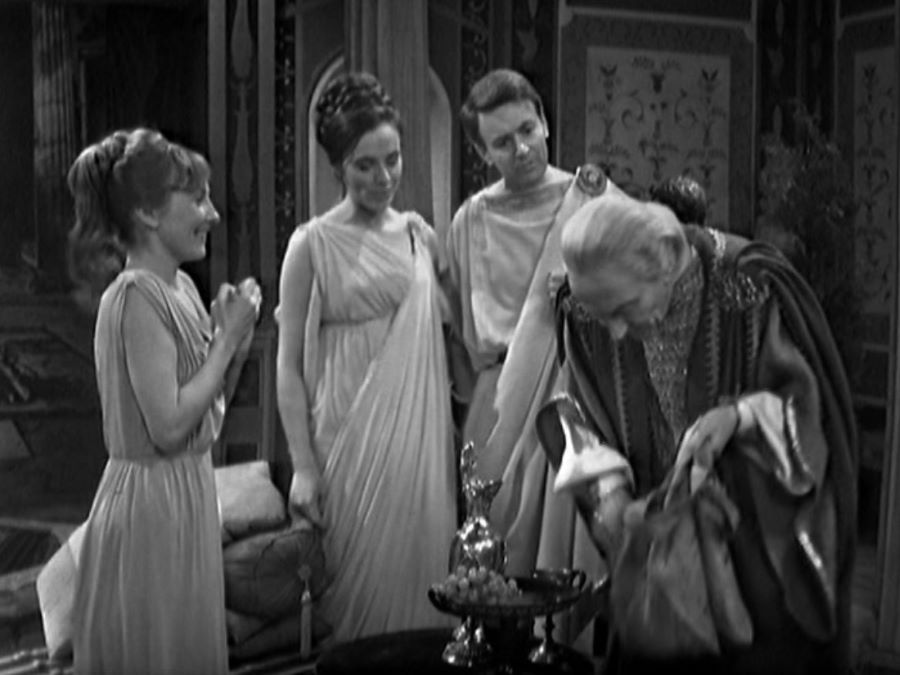
Eventually, whilst Ian and Barbara are enjoying the luxury of being in Italy, the Doctor decides to visit Rome and takes Vicki with him. Ian and Barbara are sadly uninvited and stay behind in the villa. Not sure why the Doctor didn’t want them along, although he doesn’t want them to be their nursemaids.
As the Doctor and Vicki go off to Rome, Ian and Barbara enjoy their luxury for a bit before they’re kidnapped by slave traders, including Derek Sydney as Sevcheria and Nick Evans as Didius. And if Nick Evans is a name you recognise, that’s because he’s recently been in ‘The Dalek Invasion of Earth’.
In that, he was a Dalek operator as well as played the Slyther. Gosh, Nick Evans gets to be busy in Season 2 of ‘Doctor Who’ so far by having two stories to credit his name. I’m sure he enjoyed playing Didius more than playing a Dalek operator and a Slyther operator, since he gets to appear in the flesh here. 🙂
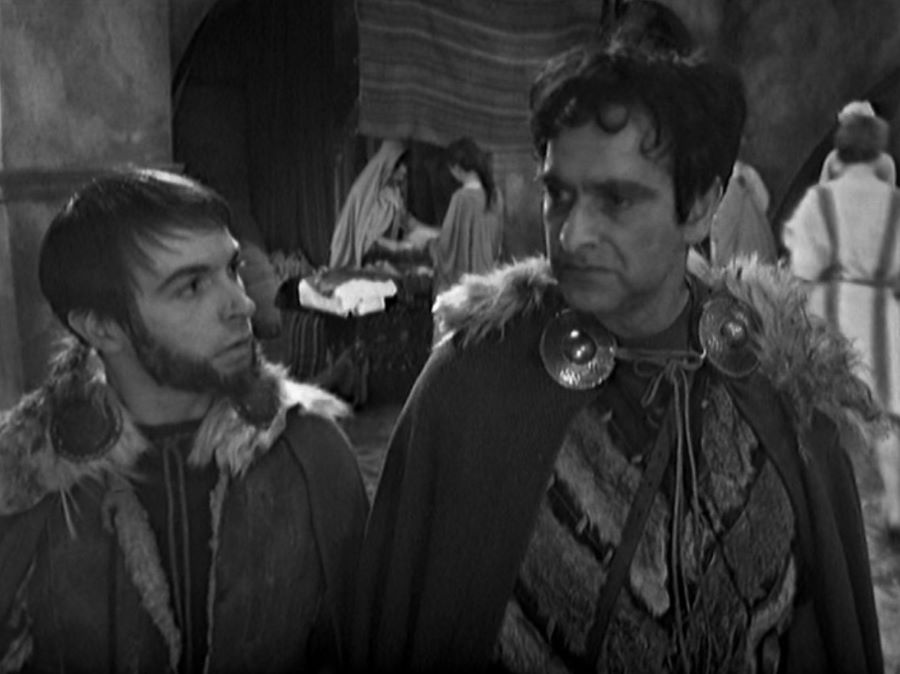
Mind you, it’s a shame that Didius is only in one episode of ‘The Romans’, as Derek Sydney as Sevcheria appears in the entire story. I wonder where Didius went off to after the story’s first episode. I get the impression that Didius could have had more to do being opposite Sevcheria in this.
I’m not sure why Sevcheria and Didius took advantage of invading the villa and capturing Ian and Barbara to be sold as slaves. I suppose Roman times aren’t to be taken lightly, since as well as their luxury, the Romans can be ruthless in their Empire, especially when it’s concerning slavery and such.
Once Ian and Barbara are captured, they’re soon separated and sold into slavery. Barbara gets sent off to be sold as a slave in Nero’s court, and Ian ends up on a galley slave ship. Ian is determined to get away and is soon helped by Peter Diamond as Delos when they escape in order to get to Rome. 🙂
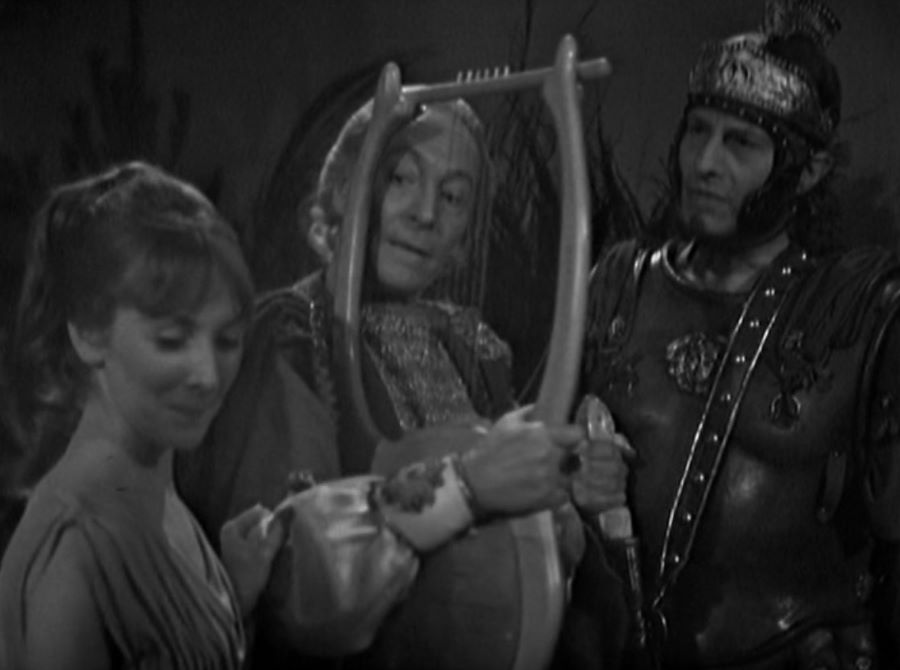
The Doctor and Vicki meanwhile discover a dead body in some bushes. Soon, the Doctor is mistaken for being the lyre player called Maximus Pettulian and is called to attend Nero’s court to play for him. Will our four heroes reunite with each other by this story’s end, despite missing each other? 😀
Like I said, ‘The Romans’ is a four-part ‘Doctor Who’ story by Dennis Spooner. He became the show’s new script editor after David Whitaker left. As established in my review for ‘The Rescue’, Dennis’ first contribution to the ‘Doctor Who’ TV series was the six-part finale to Season 1 – ‘The Reign of Terror’.
His impact on Season 2 of ‘Doctor Who’ is very significant, since he injected more humour into the ‘Doctor Who’ TV series to make it more fun. This is something that predates the Douglas Adams era of ‘Doctor Who’ in the 1970s with Tom Baker. It fits, as Dennis only did one season as script editor. 😐
After he left the position of script editor of ‘Doctor Who’, he went on to write the Season 2 finale called ‘The Time Meddler’, which was script-edited by Donald Tosh. He wrote the second half of the 12-part epic story ‘The Daleks’ Master Plan’ and rewrote some of ‘The Power of the Daleks’ scripts. 🙂
Outside ‘Doctor Who’, Dennis Spooner wrote episodes for plenty of TV shows, including some of Gerry Anderson’s shows like ‘Fireball XL5’, ‘Stingray’ and ‘Thunderbirds’. He also wrote for live-action shows such as ‘The Avengers’ and co-created TV shows like ‘Randall and Hopkirk (Deceased)’.
You can definitely taste the humour of his script-editing when watching an episode of ‘Doctor Who’ or ‘Thunderbirds’ penned by Dennis. I take pleasure out of watching those episodes, as I know I’m going to get something that’s entertaining. It might not be everyone’s cup of tea, but it suits me fine.
Incidentally, I highly recommend checking out ‘The Romans’ as a ‘Doctor Who’ story over an Easter weekend. I recall revisiting ‘The Romans’ the second time over Easter in April in 2009. I enjoyed watching it on DVD on a small TV whilst in bed. The experience was very relaxing and invigorating. 😀
It’s also intriguing to check out this story. It presents an insight on what Ancient Rome was like and how it gets depicted in a 1960s TV production. This isn’t just through the TV story itself, but also in the making-of documentary called ‘What Has ‘The Romans’ Ever Done For Us’, first released on DVD.
I enjoyed how contributors like historian Dr. Mark Bradley (no relation, I’m afraid, and I happen to have a cousin called Mark Bradley on my Dad’s side too 😀 ) share their knowledge on how Roman people like Nero and his wife Poppaea Sabina behaved in real life compared to what’s in the TV story.
It’s also fascinating from watching the making-of documentary how there were five emperors in the Julio-Claudian dynasty such as Augustus, Tiberius, Caligula, Claudius and Nero. I’m not an expert on Ancient Roman history, but facts like those are insightful when checking out this ‘Doctor Who’ story.
I’ve also picked up on more details about some of these Roman emperors from watching the BBC TV series ‘Horrible Histories’, which is both educational and comedic at the same time. You could say ‘The Romans’ is providing that avenue of education and entertainment required for a historical story.
Admittedly, ‘The Romans’ isn’t an accurate historical representation of Ancient Rome, but I like how Dennis Spooner balances the educational and historical details that provide the horror and luxury of those times. It’s very easy to be misled into thinking that everything was happy and carefree then. 😐
I was on board for the balance of showing the good and bad sides of Ancient Rome. And this is something that’s not only presented in a ‘Doctor Who’ story like ‘The Romans’, but also in feature films like ‘Spartacus’ and ‘Ben-Hur’, which can depict the Roman people as being cruel and decadent.
You’d think that the Ancient Roman way of life was luxurious and full of fancy free, but it’s very easy to forget that the Romans did some cruel and vile things in that time. As well as slavery, people were trained to be gladiators or were thrown into the arena to be fed to the lions. Some concoct poisons.
The poisons are given to those who are threats to people that consider themselves full of power and authority, e.g., Poppaea wanting Barbara killed due to Nero having flirtatious intentions towards her. It’s also well-known that the Romans also did some cruel things to the Christian people back then. 😐
This is clearly established in a film like ‘The Passion of the Christ’ where the Romans were cruel in their torture methods to Jesus Christ as he was being flogged and crucified. There’s an early Christian character featured in ‘The Romans’, which I found enlightening and refreshing to see here.
Sometimes the horror aspects featured in this ‘Doctor Who’ story are often laced with many humorous moments for viewers to enjoy. Sometimes, the balance of those horror and comedic moments can be uneven, but at least it’s better than what we’d get in say the Steven Moffat eras. 😀
The grimness of Roman life is shown in the story’s second episode where we see Barbara and Ian treated as slaves. The comedy value of the story is highlighted in the story’s third episode, especially when the humour is taken to more ‘Carry On’ levels. And I’ve already seen the early ‘Carry On’ films.
A common complaint about the historical ‘Doctor Who’ adventures, especially in the early 1960s with William Hartnell, is that they’re considered ‘dull’. This is especially when the historical stories tended to more serious like ‘Marco Polo’ and ‘The Aztecs’, even those stories are quite good indeed.
‘The Romans’ is refreshing for me, especially when it incorporates comedy value to make it more interesting. This suits the story’s atmosphere well, especially when enhancing the grim life of Ancient Rome. The dialogue for the characters is also very well-served by some amusing moments. 🙂
William Hartnell is brilliant as the First Doctor in this ‘Doctor Who’ adventure. Whilst he may be well-known for playing tough sergeant-major characters before doing ‘Doctor Who’, apparently, he did farces as well. Hartnell even played a sergeant-major in ‘Carry On Sergeant’, the first ‘Carry On’ film.
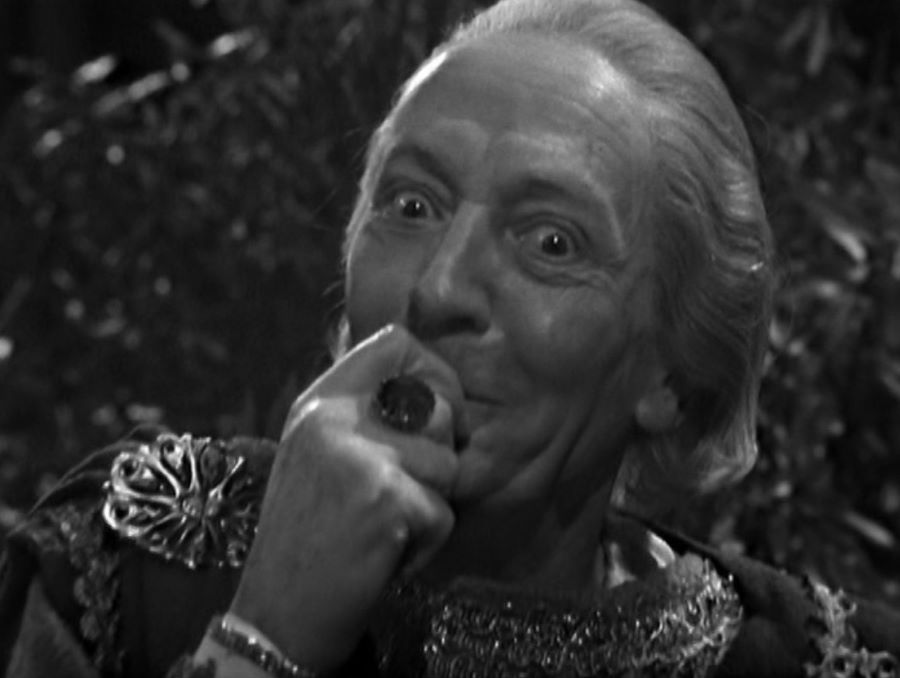
It’s clear that he’s enjoying himself in this ‘Doctor Who’ story, as he’s able to perform the comedy scenes as well as the drama scenes very well. He also laughs quite a lot in this ‘Doctor Who’ story and isn’t as grumpy as he tends to be in many of the other stories, which is quite why I like ‘The Romans’.
It’s also nice to see William Hartnell’s Doctor in something different compared to his usual attire. He looks like a Roman official in the clothes he wears, and they suit him well. It turns out he’s a good fighter too, especially when he wards off Ascaris who tries to assassinate him in the second episode.
I found his scenes with Nero very well done, particularly when he was told by Tavius, who believes him to be Maximus Pettulian intent on assassinating the Emperor, that he was going to be made to play in the arena where the lions would be set upon him. And why would Nero would do this to him? 😐
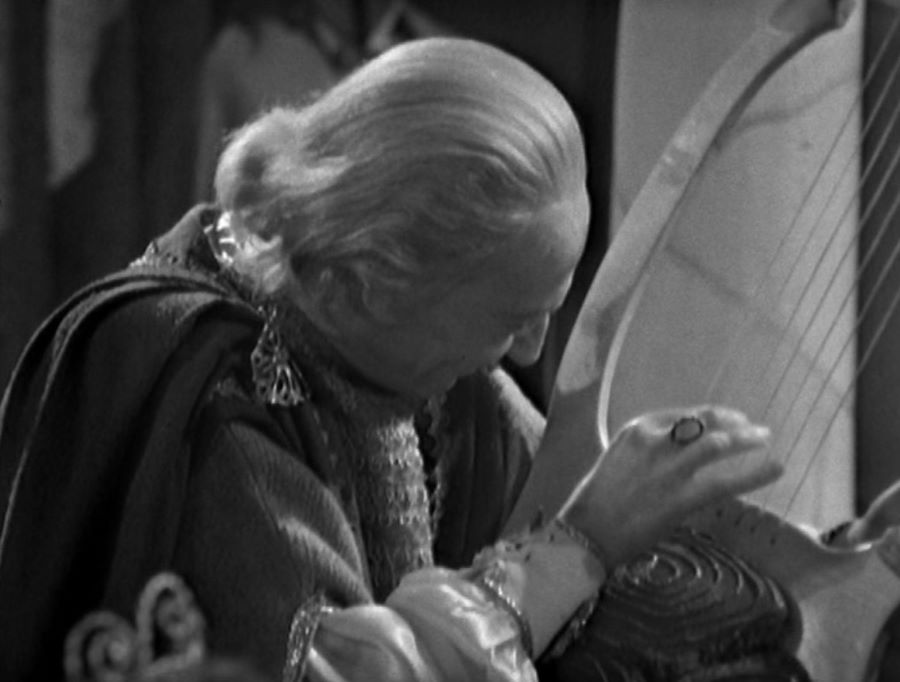
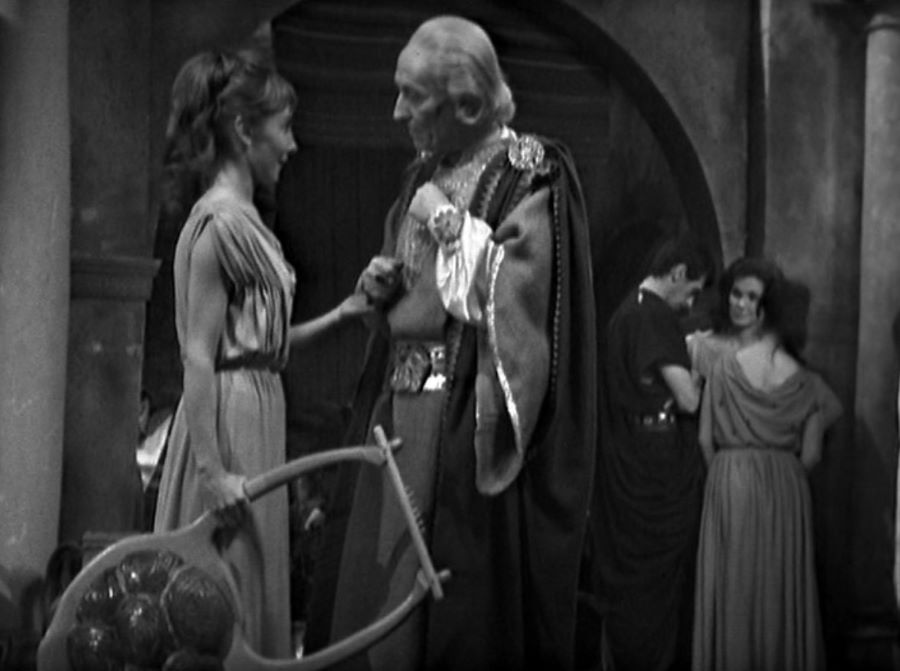
Well, apparently, the Doctor impressed everyone with his lyre-playing, if you can call it that, by doing ‘The Emperor’s New Clothes’, where he played silently on the lyre. It’s an amusing scene and I’m amazed the Doctor managed to impress everyone so he could avoid actually playing the lyre himself.
Nero’s reaction to the Doctor ‘guessing’ that he intended to have him play in the arena where the lions would be set upon him was amusing. The Doctor saying to Nero he hopes to make it a ‘roaring’ success is also funny. The Doctor is also responsible for starting the Great Fire of Rome (more later).
Maureen O’Brien is equally very good as Vicki in this ‘Doctor Who’ adventure. I like how she gets to spend time with the Doctor when they go on their journey to visit Rome. In some respects, I do wish we had more of this between Susan and her grandfather compared to between Vicki and the Doctor.
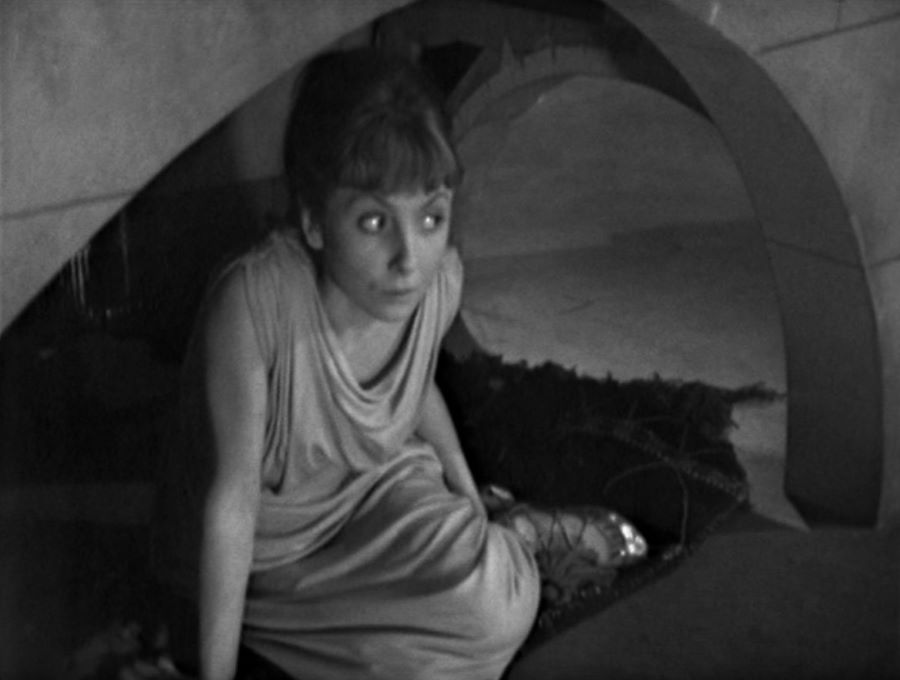
Not that anything between Susan and her grandfather was bad. It’s just there wasn’t that relaxed camaraderie I expect to find in a grandfather-granddaughter relationship. If Susan hadn’t left the TV series when she did, I think we could have had that between her and her grandfather in this story. 😐
Here, with Vicki and the Doctor, you can clearly see how they enjoy being in each other’s company, and you can see how much Maureen O’Brien and William Hartnell get on well with each other when they visit Rome. Maureen O’Brien as Vicki also looks rather pretty in her Roman attire in this story. 🙂
Vicki does get to be cheeky in this adventure, especially when she swaps the two goblets with one containing poison in it. The Doctor told Vicki not to interfere, but she didn’t want the person meant to be poisoned by Poppaea killed. She was unaware Barbara was going to be that intended victim. 😮
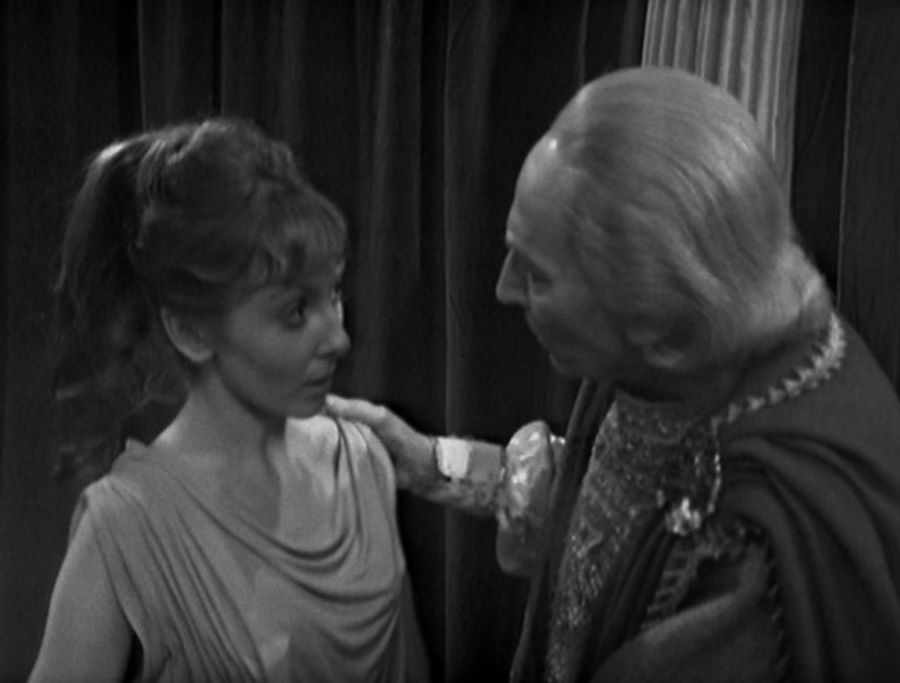
I enjoyed it when Vicki found it funny once Nero fell over backwards whilst chasing Barbara around in the corridors. I also found it funny when Vicki was being manhandled by the Roman guards that came in to arrest her and the Doctor before Nero dropped charges. She reacted in pain once freed. 🙂
It’s also amusing when Vicki pointed out to the Doctor that he caused the Great Fire of Rome compared to what the history books have said. Despite the Doctor’s denial, Vicki is determined to keep to her opinion. The comedy between the Doctor and Vicki is fun to see throughout this story. 🙂
One of the joyous comedic parts of ‘The Romans’ is how the Doctor and Vicki keep missing Barbara and Ian when they too are also in Rome. I’m amazed that Dennis Spooner kept that joke going, especially when the four reunite at the end without realising they were all in Rome at the same time.
That joke is contradicted in ‘The Romans’ Target novelization by Donald Cotton, which I found disappointing among other things. It works well in this ‘Doctor Who’ story, especially when you build up the tension and anxiety for the viewers on wondering whether our heroes will be reunited or not.
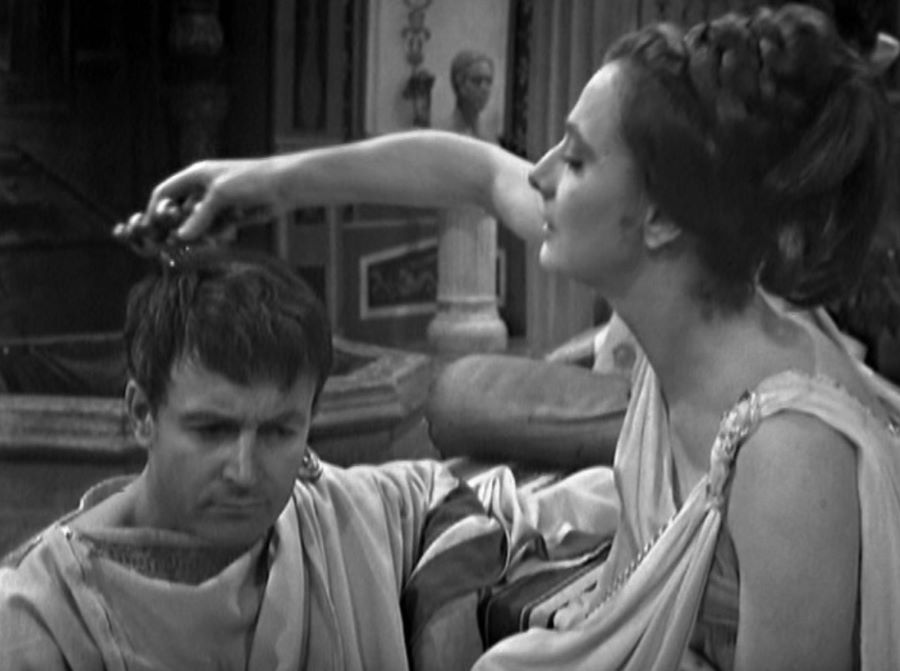
William Russell is very good as Ian Chesterton in this ‘Doctor Who’ story. I found his scenes with Barbara very good, especially in the first episode when they’re enjoying the luxury of their Italian villa. It was funny when Ian was being ‘such a baby’, as Barbara decided to comb his hair in the story. 🙂
Ian seems to enjoy wearing his Roman toga, especially when he recites quotes from Anthony’s speech from Act III, Scene 2 of ‘Julius Caesar’ by William Shakespeare, which Barbara thinks was a mistake. 😀 I also enjoyed the ‘ice in the fridge’ joke, as it’s a lovely comedic and character moment.
It emphasises the friendship that’s there between Ian and Barbara, as they’re clearly very fond of each other. Barbara’s high-pitched laugh seals it off too. 😀 Ian also declares “O tempora, o mores” twice, which is a Latin phrase. 🙂 Translated into English, it means, “Oh the times, Oh the customs!” 🙂
Sadly, Ian has a hard time in this ‘Doctor Who’ story when he’s sold into slavery aboard a sailing ship. I like it when he befriends Delos and they manage to escape their captivity when their ship has shipwrecked. They soon head for Rome where Ian hopes to rescue Barbara before they’re caught. 😮
It’s unfortunate that they’re caught, as, at first, Ian and Delos are going to trained as a gladiators in order to fight ferocious lions in the arena. We don’t get to that, thankfully, as the lions depicted in the story are just stock footage. They do, however, fight each other when Nero demands it in the story. 😐
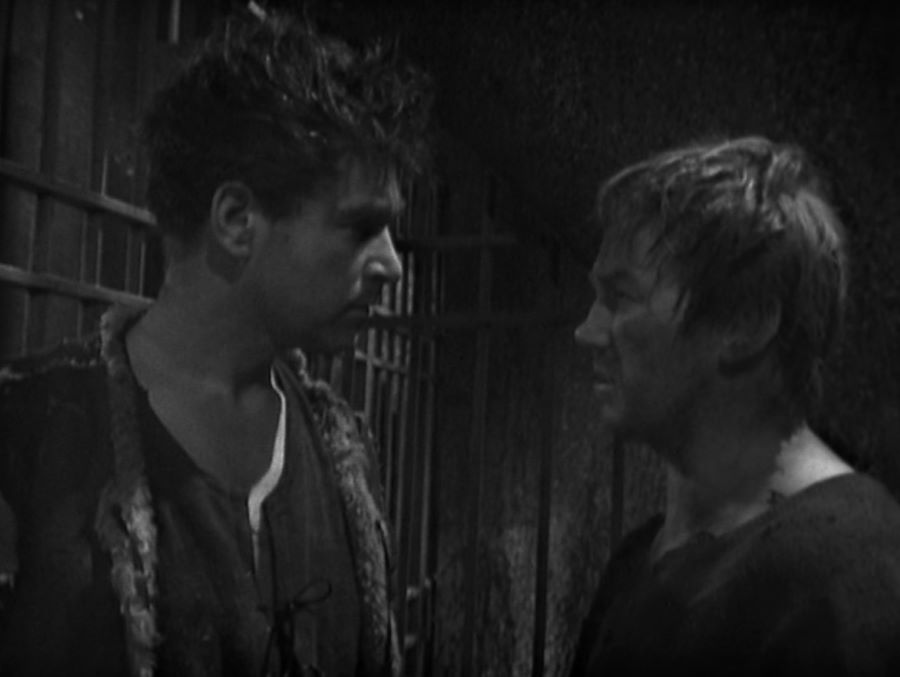
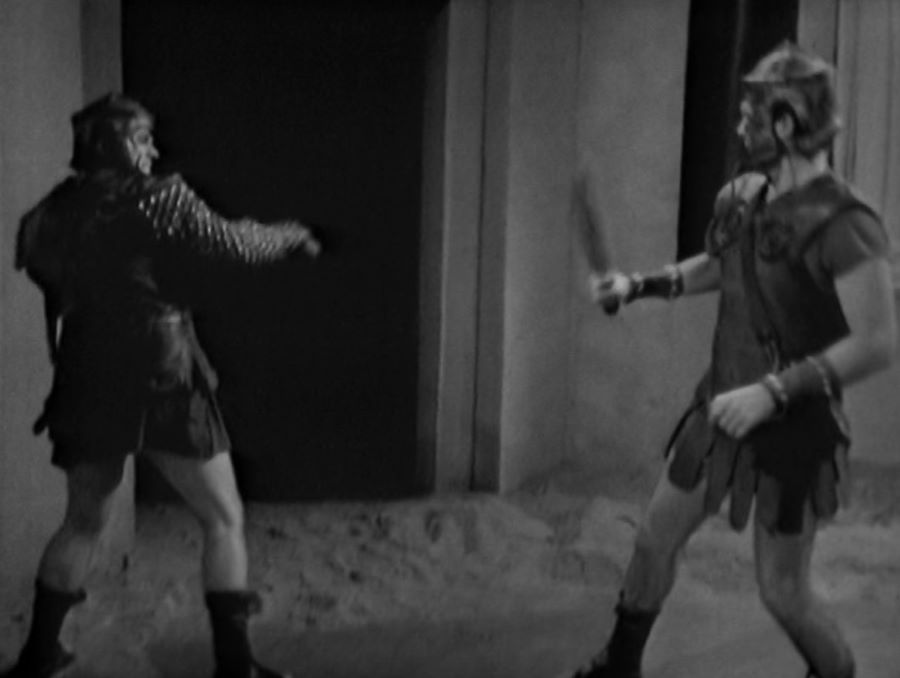
It was tense to see Ian and Delos fighting each other. William Russell gets to show off his sword-fighting skills, especially since he was in ‘The Adventures of Sir Lancelot’ on TV in the 1950s. Thankfully, Delos defies Nero ordering him to cut off Ian’s head, and Ian gets to reunite with Barbara in the story.
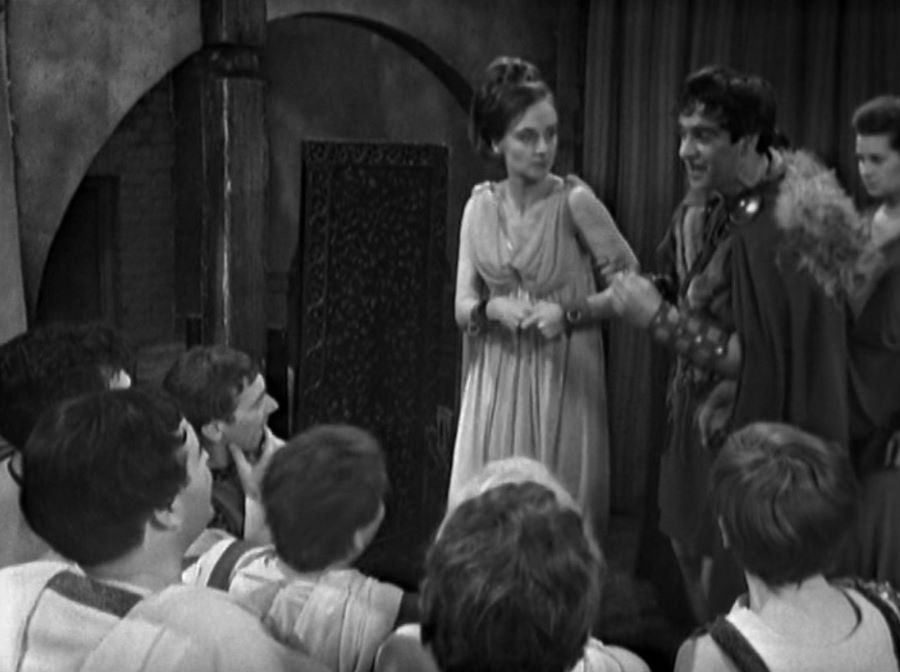
Jacqueline Hill is equally great as Barbara Wright in this ‘Doctor Who’ story. Like Ian, Barbara is sold into slavery to be one of Poppaea’s serving girls at Nero’s court. It’s interesting how she gets sold into slavery, since she’s seen helping a poor old woman in a prison cell by Michael Peake as Tavius. 🙂
Initially, Barbara isn’t keen on Tavius helping her out of her prison to be one of Poppaea’s slaves. But she grows to trust Tavius and appreciates his kindness, especially when she plans on finding a way to get out of Rome and return to the villa in Assisium where she hopes to be reunited with her friends.
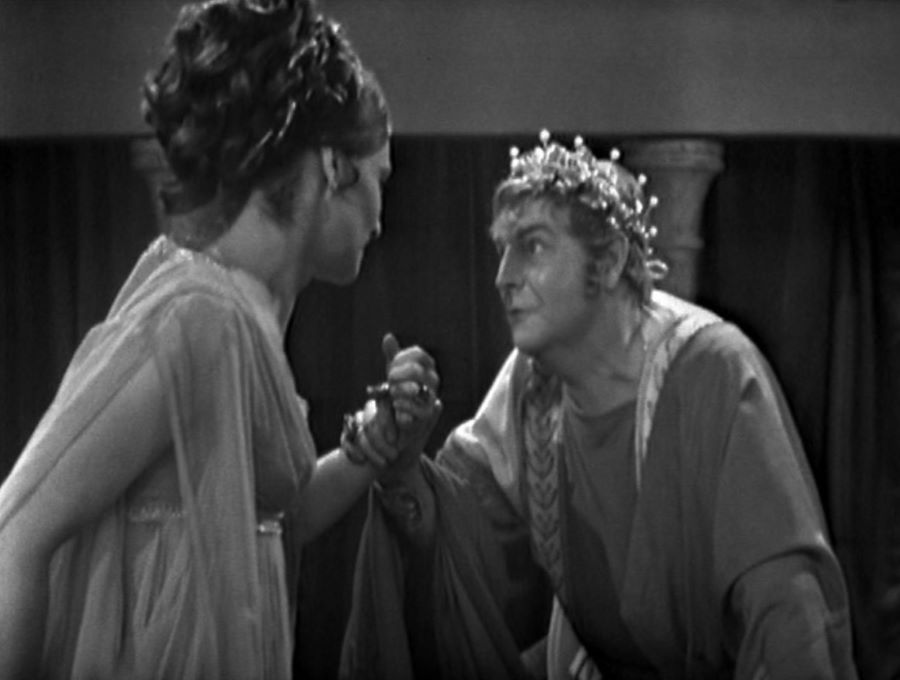
Unfortunately, Barbara gets chased by Nero a lot in this ‘Doctor Who’ story. The chasing around scenes with Barbara by Nero is somewhat an integral part to the comedy aspect featured in the story’s third episode. Some might consider that rather over-the-top, but I found it quite entertaining.
I quite like how Jacqueline Hill’s honest acting in her performance as Barbara bounces off Derek Francis’ somewhat comedic and bumbling performance. At one point, Barbara is given a gold bracelet by Nero as a gift. Remember this gold bracelet for later, as it’ll be used again in ‘The Web Planet’.
Barbara is forced to watch the gladiatorial tournament between Ian and Delos when Nero brings her along after being offended by the Doctor/Maximus’ abilities as a lyre player. It was tense when Barbara was found out for being friends with Ian, though thankfully Nero doesn’t have her be killed.
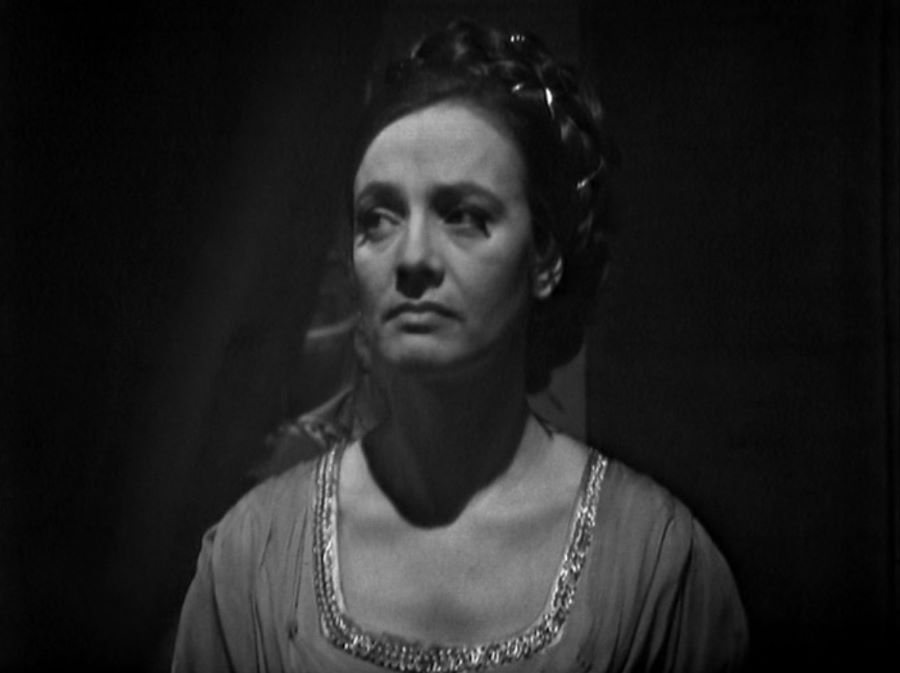
I liked it when Barbara was reunited with Ian when he came to save her during the Great Fire of Rome proceedings. Their return to their Roman villa is a somewhat happy one, although Barbara lets slip that she accidentally broke the vase on Ian’s head when they were invaded by the slave traders.
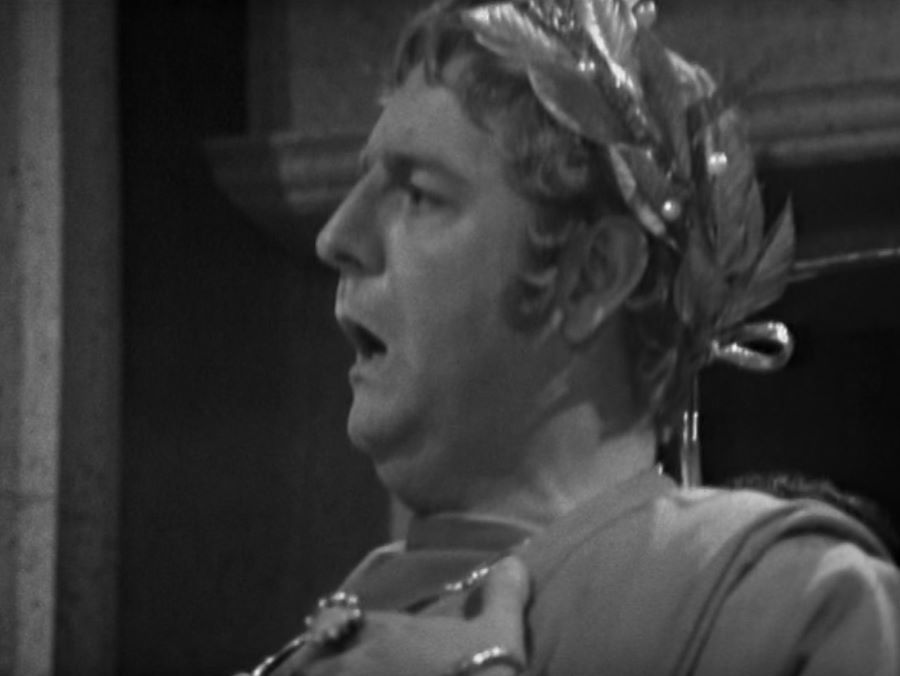
The story’s biggest guest star of course is Derek Francis as Caesar Nero, the fifth Emperor of Ancient Rome. Derek Francis is mostly a comedy and character actor, having performed regularly in the ‘Carry On’ films and I’ve seen him in one of Norman Wisdom’s films called ‘Press For Time’ in 1966. 🙂
I enjoyed Derek Francis’ performance as Nero, as he’s able to blend in the madness, humour and villainy of the Emperor pretty well. Whether it’s an accurate historical depiction of Nero in the story is a matter for debate, but it’s an intriguing blend of the humorous and sinister aspects of the role. 🙂
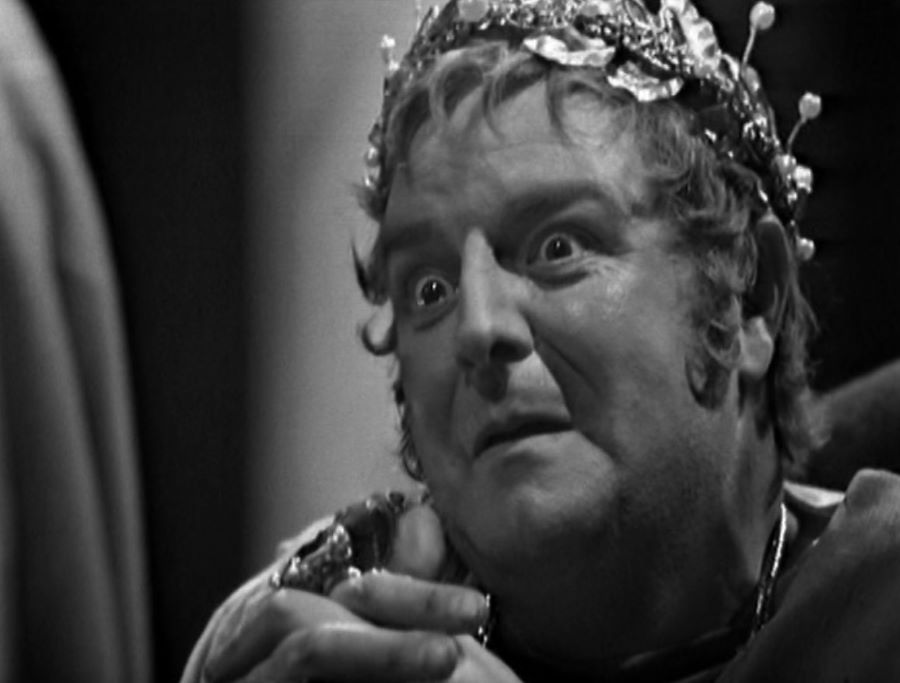
It’s quite ironic, because over the years, there have been various interpretations and depictions of Nero in film and TV. As well as ‘Horrible Histories’, there are also performances by various actors playing Nero, such as Christopher Biggins in ‘I, Claudius’ and Anthony Andrews in ‘A.D.’ – both on TV.
Christopher Biggins and Anthony Andrews have been interviewed for ‘What Has ‘The Romans’ Ever Done For Us?’ documentary, originally released on ‘The Romans’ DVD. I’ve not seen their interpretations of Nero properly, but it’s so interesting to compare them to Derek Francis’ portrayal.
It’s easy to think that Nero is just remembered for chasing Barbara around in the story. But Nero does have his cruel streak, including when he passes the poison goblet to his cup bearer Tigellinus, causing the first comedy death in the story, as well as him wishing to see ‘someone hurt’ in an arena.
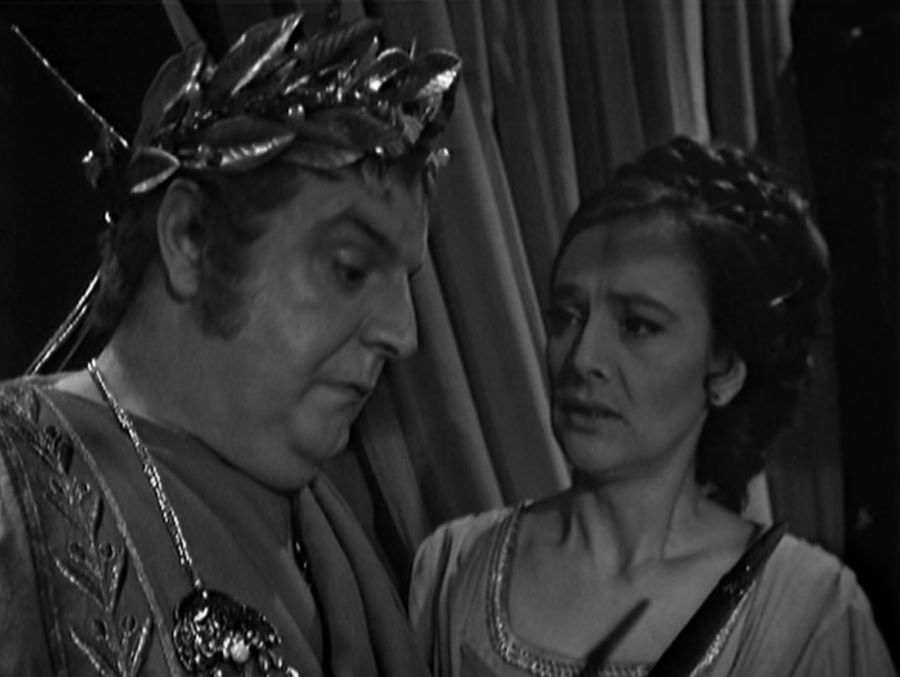
He also kills a Roman soldier with a sword instead of Barbara, claiming ‘he didn’t fight hard enough’, which is shocking to witness. And of course, Nero orders for Rome to be burnt to the ground. He’s clearly bonkers when he’s playing the lyre whilst the burning of Rome is taking place in the climax. 😀
The story’s guest cast also includes Kay Patrick as Poppaea Sabina, Nero’s second wife, I believe. It’s interesting how she’s depicted in this story, since she comes across as being the jealous type, especially when Nero sets his sights on Barbara and she’s wishing to remain being Empress of Rome.
Poppaea orders for Barbara to be poisoned and is easily angered when it doesn’t work as planned. She also slaps Tavius bitterly when he questions her orders to dismiss Barbara as her slave. Mind you, Poppaea should reconsider being Empress, as she would be kicked to death by Nero in later life.
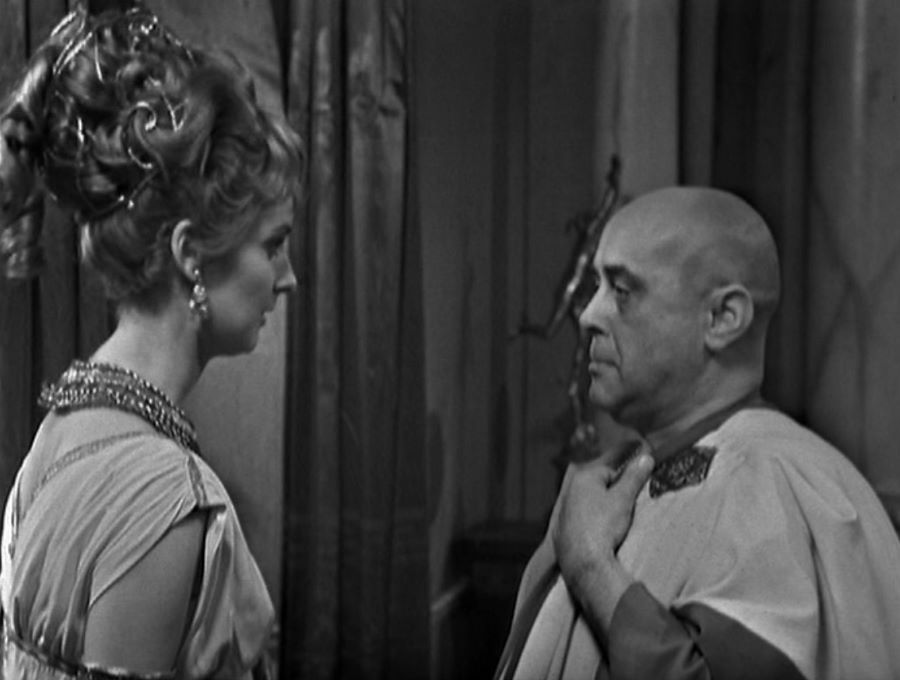
I enjoyed Michael Peake’s performance as Tavius in this ‘Doctor Who’ story. It’s interesting how he helps Barbara, as it turns out by the story’s end that he’s an early Christian when bearing a crucifix whilst watching Barbara flee with Ian during the Great Fire of Rome. I do like the moment in the story.
It’s often a thing about Tavius that doesn’t really get talked about in the story, as you wonder how he’s able to serve Nero in his court when he’s secretly a Christian. It’s also fascinating how it’s reflected in his interactions with Barbara, as he’s genuinely helping her with being a compassionate ally.
Peter Diamond as Delos is another worthwhile character in the story. As well as an actor, Peter Diamond is a stunt performer, and this is clearly reflected when he, as Delos, is fighting Ian in the sword fight for Nero’s entertainment. He must’ve been on hand all the time with the sword fighting.
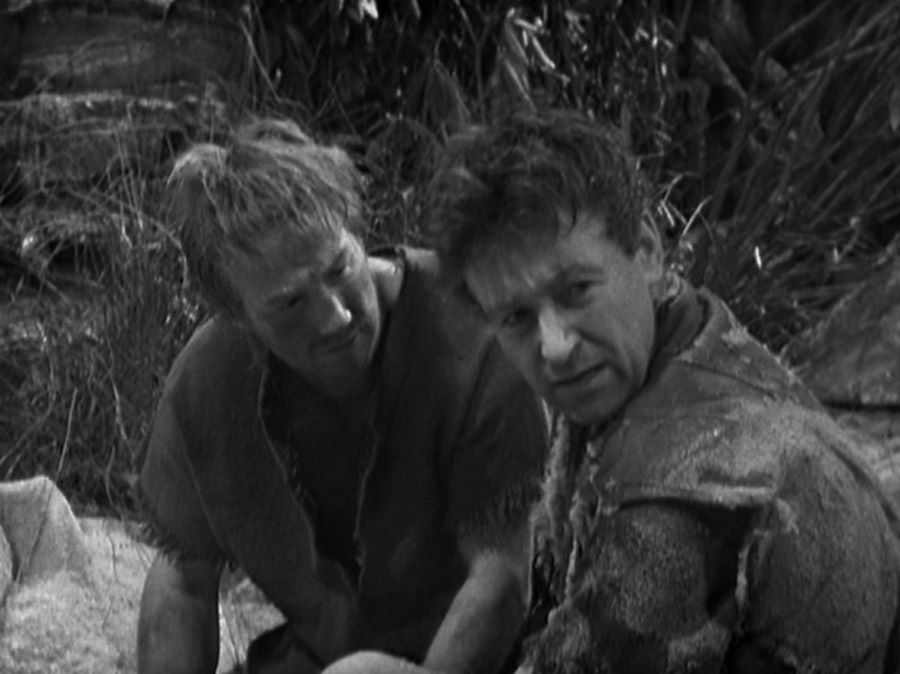
In fact, Peter Diamond was a fight arranger was several stories, including this one, ‘The Dalek Invasion of Earth’, ‘The Space Museum’, ‘The Chase’, ‘The Highlanders’, ‘The Evil of the Daleks’, ‘The War Games’ and ‘The Dæmons’. He also has plenty more ‘Doctor Who’ acting credits to his name. 😀
He later performed in ‘The Space Museum’, ‘The Highlanders’ and ‘The Ice Warriors’. Delos is a compassionate ally and friend for Ian, especially when they escape the sailing ship to get to Rome, only to end up in prison. 😐 It gets tense when Ian and Delos are forced to fight for Nero by Sevcheria.
Delos promises to make it swift and easy for Ian should he defeat him when fighting him in the arena, but thankfully that doesn’t happen. I like how Delos accompanies Ian after the fight when they get inside Nero’s court among the would-be torch-bearers so they can locate where Barbara is.
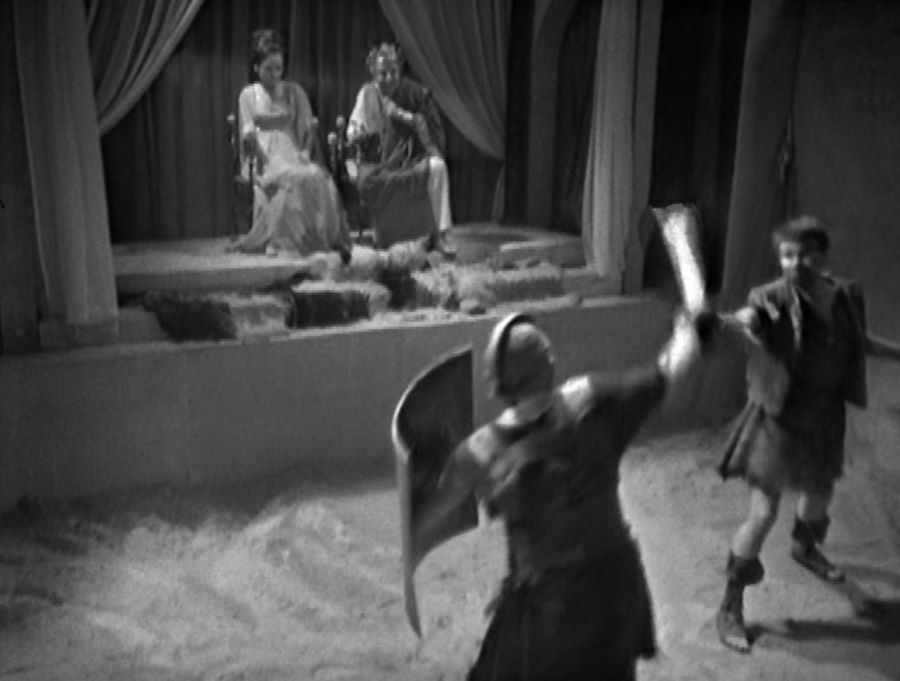
And yes, I know that the arena fight between Ian and Delos doesn’t reflect what an actual arena would look like in Roman times, since surely it should be bigger and Nero and Barbara should be sitting high above the gladiatorial combat. But this a 1960s TV production and they couldn’t afford it.
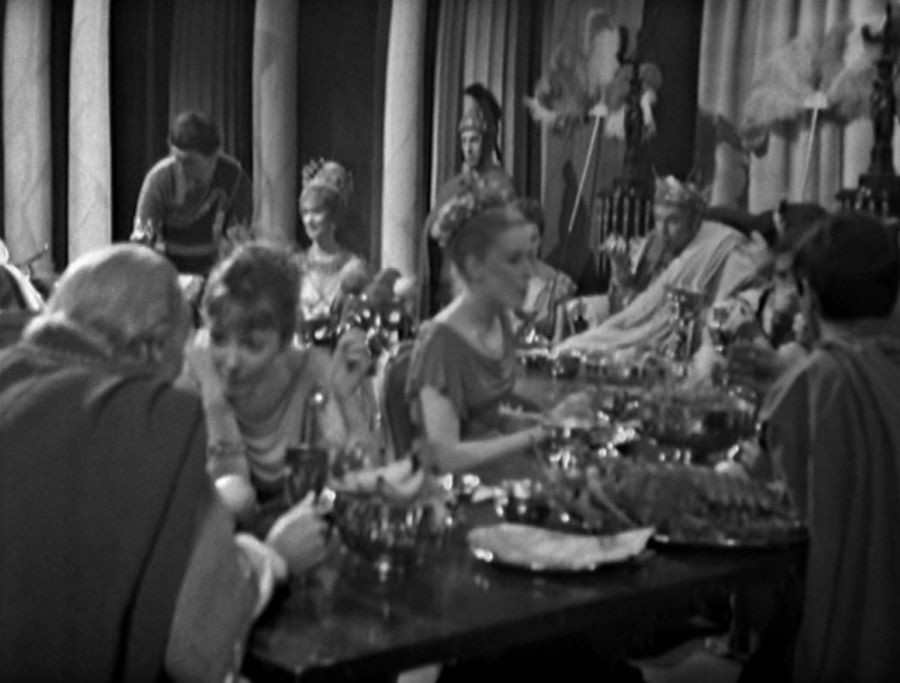
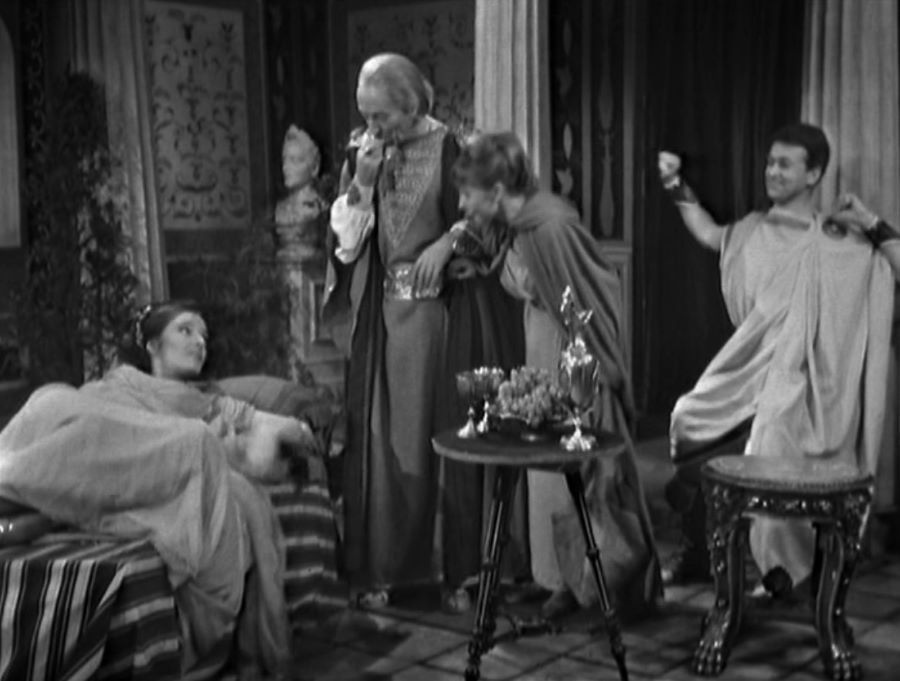
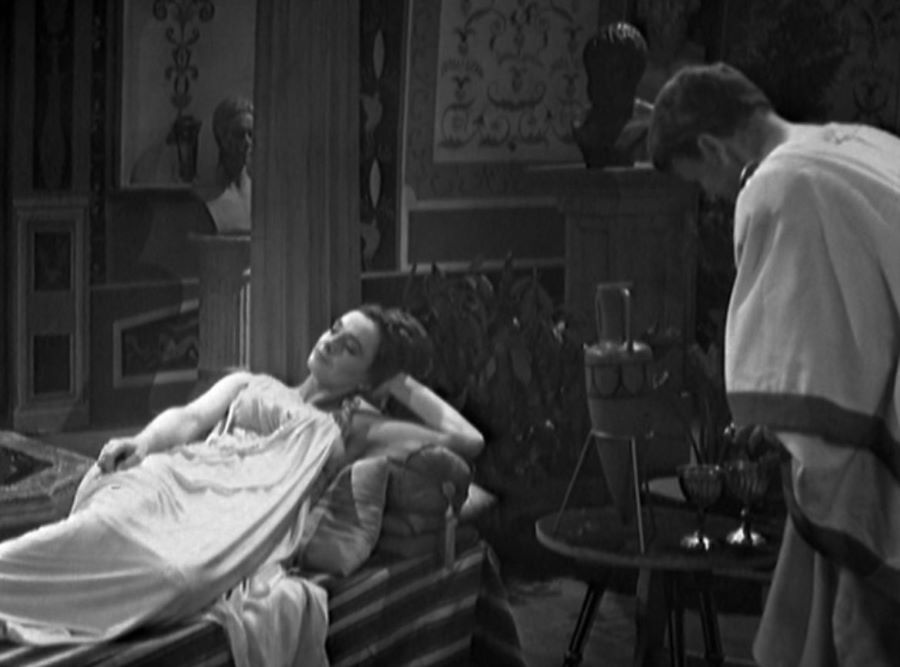
It’s also amusing that the banquet scene featured in the story’s third episode where the Doctor plays ‘The Emperor’s New Clothes’ on his lyre isn’t historically accurate. All the guests are sitting on chairs and at tables, whereas in historical terms, they should be lying on couches whilst eating their food. 😀
There’s a ‘Blue Peter’ item from the 1970s, I believe, on ‘The Romans’ DVD and Blu-ray where the ‘Blue Peter’ team, including Peter Purves, are demonstrating how a Roman banquet was done in those days, including lying down on couches. I’m relying on that interpretation than ‘The Romans’ version.
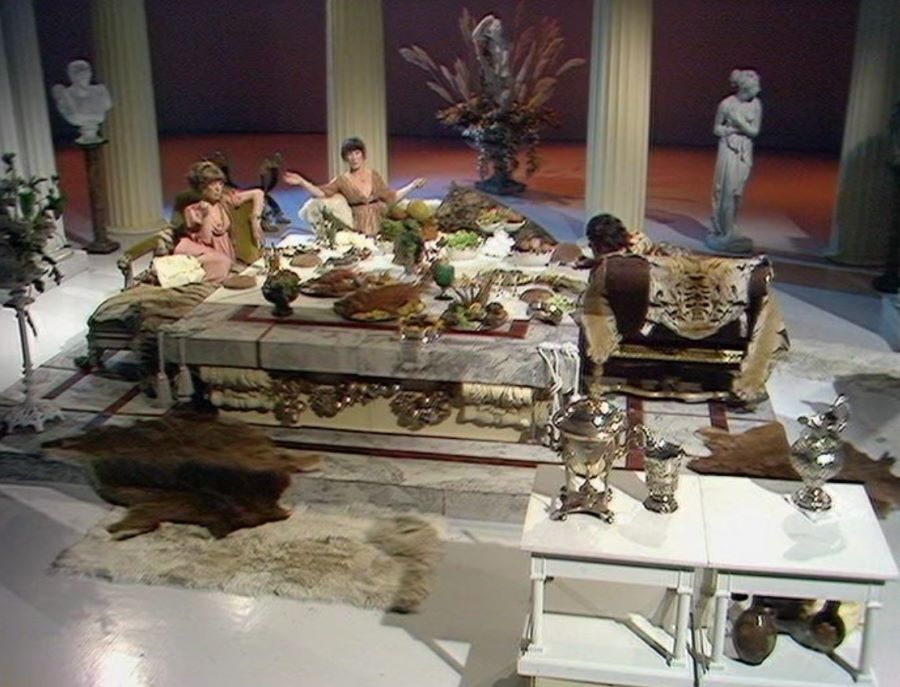
In fact, when I wrote ‘The Space Hotel’ for my ‘Fifth Doctor’ series of ‘Doctor Who’ stories, I included a scene where characters were playing Romans and they had a Roman banquet similar to what’s in the ‘Blue Peter’ item. It goes to show how much of an impact ‘The Romans’ as a story had on me then. 🙂
As well as Brian Proudfoot playing the cup bearer Tigellinus (Poor chap. He didn’t get any lines to say and was killed off in the third episode by Nero), there’s Barry Jackson as Ascaris, the assassin that had his tongue cut out who killed Maximus Pettulian before he tried to kill the Doctor in this adventure. 😮
After ‘The Romans’, Barry Jackson went on to play Jeff Garvey in ‘Mission to the Unknown’ and Drax in ‘The Armageddon Factor’. 🙂 There’s also Ann Tirard as Locusta, the professional poisoner in the story. She’s only in the third episode, but it’s very unusual to see a professional poison maker in this.
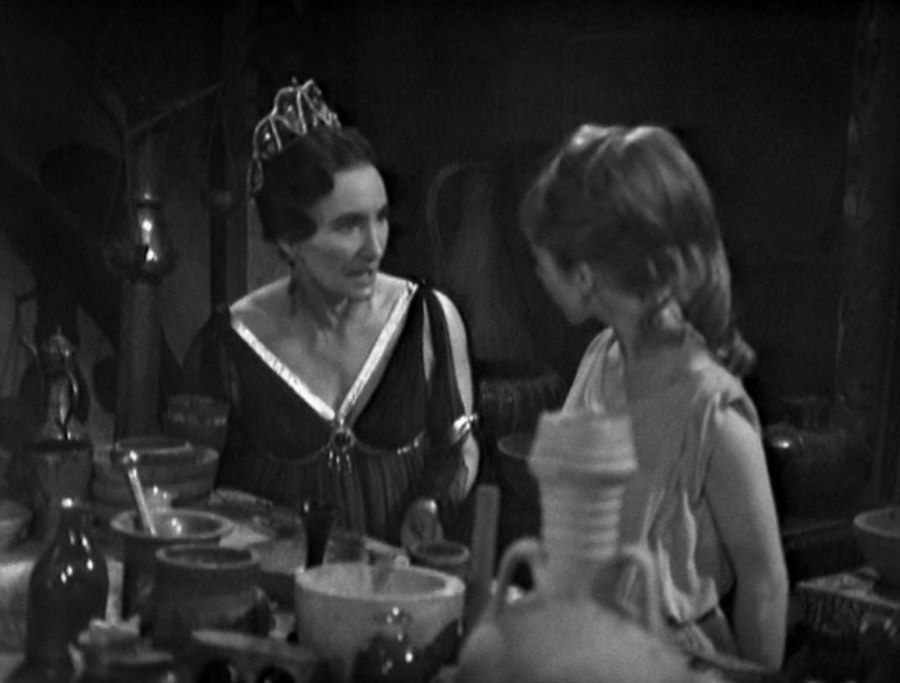
A thing to mention about Maximus Pettulian is he’s played by Bart Allison, and he looks like William Hartnell in certain respects, especially with his white wig (or perhaps it’s his real hair 😀 ). I did wonder if Bart Allison had doubled for William Hartnell on certain occasions in the series, but apparently not.
The story concludes with the Great Fire of Rome taking place and the Doctor and Vicki get to witness it from a distance. I agree that the Great Fire of Rome doesn’t look very impressive when seeing it in the TV story. Even the director Christopher Barry wasn’t very impressed by how that fire turned out.
With that said, the story’s design work by Raymond Cusick is very good. Apparently, this was the first time he did a historical ‘Doctor Who’ story compared to previous future-setting stories like the first ‘Daleks’ story and ‘The Rescue’. Very often, I believed that we were actually in Ancient Rome in this.
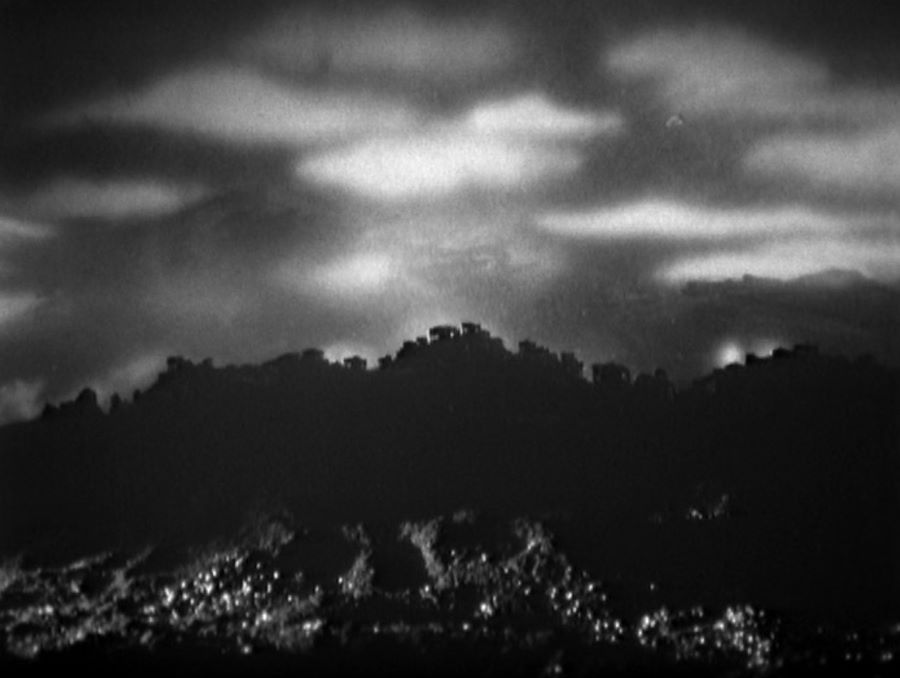
Going back to when the Doctor claims that the Great Fire of Rome wasn’t his fault, it should be noted that he was holding his spectacles at such an angle to set fire to Nero’s plans for a new Rome on the table. So, I’m willing to side with Vicki on this and say the Doctor was responsible for the fire.
It’s ironic because the Doctor would do the same sort of thing again in ‘The Visitation’ when he as Peter Davison’s Fifth Doctor dropped a torch in a barn and caused the Great Fire of London in 1666. The Doctor should be more careful when it comes to visiting Earth’s past, as he often accidentally causes historical events.
I mean, like, in years to come when the Tenth Doctor and Donna visited Pompeii in 79 A.D., the Doctor is partly responsible for causing the eruption of Mount Vesuvius. I say ‘partly responsible’ because the Pyrovilles were also there when they crashed their spaceship into the mountain itself. 🙂
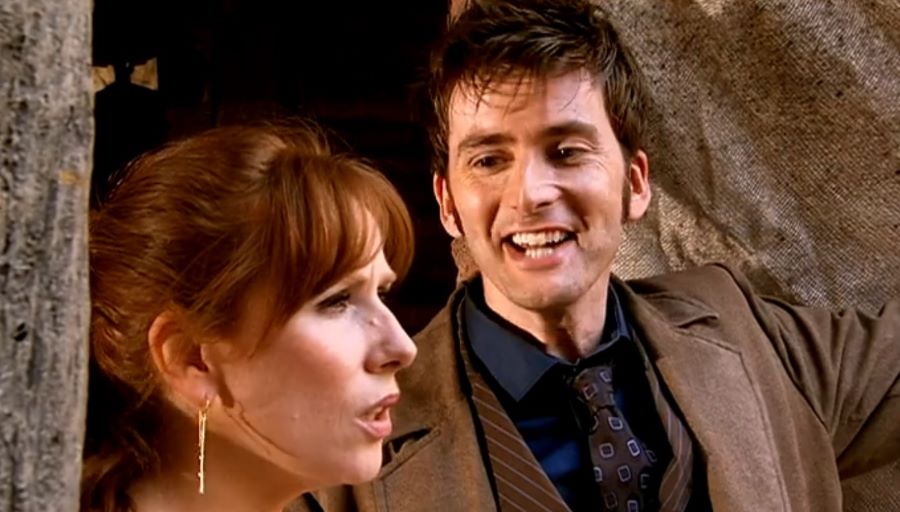
Speaking of which, that said story called ‘The Fires of Pompeii’ is quite a nice follow-up to ‘The Romans’ and I like how it gets mentioned in the ‘What Has ‘The Romans’ Ever Done For Us?’ making-of documentary. It’s a nice tie-in between the classic and new TV shows of ‘Doctor Who’ for me here. 🙂
I like how ‘The Romans’ ends with the Doctor and Vicki reuniting with Ian and Barbara back at their villa, unaware that they’d all been to Rome but on different paths. All four return to the TARDIS to set off for another adventure. But where they’re all setting off to next, the Doctor doesn’t know yet.
Apparently, there are stories set between ‘The Romans’ and ‘The Web Planet’, including ‘Starborn’ – a Big Finish audio story – and ‘The Eleventh Tiger’ – a BBC Books story – that delay the Doctor and friends’ journey to Vortis. So, the last scene of ‘The Romans’ is somewhat contradicted in that regard.
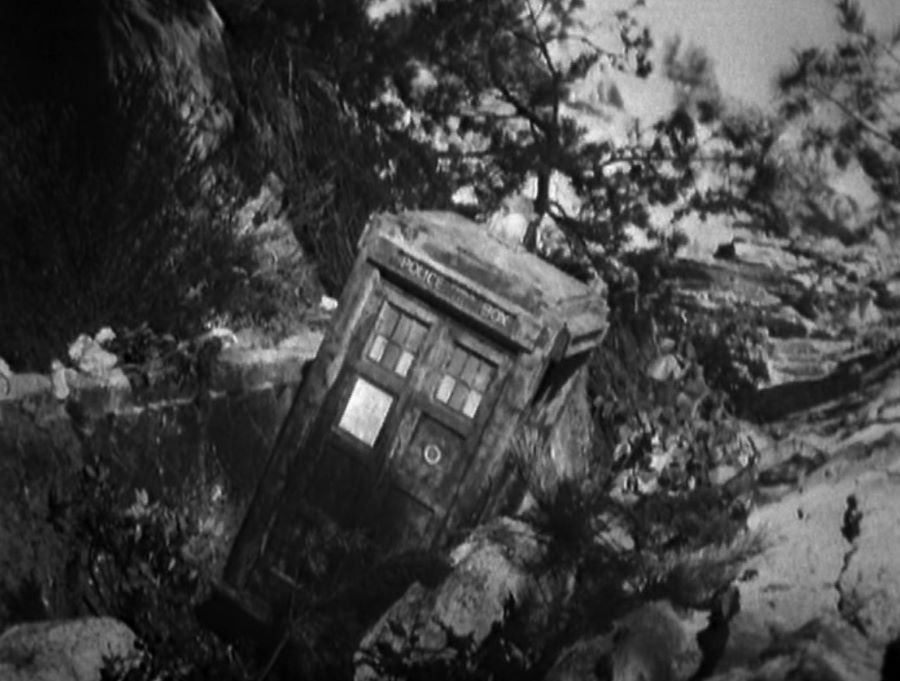
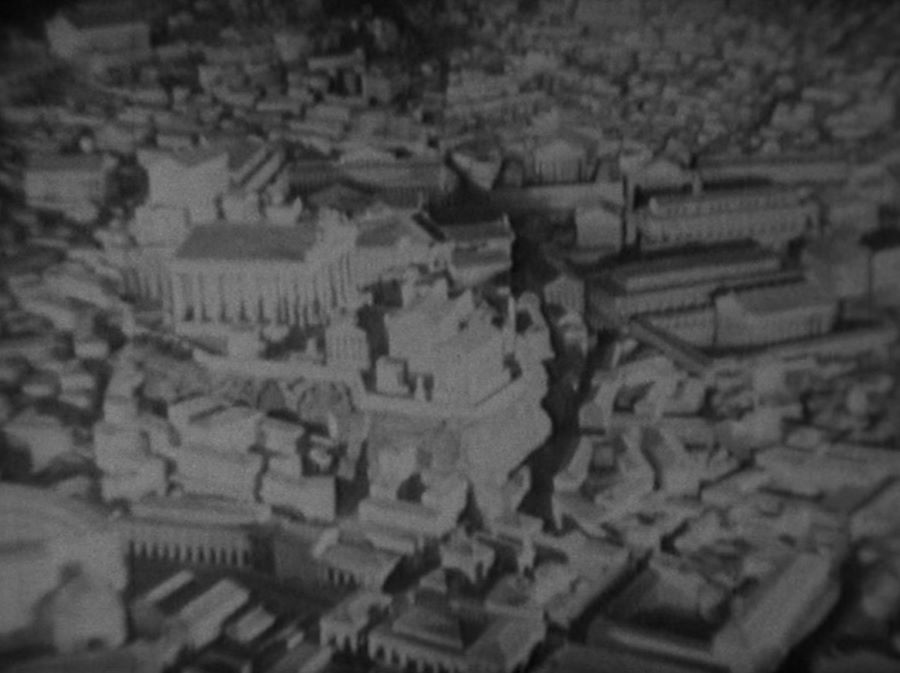
The original DVD special features were as follows. There was the ‘What Has ‘The Romans’ Ever Done For Us?’ making-of documentary with behind-the-scenes cast and crew interviews, the model featurette called ‘Roma Parva’ with director Christopher Barry, the ‘Dennis Spooner – Wanna Write A Television Series’ profile, and the ‘Blue Peter’ item featuring the ‘Blue Peter’ team, including Peter Purves, having a Roman banquet in their studio, which I enjoyed a lot. There was the ‘Girls! Girls! Girls! – The 1960s’ featurette with behind-the-scenes cast and crew interviews, a photo gallery of the story, a dual mono sound audio mix option of the story to enjoy, and an audio commentary with William Russell, Nick Evans, Barry Jackson and director Christopher Barry, moderated by Toby Hadoke. There was an info-text commentary option to enjoy and PDF materials, including a ‘Radio Times Listings’ of the story. There was also a ‘coming soon’ trailer for ‘Attack of the Cybermen’, starring Colin Baker and Nicola Bryant.
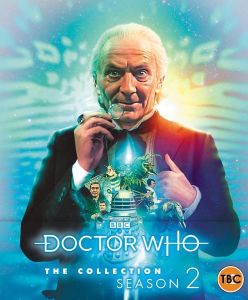
On Disc 4 of the ‘Doctor Who – The Collection – Season 2’ Blu-ray, the ‘What Has ‘The Romans’ Ever Done For Us’ making-of documentary, the ‘Roma Parva’ model featurette, the ‘Dennis Spooner – Wanna Write A Television Series’ profile, the ‘Blue Peter’ item, the dual mono sound audio mix option and the DVD audio commentary can be found on there. The photo gallery and the info-text commentary option have been updated for 2022 on the Blu-ray. Sadly, the ‘Girls! Girls! Girls! – The 1960s’ featurette isn’t included on ‘The Romans’ Blu-ray disc.
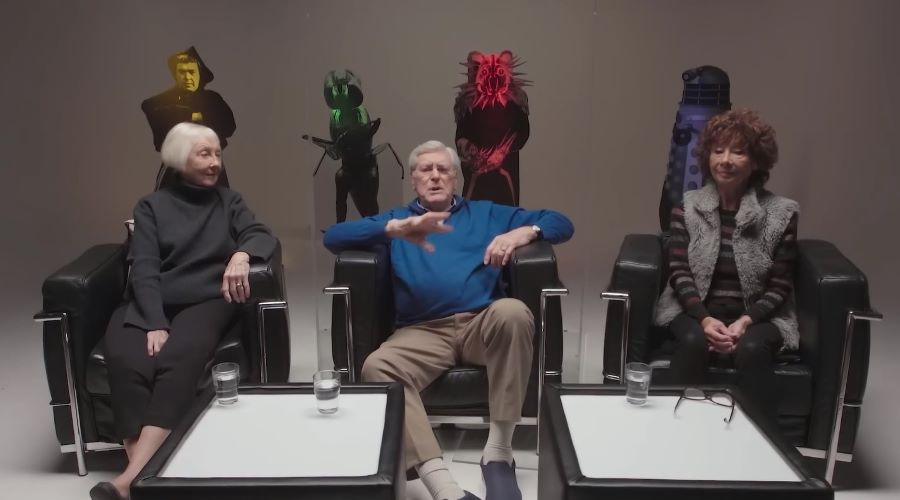
The new special features on Blu-ray include the ‘Behind the Sofa’ feature on ‘The Romans’ with Maureen O’Brien (Vicki), Peter Purves (Steven) and Carole Ann Ford (Susan) as well as Janet Fielding (Tegan), Wendy Padbury (Zoe) and Sarah Sutton (Nyssa) as well as Bonnie Langford (Mel) and Sophie Aldred (Ace).
On the PDF front, as well as the ‘Radio Times Listings’ of ‘The Romans’, there are production documents, four camera scripts, design drawings, studio floorplans for the first and second episodes of the story, and photographer John Cura’s telesnaps of the story. You need a special Blu-ray computer drive for that.
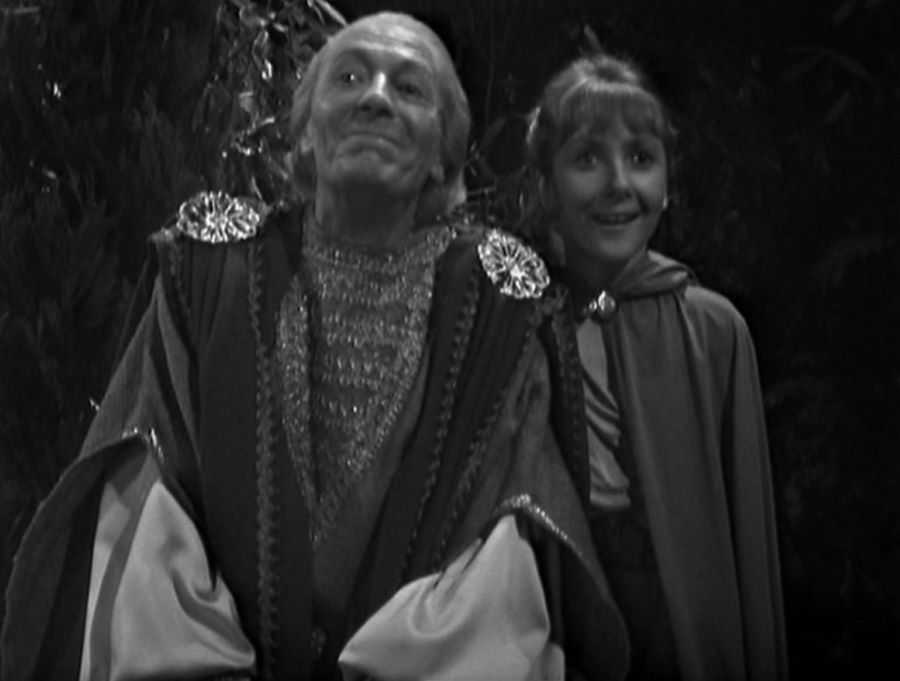
‘The Romans’ is definitely one of my favourite ‘Doctor Who’ stories – my absolute favourite ‘Doctor Who’ story – from the William Hartnell/First Doctor era. Yes, I acknowledge there are flaws with this story and it can’t be denied there is an overdose of humour, particularly in the story’s third episode.
But I look back on ‘The Romans’ with very fond and happy memories, especially for the fact it has a refreshing approach in terms of doing a comedic take of the historical adventure genre of ‘Doctor Who’ storytelling. It might not be to everyone’s tastes, but I really gained a lot of enjoyment from it.
In fact, both ‘The Rescue’ and ‘The Romans’ as Vicki’s first two ‘Doctor Who’ stories have been very enjoyable to watch. This was where the classic TV series was beginning to peak at its best, especially with the introduction of Maureen O’Brien as Vicki. Things seemed to be very hopeful by this stage. 🙂
This is thanks to Dennis Spooner’s efforts as ‘Doctor Who’s script editor in the classic TV series’ second season. He introduced more variety in what the TV show could do beyond the standard historical and futuristic stories. But how would things be for our TARDIS heroes in the rest of Season 2?
‘The Romans’ rating – 9/10
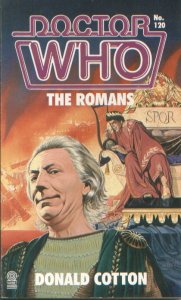

‘DOCTOR WHO – THE ROMANS’
Please feel free to comment on my review.
Letters and Diary Entries from ‘The Romans’

My ‘Doctor Who’ Target novelizations of ‘The Romans’ and ‘The Chase’ from the ‘Carlisle Comic Con’, March 2018
I wish this were a straightforward Target novelization/audiobook of the ‘Doctor Who’ story. 😦
So, back in 2018 when I did my original review on ‘The Romans’ Target novelization by Donald Cotton, I probably said some things that were rather harsh about its presentation. Checking out the Target novelization for a second time has been a little better, especially with the audiobook release.
The BBC audiobook for ‘The Romans’ was released in 2023, and features readings by Tim Treloar, Jamie Glover, Dan Starkey, Clare Corbett, Jon Culshaw, Maureen O’Brien and Louise Jameson. I enjoyed listening to the audiobook whilst reading the book when I had it on download via Audible. 🙂
However, despite that, I still don’t like ‘The Romans’ Target novelization by Donald Cotton and I won’t hold back on why I dislike it so much. My main problem with it is that it’s not a proper novelization. It isn’t a direct translation of the original TV story into prose, which is what you’d expect.
Granted, it’s an intriguing experiment of a novelization in terms of doing something different, but it’s not entirely satisfying. This is especially when you consider the numerous changes made by Donald Cotton from adapting the TV scripts into prose. Thus, making it a less faithful novelization of the story.
I’ll try to be a bit fairer on ‘The Roman’ novelization based on my revisit of it in 2024, along with the audiobook release, but basically, my updated review on it is more or less the same. There are extra details about the audiobook and its readers, but my thoughts on the novelization is about the same.
‘The Romans’, as you might have gathered, is one of my favourite ‘Doctor Who’ stories from the William Hartnell era of the classic TV series. Possibly my absolute favourite from the era. I know this is something that many ‘Doctor Who’ fans won’t share with me on, considering it’s a comedy story. 😐
It was with some sadness that I discovered the ‘Behind the Sofa’ contributors including Maureen O’Brien, Peter Purves, Carole Ann Ford, Janet Fielding, Wendy Padbury, Sarah Sutton, Bonnie Langford and Sophie Aldred on ‘The Romans’ Blu-ray didn’t regard this story highly compared to me.
However, I gained plenty of enjoyment, pleasure and happy memories from watching this ‘Doctor Who’ story, especially for the first time on DVD and on revisits, particularly on DVD and Blu-ray. It’s a unique ‘Doctor Who’ story delving into the realms of comedy, especially in a historical setting, which I like.
After reading and hearing many ‘Doctor Who’ novelizations and audiobooks; it was only fair that I check out the novelization of the classic ‘Doctor Who’ historical story. It was by chance that I came across a copy of ‘The Romans’ novelization whilst I attended the ‘Carlisle Comic Con’ in March 2018.
I purchased the novelizations of ‘The Romans’ and ‘The Chase’ when attending the ‘Carlisle Comic Con’. Once I returned home from my weekend in Carlisle, I was looking forward to checking out this Target novelization when I got the chance to read it between the months of April and May in 2018. 🙂
It’s such a shame then that the expectations I had of ‘The Romans’ novelization being very good were sadly crushed during the time I checked it out. I hope one day to do my own novelization of ‘The Romans’ to illustrate why I’ve enjoyed the story a lot from checking it out on DVD and Blu-ray. 🙂
Initially, I was pleased that Donald Cotton was the author of ‘The Romans’ Target novelization. In ‘Doctor Who’, he’s well-known for writing comedic historical stories in the William Hartnell era, like ‘The Myth Makers’ and ‘The Gunfighters’. He seemed to be a terrific choice to novelize ‘The Romans’.
Beforehand, I read and heard the Target novelization/audiobook of ‘The Myth Makers’ by Donald Cotton and I found it to be particularly good. It was all taken from Homer’s point of view during the events of ‘The Myth Makers’, but it managed to keep to the dialogue featured in the original scripts. 🙂
This was what I had expected to find when checking out ‘The Romans’ Target novelization. I’ve seen ‘The Romans’ more than once and mostly know the dialogue off by heart. I hoped that Donald Cotton would do a good translation of the story into prose based on Dennis Spooner’s original scripts.
Sadly, that wasn’t the case for this. 😦 For one thing, Donald Cotton didn’t even try to keep to what was in the original scripts by Dennis Spooner. He paraphrased everything and didn’t include the familiar wonderful dialogue that was spoken by many of the characters featured in the lovely tale. 😦
He also took the approach of having the story told in letters and diary entries, given by certain characters in the story. It’s an odd way to tell a story in novelization form, as characters like the Doctor, Ian, Barbara, Poppea and Nero give summaries of what occurred to them in the actual book.
There aren’t enough dialogue-y scenes featured in the book. Thus, everything I was expecting to find from hearing what characters said and did in the original TV story aren’t included in the novelization. It’s something that makes you tilt your head and it’s bizarre Donald Cotton went with that approach.
I wouldn’t be against this approach to a ‘Doctor Who’ story if it was an author’s original work, but this is a novelization! I would have expected certain dialogue from the TV story to be included in this. Was Donald Cotton not allowed to have actual dialogue from the TV scripts featured in the book? 😐
Did Donald Cotton deliberately choose not to do a direct adaptation of Dennis Spooner’s story in his novelization of ‘The Romans’? Not that I don’t admire Donald Cotton’s attempt to tell the story via diary entries and letters, but it makes it less of a novelization of a story most would know quite well.
I recall there being a ‘sort-of’ children’s novelization of ‘Spider-Man 2’ published in 2004 called ‘The Daily Bugle Stories’. That had the story told in newspaper articles by some of the characters in the film. I didn’t read that book as I lost interest in it, and I actually prefer the official movie novelization.
This is a similar situation with ‘The Romans’ novelization, as I would have preferred a novelization where we have the story told in linear order with actual dialogue being given to us, rather than summaries in letters and diary entries. It made it less enjoyable for me, since I do love ‘The Romans’.
I wondered who would do the BBC audiobook reading for ‘The Romans’, and I assumed it would either be William Russell or Maureen O’Brien. I hoped I would be able to salvage something when it came to revisiting the Target novelization, since I was very disappointed in reading it the first time. 😐
So, it came as a surprise to me when it turned out there would be seven narrators for the BBC audiobook. Seven narrators! It gradually dawned on me that this made sense in the end, due to the nature of the novelization being a compilation of letters and diary entries read by certain characters.
It’s easy to be deceived and think that this is a multi-cast audio production, whereas in fact it’s specific actors playing certain characters when reading their parts in the story. Sometimes it works well for certain actors. Sometimes a couple are barely in the audiobook. I’ll get on to explaining why that is. 🙂
Originally, ‘The Romans’ novelization was published in September 1987. The story is divided into 31 chapters. Or rather; it’s divided into a prologue, 29 documents and an epilogue. The 29 documents vary in terms of whether they’re letters or diary entries being given by certain characters in the tale.
There’s the Doctor, played by Dan Starkey in the audiobook; Ian, played by Jamie Glover; Barbara, played by Louise Jameson; Poppea Sabina, played by Clare Corbett; and Nero, played by Jon Culshaw. There’s also Ascaris, played by Tim Treloar, and Locusta, who’s played by Maureen O’Brien.
I find Maureen O’Brien and Louise Jameson rather wasted in ‘The Romans’ audiobook, since there’s only one document by Locusta and only one letter by Barbara. Surely, it would have been better if Clare Corbett played all the female characters, since there are more entries by Poppea in the tale. 😐
I mean, Clare Corbett can do a variety of voices, can’t she? I heard her read ‘The Good Doctor’ on audio, and she did a very good impersonation of Jodie Whittaker’s Thirteenth Doctor. Also, it’s a pity Maureen O’Brien didn’t get to play Vicki and it’s odd that Jemma Powell didn’t play Barbara in the story.
Jemma Powell, after all, played Jacqueline Hill in ‘An Adventure In Space and Time’ as well as Barbara in the Big Finish audios with David Bradley. How come she’s not in the audiobook whereas Jamie Glover, who played William Russell in ‘An Adventure In Space and Time’ and Ian in the Big Finish tales, did.
Also, why was Louise Jameson brought on to play Barbara for only one document/chapter? It doesn’t make sense. Louise Jameson played Leela in ‘Doctor Who’, not Barbara. Where’s the connection? I’m surprised Sarah Sutton wasn’t brought in to play Barbara or someone else for the audiobook release.
The book begins and ends in the prologue and the epilogue with epistles/letters to the Keeper of the Imperial Archives in Rome by someone called Tacitus. Tim Treloar voices Tacitus in the prologue and the epilogue on audio, as well as playing Ascaris. I’m glad Tim played two roles in the audiobook.
However, I didn’t feel invested in the prologue and the epilogue, both in book form and audio form, since it’s all about someone who has kept the letters and diary entries featured in ‘The Romans’, which have been left behind. This of course begs the big question; how come they were left behind?
And why did people like the Doctor and Ian write diary entries to begin with? When would they have found the time? Again, it adds to the oddness of this being a novelization when it’s mostly letters and diary entries, as I think a straightforward translation of the TV story into book would’ve been enough.
I’ve also noticed that each chapter/document in the book is pretty short containing summaries of certain events featured in the tale by the characters. I know that isn’t shocking as it sounds, since they’re letters and diary entries, but it made me drift when I checked out the book for the first time.
When revisiting the novelization along with the audiobook, I found myself going through the book rather quickly, as the chapters/documents were swift and didn’t stay their welcome. It’s better checking out the novelization with the audiobook, but checking it out on its own is quite dull for me.
I felt the characterisations of the Doctor and Ian didn’t match what’s in the TV story. As I’ve established, why would the Doctor keep a diary of his time in Rome and leave it behind in Italy in 64 A.D. for someone to pick up? The First Doctor wouldn’t be so careless in leaving things lying around.
With Dan Starkey playing the Doctor, the only other time I encountered him doing William Hartnell’s Doctor was when he read ‘The Son of the Crab’ in the ‘Time Wake and Other Stories’ audio collection. I wasn’t keen on his First Doctor impersonation then, and I’m not sure I particularly like it in ‘The Romans’ audiobook.
There are times when he can be convincing and sound like William Hartnell at times, but other times I wondered why was Strax or one of the Sontarans was reading the Doctor’s diary entries instead? I would’ve preferred Peter Purves or David Bradley to have read the Doctor’s diary entires on audio. 😦
With Ian, when checking out the novelization, I felt his voice as a character didn’t match to the words he was writing in his letters to the Headmaster at Coal Hill School in 1963. It sounded formal and not as relaxed and good-humoured as you would expect Ian to be in the ‘Doctor Who’ TV series.
It also doesn’t add to the emotional impact that Ian has as a character in this story, particularly when he’s treated as a slave by the Romans. I’m okay with Jamie Glover playing Ian in the audiobook, since he’s earned it by being in ‘An Adventure In Space and Time’, but I didn’t feel the emotional impact. 😦
There was a diary entry by Ian Chesterton that I felt engaged with and enjoyed whilst reading the book, and that’s when Ian and Barbara receive Sevcheria and Didius as guests at the Roman villa. This is before they’re captured by the two slave traders and are taken away to be sold into slavery. 😐
In my opinion, this is a better version of that scene in book form compared to the TV story. After all, Ian and Barbara received Sevcheria and Didius unexpectedly when they practically walked-in in the TV story. Having the slave traders come in as guests before capturing our heroes does work better. 🙂
I’m surprised this wasn’t done in the TV story, as surely it would have made Sevcheria and Didius more sinister by giving Ian and Barbara a false sense of security before capturing them. It’s one of the rare moments in the Target novelization that I really appreciate and I consider it a good moment.
Apparently, Ascaris has an extended appearance in the Target novelization compared to the TV story. For those of you who cannot recall, Ascaris was the assassin who tried to kill Maximus Pettullan/the Doctor and he lost his tongue. Here, he writes lots of letters to his mother in the story.
I found this intriguing when I read the Target novelization. It gets more unusual when Ascaris doesn’t seem to be tongue-less. In fact, it’s clear he can actually talk in the story. 😐 This is odd, as I wonder why Donald Cotton decided to change that aspect in the story when he was novelizing the TV scripts.
When hearing the audiobook, Tim Treloar speaks in a Welsh accent when playing Ascaris in the story. I found it this rather peculiar, since does this mean that Ascaris is actually a Welshman? I don’t know if this was a choice on Tim Treloar’s part or on the part of the producers for this audiobook. 😀
It also turns out that Ascaris happens to be the son of the poison-maker slave named Locusta. Wait a minute! Ascaris was Locusta’s son this whole time? Hmm. Goodness, there are details about ‘The Romans’ that I didn’t think I’d ever come across had I not checked out and read the novelization. 😀
It’s interesting that Ascaris lasts for the rest of the story, as he ends up in the gladiatorial fight between Ian and Delos and he soon flees Rome during the Great Fire. This is a contrast in the TV story, since Ascaris was only in two episodes of the four-part story and he was defeated by the Doctor.
Nero is decently written in the book and it’s helped that Jon Culshaw performs him well in the audiobook. It’s actually quite amusing when Barbara writes a letter to Nero to ward off his lustful desires to her and it’s followed by one of his entries in which he believes Barbara is in love with him.
Delos as a character has changed significantly in the Target novelization compared to the TV story. Instead of being Ian’s friend, Delos abandons him after the gladiatorial fight to head off north as planned. No disrespect to Donald Cotton, but I prefer the TV version of Delos than the book version.
I don’t understand why Donald Cotton thought it a good idea to make Delos a jerk when clearly in the TV story, Ian and Delos looked out for each other despite having to fight in a gladiatorial combat at one point. Was this supposed to be a reflection of Roman characters not being friendly and good?
I mean, it’s nonsensical anyway, since, according to the novelization itself, Delos happens to be from Greece. I’m not an expect on Ancient History, particularly Roman and Greek, but I’d like to think there’s a balance of good and bad people in Ancient Italy and Greece just like in the TV story itself. 😐
Some characters are reduced in the story, including Sevcheria, who doesn’t get a promoted appearance as he did in the TV story. He disappeared after recapturing Ian and Delos. Tavius’ appearance is also limited, which grates me, as I felt he was a good Christian character in the story. 😦
There also isn’t a scene where Locusta is sent away to her death. In fact, the actual drink poisoning scene with Nero and Barbara isn’t included in the novelization. I’m not sure what happened, as it’s rather garbled with the Doctor interfering and being in the room with Vicki entering with the drinks.
But here’s the thing that annoys me about this ‘Romans’ novelization by Donald Cotton. Instead of having the Doctor and Vicki missing Ian and Barbara completely in Rome throughout the story, Donald Cotton decided to have the Doctor encounter Barbara and help her and Ian to escape Rome.
WHY?! One of the comedic joys of ‘The Romans’ was having our main leads separated from each other and missing each other before being reunited by the story’s climax. It ruins the structure of what was featured in the TV version. I feel my love for ‘The Romans’ TV story has been crushed here.
I could talk about how the Great Fire of Rome is depicted in the novelization, but I feel that the climax was so rushed with the lions being released and the fire accidentally started that I missed it completely. The Doctor, Ian, Barbara and Vicki’s departure also felt really hurriedly handled in prose.
If I haven’t made my point clear, I found ‘The Romans’ novelization/audiobook, unfortunately, very disappointing. I had looked forward to enjoying this novelization of ‘The Romans’, since it’s one of my favourite ‘Doctor Who’ comedy dramas. But I felt my expectations of this were severely ruined. 😦
I admire Donald Cotton’s attempts to write the story in the form of letters and diary entries, but why couldn’t he have written it in the way he wrote ‘The Myth Makers’ novelization? The paraphrasing of dialogue and providing summaries of events takes away the comedic moments featured in the story.
And that’s what I feel is sadly lacking. There are times when the characters can sound humorous in the way they write their letters and diary accounts, particularly on audio, but mostly, I felt the comedy moments swept me by. There wasn’t anything recognisably funny from the TV story to enjoy.
The audiobook release compensated slightly for my reading of it first time round in 2018 when I checked it out again in 2024, and it’s nice to hear the readers Tim Treloar, Jamie Glover, Dan Starkey, Clare Corbett, Jon Culshaw, Maureen O’Brien and Louise Jameson playing the characters they did. 🙂
However, that doesn’t make me appreciate ‘The Romans’ Target novelization/audiobook more than what it already is, as I consider it not a proper translation of the TV story into prose. I would have done what Terrance Dicks would have by doing a straightforward novelization of this TV story itself.
All in all, ‘The Romans’ novelization/audiobook isn’t good, which is a shame. The book seemed like a good purchase at the time when I found it at the ‘Carlisle Comic Con’ in March 2018 along with ‘The Chase’. I hoped ‘The Chase’ novelization would make up for my disappointment. Thankfully, it did. 🙂
There were two saving graces for me when I first read the book in 2018. I enjoyed reading it whilst also reading ‘Doctor Who and the Krikkitmen’ at the same time. I also enjoyed reading the book when I was in Folkestone and I attended the ‘Folkestone Film, TV and Comic Con’ back in May 2018.
I mean, if those weren’t good reasons to enjoy the book back then, I don’t know what was. 😀 It took me a while to revisit the novelization with the audiobook in 2024, a year after it was released in 2023, but I’m glad I got to revisit it along with ‘The Romans’ TV story in the Season 2 Blu-ray box set.
‘Doctor Who – The Romans’ rating – 3.5/10
| The previous story
For the First Doctor was
For Ian was
For Barbara was
For Vicki was
|
The next story
For the First Doctor is
For Ian is
For Barbara is
For Vicki is
|
| Return to The First Doctor’s Timeline | |
| Return to Ian’s Timeline | |
| Return to Barbara’s Timeline | |
| Return to Vicki’s Timeline | |
| Return to The Doctors’ Timelines Index | |
| Return to The Companions’ Timelines Index | |
| Return to Doctor Who Timelines | |
| Return to Doctor Who | |
| Return to Sci-Fi |
 Bradley's Basement
This one didn’t float my boat as such, i found the comedy elements a little off putting & i was never a fan of the historical stories, excellent detailed review Tim, i always resprect & appreciate another persons perspective on stories that didn’t quite gel with me.
LikeLiked by 2 people
Hi Simon.
Yeah that’s fair enough. I appreciate your thoughts and feelings about this story. I know ‘The Romans’ won’t agree with everyone.
But for me, I found this story with ‘The Rescue’ better than ‘The Dalek Invasion of Earth’ and ‘The Web Planet’. I even had inspiration from this story when writing the humour for my ‘Doctor Who’ story, ‘The Space Hotel’. There’s even a scene with Romans in ‘The Space Hotel’ if you remember.
I would like to read the novelization by Donald Cotton, as I’d like to find out how the story was translated into book form and what changes were made in the story-telling. I hope the audiobook for that will come out soon.
Tim. 🙂
LikeLiked by 1 person
Holy Bradley Rant, you haven’t pulled your punches with this novelization review of The Romans Tim lol, i completely agree with you my friend, you expect subtle changes but this novelization by Donald Cotton completely jumps the shark with it’s changes.
A fantastic honest review.
LikeLiked by 2 people
Yeah I am heavily critical of this ‘Doctor Who’ book, aren’t I?
Glad you enjoyed my honest review on ‘The Romans’ novelization, Simon. Glad you agree with my thoughts on it. I had hoped for this to be a great ‘Doctor Who’ novelization on my favourite William Hartnell TV story. I was so disappointed when I discovered what it turned out to be, which is a shame since I enjoyed Donald Cotton’s novelization/audiobook on ‘The Myth Makers’ last year.
Tim. 🙂
LikeLiked by 1 person
Have you seen the BBC audiobook version is being read by several actors? Very strange.
As always a joy to read your excellent reviews.
LikeLiked by 2 people
Hi Simon,
Yes, I’m aware of the new BBC audiobook for ‘The Romans’ novelization. I own it on Audible. I haven’t had the chance to check it out properly, as I’m hoping to when it comes to revisiting the Season 2 Blu-ray box set in full detail after I’ve sorted out the 60th anniversary stuff, including ‘The Thirteen+ Doctors’. It should be interesting to check out with the many actors reading it. Whether it’ll be a better experience remains to be seen. Glad you enjoyed my reviews on ‘The Romans’ again.
Many thanks,
Tim 🙂
LikeLiked by 1 person
The set-in-between-TV-episodes stories for Doctor Who can feel a bit overwhelming and certainly because of the chances taken by Big Finish in that regard. To expand a good deal on what the TV shows originally achieved, it can certain have its appeal. It can however get quite challenging when new companions or “earlier” versions of the popular villains, like James Dreyfus’ Master for the 1st/2nd Doctor eras, are suddenly introduced. How it affects our memories of the TV stories thankfully doesn’t have to be damaging. Thank you, Tim, for your review. I adored Derek Francis’ performance as Emperor Nero.
LikeLiked by 2 people
Hi scifimike,
Glad you enjoyed my review on ‘The Romans’. Yes, Derek Francis is very enjoyable as Emperor Nero in this ‘Doctor Who’ adventure. I do see what you mean it comes to talking about in-between stories set during the TV series whether they be by Big Finish, BBC Books, etc. In some senses, I do enjoy checking out expanded material in ‘Doctor Who’ in order to heighten my awareness and challenge my understanding of how the ‘Doctor Who’ TV series, though it can be frustrating when some of these expanded media tend to be ignored in future seasons, particularly in the new TV series era, as sometimes the stories you enjoyed in expanded media form are the ones you grew up with thinking they’re the proper stories. I’m sure ‘Star Trek’ and ‘Star Wars’ are affected in that regard too. Thus, it can be frustrating when stories like ‘Romans Cutaway’ and ‘Byzantium!’ (even though I haven’t read that yet) don’t match up with each other as lead-ins to ‘The Romans’ and how the Target novelization/audiobook doesn’t match to what’s in the TV version of ‘The Romans’ at times. Regardless, these are fascinating ventures to check out and I try my best to highlight the positives and negatives of these stories in any medium they’re in, whether TV, film, book, audio, comic, etc.
Many thanks for your comments.
Tim 🙂
LikeLiked by 1 person
There’s honestly a really interesting conversation to be had, here, for what we consider the “spine” of our personal continuities. Depending on the Doctor, you’ll get different answers from me.
Everything is more or less consistent until you get to the Fifth Doctor’s era. He possesses enough televised stories that the “ribs” of expanded media form around them. However, when you factor in the Five/Nyssa stories, his travels alone with Turlough, alongside Peri and Erimem, accompanied by Marc… His televised stories only barely sneak out in front.
Once you get to the Sixth Doctor… His televised oeuvre becomes something of a footnote. It’s his time on audio that really forms the main spine of his travelling experiences. You can document the character’s traumatised beginnings (accompanied by Peri), his initial healing, his trial, his relapse, his further periods of healing, and his final acceptance (accompanied by Mel).
Shuffle on to the Seventh Doctor and it’s different again. Here, that “spine” is the New Adventures that eclipse anything else. Thanks in no small part to the influence of Bernice Summerfield. His televised stories feel like the initial steps of a much deeper, darker and rarefied exploration of the character in prose. You can’t really take him from that without losing a dimension of him. It’s been that potent.
Then, we get to the Eighth Doctor and…
I genuinely don’t know which “spine” takes precedence. For the first time, ever, we have a Doctor who has to make an impression with one story. Alan Barnes shaped his current interpretations quite strongly in both comics and on audio. The audio dramas may win out by sheer virtue of numbers, but there are some strong contenders for the mainline of that incarnation.
But, when we apply that idea to earlier Doctors… Doctors with quite sturdy televised eras… You begin to rub against some quite sharp edges. There are certain eras that have to be treated as completely different animals. The monochrome era, especially. As it’s not just the terminology that’s different, but the mentality as well.
This isn’t a clever-clever magician running about Space. This is a fugitive refugee running in a stolen time-machine with no one’s support at his back. Inveigling himself in local cultures, learning, studying and helping, but always knowing that someone could turn around and sell him out to his own People. It’s a very different dynamic to even the Pertwee era.
That’s why I think ideas like introducing the Master early fall a bit flat. It’s a gimmick and, unfortunately, it’s also a gimmick that doesn’t make sense. The framework, here, isn’t malleable like later eras. The magic trick has to fit the series. Not the series be made to fit the magic trick. Feathered and finessed, not beaten and ground.
LikeLiked by 2 people
Hi Wolfie,
Thanks for sharing your thoughts on how you find expanded media in ‘Doctor Who’ often works and doesn’t work. Quite often, I’ve contended the Big Finish audios take priority, considering some of the original actors reprising their roles from the TV series. But because of the plethora of stories we’ve had over the years, especially in the audios as well as books, comics and short stories, I suppose it’s difficult to maintain remembering how certain continuities flow when they keep changing because of a writer’s preference and how the direction of a TV series or a film series is supposed to go.
I suppose it’s something that shouldn’t be worried about too much and maybe one day I’ll check out ‘Byzantium!’ to confirm whether it matches with ‘Romans Cutaway’ as a lead-in to ‘The Romans’ or not. But it’s astounding how continuities override each other, particularly in the TV sense, as ‘The Sarah Jane Adventures’ ignores what happened to Jo Jones née Grant in a BBC book story like ‘Genocide’ (even though I’ve not read that yet). I’m pleased I wrote a story like ‘Into the Death-Space’ to theoretically establish the varying continuties of Nyssa’s post-TARDIS travels following ‘Terminus’ and how they can fit together in a multiverse of possibilities.
Many thanks for your comments.
Tim 🙂
LikeLiked by 1 person
From memory, Byzantium! turns Roman Cutaway into a dream. It becomes a question of personal preference and, I think, that’s quite an ordinary approach in the very crowded stacks that make up Doctor Who fiction in 2024.
It’s been interesting to see the change, in retrospect. Ten or twenty years ago, continuity was used as a measuring stick for character development. What lessons had been learnt. What had yet to be learnt. What opportunities were available to writers because of the events surrounding their continuity placement.
Nowadays… Well, those gaps are filled. In fact, new gaps have to be invented to provide space. That’s the unfortunate trouble with both time and travel. When you take a journey and arrive at a destination, you have to acknowledge that you have journeyed and arrived. In the past tense.
So… Nowadays, it’s a very crowded room for storytelling in Doctor Who. I’ve told stories with the Sixth Doctor, Peri and Frobisher because — by some strange quirk of fate — comic companions are still vastly unexplored.
And that’s probably down to a few decades of general snobbery towards comics as a medium, let’s face it. It’s only in the last twenty years — thanks to Marvel films — that they’ve really slid into mainstream popular culture in a big way.
LikeLiked by 2 people
Depending on the Doctor, you might get different answers from me too. When I first learned about Dr. Evelyn Smythe (during an imagined gap between Peri and Mel that wasn’t shown in the The Trial Of A Time Lord (and Real Time was a good intro to Evelyn for me), it just worked for me because of effective storytelling and especially a good twist ending. As Big Finish promos always say, “for the love of stories”. I think that love of stories, even the most controversial ones, can keep the Whoniverse going. But if it’s a Doctor that in some way you wanted more from like Colin Baker or Jodie Whittaker, certainly in ways that the TV shows might have neglected for whatever reasons, then the appeals for their most subjective fans can be sufficient.
The quite understandable opportunities like Leela first getting to know the Daleks in Genocide Of The Daleks when Tom Baker finally started with Big Finish, even if the story works on enough levels, might make us wish that the story could have been originally televised. It’s the main appeals of audio stories quite naturally being able to achieve all that can’t be achieved on TV or film (certainly for sci-fi) that can be a spine in most regards. Certainly for companions like Susan and spin-offs like Class. The Whoniverse has most easily encouraged me to be open-minded enough out of all the sci-fi universes that I’ve been a fan of over time. But subjective views in regards to specific characters can indeed influence a lot for us.
LikeLiked by 2 people
Hi Wolfie; Hi scifimike,
Thanks for sharing your thoughts.
It’s an irony that despite me putting together ‘Doctor Who’ timelines, I’m always having to constantly change the placements of certain stories in order to accomodate any developments regarding how certains stories of Doctors and companions fit in with each other, e.g. the Seventh Doctor and Ace, as their timelines were very different before ‘A Childhood’s End’ came along. I enjoyed checking out ‘Romans Cutaway’ earlier this year as a prelude to ‘The Romans’. I’m sure’ll equally enjoy ‘Byzantium!’ when it comes to checking it out properly to see how it acts as a prelude to ‘The Romans’ and how it makes ‘Romans Cutaways’ as a dream.
BTW, scifimike, I’ve believe the first Fourth Doctor and Leela story was called ‘Energy of the Daleks’. I enjoyed that story, though I wish it was a four-episode story instead of a two-episode story.
Many thanks,
Tim 🙂
LikeLiked by 1 person
Hi Tim,
I enjoyed ‘The Romans’, and it’s now my favourite First Doctor historical. It was a good story for being Vicki’s first as a companion. The comedic parts of the story were fun to watch as well. 😀
Hopefully I’ll get around to watching the rest of Season 2 soon. BTW, did you notice that Peter Purves referred to it as Series 2 in the Blu-Ray set intro. I thought that was rather weird.
P.s. did you know Derek Francis was in ‘Oh Brother’, a spin-off of ‘All Gas and Gaiters’.
Xavier
LikeLiked by 2 people
My mistake. ‘Oh Brother’, isn’t a spin-off, but it is similar to ‘All Gas and Gaiters’.
Xavier
LikeLiked by 2 people
I first saw Derek Francis as a villain in a Thriller (Brian Clemens) episode called Murder Motel. I’m not familiar with much of his work. But I liked how distinctive he was like most British actors.
LikeLiked by 3 people
Hi Xavier,
Thanks for sharing your thoughts on ‘The Romans’. I’m very pleased it’s your favourite historical adventure in the First Doctor era of ‘Doctor Who’. It’s a good story for Vicki and I enjoyed the comedic elements featured throughout. Hope you enjoy more of Season 2. Actually, I didn’t notice that when checking out each of the Blu-ray discs in the Season 2 Blu-ray box set with Peter Purves doing the introductions. I’m more concerned that he did the introductions instead of Maureen O’Brien, since he’s only in the last two stories of the season. 😀
Thanks for reminding me that Derek Francis was in ‘Oh Brother’. He was also in ‘Oh Father’, the sequel series to ‘Oh Brother’. I haven’t seen those two shows very often, but I do recall him being in those shows with Derek Nimmo.
Thanks, scifimike, for letting us know that Derek Francis was a villain in the ‘Thriller’ episode called ‘Murder Motel’. I’ve not seen that series yet. I’ve found out from checking out ‘The Underwater Menace’ Blu-ray that Derek Francis has been in ‘The Midnight Men’ episode ‘The Man From Miditiz’ with Patrick Troughton, Joseph Fürst, Bernard Archard, Laurence Payne and John Bennett.
Many thanks for your comments, you two.
Tim 🙂
LikeLiked by 2 people