


‘THE CELESTIAL TOYMAKER’
Please feel free to comment on my review.
The Toymaker with the First Doctor, Steven and Dodo
Let’s be honest, most of you are here because you’ve seen ‘The Giggle’. 😀
It’s time to revisit ‘The Celestial Toymaker’, a ‘Doctor Who’ story that has received the animation treatment and was released on DVD and Blu-ray in 2024. As ever, it’s always exciting to check out these animation versions of these incomplete black-and-white stories and find out what they’re like.
‘The Celestial Toymaker’ is a four-part story from Season 3 of the classic ‘Doctor Who’ TV series, starring William Hartnell as the First Doctor. It’s a pretty surreal adventure where the Doctor and his friends are caught in the games of the sinister Toymaker, who wants to keep them forever and ever.
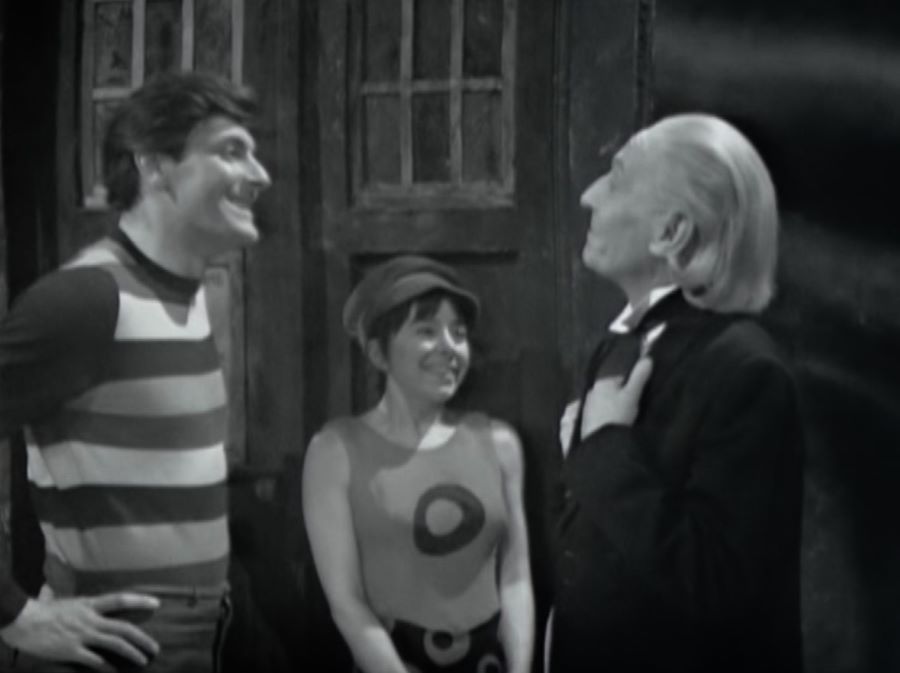
Sadly, this four-part story is mostly missing from the BBC Archives. The only episode to have survived in existence is the fourth episode. The episode was included in ‘The Hartnell Years’ VHS release in 1991, with an introduction provided by Sylvester McCoy, who plays the Seventh Doctor in the series.
The fourth episode of ‘The Celestial Toymaker’ was included on Disc 1 of the ‘Lost in Time’ 3-disc DVD set, which was released in 2004. I enjoyed checking out the fourth episode of the TV story when I saw it. In many respects, the episode can be viewed just as well as on its own without any issues. 🙂
‘The Celestial Toymaker’ was released as a TV audio soundtrack on a 2-disc CD set in 2001, and eventually on both CD and as a download in ‘The Lost TV Episodes: Collection Two’ in 2011. The story in its TV audio soundtrack form was also released on vinyl in 2022, which is quite astonishing. 🙂
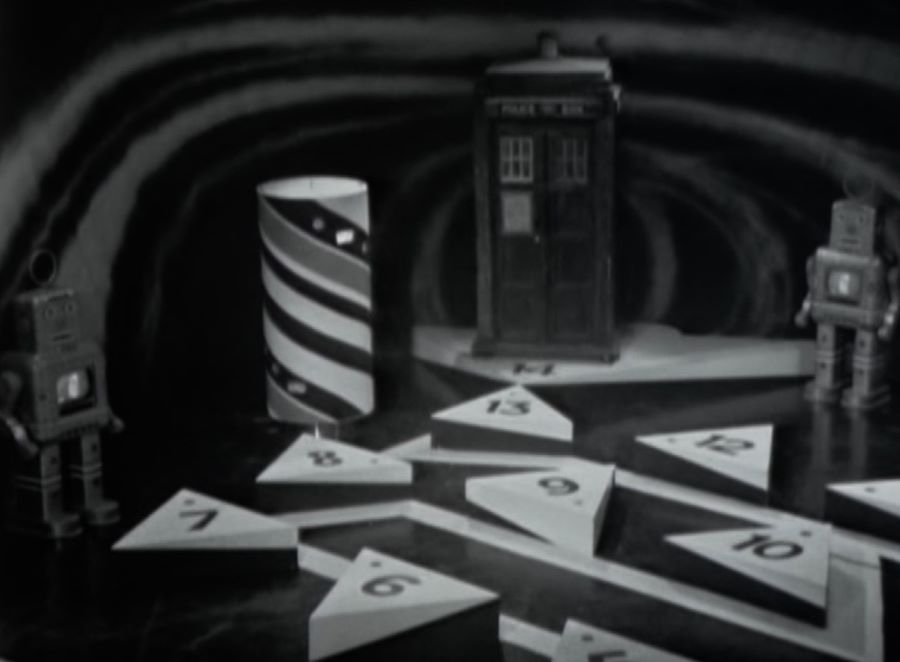
In 2023, it was announced that ‘The Celestial Toymaker’ would be released in animation form on DVD and Blu-ray as part of the 60th anniversary celebrations as well as tie-in to the fact that the Toymaker would return to ‘Doctor Who’ in ‘The Giggle’, the third of the 60th anniversary TV specials.
My enthusiasm for ‘The Celestial Toymaker’ being released in animation form on DVD and Blu-ray…only lasted for about a second or so. Now let’s be clear about something. It’s always nice to check out these animation versions of these missing ‘Doctor Who’ stories to help fill in the gaps of the series.
But with regards to the animation…well, let me put this in perspective to make myself as clear as possible on how I feel about the animation for ‘The Celestial Toymaker’. This is because there’s quite a lot to unpack regarding how I feel about animations on classic ‘Doctor Who’ stories over the years.
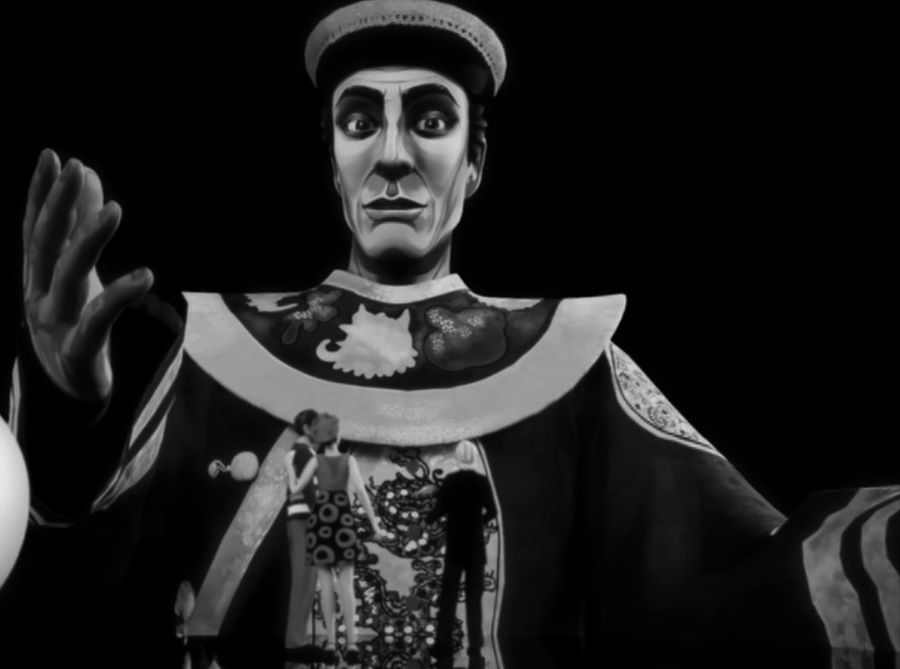
You see, when animations for missing episodes started with ‘The Invasion’ back in 2006, it was a unique treat. I was excited by the animation episodes of that story to fill in the gaps of the missing episodes. I was looking forward to more animations of missing ‘Doctor Who’ stories to be produced.
And in a sense, we did get more. Following ‘The Invasion’, we have had stories like ‘The Reign of Terror’, ‘The Ice Warriors’, ‘The Tenth Planet’, ‘The Moonbase’, etc, being completed, thanks to animation versions of the missing episodes to fill in the gaps. I’m so pleased that this has occurred. 🙂
With that said, the styles in the releases of the animated versions of some ‘Doctor Who’ stories has been…varied at best. And annoyingly inconsistent at most. Usually, when it comes to checking out an animation version of a missing ‘Doctor Who’ story, they’re usually 2D animations for the majority.

That’s fine as far as I’m concerned, as I prefer that when checking out an animation version of a ‘Doctor Who’ story like ‘The Abominable Snowmen’ and ‘Fury From The Deep’. There are issues regarding the animations not matching to the surviving episodes of those stories they’re based on. 😦
But I’d like to think I can get past that and enjoy the animations for what they are. I might raise the inconsistencies of the animations in my updated reviews on these stories now and again, but I’d like to think the animation teams have done a good job in completing what is essentially a missing story.
However, there are occasions where certain animation teams are chosen to do unique experiments for certain missing stories. By that, I mean, they end up doing animations that are essentially 3D in principle as opposed to 2D. And quite often, that makes the animations in every story inconsistent. 😦
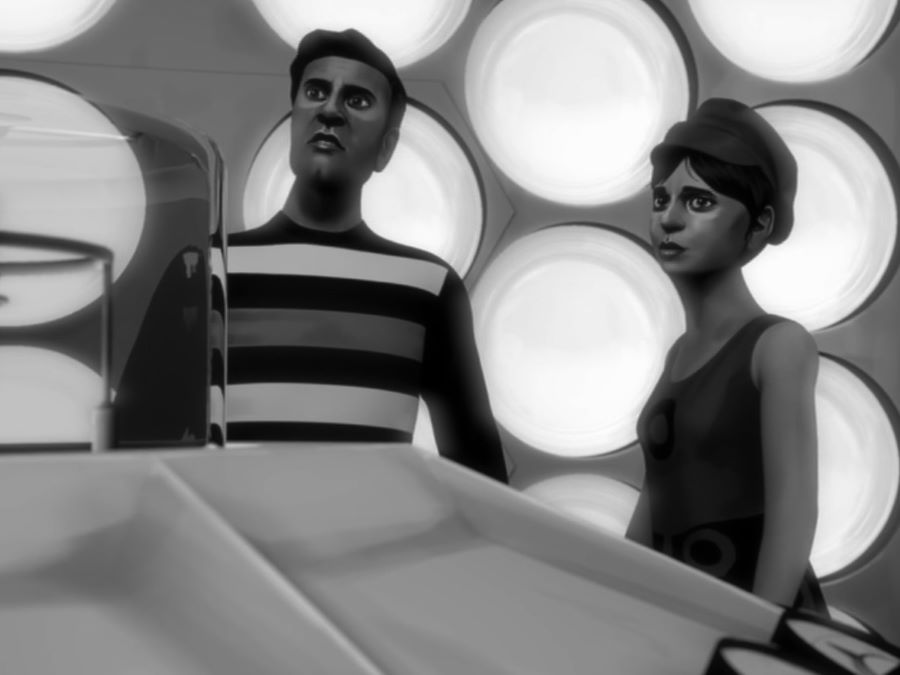
Now, I have checked out the behind-the-scenes making-of featurette on the animation to understand why the certain animation team – Shape Shifter, I believe – went with the certain 3D animation approach they chose for this tale. And it’s a fascinating approach when you think about it, no doubt.
However, that doesn’t change my first impression of the animation style they went with when I saw the preview on YouTube back in December 2023. To summarise how I felt about the animation in the preview and how I feel about it now…well… I’ll let Margaret from ‘Batman Forever’ do it for me.
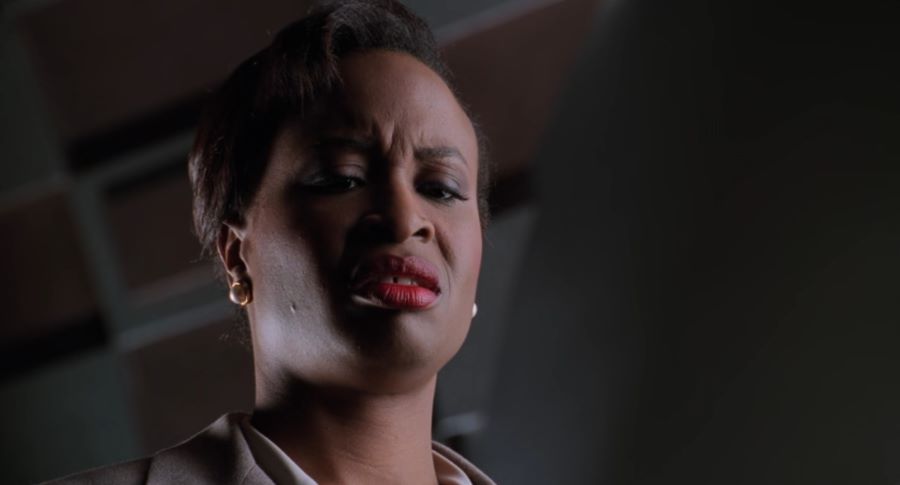
Margaret: That’s hideous.
Yeah, I’m not a fan of the animation in ‘The Celestial Toymaker’. Admittedly, it’s better than the animation used for ‘Episode Three’ of ‘The Web of Fear’, which was also done by Shape Shifter, apparently. But I would have preferred a more 2D approach than the 3D approach they went with. 😦
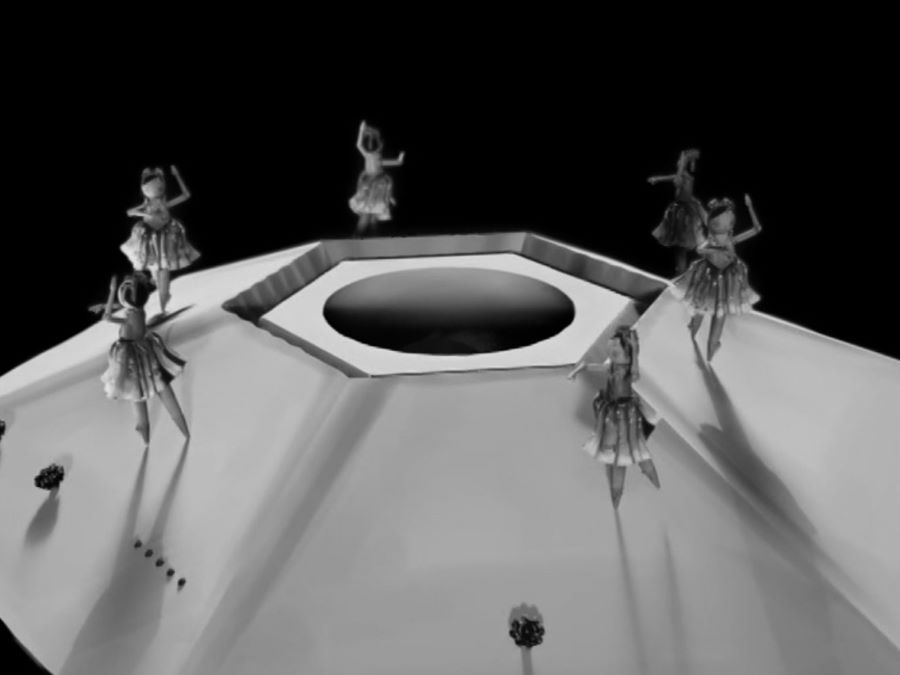
Now, I sort-of understand why they did the 3D approach for this story, as they wanted to give us an abstract feel to the world of the Toymaker’s domain, particularly when he sends in his toys to be his pawns during Steven and Dodo’s games. This does contrast to what was in the actual TV production.
In the actual TV production in 1966, human actors were playing the toy characters on a limited budget. Here, in the animation version of the story – both black-and-white and colour versions – the toy-like characters in the tale look like actual toys as opposed to looking human in the TV version. 😐
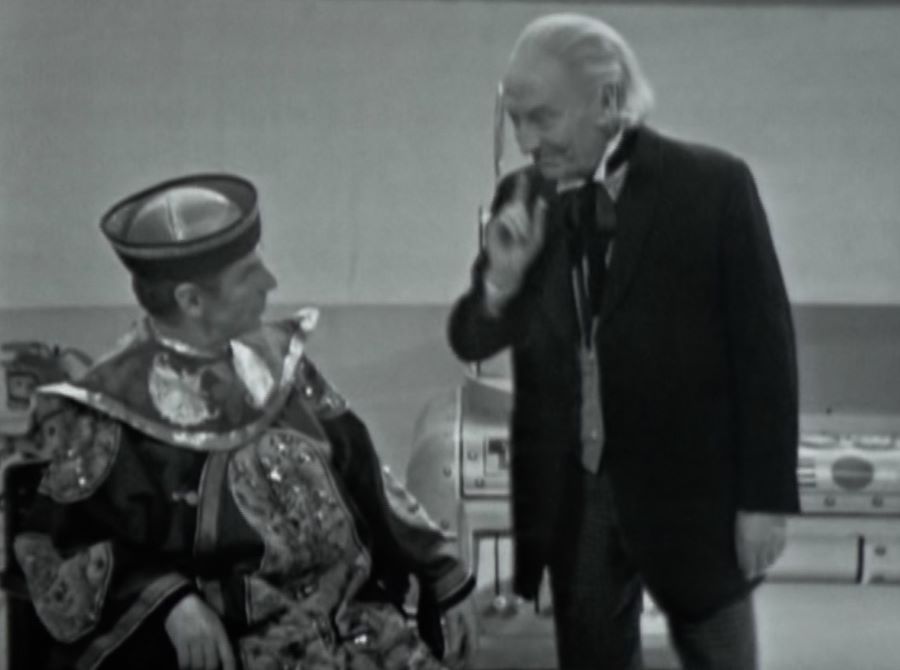
Admittedly, we only have the fourth surviving episode, behind-the-scenes photos (some of them in colour) and telesnap constructions to represent what was in the TV story. But the animation team wanted to do their own take on the story and be more inventive and creative with this surreal world.
That would be fine for an entire story in animation – both in black-and-white and colour. But watching the first three black-and-white animation episodes with the fourth surviving episode makes it so jarring. The animation doesn’t match to what’s in the live-action in the fourth surviving episode.
This is noticeable with the Cyril character that appears in the third and fourth episodes of the story when you watch animation first before live-action, but I’ll get back to that in a bit. Strictly speaking, I wish the animation was in 2D and that it matched to what’s in the surviving episode for consistency.
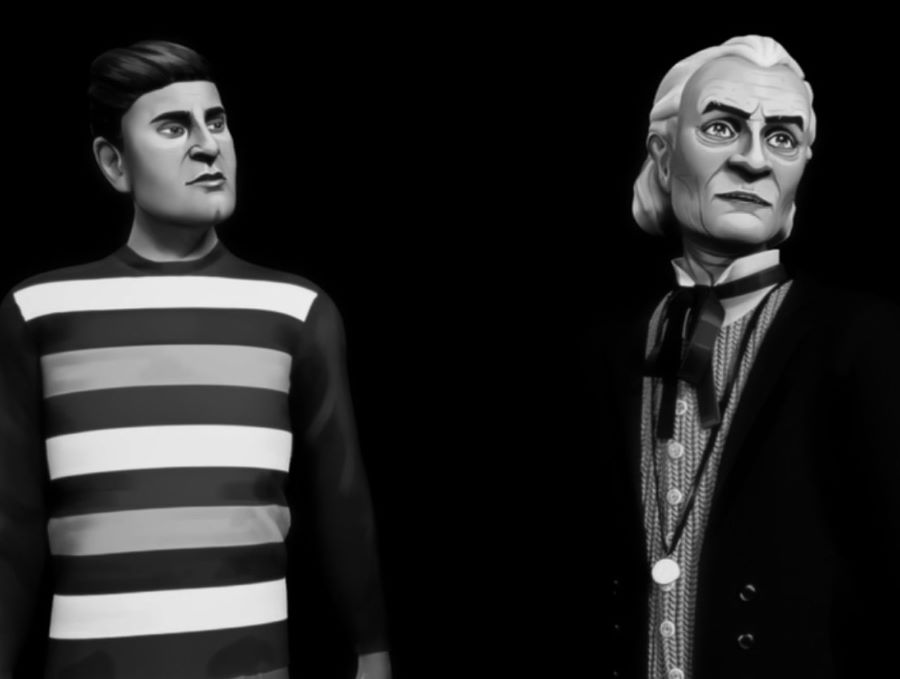
The likenesses for William Hartnell as the First Doctor and Peter Purves as Steven aren’t that great either. Jackie Lane as Dodo and Michael Gough as the Toymaker are mostly okay in terms of likeness. But again, I wish this was in 2D so that true likenesses for the characters could be provided.
And it’s a such that most of the supporting toy characters featured in the story don’t match to the actors’ counterparts, including Carmen Silvera, Campbell Singer and Peter Stephens. It’s even sadder when Carmen Silvera and Campbell Singer’s appearances in the first three episodes are still missing.
Going back to the story, it turns out it had a troubled process in terms of the writing. Originally, the story was conceived by Brian Hayles. This would be his first contribution to the TV series, as he would later created the Ice Warriors in ‘Doctor Who’ for Patrick Troughton and Jon Pertwee’s eras. 🙂

I’d also like to point out that Brian Hayles later wrote ‘The Moon Stallion’, starring Sarah Sutton. Whilst Brian Hayles initially wrote ‘The Celestial Toymaker’, it turns out there were problems with the scripts and Brian Hayles wasn’t able to finish them due to him being busy with other TV projects.
At the time, producer John Wiles and script editor Donald Tosh commissioned the scripts from Brian Hayles, and they were about to leave the TV series at this stage. As a final contribution in being script editor to the series, Donald Tosh rewrote the scripts himself and gave them to his successor. 😐
That successor of course was Gerry Davis, who would go on to co-create the Cybermen with Kit Pedler. Working under new producer Innes Lloyd, Gerry Davis rewrote ‘The Celestial Toymaker’ scripts from scratch, so much to dismay of Donald Tosh, who hadn’t been informed of the changes.
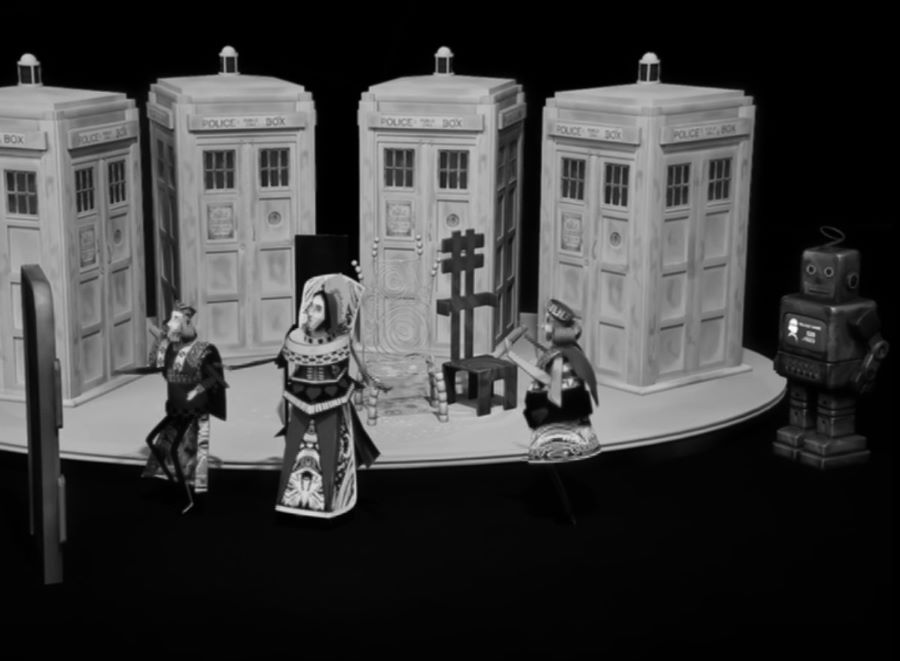
In the end, ‘The Celestial Toymaker’ became a whimsical adventure full of childlike elements, involving clowns, dolls, toys, games and a mandarin-like villain in the form of the Toymaker. Before the animation version came along, I found the tale enjoyable to watch through its surviving episode.
It was also enjoyable to listen to via it TV audio soundtrack on CD. Whilst I’ve raised my reservations about the animation version of the story, it has been enjoyable to check out in its black-and-white version, both through the first three episodes in animation form and the fourth surviving TV episode.
‘The Celestial Toymaker’ is pretty unique as a ‘Doctor Who’ adventure. The story was directed by Bill Sellars, who would go on to be the producer of the original ‘All Creatures Great and Small’ TV series with Christopher Timothy, Robert Hardy and Peter Davison. I’m amazed Bill Sellars directed this tale.
In terms of the production, nothing like it had been before in ‘Doctor Who’. Initially, the story was supposed to be about playing with people’s minds before it became about the Doctor and his friends playing games for their lives against the Toymaker. It predated other surreal TV stories afterwards. 🙂
This includes ‘The Mind Robber’, ‘Kinda’ and ‘Snakedance’, which had fantasy and dream-like elements to them. Also, going back to the animation, despite my reservations on it, the toy characters featured in the animation sort-of match well to what’s depicted in ‘The Giggle’ TV story. 🙂
After all, the Stooky Bill doll and its compatriots like Stooky Sue in ‘The Giggle’ are actual doll characters themselves and were performed as puppets instead of being played by real people. So, make that what you will when you’re comparing ‘The Celestial Toymaker’ to ‘The Giggle’ as stories. 🙂
Michael Gough steals the show as the villainous Toymaker in the story. He might not have so much screentime throughout the story, but his sinister presence is felt throughout, and I enjoyed it when he and William Hartnell interacted and had scenes with each other – both live-action and animation.
It’s intriguing that the Doctor knows who the Toymaker is already, as he’s encountered him before. That sort-of gets explored in the BBC Books adventure called ‘Divided Loyalties’ by Gary Russell, where there’s a section which contains flashbacks of the Doctor first visiting the Toymaker’s domain.
This isn’t like the Doctor’s first encounter with ‘The Daleks’ where he didn’t know who they were before and he meets them for the first time. This is more in tune with the Doctor’s encounter with the Monk in ‘The Time Meddler’, since he knew who he was before tackling him in that certain story.
Incidentally, Michael Gough later went on to guest star as Councillor Hedin in ‘Arc of Infinity’ with Peter Davison. He was supposed to reprise his role as the Toymaker in ‘The Nightmare Fair’, which was the first story for the original Season 23 with Colin Baker, before the season was sadly cancelled.

Michael Gough would also later play Alfred Pennyworth in the original ‘Batman’ 1989-1997 film series, including ‘Batman’, ‘Batman Returns’, ‘Batman Forever’ and ‘Batman & Robin’. And it turns out Michael Gough was married to future ‘Doctor Who’ companion Anneke Wills at the time this story was made.
He also appeared in ‘The Avengers’ 1960s TV series where he happened to be the creator of ‘The Cybernauts’ in one of the episodes. 😀 I enjoyed him in ‘The Avengers’ TV series with Patrick MacNee and Diana Rigg as much as I’ve enjoyed his ‘Doctor Who’ appearances, including as the Toymaker.
In this story, the Toymaker is obsessed with playing games. He’s an amoral figure who wishes the Doctor and his friends to be his playthings and never escape. The Doctor, Steven and Dodo have to play these games in order to get out alive and return to the TARDIS, which isn’t altogether very easy.
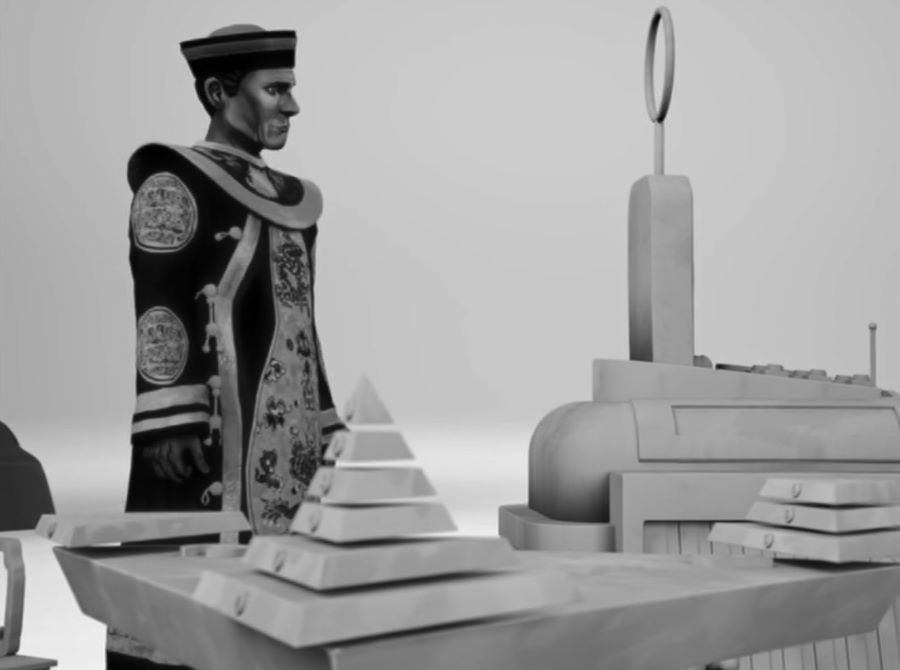
For the Doctor, he must play the Trilogic game, a ten-piece puzzle. I’m not sure I fully understand the game. Peter Purves seems to know how it’s played. I got that impression when he shared how he acquired the game from the TV production whilst at ‘Regenerations 2023’ in Swansea in September 2023.
Quite often, the Doctor plays the game when he’s made to be invisible. He also has his voice taken away from him by the Toymaker. This story was also an excuse to give William Hartnell a two-week holiday. During the making of this story, William Hartnell pre-recorded his lines before being absent.
That was for the second and third episodes of the story. This explains why he’s invisible for most of the story and why he’s not speaking. His absence is felt throughout, and perhaps this is probably why I don’t revisit this story so often, considering the Doctor doesn’t have an active part to play in it.
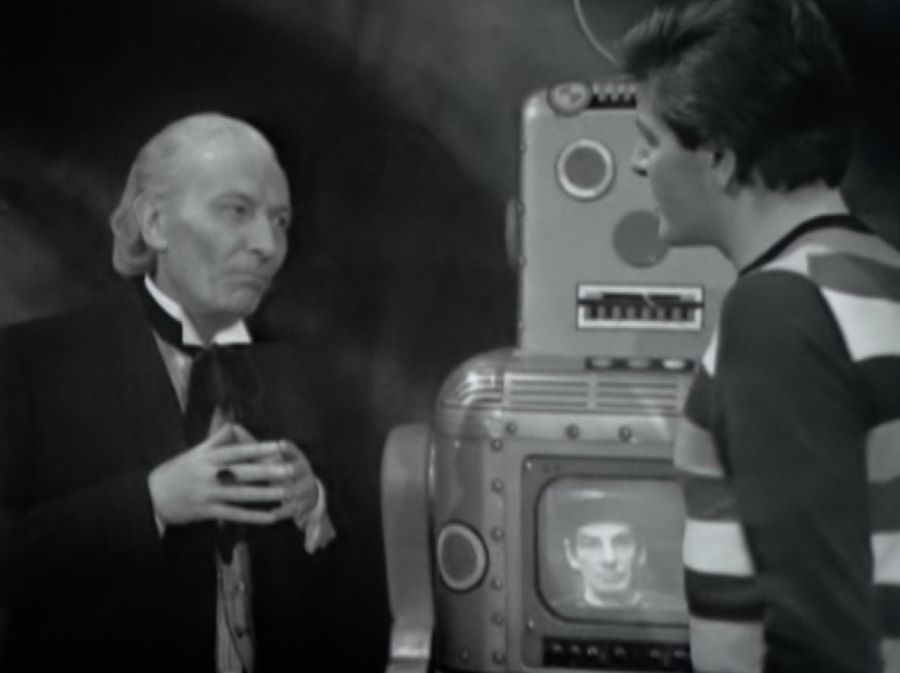
There was speculation that William Hartnell would be replaced by a different actor during the making of this story to give the actor the chance to leave after working so furiously hard on the TV series. That didn’t happen of course. We wouldn’t be given the concept of regeneration if it ever did.
But it’s fascinating to think had the idea had gone ahead with the Doctor being invisible for most of the story before he ended up being replaced by a totally different actor. The story would be a totally different beast compared to how we know it today. Perhaps the TV show wouldn’t have lasted for many years.
It’s an idea that could have worked for the 60th anniversary TV specials, had it turned out Jodie Whittaker regenerated into Ncuti Gatwa all this time to be replaced by David Tennant’s face…or perhaps David Tennant could have been replaced by Ncuti Gatwa without the need to regenerate. 😐
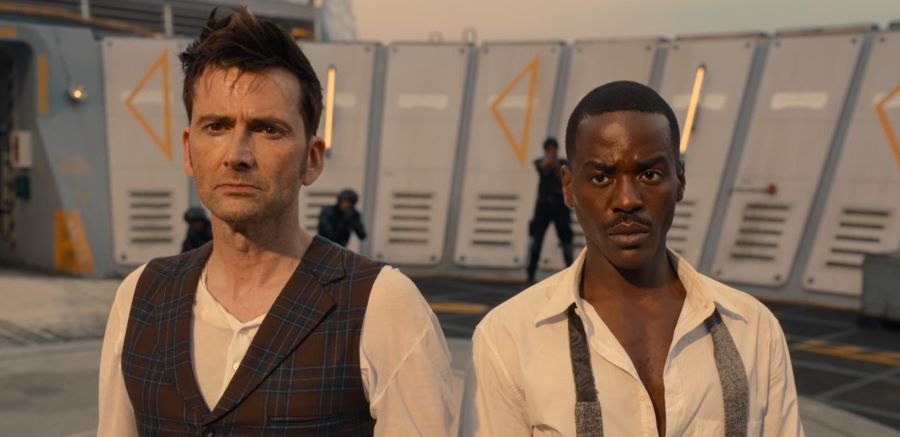
That way, Ncuti Gatwa could’ve still been the Fourteenth Doctor despite David Tennant playing him in the 60th anniversary TV specials. I’m surprised Russell T. Davies didn’t come up with that idea. it could’ve made the 60th anniversary specials fascinating and mysterious with the Toymaker involved.
Anyway, that’s enough on what could have been. Let’s get back to the story. With Steven and Dodo, they must play their set of games in the story’s four episodes in order to return to the TARDIS and reunite with the Doctor. All of the games aren’t played fairly, especially with the toy-like characters.
The four games include Blind Man’s Bluff, The Hall of Dolls, The Dancing Floor and TARDIS Hopscotch. The first three games sound complicated to listen to on audio. They’re represented better in the animation episodes, although from watching the animation, they’re underwhelming. 😦
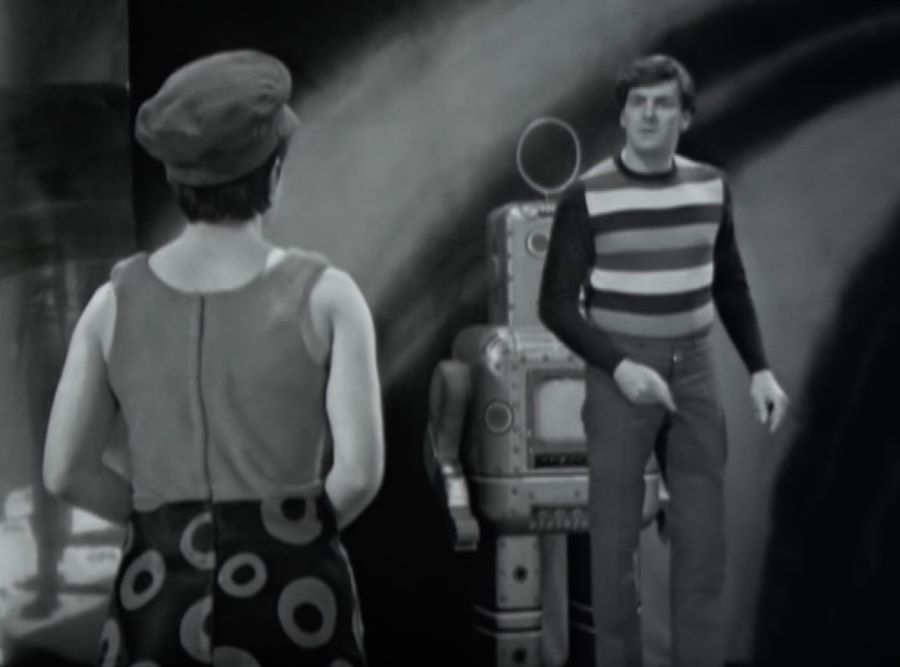
I enjoyed Peter Purves as Steven Taylor and Jackie Lane as Dodo Chaplet in the story. I like how Steven and Dodo share a camaraderie together, which is carried over from ‘The Ark’. It does come across that Steven and Dodo have been friends for a long time. The Big Finish audios support that. 🙂
Very often, it’s a brother-sister relationship between the two. This is especially when Dodo can be quite cheeky and naïve at times, whereas Steven is cautious, despite being fearless. I don’t think Dodo is that great as a ‘Doctor Who’ companion compared to others, which is a shame when thinking about it.
Dodo could have had so much potential in her interactions with William Hartnell as the Doctor and Peter Purves as Steven. I’ve yet to check out more of the latest Big Finish audios with Dodo, where she’s played by Lauren Cornelius, although I’ve heard good things said about them from others. 🙂
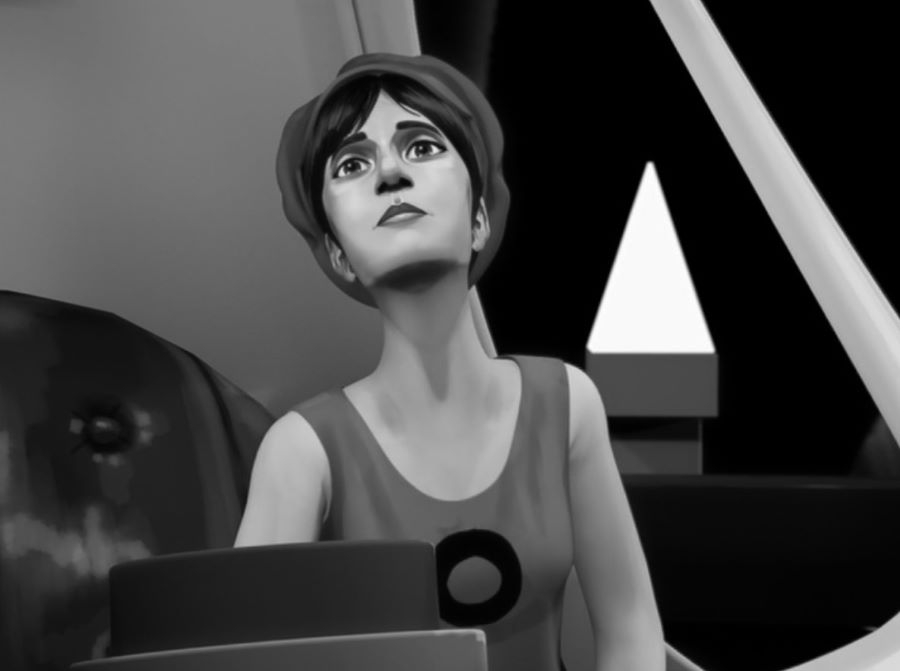
It’s a shame in terms of how Dodo was treated as a character in the TV series, especially when it’s reflected in her eventual exit from the TV series, as that was badly handled. Regardless, here in this story, I like how Dodo bounces off Steven when they’re working together to solve their many puzzles.
Steven and Dodo find themselves up against dodgy allies or opponents in their games. This includes clowns in the first game, playing cards in the second game, two children’s book characters in the third game, and a Billy Bunter character in the fourth game. Very often, these characters don’t play fairly.
Carmen Silvera guest stars as several characters in this story. Outside ‘Doctor Who’, she played Fiona Grey in the ‘Dad’s Army’ episode ‘Mum’s Army’. She later played Edith Artois in the BBC comedy TV series ‘Allo, ‘Allo’. She was also in another ‘Doctor Who’ TV story called ‘Invasion of the Dinosaurs’. 🙂

The characters she plays in this ‘Doctor Who’ story include Clara the clown, the Queen of Hearts and Mrs. Wiggs. It’s a shame that Carmen Silvera’s episodes in this story are missing, as we don’t get to see her in the fourth episode and the animation versions of her characters don’t have her likeness much.
Campbell Singer guest stars as Joey the clown, the King of Hearts and Sergeant Rugg in the story. Outside ‘Doctor Who’, Campbell Singer has appeared in a couple of ‘Dad’s Army’ episodes, including ‘If the Cap Fits…’ and ‘Is There Honey Still For Tea?’. I thought he was the same character in those. 😀
He was also in the 1975 Christmas Special of ‘Some Mothers Do ‘Ave Them’. I didn’t realise it was Campbell Singer in this ‘Doctor Who’ story and the animation doesn’t help much for me to recognise him. His characters’ interactions with Carmen Silvera’s characters have been joy to watch and hear though.
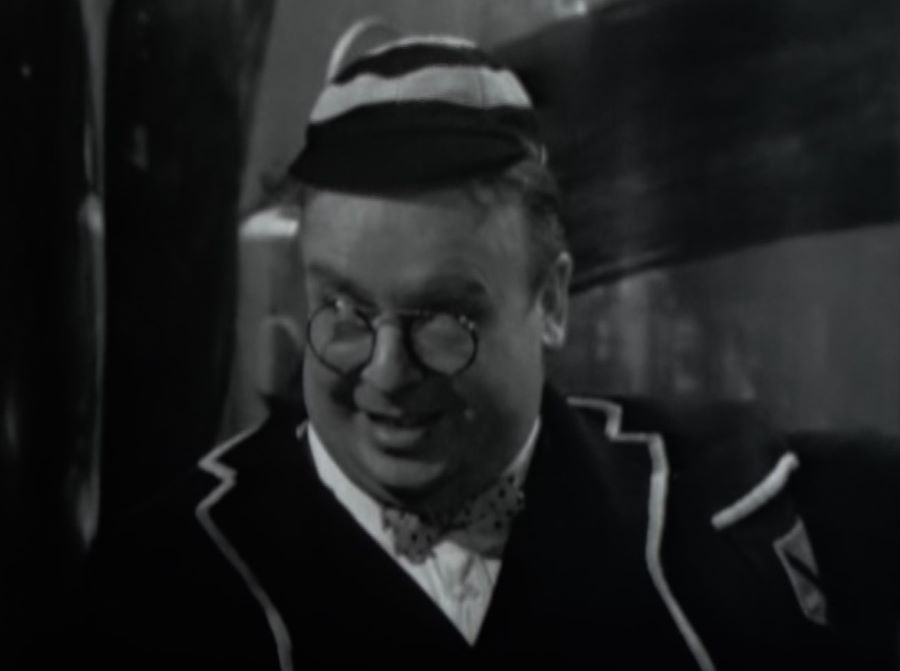
There’s also Peter Stephens as the Knave of Hearts, the Kitchen Boy and Cyril. His appearance as Cyril in the story’s fourth episode did spark a controversy, since the character was a lot like Billy Bunter. It was later pointed out that Cyril was meant to be ‘like’ Billy Bunter, not actually be Billy Bunter.
I prefer the live-action version of Cyril in the surviving fourth episode as opposed to the animation version of Cyril, since he looks so big in terms of his head compared to Steven and Dodo. It doesn’t match when you watch the animated third episode and the surviving fourth episode in succession. 😐
Incidentally, just to side-track a bit. I’m surprised the fourth episode wasn’t colourised to match with the colour version of the story on Disc 2 of the 2-disc DVD and Blu-ray sets. This is because some scenes of ‘The Celestial Toymaker’s fourth surviving episode had been colourised lately for the TV screen. 😐
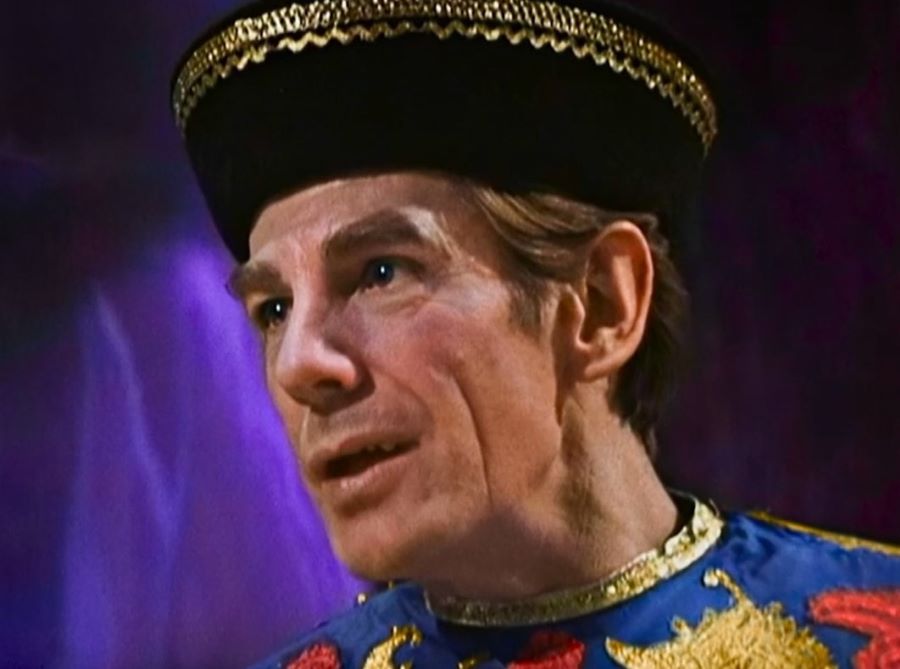
This was for the colourised version of the first ‘Daleks’ story shown on the 23rd of November for the show’s 60th anniversary as well as for ‘The Giggle’ where we had flashback shots of David Tennant’s Fourteenth Doctor recalling his encounter with Michael Gough’s Toymaker from the 1966 TV story. 😐
I’m just saying, it would have been nice to have seen the full colourised version of the fourth surviving episode of ‘The Celestial Toymaker’ to accompany the colour version of the animation episodes. Then again, the colourised version of the first ‘Daleks’ was a truncated effort anyway, so…
The story also features Reg Lever as the Joker (No, Batman’s Joker. Another one) and there’s Beryl Braham, Ann Harrison and Delia Lindon as the Ballerina dolls in the story. The dancers playing the dolls in the photographs are lovelier than the toy-like dolls featured in the animation version of this story.
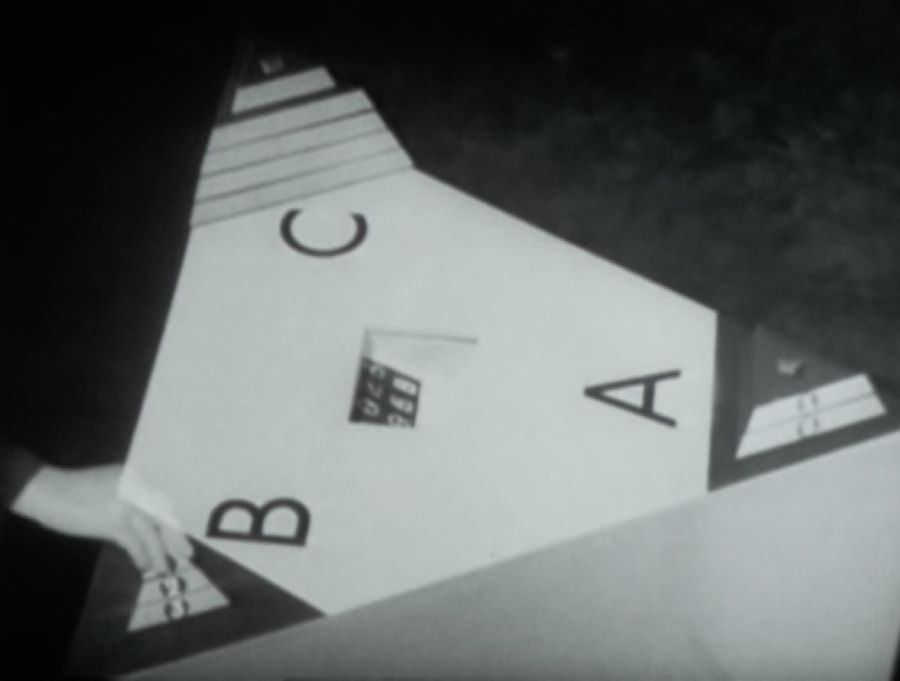
Albert Ward provided William Hartnell’s hand when the Doctor was made invisible by the Toymaker for most of the story. Like I said, it’s a shame that Bill Hartnell didn’t appear for most of the story, as I think it would’ve been okay for him to pre-record his lines for the story’s second and third episodes.
From seeing the surviving fourth episode, hearing the TV audio soundtrack and watching the animation episodes, it does seem impossible that the Doctor and his friends would be able to escape the Toymaker’s realm. I mean, every time Steven and Dodo win a game, the TARDIS they find is fake.
Every time a fake TARDIS turns out to be a cupboard instead of the real, Steven and Dodo discover a clue which helps them to find a way to win the next game. This turns out to be a riddle of sorts. Incidentally, the riddles were put at the end of each of the first three episodes as the end credits rolled up.
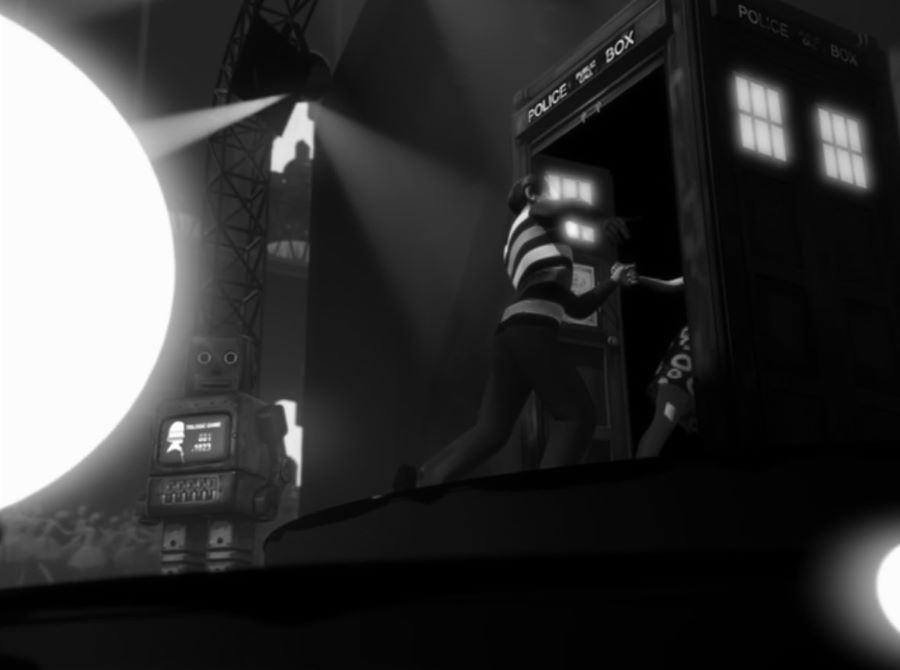
Fortunately, the TARDIS that appears in the fourth episode at the end of the TARDIS Hopscotch game is the genuine article. However, getting out of the Toymaker’s domain continues to be difficult, especially when the Doctor has to make the ‘last move’ when he’s playing the Trilogic game.
I liked it when the Doctor, with Steven and Dodo’s help, worked out how to outwit the Toymaker before departing in the TARDIS. The Doctor makes his final move in the Trilogic game, but he tricks the Toymaker by mimicking his voice so that the villain can fade and the TARDIS can leave his realm.
On the 2-disc DVD and Blu-ray sets, the special features are as follows. On Disc 1, as well as the black-and-white animation version of the story, there’s the surviving original fourth episode. It turns out you can ‘play all’ animated episodes and you can ‘play all’ episodes with the surviving original fourth episode in the ‘PLAY ALL’ option of the DVD and Blu-ray menus. There are also photographic reconstructions on the first, second and third episodes of the story, which include the original audio option and the narration audio option by Peter Purves. There’s a dual mono sound audio mix option on both the black-and-white animation version of the story and the surviving original fourth episode of the story. There are also audio commentaries on selected episodes. There’s a commentary on the first animation episode with Peter Purves, moderated by Toby Hadoke. There’s a commentary on the second animation episode with camera operator Dudley Darby, moderated by Toby Hadoke. There’s a commentary on the third animation episode with Peter Purves, dancer Delia Lindon and make-up assistant Sylvia James, moderated by Toby Hadoke. There’s a commentary option on the surviving original fourth episode with Peter Purves and camera operator Dudley Darby, moderated by Toby Hadoke. And there’s a commentary option on the fourth animation episode with Peter Purves and animation series producer/director David Devjak, moderated by Toby Hadoke. There’s also an info-text commentary option to enjoy on both the black-and-white animation version of the story and the surviving original fourth episode of the story.
On Disc 2 of the 2-disc DVD and Blu-ray sets, there’s the colour animation version of the story. There’s ‘Doctor Who: The Collection Escape Room – Team First Doctor’, featuring Maureen O’Brien, Peter Purves and Lisa Bowerman and hosted by Emily Cook, which I enjoyed watching. I’m currently looking forward to when I get to see the ‘Doctor Who: The Collection Escape Room – Team Fifth Doctor’ with Peter Davison, Sarah Sutton and Janet Fielding. There’s the behind-the-scenes making-of featurette on the animation for ‘The Celestial Toymaker’, the introduction on the story’s fourth episode by Sylvester McCoy from ‘The Hartnell Years’ VHS release, an audio interview with Carmen Silvera, a photo gallery of the story, the dual mono sound audio mix option carried over from Disc 1, and the audio commentaries carried over from Disc 1, except just on the colour animation episodes, since the surviving original fourth episode isn’t included on Disc 2. There’s also an info-text commentary option to enjoy on the colour animation version of the story. There’s also a full set of camera scripts, ‘Radio Times Listings’ for ‘The Celestial Toymaker’, and a BBC press release, which can be accessed via a computer.
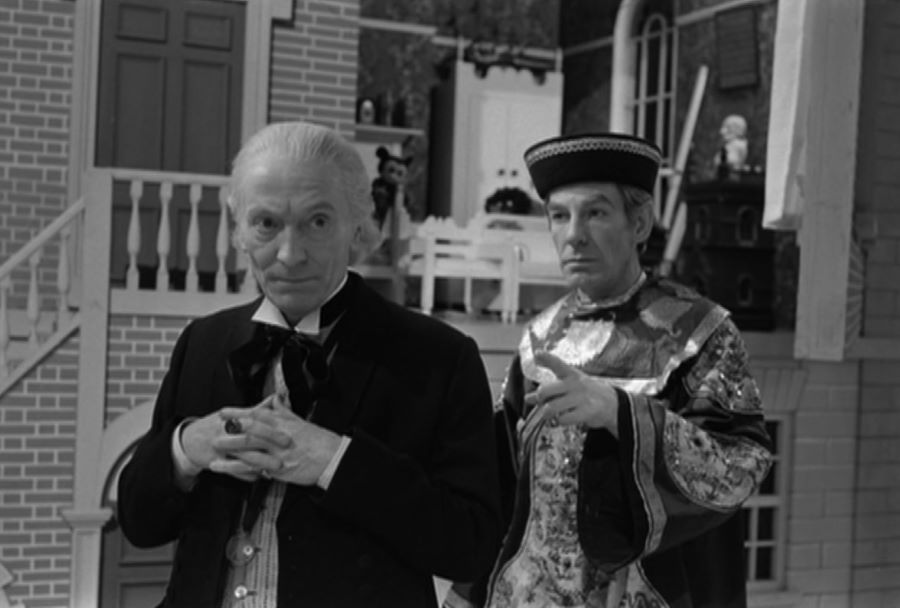
I’ve found ‘The Celestial Toymaker’ an enjoyable ‘Doctor Who’ story from the William Hartnell era, in its TV audio soundtrack, its surviving fourth episode and in animation. Despite its troubled writing process, the story turned out to be quite memorable, especially when full of whimsy and surreal style.
Michael Gough steals the show in his villainous ‘Doctor Who’ role. It’s no surprise the Toymaker went on to be in more stories, like the book story ‘Divided Loyalties’ with the Fifth Doctor, ‘The Nightmare Fair’ with the Sixth Doctor in book and audio, and the comic story ‘Endgame’ with the Eighth Doctor.
And of course, he returned on TV in ‘The Giggle’ with the Fourteenth Doctor to be played by Neil Patrick Harris. Whilst it’s a shame the first three episodes of ‘The Celestial Toymaker’ are still missing, I’m pleased an animation version of the story in black-and-white and in colour is available. 🙂
Yes, there’s no getting away from my reservations about the 3D animation and the approach used for the animation in ‘The Celestial Toymaker’, which doesn’t match to what’s in the live-action surviving fourth episode. But I’d rather have that than to have nothing at all to enjoy the story itself.
I don’t think ‘The Celestial Toymaker’ is a great ‘Doctor Who’ story starring William Hartnell as the First Doctor, especially when he’s mostly absent in the second and third episodes. Despite that, I enjoyed the concepts and ideas featured in the story, especially concerning the Toymaker as a villain.
The story concludes with the First Doctor, Steven and Dodo celebrating their victory with a bag of sweets given to Dodo by Cyril. The Doctor puts one into his mouth and he quickly yells in pain. I don’t think that was the Toymaker’s doing, judging by how the next story ‘The Gunfighters’ turns out.
‘The Celestial Toymaker’ rating – 7/10
| The previous story
For the First Doctor was For Steven was For Dodo was |
The next story
For the First Doctor is For Steven is For Dodo is |
| Return to The First Doctor’s Timeline | |
| Return to Steven’s Timeline | |
| Return to Dodo’s Timeline | |
| Return to The Doctors’ Timelines Index | |
| Return to The Companions’ Timelines Index | |
| Return to Doctor Who Timelines | |
| Return to Doctor Who | |
| Return to Sci-Fi |
 Bradley's Basement
This story has never quite worked for me, something feels slightly off & i found the Doctor’s disappearance gave the plot a weak narrative, Michael Gough is excellent as The Toymaker even if he does come across a little silly but Dodo is a character i can’t warm tol the characters hollow there’s no personality coming through.
LikeLiked by 2 people
Hi Simon.
Interesting thoughts you have on this story. Yeah, it’s not a great one to feature William Hartnell’s Doctor who’s mostly absent. But I enjoyed the concepts and ideas floating around with the Toymaker story and as you say, Michael Gough is excellent in his villanious role.
Dodo does seem rather flat as a character in the series but I like how she interacts with Steven in this adventure.
Thanks for your comments. Glad you enjoyed my review.
Tim. 🙂
LikeLiked by 1 person
I remember first seeing Michael Gough as Counciller Hedin in Arc Of Infinity and then shortly after in other roles. Including his uncredited role as Bylasko in The Legend Of Hell House. I knew that he was in Joan Crawford’s last film Trog. But seeing him as a most unforgettable Whoniversal villain like the Toymaker was an affirmation for how distinctly talented he was. I liked him as Alfred Pennyworth too. Thank you, Tim, for your review.
LikeLiked by 2 people
Hi scifimike,
Thanks for sharing your thoughts on Michael Gough. I greatly enjoyed him in ‘Doctor Who’ as both the titular Celestial Toymaker and Hedin in ‘Arc of Infinity’, and he’s very good as Alfred in the original 1989-1997 ‘Batman’ film series. I’ve also enjoyed him in ‘The Avengers’ TV series with Patrick MacNee and Diana Rigg where he created ‘The Cybernauts’. It’ll be interesting to see how Neil Patrick Harris plays the Celestial Toymaker next in the upcoming 60th anniversary specials of ‘Doctor Who’.
Glad you enjoyed my review on ‘The Celestial Toymaker’.
Many thanks,
Tim 🙂
LikeLiked by 1 person
I must agree that Dodo should have had more potential. But changes of companions became more frequent during Hartnell’s era for varied reasons. So it was good when some like Jamie, Jo, Sarah and Tegan could help change that for the most part.
LikeLiked by 2 people
Hi scifimike,
Yes, I’m glad the ‘Doctor Who’ companions got better treatment as the classic TV series progressed, leading into the new TV series. It’s such a shame that some companions like Vicki and Dodo were badly-handled in terms of their exits, and as you say, Dodo could have had more potential in her interactions with William Hartnell’s Doctor and Peter Purves as Steven. I’ve yet to check out the latest Big Finish audios with Dodo, but I’ve heard good things about them.
Many thanks,
Tim 🙂
LikeLiked by 1 person