
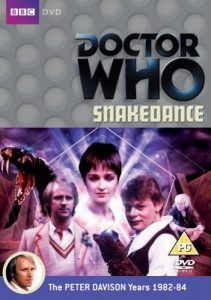

‘SNAKEDANCE’
Please feel free to comment on my review.
The Mara’s Return with the Fifth Doctor, Nyssa and Tegan


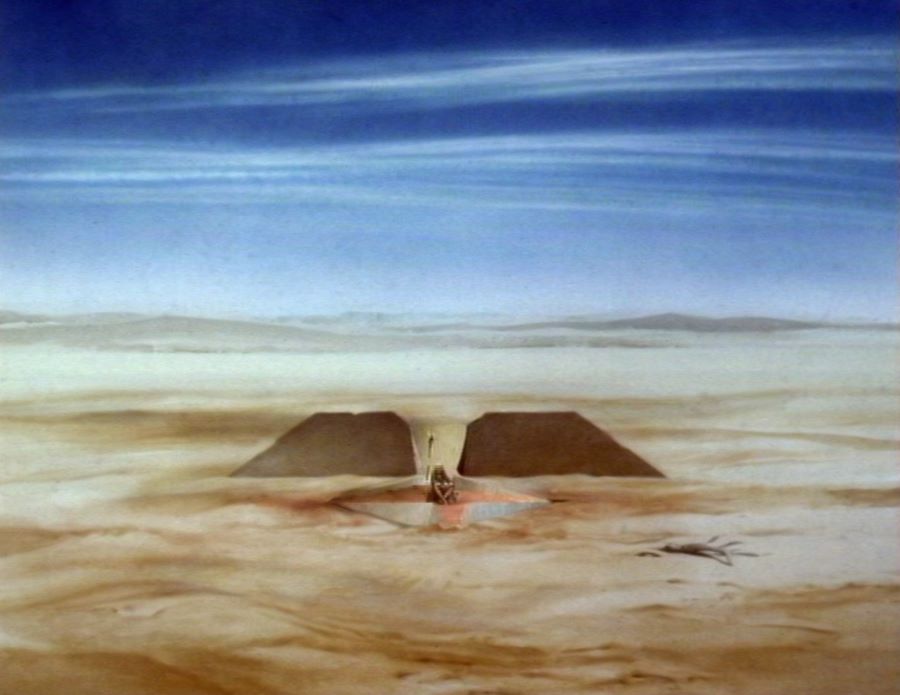
Here we are on the second story of Season 20 of the classic ‘Doctor Who’ TV series and this happens to be the second Mara story featured in ‘Doctor Who’ called ‘Snakedance’. The first Mara story was ‘Kinda’, shown in Peter Davison’s first season as the Fifth Doctor.
It’s interesting that Peter Davison’s Doctor had the Mara stories of ‘Doctor Who’ in his first and second seasons of the classic TV show, but not in his third season. The writer Christopher Bailey was meant to submit a third story, but we’ll get back to that later on.
If we’re take into account that the Big Finish audios occurred in the main ‘Doctor Who’ continuity as well as adventures in books, comics and short stories, a lot has happened for the Fifth Doctor, Nyssa and Tegan as a TARDIS trio since reuniting in ‘Arc of Infinity’. 🙂
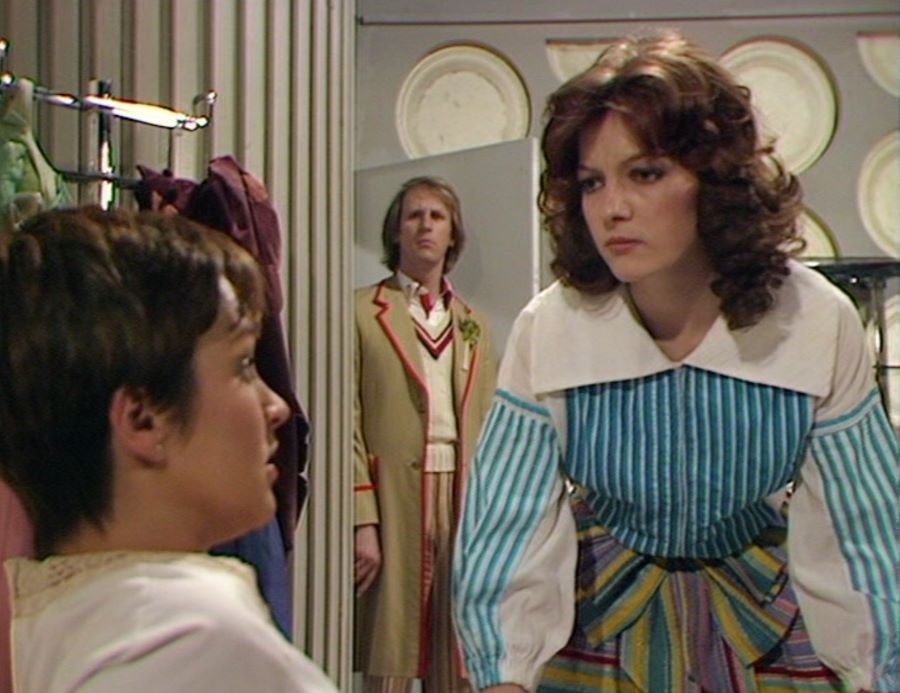
This includes another adventure in Amsterdam itself in ‘The Waters of Amsterdam’, having their ‘Lost Stories’ trilogy, witnessing the Peterloo Massacre, and meeting and having adventures with Marc, a young man from 63 BC, just to mention a small amount. 😀
Now, of course, we’re looking at this from a modern perspective. Back then, it was just going from ‘Arc of Infinity’ into ‘Snakedance’ when checking out Season 20 on TV for 1983 audiences. But taking those extra stories into account makes a lot of sense for me.
I find it jarring that after Tegan is reunited with the Fifth Doctor and Nyssa in Amsterdam in ‘Arc of Infinity’, there’s no indication of there being a settling-in period. The Big Finish audio stories, including ‘The Elite’, provide the settling-in period for Tegan in the TARDIS. 🙂

The book ‘Fear of the Dark’ provides that settling-in period too, but it contradicts with what’s established in ‘The Elite’ with Tegan’s return somewhat. It’s implied ‘The Elite’ and ‘Fear of the Dark’ occurred at the same time with Tegan settling back in the TARDIS.
Mind you, this tends to happen when Big Finish ignores continuity established by BBC Books for certain characters. But the point is, the stories in audio and book form do provide the period where Tegan’s been with the Doctor and Nyssa for quite some time. 🙂
Otherwise, it’s cruel and sad that Tegan would find herself having nightmares whilst sleeping in bed after having just reunited with the Doctor and Nyssa in the TARDIS. This occurs when ‘Snakedance’ begins with Tegan sleeping terribly and she has a nightmare.
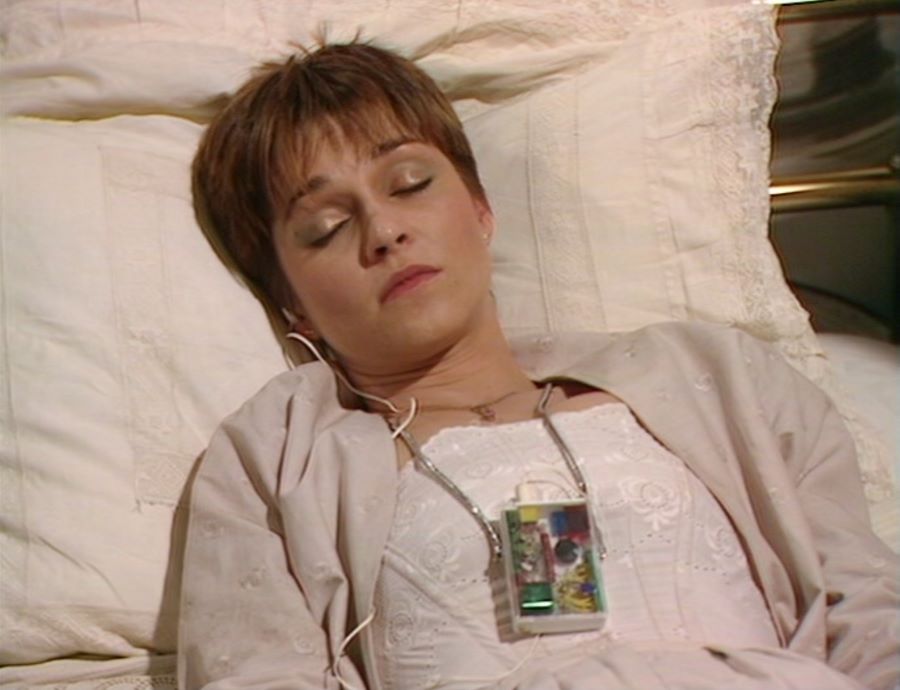
In terms of the 20th anniversary celebrations of ‘Doctor Who’ being played in ‘Snakedance’, the past villain of the story is of course, the Mara. Granted, it’s a past villain from a previous season instead of earlier, but it still counts to celebrate 20 years.
I know it’s likely the script editor Eric Saward commissioned Christopher Bailey to write a follow-up story to ‘Kinda’ before it was decided by producer John Nathan-Turner to include a monster from the show’s past to celebrate 20 years of ‘Doctor Who’s history. 🙂
Quite frankly, I don’t mind this, as it’s good to have a follow-up story to a ‘Doctor Who’ story that must have been quite baffling to some viewers when they first saw it in 1982. And this is just my opinion, but I think ‘Snakedance’ works better as a story than ‘Kinda’.
I’m quite surprised Eric Saward commissioned Christopher Bailey to write for ‘Doctor Who’ again and equally surprised that Chris Bailey agreed to write another Mara story, considering the frustrations of working with three script editors when writing up ‘Kinda’.
But of course, Chris Bailey is working with only one script editor this time and he knows how to write for Peter Davison’s Doctor compared when it was originally Tom Baker’s Doctor for ‘Kinda’. It must have been happier for Chris Bailey to write up ‘Snakedance’. 🙂
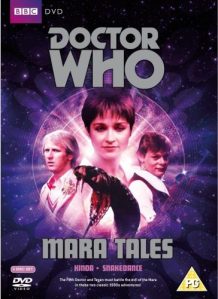
Like ‘Kinda’ before it, ‘Snakedance’ is a four-part adventure. The first time I saw it was when it was released on DVD in the ‘Mara Tales’ DVD box set, which I had for my birthday back in May 2011. ‘Snakedance’ is the Mara story I enjoyed the most on DVD. 🙂

This is especially when Sarah Sutton as Nyssa is more involved in the story compared to when she was mostly absent in ‘Kinda’. The storyline and the characters featured in ‘Snakedance’ were also easy to follow and understand compared to what was in ‘Kinda’.
I recall when watching the ‘Mara Tales’ DVD box set for my birthday in May 2011, it was on a Sunday, and my parents and I watched ‘Kinda’ and ‘Snakedance’ one after the other with a Domino’s Pizza. It was a very happy time in checking out these tales for my birthday.
Like I said, in the ‘Snakedance’ story itself, Tegan has been having some terrible nightmares which are connected to her previous experience and possession by the Mara in ‘Kinda’. The Doctor and Nyssa see Tegan troubled and do all they can to help her.
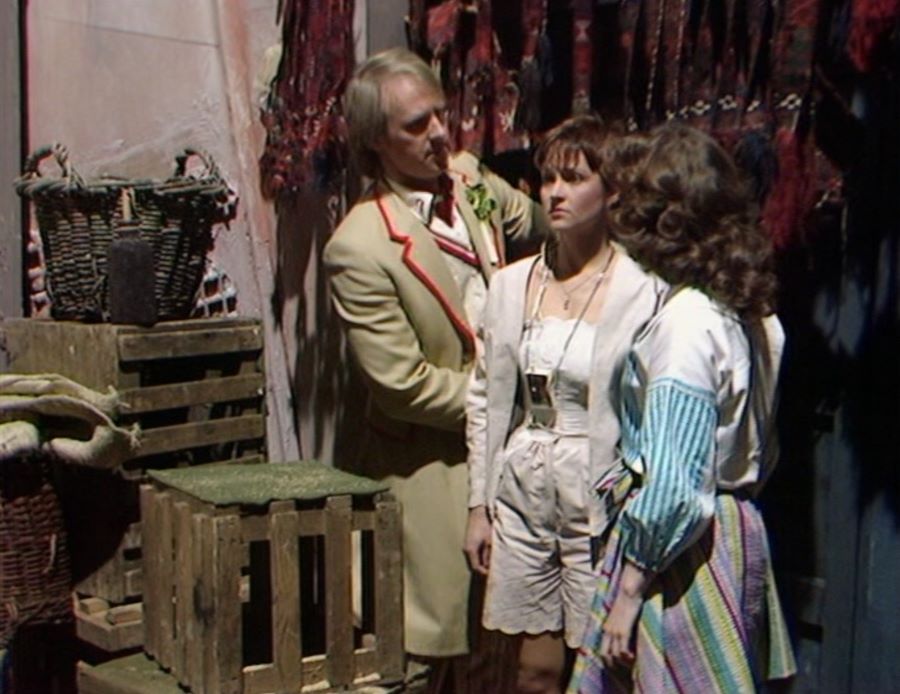
With Tegan troubled, the Doctor deduces that she unknowingly had the TARDIS piloted to the planet Manussa. The planet Manussa happens to be where the Mara once ruled and terrorised its society many years ago. Now it attempts to do so again in this story. 😐
I’m not sure if this is referring to the point in Manussa’s history where the Mara took control of the planet in its third story by Marc Platt called ‘The Cradle of the Snake’, or if it’s referring to another point in time completely. ‘Doctor Who’ history can be confusing.
Regardless, it’s interesting to come across another society in ‘Doctor Who’ where the Mara has become a dominant force for evil and malice just as it had been so for the Kinda on Deva Loka. The society of Manussa is also fascinating when watching this story.
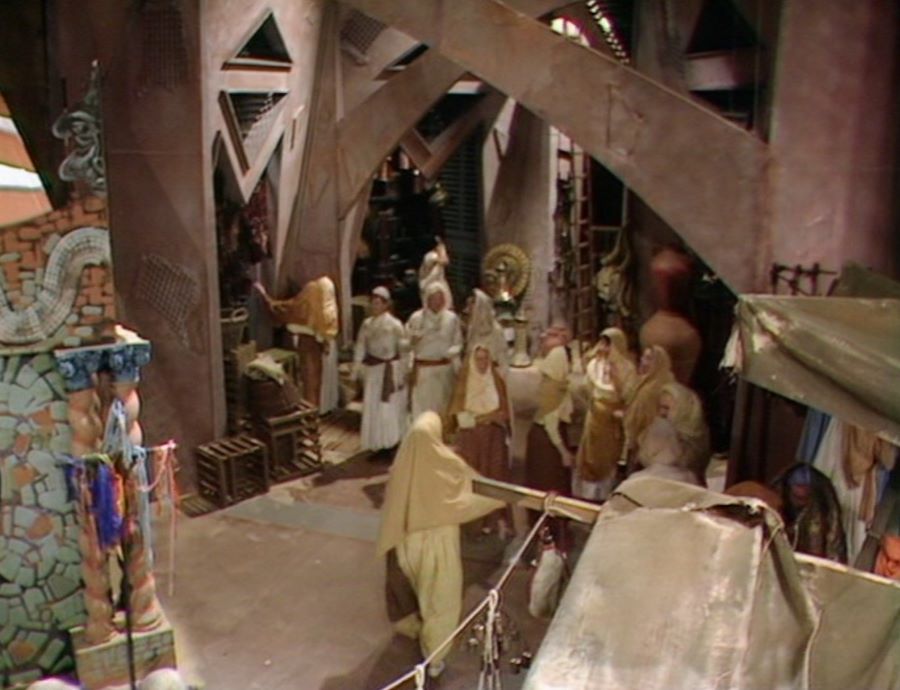
Manussa is a society that happens to be run-down. It’s an empire that’s forgotten its morals, ethics, values and principles, especially when its people are commercialising on the fear factor of the Mara. Nobody is taking the threat of the Mara seriously in this tale. 😐
There are echoes of the Morok Empire in ‘The Space Museum’ where the people are run-down in their ways and have forgotten to defend themselves. It’s the case for the Manussans who have forgotten that the Mara was once deadly and terrible to their lives.
In ‘Snakedance’, the Mara attempts to take over Manussa by using Tegan and possess her again. When the Mara fully possesses Tegan, it’s determined not to let anything get in its way with controlling Manussa and feeding on the people’s fear, greed and despair.
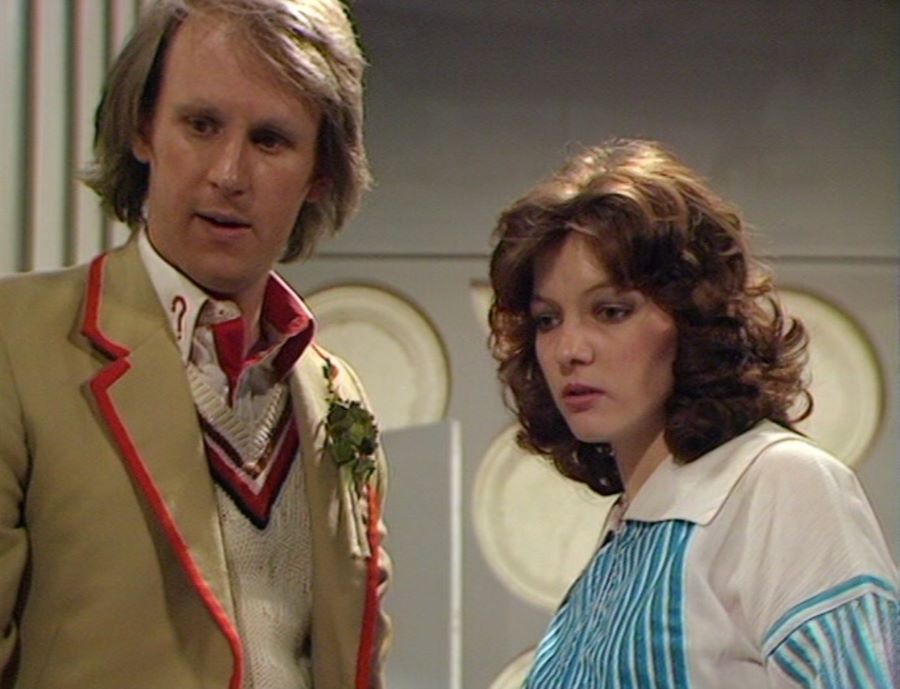
It’s a source of anxiety for the Doctor and Nyssa, who try to work out how the Mara can stopped in order to save Tegan. It’s quite grisly and intense throughout, especially when the story explores the themes of possession to develop an entity dependent on malice.
I found Manussa a very interesting society when it’s woven together by Christopher Bailey in terms of the story and the characters. It’s fascinating how the people of Manussa aren’t aware of the Mara’s evil approaching when celebrating in past victories.
The Doctor tries to warn those who have knowledge about how the Mara can be defeated, especially through a Great Crystal, but the people think he’s mad and they have him locked away. It adds to the tension of Manussa and its people being in danger.
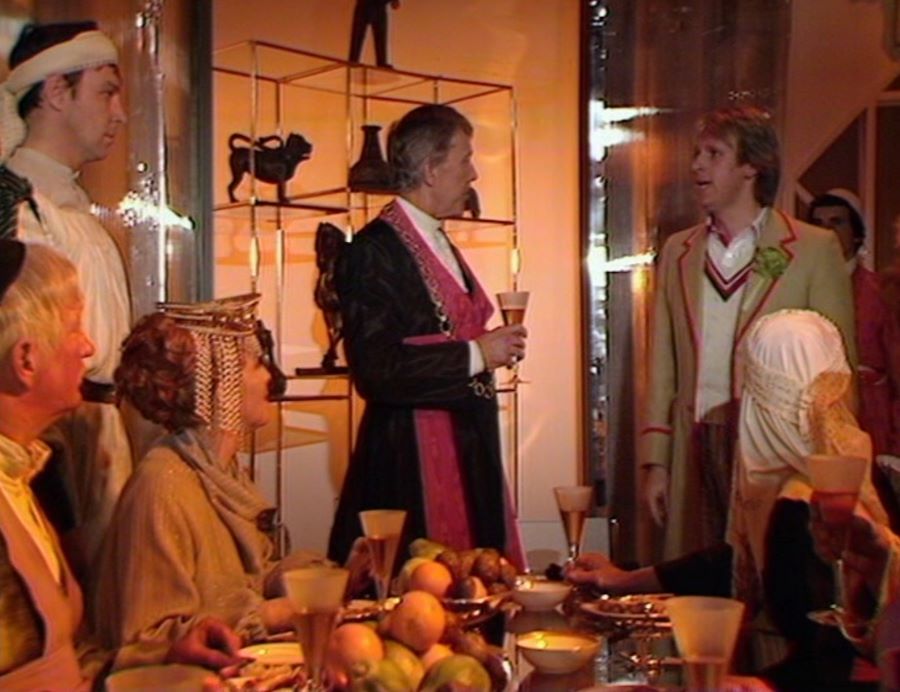
It makes me wonder how we in society are sort-of going in a similar direction with a dependency of commercialism and how it makes people decadent with forgetting potential dangers, whether it’s war or natural disasters that could devastate everything.
For all the criticisms that ‘Doctor Who’ gets, including the classic TV series with its production values, including dodgy special effects, there are stories like ‘Snakedance’ that contain messages that resonate throughout society, whether it’s in 1983 or beyond.
To borrow a quote from the Fifth Doctor in ‘Kinda’, ‘there’s always something to look at if you open your eyes’. ‘Snakedance’ might be regarded as an entertaining ‘Doctor Who’ story, especially in featuring enjoyable characters and an intriguing set-up of a society. 🙂
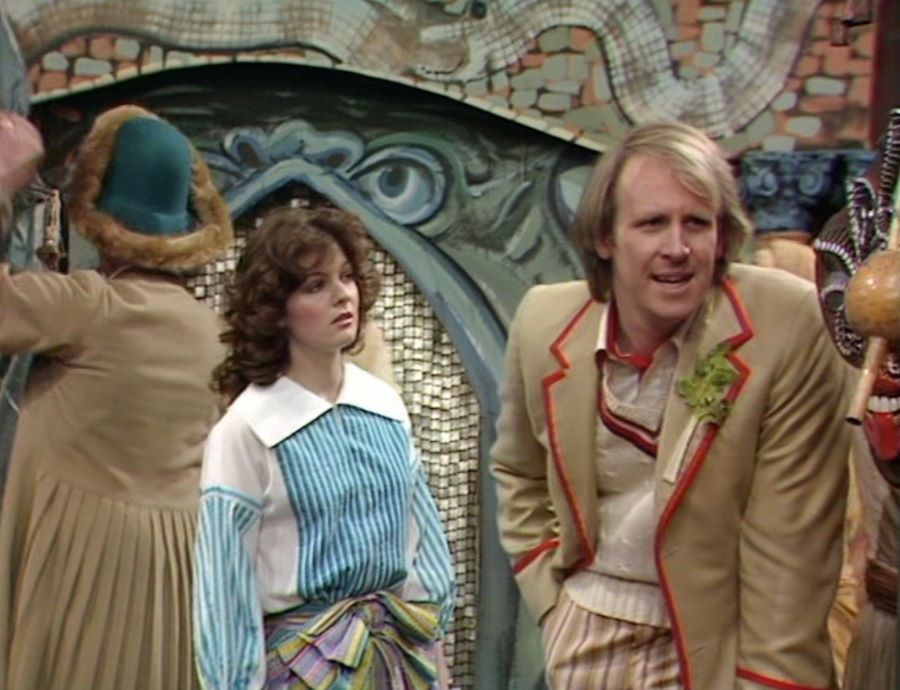
But it’s easy to forget that ‘Snakedance’ is also a story on how we must always be on the alert for any potential dangers that affect how we live our lives and how our society is turning out, whether you happen to have a religious faith – me being a Christian – or not.
I quite like the concept Chris Bailey came up with for the Snake Dancers in that they’re based on a group of ‘fundamentalist Christian sects’ that handle snakes and that in this story, the Snake Dancers ‘armour’ themselves to prevent the Mara coming into being.
It’s a pity we don’t get to see many Snake Dancers in this ‘Doctor Who’ story, as we only meet one in the form of Dojjen, who helps the Doctor by providing the answer on how to defeat the Mara inside himself. It’s an aspect of the story that, for me, isn’t fully explored.
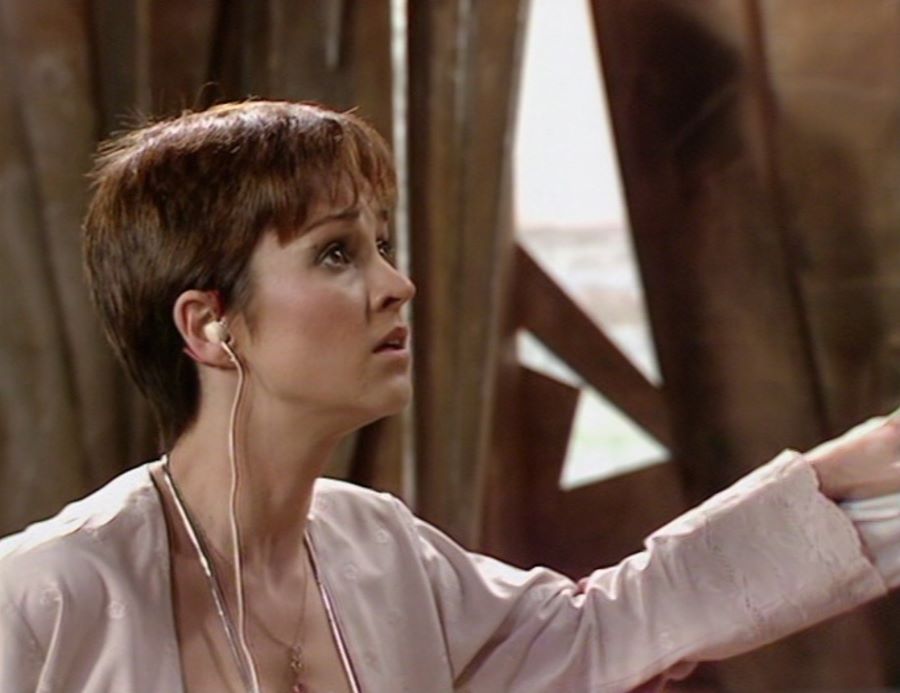
‘Snakedance’ is of course Janet Fielding’s show as Tegan, especially when she gets to do her Tegan-possessed-by-Mara performance once more. I know she did it in ‘Kinda’, but that wasn’t for very long. Here in ‘Snakdeance’, Tegan gets to be evil a little longer. 😀
Initially, Tegan is frightened, especially when having had her nightmare in the TARDIS. As the story progresses, she loses control and becomes playful, especially when meeting up with Nyssa, who sees she isn’t wearing the earplugs and the anti-dreaming device. 😐
Speaking of which, according to Peter Davison in the DVD audio commentary, this might be where the iPod was invented. Perhaps the people who built the iPod were inspired from watching this ‘Doctor Who’ story. It’s possible. I wouldn’t be at all surprised by this. 😀
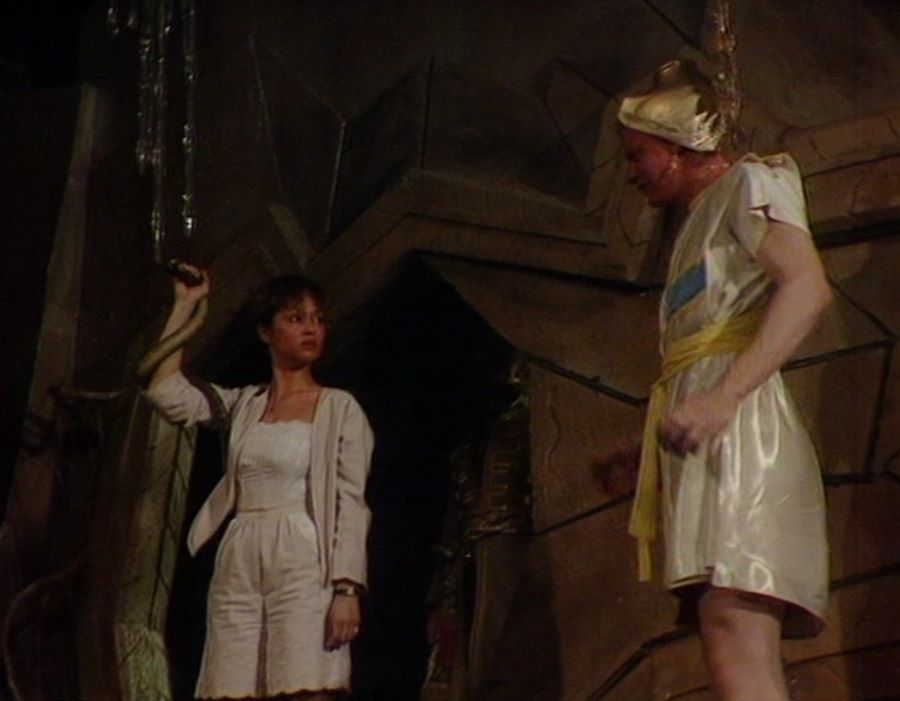
It’s disturbing that Tegan became possessed by the Mara in this story, especially when her skin turned red, and her mouth became red. This was an effect that happened in ‘Kinda’ when Tegan and Aris were possessed by the Mara, but this is more pronounced.
In fact, Tegan and Lon become very red by the time we get to the end of ‘Snakedance’. I supposed that’s what being possessed by the Mara does for you. I’m not sure if it’s their bodies burning up and the Mara is slowly destroying them once it controls their souls. 😐
It was funny when Tegan was wearing the earplugs and the anti-dreaming device, a salesman was selling twirling snake-like merchandise. Once she saw one, she became terrified. I don’t blame her, since who shoves snake-like merchandise in people’s faces like that?
Even my best mate from school Stephen commented on how ridiculous that scene is. It’s a pretty hilarious moment. Granted, you get people who try to sell you stuff in the streets, but this is going to an extreme, isn’t it? It’s a scene I enjoy replaying again and again. 🙂
For me, Sarah Sutton shines as Nyssa in this ‘Doctor Who’ adventure. I like that Nyssa gets to help the Doctor in solving the mystery when they’re visiting Manussa and trying to cure Tegan of the Mara influence inside her. Nyssa gets to shine quite a bit in this story.
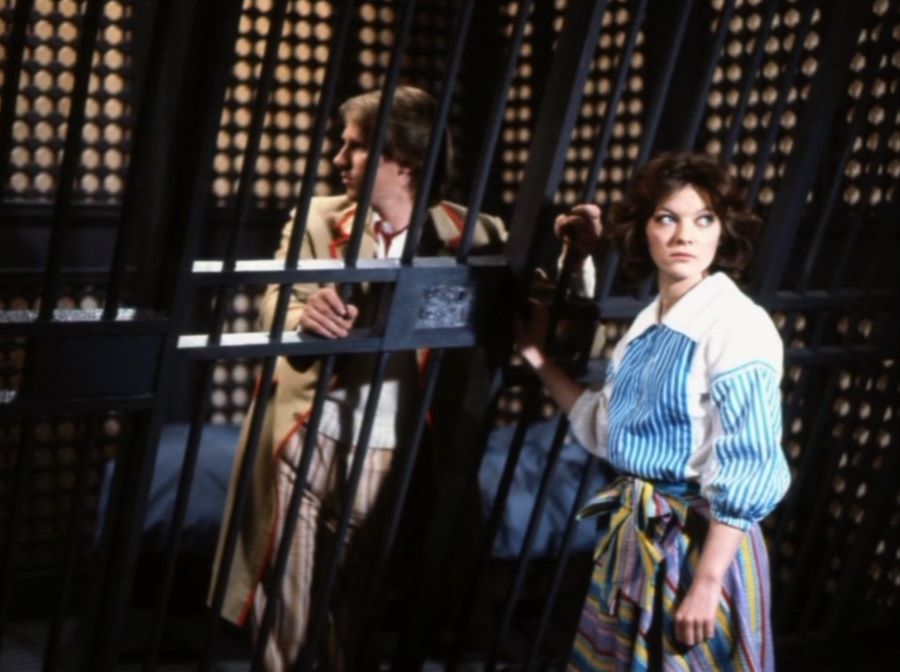
She’s resourceful, especially when trying to solve the puzzle of what’s going on in the snake mouth-like cave where the special ceremony for the ‘Part Four’ climax is about to take place. She also does her best in finding the key to free the Doctor from his prison cell. 🙂
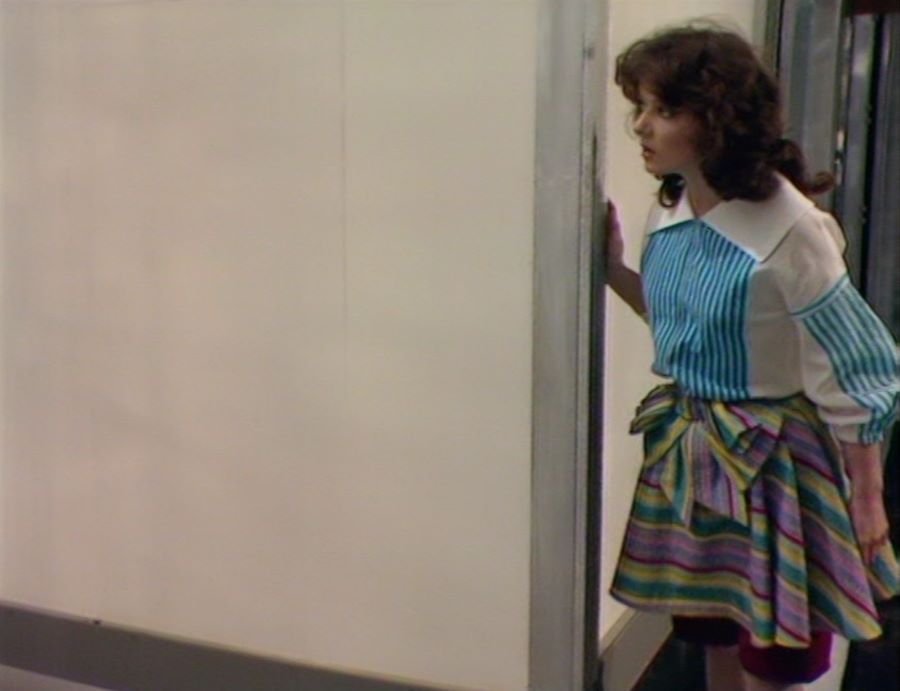
Granted, she ends up getting locked in the prison cell with the Doctor once caught by Tanha. Maybe she should have looked in the drawers instead of going through the papers on Ambril’s desk. And maybe she should have been alert when Tanha walked in.
But at least this gives Sarah Sutton the chance to share some scenes with Peter Davison, especially when they worked so well together as the Doctor and companion in ‘Arc of Infinity’. Sarah and Peter’s scenes as Nyssa and the Doctor are worth watching. 🙂
And then there’s the new blue stripy dress that Nyssa wears. Not many people like that dress. 😐 Peter Davison certainly doesn’t. He described Sarah Sutton looking like a waitress from McDonald’s. His then-wife Sandra Dickson described her as a ‘walking deckchair’. 😀
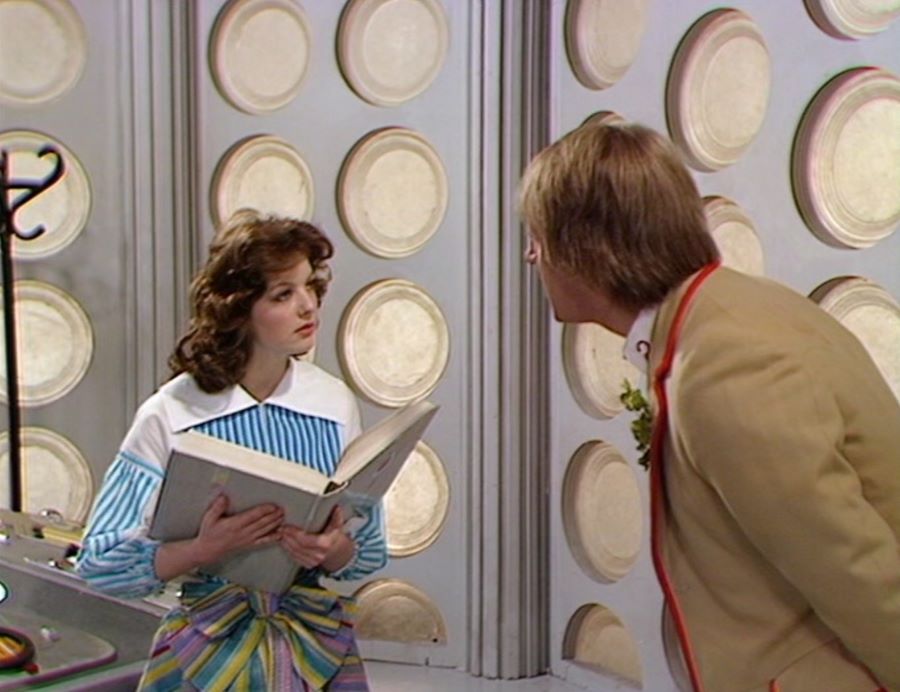
I don’t mind the blue stripy dress that Sarah wears as Nyssa, since blue is my favourite colour. Granted, it would have been better if she wore something straightforward instead of it being designed, but I do think Sarah wore that dress quite well, considering.
Perhaps it was probably for the best that Nyssa only wore that ‘Snakedance’ outfit for one TV story, as by the time we get to the next story ‘Mawdryn Undead’, she’s wearing something completely different, and it’s a lot better compared to what she wears in this.
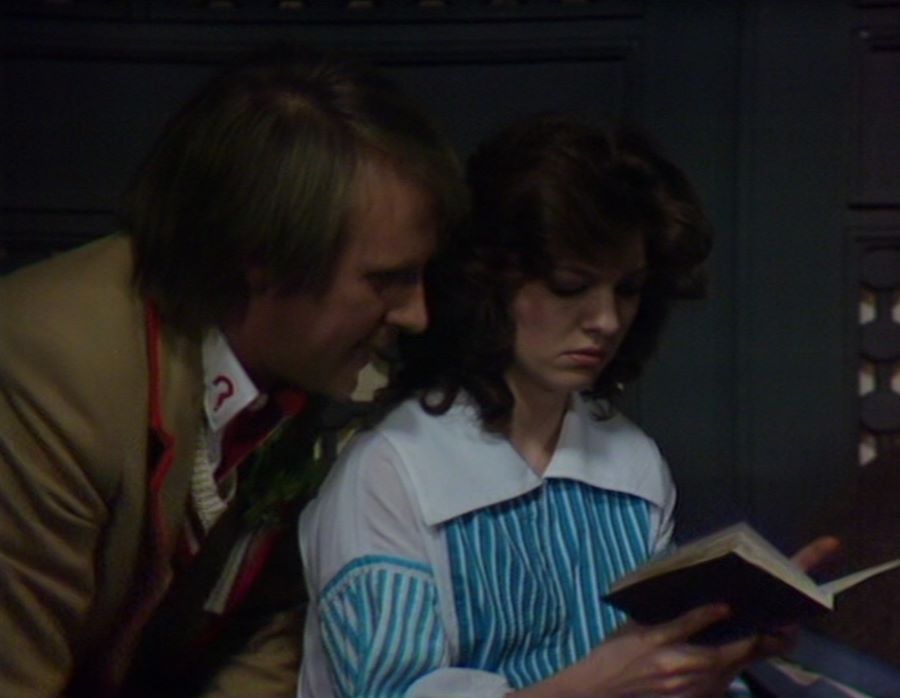
Incidentally, why did Nyssa look through a book to find out information about the Manussan and Sumaran Empires once the TARDIS had landed on Manussa in ‘Part One’? Couldn’t she have used the TARDIS data banks to find out that information? Very odd. 😐
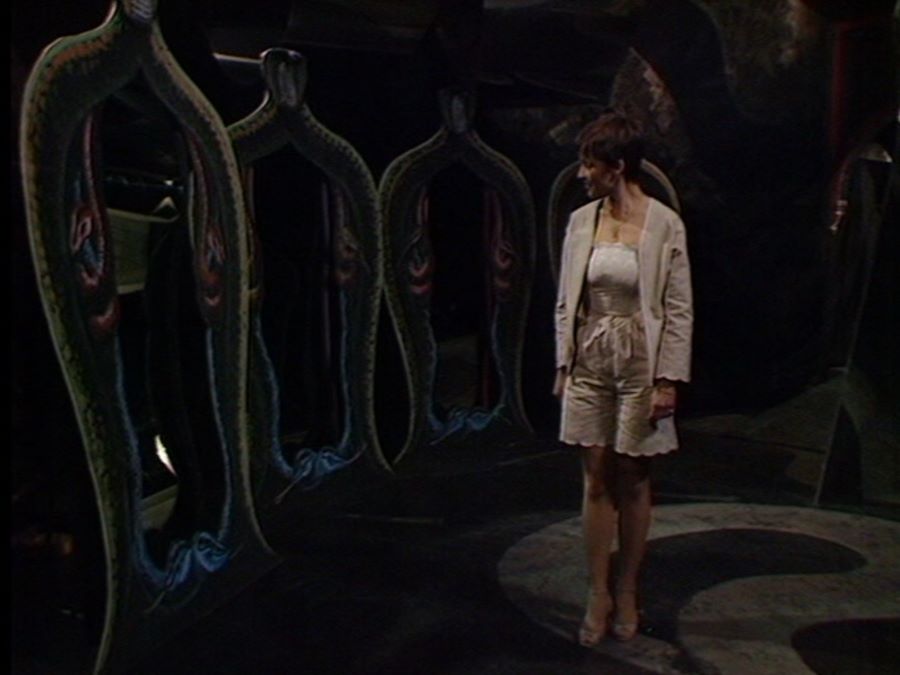
Something I forgot to mention in my ‘Arc of Infinity’ review is that Tegan has a new haircut compared to the hairstyle she had in Season 19 and she’s wearing a new outfit compared to the purple uniform she wore. Janet was very happy with her new haircut. 🙂
She wasn’t happy with the white tube top outfit she wore in Season 20. Yes, I know it’s called a ‘boob tube’, but thanks to Alan Camlaan/Wolfie when I wrote ‘The Sunfire Chronicle’ called ‘The Race of Endurance’, ‘tube top’ is a better term for what she wore.
Honestly, I don’t mind Tegan wearing the tube top outfit in say the first two stories of Season 20. If she wore it only for a couple of stories instead of a whole season, it’d make sense. To see her wearing it in most of the stories in Season 20 is quite ridiculous. 😐
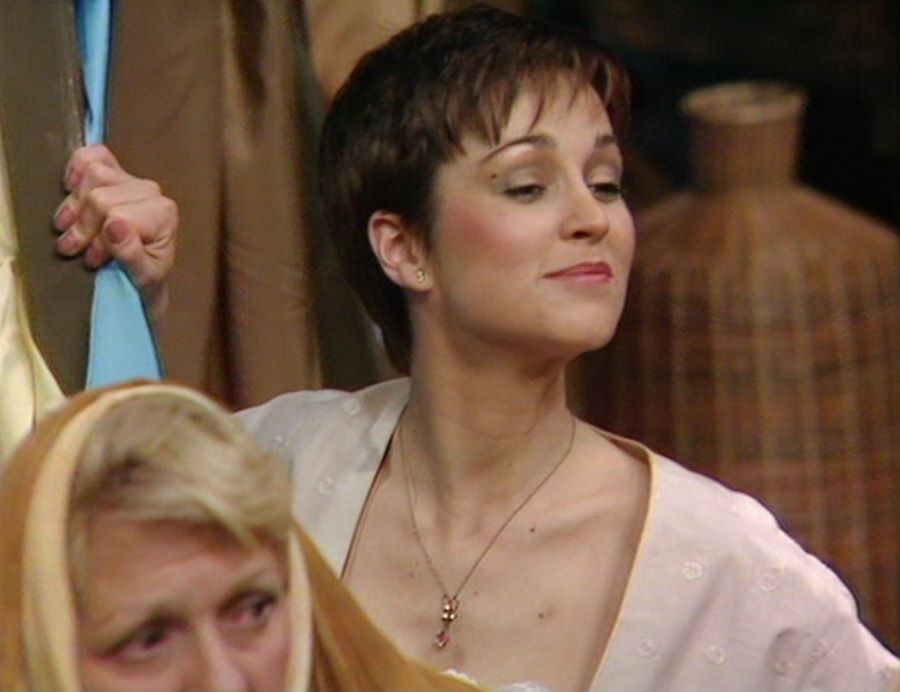
Thankfully, the costumes changes for Tegan improved by the time we get to Season 21, as she got to wear two different outfits in that. Yes, yes, I know, she wore different outfits in ‘The King’s Demons’ and ‘The Five Doctors’, but that’s by the time Season 20 draws to a close.
Apparently, Janet Fielding had problems with wearing the outfit whilst making Season 20 of ‘Doctor Who’. So much so that when Peter Davison asked her to raise her arms up in the air, she literally ‘popped’ out. That must have been hilarious when it happened. 😀
I know it’s naughty, but it shows how ridiculous some of the outfits that ‘Doctor Who’ companions wore in the 1980s were, including Nyssa’s stripy blue outfit and Tegan’s white tube top. Janet’s ‘popping’ out moment happened during the making of ‘Snakedance’, I believe.
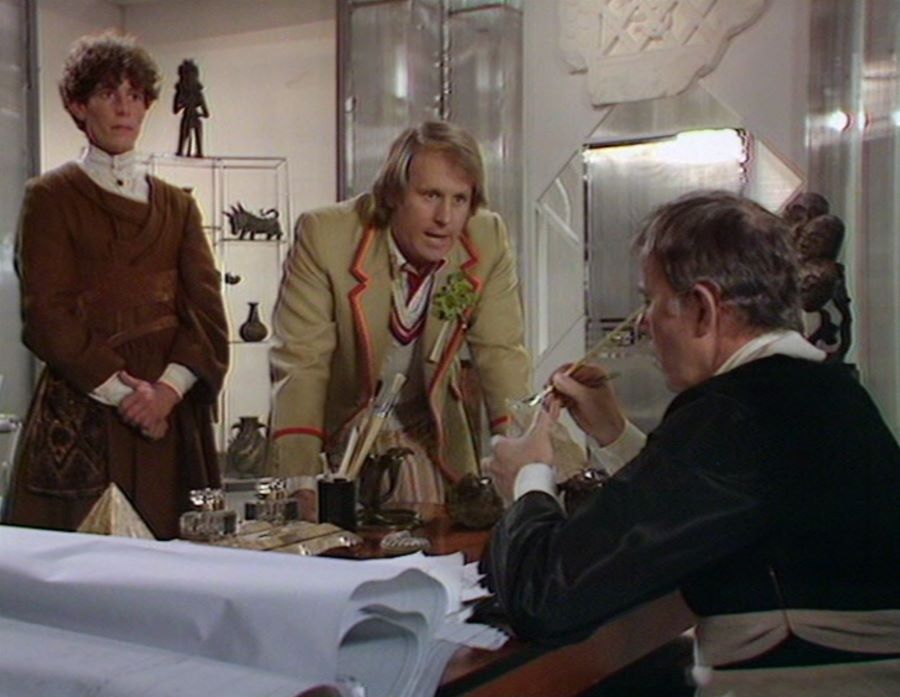
Peter Davison is great as the Doctor in this adventure. It’s clear that Chris Bailey found Peter’s Doctor easy to write for in ‘Snakedance’ compared to writing for him in ‘Kinda’. This is especially in how the Fifth Doctor behaves and sounds in interacting with others.
It was funny when Peter’s Doctor didn’t notice Nyssa wearing a new outfit once she tried to show it off to him at the beginning of ‘Snakedance’. I mean, if Billy was in the TARDIS, he would have said something nice to Nyssa about what she’s wearing in this TV story. 🙂
He’d probably tell Nyssa looked ‘great’ in what she wears in ‘Snakedance’, but then, Billy is a lovesick character anyway. 😀 I also like Peter’s Doctor’s wit and humour and how it’s used to great effect throughout this TV story, especially as he tries to thwart the Mara. 🙂
I like how early on in the story, the Doctor knows that something’s wrong with Tegan and is determined to save her as well as the people of Manussa. Even when the Doctor’s sharp with her, you can see how genuinely concerned he is for her well-being in this story.
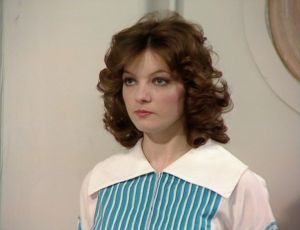
Doctor: Now then, Tegan, where are we?
Tegan: What?
Doctor: Very simple question, where are we?
Tegan: Well, aren’t we on Earth?
Doctor: No, we’re not. So?
Tegan: Well, how should I know?!
Doctor: Think!
Nyssa: Doctor.
Doctor: Please, Tegan, think. Reach into the back of your mind.
I really like the scenes between the Doctor and Nyssa, especially when he relies on her opinion and resourcefulness when Tegan’s not around. I also like the Doctor’s quote to Nyssa about how dreams are important and that we must never underestimate them. 🙂
There’s a moment I found funny in ‘Snakedance’ where the Doctor’s inside the snake mouth-like cave and he sees Nyssa waving at him. He has an almost confused look. Even Peter Davison and Sarah Sutton make fun of that moment in the DVD audio commentary.
Since seeing ‘Snakedance’ for the first time on DVD in May 2011, I’ve had my DVD cover of ‘Snakedance’ signed by Peter Davison at the ‘York Unleashed’ event at the York Racecourse in York, August 2017. Sarah Sutton also signed my ‘Snakedance’ DVD cover.
She signed it when I saw her at ‘Fantom Events at Memorabilia 2016’ at the NEC in Birmingham in March 2016. I told Sarah how much I enjoyed her as Nyssa in both ‘Kinda’ and ‘Snakedance’. I’ve also had nice photos of Sarah as Nyssa in ‘Snakedance’ signed by her over the years.
This includes one that she signed when I saw her at the ‘London Film and Comic Con’ in July 2011. I’ve had a photo of Nyssa, Tegan and the Fifth Doctor in ‘Snakedance’ signed by Sarah with a “Happy Birthday” message at the ‘Folkestone, Film, TV & Comic Con’ in May 2018.
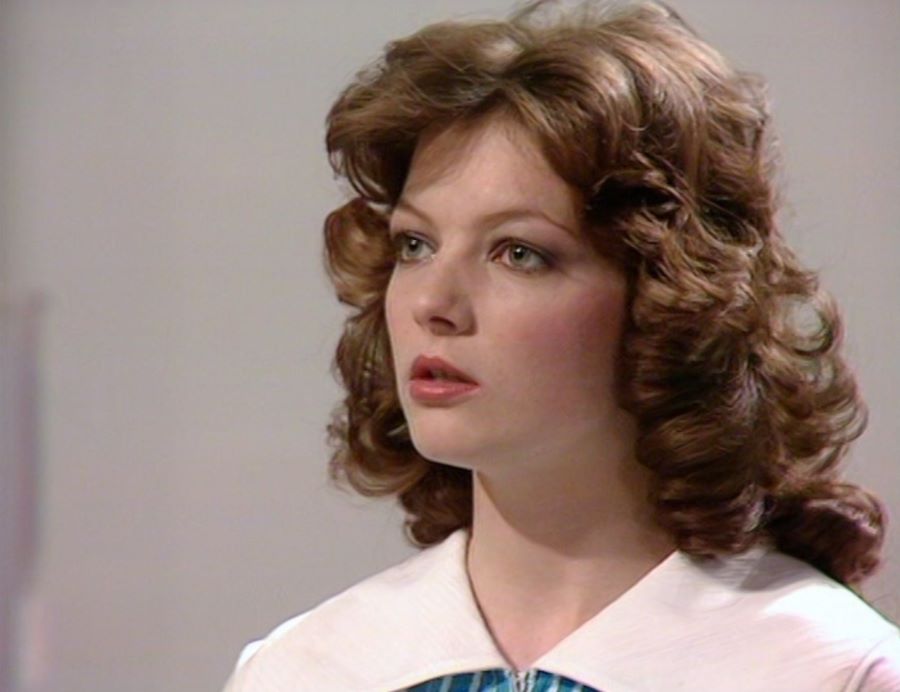
I’ve also had two of the same photo of Sarah as Nyssa in ‘Snakedance’ signed by her and sent to me in the post via her website in 2023 and 2024, including one that says, “Happy Christmas and Happy 2025″. I feel very lucky to have received those photos from Sarah.
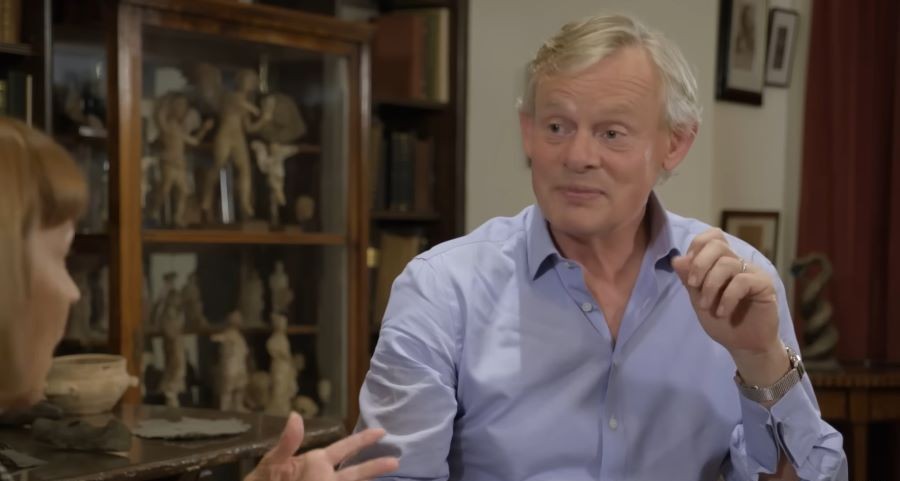
The story features a superb guest cast, including ones I’ve met at a few conventions over the years. The biggest guest star of all featured in ‘Snakedance’ is of course a very young Martin Clunes. It was great to see him. This happens to be his first television role.
I’ve seen Martin Clunes as Barmy Fotheringay Phipps in Series 2 of ‘Jeeves and Wooster’, and he’s also been in the 2002 TV film ‘Goodbye Mr. Chips’. I’ve seen him in ‘Nativity 3: Dude, Where’s My Donkey?!’ and who knew he voiced Kipper the dog on TV. 😀

He’s well-known for being ‘Men Behaving Badly’ as well as a TV series my parents have been into lately called ‘Doc Martin’. 😀 It’s amazing to find that before he became famous, he was in a ‘Doctor Who’ story shown on BBC TV in 1983 that started off his career.
Martin Clunes plays Lon, who is the son of Tanha, played by Colette O’Neil. Lon is the heir to the Manussan title of Federator. Yeah, apparently, there’s a Federation in Manussa’s time. I don’t think it’s the Galactic Federation from the two Peladon TV tales.
Nor is it the United Federation of Planets from ‘Star Trek’. 😀 Lon is easily bored and doesn’t take any interest in the celebrations of Manussa’s people in the Federation’s victory over the Mara many years ago. He tolerates Ambrill and his Manussa expertise.
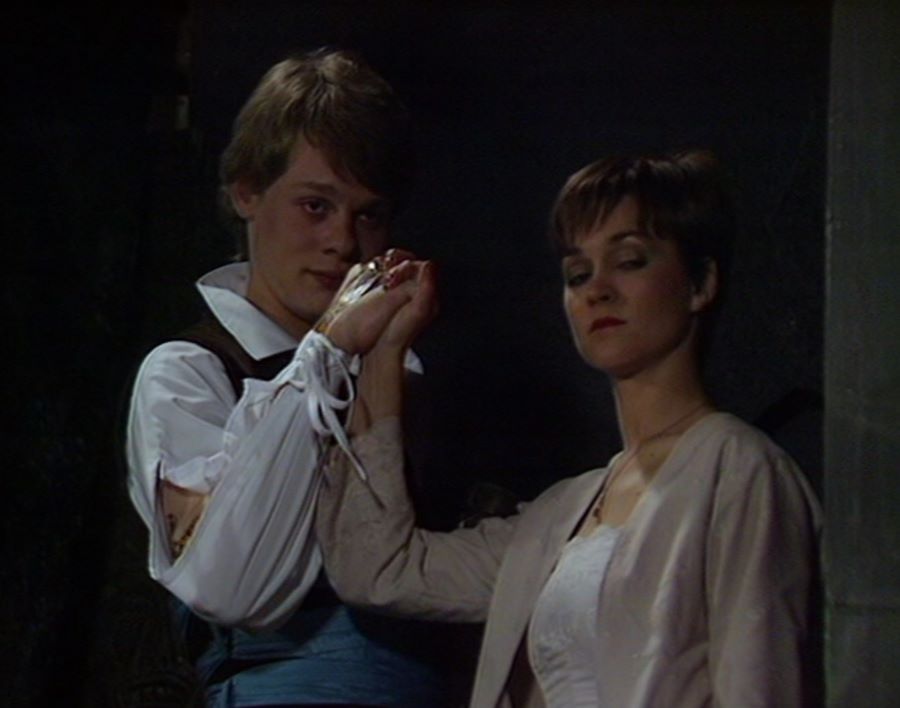
When Lon meets Tegan however, he becomes possessed by the Mara and does the Mara’s work in acquiring the Great Crystal from Ambrill so that it can come back to life. And of course, it’d be remiss of me not to mention the fashion sense Lon has in this story.
Throughout the story, Lon is dressed up with jewellery in his ears and he happens to be wearing lipstick compared to other Manussans. I don’t know if that makes Lon a homosexual character, but it was interesting to see when watching his character in this tale.
The costume that Lon wears in ‘Part Four’ to represent his ancestor who defeated the Mara years ago is a pretty bizarre one. I’d say it’s worse as a costume design than Nyssa’s ‘Snakedance’ outfit, and I know that Martin Clunes has been mocked for it since then.
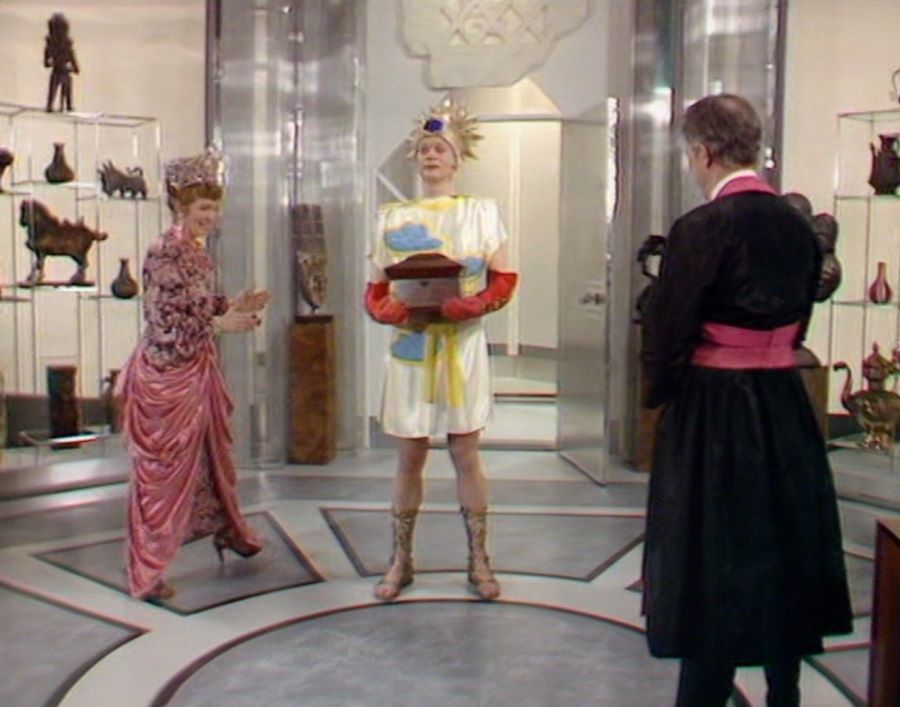
Tanha: You look splendid!
My best mate Stephen was like “Are you serious?!” once he saw Martin Clunes in that outfit as well as how the mother reacted to it. I know the production team were pressed for time in making this ‘Doctor Who’ adventure, but surely it could have been a lot better. 😀
And look, I know, I know. Manussa is an alien society and maybe what Martin Clunes’ character and everyone else is wearing is acceptable, including the ceremony outfit that Lon wears in ‘Part Four’. Aspects of Manussa were based on Morocco designs, I believe.
But in terms of the presentation on TV, it’s bound to be made fun of, even by the casual viewers who aren’t into ‘Doctor Who’ as many fans like me are. And this is probably a sign of how 1980s costume design were done, but it’s easy to make fun of. 🙂
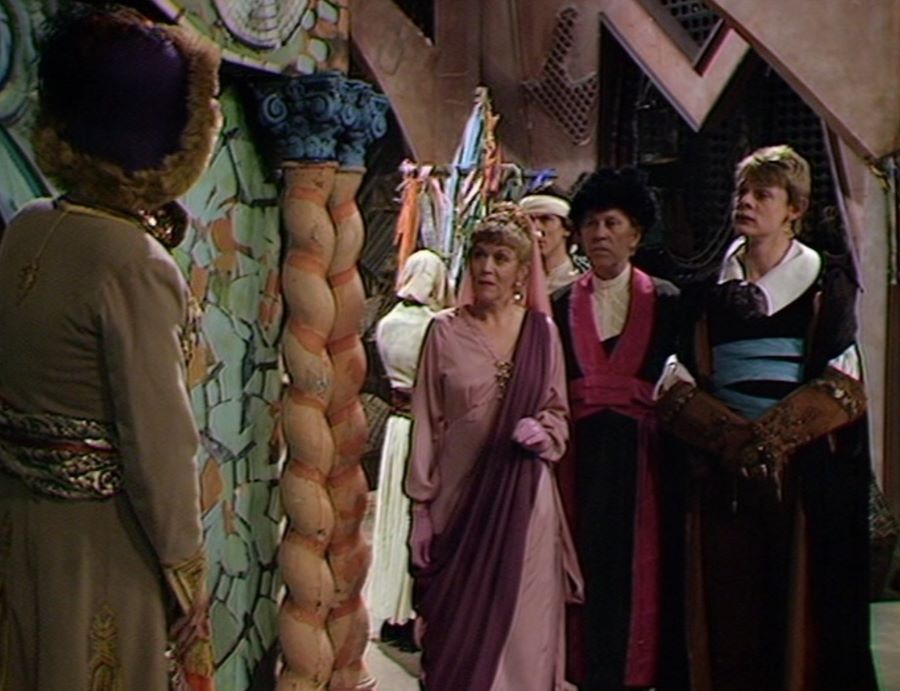
Incidentally, ‘Snakedance’ was directed by Fiona Cumming, who previously directed ‘Castrovalva’ in Peter Davison’s first season as the Fifth Doctor. She would go on to direct two more stories for the TV series, including ‘Enlightenment’ and ‘Planet of Fire’. 🙂
‘Snakedance’ was also made first in terms of production order in Season 20 before Peter, Sarah and Janet did ‘Arc of Infinity’ next. I suppose it’s an improvement compared to the production order the main cast went through in making Season 19 the previous year.
Colette O’Neil guest stars as Tanha, Lon’s mother in this ‘Doctor Who’ story. According to Sarah Sutton in the ‘Snakedance’ DVD audio commentary, she recalls working with Colette O’Neil before, which I believe was in the 1979 BBC radio play called ‘Dust in the Sugar House’.
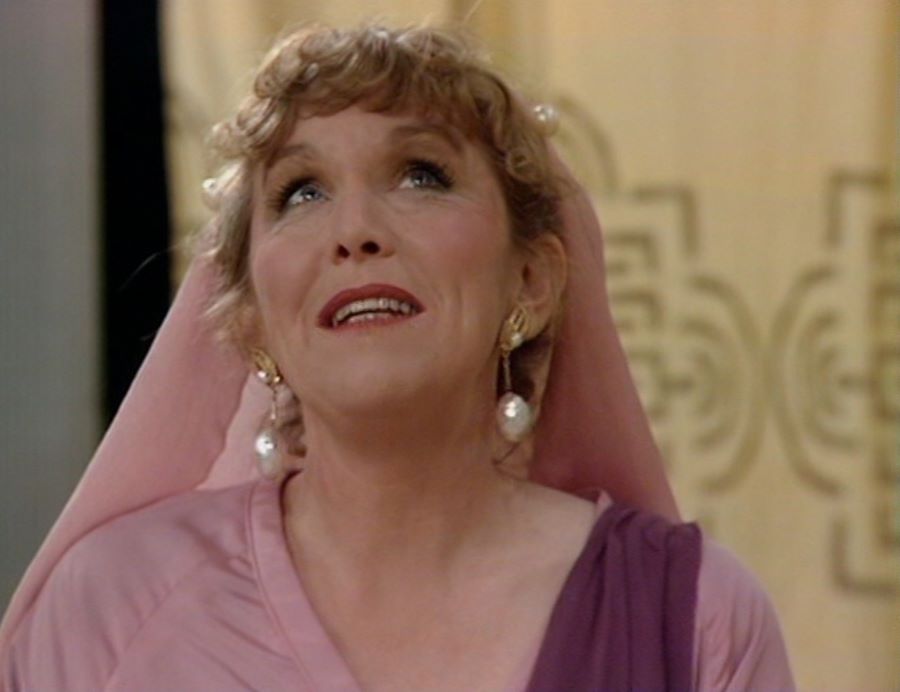
I managed to retain information about the BBC Afternoon Theatre radio plays starring Sarah Sutton via the Internet to know and confirm she worked with Colette O’Neil before ‘Snakedance’. Colette O’Neil would go on to guest star in a Series 6 episode of ‘Monarch of the Glen’.
She was with Tom Baker in that. 😀 I enjoyed Colette O’Neil’s performance as Tanha in this ‘Doctor Who’ story. Tanha is of course Lon’s mother and the wife of the Federator of Manussa. Interestingly, we don’t get to meet the Federator nor know his name in this.
You could easily be mistaken into thinking that Lon’s father and Tanha’s husband is dead, especially when they talk about him in certain scenes. It’s evident that the relationships between husband and wife and between father and son aren’t clear-cut in the conversations. 😐
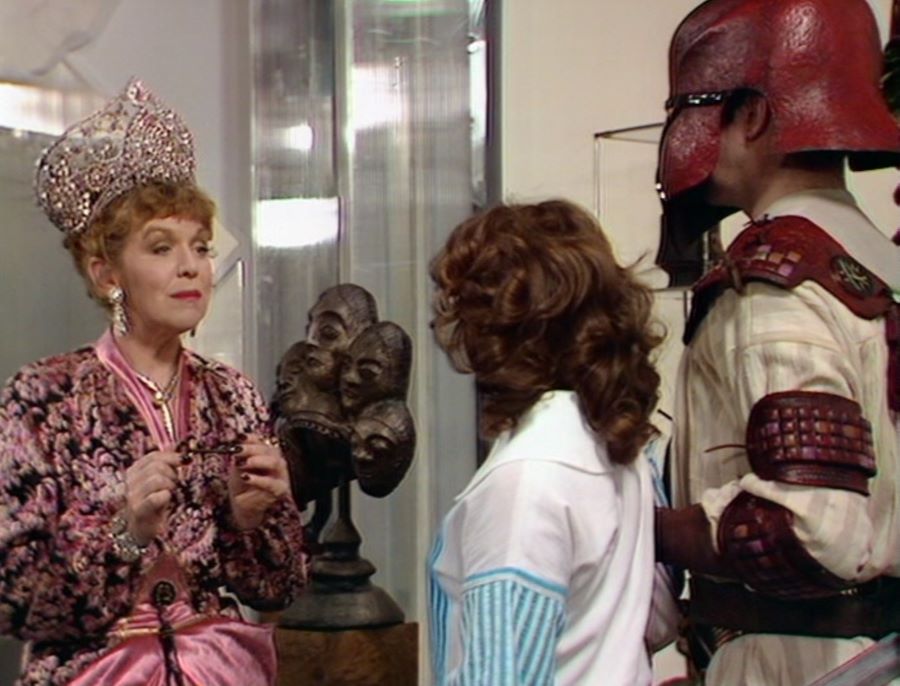
Colette O’Neil could have easily played Tanha as a rather silly woman who dots on her son a lot. There are traces of that now and again, but it’s done with plenty of sincerity, and it’s not done in an over-the-top or comedic manner, as Colette plays it quite straight.
In the story, Tanha struggles to make her son understand the weight of responsibility attached to his role of becoming the next Federator of Manussa. She’s unaware of her son being possessed by the Mara before it’s too late at the great ceremony in ‘Part Four’.
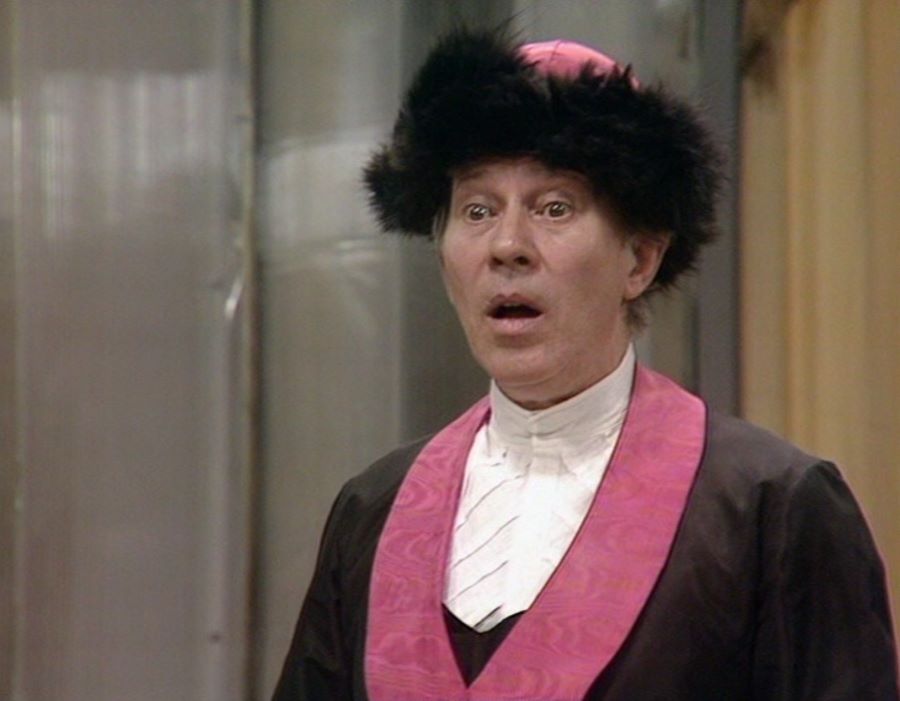
John Carson guest stars as Ambril, the Manussan historian who becomes the Director of Historica Research on the planet. I’ve seen John Carson before, as he played George Knightly in the 1973 BBC TV production of ‘Emma’ with Doran Godwin. I saw that in 2011.
This was when I was doing my research on Jane Austen and her works of literature for my ‘Doctor Who’ story ‘The Austen Code’. Interestingly, Donald Eccles, who was Krasis in ‘The Time Monster’ with Jon Pertwee, also starred in 1973’s ‘Emma’ with John Carson.
John Carson also voiced Captain Foster in the 1966 film ‘Thunderbird 6’, would you believe? I enjoyed how John Carson played Ambril in this ‘Doctor Who’ story, especially when he’s supposed to be an expert on Manussan history, but is quite sceptical of things.
Most specifically, he’s sceptical of the legend or prophecy of ‘the return’ of the Mara, as he’s convinced the Mara is destroyed. He immediately dismisses the Doctor, believing him to be a ‘crank’ and considers the Snake Dancers to be…well, how did Ambril put it?
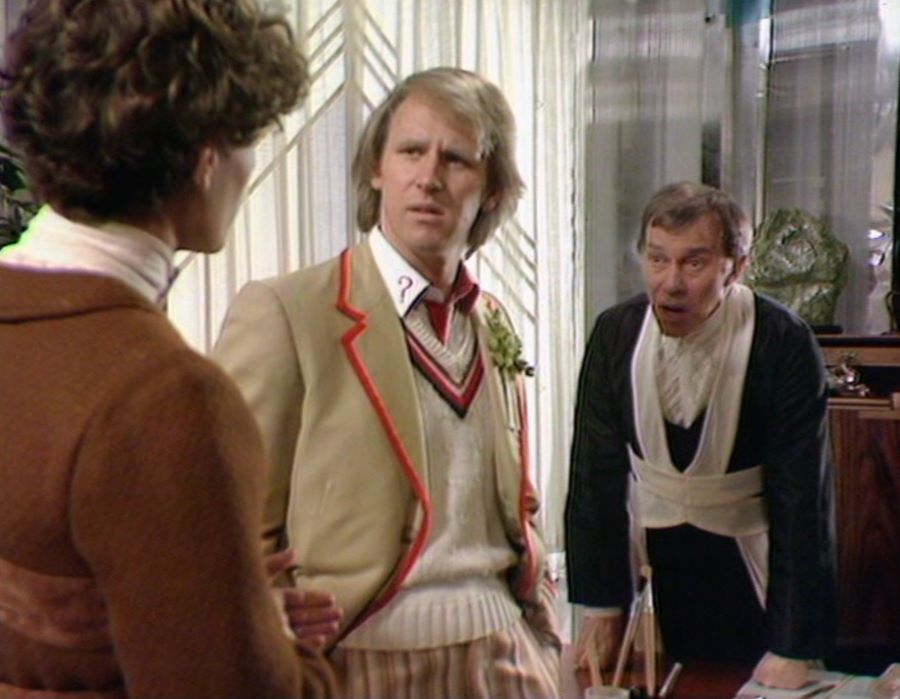
Ambril: It appeals to a certain type of mind. Primitive, lazy, uneducated type of mind.
Yeah, that’s it. Ambril is a clear example of how Manussan society has lost its way in being unaware of the impending threat and danger that’s coming with the Mara about to manifest itself. Ambril is also clearly driven by his greed of knowledge in collecting artefacts.
You see that when he’s being tempted to have the items inside the secret cavern within the snake cave-like mouth once Lon requests that Ambril gives him and Tegan, possessed by the Mara, the Great Crystal. Ambril doesn’t consider the consequences of his actions. 😐
It’s fascinating that crystals are utilised in terms of animating the Mara to come into being. It’s a contrast to how mirrors are used to defeat the Mara in ‘Kinda’. The Doctor must find ‘the still point’ when seeing into the Little Mind’s Eye crystal to thwart the Mara.
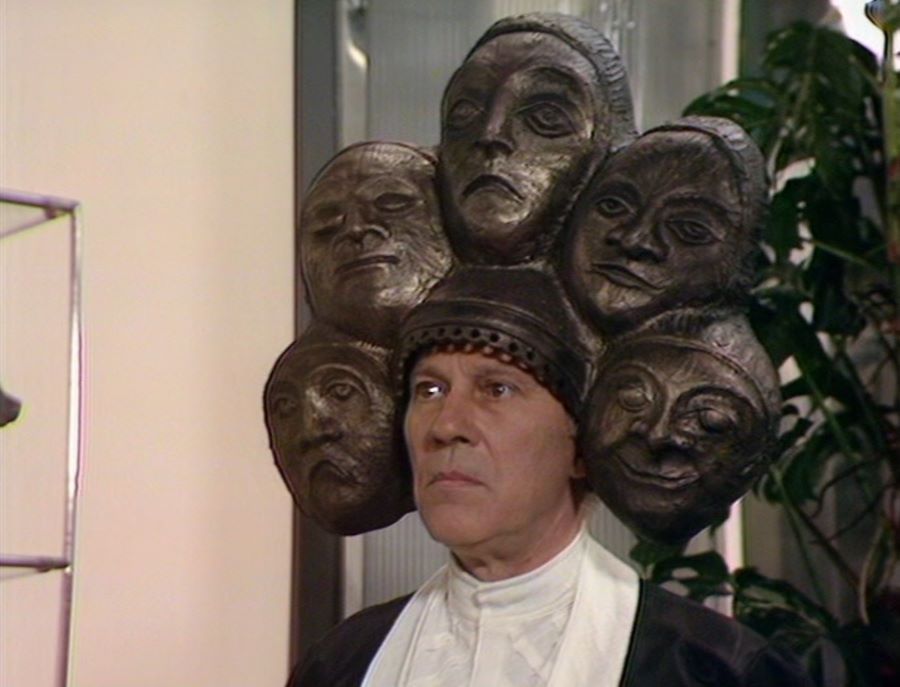
One of my favourite scenes in ‘Snakedance’ is when the Doctor proves a point to Ambril about the Six Faces of Delusion headpiece. It’s so funny that I’m surprised Ambril didn’t realise its significance when he was asked to put it on. I mean, it’s screamingly obvious!
Isn’t it? How come Ambril didn’t realise that the sixth Face of Delusion would be the wearer himself? What’s even funnier is instead of being grateful, the Doctor is shouted at by Ambril. It clearly shows his embarrassment and the realisation he’s the expert he thought he was.
Doctor: The sixth Face of Delusion is the wearer’s own. That was probably the idea, don’t you think?
Ambril: GET OUT! GO ON, GET OUT!!!
I’m surprised the Doctor didn’t walk out by saying, “But I just helped you!” when he told Ambril what the significance of the Six Faces of Delusion was all about. Ambril was so ungrateful, wasn’t he? It’s a small moment, but it truly defines Ambril’s character well. 🙂
This story also features Brian Miller as Dugdale, a Manussan showman who owns a hall of mirrors in the marketplace of Manussa. For those who don’t know, Brian Miller is in fact the real-life husband of Elisabeth Sladen, who played Sarah Jane Smith in the TV series.
This is his first ‘Doctor Who’ appearance I believe, as he went on to do Dalek voices in ‘Resurrection of Daleks’ and ‘Remembrance of the Daleks’. He guest starred as Harry Sowersby in one of ‘The Sarah Jane Adventures’ called ‘The Mad Woman in the Attic’. 🙂
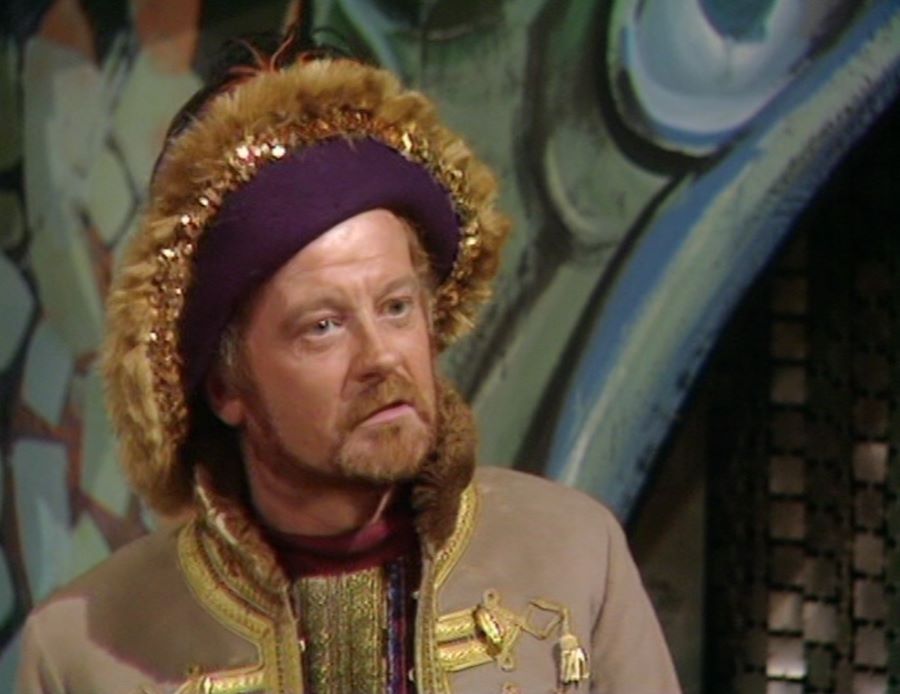
He also briefly appeared in ‘Deep Breath’, starring opposite Peter Capladi’s Twelfth Doctor and playing a tramp called Barney. Brian Miller also guest starred in one of the ‘Sarah Jane Smith’ audios by Big Finish called ‘Ghost Town’ and a ‘Gallifrey’ audio called ‘Reborn’. 🙂
In the story, Dugdale tries to get people to come inside his stall and see his hall of mirrors. It was funny when Tegan went in there and did funny poses in front of those funny mirrors. We’ve all been there when we visit a house full of mirrors at a fairground.
Dugdale meets Tegan when she’s looking herself in the mirror and doesn’t realise she’s possessed by the Mara. He joins Tegan and Lon when they go inside the snake mouth-like cave and it’s there where he gets taken over by the Mara and presumably through fear.
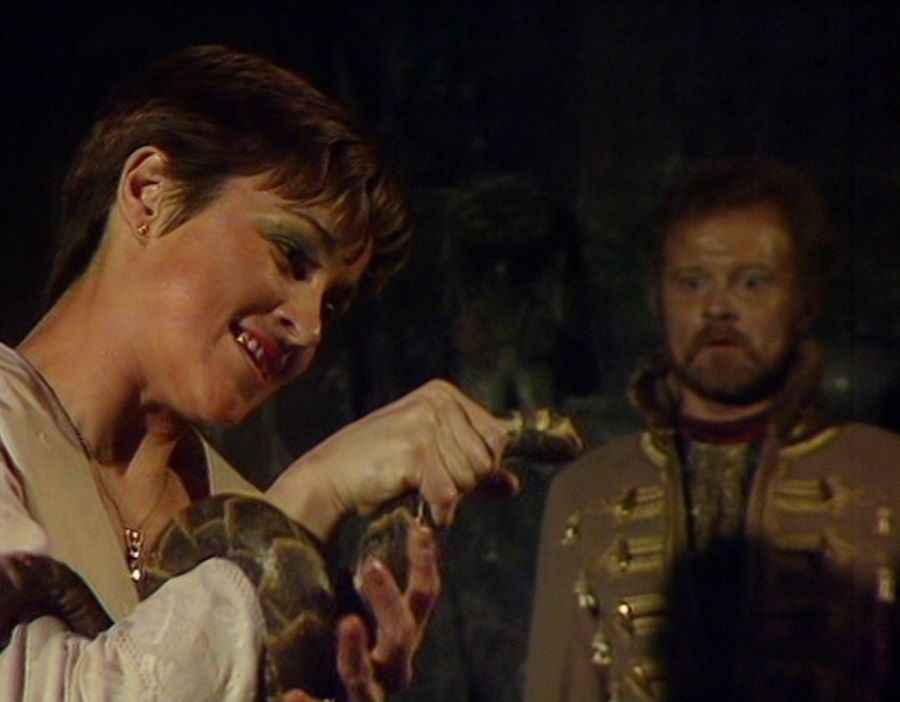
I mean, Dugdale doesn’t really do much in ‘Parts Three and Four’ of the story, especially when made to look at the Mara snake coming to life on Tegan’s arm. He and Lon try to take the Little Mind’s Eye crystal from the Doctor when ordered to by Tegan as the Mara.
I’ve also had my ‘Snakedance’ DVD cover signed by Brian Miller when I saw him at ‘London Comic Con Spring’ in March 2019. I’ve also had a photo of John Carson as Ambril and Colette O’Neil as Tahna signed by them when I saw them at an event in 2013.
That particular event was the ‘celebrate 50 – The Peter Davison Years’ signing event, run by Fantom Films in Chiswick, London in April 2013, where I saw John Carson, Colette O’Neil and Brain Miller. It was fantastic to see the three guest stars at the event.
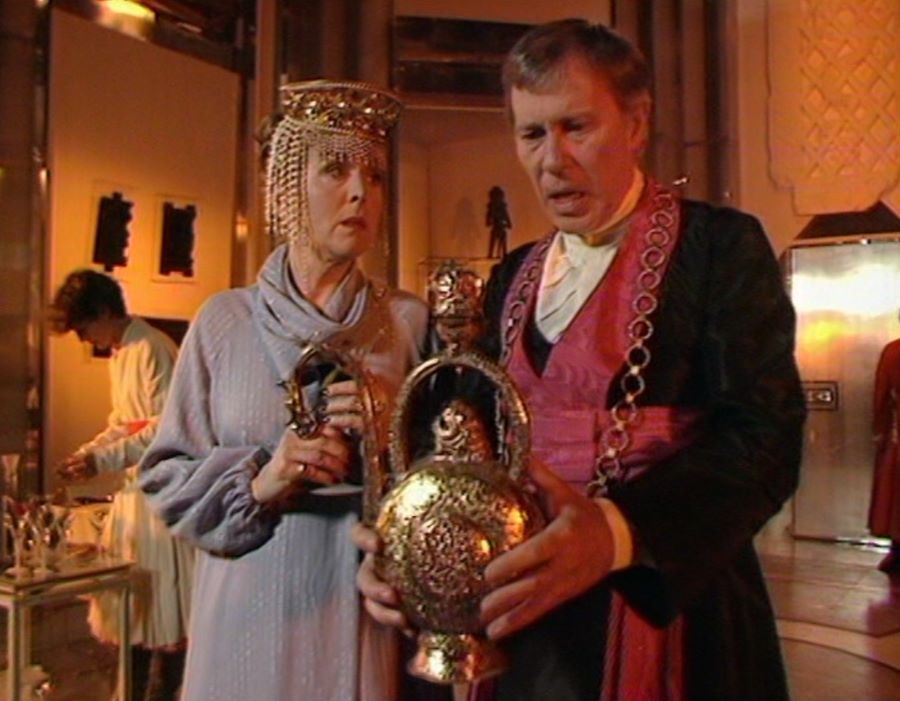
Sadly, John Carson and Colette O’Neil have passed away since I met them in person. John Carson passed away in November 2016 whilst Colette O’Neil passed away in July 2021. I’m lucky to have met the two actors and have a photo signed by them at an event.
This story also features Jonathon Morris as Chela, a Manussan historian and Ambril’s assistant who helps the Doctor and Nyssa with sorting out and defeating the Mara. Jonathon Morris is well-known for playing Adrian Boswell in the TV sitcom called ‘Bread’.
It was interesting to hear from Peter Davison in the ‘Snake Charmer’ making-of documentary that Jonathon Morris didn’t enjoy doing ‘Doctor Who’ as much as he would have liked, which is a shame, as I liked the Chela character he played in this story.
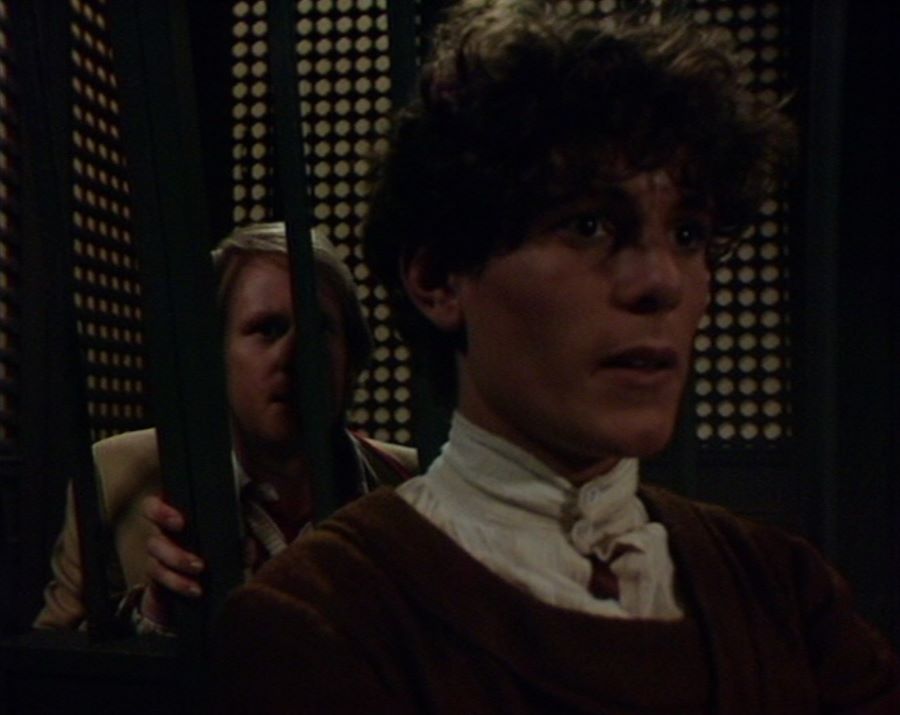
Peter Davison seems to think that Martin Clunes stole the show when he appeared in ‘Snakedance’, which might have prompted Jonathon Morris’ dissatisfaction with being in ‘Doctor Who’. I’ve not seen ‘Bread’ yet, but I’m sure that he gained a huge success in that.
I like how Chela listens to the Doctor and is more willing to hear him out compared to Ambril. It’s fortunate for the Doctor and Nyssa that Chela helps them escape their prison cell, and he sort-of becomes a one-off companion helping the Doctor and Nyssa.
There’s also Preston Lockwood as Dojeen, the former Director of Historica Research on Manussa before Ambril replaced him. Preston Lockwood has been in many TV productions, including ‘At Bertram’s Hotel’ in 1987 with Joan Hickson as Miss Marple. 🙂
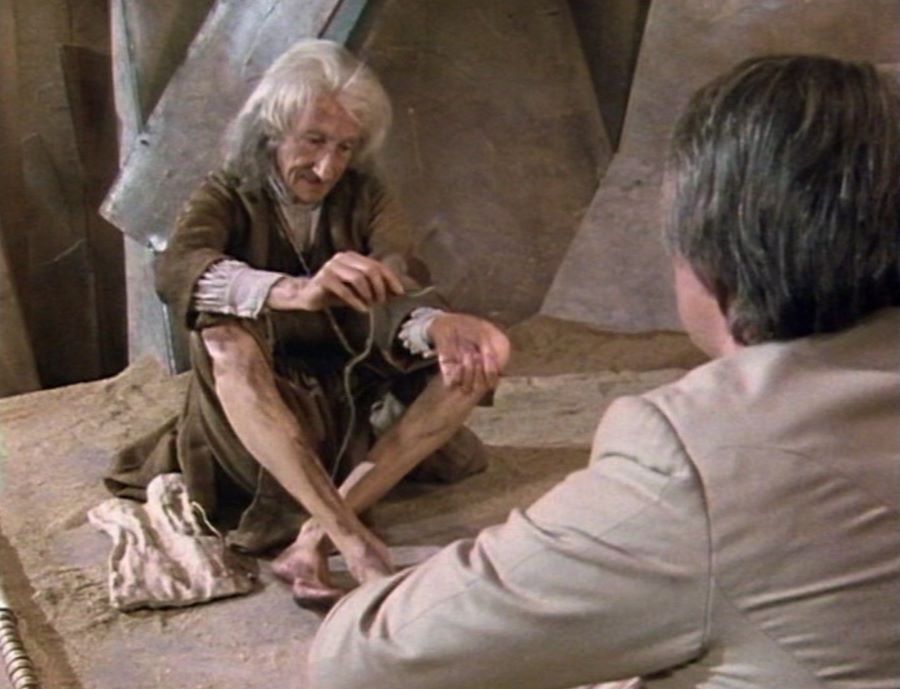
He’s also been in an episode of the ‘Partners in Crime’ TV series with Francesca Annis and James Warwick, an episode of the original ‘All Creatures Great and Small’ TV series, and the BBC’s ‘The Chronicles of Narnia: The Voyage of the Dawn Treader’ TV serial.
Preston Lockwood has also been in two episodes of Series 4 of ‘Jeeves & Wooster’, the first episode of ‘The Vicar of Dibley’ and one Christmas Special of ‘Keeping Up Appearances’. It’s so incredible to find that Preston Lockwood did many things in his acting career.
It’s interesting about the character Preston Lockwood played in ‘Snakedance’, as his character doesn’t really get to speak or do much apart from appearing significantly in ‘Part Four’. Most of his scenes are via telepathic communication with the Doctor in this story.
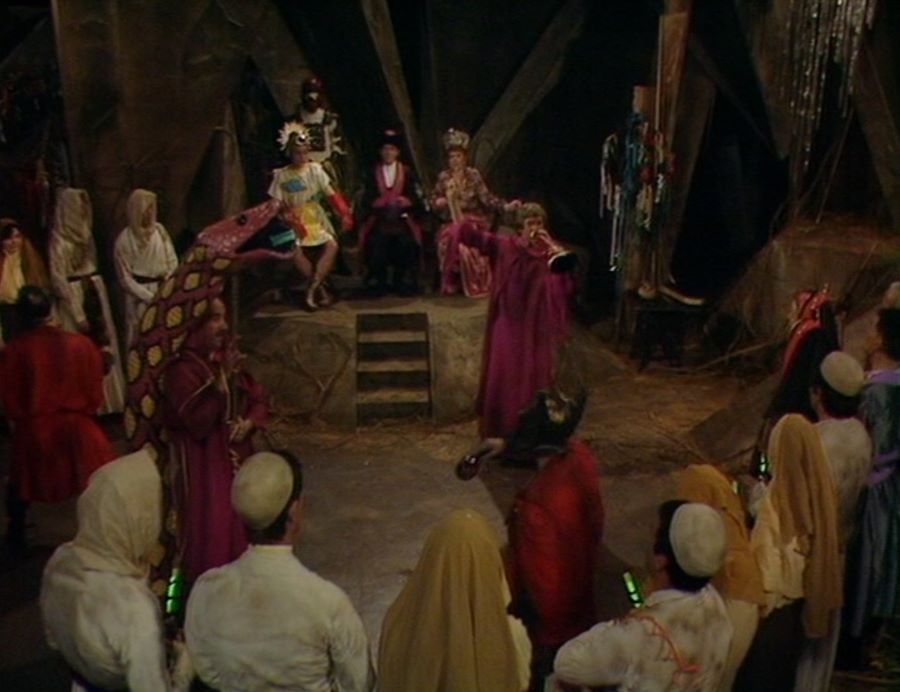
The guest cast also includes Brian Grellis as the Megaphone Man during the Mara ceremony in ‘Part Four’. How come he wasn’t given a name. Brain Grellis has been in an episode of ‘The Good Life’ and he’s also been in ‘The Invisible Enemy’ with Tom Baker. 🙂
There’s George Ballantine as the salesman (or ‘Hawker’ as he’s credited in ‘Part One’) that shoved the twirling snake-like toys in Nyssa and Tegan’s faces. There’s Barry Smith as the puppeteer that performed the…Punch and Judy-like show in ‘Part Three’ of this tale? 😐
Yeah, that was weird with seeing the Punch and Judy-like show in ‘Part Three’ of ‘Snakedance’. Albeit, instead of a crocodile, it’s a Mara snake that attacks Punch instead. There’s also Hilary Sesta as the Fortune Teller who screams in ‘Part One’ of the story.
The ‘Part One’ cliffhanger is very dramatic, especially with the snake-like skull appearing in the Fortune Teller’s ball and exploding. This contrasts with the ‘Part Three’ cliffhanger, which felt rather forced and didn’t need to have Nyssa scream at the end of the episode.
And yes, Nyssa was probably scared when she, the Doctor and Chela were at the point of death when Lon ordered for them to be killed. And yes, the scream was meant to lead into a cliffhanger. But I think the episode ending could have done without the scream. 😐
The Mara does appear again as a giant snake at the end of ‘Snakedance’. It looks more convincing than the original one that appeared in ‘Kinda’ and it looks terrifying and horrible to see. It’s very disturbing when Tegan’s face appeared inside the Mara’s mouth.
On the Blu-ray disc of ‘Snakedance’, there is a CGI effects option for the giant snake appearing at the end of the story in ‘Part Four’. Whilst it does look impressive, I don’t think it’s as effective compared to when I saw the original Mara special effect on DVD. 😐
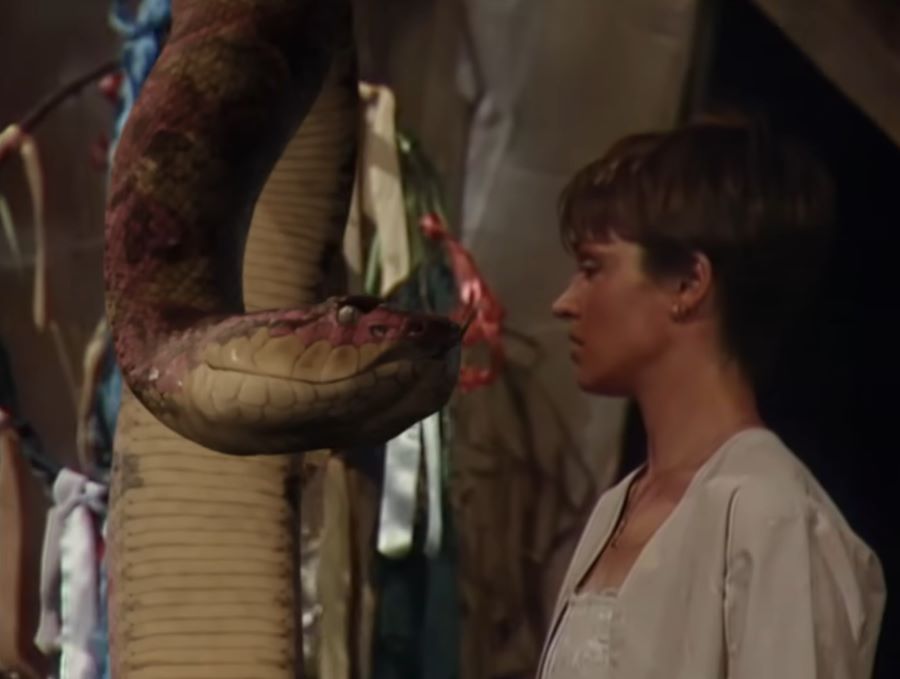
Fortunately, the Doctor manages to defeat the Mara, and it ends up dead with plenty of goo spewing from its mouth. Nice and tasty! 😀 Tegan is understandably very upset and broken after experiencing such hated and rage when having the Mara deep inside her. 😐
I like that the Doctor comforts Tegan in that moment by putting his arm around her. It’s very rare for that to happen in the Fifth Doctor era, especially when Peter Davison was told ‘not’ to put his arm around the Doctor’s female companions by John Nathan-Turner.
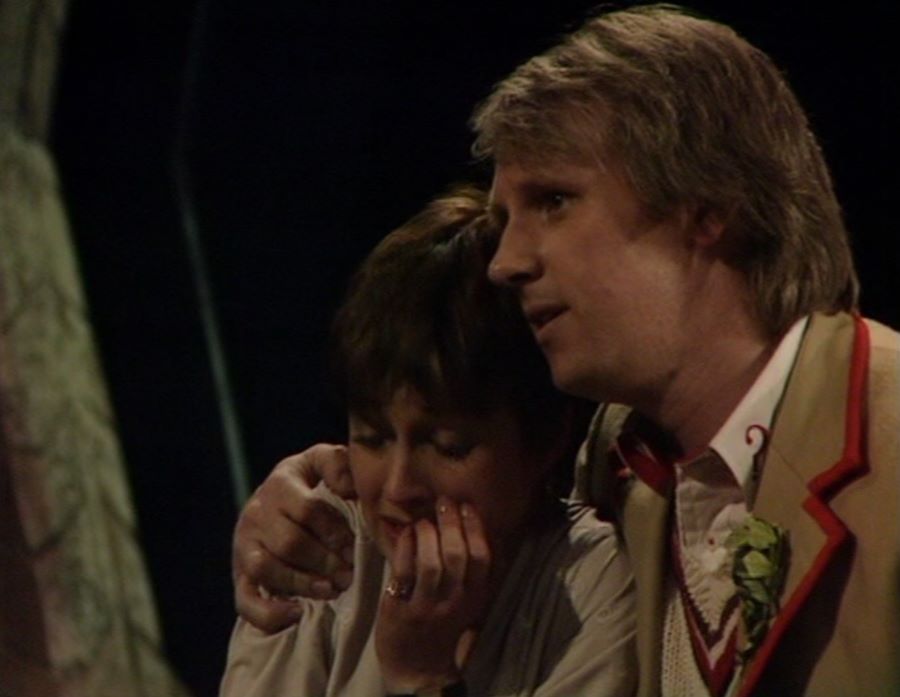
Tegan: The Mara’s gone for ever?
Doctor: Yes. The Mara has been destroyed.
Uh, no, Doctor. Sadly not. The Mara does return for future stories in the Big Finish audio realm, including the aforementioned story ‘The Cradle of the Snake’ as well as a ‘Torchwood’ audio story called ‘Art Decadence’ and recently in an Eighth Doctor audio story. 🙂
There’s also an appearance of the Mara in one of the ‘Tales of Trenzalore’ stories featuring the Eleventh Doctor called ‘The Dreaming’. The Mara has also been in ‘Little Did She Know’ by Janet Fielding as well as the Season 20 Blu-ray trailer ‘The Passenger’.
So, not completely ‘destroyed’, Doctor. 😐 Also, when it comes to Tegan being in one of these Mara stories, she’s always possessed by it. Poor, poor Tegan. I wonder if one day I’ll ever write a ‘Doctor Who’ story featuring the Mara. We’ll just have to wait and see. 😀
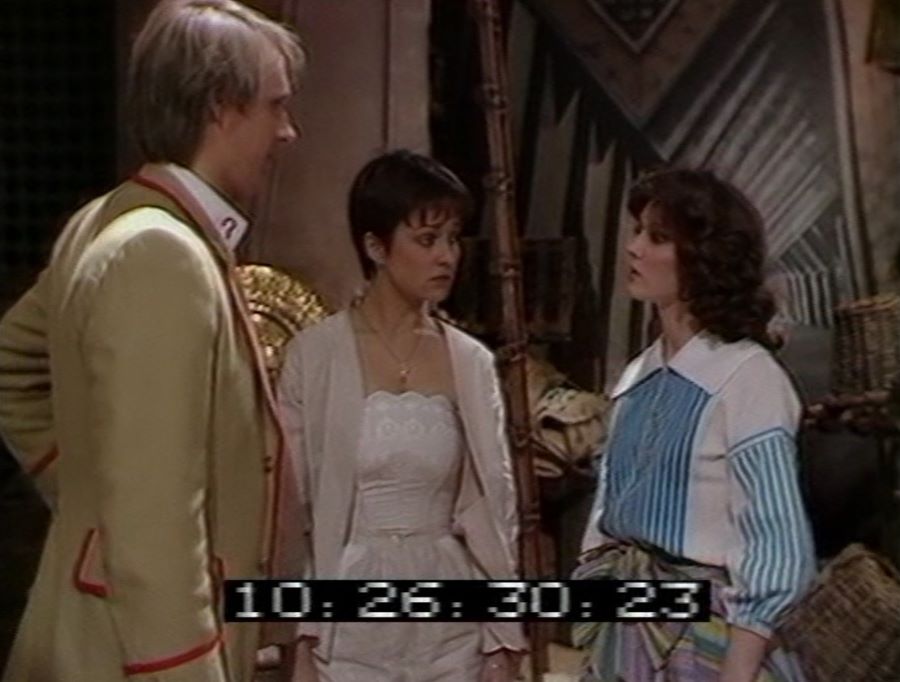
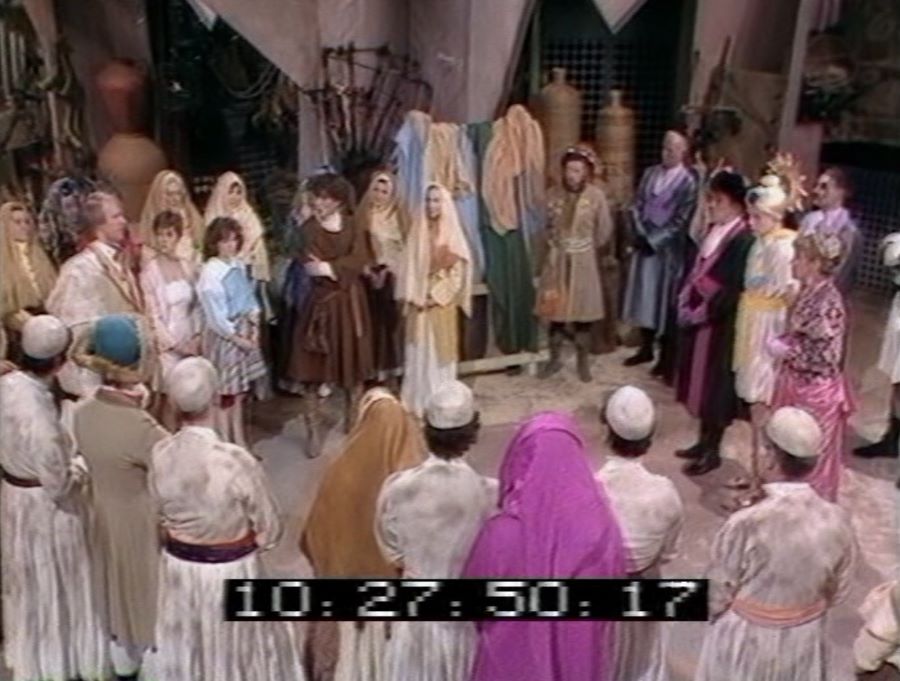
Interestingly, there is a deleted ending for ‘Snakedance’, which you can see on DVD and Blu-ray where the people of Manussa, including Ambril, Chela, Lon and Tanha thank the Doctor, Nyssa and Tegan for saving them from the Mara. A shame it’s not in the TV story.
I know it’s a matter of being pressed for time and it couldn’t be included in the actual ‘Part Four’ without it being overlong. But for me, the story feels incomplete without that scene. Mind you, I do wonder if there’s a continuity error concerning that deleted scene.
You see, in the deleted scene, Peter’s Doctor gives back the Little Mind’s Eye crystal to Chela for him to use. Wouldn’t the Doctor need for that for ‘The Cradle of the Snake’? Maybe I’m misremembering what occurred in that audio story. Please correct me on this.
Like I said at the beginning, Chris Bailey was meant to write a third ‘Doctor Who’ story but without the Mara called ‘The Children of Seth’. Sadly, that didn’t happen, but thankfully the story has been adapted for audio and it features the Fifth Doctor, Nyssa and Tegan.
I don’t know what would have happened if ‘The Children of Seth’ was made for TV and or whether there would be a third Mara story in ‘Doctor Who’. Whether that would have been with the Fifth Doctor, Tegan and Turlough or the Sixth Doctor and Peri, who knows?
The original DVD special features were as follows. There was the making-of documentary ‘Snake Charmer’, featuring behind-the-scenes cast and crew interviews. There were the deleted scenes from ‘Part Four’ that formed the extended ending of the story, there was ‘In Studio’ behind-the-scenes footage of the story, and a ‘Saturday Superstore’ interview with Peter Davison. There was a photo gallery of the story, a dual mono sound audio mix option for the story, and the DVD audio commentary with Peter Davison, Janet Fielding and Sarah Sutton, and an isolated music option of the story by Peter Howell to enjoy. There was an info-text commentary option to enjoy, and PDF Materials, including the ‘Radio Times Listings’ of the story. There was also a ‘coming soon’ trailer for the ‘Revisitations 2’ DVD box set, including ‘The Seeds of Death’, starring Patrick Troughton, Frazer Hines and Wendy Padbury, ‘Carnival of Monsters’, starring Jon Pertwee and Katy Manning, and ‘Resurrection of the Daleks’, starring Peter Davison, Janet Fielding and Mark Strickson. There was also an ‘Easter Egg’ to look out for on the ‘Snakedance’ DVD, which was ‘In Conversation – Chris Bailey & Rob Shearman’, an interview with writer Christopher Bailey, conducted by new series writer Robert Shearman.
On Disc 2 of the ‘Doctor Who – The Collection – Season 20’ Blu-ray, the ‘Snake Charmer’ making-of documentary, the deleted scenes from ‘Part Four’, the dual mono sound audio mix option, the DVD audio commentary, the isolated music option, and the ‘In Conversation – Chris Bailey & Rob Shearman’ interview can be found on there. The ‘In Studio’ behind-the-scenes footage has now been extended and updated as ‘Studio Footage’ on the ‘Snakedance’ Blu-ray disc. The ‘Saturday Superstore’ interview with Peter Davison has been extended and updated, and is now included on Disc 1 of the Season 20 Blu-ray box set (containing ‘Arc of Infinity’). The photo gallery and the info-text commentary option have been updated for 2023 on the Blu-ray.
The new special features on Blu-ray include the brand-new CGI effects option for the story to enjoy, and the ‘Behind the Sofa’ feature on ‘Snakedance’ with Peter Davison (the Fifth Doctor), Sarah Sutton (Nyssa), Janet Fielding (Tegan) and Mark Strickson (Turlough) as well as Colin Baker (the Sixth Doctor) and Sylvester McCoy (the Seventh Doctor) as well as Katy Manning (Jo) and Sophie Aldred (Ace). There’s ‘When Janet Met Martin’, where Martin Clunes is interviewed by Janet Fielding. There’s ‘The Passenger’ Season 20 Blu-ray trailer, starring Janet Fielding as Tegan and Sarah Sutton as Nyssa, along with the ‘Making ‘The Passenger’ behind-the-scenes featurette. There’s Ealing film footage for ‘Snakedance’, ‘The 50th Anniversary Archive’ panel interview with Sarah Sutton and Matthew Waterhouse, moderated by Matthew Sweet, and BBC trailers and continuity announcements for ‘Snakedance’. There’s also the ‘coming soon’ trailer for ‘The Black Guardian Trilogy’ (taken from ‘The War Games’ 3-disc DVD set), including ‘Mawdryn Undead’, starring Peter Davison, Sarah Sutton, Janet Fielding and Mark Strickson, ‘Terminus’, starring Peter Davison, Sarah Sutton, Janet Fielding and Mark Strickson, and ‘Enlightenment’, starring Peter Davison, Janet Fielding and Mark Strickson. There’s also a brand-new 5.1. surround sound audio mix option for the story to enjoy.
On the PDF front, as well as the ‘Radio Times Listings’ of ‘Snakedance’, there are production documents, four rehearsal scripts, four camera scripts, four transmission scripts, a recording schedule, and costume designer Ken Trew’s costume designs for the story. You need a special Blu-ray computer drive for that.
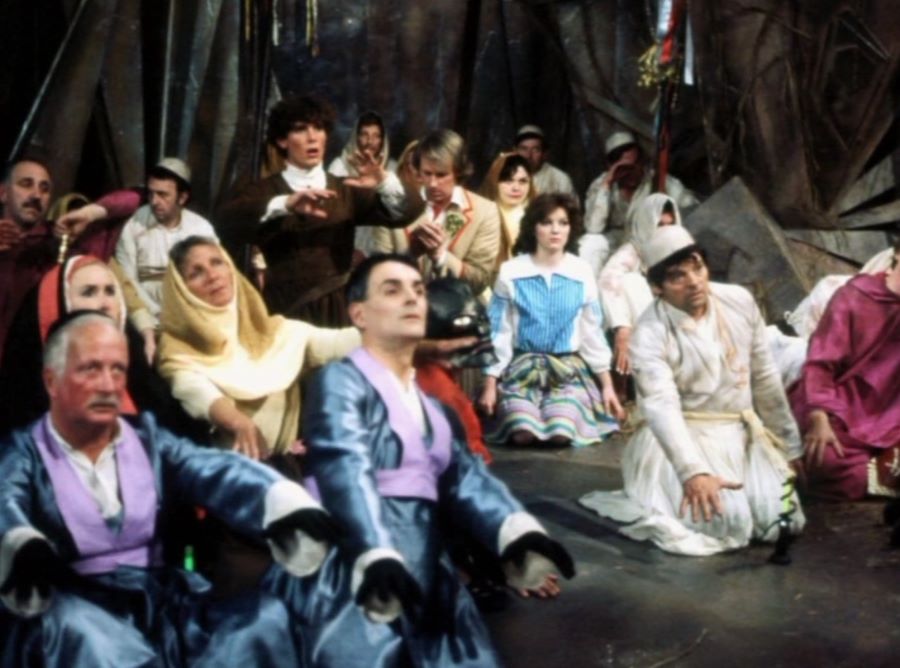
I greatly enjoyed ‘Snakedance’ when I saw it for the first time on DVD and I’ve enjoyed it again in the Season 20 Blu-ray box set. It was lovely to see Sarah Sutton as Nyssa play a major role in the story compared to when she was absent in the previous Mara story ‘Kinda’.
Janet Fielding is also great as the Mara-possessed Tegan and the story features a very good guest cast in it, with the likes of Martin Clunes in his first TV role. ‘Snakedance’ is a gripping story to watch and there’s no denying the popularity the Mara has had as a villain.
It’s a shame the extended ending of ‘Snakedance’ based on the deleted scenes from ‘Part Four’ isn’t included in the actual TV story, as it provides a suitable coda. But at least the story finishes on a note where the Doctor comforts Tegan once the Mara is thwarted.
The ‘Mara Tales’ DVD box set was a very good birthday present for me to check out in May 2011. I enjoyed both ‘Kinda’ and ‘Snakedance’, and I was pleased to find Sarah Sutton as Nyssa appearing in both stories, even if she appeared less in one than the other.
They’re two very intriguing tales from the Peter Davison/Fifth Doctor era of ‘Doctor Who’ and I’m pretty sure you’ll enjoy them regardless of whether you understand them and get behind the concepts or not. They’re very mind-boggling stories when you see them.
Incidentally, Timelord007 did a painting for me of Nyssa in her ‘Snakedance’ outfit, as he’s done Nyssa artwork for me from ‘Black Orchid’ and ‘Time-Flight’. I’m very grateful he did the paintings for me, as Nyssa’s definitely my favourite ‘Doctor Who’ companion.
‘Snakedance’ rating – 8/10
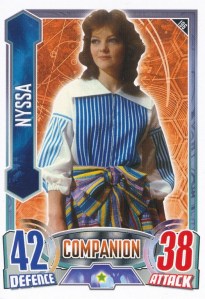
ALIEN ATTAX TRADING CARD – NYSSA OF TRAKEN
Please feel free to comment on my review.
Originally posted on the 27th of April 2017.
This is a lovely Nyssa trading card! 🙂
I rarely get a chance to review any ‘Doctor Who’ merchandise, but for me, this is a very special item. Nyssa is my favourite ‘Doctor Who’ companion, as I’m sure many of you know by now. 😀 I love Sarah Sutton who plays Nyssa of Traken, as she gives lovely performances with her character in the TV and audio stories.
In my opinion, Nyssa is the best ‘Doctor Who’ companion from the Peter Davison/Fifth Doctor era. It’s pretty clear though that Nyssa is a pretty underrated companion. She often gets overlooked by the majority of ‘Doctor Who’ fandom with companions like Sarah Jane, Rose, Donna, Amy and Clara.
Through no fault of her own, Nyssa tends to get left out a lot in ‘Doctor Who’ circles. Nyssa deserves her own Top Trump trading card and it’s rather sad her character wasn’t included in the 45th anniversary collection of ‘Doctor Who’ Top Trump trading cards, which I purchased in Cardiff in 2008.
I recall Sarah Sutton saying on the ‘Four to Doomsday’ DVD audio commentary that she wished for her own trading card. How lucky I was to find this rare item on Amazon.co.uk that is a collector’s item for definite Nyssa and ‘Doctor Who’ fans in general. This trading card is part of the ‘Alien Attax’ series by Topps in 2013.
The ‘Alien Attax’ card series was to celebrate the 50th anniversary of ‘Doctor Who’. Nyssa’s trading card is #196 and was part of the Companions card collection. Being a Sarah Sutton/Nyssa fan and the fact that I love collecting any memorabilia and photos of her, I couldn’t resist purchasing this lovely card.
It’s a really nice collector’s item and one that I treasure keeping in my scrapbook of Nyssa items over the years from conventions and photos purchased for me over Christmas from Amazon or eBay. The card is good, as it has a picture of Sarah as Nyssa in her blue and white stripy outfit from ‘Snakedance’.
It’s a very complimentary picture of Nyssa who looks nice in her ‘Snakedance’ outfit, despite it being the least favourite costume of the fans. Nyssa’s name is placed well in a blue box on the left-hand side. According to the card, Nyssa has a ‘defence’ of 42 and an ‘attack’ of 38, which was intriguing to see.
Now I don’t know much about statistics and how to use trading cards in a card game like this, but those statistics for Nyssa in ‘defence’ and ‘attack’ seem about right for her character. When I received the Nyssa trading card in the post, it came with two non-related ‘Top Gear’ trading cards in a slim casing.
Now I didn’t want those ‘Top Gear’ cards, but the supplier who sent the item must have put them in so that the Nyssa trading card can be protected from being damaged or scratched. It was very good of the supplier to do that, especially as the Nyssa card looks perfect in every detail when it came in the post.
So if you’re a Nyssa fan like me, you should add this trading card to your collection of ‘Doctor Who’ memorabilia. It features a complimentary picture of Nyssa in her ‘Snakedance’ costume and it’s a worthy purchase that I was pleased to receive from Amazon during the 50th anniversary of ‘Doctor Who’.
I need to show this Nyssa trading card to Sarah Sutton next time I see her at a convention! 😀
‘Alien Attax’ Trading Card – Nyssa of Traken’ rating – 10/10
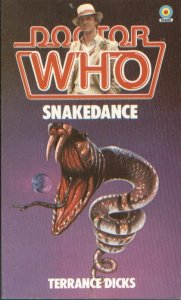
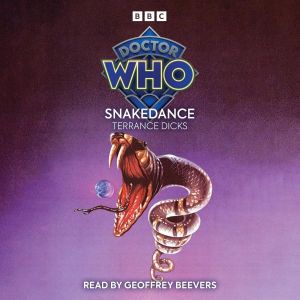
‘DOCTOR WHO – SNAKEDANCE’
Please feel free to comment on my review.
The Mara and the Snakedancers in Book
For Terrance Dicks
It’s been great to revisit the ‘Snakedance’ Target novelization with the audiobook! 🙂
The novelization is of course based on the original TV scripts by Christopher Bailey, with the TV story shown in 1983. Terrance Dicks previously novelized Chris Bailey’s first Mara adventure ‘Kinda’ for the Target novelization range of ‘Doctor Who’ books in the year 1984.
So, it makes sense that Terrance would continue with the Mara tales of ‘Doctor Who’ by novelizing ‘Snakedance’ next. In fact, ‘Snakedance’ was the next ‘Doctor Who’ story to novelized and published in the Target range, since ‘Kinda’ got published in March 1984. 🙂
‘Snakedance’ was published in May 1984. In audio terms, the ‘Kinda’ audiobook read by Janet Fielding was released in June 2024 whilst the ‘Snakedance’ audiobook read by Geoffrey Beevers was released in February 2025. Quite a difference regarding releases. 🙂
The novelizations being released one month after the other whilst the audiobooks were released one year after the other. Mind you, with the Target novelizations, Terrance Dicks was probably in a rush to get these novelizations delivered. Not that they’re bad books. 😐
It’s just with the two Mara stories novelized by Terrance Dicks; they’re more or less straightforward translations of the TV scripts into prose form compared to what authors like Christopher H. Bidmead and Terence Dudley would’ve done with their novelizations.
‘Snakedance’ is my favourite out of the two Mara TV stories in the ‘Mara Tales’ DVD box set, which I had for my birthday in May 2011. I enjoyed that story, due to the fact Nyssa was in the majority of ‘Snakedance’ since she was absent in the first Mara story ‘Kinda’. 😐
Also, ‘Snakedance’ was a clearer story to follow than ‘Kinda’, especially when the guest characters were enjoyable and relatable in certain measures. I did wonder what ‘Snakedance’ would be like as a ‘Doctor Who’ story in book form and whether it’d be good.
I purchased the ‘Snakedance’ Target novelizaiton at ‘H-Con’ in Eastleigh, Hampshire in July 2015 where I met Peter Davison and Sarah Sutton simultaneously for the first time at a convention. I’m glad I’ve seen Peter and Sarah together more than once at conventions.
Since I’d read the ‘Kinda’ Target novelization beforehand, I felt it wouldn’t do to complete the Mara experience of ‘Doctor Who’ stories in book form without checking out ‘Snakedance’. It turned out to be satisfying, although not in-depth as I would’ve expected.
I did take a while for me to check out the ‘Snakedance’ Target novelization in February 2016 when I was preparing my reviews for ‘The Nyssa Challenge’ review marathon from 2016 to 2017 on ‘Bradley’s Basement’. But it was a very enjoyable experience when I finally read the book.
From my initial reading experience, I felt Terrance Dicks gained a firmer grasp of the Mara and the world it inhabited. I found it a better effort by Terrance in describing the Mara for prose compared to how he approached ‘Kinda’, which I found was a very decent effort. 🙂
Having read the book again along with the audiobook to listen to on CD, I still consider it to be a good interpretation of ‘Snakedance’ in prose form by Terrance Dicks. But it’s fair he doesn’t capture the themes of the Mara that Chris Bailey delivered in the TV scripts. 😐
It’s a shame that Chris Bailey didn’t do brand-new novelizations for audio with his Mara tales, including ‘Kinda’ and ‘Snakedance’, like when David Fisher did new novelizations for ‘The Stones of Blood’ and ‘The Androids of Tara’. Maybe he wasn’t interested in writing it.
I’ve not come across many of Chris Bailey’s works as an author outside of ‘Doctor Who’, but I don’t think he’s done works in any prose form. At least not to my knowledge. Correct me if I’m wrong on that. Maybe that’s why Terrance novelized the Mara stories instead. 😐
When speculating on whether there would be an audiobook for the ‘Snakedance’ novelization or not, I hoped that the reader would either be Peter Davison, Janet Fielding or Sarah Sutton. Even Martin Clunes would have been very welcome to read the audiobook.
So, it’s quite a surprise that Geoffrey Beevers would be the reader for the ‘Snakedance’ audiobook, even though he wasn’t involved in the TV story whatsoever. But then, this isn’t the first time BBC Audio has asked Geoffrey to read stories he didn’t play a part in. 😐
To give you another Fifth Doctor-era story example, Geoffrey read the audiobook for the ‘Arc of Infinity’ novelization, even though he had no part to play in that story either. Again, I stress, Geoffrey Beevers isn’t a bad narrator, as he reads fine for the ‘Snakedance’ book.
But how come it wasn’t Janet Fielding who read the ‘Snakedance’ audiobook instead? She read the unabridged ‘Kinda’ audiobook for 2024. Why didn’t she do both audiobooks of the Mara stories? Was Janet only able to read the ‘Kinda’ audiobook when she was asked?
Then again, Christopher H. Bidmead didn’t read all his books. Whilst he read the ‘Logopolis’ and ‘Frontios’ audiobooks, he didn’t do the ‘Castrovalva’ one as that was read by Peter Davison. But again, Martin Clunes could have been asked to read ‘Snakedance’.
Or maybe he was too busy to read it as well, considering he’s a top name actor. My point stands that having Geoffrey Beevers be the narrator of the ‘Snakedance’ audiobook doesn’t make sense when you consider that he had no involvement with the TV tale at all.
In terms of the book’s structure, the story is divided into 12 chapters with 3 chapters making up one of the four episodes. Chapters 1 to 3 form ‘Part One’, Chapters 4 to 6 form ‘Part Two’, Chapters 7 to 9 form ‘Part Three’ and Chapters 10 to 12 form ‘Part Four’ in the book.
Weirdly, the audiobook release on CD is structured differently compared to how the ‘Kinda’ audiobook is released on CD. Disc 1 contains Chapters 1 to 2, whilst Disc 2 contains Chapters 3 to 5, Disc 3 contains Chapters 6 to 9, and Disc 4 contains Chapters 10 to 12. 😐
This means that ‘Part One’ is overlapped on Disc 2 and ‘Part Two’ is overlapped on Disc 3. I wonder why the first three chapters weren’t on Disc 1 and the second three chapters weren’t on Disc 2. Was one of the chapters on Disc 1 too long to stop having Chapter 3 on it?
Regarding the actual text of the novelization, Terrance Dicks doesn’t change much in terms of the plot. It’s as what you’d expect to find in reading the book and hearing it on audio from watching the TV story. What Terrance does splendidly though is describe the world of Manussa itself.
This is done to great detail, including the people living on Manussa and the depth to the marketplace scenes. I don’t know if it matches to the Morrocco style of design in terms of sets and costumes that director Fiona Cumming had for the story, but it’s good in the book.
I’d like to think that Terrance understood ‘Snakedance’ more as a story compared to understanding ‘Kinda’. It helps that ‘Snakedance’ is more straightforward as a story than ‘Kinda’. It also doesn’t have many dream sequences for him to translate into prose form.
That must have been mindboggling for him when he novelized ‘Kinda’ for the Target range of ‘Doctor Who’ books, especially when he doesn’t have the mindset of Christopher Bailey, who’s into the Buddhism aspects and themes of the story compared to Terrance. 😐
I quite like how Terrance emphasises how deadly and dangerous the Mara is as a threat and as a force when being an entity that inhabits Tegan. He emphasises how it could bring the downfall of Manussa, especially when its people are ignorant of the impending threat.
From reading the book and hearing the audiobook, ‘Snakedance’ as a story allowed me to understand Manussa’s history and how the Mara was defeated, compared to how it was told on TV. In fact, I believe the links to ‘The Cradle of the Snake’ have become clearer.
This is especially when it’s talked about how Manussa used to be highly civilised and advanced in terms of technology before its downfall once the Sumaran and Manussan Empires collapsed. It adds to the explanation on how the blue crystals were constructed.
I like that Terrance doesn’t have so many interconnecting scenes occurring the book, as that was often distracting when watching the TV story. The scene where the Doctor asks for information from Ambril and Chela in Chapter 4 is clearer in the book compared to TV.
This is especially when it’s one scene in the book. Not four to five scenes in the TV story. I know it’s meant to provide pace when interconnecting between scenes in the TV story, but this is a case of where things needed to be calmed down regarding the storytelling. 😐
In the book, Terrance does well with enhancing some of the characters. He clearly understands them when novelizing ‘Snakedance’ as a book. The guest characters of Lon, Tanha and Ambril are enhanced in terms of their histories and personalities, which I like.
Lon’s selfishness and boredom is clearly illustrated in the book. It adds to the justification of why he’s so easily taken over by the Mara when he makes contact with Tegan, as he likes to be amused. This is also indicated when he wishes to hear the Doctor in Chapter 3.
The fortune teller that Tegan meets in Chapters 3 and 4 of the story is given a name by Terrance Dicks, which is great. Her name is Madame Zara. I like that Terrance takes care of certain characters in ‘Doctor Who’, including ones he didn’t create by giving them names.
This has happened before when he novelized ‘The Horns of Nimon’ and ‘Meglos’, as he named the Pilot ‘Sekkoth’ and the Co-Pilot ‘Sardor’ in ‘The Horns of Nimon’ and he named the Earthling ‘George Morris’ in ‘Meglos’. It’s a pity he didn’t give Megaphone Man a name.
Well, he calls him ‘the Voice of the Mara’ during the Ceremony of the Mara in the ‘Part Four’ section, but that’s it. How come the Fortune Teller is given the name of Madame Zara whilst the Megaphone Man doesn’t? Both don’t have big parts to play in the story anyway.
It also makes things confusing when ‘the Voice of the Mara’ could easily be considered as the actual Mara speaking during the ‘farcical’ ceremony for Lon to take part in. Again, it’s supposed to be figuratively referred to as ‘the Voice of the Mara’ in the ceremony, but still.
In the book, there’s a point where the Doctor tells Tegan about the Sumaran Empire in Chapter 1. The Doctor translates ‘Sumaran Empire’ to ‘Empire of the Mara’. This wasn’t mentioned in the TV version of ‘Snakedance’, and I do like this addition in the novelization.
It wasn’t made clear in the TV story when the Doctor asked Tegan if ‘Sumaran Empire’ rang a bell to her. Having the Doctor say that it means ‘Empire of the Mara’ makes sense. I wish that had been added in the TV story, and I’m surprised that wasn’t even considered then.
I like how Terrance adds to the Doctor’s character in that he reflects on how the people of Manussa didn’t listen to him about his warnings of the Mara until it was too late. It’s noticeable in the TV story, but it’s so intriguing the Doctor’s warnings were being ignored. 🙂
It’s often the case for a lot of these ‘Doctor Who’ stories featuring the Fifth Doctor when he’s being ignored, even up to the point where no-one would listen to him in ‘The Caves of Androzani’. It’s a side of the Doctor’s vulnerability that I appreciate when seeing these stories.
I’m pleased with how Terrance has written for Nyssa in the ‘Snakedance’ novelization. She’s about the same as she was in the TV version, but I like how Terrance makes her worthy as a ‘Doctor Who’ companion in the book, especially when Tegan’s not around much.
There’s a little difference in the book compared to the TV story concerning Nyssa. When she visits the Doctor in his prison cell in Chapter 7, she doesn’t hide from Chela. In fact, when Chela sees her, he doesn’t raise the alarm, which allows her to slip away quietly. 🙂
I don’t know why that addition is included and whether it makes the story any better, but it was fascinating to discover that when checking out the story for the first time and revisiting it with the audiobook. At least Nyssa didn’t scream in the book as she did at the end of ‘Part Three’ in the TV story.
Tegan’s possession by the Mara is well-handled in the book. There are times where it’s not clear whether Tegan is herself with the Mara inside her or whether the Mara is talking through her all the time. The audiobook doesn’t seem to know either when I’m listening to it.
In the book, some pieces of dialogue said by Tegan when she’s possessed by the Mara are in italics. Some pieces of dialogue aren’t in italics, and yet when Geoffrey Beevers voices Tegan as the Mara, there’s a distortion effect in the audiobook to make the voice demonic.
I’m okay with the voice of the Mara being demonic when Geoffrey Beevers reads Tegan’s lines as the Mara. I think it would have been better if Tegan’s lines as the Mara were all given the distortion effect, as that’s not often the case when hearing the audiobook throughout.
Despite that, it’s clear how influenced Tegan is by the Mara’s evil and it expresses the darker nature that she has within her when being possessed by it. It’s also made evident that the Mara relies on its subjects to look upon it and to believe in it before it can corporally exist.
Like I said, I do like how Terrance describes the world of Manussa, including its culture, its people and the marketplace scenes. The Ceremony of the Mara scenes are well-handled, especially when the crowds cheer and pursue the papier-mâché Mara snake. 🙂
Funnily, the Punch and Judy-like show in the ‘Part Three’ section of the story is briefly described in the story. I’m surprised this wasn’t delved into more when reading and hearing the story. Maybe Terrance didn’t have time to explore the Punch and Judy-like show. Or perhaps he didn’t like it to begin with.
The story’s climax is gripping to read, especially when Tegan unleashes the Mara snake from her arm and it grows. The scene is not as weird as it is in the TV story, but I found it gripping when the Doctor was being tempted to look at the Mara and was nearly deceived.
It illustrates the point I made about the Mara being dependent on its subjects/victims to look at it and believe in it so it can fully exist. Maybe that’s something I should consider when it comes to writing a Mara story of my own, especially in defining how truly evil it is.
There’s a different ending provided in the ‘Snakedance’ novelization. I was hoping for the deleted scenes that formed the extra ending to ‘Snakedance’ in the DVD extras to be included in the book. Surely those scenes were in the original TV scripts by Chris Bailey.
Instead, Terrance Dicks provides an extra page after the Doctor tells Tegan, “The Mara has been destroyed” on what happened to Lon, Tanha, Ambril, Chela and Dojjen following the Mara’s defeat. There’s also a bit about the Doctor, Nyssa and Tegan leaving in the TARDIS.
Not a bad way to end the ‘Snakedance’ novelization on, since the TV story did end abruptly on the Doctor’s line to Tegan about the Mara being destroyed and the Mara snake withering away. But I would have really liked it if those deleted scenes had been novelized.
Before the ‘Snakedance’ novelization was published in May 1984, Terrance Dicks had written for the Fifth Doctor and Tegan on TV before in ‘The Five Doctors’ for ‘Doctor Who’s 20th anniversary. He’d also written for them in the Target novelization published in November 1983.
He’s also written for the Fifth Doctor, Nyssa and Tegan in Target novelizations beforehand. This includes ‘Four to Doomsday’, ‘Kinda’ and ‘Arc of Infinity’. He also wrote for Nyssa in ‘The Keeper of Traken’ novelization. It’s interesting how far he’s come in writing for them at this point.
The ‘Snakedance’ novelization/audiobook has been great to check out and revisit. I greatly enjoyed this Mara tale in book and audio form, far more than I’ve enjoyed ‘Kinda’ in book and audio form. It felt like seeing and hearing the TV version of the tale in book and audio.
I was able delve further into the guest characters of ‘Snakedance’ and gain a clearer idea about what the story is about compared to first seeing its TV version on DVD. Whilst Geoffrey Beevers is an odd choice to read the audiobook, I enjoyed his take on the story.
There’s no doubt that Geoffrey Beevers has a good voice for narration and I’m glad he was able to get into the story, despite having not being involved in its TV counterpart. I’m so glad that I’ve revisited ‘Snakedance’ both on Blu-ray and via its novelization/audiobook. 🙂
‘Doctor Who – Snakedance’ rating – 8/10
| The previous story
For the Fifth Doctor was For Nyssa is For Tegan is |
The next story
For the Fifth Doctor is For Nyssa is For Tegan is |
| Return to The Fifth Doctor’s Timeline | |
| Return to Nyssa’s Timeline | |
| Return to Tegan’s Timeline | |
| Return to The Doctors’ Timelines Index | |
| Return to The Companions’ Timelines Index | |
| Return to Doctor Who Timelines | |
| Return to The Nyssa Challenge | |
| Return to Doctor Who | |
| Return to Sci-Fi |
 Bradley's Basement
I love reading your Kinda & Snakedance, I find both the stories a compelling watch, as ever Tim you have written a excellent in depth review of the tv episodes & Target novelisation.
I look forward to reading your new story Tim is this a linked 3 story arc/trilogy.
LikeLiked by 2 people
Thanks Simon.
I’m glad you enjoyed my reviews on both the TV version and Target novelization versions of the ‘Doctor Who’ TV stories I’ve enjoyed watching in ‘The Nyssa Challenge’. They are very compelling stories indeed. I’m currently re-watching ‘Snakedance’ for this week.
Yes, it is a linked 3-part story trilogy for this year in ‘The Fifth Doctor by Tim Bradley’. It’s ‘The Salvador Trilogy’ and the three stories feature a deadly villain intent on revenge upon the Doctor. They include ‘The Austen Code’, ‘Junglos 4198’ and ‘Chieftains’ Caves’. I hope you enjoy ‘The Austen Code’ for this month and the other two stories for the next two months.
Tim. 🙂
LikeLiked by 1 person
Looking at my artwork i think the Blue a little light lol, blimey how long ago was it i did this? I remember i did three didn’t i with Black Orchid illustration of dvd cover, so glad you like my artwork, taking a break though for a bit until things settle down at home, going try start reading Stockbridge Terror soon i need good doctor who drama to distract me from current family stresses.
Nice addition to the review Tim, I’ve never seen those cards before.
LikeLiked by 2 people
Hi Simon.
I believe you did the artwork for me back in March 2017. Yes you did quite a number of artworks for me with Nyssa including ‘Black Orchid’, ‘Time-Flight’ and ‘Snakedance’. I think you also did one for the whole Peter Davison era for me. I’m doing some tidying up with my blog and I just felt I couldn’t leave your artwork for me left abandoned on my blog. So I’ve found them a home in the photo galleries of some of my ‘BB’ reviews.
Thanks for doing these pieces of artwork for me. I really do like them. I’ll let you know when I’ve added more to my blog.
I look forward to hearing from you about ‘The Stockbridge Terror’. I hope you’ll enjoy the story.
Yeah the ‘Alien Attax’ Nyssa card review was something I did a while back on Amazon. Thought my review of it would be suited to my ‘Snakedance’ review with Nyssa wearing the ‘Snakedance’ outfit on it.
I’ve reviewed ‘Iron Man 2’ on my blog by the way.
Thanks Simon.
Tim. 🙂
LikeLiked by 1 person
Great review Tim.
‘Snakedance’ is now one of my favourite Fifth Doctor stories along with ‘Four to Doomsday’, ‘Black Orchid’ and ‘The Caves of Androzani’. It was great to see Nyssa have a more prominent role compared to ‘Kinda’. I too like the costume that she wore. I can’t remember if Sarah liked or disliked it herself.
Janet Fielding was great both as Tegan herself and Tegan when possessed by the Mara. I really felt for her because I am terrified of snakes. I noticed that Janet in the second half of the story looked red in the face. Did you notice that Tim?
My favourite characters from this story were Brian Miller as Dugdale and Martin Clunes as Lon. Do you know if Brian was married to Lis Sladen by that point? I best know Martin Clunes for being in the ITV/BBC sitcom Men Behaving Badly. He was great in his tv debut. I noticed that he was red in the face at times as well.
I hope to finally get around to listening to ‘The Cradle of the Snake’ during my run through of the older Nyssa arc. I also hope to revisit ‘Kinda’ with the CGI snake as opposed to the prop one. I’m not sure whether to wait until I revisit ‘Kinda’ as part of my re-watch of Seasons 18 and 19 like you have, or to watch it beforehand. I wonder when ‘Kinda’ and ‘Snakedance’ will be adapted for audio. Also, have you had a chance to check out my review of ‘Arc of Infinity’.
Take care, WF92.
LikeLiked by 2 people
Hi WF92,
Glad you enjoyed my review and interesting that ‘Snakedance’ has become one of your favourite Fifth Doctor stories. It’s certainly a lot better than ‘Kinda’. I’m pleased that it had more of Nyssa taking part in the story compared to Kinda. I’m not sure if Sarah liked or disliked the costume she wore in ‘Snakedance’, though she has made it clear that Peter doesn’t like it. 😆
Yes I noticed Tegan and Lon looking more red than usual. I suppose that’s what being possessed by the Mara does to you. 😄 I believe Brian Miller was still married to Lis Sladen by this point. They married before Lis Sladen got cast as Sarah Jane in ‘Doctor Who’, I believe.
Like ‘Arc of Infinity’, I’m looking forward to revisiting ‘Snakedance’ and updating my review on the story when it comes to the Season 20 Blu-ray box set being released someday. I hope you’ll enjoy ‘The Cradle of the Snake’ when you get to hear it.
Many thanks for your comments.
Tim. 🙂
LikeLiked by 2 people
John Carson particularly impressed me as Ambril. I first saw him in two Thriller episodes, in both of which he played a potentially dangerous man against women, who might be blacking out his crimes. Ambril was an interesting departure for him in that regard, a luxury that any actor fortunate enough to guest star in Dr. Who could certainly have.
Colette O’Neil (Tahna) also guest starred with him in one of those Thriller episodes.
LikeLiked by 2 people
Hi scifimike,
Thanks for sharing that John Carson and Colette O’Neil were in ‘Thriller’. I’ve not seen that TV series yet. The other times I’ve come across John Carson in non-‘Doctor Who’ roles include a BBC production of ‘Emma’ and a voice role in ‘Thunderbird 6’, whilst I’ve seen Colette O’Neil in an episode of ‘Monarch of the Glen’. I hope to elaborate more on that when I update my review on ‘Snakedance’ based on a potential Season 20 Blu-ray box set release. I’m glad I’ve met John Carson and Colette O’Neil in real-life at a convention.
Many thanks,
Tim 🙂
LikeLiked by 1 person
You’re welcome. There were several actors seen in Dr. Who that were also seen in Thriller, including Patrick Troughton in Nurse Will Make It Better. The first I remember seeing was Peter Jeffrey (The Androids Of Tara’s Count Grendel) as the misogynistic D.I. Dexter in Come Out Come Out Wherever You Are. That was before seeing Snakedance of course.
LikeLiked by 2 people
Thanks scifimike,
Oh, that’s interesting about Patrick Troughton and Peter Jeffrey being in ‘Thriller’. Thanks for letting me know. I see the 1970s series is available to purchase on DVD from Amazon.
Best wishes,
Tim 🙂
LikeLiked by 1 person
You’re welcome. Michael Jayston (the Valeyard) too and one of his Thriller episodes co-starring Helen Mirren.
LikeLiked by 2 people
Hi scifimike,
Wow! No matter how hard you try, you can’t get away from ‘Doctor Who’ when watching TV shows and films featuring ‘Doctor Who’ stars in them. I’ve had that experience when going to Blenheim Palace and I saw a video where Nicola Bryant played Winston Churchill’s mother. 😀
Thanks,
Tim 🙂
LikeLiked by 1 person
The ending for Snakedance is most unforgettable for making us realize how even for the Doctor the triumph over evil can be most overwhelming. Janet’s own triumph in her performance as Tegan in this one could make her most identifiable for women who’ve been victimized by evil. It proves that classic Dr. Who was more fearless than ever in tackling such serious drama in the 80s. After Adric’s tragedy that was certainly no surprise. Tegan was a wonderful companion, even though her stories wouldn’t be quite the same after parting ways with Nyssa. I was very pleased when she returned in The Power Of The Doctor. Thank you, Tim, for your review.
LikeLiked by 2 people
Hi scifimike,
Thanks for sharing your thoughts on ‘Snakedance’ and glad you enjoyed my review. Yes, the ending for ‘Snakedance’ was pretty dramatic, especially with Tegan recovering from her traumatic experience. I know it’s followed up on briefly in ‘Mawdryn Undead’ and in the Big Finish audios, the Doctor’s words “The Mara has been destroyed” will come back to haunt him in ‘The Cradle of the Snake’. I often wish that the deleted ending on the DVD had been included in the transmitted version of the story, since it provides a suitable coda for how the Doctor, Nyssa and Tegan are treated as heroes by the people of Manussa, despite Tegan feeling anxious about it. But the story’s ending with the Doctor comforting Tegan after the Mara is ‘destroyed’ is fine enough and I’m glad the deleted ending is there on the DVD for fans to enjoy.
Many thanks,
Tim 🙂
LikeLiked by 1 person
Snakedance is comparatively much more conventional than Kinda. There’s a threat that must be destroyed, rather than a problem that must be understood.
I’m reminded of The Tenth Planet when looking at Kinda. Yes, it’s a story featuring the Cybermen, but it’s not a story about them, as such. That’s The Moonbase. Kinda is a story that heavily features the Mara, but the central threat is actually Hindle and the colonials in the base.
Snakedance, by comparison, is a John Lucarotti historical drama with the trimmings of a futuristic setting. Curiously, though, Chris Bailey does specify in the script that the Mara is only exacerbating pre-existing darknesses in all the characters it touches.
Is Snakedance a story about the Mara? Yes, but it’s also about Tegan and Lon’s own insecurities, temptations and hatreds. The Mara merely uses them as a conduit for its manifestation in the real world. That, it can only achieve through the collective fear of the Manussans.
The Mara is a parasite and, actually, parasites are a strong theme throughout this season. In Arc of Infinity, Omega’s plan relies on parasitising the Doctor. The Mara, here. The Black Guardian’s exploitation of Turlough. Terminus Incorporated’s exploitation of the Vanir through drugs in Terminus. The Doctor calls the Eternals “parasites” outright in Enlightenment.
If not for Time-Flight and Arc of Infinity sitting in between (as well as years of solo Five/Nyssa adventures), I would’ve said that Snakedance was a strong follow-up to the emotional aftermath of Earthshock.
It’s interesting to see the Fifth Doctor’s reaction here compared with Adric. There’s a sense in that first season that the Doctor’s companions are with him on sufferance. He doesn’t have a lot of patience for Tegan or Adric (we don’t really get too much of Nyssa to make a judgement).
The Doctor is dismissive to Adric. He blows him off at multiple points. When Adric criticises him, directly, he takes the accusation to heart. Probably because on some level, it was true. A genuine failing on the Doctor’s part.
Now, whether or not the Fifth Doctor’s inability to appreciate or even like Adric led to the boy’s death is a different story. The Doctor is emotionally repressed with all of his companions. His politeness evaporates in his third year to be replaced with the sarcastic barbs he always seemed to want to say, but never did.
That repression comes unstuck somewhat here in Snakedance. He practically leaps on Tegan’s nightmares. Enough that Nyssa has to chastise him in the moment (“Doctor, stop it.”). It does feel like overcompensation for Adric’s treatment in Earthshock.
In fact, coupled with the insincerity that everyone treats the Mara’s legend, it becomes an interesting commentary on the dangers of forgetting. This paragraph from the review has aged like wine:
Woof.
LikeLiked by 2 people
The Doctor’s attitudes towards companions, certainly the most socially frail ones like Adric and the most outspoken ones like Tegan, may be due to some form of repression when we reflect on how Ian, Barbara and especially Susan most originally influenced him. For a time and space traveling hero with the burden of great wisdom and cosmic justice, it can take a huge toll on someone’s mentality. It can be likened to many real world people in authority which in that sense might make the Doctor fairly understandable. Though I appreciated as I’m sure we all did seeing how Adric’s death and Tegan’s heartbreaking farewell helped the 5th Doctor to face his youthful aspects of his regeneration in ways that his previously older selves might have somewhat lacked.
LikeLiked by 2 people
Well, it’s the life of an activist, social worker or an itinerant doctor, as much as a scientist and a wanderer. The Doctor is faced with the consistent knowledge that wherever they go, there is evil in the Universe. Cruelty, sadism, wilful ignorance, torture, abuse… It’s a facet faced by all of their incarnations in nearly every society they visit.
Curiously, the Doctor has always been criticised for not caring enough. There’s an instance in every incarnation. Even among Doctor and companion pairings that are considered steadfast. Sarah was appalled by the Fourth Doctor’s coldness in Pyramids of Mars, Jamie planned to leave the Second Doctor in The Evil of the Daleks (if not for Victoria), and Charley did actually leave the Eighth Doctor after Absolution.
For the Fifth Doctor, we’re given an in-universe reason. His incarnation is shaped by the events of Cold Fusion. He’s open with Patience in a way that he never quite is with any of his companions. When she’s killed, that’s the end of it. He emotionally locks himself down and never speaks about it again.
I think the secret of the Fifth Doctor is that he’s an old man with a young man’s face. He’s surrounded by a youthful assortment of personalities that, frankly, he’s not really equipped for.
We know from the Fourth and Sixth Doctors what an erratic post-regenerative aftershock can look like and do. The Fourth Doctor abandons UNIT on multiple occasions (and becomes a source of tyranny in The Face of Evil). The Sixth Doctor is so erratic that he experiences a complete breakdown.
The difference between the two is that the Third Doctor seems to have handled Planet of the Spiders on his own terms. There’s not a lot of trauma there (except in the occasional bit of arachnophobia). The Fifth Doctor is deeply traumatised by The Caves of Androzani and passes that along, in death, to the Sixth Doctor with complex PTSD (or, alternatively, the regeneration itself is traumatic enough to linger for Sixie).
It’s that trauma which informs the energetic and erratic nature of the Sixth Doctor. Otherwise, his attitude would likely have been not too dissimilar from the Fourth Doctor (and, curiously, he starts off rather clownish, before settling into something far moodier).
We know a lot about the Doctor’s psyche after regeneration, but we don’t tend to focus too much on the body. High-energy regenerations are true for the Third, Fourth, Sixth and Seventh Doctors, at the very least.
The Fifth Doctor is completely spent after his. The exhaustion is one of the defining characteristics of his persona in Castrovalva. And it doesn’t really go away, either. It’s there across his entire run on television.
The simple truth might be that the Fifth Doctor really is an old man with a young man’s face. We wouldn’t really call him energetic. He’s a lot more listless than that. He doesn’t like to expend much more energy than he must.
I think part of the friction between the Fifth Doctor and his companions are assumptions. If the First Doctor — with his white hair and raven-like nose — had that conversation with Adric, word-for-word, would we really be as hard on the Doctor for it?
There’s a genuine bias present in how the Fifth Doctor appears young, but actually isn’t. In both mind and, actually, body. Something that transfers across to his companions and — for Snakedance — those he meets.
LikeLiked by 2 people
Hi Wolfie, Hi scifimike,
Thanks for sharing your thoughts on ‘Snakedance’ and on the Fifth Doctor as a character. I find it interesting how the Fifth Doctor develops as a character from being meek and mild in his first season to being witty and sarcastic to the point of threatening an end to his friendship with Turlough in his third season. In my writing of the Fifth Doctor, quite often, it’s on the Season 19 side of his journey, although elements of Season 20 and 21 tend to crop in now and again.
I’m pleased the ‘forgetting’ paragraph in my ‘Snakedance’ review stood out for you, Wolfie. I quite like how the relationships between the Fifth Doctor and his companions including Adric, Nyssa, Tegan and Turlough are very different and maybe that’s why the Fifth Doctor era appeals to me in terms of his relationships with his friends. They’re not all the same in being happy and pleasant, as it’s often good to have a variety of dynamic relationships in ‘Doctor Who’ characters. Whilst I love the Thirteenth Doctor era, it can be argued her relationships with Graham, Ryan, Yaz and Dan are about the same since they’re all very nice characters and there’s not enough clashes between them. Not that’s a bad thing, but when Adric and Tegan bicker with the Fifth Doctor, you know there’s an interesting dynamic going on with the Doctor and his companions. I greatly appreciate how the Doctor, in spite of his bickering with his friends, shows concern for Tegan, especially when there’s a lingering threat in her mind created by the Mara, and his anxiety is drawn by how he lost Adric previously.
Many thanks and Best wishes,
Tim 🙂
LikeLiked by 1 person
The thoughts on how casting a child actor as Doctor Who at this point can tax the mind. Can the younger regenerations mellow the Doctor’s mentality despite his elderly wisdom today in the modern era? Maybe Davison didn’t have that much fortune, even though he’s one of the best actors in the role. Jodie’s young Doctor was remarkably mellowed compared to most of her male predecessors. Even when she had to be morally serious with either her companions or the villains, there was something more youthfully identifiable in that way she did it. I think that the post-regeneration aftershocks have a lot to say on the challenges that the Doctor of course naturally faces in each new lease on life.
LikeLiked by 2 people
I have a big soft spot for the Thirteenth Doctor. Thirteen is convivial, open, gleeful and genuinely enamoured in the wonders of the universe. She is the Doctor having fun for the first time in a very long time.
From a theoretical standpoint, I can see how some bounced off her. The change from Twelfth to Thirteen is as stark as Seven to Eight (i.e. brooding mastermind to sassy improviser). For the latter, it’s like going from Doctor Manhattan to MacGyver in the same character. Not bad, but definitely requiring a bit more mental gymnastics than other regenerations.
The Thirteenth Doctor also has an interesting contradiction inherent in her personality (see the friendly, lovable Second Doctor who frequently commits mass murder). Thirteen is excellent at promoting cooperation, but absolutely rubbish at sharing the burden of responsibility. It’s hers and hers alone. That hasn’t changed across regenerations at all.
That distance is something that can be seen in the Fifth Doctor, as well. Distance that reads a lot like resistance. As Tegan proves time and time again, it’s really hard to get Five to actually talk about his vulnerabilities. She asks in one story: “Did you like [Adric]?” and the Doctor gets defensive, which…. isn’t out of character. It’s exactly how he behaved with Adric, too.
Distance is something that young people can detect as much as forced cheer. We’re talking about characters — Tegan, Adric, Nyssa, Peri, Erimem, et al. — who are probably in their early 30s at most, but the Fifth Doctor just doesn’t have the performative bonhomie of his predecessors or successors (in art imitating life, the Sixth Doctor can walk into a party and become it).
So… The Fifth Doctor is more likely to be mistaken for a tour guide or a substitute teacher, than someone necessarily in a position of authority.
That’s got to be pretty humbling for the Doctor, actually. I bet that really got up his nose after a while…
LikeLiked by 2 people
Hi scifimike, Hi Wolfie
Many thanks for sharing your latest thoughts. ‘Conversion’ is the audio story where Tegan asks the Fifth Doctor, “Did you like Adric?” Whilst I have issues with that story, I appreciate it exploring areas of the Fifth Doctor’s character where he struggles to talk about traumatising events like Adric’s death. It’s something I hope will explored when I share ‘Neptune Connect’ in its complete form on ‘Bradley’s Basement’.
It’s a shame that the TV series didn’t harken back to the Fifth Doctor’s grief of Adric more as that would be made a huge deal of in today’s TV show screenwriting. There might be touches of it now and again in stories like ‘Time-Flight’ and ‘Terminus’ where Adric is name-dropped, but not to an extent where it’s directly focused on, since the stories come first more than the characters. ‘Snakedance’ might be close to the Fifth Doctor being determined to save a friend’s life who’s in danger and not repeat what happened to Adric in ‘Earthshock’. That and ‘The Caves of Androzani’ where the Fifth Doctor is clearly determined to save Peri once seperated from her.
Regarding the Thirteenth Doctor, maybe once I’ve done my 70th anniversary series in 2033, I might do my own ‘Thirteenth Doctor by Tim Bradley’ series in a similar vein to ‘The Fifth Doctor by Tim Bradley’ series to illustrate how I would have done things if I was in charge of that era, especially with an original companion and such. The plans are simmering in the melting pot. We’ll see how things turn out in future.
Best wishes,
Tim 🙂
LikeLiked by 1 person
There definitely was a different mindset behind television storytelling in the twentieth-century versus the twenty-first. Television was originally developed as a one-and-done production. Not unlike a stageplay. If you were there, you got to see it and enjoy it. Otherwise, it vanished into the past and became largely inaccessible. Save for, perhaps, reruns in syndication (a large part, potentially, of what made Tom Baker’s Doctor so widely recognised).
By the 1990s, the idea that all these television stories existed in the same continuum was mind-blowing. Events came and went, the fact that creators could go back and revisit a storyline on an ongoing basis was incredible. Even there, the mentality took time to shift. The one-off psychology was so strong that there were viewers of The X-Files, for instance, who thought the Myth Arc and Monster of the Week episodes existed in two separate continuities. Nowadays, it would be very rare to find that approach to a series.
The idea that a character would suffer the ongoing effects of a traumatic event was pretty radical in 1982. The attitude towards mental health in family programming now is wildly different than back in the ’80s. The 1980s was entrenched in hypermasculine “shut up and put up” stoicism. Reflected in a lot of protagonists of the era. The ’90s softened that attitude — the New Adventures tackles the shock, grief and loss inherent in the show’s violence quite readily (especially through Benny) — but it’s only in the last few decades that these conversations have become commonplace.
Conversion is an interesting result of all that. It’s a story where the Fifth Doctor bungles almost every choice he makes. In a really, really big way, and I think that’s deliberate. I don’t think we’re meant to identify with him. We’re meant to be left with a sense of discomfort. Because it’s a genuine loss of face. The Fifth Doctor, who’s held up as this paragon of perfection, makes all these incredibly human mistakes from fear.
We’re meant to be disappointed in him. We’re meant to think a little less of him. And we’re being set up for the subsequent set of stories that follow on from that. A new arc of loss and recovery. Now, that… That is doing something new with Adric’s death beyond what are now decades of lament.
We’re more than familiar with lament as fans. Shame that drives the Fifth Doctor to ruin… That’s something brand new. Scary for this incarnation, in particular. The reality that he can betray himself trying to do the right thing. That he can become unreliable.
You couldn’t do it every week, but done well, it shows us a new side to a character we thought we knew inside and out. It made sense of the Fifth Doctor’s decision to kill Davros in Resurrection of the Daleks. This is an incarnation who could definitely lose his way and, for Conversion, does. To a consequence, too. It’s not brushed off. Things don’t immediately get better, his companions leave him, and the Doctor has to weather that aftershock.
That’s one of the biggest advantages of complex emotional storytelling. We get to explore the full spectrum of it. Grief, yes, but also the potential for disappointment. Characters not measuring up to their better selves.
LikeLiked by 2 people
Hi Wolfie,
Thanks for sharing your thoughts on how TV has changed quite significantly in terms of storytelling and character development, particularly in the transition from the 1980s into the 1990s. Thanks also for sharing your thoughts on ‘Conversion’. I have a different mindset on how that story worked for me, but it’s interesting to read how that story worked for you. It helps that Big Finish can explore angles of classic ‘Doctor Who’ TV stories that weren’t addressed in-depth, particularly with the aftermath of Adric’s death because of the Cybermen. My take on the aftermath is different in ‘Neptune Connect’, but hopefully it’s enjoyable enough once I get around to sharing the story in complete form online.
Best wishes,
Tim 🙂
LikeLiked by 1 person