
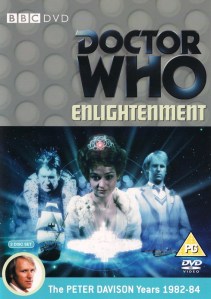
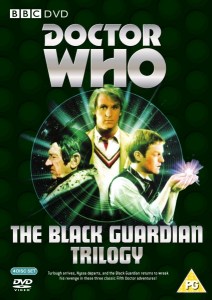
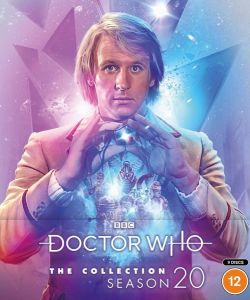

‘ENLIGHTENMENT’
Please feel free to comment on my review.
The Race for Enlightenment Begins with the Fifth Doctor, Tegan and Turlough


We come now to the third and final instalment of ‘The Black Guardian Trilogy’ in Season 20 of the classic ‘Doctor Who’ TV series called ‘Enlightenment’. It’s also the fifth story in the 20th anniversary season as well as being the season’s last four-part TV tale.
I must admit, when I saw ‘Enlightenment’ for the first time in ‘The Black Guardian Trilogy’ DVD box set back in August 2009, I found it quite a struggle to watch the story. Mainly because I was still upset about Nyssa having just left in the previous story ‘Terminus’.
The second half of Season 20 isn’t what I consider exciting enough compared to the first half. Granted, ‘Enlightenment’ is a very imaginative and creative story to end ‘The Black Guardian Trilogy’ on, and there’s ‘The Five Doctors’ 20th anniversary story to check out. 🙂

‘The King’s Demons’ is rather dodgy as a story, but that’s something for me to elaborate on in the next updated review. My issue with the rest of Season 20 and, if I’m honest, most of Season 21, is that the TV series’ emotional core tended to be absent in some stories.
You might think that’s a bit bias of me to say, considering Nyssa’s my favourite ‘Doctor Who’ companion and she’s well-played by Sarah Sutton. But you see, once Nyssa left, there isn’t that happy and enjoyable feel to the series for the rest of the Fifth Doctor era.
Yes, the dynamic in the Fifth Doctor team was fraught because companions like Adric, Tegan and Turlough tended to bicker at times. But with Nyssa gone, there isn’t the calming and referee-like presence to provide the sense of stability in the TARDIS team. 😐
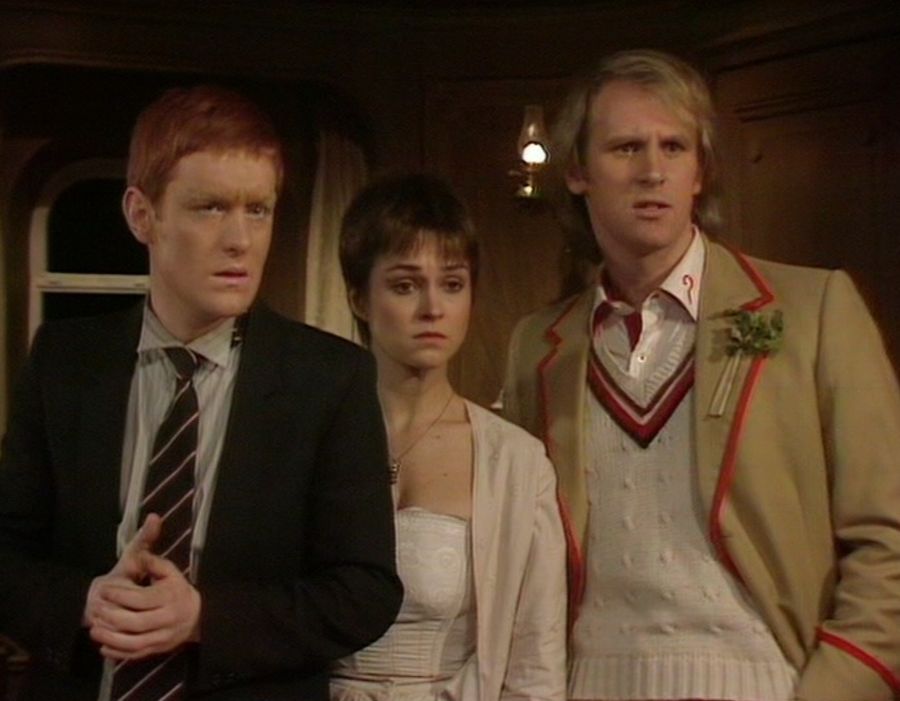
It’s like once Nyssa left, things became more heated and tension-driven, especially with the Fifth Doctor having to contend with two companions in Tegan and Turlough, who weren’t always the happiest of playmates to be with in the TARDIS whilst adventuring.
Now honestly, this wouldn’t have been a bad thing if more thought had been given to explore the character relationships in the Fifth Doctor, Tegan and Turlough as a TARDIS trio, like there was when the Fifth Doctor, Nyssa and Tegan were handled as characters.
There are touches of it in ‘Enlightenment’ and it would have been nice if the character development between the Fifth Doctor, Tegan and Turlough was built upon in every story to follow that right through into Season 21. But I didn’t get that in viewing further stories.
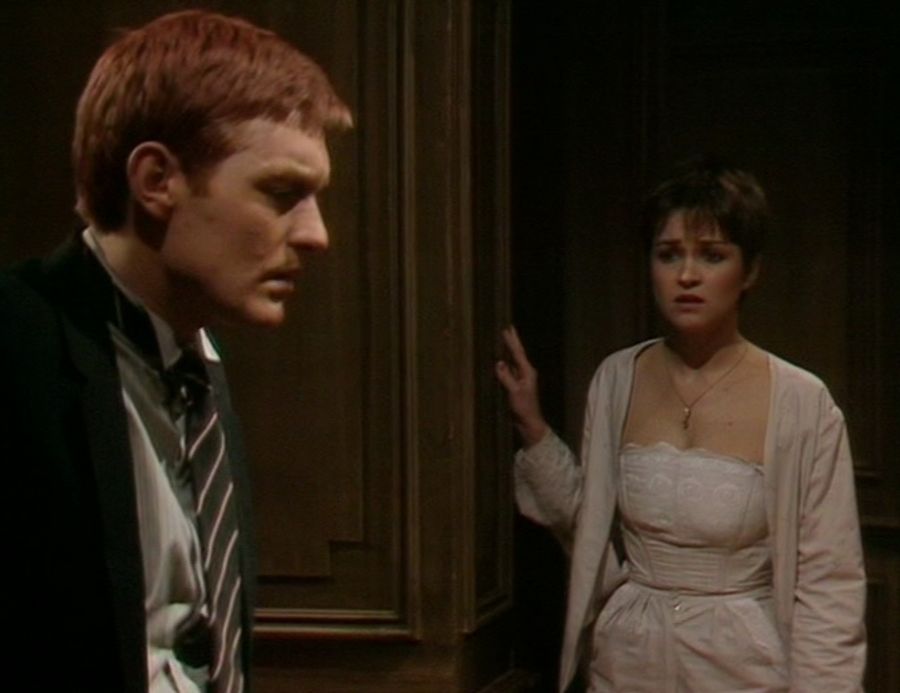
As Peter Davison indicated in an interview, the producer John Nathan-Turner tended to focus on the more superficial aspects of ‘Doctor Who’ companions to make them interesting rather than thinking about how the characters explored their relationships. 😐
You could argue that the ‘EastEnders’ soap opera angle is put into play here regarding the Fifth Doctor TARDIS team featured in post-Season 20 and early Season 21. But quite frankly, I’d prefer more ‘Coronation Street’ than ‘EastEnders’ to be in ‘Doctor Who’ itself.
Also, I don’t watch ‘EastEnders’ much. The point I’m trying to make is when I want characters like Tegan and Turlough to be likeable, I’m let down by the fact that they’re not very happy to be in the TARDIS, which is why I prefer Nyssa more as she’s very likeable.

Another reason for me struggling to watch ‘Enlightenment’ as a ‘Doctor Who’ story was the fact that there’s not a reference to Nyssa in the story. Not even a mention is made by Tegan about her missing her best friend following their goodbye in ‘Terminus’ in this story.
Thankfully, Big Finish have made up for this in a series of post-Season 20 stories with the Fifth Doctor, Tegan and Turlough reuniting with an older Nyssa. But back when I saw ‘Enlightenment’ in 2009, I didn’t think there would be more post-‘Terminus’ Nyssa stories.
It just made me feel that the ‘Doctor Who’ production team didn’t care about Nyssa, and they wanted to get rid of her as soon as possible. Now I’m sure that wasn’t the intention, but it’s what it came across as when I saw ‘Enlightenment’ for the first time. 😐
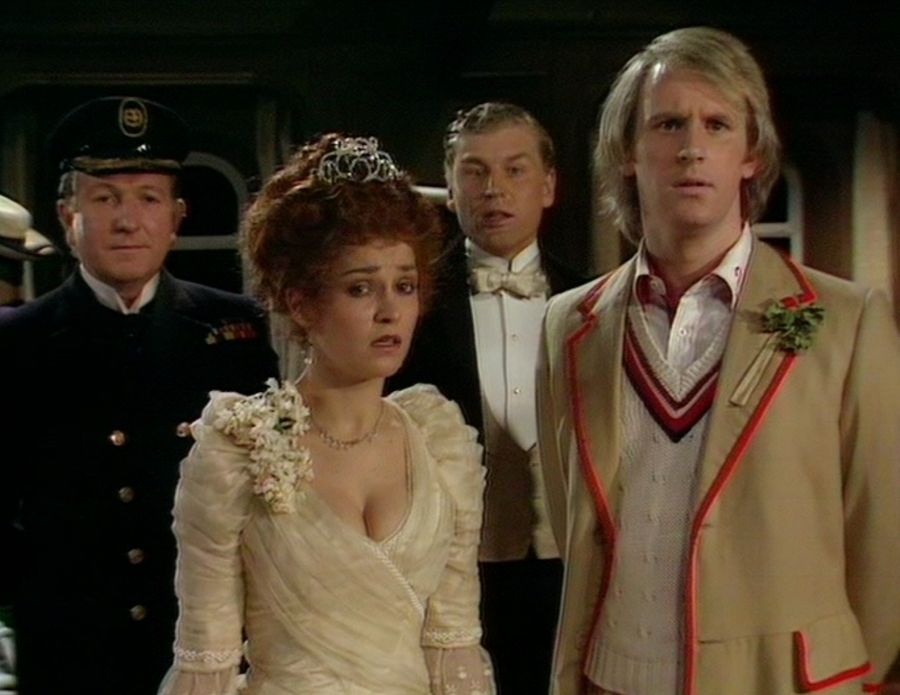
In many respects, I wish Nyssa was in ‘Enlightenment’ to make her appearances in ‘The Black Guardian Trilogy’ more complete. I’m sure that Sarah Sutton would have enjoyed being in ‘Enlightenment’, especially with the period costume-style drama elements to it.
I’m also sure that Sarah would have been lovely wearing a ball gown in ‘Enlightenment’ just like Janet Fielding as Tegan did in the story. It’s like a lot of things Sarah could have had in the rest of Peter Davison’s era of ‘Doctor Who’ were denied to her once she’d left.
It all seemed unfair to me, especially with this being a story made after Sarah as Nyssa left the TV series. Regardless, it’s probably what prompted me to write my ‘Doctor Who’ series featuring the Fifth Doctor, Nyssa and Billy to get over all the anxieties that I had.
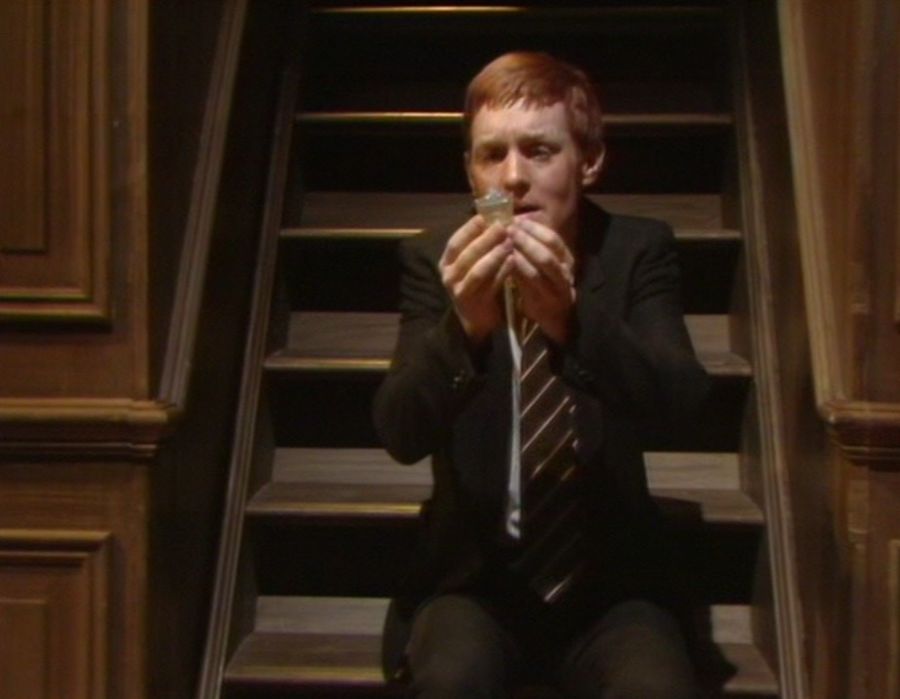
Arguably, ‘The Black Guardian Trilogy’ is more about Turlough’s character journey than about Nyssa’s. But I’m sure Nyssa could have made a small appearance in ‘Enlightenment’ to reassure us that she’s not forgotten by the Doctor or by anybody else.
I’m pleased that Sarah signed the back of my ‘Enlightenment’ DVD cover when I saw her at the ‘Timey-Wimey 1’ convention in Brighton back in November 2014 for the ‘Finding Sarah Sutton’ featurette. 🙂 That was the personal highlight of the 2-disc DVD set for me.
Yes, it’s been transferred to the ‘Terminus’ Blu-ray disc in the Season 20 Blu-ray box set. But back then, Sarah’s presence on the ‘Enlightenment’ DVD was important to me. I’m glad Sarah is in the ‘Behind the Sofa’ item for ‘Enlightenment’ for the story’s Blu-ray disc.
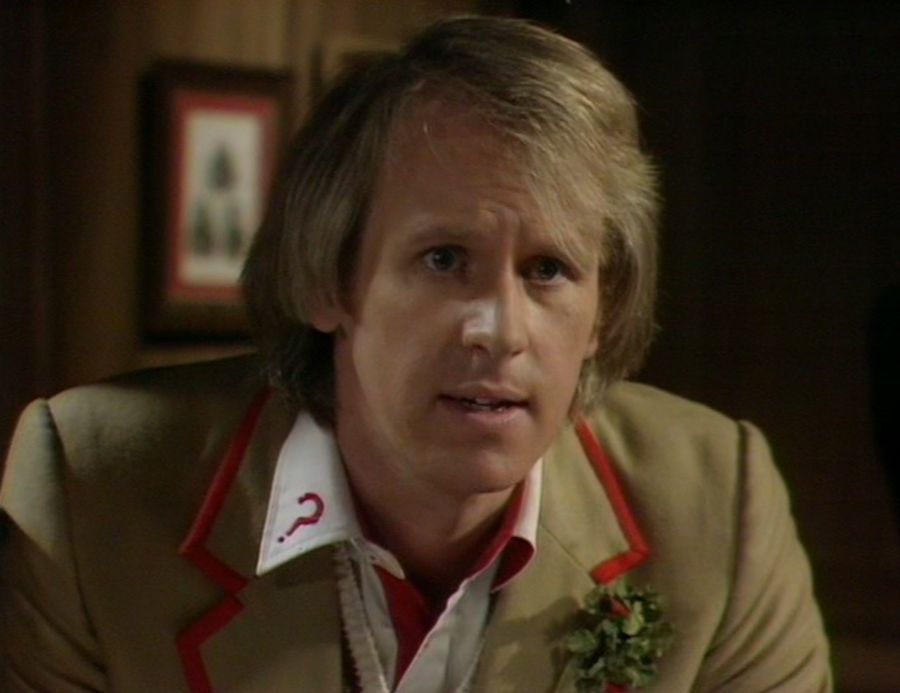
I’ve also had the DVD cover of ‘Enlightenment’ signed by Peter Davison at the ‘MCM Birmingham Comic Con’ at the NEC in Birmingham in November 2017. I’ve shared with Peter how much I’ve enjoyed the TV story in Birmingham in 2017 and in London in 2025.
As I said, ‘Enlightenment’ was released on a 2-disc set in ‘The Black Guardian Trilogy’ DVD box set. This contrasts with ‘Mawdryn Undead’ and ‘Terminus’ that were given the 1-disc treatment. Mind you, there were two versions of ‘Enlightenment’ on its 2-disc set.
Disc 1 contained the original four-part story that was shown in 1983 whilst Disc 2 contained a Special Edition movie version of the story by its director Fiona Cumming. The Special Edition version of ‘Enlightenment’ was the DVD’s selling point, apparently. 🙂
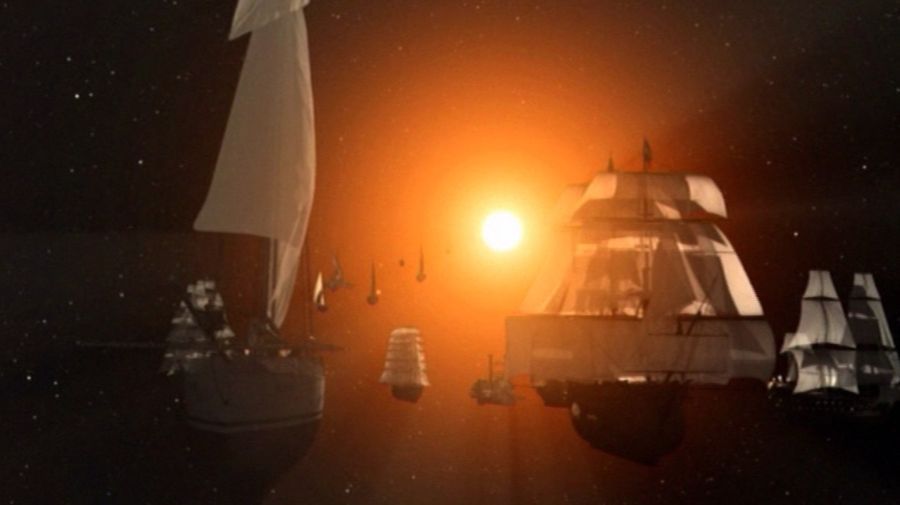
Nowadays, you can see ‘Enlightenment’ in three ways on its Blu-ray disc in the Season 20 box set. You can see it as its original four-part version, you can the Special Edition movie version, and you can see the four-part story with a brand-new CGI effects option.
After watching the latest CGI effects option of the story on Blu-ray, I prefer the CGI effects featured in the Special Edition version of the story. I’ll explain why that is as we go further into the review to make comparisons between the various versions of the story.
‘Enlightenment’ is a four-part story by Barbara Clegg. This is Barbara Clegg’s first and only contribution to the ‘Doctor Who’ TV series. She was also regarded as the first solo female writer to work on ‘Doctor Who’, which is very astonishing when thinking about it.
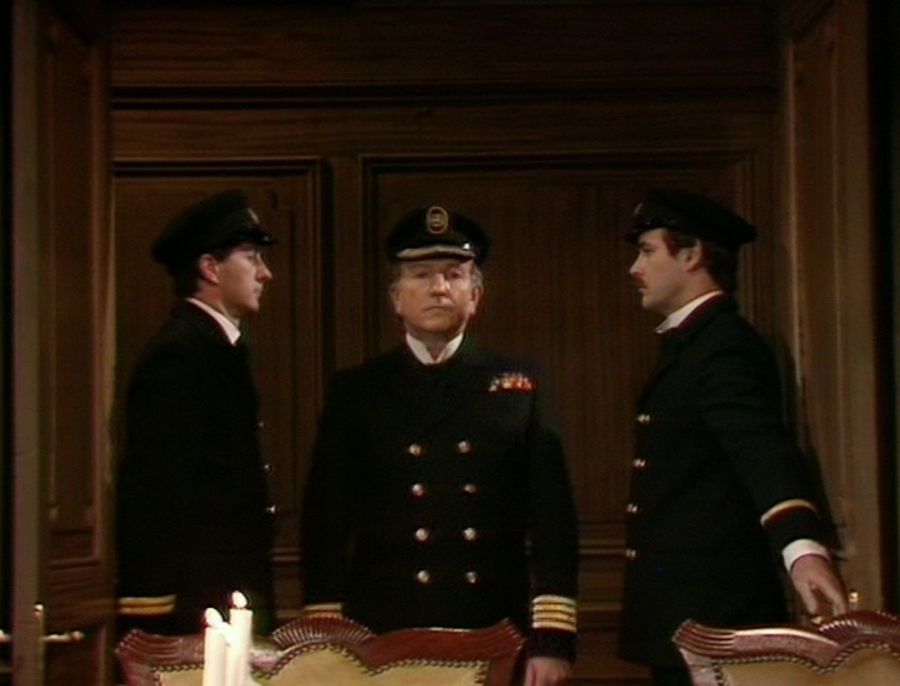
Barbara Clegg did submit a couple more storylines to the ‘Doctor Who’ production office that were sadly rejected. Thankfully, they have found their way into the Big Finish audios. This includes ‘The Elite’ with Peter Davison and ‘Point of Entry’ with Colin Baker.
In re-watching ‘Enlightenment’ more and getting over my anxieties about Nyssa, I’ve enjoyed this story by Barbara Clegg very much. I’ve found the concepts and ideas featured in the story very invigorating, and it’s fascinating how Barbara delivers the story.
‘Enlightenment’ is mainly about a space race involving sailing ships in outer space. This is something that’s been criticised by Peter Davison lately in the story’s ‘Behind the Sofa’ item, but I quite like how it’s handled in the TV story, both in the original and CGI versions.
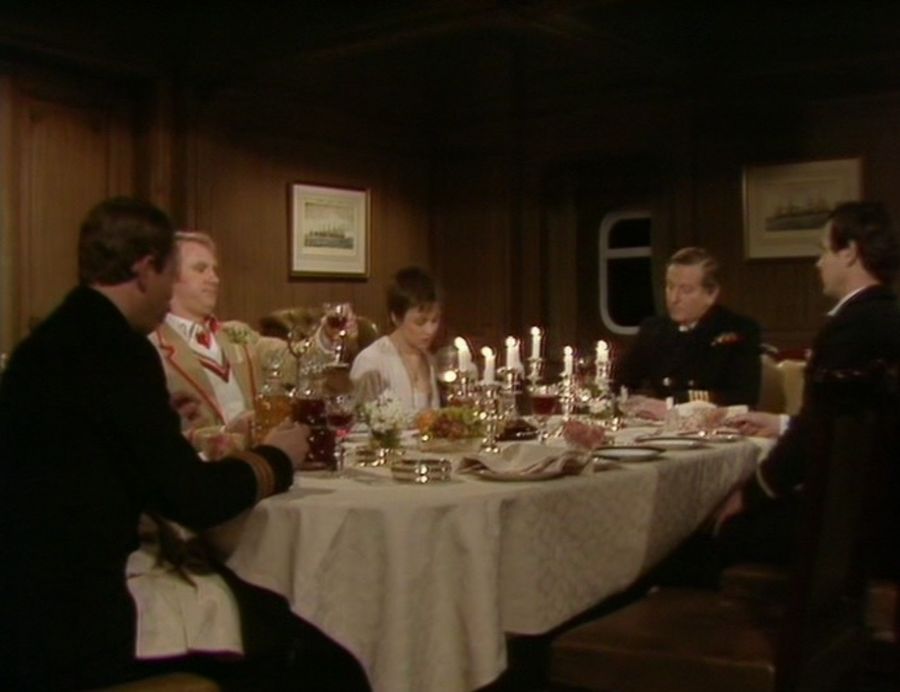
The story is very well-directed by Fiona Cumming, who put her heart and soul into making this TV adventure. This is Fiona Cumming’s second contribution to Season 20 of ‘Doctor Who’, since she previously directed ‘Snakedance’, the season’s second TV story.
And this happens to be Fiona Cumming’s third ‘Doctor Who’ story to direct in the classic TV series, with the first two being ‘Castrovalva’ and ‘Snakedance’. She went on to direct her fourth and what became her final contribution to the series – ‘Planet of Fire’ – in 1984.
Incidentally, just to be clear, there are no stories that take place between ‘Terminus’ and ‘Enlightenment’ featuring the Fifth Doctor, Tegan and Turlough. At least, not yet as far as I’m concerned. In terms of 20th anniversary celebrations, two past characters are in this story.
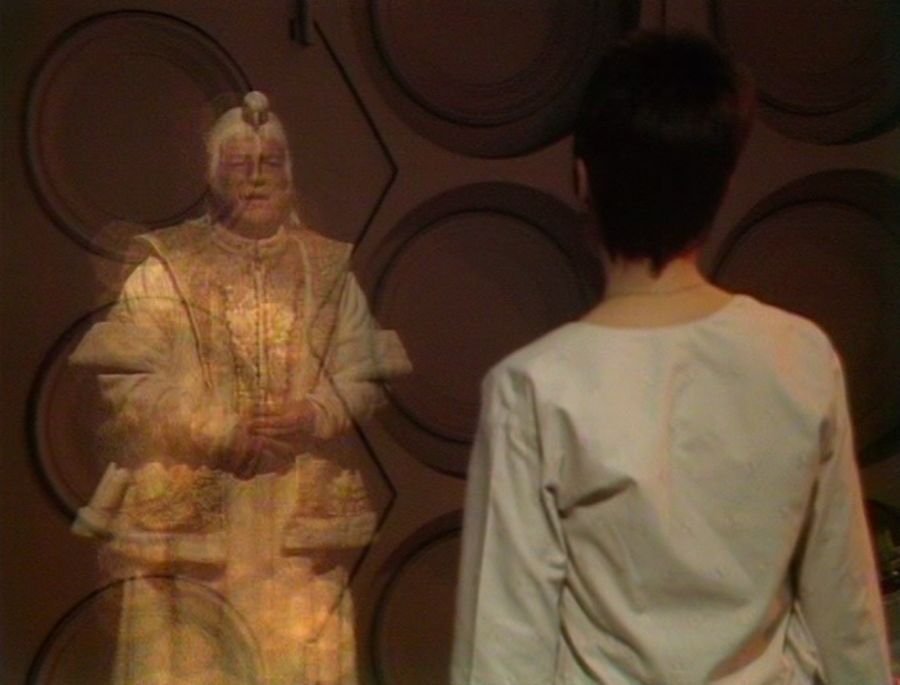
As well as Valentine Dyall as the Black Guardian, there’s the return of Cyril Luckham as the White Guardian, who made his ‘Doctor Who’ debut in the first story of ‘The Key to Time’ season (Season 16) called ‘The Ribos Operation’. It’s very nice to see him in this. 🙂
In the story, the TARDIS receives a visit from the White Guardian who tries to send a message to the Doctor that includes coordinates. Unfortunately, the message gets interrupted. This is caused by the Black Guardian when he appears in the TARDIS corridor.
Incidentally, an unusual thing to happen in this ‘Doctor Who’ story is that at the beginning, the TARDIS lights have been dimmed in the console room. Admittedly, this is to preserve power whilst repairs are being done by the Doctor, but it’s amazing to see. 🙂
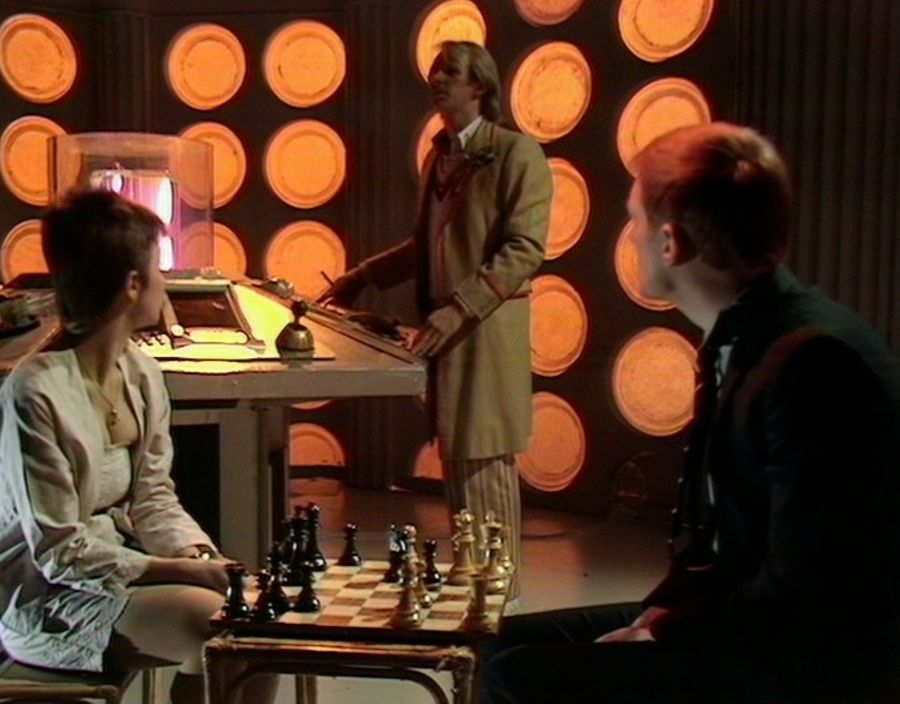
Usually, in a 1970s and 1980s ‘Doctor Who’ story, the lights in the TARDIS are very bright. This contrasts to some of the new TV series stories where the lights are dimmed in the console rooms of the Ninth, Tenth, Eleventh, Twelfth and Thirteenth Doctor’s TARDISes.
As I was introduced to the Ninth and Tenth Doctor’s TARDISes having low lighting in their console rooms in the new TV series, it was a shock to see the TARDIS console room in ‘Earthshock’ being brightly lit when that was the first classic ‘Doctor Who’ story for me. 😐
So, it makes for a nice change, even for a little bit, to see the Fifth Doctor’s TARDIS console room not looking so bright as it usually is, and to see it be so orange when the lights are dimmed. It’s a pity that this wasn’t done more often in the classic TV series. 😦
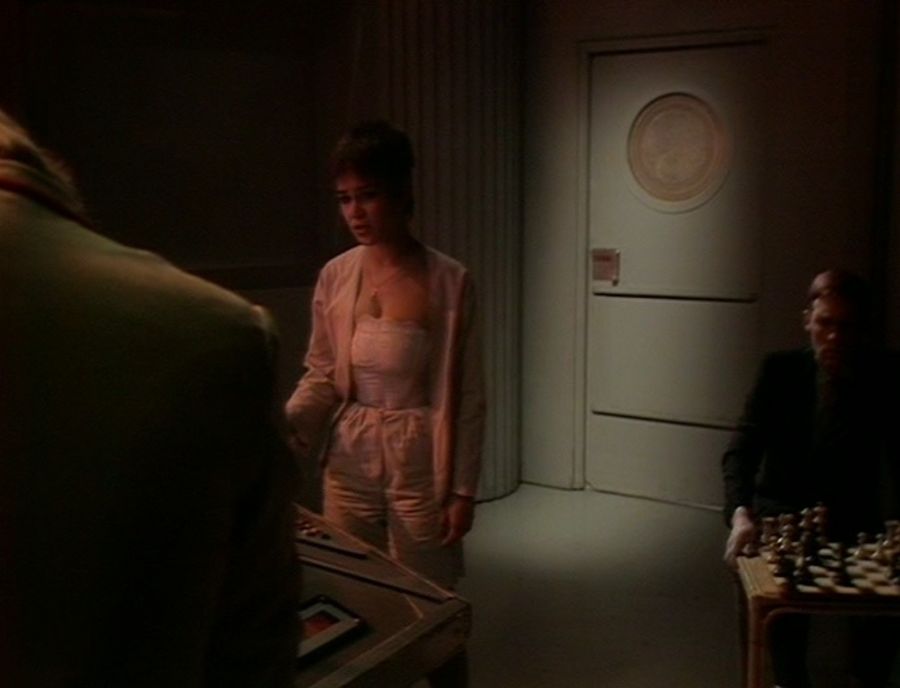
Something like that wouldn’t happen again until we get to ‘Battlefield’, the first story of Season 26 where we see the Seventh Doctor and Ace in a dimly-lit console room. Seeing the Fifth Doctor’s TARDIS console room dimly-lit reminds me of the new TV show.
It’s also interesting to see Tegan and Turlough play chess whilst the Doctor’s conducting repairs at the TARDIS console. The black and white counters on the chessboard do reflect the Black and White Guardians in the story, which is a nice bit of symmetry there.
After receiving the message from the White Guardian, the TARDIS soon ends up inside an Edwardian sailing ship. The Doctor, Tegan and Turlough naturally assume the ship is out on the sea. The Doctor and Turlough go out and explore the sailing ship in ‘Part One’.
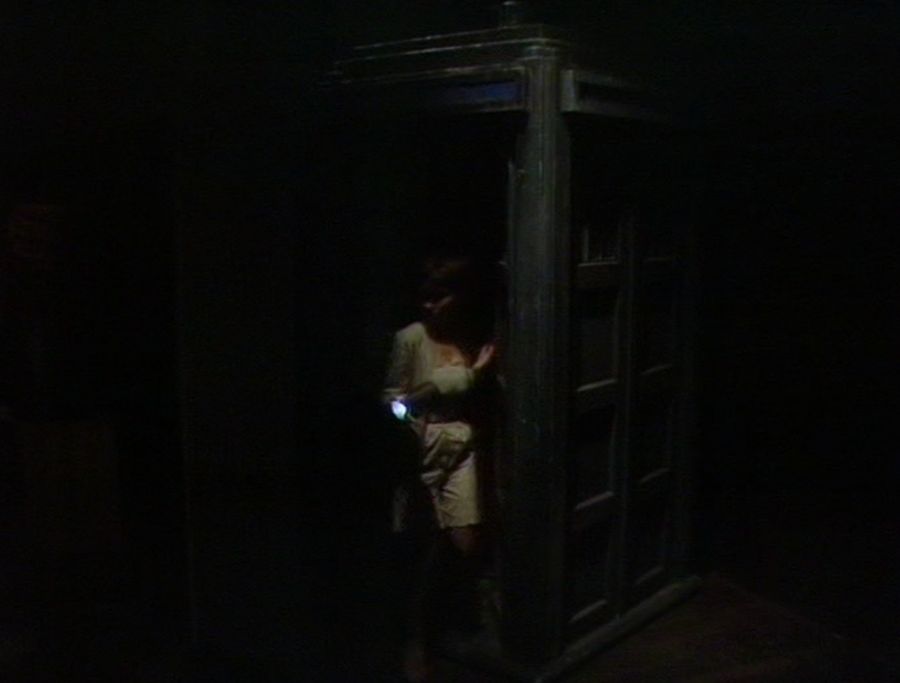
Tegan is told to stay behind and wait for a message from the White Guardian. She does receive a message, but she soon ends up going outside the TARDIS herself, much to the Doctor’s annoyance. I found the Doctor’s reaction to seeing Tegan very funny in the tale.
It’s as if he’s saying, “Oh for goodness sake!” 😀 I found it a little cruel of Peter Davison to say in the DVD audio commentary that that’s how most people to react to Janet Fielding once they see her. 😀 Maybe the Doctor shouldn’t have left Tegan inside the TARDIS when he did. 😀
It soon transpires that all is not as it seems. The Edwardian sailing ship is actually a spaceship. The TARDIS trio also find that the officers of the Edwardian sailing ship are Eternals. They and more Eternals aboard other sailing ships are in the race for Enlightenment.

It’s interesting to see a variety of sailing ships in this ‘Doctor Who’ story from many time periods in outer space in ‘Enlightenment’. This includes the pirate ship the Buccaneer, a Greek trieme, and the Edwardian ship which happens to have the name – the Shadow.
Not that’s said out loud in the story by any character, but you can find the name if you look closely on the Edwardian ship’s exterior. In the Special Edition movie version at least. It’s also named after a character called the Shadow in ‘The Armageddon Factor’. 😐
There’s an echo of ‘The War Games’ in this ‘Doctor Who’ story, especially with the Eternals picking up various crews from different Earth time periods. But of course, this is for a competition in a race as opposed to having wars being fought out among groups.
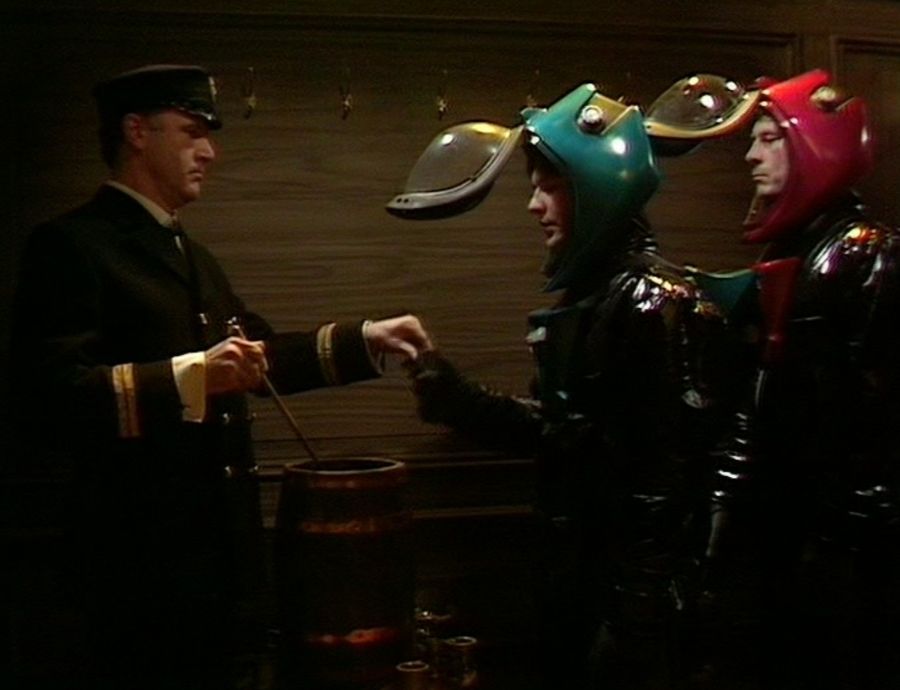
It’s still done without the consent of the Earth crews of many sailing ships in the race, but at least the Eternals aren’t doing this for universal conquest. Mainly, it’s because the Eternals are bored out of their minds and they’re seeking to be entertained in the tale. 😐
It’s like those alien cosplayers in the ‘Doctor Who’ episode ‘Rogue’ where they want to dress up as various individuals at a Regency ball because it amuses them. The same applies to the Eternals who are seeking to be amused and ‘enlightened’ to coin a word.
The Eternals are a very unusual set of beings. Apparently, they come from the Void. Yes, the space between dimensions, which is sometimes called the Howling, the Death-Space or simply Hell, as described by the Tenth Doctor in ‘Army of Ghosts’/’Doomsday’.
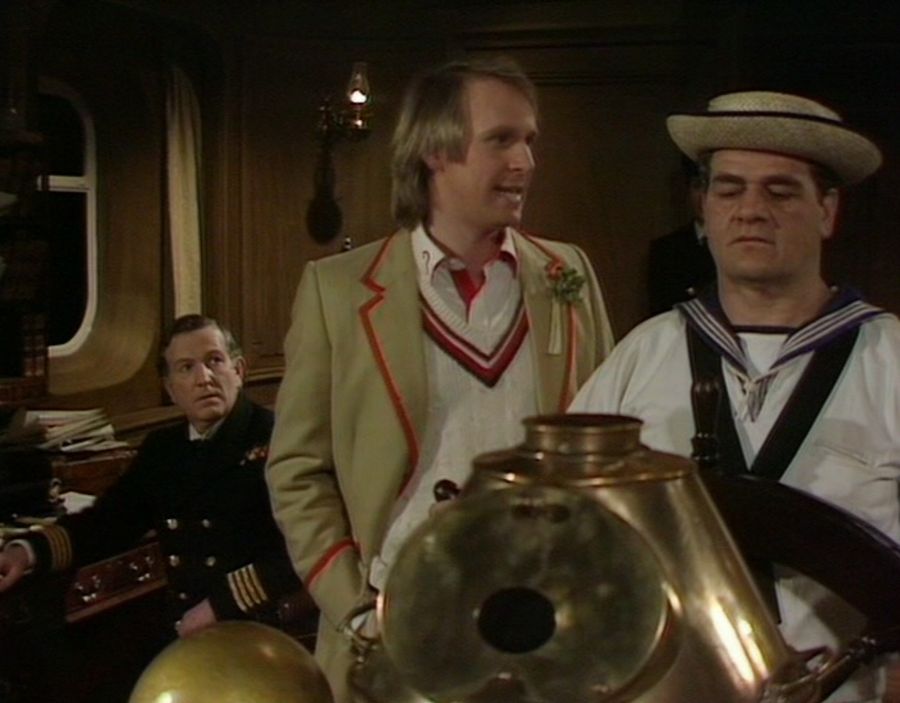
In this story, the Eternals feed on the minds of humans (or Ephemerals, as they call them) in order to exist. They don’t exist in time, as they mainly exist in eternity. As well as being bored out of their minds, they’re easily selfish. Not compassionate as humans.
One wonders how the Eternals manage to get involved in a space race as well as how and why they chose specific sailing ships from different times in Earth’s past. Presumably, the Guardians allowed it to occur, but it’s not explained why it’s occurring.
The prize that the Eternals are seeking in this story is something called Enlightenment. The concept of Enlightenment is quite intriguing as well as mind-boggling. The prize could mean anything. One could easily be corrupted should the prize ever be obtained.
As the Doctor discovers in this ‘Doctor Who’ adventure, it’s imperative none of the Eternals obtain Enlightenment. This is signified pretty strongly by the story’s end when the Black Guardian shares what would occur should the Eternals obtain Enlightenment.
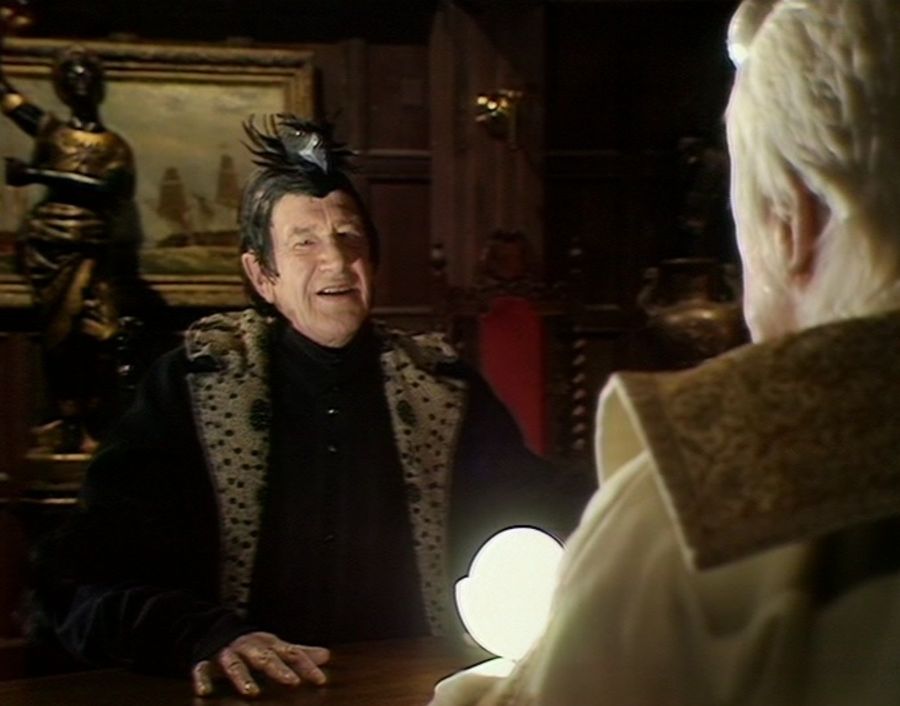
Black Guardian: These creatures have no knowledge of good or evil. Enlightenment will give them power. They will invade time itself. Chaos will come again, and the universe will dissolve.
Again, one wonders why this would be allowed to happen and why it must be in the form in a space race, apart from keeping the Eternals entertained. Mind you, the Key to Time was dispersed throughout Space and Time before the Fourth Doctor went forth to find it.
It’s not quite explained how the Key to Time was scattered in the first place and was presumably caused by the Guardians. So, we’ll have to run by the assumption that the Guardians move in mysterious ways, so to speak, and accept everything that goes on. 😐
The period drama aspects featured in this ‘Doctor Who’ story are pretty enjoyable to see. The story’s director Fiona Cumming is clearly into incorporating as many historical elements, including Edwardian and Jacobean, as possible to make it pretty memorable.
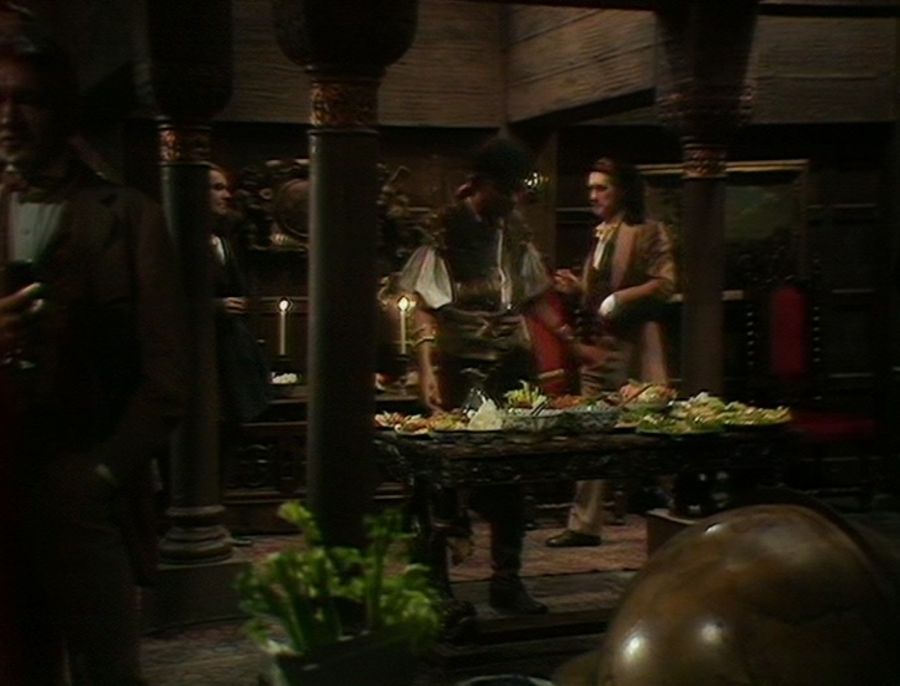
This is in the atmospheres of the sailing ships like the Edwardian ship (the Shadow) and the Jacobean ship (the Buccaneer). This is also in the set designs and costumes in the story, which I find very impressive when I’m rewatching ‘Enlightenment’ again and again.
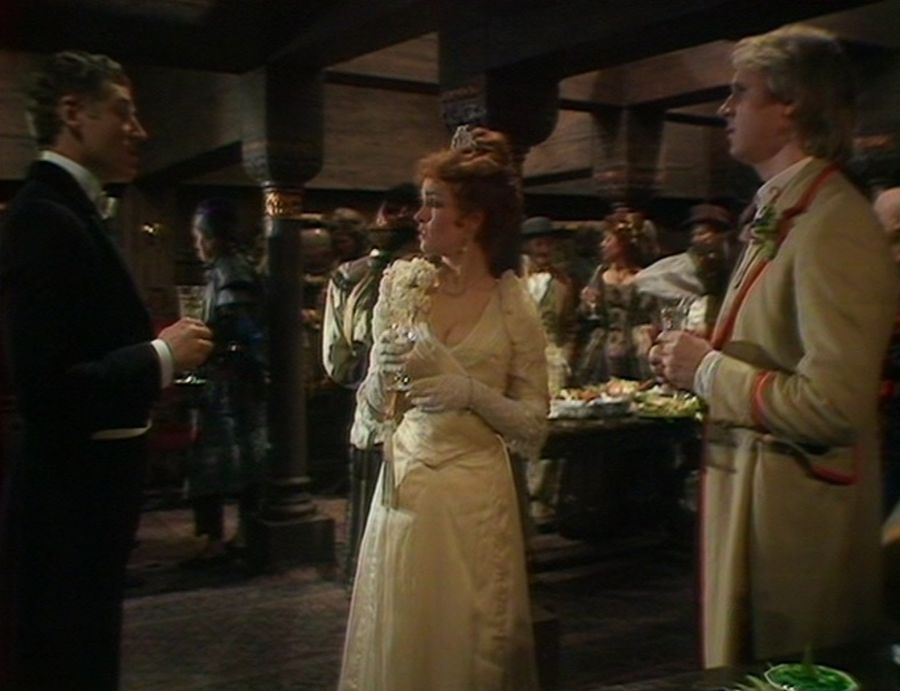
There’s a party scene featured in ‘Part Three’ of ‘Enlightenment’ where we see the Eternals in a variety of period costumes including Dickensian and Asian, I believe. There’s floaty incidental music provided by Malcolm Clarke in the party scene, which I like.
Malcolm Clarke, as a music composer, has contributed to ‘Doctor Who’ before. He provided the incidental music for ‘The Sea Devils’ in Season 9 and ‘Earthshock’ in Season 19. He would go on and provide music for more stories in the classic TV show. 🙂
This includes ‘Resurrection of the Daleks’, ‘The Twin Dilemma’, ‘Attack of the Cybermen’ and the ‘Terror of the Vervoids’ segment in ‘The Trial of a Time Lord’. Malcolm Clarke’s style of incidental music has greatly improved since his days of doing ‘The Sea Devils’. 🙂
The sailing ships racing through space for Enlightenment is pretty exciting to watch, both in the original and CGI versions of the story. The visual effects in the original version of the story, provided by Mike Kelt, are quite impressive, especially for their time.
Some of the original effects may seem dated, but I like the simplicity of the model work for the sailing ships. Mike Kelt gets to describe the process of realising the sailing ships in outer space for the TV screen via the ‘Storyboards’ featurette on the DVD and Blu-ray.
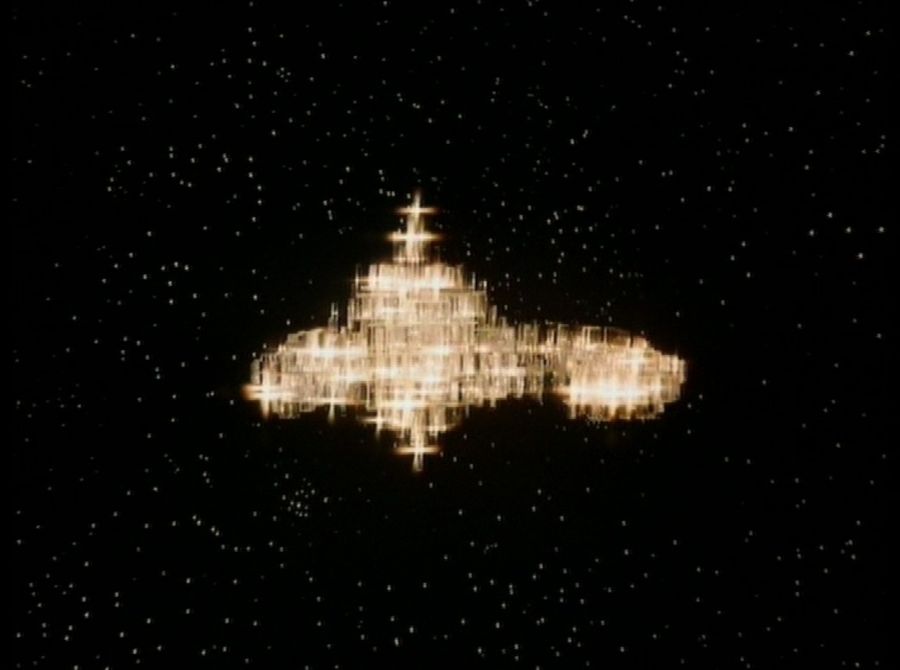
Mind you, with that said, I found the crystalline space station of the Enlighteners in ‘Part Four’ of the story disappointing. It looks more impressive in the Special Edition movie version of the story. More so than the CGI effects version of the story on the Blu-ray disc.
Just to talk about the various versions of ‘Enlightenment’ for a bit, I did enjoy the Special Edition movie version of the story when I saw it on DVD back in 2009. But I was expecting it to be longer, as sometimes it felt like it was a new TV series Christmas Special.
Going off on a tangent, there are echoes of ‘Voyage of the Damned’ featured in ‘Enlightenment’, especially considering that story had a spaceship modelled on the Titanic. ‘Enlightenment’ could’ve easily been made as a 1983 Christmas Special instead.

I do prefer the original four-part version of ‘Enlightenment’ compared to the Special Edition movie version, especially as there are more scenes to enjoy. There’s more breathing space, particularly to enhance characters like Turlough, Tegan and the Doctor.
When I think of Special Edition, I expect the stories in Special Editions like ‘The Five Doctors’, ‘Battlefield’ and ‘The Curse of Fenric’ to be extended and have more scenes. Not to be truncated into 75-minutes, as is the case for the ‘Enlightenment’ film version.
With that said, the CGI effects featured in the Special Edition movie version do look great. The visuals of the sailing ships in outer space in the original TV version do look impressive for their time, but it’s always nice to see CGI interpretations of those ships. 🙂
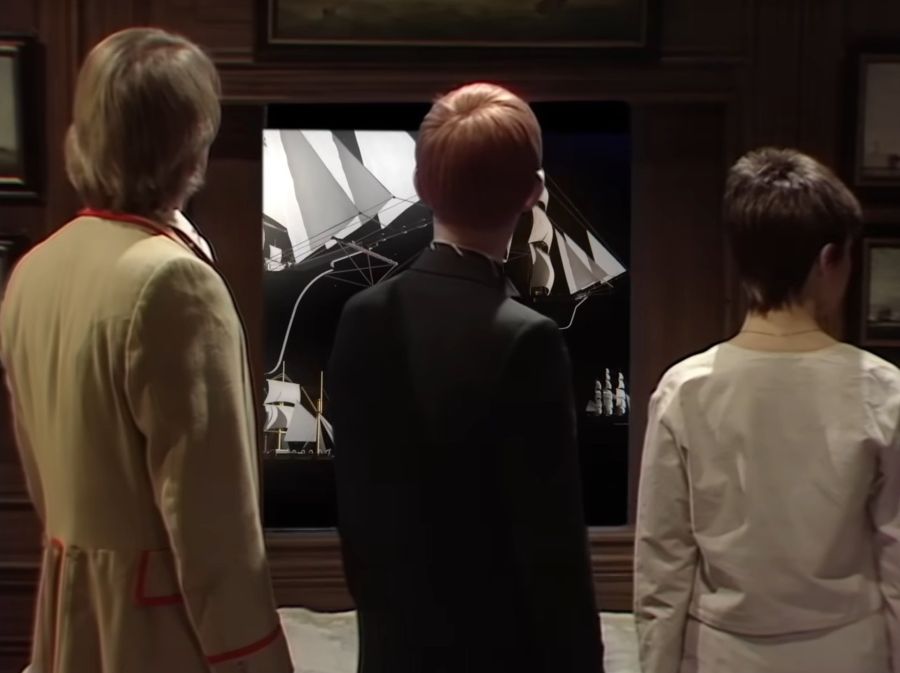
When it came to seeing the brand-new CGI effects option for ‘Enlightenment’ in the Season 20 Blu-ray box set, I was hoping for the CGI effects from the Special Edition movie version to be simply transferred into the CGI effects option for the Blu-ray disc. 😐
Sadly, that wasn’t to be as it’s brand-new CGI effects instead. Not that’s a major problem in the grand scheme of things, but the new CGI effects on the Blu-ray disc don’t match up to the CGI effects options for the ‘Mawdryn Undead’ and ‘Terminus’ stories. 😐
You see, when producer Brendan Sheppard did ‘The Black Guardian Trilogy’ DVD box set, he managed to keep things consistent in the CGI effects versions of the stories for ‘Mawdryn Undead’ and ‘Terminus’ that went on for the ‘Enlightenment’ movie version. 🙂
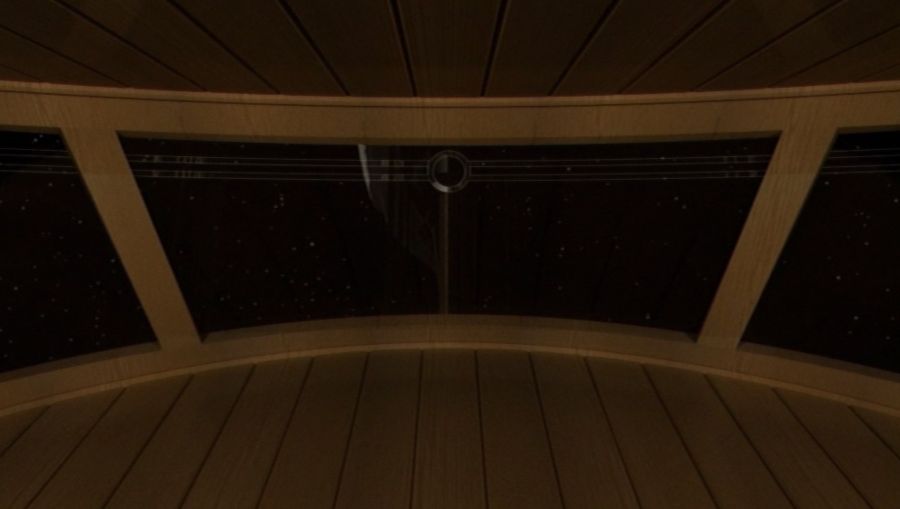
It’s a shame there wasn’t a CGI effects option for the four-part version of ‘Enlightenment’ on DVD, but I hoped it would be made up for in the Blu-ray CGI version of the story. Sadly not, and it’s a real shame, as I think there was a missed opportunity there.
It’s pretty noticeable when the Blu-ray CGI version of ‘Enlightenment’ doesn’t match to the Special Edition movie version of the story. For example, when Tegan sees it’s dark outside, we cut to a shot of the viewscreen in the Special Edition film version of the tale.
That’s not included in the Blu-ray CGI version of ‘Enlightenment’. The moments where Turlough’s communication crystal is supposed to light up in the Special Edition movie version matches to how it looks in the ‘Mawdryn Undead’ and ‘Terminus’ CGI versions. 😐
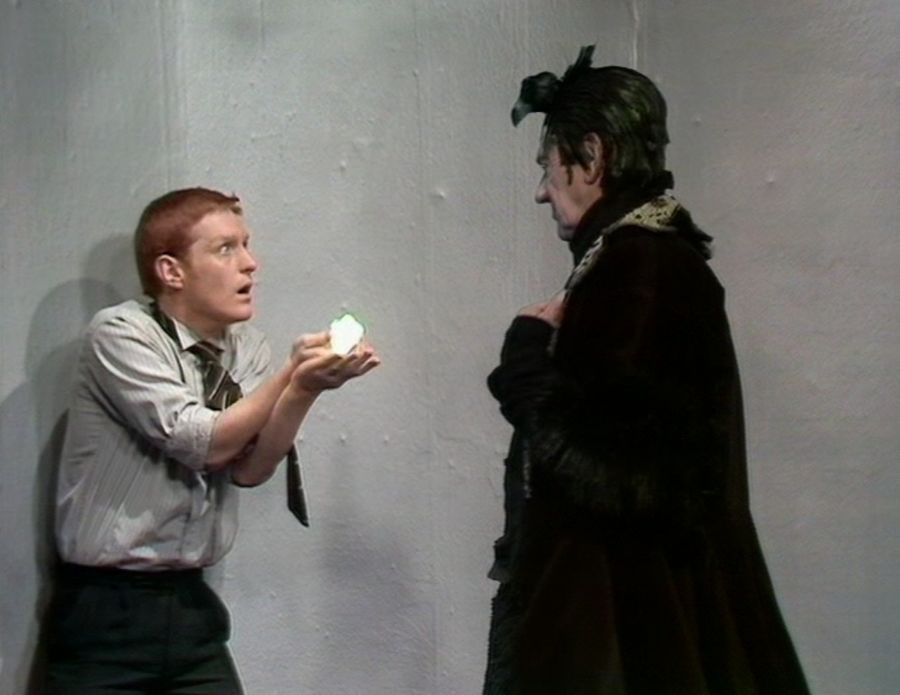
In the Blu-ray CGI version of ‘Enlightenment’, there’s no swirling CGI effects option around Turlough’s communication crystal that matches to what’s in the ‘Mawdryn Undead’ and ‘Terminus’ CGI versions of the stories. This does make things inconsistent.
The biggest blow for me is when the crystalline space station of the Enlighteners in the Blu-ray CGI version doesn’t match to the CGI version in the Special Edition film version, especially when the top crystal matching Turlough’s communication crystal is omitted.
In the ‘Re-Enlightement’ behind-the-scenes featurette on the making of the Special Edition movie version of ‘Enlightenment’, director Fiona Cumming and producer Brendan Sheppard discussed the look of what the space station should be like in CGI form.
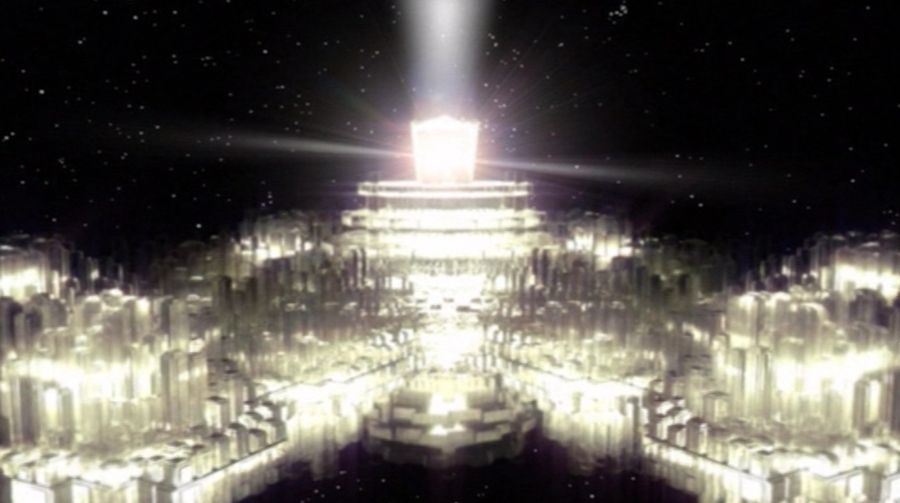
They came up with the idea that the top of the space station should look like a giant version of Turlough’s communication crystal. As if this is what it’s all been building up to, as if Turlough’s communication crystal is a piece of Enlightenment itself in the tale. 🙂
I find that very insightful and fascinating. It’s a shame it’s not followed through in the Blu-ray version. Basically, it’s a CGI version of what the space station looked like in the original four-part story. It doesn’t look as impressive in the Special Edition film version.
But hey, at least there are three versions of ‘Enlightenment’ to enjoy in the Season 20 Blu-ray box set as opposed to two in the 2-disc set in ‘The Black Guardian Trilogy’ DVD box set. And there’s a CGI effects version of the four-part story to enjoy than not at all. 🙂
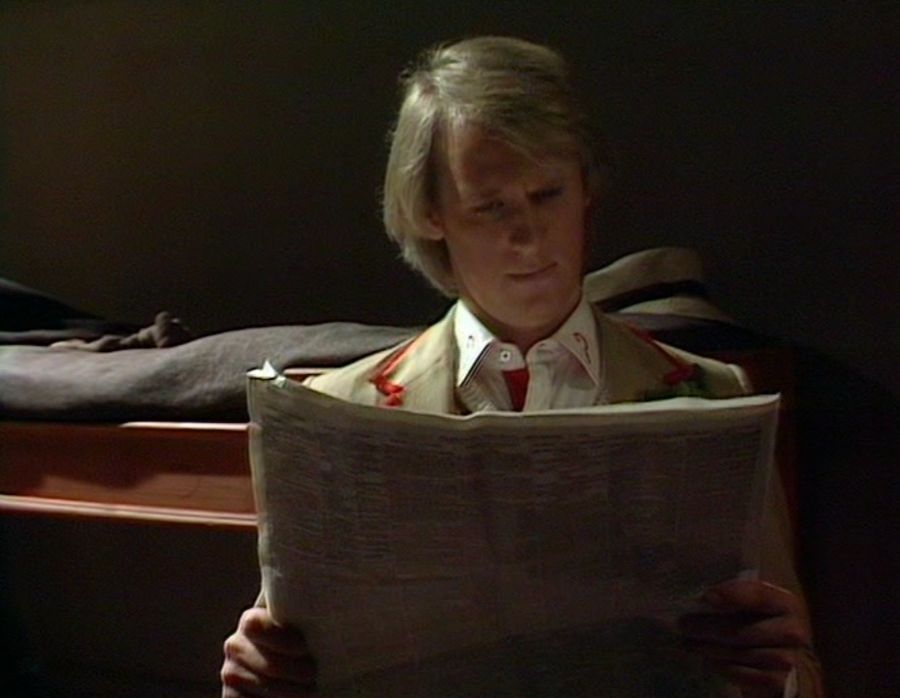
Peter Davison is extremely good as the Fifth Doctor in this ‘Doctor Who’ adventure. It was interesting to see how he coped with having Tegan and Turlough as his companions, especially with Nyssa now gone, as he adopts a very wry sense of humour.
His Edwardian manner and cricketing outfit does seem to blend very well aboard the Edwardian sailing ship, the Shadow. It was amusing to see him eating whilst having dinner aboard the Shadow in ‘Part One’. He seemed to enjoy having his meal, didn’t he?
The Doctor also gets a chance to replace his old celery stick on his lapel with a new one. Mind you, the old celery stick could have come from ‘Castrovalva’ which wasn’t real, just as the new celery stick he applies to his lapel isn’t real aboard the Buccaneer sailing ship.
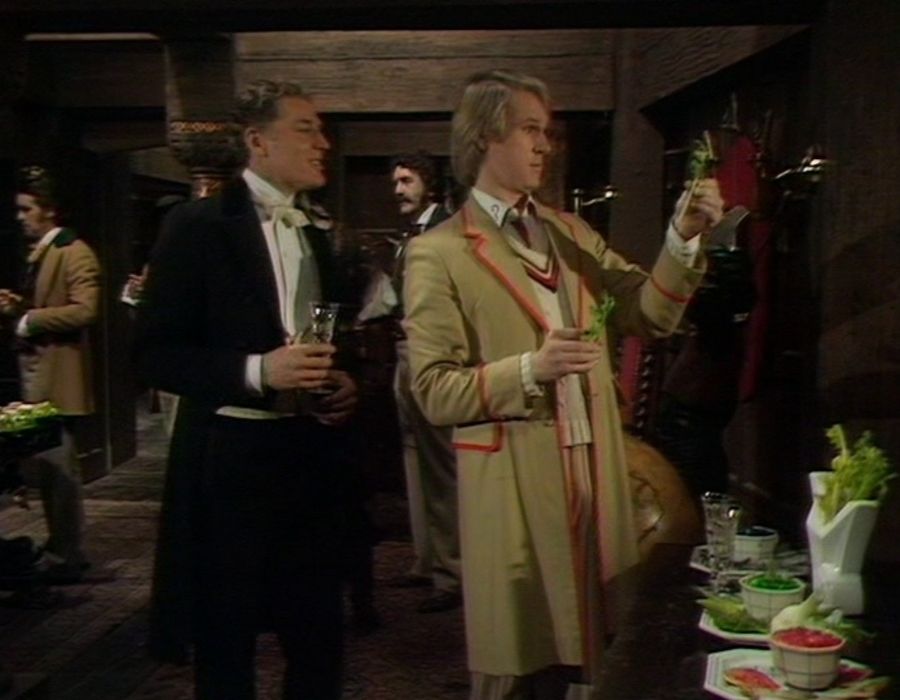
I’m surprised the celery sticks he wears in ‘Doctor Who’ don’t vanish or evaporate just like Castrovalva did. Or it could be the Master did collect real celery for his trap for the Doctor in the story. And the celery on the Buccaneer could have been just as real too. 🙂
I liked it when the Doctor got to challenge Eternals like Captain Striker about how he and his kind use humans (Ephemerals) to feed on their minds to exist as well as use them for their outer space race. The Doctor is pretty angry in those scenes when watching him. 🙂
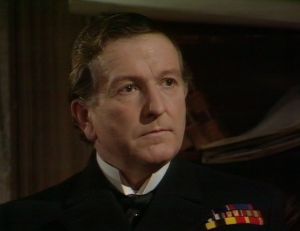

Doctor: Parasites! That’s what Eternals are. You feed on living minds, you use them as blueprints.
Striker: As diversions.
Doctor: Oh, absolutely, I do see what you mean. Living minds are contaminated with crude emotions, organic, irrational, creative, entertaining.
It’s easy for audiences to consider the Fifth Doctor as bland and uninteresting. But when Peter Davison has to perform very passionate scenes as the Doctor, especially when he gets angry, he really goes for it. You can feel the fire coming out of his performance.
I also liked it when the Doctor notices the Eternal don’t read minds instantly when interacting with them. This occurs twice when he confronts Captain Striker in ‘Part Two’ and when he’s with Marriner in ‘Part Four’ after just saving the Shadow from destruction.
I like the relationships Peter’s Doctor has with Tegan and Turlough. The scene the Doctor has with Tegan when he visits her quarters aboard the Shadow is a nice scene, especially when she’s distressed with the Eternals being able to read her mind and such. 🙂
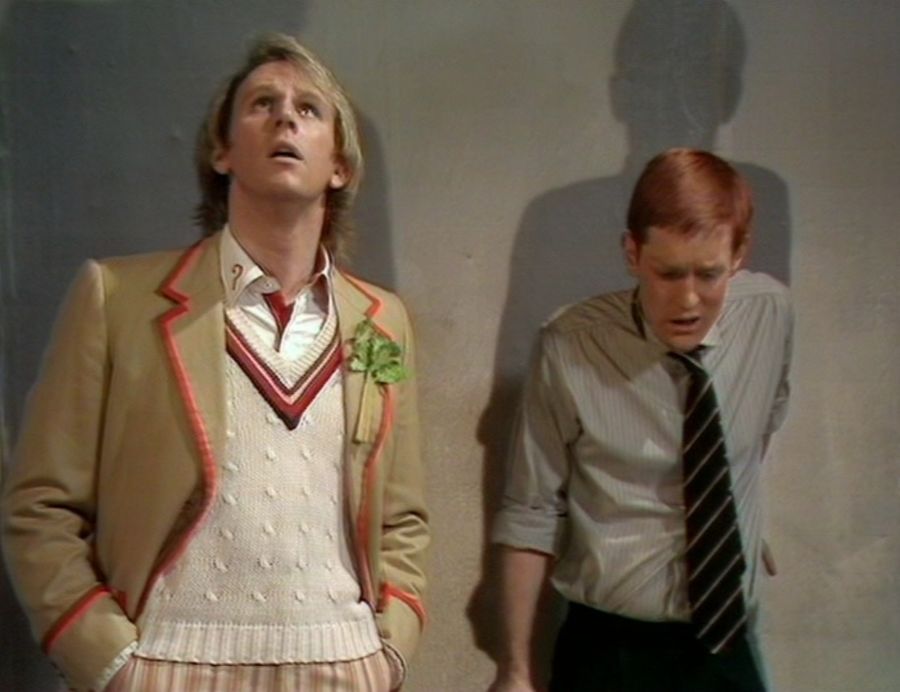
The scenes that the Doctor has with Turlough are also interesting, especially when he saves him from dying in the vacuum of space in ‘Part Three’. The Doctor seems to be observing Turlough, especially in this story concerning his actions in being an assassin. 😐
I wonder if the Doctor knew all along that Turlough had been working for the Black Guardian and he’d taken him under his wing, knowing the struggle he was going through. It’s possible, especially when the Doctor has forgiven Turlough by the story’s end.
Janet Fielding is very good as Tegan in this ‘Doctor Who’ story. In a sense, Tegan gets to have her own journey in ‘Enlightenment’, especially when she becomes troubled by the Eternals reading her thoughts. I do wonder how much she’s missing Nyssa by this stage. 😐
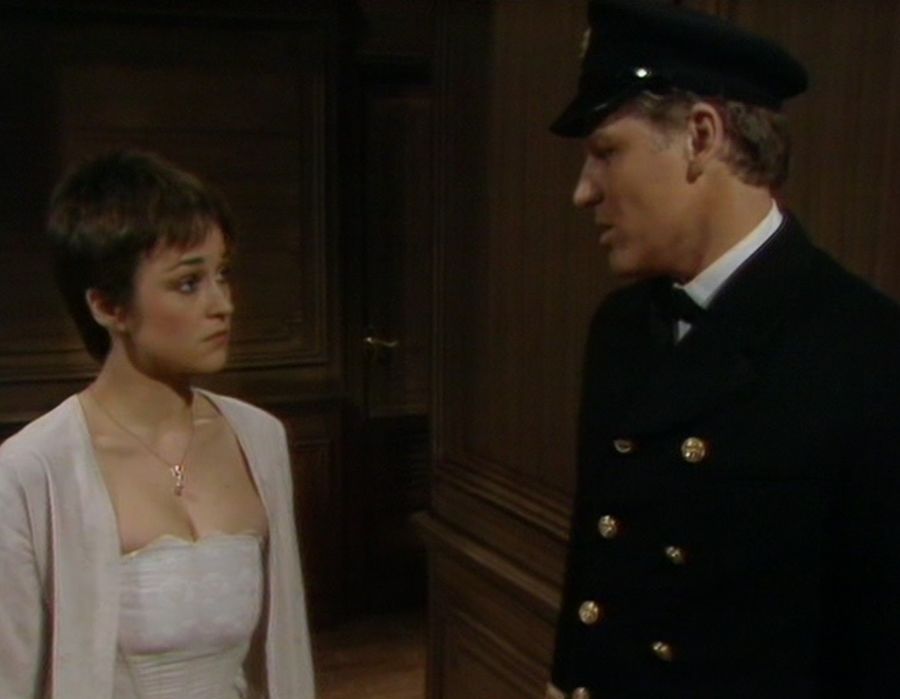
In the story, Tegan meets the Shadow’s first mate Marriner, who seems to have an interest in her. I quite like how their relationship is played out in this ‘Doctor Who’ story, especially when he seems to keep on reading her thoughts and she doesn’t really like it.
This could have easily been made as a traditional love story where two people that start out as enemies become lovers in the end. But of course, that doesn’t happen, especially when Tegan discovers for herself that Marriner isn’t romantically interested in her.
He just needs to read her thoughts in order to exist. Quite often, it comes across as creepy and I don’t blame Tegan for feeling the way that she does, especially when Marriner seems to be quite persistent in his interest in her throughout this TV adventure.
I like that moment where Tegan challenges Marriner on whether he’s in love with her and he doesn’t understand by asking “What is love?” Funnily enough, that’s like one of three occasions in the classic TV series where I’ve come across a character asking that question. 😀
Going back to Tegan, I also like it when she challenges Marriner about the fact that the Greek ship got blown up in the race and that he and his kind don’t seem to care about the fact that people have died. They’re not concerned about the crew that died in space.
It’s fascinating to see Marriner’s miscomprehension about Tegan’s disgust over this matter, as he finds that humans (Ephemerals) have short lives compared to Eternals, who have the ability to transfer back to where they came from in the Void and survive. 😐
Of course, Tegan has to point out to Marriner that she considers human lives just as valuable as others, and reminds him that she’s a human being herself. The anger and frustration that comes through in Janet Fielding’s performance is very good in this story.
It was funny when Tegan became ‘seasick’ in ‘Part Two’, as shouldn’t she be ‘space-sick’ instead? They’re in outer space after all, not out at sea. If I rewrote that scene, I would have had Turlough criticising Tegan on her choice of words and she’d tell him to shut up.
And of course, Janet as Tegan gets to wear a ball gown in ‘Part Three’ of this story. It’s nice to see Janet wear something different in ‘Enlightenment’, especially as she’d been in that white tube top outfit for the majority of Season 20 since she returned in ‘Arc of Infinity’.
The ball gown does suit Tegan very well, bringing out her softer and more feminine side. 🙂 Mind you, I have to question the hairstyle she has when wearing that ball gown. Is that a wig she’s wearing? She couldn’t have grown her hair that fast in a short space of time.
I mean, Space and Time and all, but Tegan has managed to keep her short haircut for the majority of Season 20. Unless there’s a special hairdresser she goes to (or perhaps the Doctor provides her haircuts 😀 ), I don’t see how she could have grown her hair quickly.
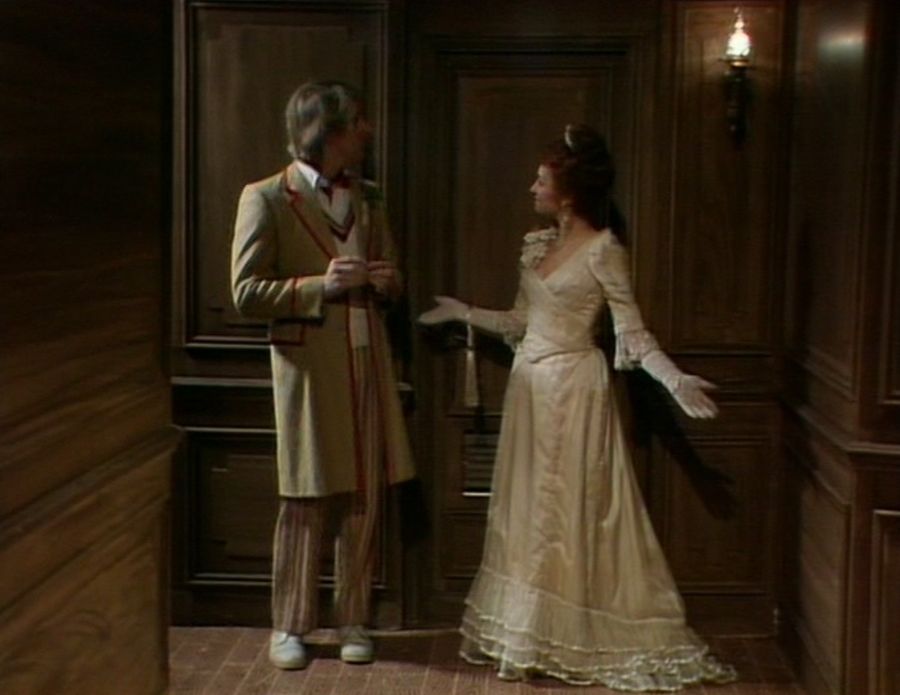
It must be a wig! Not just in behind-the-scenes terms but narratively speaking too. I can’t claim to be a fashion expert and how women do their hair for evening galas, but surely it would’ve been better for Tegan to keep her short haircut whilst in the ball gown.
Mark Strickson is of course very good as Turlough in this ‘Doctor Who’ story. It’s interesting to see how far Turlough has come since ‘The Black Guardian Trilogy’ began. Initially, he was so selfish and devious, being determined to want to return to his home.
But of course, as time has gone on, he’s got to know the Doctor more and he can’t bring himself to kill him. It’s clear from watching this story how much Turlough is doing all he can to not kill the Doctor, especially in his interactions with him and Tegan in this story. 🙂
He gets tormented by the Black Guardian, who attempts to strangle him in a corridor aboard the Shadow. Turlough tries to use his communication crystal to seek help from the Black Guardian, but he’s rebuked by him for not killing the Doctor as he’s being told to. 😐
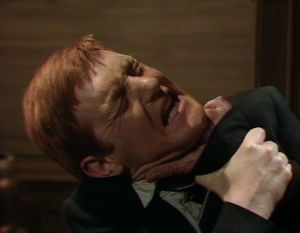
Black Guardian: You are pathetic! I have watched your progress. You had many opportunities to destroy the Doctor.
Turlough: (chokes) I can’t kill him!
It makes me wonder why the Black Guardian kept Turlough alive by the end of ‘Terminus’ if he’s not going to do what he’s been told to do in ‘Enlightenment’. Again, maybe the Black Guardian should have found someone better than Turlough to do the job properly.
It was fascinating to see Turlough attempt to commit suicide by the end of ‘Part Three’ by throwing himself overboard so that he could end his agreement with the Black Guardian. It didn’t help. 😐 He ended up on Captain Wrack’s ship, the Buccaneer, instead.
Mind you, with the Black Guardian speaking in his head and tormenting him the way he did, I wouldn’t blame Turlough for throwing himself overboard like that when he did. I mean, it’s not something you want to have every time the Black Guardian speaks to you.
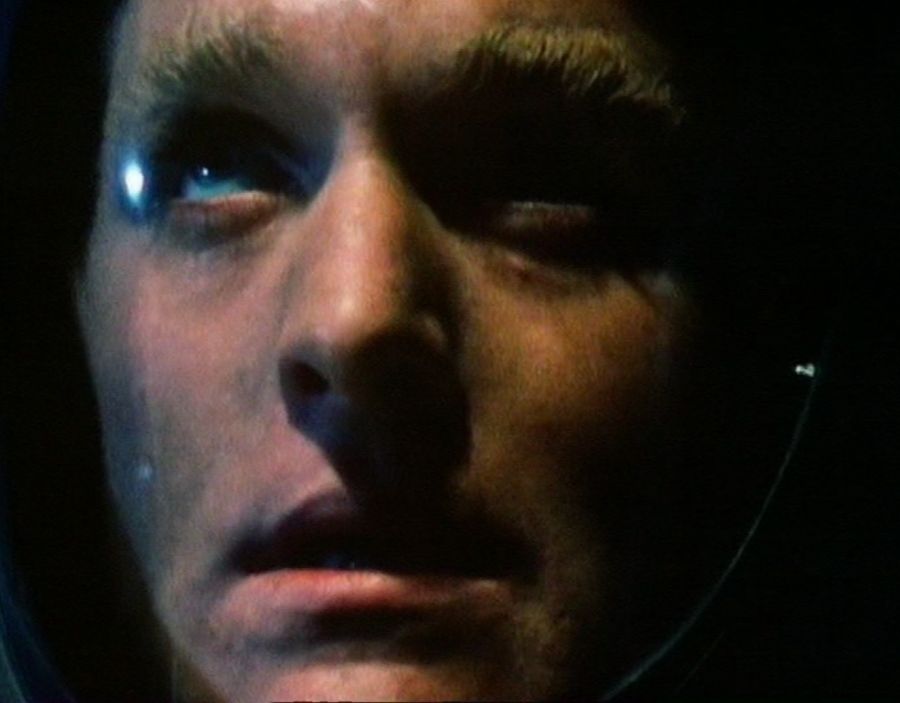
Black Guardian (V’O): (echoes) You are doomed, boy. You are doomed, boy. You are doomed, boy.
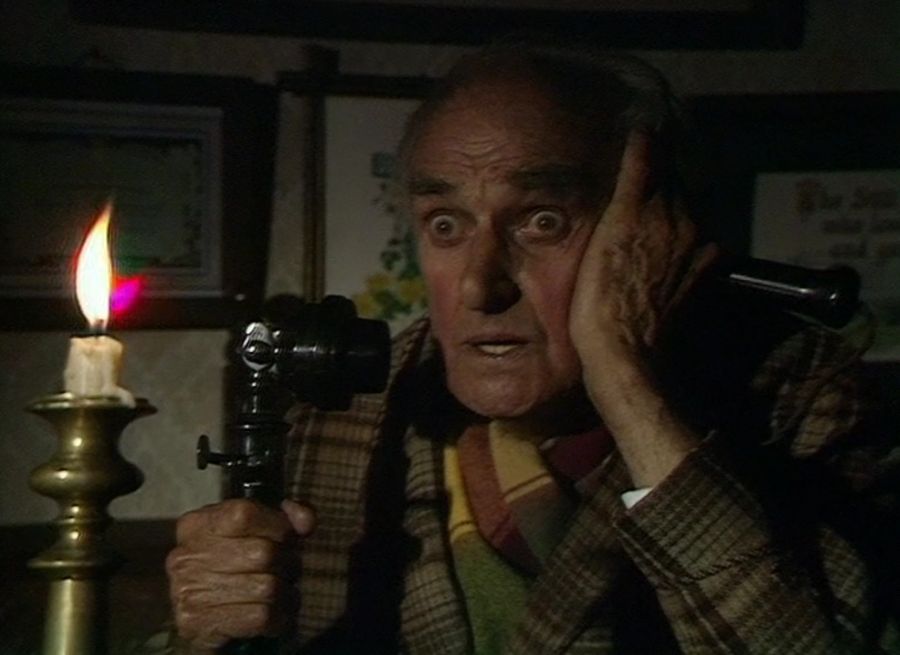
Frazer: HE’S DOOMED!!! DOOMED!!!
I quite like how Turlough goes on this journey in ‘Enlightenment’ as well as the entire ‘Black Guardian Trilogy’ on whether he’s going to kill the Doctor or endure agony from the Black Guardian forever. His first three stories are a good introduction for his character.
It’s a shame that stories after ‘The Black Guardian Trilogy’ don’t handle Turlough’s character well as one might expect. There are exceptions like ‘Frontios’ and ‘Planet of Fire’, and thankfully ‘The Black Guardian Trilogy’ does set up his character well because of that. 🙂
Mark Strickson’s acting is great throughout his time in ‘Doctor Who’, especially in the intense moments where he’s belting it out in his performances. Mind you, that moment where he has the staring eyes in talking to Captain Wrack in ‘Part Four’ is a bit too much.
I also like the defining moment that Turlough has in the story where he rejects the offer given to him to have a share of Enlightenment, but only if he gives the Doctor to the Black Guardian. It does enable Turlough to have that amount of complexity to his character. 🙂
It’s also interesting how Turlough shared he didn’t want the agreement with the Black Guardian in the first place and the Doctor believes him. Tegan doesn’t, even when Turlough gave up Enlightenment for the Doctor’s sake. The Doctor’s reply to her is good.
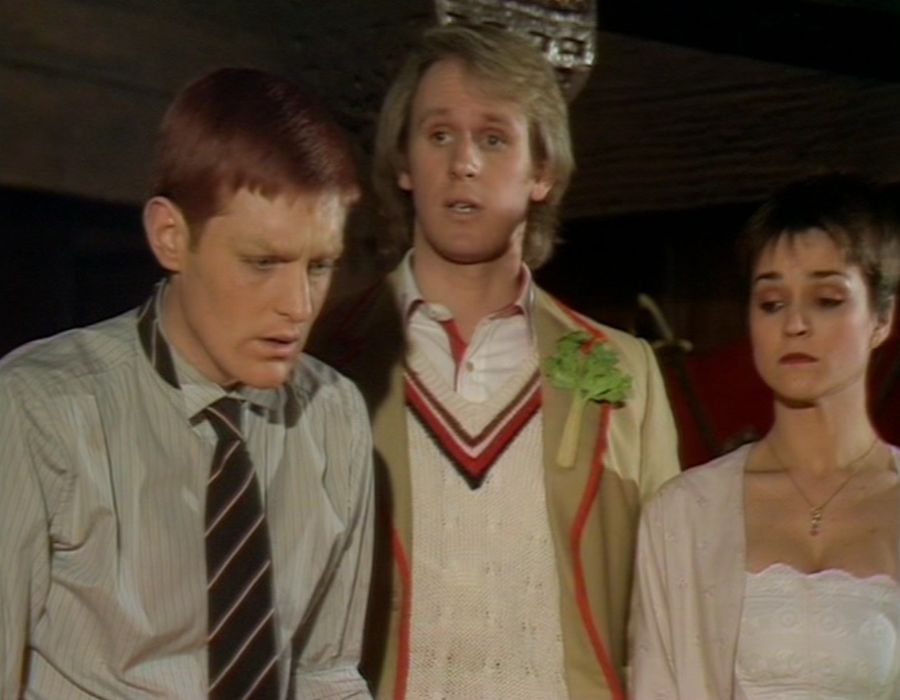
Doctor: You’re missing the point. Enlightenment was not the diamond. Enlightenment was the choice.
I wonder how that’s changed around in the ‘Bernice Summerfield’ audio story ‘The Heart’s Desire’ where Enlightenment was not the choice but the diamond all along. That’s something for me to uncover should I ever getting around to listening to that story.
Incidentally, I do feel for Mark Strickson when he injured himself during the making of this ‘Doctor Who’ story when he was filming the scene of Turlough throwing himself overboard and the Kirby wire he was suspended from broke. That must have really hurt.
When Turlough throws himself overboard, I prefer the Doctor shouting “NO!!!” at the end of ‘Part Two’ instead of him saying “Don’t be an idiot!” at the beginning of ‘Part Three’. I’m pleased the Doctor’s “NO!!!” was kept in the Special Edition movie version. 🙂
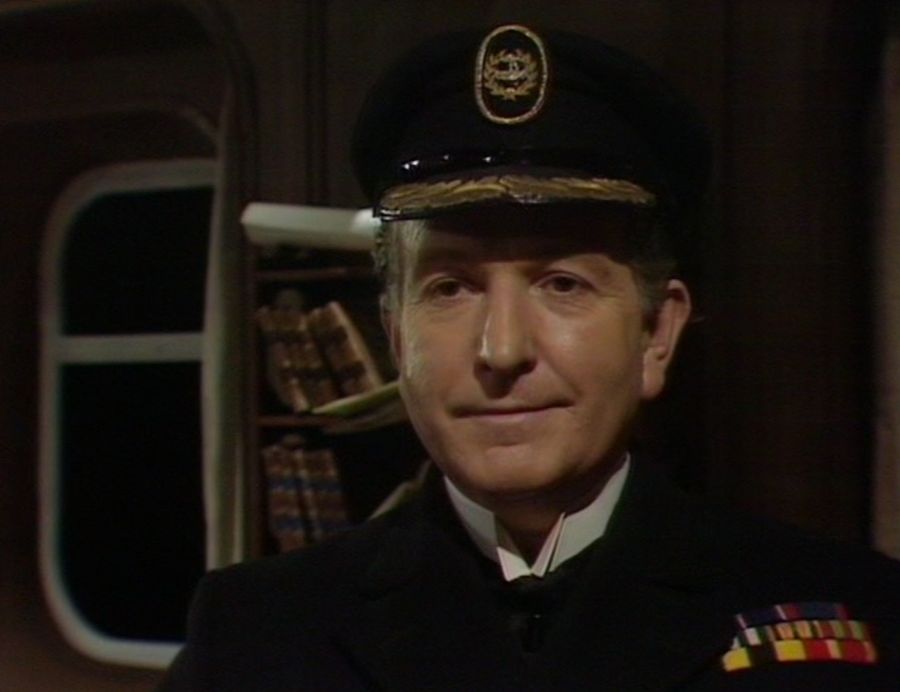
In terms of the Eternals and who play them, there’s Keith Baron as Captain Striker. Now originally, Keith Barron wasn’t Fiona Cumming’s first choice to play the character. Striker was going to be played by Peter Sallis, who later voiced Wallace in ‘Wallace & Gromit’.
Peter Sallis was also in ‘The Ice Warriors’ with Patrick Troughton and was well-known for being in the ‘Last of the Summer Wine’ BBC sitcom series. Peter Sallis did attend one day of rehearsal for the story before a strike began and production dates were changed.
Unfortunately, Peter Sallis couldn’t do the new production dates, as he was working on a ‘Last of the Summer Wine’ special at the time. Therefore, Keith Barron was cast instead. It’s a shame and I wonder what Peter Sallis would have been like playing Captain Striker.
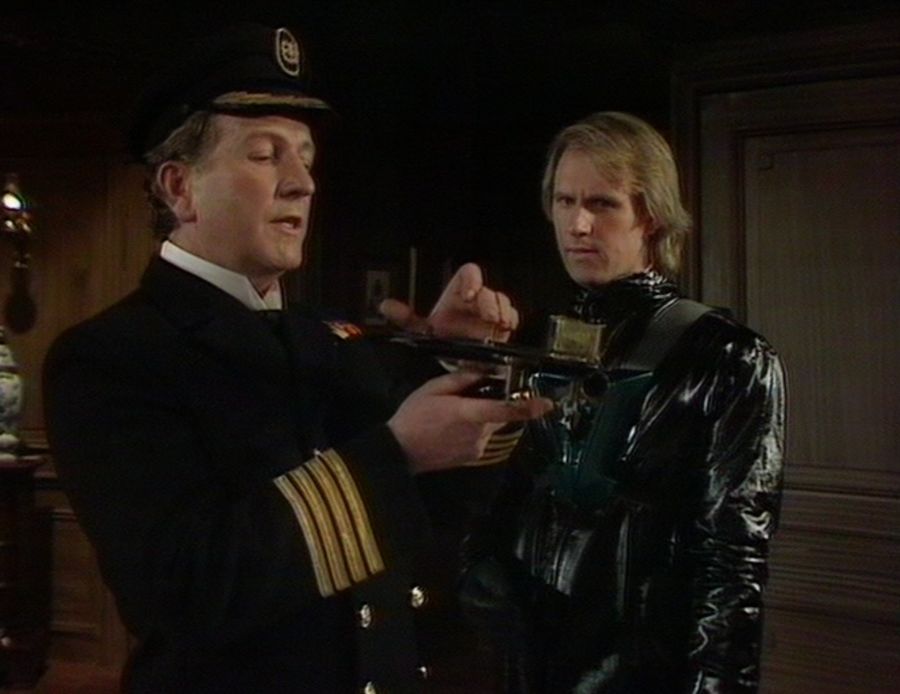
With that said, Keith Barron delivers a ‘strikingly eternal’ performance as the character. He’s always serious and stern, yet able to deliver Striker with an element of intrigue and mystery. You’re not quite sure what his motives are and what his desires are in the race.
This especially concerns the conversation the Doctor has with him when he challenges him and his kind about using humans (Ephemerals) as tools or toys in the race. Keith Barron also delivers some incredibly well-written lines given to him as Striker in the TV story. 🙂
Doctor: Heave to!
Striker: And lose our chance of being first round? Never! This is the sort of excitement that makes eternity bearable.
Striker seems very determined to win the race for Enlightenment, though he won’t share with the Doctor what he desires most. I presume it’s to be amused and entertained, but Striker always seems so serious that you’re not sure if there’s a lot more to it than that. 😐
Keith Barron has also worked with Peter Davison in two episodes of the ITV sitcom series ‘Holding the Fort’, which I’ve not seen yet. He later worked with Peter Davison and Sarah Sutton in the Big Finish audio story ‘Plague of the Daleks’, which I’ve enjoyed a lot. 🙂
The character in that story, Isaac Barclay, is very different to the character he plays in ‘Enlightenment’ where it’s more down to Earth. Keith Barron has also done a Big Finish audio story called ‘The Bad Penny’ with Tom Baker and Louise Jameson, which I’ve yet to hear.
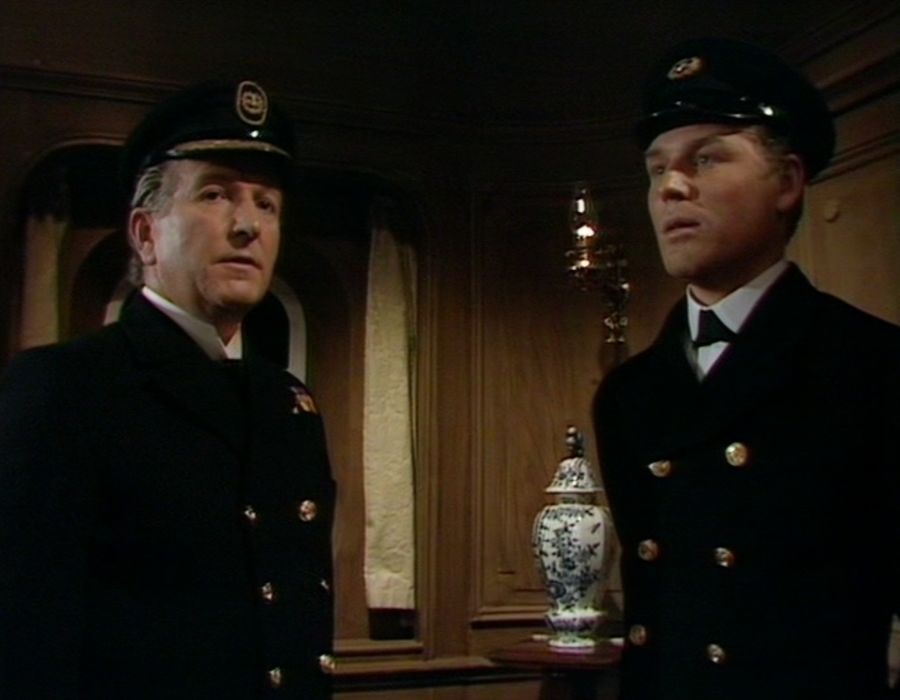
There’s Christopher Brown as Marriner, Captain Striker’s first mate aboard the Shadow who shows an interest in Tegan. Christopher Brown has also worked with Peter Davison, as he guest starred in two episodes of the original ‘All Creatures Great and Small’ BBC TV series.
In those episodes, he played Richard Carmody, a vet who temporarily replaced Tristan in Skeldale House in Darrowby before he returned from doing his exams. Ironically, the character Richard Carmody has appeared more prominently in the Channel 5 TV series.
And he’s played by James Anthony-Rose. Imagine ‘Enlightenment’ being made today where Callum Woodhouse played the Fifth Doctor and James Anthony-Rose played Marriner. I wonder if that ever happened in another reality. 😀 It’s something to ponder on.

I enjoyed Chris Brown’s performance as Marriner in ‘Enlightenment’ and it’s amusing how he always keeps showing an interest in Tegan whilst she’s trying to fend him off. I’m sure Chris Brown and Janet Fielding got well with each other behind-the-scenes in this story.
Sometimes, Marriner can be a good ally for the Doctor and Tegan when they’re trying to collect Turlough from the Buccaneer ship in ‘Part Three’. This is especially when the Doctor requests Marriner to locate Turlough when he’s below in the ship’s Ion chamber.
But there are times when Marriner is often on the side of Eternals like Striker, particularly when he insists Tegan stays aboard the Shadow whilst the Doctor goes to the Buccaneer to stop Wrack winning in ‘Part Four’. You’re not sure what to make of him.
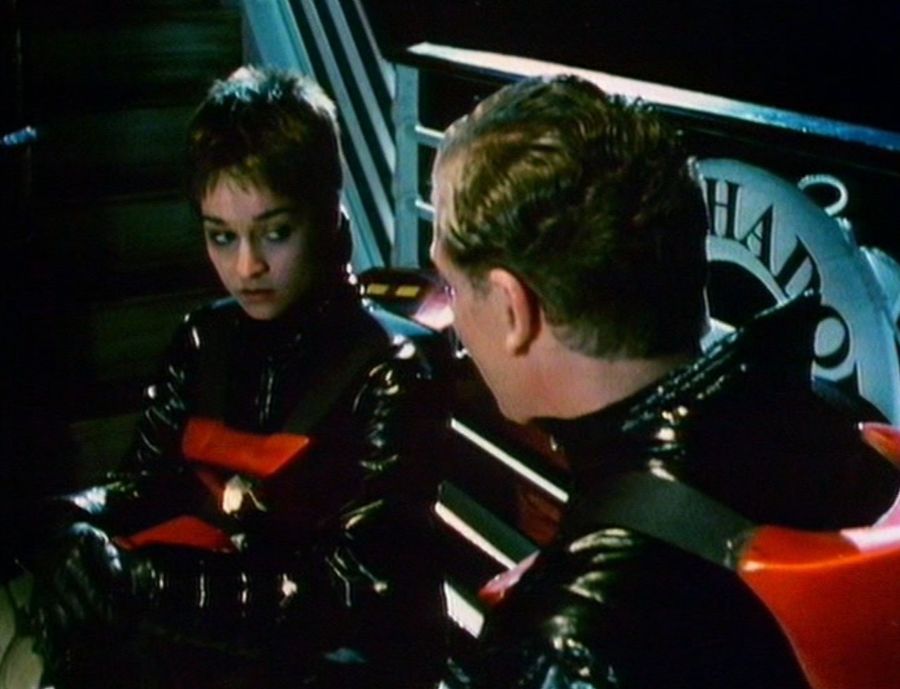
I liked the scene where Tegan closed her mind to Marriner in ‘Part Three’. In ‘The Sunfire Chronicle’ story ‘The Race of Endurance’, which takes place before ‘Enlightenment’, I linked to that scene by having Tegan struggle to close her mind to the telepathic Becceri.
I also liked it when Marriner read Tegan’s mind when she’s grieving over the seeming loss of Turlough and the Doctor in ‘Part Four’. Marriner struggles to understand what grief is. I quite like how that scene is played out there, especially with Tegan being silent.
There’s Lynda Baron as Captain Wrack of the Buccaneer in this ‘Doctor Who’ story. This isn’t Lynda Baron’s first association with ‘Doctor Who’, as she previous sang ‘The Ballard of the Last Chance Saloon’ throughout the story ‘The Gunfighters’ with William Hartnell.
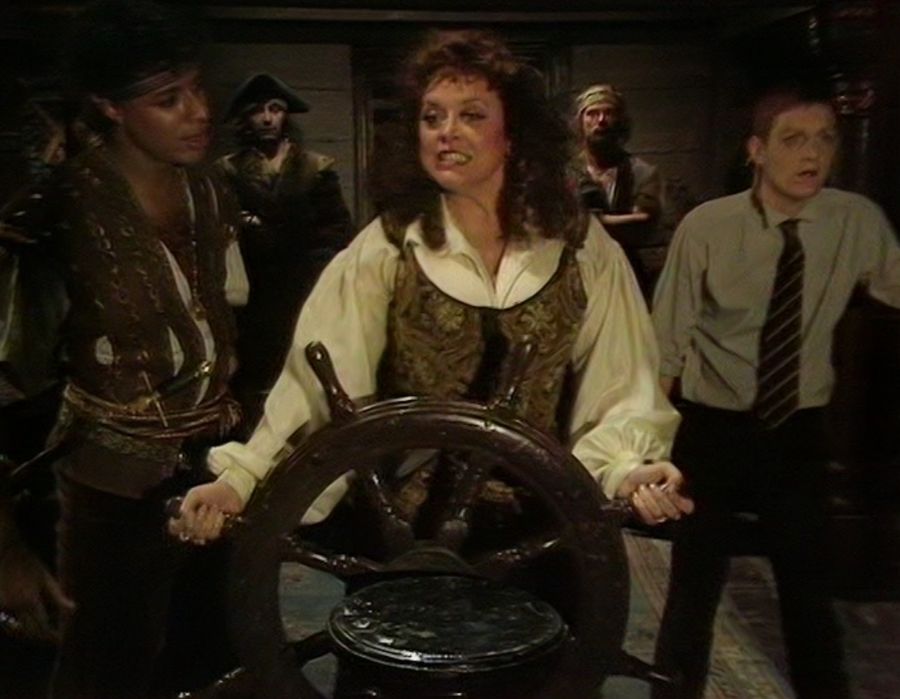
Yes! That story! Where the song kept being sung throughout the four episodes when you didn’t want it to. 😐 Fortunately, I remember Lynda Baron more fondly in ‘Enlightenment’ than I do for her in ‘The Gunfighters’, especially when you didn’t see her in that TV story.
Lynda Baron also went on to play Val in the ‘Doctor Who’ episode ‘Closing Time’ with Matt Smith’s Eleventh Doctor. Again, I recall Lynda Baron more fondly in ‘Enlightenment’ than in ‘Closing Time’, but she was fine in that and it was nice to see her in that episode.
Lynda Baron is more well-known for being in ‘Open All Hours’ and its sequel series ‘Still Open All Hours’, and she’s been in the series ‘Come Outside’ as well as ‘EastEnders’. Her performance as Wrack in this ‘Doctor Who’ story is…rather interesting to say the least. 😐

Unlike Striker and Marriner aboard the Shadow who are more reserved and in check with their emotions, Wrack is rather, well, expressive in her mannerisms. This might be because she adopts the pirate captain role more readily than one might expect her to. 😐
I wouldn’t say it’s a bad performance, as Lynda Baron does very well in delivering a villainous performance in Wrack. But matching her to the other Eternals like Striker and Marriner, it seems to be out-of-place, especially when she’s determined to win the race.
Wrack tends to laugh a lot in this ‘Doctor Who’ story, which I think should have been toned down to make her more threatening. It risks the story with going in pantomime realms, which, if this was made as a Christmas Special instead, it would be more appropriate. 😐
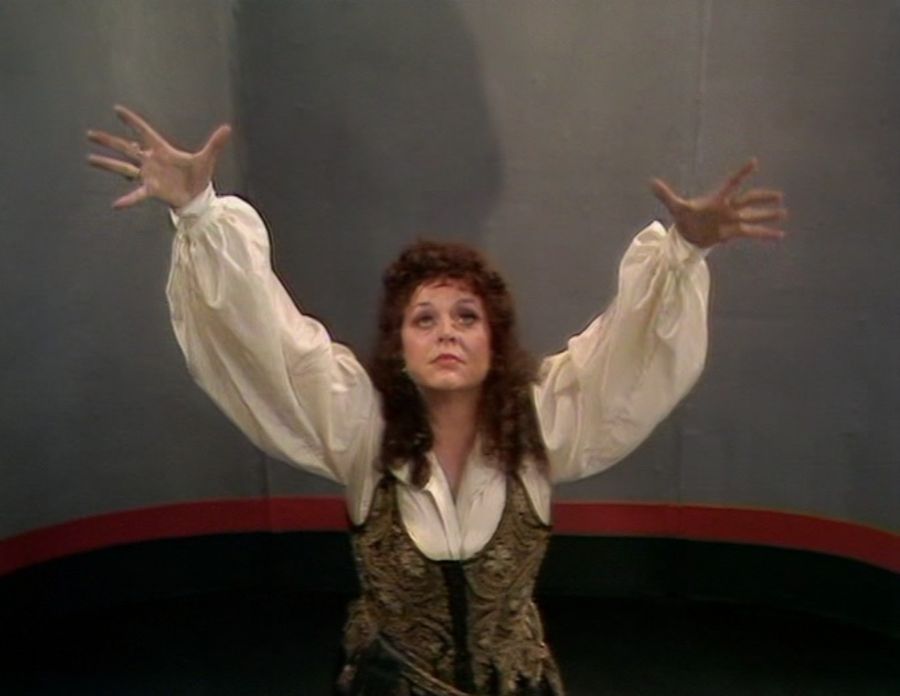
It’s interesting how Wrack’s character turns out in this story, even in the last two episodes that she’s in. As Turlough discovers, she’s in league with the Black Guardian, who provides her with ruby-like gemstones that are used as bombs to blow up her competitors.
So essentially, Wrack is determined to cheat and kill in order to win the race. Wrack is more dangerous than Striker and Marriner as an Eternal, especially when she shares her plans to Turlough on what she hopes to do when she wins the prize of Enlightenment. 😐
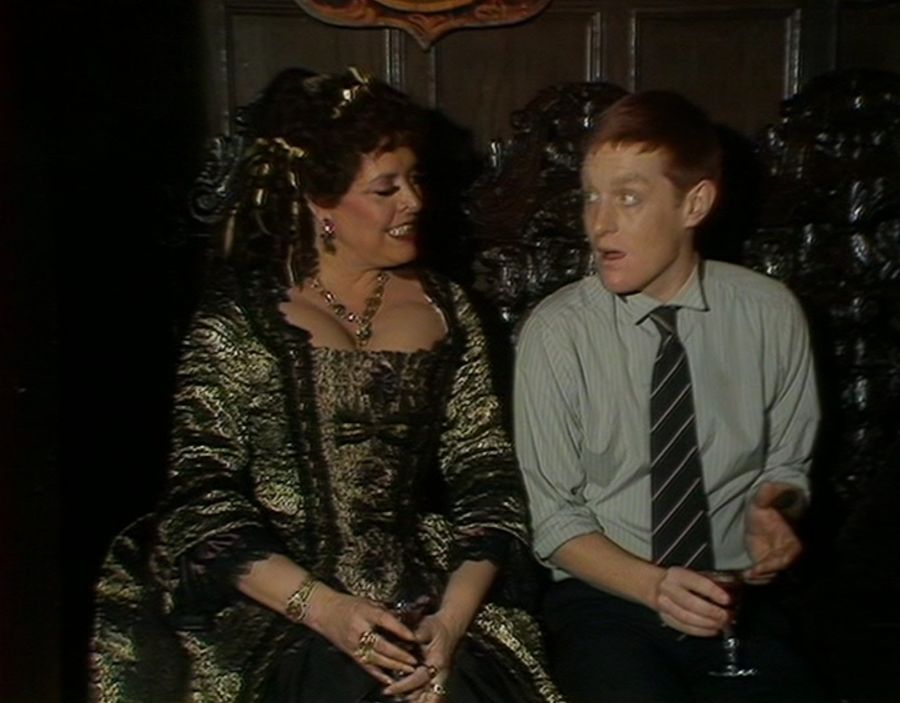
Wrack: When I have it, I shall no longer depend on Ephemeral minds. Everything conceived in time, from the beginning to the end, will be clear to me. I shall create and destroy as I wish. I’ll never be bored again.
Turlough: Destroy?
Wrack: Enlightenment brings whatever one desires. I desire to be amused.
I’m sure Lynda Baron was enjoying herself when making this ‘Doctor Who’ story. Although, perhaps maybe a little too much, especially when she delivers that over-the-top laugh at the end of ‘Part Three’. I don’t think that laugh was really necessary in the story.
I’m glad it was omitted when we got to the resolution of that ‘Part Three’ cliffhanger in ‘Part Four’. I’m also glad that it’s not included in the Special Edition movie version of the story. The ‘Part Three’ cliffhanger is also omitted in the Target novelization/audiobook. 🙂
Incidentally, Wrack’s interaction with Turlough is very interesting when watching this story. In ‘Part Three’, Wrack seems to give the impression Turlough deliberately came to her ship after he tried to commit suicide when going overboard at the end of ‘Part Two’. 😐
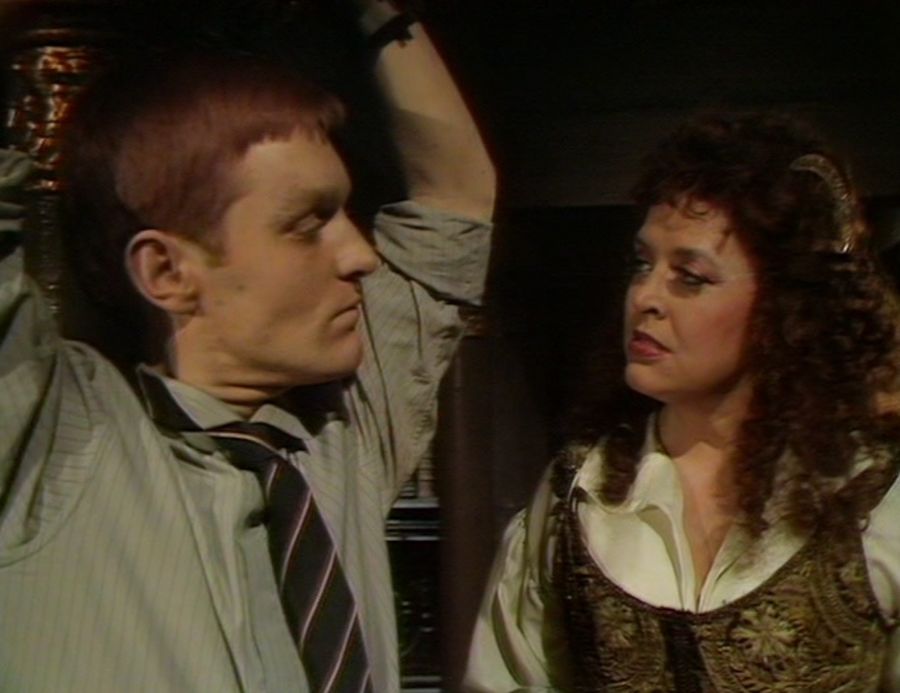
Wrack: Why did you come to me? Was your intention sabotage?
No, of course, it wasn’t, Wrack! Turlough didn’t deliberately have in mind to come to your ship. He was trying to kill himself when trying to get away from the Black Guardian at the end of ‘Part Two’ when the Buccaneer picked him up. What are you talking about?!
Leee John guest stars as Mansell, Wrack’s first mate aboard the Buccaneer. Like Keith Barron, Leee John was a replacement for another actor originally cast to play Mansell. Mansell was originally going to be played by David Rhule, who I’ve not seen at all before.
Looking him up, David Rhule was a black actor cast in the role of Mansell like Leee John, and he’s been in episodes of ‘Only Fools and Horses’ and ‘The Young Ones’. Like Peter Sallis, David Rhule couldn’t do the new production dates once the strike occurred.
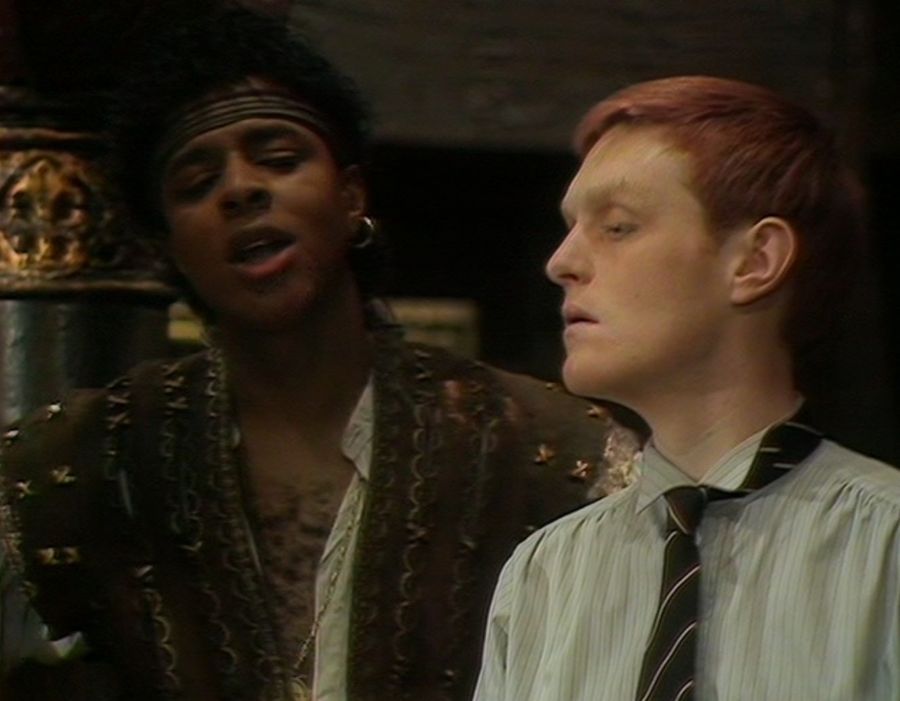
As I understand it, Leee John replaced David Rhule at short notice, despite having no previous acting experience. At the time of recording ‘Enlightenment’, Leee John was the leader singer of the 1980s pop group Imagination. Not that I’m expecting you to know that.
Some are likely to criticise Leee John’s acting abilities, especially with him being a last-minute replacement and being more of a musician than an actor. But honestly, I’m okay with Leee John’s performance and he does a decent performance as Mansell in the tale.
I mean, Mansell’s not a very big character role to rave about and he’s mainly there to support Captain Wrack in her endeavours to win the race. And with him being in the last two episodes of the TV story, I don’t think you can do much in enhancing his character. 😐
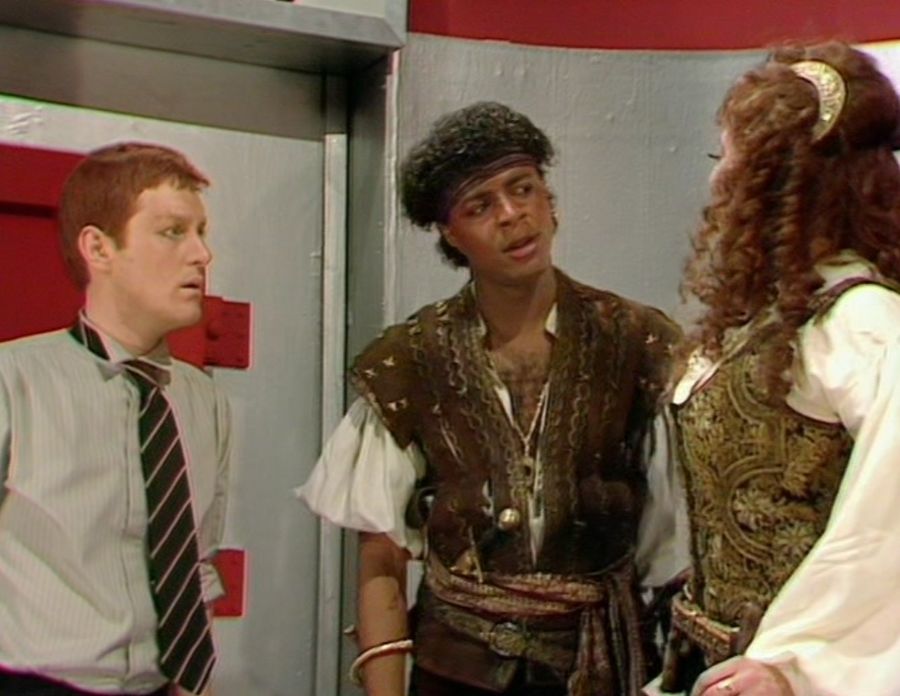
From checking Leee John’s IMDb page, he doesn’t seem to have done much TV or acting after ‘Enlightenment’. Mostly, he’s done music videos for his pop group Imagination. I think we can safely assume he’s more of a musician than an actor in his line of career.
The story’s cast also includes Tony Caunter as Jackson and Clive Kneller as Collier, the two sailors of the Edwardian sailing ship, the Shadow, that get to speak in this story. Tony Caunter appears in three episodes of this story whilst Clive Kneller is just in one episode.
This also isn’t Tony Caunter’s first association with ‘Doctor Who’ either. Beforehand, he played Thatcher in ‘The Crusade’ and Morgan in ‘Colony In Space’. Katy Manning seemed to recognise Tony Caunter when seeing this story in the ‘Behind the Sofa’ item. 🙂
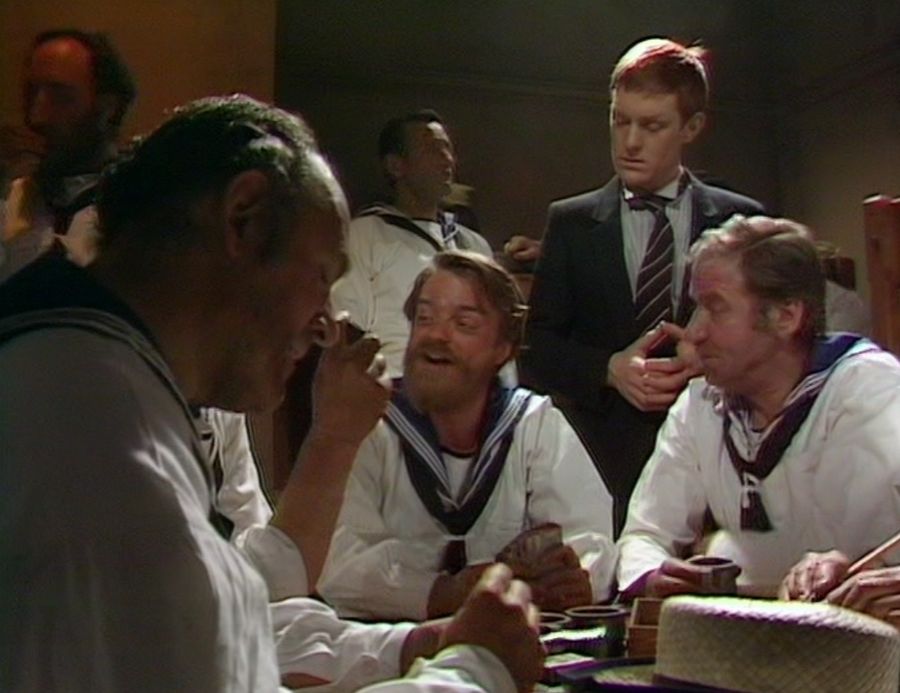
There’s also James McClure as the First Officer aboard the Shadow ship. I’m surprised James McClure’s character wasn’t given a name in the TV story. Not even in the Target novelization/audiobook either. I believe James McClure is only in the first two episodes.
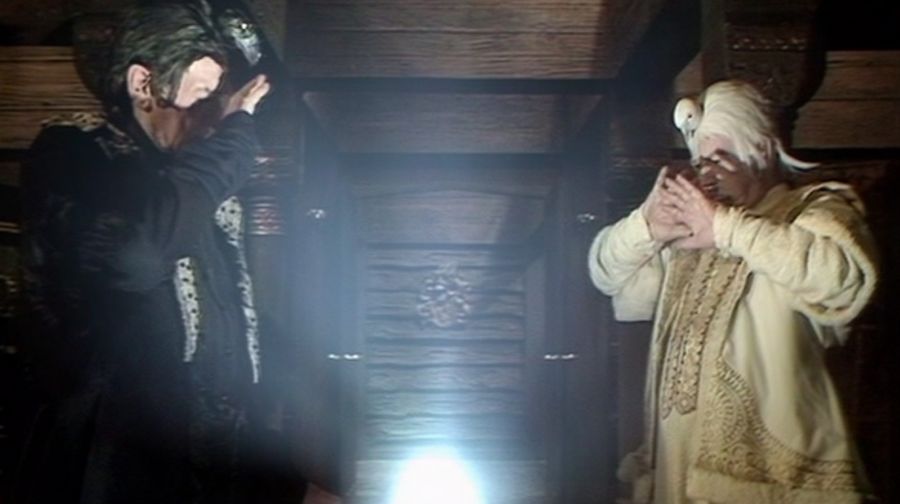
The story concludes with the Black and White Guardians appearing in the Buccaneer once the ship has reached the finishing line at the crystalline space station of the Enlighteners. They’re about to provide the prize of Enlightenment to the race’s winners.
I enjoyed the confrontation scene between the two Guardians, as they establish how they cannot exist without each other. It’s a scene I’m sure lots of fans were hoping to see with the two Guardians meeting each other since they debuted in ‘The Key to Time’ season.
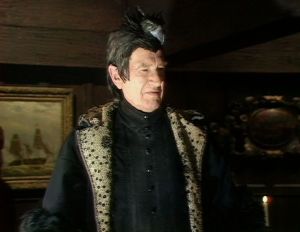

White Guardian: You will never destroy the light.
Black Guardian: Others shall do it for me.
White Guardian: Destroy the light and you destroy yourself. Dark cannot exist without knowledge of light.
Black Guardian: Nor light without dark.
Incidentally, like the Black Guardian who has a crow on his head, the White Guardian has a dove on his head. I quite like the symmetry of the two Guardians’ costumes with the birds on their heads, matching the light and the dark of their characters in the series.
In my ‘Doctor Who Unbound’ story called ‘Into the Death-Space’, the Black and White Guardians appear in the story and are represented by their crow and dove forms. It may seem ridiculous in the costume design, but the imagery of it sometimes works well.
I also liked it when the Fifth Doctor got to meet the two Guardians together as well as confront the Black Guardian at last. Tom Baker’s Doctor only confronted the Black Guardian via a TARDIS viewscreen. Here, Peter Davison’s Doctor meets him in person. 🙂
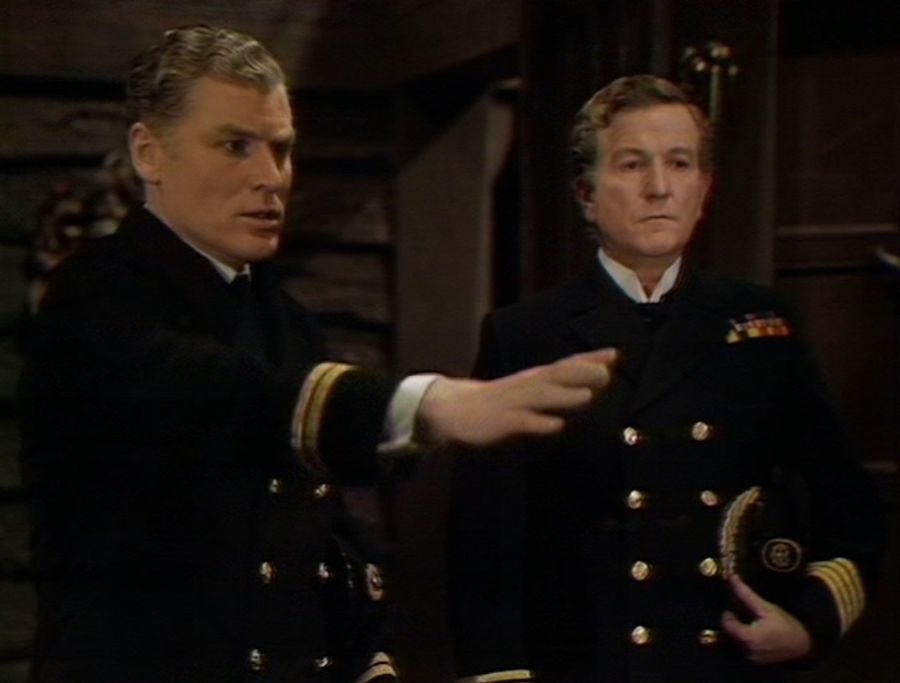
Eventually, the White Guardian has the Eternals sent back to the Void, much to the protests of Marriner who wants to stay. He begs Tegan to help her, but she tells him she can’t. Whether she wanted to help Marriner or not is a matter for debate with this story. 😐
We then have the scene where Turlough is offered a share of Enlightenment by the White Guardian before he rejects it and has the Black Guardian disintegrated, ending his contract with him. Again, I do like how that scene is played out in the TV adventure. 🙂
But just as the White Guardian is about to leave, he warns the Doctor that despite him thwarting the Black Guardian twice with denying him the Key to Time as well as Enlightenment, there will soon be a third encounter. He advises him to be ready for that.
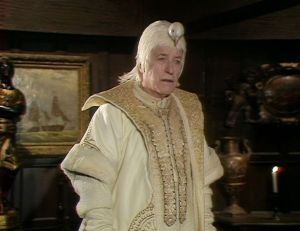
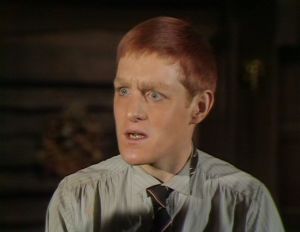
Turlough: But the Black Guardian is destroyed.
White Guardian: While I exist, he exists also, until we are no longer needed.
Whilst that third encounter hasn’t happened in the TV series yet as far as I’m concerned, there’s a ‘third encounter’ for the Fifth Doctor when he confronts the Black and White Guardians in ‘The Key 2 Time’ trilogy by Big Finish with then companion Amy.
Abby, as she would later be called. 😀 Once the White Guardian has gone, Tegan suggests that they leave. The Doctor asks where to and Turlough requests they take him back to his home planet. The Doctor agrees. 🙂 Will he return Turlough home though? 😀
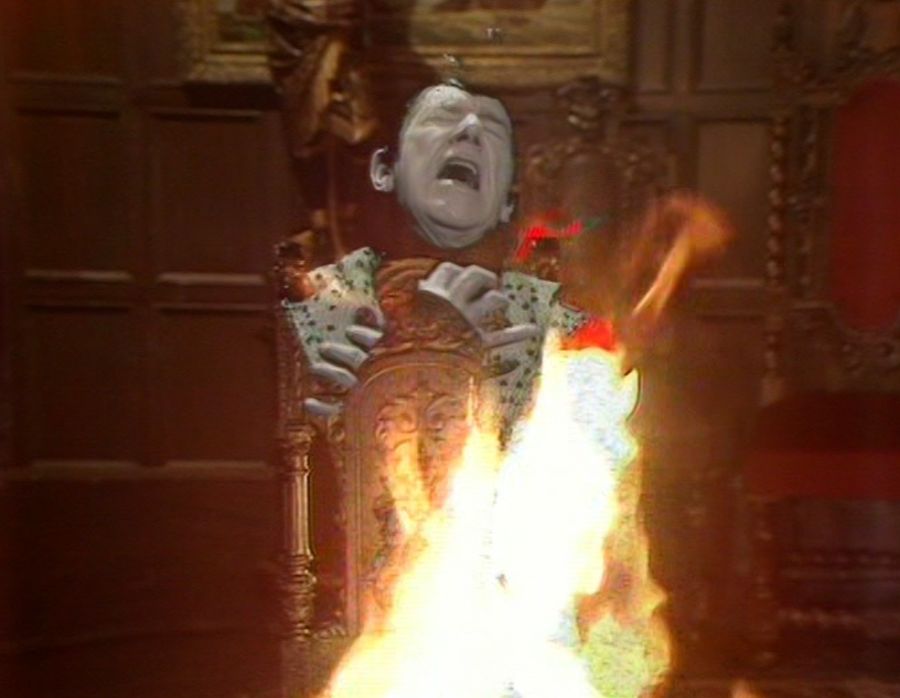
The original DVD special features were as follows. There was the original four-part version of the story, a dual mono sound audio mix option for the story, a DVD audio commentary with Peter Davison, Mark Strickson, writer Barbara Clegg and director Fiona Cumming, and an isolated music option of the story by Malcolm Clarke to enjoy. There was an info-text commentary option to enjoy, and the making-of documentary ‘Winner Takes All’, featuring behind-the-scenes cast and crew interviews. There was the ‘Casting Off!’ featurette about the cast of ‘Enlightenment’, the ‘Single Write Female’ featurette with writer Barbara Clegg, and ‘The Story of the Guardians’ featurette, which looks into the White and Black Guardians and the actors who played them – Cyril Luckham and Valentine Dyall. There was a storyboards multi-angle featurette on the sailing ships in outer space for ‘Enlightenment’, narrated by visual effects supervisor Mike Kelt. There was a photo gallery of the story, and PDF materials, including a ‘Radio Times Listings’ of the story and CGI storyboards. There was also a ‘coming soon’ trailer for ‘The Twin Dilemma’, starring Colin Baker and Nicola Bryant. There were two Easter Eggs to look out for on Disc 1 of the ‘Enlightenment’ 2-disc DVD set, including a TARDIS Information System item and ‘Janet’s Boob Tube’ item.
There was the 75-minute Special Edition movie version of ‘Enlightenment’ with new CGI effects to enjoy, with an introduction provided by director Fiona Cumming. The Special Edition movie version could be seen via two audio options, including a 5.1 surround sound audio mix option and a 2.0 stereo sound audio mix option. There was ‘Re-Enlightenment’, a behind-the-scenes look at the Special Edition movie version of ‘Enlightenment’ with director Fiona Cumming, producer Brendan Sheppard, storyboard artist Russell Owen and CGI animator Rob Semenoff (voice only when he was calling from Canada). There was an original edit comparison that focuses on the opening of ‘Part Three’ between the broadcast version and the Special Edition movie version of the story. There were also film trims from certain scenes in the story. There was the ‘Finding Mark Stickson’ featurette (which can now be found on Disc 3 of the Season 20 Blu-ray box set containing ‘Mawdryn Undead’) and the ‘Finding Sarah Sutton’ featurette (which can now be found on Disc 4 of the Season 20 Blu-ray box set containing ‘Terminus’). There was the ‘Russell Harty’s Christmas Party’ item, featuring Peter Davison and his then-wife Sandra Dickson performing a sketch based on a ‘Cinderella’ pantomime (which can now be found on Disc 1 of the Season 20 Blu-ray box set containing ‘Arc of Infinity’). There was also BBC continuity announcements of the story, and there were PDF materials, including ‘The Radio Times ‘Doctor Who’ 20th Anniversary Special’ and the ‘Doctor Who Office’s Production Bible’. There was an Easter Egg to look out for on Disc 2 of the ‘Enlightenment’ 2-disc DVD set, which was a photo gallery on the making of ‘The Black Guardian Trilogy’ DVD box set. I enjoyed the photo gallery, since it contains photos of the cast and crew being interviewed for the DVD extras, including some lovely shots of Sarah Sutton being interviewed, which was a joy for me.
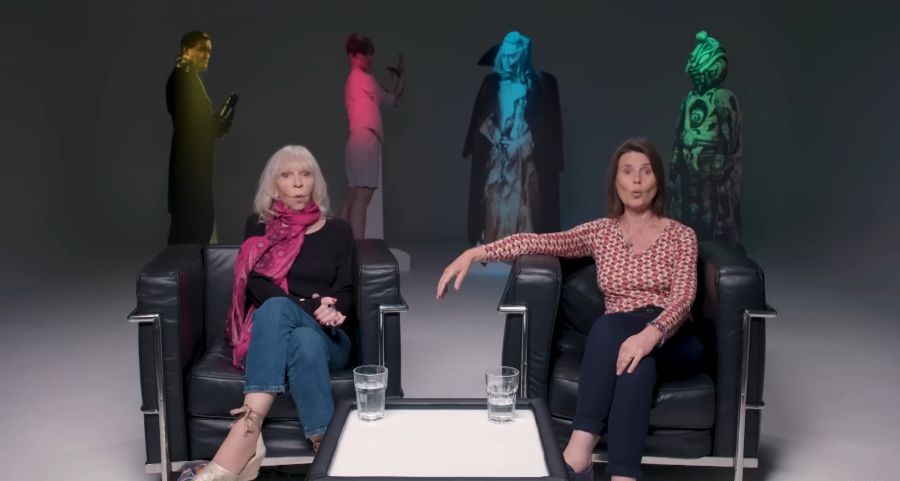
On Disc 5 of the ‘Doctor Who – The Collection – Season 20’ Blu-ray, the original four-part story, the dual mono sound audio mix option, the DVD audio commentary, the isolated music option, the ‘Winner Takes All’ making-of documentary, the ‘Single Write Female’ featurette, ‘The Story of the Guardians’ featurette, the storyboards multi-angle featurette, the 75-minute Special Edition movie version of ‘Enlightenment’ and its two audio options, including the 5.1 surround sound audio mix option and the 2.0 stereo sound audio mix option, the ‘Re-Enlightenment’ behind-the-scenes look at the Special Edition movie version of ‘Enlightenment’, and the original edit comparison on the opening of ‘Part Three’ can be found on there. The info-text commentary option, the ‘Casting Off!’ featurette, the photo gallery, and the film trims have been updated for 2023 on the Blu-ray. The BBC continuity announcements of the story have been updated as BBC trailers and continuity announcements of the story. The three DVD Easter Eggs, including the TARDIS Information System item, the ‘Janet’s Boob Tube’ item and the photo gallery on the making of ‘The Black Guardian Trilogy’ DVD box set have been combined into one Blu-ray item.
The new special features on Blu-ray include the brand-new CGI effects option for the story to enjoy, and the ‘Behind the Sofa’ feature on ‘Enlightenment’ with Peter Davison (the Fifth Doctor), Sarah Sutton (Nyssa), Janet Fielding (Tegan) and Mark Strickson (Turlough) as well as Colin Baker (the Sixth Doctor) and Sylvester McCoy (the Seventh Doctor) as well as Katy Manning (Jo) and Sophie Aldred (Ace). There’s a new visual effects featurette on the story, and there’s a ‘Breakfast Time’ interview with Peter Davison and Patrick Troughton, which has been taken from ‘The Five Doctors’ 25th anniversary 2-disc Special Edition DVD and has been updated and extended on Disc 5 of the Season 20 Blu-ray box set containing ‘Enlightenment’.
On the PDF front, as well as the ‘Radio Times Listings’ of ‘Enlightenment’, there are production documents, four editing scripts, four rehearsal scripts, four camera scripts, four transmission scripts, a recording schedule, studio floorplans, and design drawings (not sure if the CGI storyboards from the DVD release are included). You need a special Blu-ray computer drive for that. ‘The Radio Times ‘Doctor Who’ 20th Anniversary Special’ PDF and the ‘Doctor Who Office’s Production Bible’ PDF can be found on Disc 9 of the Season 20 Blu-ray box set containing the 1995 Special Edition version of ‘The Five Doctors’.
‘Enlightenment’ is a good story to close off ‘The Black Guardian Trilogy’ of ‘Doctor Who’ in Season 20 of the classic TV series. It’s also a good story to end Turlough’s eventful introduction and journey as a ‘Doctor Who’ companion, which I found quite fascinating.
It’s a very imaginative tale featuring creative ideas in terms of the writing by Barbara Clegg as well as the direction by Fiona Cumming. There’s no denying it’s arguably the strongest story of the trilogy that ends it on a high, though it’s a pity that Nyssa didn’t appear in it.
I did find the story hard-going at first, especially as it’s Nyssa-less following her departure in ‘Terminus’. I wish Sarah Sutton could’ve been in ‘Enlightenment’ to make her appearances in the trilogy complete, but I appreciate the story more over the years.
And again, at least the Big Finish audios have made up for the fact that Nyssa wasn’t mentioned or referred to in the story by doing a series of older Nyssa stories that takes place after ‘Enlightenment’. It does sort-of satisfy me that Nyssa wasn’t forgotten about.
‘The Black Guardian Trilogy’ is one of my absolute favourite trilogies to feature in the classic ‘Doctor Who’ TV series. I cherish very fond memories of this trilogy when I first saw it on DVD back in 2009, especially with two stories featuring Sarah Sutton as Nyssa.
It’s what prompted me to venture and meet Sarah Sutton at ‘Doctor Who’ conventions over the years, especially as I’ve enjoyed going to them with meeting her and other ‘Doctor Who’ stars like Peter Davison, Janet Fielding, Mark Strickson and many to name.
I’m also very happy that Sarah signed all three DVD covers of my copies of the three stories featured in ‘The Black Guardian Trilogy’ for me. Without seeing ‘The Black Guardian Trilogy’, I wouldn’t be able to embrace the ‘Doctor Who’ fandom like I am now.
So, with Turlough wanting to go back home, it’s just a matter of the Doctor getting him back home in the TARDIS, right? Well, judging by how long it took for the Doctor to get Tegan back to Heathrow Airport in Season 19, we’re probably going the long way round.
‘Enlightenment’ rating – 9/10

‘WINNER TAKES ALL’
Please feel free to comment on my review.
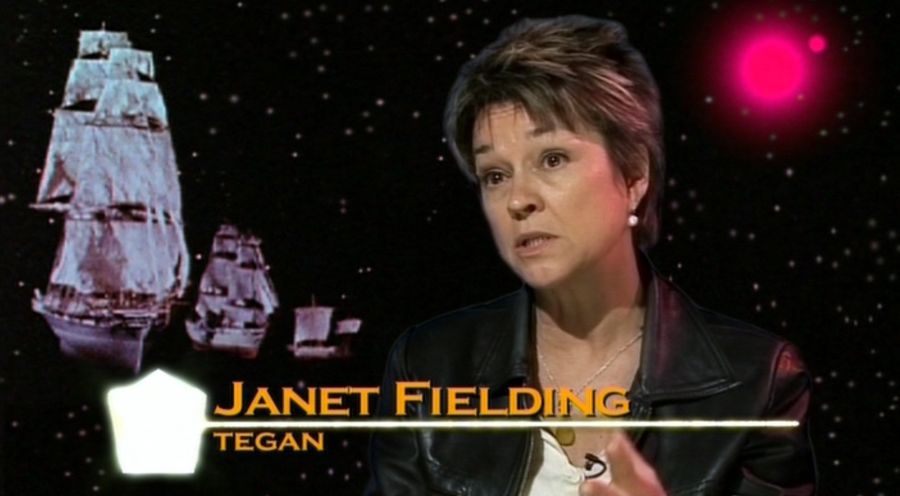
‘Winner Takes All’ is the third in a trilogy of making-of documentaries covering ‘The Black Guardian Trilogy’ of ‘Doctor Who’ on DVD. I’ve enjoyed the consistency of these making-of documentaries, even if the selections of cast and crew being interviewed isn’t quite even.
Once again, Floella Benjamin narrates ‘Winner Takes All’ for ‘Enlightenment’, having narrated the previous two instalments, including ‘Who Wants to Live Forever?’ for ‘Mawdryn Undead’ and ‘Breaking Point’ in ‘Terminus’. Her enthusiasm in the narration is evident throughout. 🙂
The interviewees include Peter Davison, Janet Fielding, Mark Strickson, Keith Barron, Christopher Brown, Leee John, writer Barbara Clegg and director Fiona Cumming. It was nice to see Janet interviewed. This is the only instalment of the trilogy of making-of documentaries that she’s in.
Mark Strickson has been the constant ‘Doctor Who’ companion throughout this trilogy of making-of documentaries for ‘The Black Guardian Trilogy’ DVD box set. It makes sense, considering this is Turlough’s journey. It’s intriguing how it’s explored in behind-the-scenes terms.
The story’s costume designer Dinah Collin is interviewed and it’s fascinating that she previously worked on ‘Earthshock’ and revamped the Cybermen for the 1980s. I enjoyed Dinah sharing her memories of putting together Tegan’s ball gown costume in the story. 🙂
It was enlightening (pardon the word 😀 ) to go through the stages of Peter Sallis being initially cast to play Captain Striker before he and David Rhule were recast following the industrial action that happened and caused the TV production to be rescheduled for brand new dates.
In the documentary, it’s made clear that the industrial action already affected ‘Terminus’ and it grounded the last three stories of Season 20 to a halt, including ‘Enlightenment’, ‘The King’s Demons’ and ‘Warhead’ before it soon became ‘Resurrection of the Daleks’. 🙂
It’s a shame that Lynda Baron wasn’t interviewed for the making-of documentary as she was around at the time and it wasn’t long after this that she guest starred in the ‘Doctor Who’ episode ‘Closing Time’ with Matt Smith. Perhaps she was unavailable at the time. 😐
It was nice to hear Leee John share his memories of playing Mansell in ‘Doctor Who’ as well as Keith Barron and Christopher Brown. The incident involving Mark Strickson injuring himself after falling from a Kirby wire is quite shocking when it’s shared in the documentary.
I like how the documentary concludes with a preview of the Special Edition movie version of ‘Enlightenment’. I also like how Fiona Cumming emphasises that the Special Edition movie version is a ‘as well as’ rather than an ‘instead of’ when you’re checking out the story.
‘Winner Takes All’ rating – 8/10
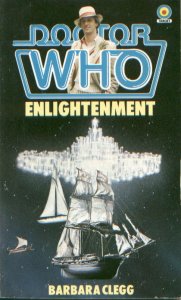
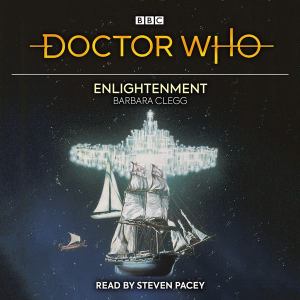
‘DOCTOR WHO – ENLIGHTENMENT’
Please feel free to comment on my review.
Winner Takes All For Enlightenment
The Target novelizations/audiobooks of ‘The Black Guardian Trilogy’ are complete! 🙂
Around 2017, I reviewed the Target novelizations of the first two stories in ‘The Black Guardian Trilogy’ of ‘Doctor Who’ – ‘Mawdryn Undead’ and ‘Terminus’. At the time, I hadn’t read nor reviewed the Target novelization for ‘Enlightenment’, the third story in the trilogy. I’d just reviewed the TV version of the story then.
Thus, it seemed only fair that I would read and review the ‘Enlightenment’ Target novelization by Barbara Clegg, having done the reviews for the novelizations on the first two stories of ‘The Black Guardian Trilogy’. I sought the opportunity when I purchased the ‘Enlightenment’ Target book in November 2017.
Unfortunately, the ‘Enlightenment’ book was delivered late. It didn’t arrive in the specified time as was intended by Amazon.co.uk. Thankfully, I kept in touch with the supplier who sent the book and I was informed that the book might be delivered late due to the fact it was being sent from abroad. 😐
Eventually, during the 2017 Christmas holidays, I received the ‘Enlightenment’ book safe and sound in the post. I was relieved to have the book. I thought it would never come and that it got lost in the post. I thanked the supplier who advised me to be patient and I looked forward to reading the book.
‘Enlightenment’ was novelized by Barbara Clegg in May 1984; a year and two months after the TV story was transmitted in March 1983. It’s interesting that Barbara Clegg novelized this TV story of hers, as it’s her first and only contribution to the Target novelization range of ‘Doctor Who’ books. And she does a remarkable job in novelizing it.
The book is divided into 12 chapters with 3 chapters making up for one episode of the four-part story. Thus, the first three chapters make up for ‘Part One’, the second three chapters make up for ‘Part Two’, the third three chapters make up for ‘Part Three’ and the last three chapters make up for ‘Part Four’.
I wonder if Barbara Clegg followed the same guidelines as Terrance Dicks when he novelized ‘Doctor Who’ TV stories in the 1970s and 1980s. It’s possible. Mind you, the ‘Part Three’ section does overlap into the ‘Part Four’ section, not matching to what we’ve seen on TV. Maybe that’s a good thing.
Barbara Clegg dedicated her ‘Enlightenment’ novelization to Adam, Rufus and Jemima, who are considered her most constructive critics. I assume those three are family members of Barbara Clegg’s that helped her with writing ‘Enlightenment’ for TV. I’d like confirmation on this to be pretty certain.
I first read the ‘Enlightenment’ Target novelization in January 2018. It was an enjoyable read. Although there was no audiobook available for me to hear it in the background, I could picture the tale in my head after seeing the TV story. It was interesting to compare the book to the TV story as I read it. 🙂
Many years later, BBC Audio released the audiobook for the ‘Enlightenment’ Target novelization in September 2020. I was looking forward to re-reading the ‘Enlightenment’ novelization with the BBC audiobook in the background. I wondered who would read the story, making guesses on the narrator.
I hoped it would be Peter Davison, Janet Fielding or Mark Strickson as the reader for ‘Enlightenment’. They’d be ideal and fitting choices to read the story, having been in ‘Enlightenment’ themselves! They could bring in the emotional baggage that was in the story from making it on the TV.
Sadly, none of the three were chosen to be the reader of the ‘Enlightenment’ audiobook. Instead, the story was read by…Steven Pacey…who previously read the ‘Terminus’ audiobook…and is well-known for playing Del Tarrant in ‘Blake’s 7’. I don’t know why Steven Pacey was chosen to be the reader. 😐
Not that Steven Pacey gives a bad reading of the story. On the contrary, he provides enough enthusiasm for the reading of the ‘Enlightenment’ story, like he did for the ‘Terminus’ audiobook. But like with ‘Terminus’, my issue with Steven Pacey being the narrator is that he had nothing to do with the story.
He didn’t appear in ‘Enlightenment’. In fact, he wasn’t playing the Black Guardian at all in ‘The Black Guardian Trilogy’! It was Valentine Dyall that played him! Mind you, it’s a very intriguing progression to have the reader of the ‘Terminus’ audiobook read the ‘Enlightenment’ audiobook next in the series. 😐
I could’ve accepted this progression of Steven Pacey being the narrator of the stories in ‘The Black Guardian Trilogy’, except he didn’t read the ‘Mawdryn Undead’ audiobook. The late David Collings did that. And David Collings was right for that audiobook. He played Mawdryn in ‘Mawdryn Undead’!
The only connection I can give Steven Pacey to ‘Enlightenment’ is that he worked with the story’s director Fiona Cumming, since she directed two ‘Blake’s 7’ episodes that he was in. But like with Mary Ridge for ‘Terminus’, it’s a weak connection to cast Del Tarrant’s actor to read ‘Enlightenment’.
I purchased the BBC Target audiobook of ‘Enlightenment’ via Audible instead of a CD release. It was nice to read the novelization with the audiobook in the background on Audible. It provided some lovely reading nights, especially when I purchased the audiobook during the Covid-19 pandemic in 2020. 🙂
Reading the ‘Enlightenment’ novelization in 2018 and hearing the audiobook in 2020 have been enjoyable, intriguing and ‘enlightening’ experiences. It was interesting how Barbara Clegg novelized her TV story and I enjoyed discovering what changes she may have made to the story in prose form.
Actually, Barbara didn’t change the story’s plot much in novelization form. It more or less stays the same as you would expect from watching the TV story. There are subtle changes made to the characters and there’s one certain aspect to the plot that gets omitted entirely in the novelization. 😐
Reading and hearing the Target novelization/audiobook has allowed me to visualise the story, both in its original four-part TV format and its Special Edition movie format on the 2-disc DVD edition of ‘Enlightenment’. It’s certainly been the case for ‘Enlightenment’ in the Season 20 Blu-ray box set, especially with its latest CGI effects option on Disc 5 containing the story. 🙂
The story begins as you would expect it to with the Fifth Doctor, Tegan and Turlough in the TARDIS and the console room darkened. It’s intriguing to note that in the book, Turlough is playing the black chess pieces (reflecting his contract with the Black Guardian) whilst Tegan is playing the white pieces.
I could comment about the fact that there’s no reference to Nyssa’s departure in ‘Terminus’ in the ‘Enlightenment’ Target novelization like there was no reference to her in the TV story, but should I be that surprised? It’s like the TV series wanted to forget about Nyssa after she’d left. Thank goodness Big Finish didn’t forget Nyssa. 🙂
Early on, when the Doctor is in contact with the White Guardian, the Black Guardian doesn’t appear as you would expect him to in the TV story. There’s no line by him saying “You cannot succeed! I control the game, the Doctor’s destiny! And soon, he will be dead!” and no evil “Bwahahahahaha!” 😀
I found that odd when reading and hearing the ‘Enlightenment’ Target novelization/audiobook. In fact, the Black Guardian doesn’t make his first appearance in the book until the ‘Part Two’ section when he’s attacking Turlough in one of the corridors of the Edwardian ship, the Shadow. An unusual introduction!
It’s very interesting that Barbara Clegg didn’t feature the Black Guardian early on in the story as you would expect. I guess the Black Guardian’s appearance in ‘Part One’ wasn’t included in the original scripts. It was only added in at the last minute and at the insistence of script editor Eric Saward.
The scene where Turlough makes contact with the Black Guardian is also interesting in its book form as opposed to TV form. Barbara Clegg explores the reasoning behind Turlough’s attempt to contact the Black Guardian. It seems to be of selfishness and his desire to want to get off the Shadow ship.
The aspect of the plot that’s omitted entirely in the ‘Enlightenment’ book from the TV story is Jackson’s attempt to ‘chug’ the grog overboard and him giving the key of the rum locker to Turlough. Not certain why Barbara didn’t include this plot point in the book. Was it not in the original script? 😐
I’m guessing that maybe it was in the original script but perhaps Barbara Clegg didn’t like it when she novelized the TV story into book form. It might be a story point that didn’t go anywhere, even though it highlighted Striker reading Turlough’s mind about Jackson giving him the key. Am I wrong?
Barbara Clegg takes advantage with the novelization to explore more of the Eternals as characters in ‘Enlightenment’. This was fascinating to explore, as the novelization allows us an opportunity to see what goes on in the Eternals’ minds and how they think as opposed to the normal Ephemeral minds.
Marriner, as a character, is interesting in the book. He gets explored in what he sees in Tegan’s mind and why he’s become fascinated by her. It’s clear in the TV story too, but in the novelization/audiobook, it’s fascinating. Marriner’s fascination with Tegan is by him wanting to exist rather than to fall in love with her.
When it comes to the end and Marriner is sent back to the Void by the White Guardian, he becomes despairing, saying to Tegan, “I need you…” over and over again as he fades. It’s not so evident in the TV story as it is in the novelization/audiobook. Steven Pacey also brings it to life well on audio.
It’s also fascinating how the Eternals whir into motion when our main characters: the Doctor, Tegan and Turlough are thinking about something and they latch onto it. It highlights how intrusive these Eternals can be and why none of these racing groups must win to secure the prize of Enlightenment.
I like how Captain Striker is explored as a character in the book. It matches to what Keith Barron’s interpretation of Striker is like in the TV story. Striker is static and serious when he’s focused on winning the race. His justifications for the Eternals’ existence when arguing with the Doctor were interesting to read and hear.
Although the Doctor’s line on calling the Eternals ‘parasites’ is omitted in the book, which I think should have been included. It’s also interesting how Steven Pacey voices the characters in the book like Striker, Marriner, Wrack and Mansell. Sometimes, his voices for them match to how they were on TV.
Sometimes they don’t. Mansell is a good choice, as he sounds more like a traditional pirate compared to the performance that Leee John gave him in the TV story, which sounded less hearty and more laid back. Somehow, I think that’s good. It makes the Buccaneer crew more convincing in the novelization/audiobook.
Wrack’s character was interesting to read and hear. Initially, there were times where I could visualise Lynda Baron as Wrack, but I don’t think its over-the-top when you read the story on its own and Steven Pacey doesn’t make it over-the-top on audio. There are times where Wrack is toned down. 🙂
She’s more mysterious and menacing. A criticism I’ve heard about Wrack is that Lynda Baron’s performance could be pantomime and cringeworthy. That I could see, especially when Lynda Baron tends to laugh a lot. Meanwhile, in the novelization/audiobook, it’s a quieter menace with Wrack’s character throughout.
An interesting point I’ve mentioned is the cliffhanger ending of ‘Part Three’ overlapping into ‘Part Four’. There’s also the omission of Wrack laughing in front of the camera and saying that the Doctor has lost and that all that waits for him is his ‘ultimate destruction’. I prefer it omitted in the novelization. 🙂
The ‘Part Three’ section of the book ends on a completely different note compared to the TV version. It ends when the Doctor realises that Wrack won’t stop in finding a way to destroy Striker’s ship with one of her ruby gemstones. I’m not sure if this was meant to be ‘Part Three’s original cliffhanger.
Apparently, in the Target novelization, Wrack used different kinds of gemstones to destroy her enemies as opposed to the TV story. I wouldn’t have registered this story’s plot point had I not read it up. But the fact that Barbara Clegg emphasises this for the story in novelization form was interesting to read.
‘Enlightenment’ concludes with Turlough being given the choice of choosing between having the diamond for himself or letting the Black Guardian have it to spare the Doctor’s life. I liked how Barbara Clegg explored Turlough’s mindset. His greed for the diamond becomes too much for him whilst choosing.
It’s also interesting how Turlough switches from hating the Doctor to actually liking him in the choice that he makes. Eventually, he chooses not to have the diamond and shoves at the Black Guardian, cancelling him out in the process. The exploration of ‘Enlightenment was the choice’ is well-handled.
‘Doctor Who – Enlightenment’ has been an enjoyable Target novelization/audiobook to read and listen to. It’s nice that Barbara Clegg got to novelize her ‘Doctor Who’ TV story for the Target novelization range. It’s been fascinating to read and listen to, especially with some of the subtle changes made. 🙂
The story remains the same despite the subtle changes made by Barbara in the novelization. I would’ve preferred it if either Peter Davison, Janet Fielding or Mark Strickson read the Target audiobook instead of Steven Pacey, but he does give a good enough reading that’s engaging to listen to.
‘Doctor Who – Enlightenment’ rating – 8/10
| The previous story
For the Fifth Doctor was For Tegan is For Turlough is |
The next story
For the Fifth Doctor is For Tegan is For Turlough is |
| Return to The Fifth Doctor’s Timeline | |
| Return to Tegan’s Timeline | |
| Return to Turlough’s Timeline | |
| Return to The Doctors’ Timelines Index | |
| Return to The Companions’ Timelines Index | |
| Return to Doctor Who Timelines | |
| Return to Doctor Who | |
| Return to Sci-Fi |
 Bradley's Basement
Excellent detailed review Tim, i remember watching this upon original transmission (arrrrgggghhhh I’m 42 on Valentines Day) & it didn’t gel with me cause i couldn’t understand the story, however the older me appreciates it far more, Its a very unique adventure with some intriguing ideas, wasn’t sold on Lynda Baron’s over the top performance as Captain Wrack or Leee John as Mansell I’m convinced they think there appearing in a pantomime.
LikeLiked by 2 people
Hi Simon.
Glad you enjoyed my review on ‘Enlightenment’. Thank you for your comments and for sharing your memories on watching this story when it was first shown in 1983.
Interesting it didn’t work for you as a story when you were younger. I’m glad you’ve been able to appreciate it more in later years. I found it hard-going at first with the story being Nyssa-less. Sarah Sutton should have been appeared in this last story of the trilogy in my opinion.
The Eternals are an unusual race of beings to feature in ‘Doctor Who’. It was interesting to see the differences between Striker’s lot and Wrack’s lot, since Striker was more serious and sterner compared to Wrack. Yes Lynda Baron does seem over-the-top, especially with her laugh at the end of ‘Part Three’. I think Leee John didn’t do much TV/acting after ‘Enlightenment’ as he’s mainly a musician than an actor.
Thanks again for your kind comments, Simon. Glad you enjoyed this!
Tim. 🙂
LikeLiked by 1 person
Excellent review Tim of the novelization, subtle changes only for this one but those minor changes were interesting though like the various jewels Wrack uses to defeat her enemies it makes the character seem darker, more devious & cunning which changes the tone the character because i never brought Lynda Baron’s performance as Wrack it was pure pantomine laughing directly into camera.
LikeLiked by 2 people
Thanks Simon.
Glad you enjoyed my review on the ‘Enlightenment’ novelization. I hope the audiobook for this will come out soon.
Yeah the changes made to this story are subtle, but it was very enjoyable reading this story in prose form after watching it on DVD. I’m currently reading/listening to the ‘State of Decay’ novelization/audiobook. So far, the changes for that are subtle, but it’s enjoyable reading a ‘Doctor Who’ story I’ve seen on DVD and identify what’s different about it in prose form.
Yeah Wrack in the novelization does seem more sinister and mysterious as opposed to the TV version. I’m just glad they removed the ‘Part Three’ cliffhanger dialogue for Wrack from the TV story in the book as I assume that was unnecessary and it didn’t do any favours for Lynda Baron’s performance.
Thanks for your thoughts, Simon. Glad you enjoyed my review on the novelization of ‘Enlightenment’.
Tim. 🙂
LikeLiked by 1 person
Excellent review of the Target Audiobook Tim, odd choice Stephen Pacey as narrator because as you say he doesn’t feature in this story or the previous other two stories which link this Black Guardian trilogy.
I still have hear this i had it a couple years but not got around listening too it yet I’ll have to dig it out.
LikeLiked by 2 people
Hi Simon.
Glad you enjoyed my review on the Target audiobook of ‘Enlightenment’.
I don’t get why Steven Pacey was chosen to be the narrator for this story since he had no part in it. I’ve shared this with Sarah back in Glasgow last year since I told her he was the narrator of the ‘Terminus’ audiobook too. She agrees with what I say about him being an odd choice for ‘Terminus’ since he wouldn’t be able to carry the emotional baggage of a story from not working on it as he wasn’t involved in the production.
Hope you’ll enjoy the audiobook when you get around to hearing it. I’m sure you’ll enjoy it despite Steven Pacey being an odd choice.
Have you seen this link from the Divergent Wordsmiths – https://divergent-wordsmiths.weebly.com/blog-19631989/from-the-hypercube-bradleys-basement-5
Tim. 😉
LikeLiked by 1 person
Great review Tim.
I really enjoyed ‘Enlightenment’ and found it to be a great way to cap off the Black Guardian trilogy. I found it a bit weird that Nyssa wasn’t even mentioned in this story since ‘Terminus’ was the very previous story, but I didn’t mind it too much and I suppose the older Nyssa arc makes up for it.
Mark Strickson as Turlough was at his best here when he officially turned his back on the Black Guardian. His progression wasn’t perfect as it was sometimes hard to tell whether he was deceiving the Black Guardian or the Doctor. But I suppose he had gotten to know the Doctor more. I felt bad for Tegan a lot of the time in this story, especially when she felt seasick. Marriner was a bit weird, but by the end I actually felt sorry for him.
The concept of the story was really intriguing. I like how Barbara Clegg wrote the story which is good considering it was the first story to be solely written by a female. I was quite shocked when Turlough jumped from the boat in an attempt to kill himself. I felt as though suicide was a hidden theme since Tegan said she wanted to die when she felt queasy.
I hope to get around to hearing ‘Cobwebs’ soon as well as watching ‘The Kings Demons’. I will share my review of ‘Enlightenment’ at the weekend. Tomorrow I will share my thoughts on ‘Terror of the Zygons’. Also, have you had a chance to check out my review of ‘Terminus’.
Take care, WF92.
LikeLiked by 2 people
Hi WF92,
Glad you enjoyed my review on ‘Enlightenment’. Yeah it’s a shame Nyssa wasn’t mentioned in the story, but I suppose the older Nyssa stories set in Season 20 make up for that.
Thanks for sharing your thoughts on Turlough’s character development as well as Tegan and Marriner. Glad you enjoyed the writing aspect of the story by Barbara Clegg. The ‘Enlightenment’ novelization/audiobook by Barbara Clegg is pretty good.
Hope you’ll enjoy the older Nyssa stories and ‘The King’s Demons’. Like with ‘Terminus’, I hope to update my review on ‘Enlightenment’ when the Season 20 Blu-ray box set comes out.
Many thanks for your comments.
Tim 🙂
LikeLiked by 2 people
There is a ship with cotton sails charting the course of our Solar System. Its hull is made of wood. Its crew of flesh and blood. There are those who go mad when they see the sky above. But this is not unusual. There is a new passenger aboard. He travels in Time and has come at the desperate plea of a dying angel. He is not unusual either. He is a Lord and yet, in this race, he is a speck on the solar winds. As ephemeral as a glinting of light. Yet he is here. Now. At the crux of a race where winner takes all and the City of Enlightenment awaits. Now, that… that dares to be unusual.
“Enlightenment” is one of the most atmospheric stories of the Fifth Doctor’s run. Owing a great deal to the directorial elegance of Fiona Cumming who helps this serial feel almost like an entry of ‘Sapphire and Steel’. It never quite tips its hand until the end of “Part One”, where it goes from a spellbinding mystery to something far more interesting. Barbara Clegg will see only one story in televised run, but both “The Elite” and “Point of Entry” — adapted to audio by other authors — show what a superb addition she could have been to the regular list of writers for premise alone.
The serial shows a highly effective use of its regulars. It’s a story that fundamentally belongs to Turlough as he grapples with his Faustian pact to the Black Guardian. Thrown into direct contrast with Captain Wrack who, unlike Turlough, entered her partnership quite willingly. Nevertheless, the Doctor remains at the forefront of the narrative. Redirecting its flow with his own insights, speculations and quick action. It’s easy to say without his intervention, the race would have gone in an entirely different fashion. We also get a rather unique insight into Tegan’s character with Mariner. Her unwanted admirer. Behind the bluster, there’s quite a bit of humanistic vulnerability. We see that in her reaction to the apparent deaths of her fellow travellers. As Mariner says: “The sparkle has gone from your mind.”
As to the concept of Enlightenment itself. It has the air of the Key to Time, especially in its use of the Guardians, and yet, I don’t feel as though this is a story that could have been done during that season. As compelling as it was, there was a distinctive air of non-ambiguity to the conflict (even despite Robert Holmes’s efforts to muddy the waters a little). “Enlightement”, as a story, is one that exists firmly in the more morally dubious era of the programme. We’re not yet in the realm of post-Androzani storytelling, but it’s clear that there is far more darkness out there in the cosmos than there is light, even at this point.
It’s what makes the conclusion as clever as it is. Vislor Turlough, for as long as we’ve known him, has attempted to kill the Doctor once a story. An unwilling assassin of the Black Guardian. Trapped by circumstance, rather than pushed by choice. We’ve seen the Fifth Doctor cajole, push and argue to get what he wants on occasion, but in the final meeting with the Guardians — he does nothing. He lets Turlough’s decision rest with Turlough and gives him one thing that the Black Guardian never did. A choice.
In that moment, I wonder if the Doctor is remembering Dojjen’s words from “Snakedance”: “Fear is the only poison.” Enlightenment, true enlightenment, does not transform the world in an instant. It is the same before and after, but for one thing — realisation. And that realisation can change the course of a lifetime, as it does with Turlough.
Highly recommended.
LikeLiked by 2 people
Hi Wolfie,
Thanks for sharing your thoughts on ‘Enlightenment’. I enjoyed your summary of the story at the beginning. I believe I prefer the original four-part version of ‘Enlightenment’ compared to the Special Edition movie version, especially when there are more scenes to enjoy and there’s more breathing space, particularly in enhancing the characters. Although the CGI effects look great in the Special Edition, the effects of the ships in outer space in the original TV version look impressive for their time, thanks to Fiona Cumming’s direction. I’ve enjoyed all three stories by Barbara Clegg, including ‘Enlightenment’, ‘The Elite’ and ‘Point of Entry’.
The journeys for the characters of the Doctor, Tegan and Turlough have been interesting to see. I like your comparison between Turlough and Captain Wrack and how they handle their deals with the Black Guardian. It was also interesting to see Tegan’s reactions to Mariner, an Eternal who takes an interest in her. I think Enlightenment being formed by the Guardians like the Key to Time makes sense, although the Grace could easily have had a part to play in its construction too. Interesting how you compared this story to ‘The Caves of Androzani’ with their themes of morality and darkness.
I like how Turlough’s journey has grown from when he started in ‘Mawdryn Undead’ to where he is in ‘Enlightenment’, especially in how he makes the choice to not take Enlightenment over the Doctor. I like your comment about the Doctor giving Turlough a choice compared to the Black Guardian who didn’t give him a chance to agree or decline the mission to kill the Doctor. I also like your reference to ‘Snakedance’ about ‘fear being the only poison’ in this situation with Turlough making the choice at the story’s end.
Many thanks for your comments.
Tim 🙂
LikeLiked by 1 person
This dovetails nicely with the Buddhist symbolism I ended up noticing in Kinda and Snakedance. (More detail on that on the respective review pages.)
The Fifth Doctor’s rejection of Enlightenment is… curious.
The Third Doctor recounted a story from childhood, in The Time Monster, about his own moment of Enlightenment as the (intended at the time) young First Doctor. The Doctor’s already had their epiphany. In some cases, it’s implied that was what ultimately compelled him and Susan to leave Gallifrey for the wider galaxies.
It’s worth noting that Enlightenment stands almost as an epilogue to The Key to Time. A storyline that John Nathan-Turner participated in as part of the production team, at the time. One that he considered to have a somewhat flat ending. The Fourth Doctor abdicating his final choice and scattering the pieces once again.
Enlightenment is interesting to view from that perspective because Turlough is presented with a binary choice. To give the over crystal or the Doctor to the Black Guardian. If we think about it for a moment… The crystal represents more than just greed and wealth. For Turlough, it’s material freedom. Instantaneous. The Doctor, on the other hand, represents an uncertain future. One of atonement and uncertainty.
The choice for Turlough is two different kinds of freedom.
But remove that… And it’s whether or not he trusts the Doctor’s character.
In the end, Turlough does. At the very least, he trusts him more than he does the Black Guardian. With no more secrets, exposed as a spy and a traitor, the Doctor still accepts Turlough back aboard the TARDIS. The key detail, I think, was that the pact wasn’t the Trion exile’s choice. It never was. That was what convinced the Doctor in the end to give him that final, crucial opportunity.
And it feels so more satisfying than the end of The Armageddon Factor, to boot. Even knowing the Black Guardian won’t be destroyed. Even knowing that the threat is still out there. We get the satisfaction of knowing that things really won’t be the same again aboard the TARDIS.
LikeLiked by 2 people
Hi Wolfie,
Thanks for sharing your extra thoughts on ‘Enlightenment’. Interesting connection you made to ‘The Time Monster’ on where the Third Doctor recounts his story to Jo about making his moment of Enlightenment. And I like how you raised the point about ‘Enlightenment’ being an epilogue for ‘The Key to Time’ season, especially when ‘The Armageddon Factor’ concluded on an abrupt note where the Fourth Doctor scattered the segments of the Key to Time again. It’s fascinating to find these interesting angles of a ‘Doctor Who’ story you’ve never noticed before, especially considering Turlough’s decision to give up Enlightenment in order to allow the Doctor to be free, thus ending his contract with the Black Guardian and cancelling him for a short while.
Best wishes,
Tim 🙂
LikeLiked by 1 person
Hello again Tim, Enlightenment? Loved it, for me the highlight of Season 20. Barbara Clegg’s great idea for a story is brought to life on a BBC budget by excellent direction from Fiona Cummings.
The idea of the Eternals is really creepy and Keith Barron, Christopher Brown, Lynda Baron all give interesting interpretations how their being affects their character.
As children watching Enlightenment, we really couldn’t stand Turlough, because we preferred Nyssa. So at the end of episode 2 when he’s about to jump off the ship, we’re all cheering. We weren’t too happy when the Buccaneer picks him up in episode 3!
As Wolfie says, Barbara Clegg’s stories that have been adapted by Big Finish are well worth a listen. Take care, Tony.
LikeLiked by 2 people
Hi Tony,
Thanks for sharing your thoughts on ‘Enlightenment’. I’m glad this is your favourite story in Season 20. It’s a good one by Barbara Clegg and it’s well-directed by Fiona Cumming. I’ve reviewed all three stories by Barbara Clegg, including ‘Enlightenment’, ‘The Elite’ and ‘Point of Entry’, and have enjoyed them all.
Yes, the performances of Keith Barron Christopher Brown and Lynda Barron as the Eternals are very good, and the concept of the Eternals is very intriguing and unnerving. Aww, poor Turlough. I prefer Nyssa over Turlough, but even I wouldn’t wish for him to drift in space after he went overboard. 😆 Then again, I wish Nyssa was in all stories of ‘The Black Guardian Trilogy’ as well as Season 20. 😀 I’m sure Sarah Sutton would enjoy being ‘Enlightenment’, especially with being in a ball gown like Tegan does in this story.
Many thanks for your comments.
Tim 🙂
LikeLiked by 1 person
The pantomime issues for Doctor Who during the 80s, even if good actors like Lynda Baron can give some sufficient life to the characters like Wrack, are all the more easily critical in retrospect. In my teens when I could enjoy 80s Doctor Who as flowingly as most other sci-fi during that decade, I enjoyed Enlightenment for what it could most positively bring to the drama of the Whoniverse. Certainly for Turlough who, as an openly conflicted character, can say a lot about how dangerously vulnerable some young people could be when falling under bad influences. I think that’s still an important message today, with Turlough finding a most deserved salvation and redemption (even if not fully realized until Planet Of Fire) being quite just.
I also thought that the Turlough/Tegan dynamics were an interesting change for Tegan after Nyssa had left. Conflict fuels the story and the characters and in certain ways I could appreciate how John Nathan-Turner had built on that. And in other certain ways, not so much. Finally seeing the Black and White Guardians together in the end was acted quite well between Dyall and Luckham. The understanding of how mutually dependent the light and the dark are on each other (as with all opposites generally enough) can be quite relevant. In the cases of what the Doctor’s life would have been like without his conflicts and enemies like the Master and Davros, in a way it’s like the same purpose and direction that his companions have given him. So yes, the light and the dark are two sides of a very important coin. With the light winning thanks to Turlough finally making the right choice, it indeed makes the point that seeing the darkness in all its clarity can help bring out the truest light from within. Amen to that.
Thank you, Tim, for your review.
LikeLiked by 2 people
Hi scifimike,
Thanks for sharing your thoughts on ‘Enlightenment’. Glad you enjoyed my review on the story. It’s interesting how Turlough’s character journey has come so far in ‘Enlightenment’ compared to when he started in ‘Mawdryn Undead’, and I like he makes the right choice to spare the Doctor’s life and not take Enlightenment for himself by rejecting it and tossing it at the Black Guardian, cancelling him out. Interesting thoughts you have on the Tegan/Turlough dynamic compared to when Nyssa was around. I’m pleased you enjoyed the meeting of the Black and White Guardians in this story and it was good to see Valentine Dyall and Cyril Luckham together, compared to when Cyril Luckham was only in ‘The Ribos Operation’ and Valentine Dyall was only in ‘The Armageddon Factor’ in ‘The Key to Time’ season beforehand.
Best wishes,
Tim 🙂
LikeLiked by 1 person
It’s worth pointing out, too: Vislor Turlough is the only companion to have an explicit character arc, in 1980s Doctor Who, outside of Ace.
The regulars of a 20th-century series are often written as static by necessity. At the end of an adventure, your heroes have been through often harrowing circumstances, but nothing that requires any prolonged examination of their welfare. Either mental or physical.
This frees up audiences to drop into your series whenever they’d like. Writers can also draw from the characters’ baselines without worrying about developments from other writers. There are very practical considerations behind why this was often true.
That attitude of static vs. dynamic character work has changed dramatically in the era of widespread serialised storytelling, but for the era, Turlough’s arc is quite cutting-edge. He’s devious, self-serving, thoroughly lacking in bravery and actually fails many of the “conventional” qualities of a companion checklist.
Such a previous failure was Adric. A character whose petulant qualities turned the audience of the time against him and, if he’d not died in Earthshock, probably would’ve been forgotten alongside companions like Dodo Chaplet. Adric was yet another misguided child prodigy character. A character archetype that was frequently villainised in the teen-hating ’80s.
Turlough, however, was deliberately flawed. The strengths of his character played into that of script editor, Eric Saward, who had a particular penchant for the less noble of his retinue. He gravitated towards hapless Griffiths in Attack of the Cybermen. Mace in The Visitation relies on guile, not strength of character. Turlough is kind of perfect for the broken Alien-esque apathetic worlds of Saward’s tenure.
There’s a world of subtext to be found in the fact that the Doctor gives Adric’s old room to Turlough. I particularly like how — true to Turlough’s actual character — it’s treated with zero reverence. Tegan is clearly anxious because of the history associated with the room. Turlough, however, is far more keen to simply clean it out. Claim it as his own.
It’s unlikely that Tegan offered Adric’s room to Turlough, so it must be the Doctor… Why would the Doctor be so keen for Turlough to replace Adric? Especially knowing that the room would be disassembled, emptied out, and its items discarded. Food for thought.
Actually, speaking of Tegan… Turlough’s presence also enriches his co-stars. Cynicism is rewarded in Saward’s approach to the series and Tegan’s scepticism of the young Trion is well-founded. For all the Doctor’s apparent naïveté (Jonathan Morris would retcon it as a ploy in Cobwebs), Tegan demonstrates just the right amount of sensible cautiousness regarding her oily fellow traveller.
And you know what? Tegan is right. Again and again. Turlough is a life-threatening addition to the TARDIS. Notably, he nearly kills Nyssa, the Doctor and herself in Terminus. For a companion who was written in her initial appearance as shrill (a serious disservice to Janet Fielding), it’s really great to see Tegan step into her own with a companion she can genuinely bounce off.
I can’t say very much about Nyssa’s part in this, unfortunately. She doesn’t get much interaction with Turlough on television. Audio is another matter. Here, though… She seems to blithely echo the Doctor’s own assertions. There’s not much to really glean in these three stories and it’s emblematic of where the writing is placing its focus.
The naïveté of the Fifth Doctor in these three stories is balanced out, ultimately, by Davison’s performance. By Enlightenment, he’s treating Turlough with a hefty grain of salt. It’s particularly gratifying to see the Doctor openly confront Turlough on his secrecy later in Planet of Fire (better known as ‘the Doctor is out‘ the serial).
Enlightenment is, unfortunately, be the end of the character’s development until Frontios and, later, Planet of Fire. Turlough will be much more dynamic in his audio appearances with particularly strong moments in Loups-Garoux, Singularity and Kiss of Death.
The Fifth Doctor’s era is one that can absolutely run the risk of blandness. Beige coat and celery. A pleasant, open face. Lots of ‘No, please!‘ and garden parties. Turlough provided a vital spark of uncertainty where it counted — aboard the TARDIS itself.
The Fifth Doctor needed to be ruffled and, despite the intent of Tegan’s character, I don’t think she really provided that on television. Turlough was a far more effective way of forcing him to reassess his judgement.
LikeLiked by 2 people
Hi Wolfie,
Thanks for sharing your thoughts about Turlough and his character journey in ‘Doctor Who’ as well as how he interacts and affects other characters like the Fifth Doctor, Tegan and Nyssa. It’s a shame that the character journey for Turlough kind of stops in ‘Enlightenment’ before it picks up in ‘Frontios’ and ‘Planet of Fire’. The Big Finish audios do provide compensation on what could have been had Season 20 gone in a different direction concerning Turlough’s character development with stories like ‘Kiss of Death’ and ‘Eldrad Must Die!’
I like combining the TV stories and the Big Finish audios together as one continuity, and it’s a shame, even by recent TV series standards, that the combination of both TV series and Big Finish audio continuities isn’t considered. With the two combined, classic ‘Doctor Who’ characters in the Fifth Doctor era like the Fifth Doctor himself, Nyssa, Tegan and Turlough can be said to have compelling and strongly-written character journeys rather than just focusing on the TV series alone. For all the flaws the older Nyssa story arc had, at least it was compelling enough to showcase what could have been had the Fifth Doctor, Nyssa, Tegan and Turlough worked well as a foursome compared to what they had in the TV series as well as what the Fifth Doctor, Nyssa, Tegan and Adric had in Season 19.
Many thanks and Best wishes,
Tim 🙂
LikeLiked by 1 person
On television, I think there was a lot of struggle with organising companions towards the end of script editor Eric Saward’s tenure. Turlough, I can initially understand. It wasn’t known whether or not Mark Strickson would come aboard permanently, so even writing him for The Five Doctors presented a challenge. That doesn’t explain Season 21, though.
More often than not, the Fifth and Sixth Doctors ended up paired with guest stars. Characters native to (or at least familiar with) the settings in which the TARDIS arrived. Meanwhile, the companions were often relegated to fairly passive roles. With the exception of Frontios and Planet of Fire. The Awakening, while a good story, could easily have worked without Tegan or Turlough. Turlough has virtually no impact on the events of Warriors of the Deep or Resurrection of the Daleks.
This would come home to roost with Peri. A character with strong agency in Planet of Fire and none in The Caves of Androzani. Guess which one was chosen to represent her in Season 22? Fortunately, The Lost Stories would pick a different direction.
On audio, the story is quite different. By nature of the medium, your characters must have agency. Otherwise, your audience will have no idea what’s going on. The quartet of characters that originally came with Season 1 of Doctor Who served the initial divide between alien and human regulars. The Doctor and Susan. Ian and Barbara. That made sense. As the dynamics shifted, blurred and it became a found family, the initial need of that foursome were lost.
I strongly suspect that Adric was originally written to be the equivalent of a Susan character for the Doctor. However, with the addition of Nyssa — and Peter Davison’s natural inclination towards Sarah Sutton — that idea was scrapped. The longevity of Tegan’s character has put her into that legacy role, instead. She’s the Fifth Doctor’s Jamie. A long-serving companion who oversaw considerable change aboard the TARDIS.
The Season 20B team — Five, Tegan, Turlough and Nyssa — exist in a delightfully unpredictable space. Nyssa has to come back for it to work, but then Tegan did just the same with Arc of Infinity, so it doesn’t feel like a cheat. Instead, we get a team that have to work through their differences. Address them directly. Like the Sixth Doctor and Peri, allow those characters to actually react to recent events, rather than just bluster past them.
It’s a strong run of stories. Probably the strongest outside of the Five/Nyssa solo stories, and Five/Peri/Erimem tales after Planet of Fire. Cradle of the Snake is particularly strong for giving us a ‘Fifth Doctor gone wrong’ story. Unheard of at the time. One final Mara story that isn’t very Christopher Bailey (save that for Children of Seth), but very Marc Platt and feels like the catharsis we never got from Mawdryn Undead‘s opening scenes.
The only failing it really has is that final trilogy in E-Space, which felt like the right idea for the wrong group. Wanting to do something with Matthew Waterhouse, but not having him onboard yet. It was a time where Big Finish had hit the natural end for many of its companions, but kept pushing beyond them. Hex for A Death in the Family. Klein in The Architects of History. Nyssa in Prisoners of Fate.
LikeLiked by 2 people
Hi Wolfie,
Thanks for sharing your thoughts on how 1980s ‘Doctor Who’ companions have been handled in the TV series and the Big Finish audios. I think the Big Finish audios appeal to me more than the TV series, as those stories provide more insight and development into what companions like Nyssa, Tegan and Turlough could do as characters compared to what the TV series was able to do.
I greatly appreciated and enjoyed the Season 20B stories featuring the Fifth Doctor, Tegan, Turlough and an older Nyssa to explore what could have been had this TARDIS team lasted longer compared to their limited time in ‘Mawdryn Undead’ and ‘Terminus’. I agree about the ‘Return to E-Space’ trilogy at the end of that arc. I would have done things differently in terms of how Nyssa exited the series in that manner. Hopefully this is something I can explore for a future 70th anniversary series I have in mind.
Many thanks and Best wishes,
Tim 🙂
LikeLiked by 1 person
Agreed. The end of The Entropy Plague is particularly odd. It tries to soften its bleakness with a bittersweet epilogue, but honestly…? The final cost is so high that the only organic conclusion was something downbeat and it just couldn’t commit to it.
LikeLiked by 2 people
Hi Wolfie,
It’s been a while since I’ve listened to ‘The Entropy Plague’, but I recall being devastated by that ending and not wanting to accept that it was the end of Nyssa. There have been more stories like ‘Killing Time’ with the War Master and ‘The Stuntman’ with the Tenth Doctor to depict Nyssa’s post-TARDIS travels and some are set before ‘Cobwebs’, not often matching to how it ended for Nyssa in ‘The Entropy Plague’.
For those interested in my review on ‘The Entropy Plague’, please check out the following link – https://bradleybasement.wordpress.com/sci-fi/doctor-who/doctor-who-timelines/the-doctors-timelines-index/the-fifth-doctors-timeline/the-entropy-plague-audio/
Enjoy!
Tim 🙂
LikeLiked by 1 person