
‘BACK TO THE FUTURE, PART III’
Please feel free to comment on my review.
Back In Time (Part 3)
The third ‘Back to the Future’ movie is a Wild Western movie in its own right. It’s not as good as the first two ‘Back to the Future’ movies, but I did enjoy this one and it’s a really good action adventure.
After receiving a letter from the Doc from 1885 and discovering he got shot one week later, Marty takes the Delorean back in time. Will Marty and the Doc survive the dangers of old west Hill Valley?
This film is more of a human journey for our main heroes, especially the Doc as they decide what’s best in the future. This involves dealing with a villainous rogue and falling in love with a woman.
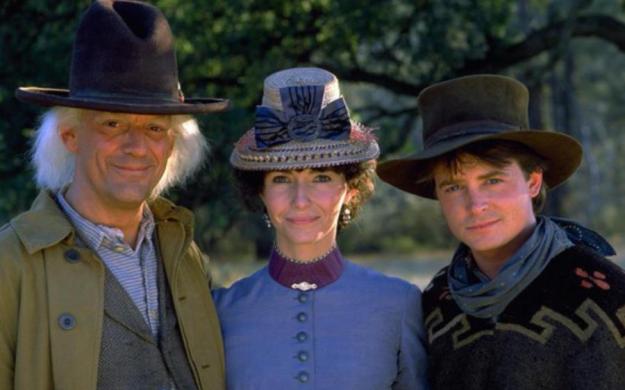
I really enjoyed the historical setting of 1885 in this movie. This movie put me in mind of the old western films that I used to watch on my grandparent’s telly with guns; horses and old saloon bars.
The plot involves Marty saving the Doc from a predicted death in 1885 when he gets shot and killed. It also involves a love story for Doc Brown as he meets the woman of his dreams in Clara Clayton.
Michael J. Fox is great as Marty McFly. I like this movie exploring Marty’s friendship with the Doc and the decisions he makes. He also gets to shoot a gun; ride a horse and calls himself ‘Clint Eastwood’.
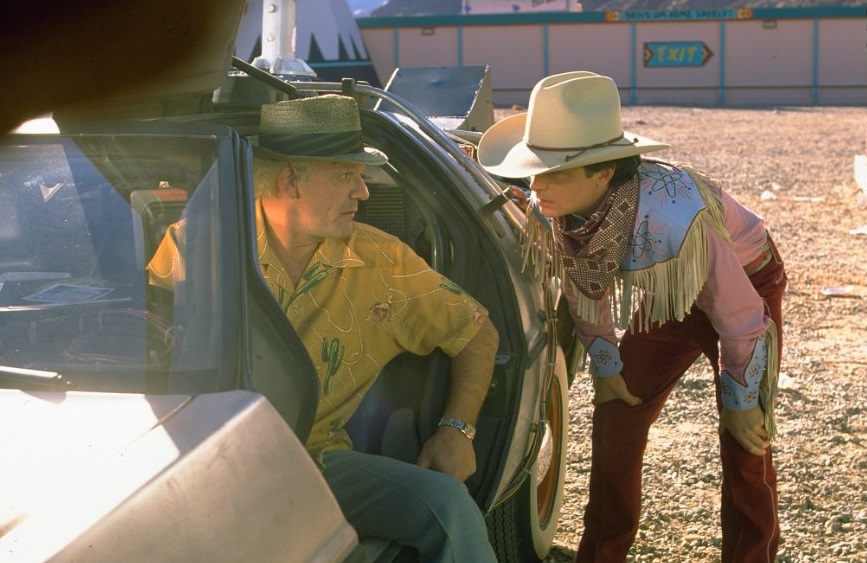
As well as playing Marty in this movie, Fox also gets to play Marty’s ancestor Seamus McFly. Seamus is a mild-mannered man in 1885 and Fox gets to use a strong Irish accent when playing him in this.
Christopher Lloyd is brilliant as Doc Brown. This film is more about Doc as he gets to fall in love with Clara. We also learn more about Doc’s love for Jules Verne novels and the choices he’s torn with.
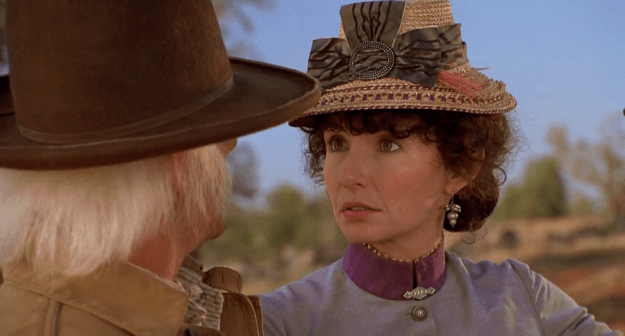
Marty Steenburgen stars as Clara Clayton, a schoolteacher who falls in love with Doc. She clearly likens to Doc immediately and shares the same interest as he including reading Jules Verne novels.
Thomas F. Wilson appears as Buford ‘Mad Dog’ Tannen, Biff’s ancestor in 1885. Tannen is a vicious and ruthless gunman and murderer, and Wilson is very good as an old-fashioned Western villain.
Lea Thompson also appears in this movie. Lea mainly plays Maggie McFly who is wife to Seamus. Lea also gets to play Maggie with a strong Irish accent. She and Seamus have a baby boy called William.
The horse riding scenes in this movie are amazing and well-directed by Robert Zemeckis, making it fell like a proper western film. Also the night festival scenes with jaunty music were pretty good.
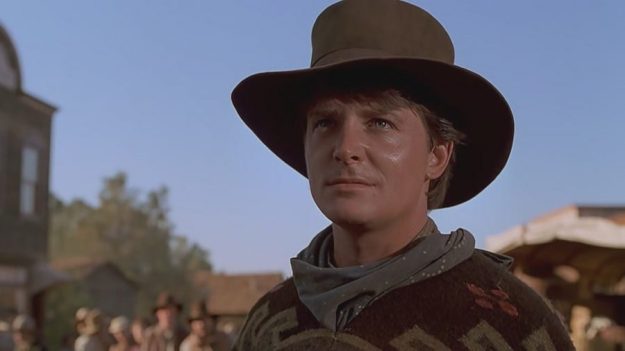
There’s an exciting showdown scene between Buford Tannen and Marty where they draw guns in a one-to-one duel. This is very much in the style of old fashioned ‘Clint Eastwood’ western movies.
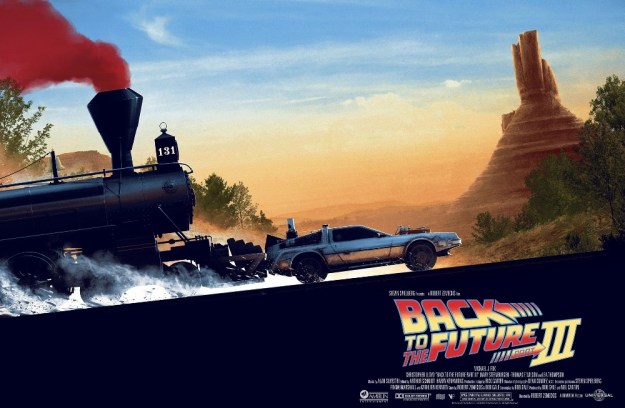
I love the steam locomotive scenes featured in this movie as I love old-fashioned railway trains. The climatic action scenes where the steam train pushes the Deloran on the train track are very exciting.
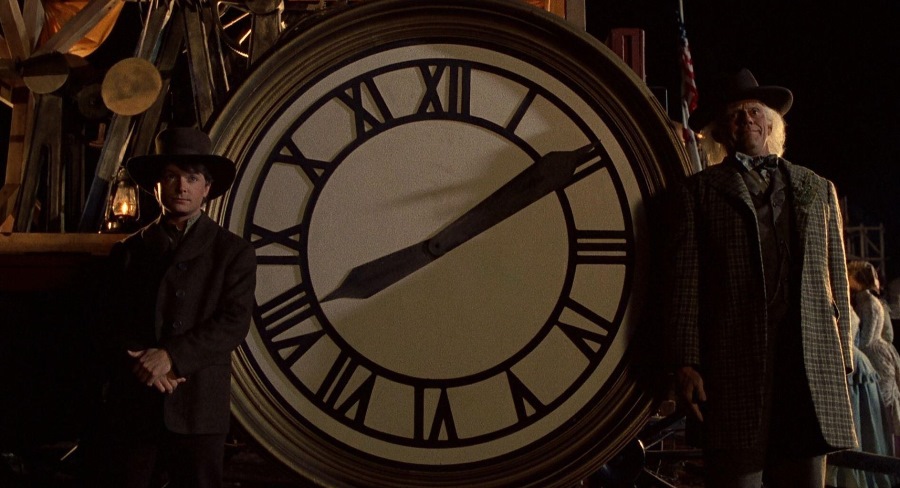
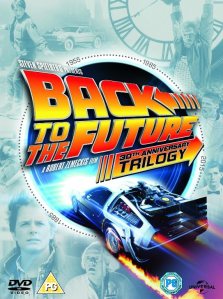
The original DVD special features are as follows. There’s the ‘Making the Trilogy: Chapter 3’ documentary; outtakes; deleted scenes and the ZZ Top music video of ‘Doubleback’. There are also production archives; storyboard to final film comparisons and a theatrical trailer for the movie.
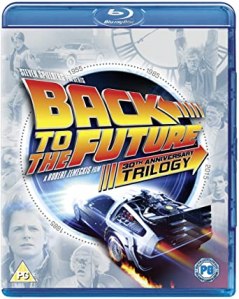
The 30th anniversary DVD/Blu-ray special features are as follows. There’s an audio commentary with producers Bob Gale and Neil Canton without director Robert Zemeckis. There’s also an audio commentary track which is actually a Q&A session with director Robert Zemeckis and producer Bob Gales in front of a live audience, moderated by Laurent Bouzerau. There are also the final two parts of a six-part retrospective on ‘Back to the Future’ with brand-new behind-the-scenes cast and crew interviews called ‘Tales From The Future: Third Time’s the Charm’ and ‘Tales From The Future: The Test of Time’. There’s ‘Back to the Future: The Ride’; ‘The Making of ‘Back to the Future, Part III’ featurette; the ‘Making the Trilogy: Chapter 2’ documentary; ‘The Secrets of the ‘Back to the Future Trilogy’ and a behind-the-scenes section including outtakes, a deleted scene and photo galleries including production archives. There’s ‘FAQs about the Trilogy’; the ZZ Top music video of ‘Doubleback’ and there’s the theatrical trailer for the movie.
On the bonus disc for the 30th anniversary DVD/Blu-ray box set of the ‘Back to the Future’ trilogy, there’s a 2015 message from Doc Brown, ‘Doc Brown Saves the World’, ‘Outatime: Restoring the DeLorean’; a nine-part supplement called ‘Looking Back to the Future’; two episodes from the ‘Back to the Future’ animated series and some 2015 commercials, including a ‘Jaws 19’ trailer and a ‘Hoverboard Commercial’.
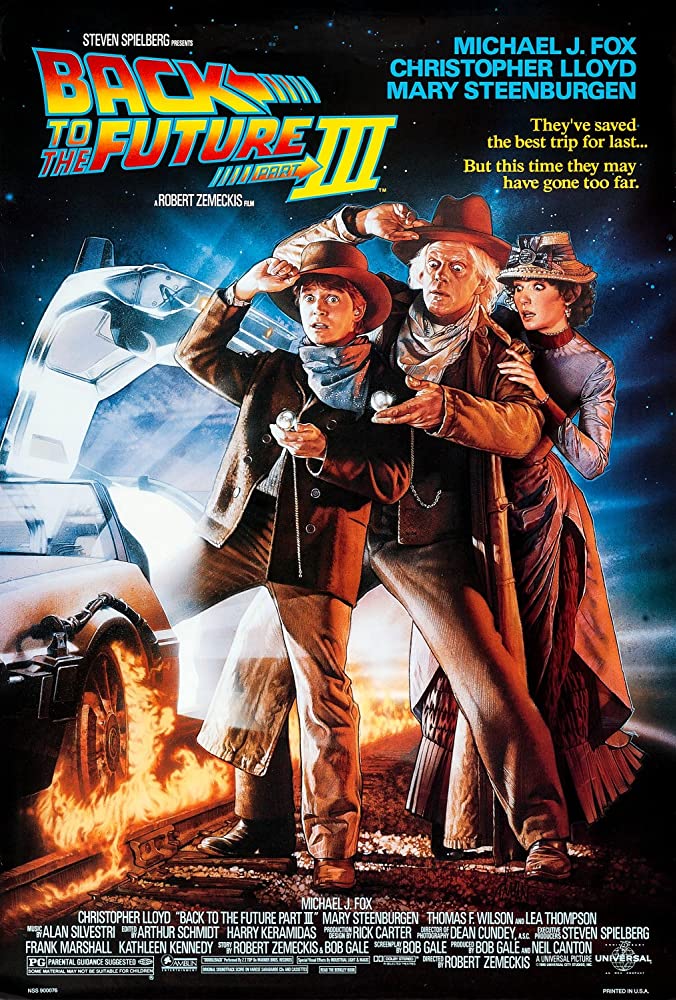
‘Back to the Future, Part III’ has been an enjoyable conclusion to this fantastic trilogy. It’s not the best film in the three, but it ends the trilogy on a satisfying and reassuring note that pleased me.
The ‘Back to the Future’ trilogy is one of the best movie trilogies I’ve ever seen. I still enjoy watching these three films with Michael J. Fox as Marty McFly and Christopher Lloyd as Doc Brown. It’s a trilogy that’s well-written; well-presented and well-directed by the likes of Robert Zemeckis.
I’m positive you’ll enjoy this movie trilogy. As Doc Brown said in ‘Back to the Future, Part III’, “Your future is whatever you make it. So make it a good one…”
So go on! Take a big step…back to the future!
‘Back to the Future, Part III’ rating – 9/10
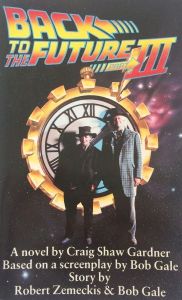
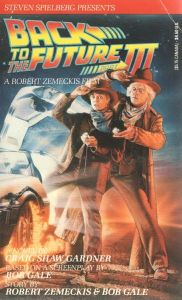
‘BACK TO THE FUTURE, PART III’ (NOVELIZATION)
Please feel free to comment on my review.
The Book Trilogy is Complete
I’m pleased to have finished my journey with ‘Back to the Future’ in the novelizations! 🙂
It’s fitting that I should complete checking out the ‘Back to the Future’ movie novelizations in 2025 to celebrate the 40th anniversary of ‘Back to the Future’. It’s also very fitting for me to finish the ‘Back to the Future, Part III’ book before Christmas in December 2025. 🙂
The first time I saw the ‘Back to the Future’ film trilogy was in December 2002 before Christmas arrived. I’ve very fond nostalgic memories of seeing the ‘Back to the Future’ film trilogy as a teenager and reading the ‘Part III’ book did provide that warm, cozy feeling. 😀
I read ‘Back to the Future, Part III’ by Craig Shaw Gardner from November to December 2025. I didn’t expect to read all three ‘Back to the Future’ books in 2025 and in time for its 40th anniversary. I had anticipated I’d read the second and third books sometime in 2026.
I suppose seeing ‘Back to the Future – The Musical’ twice in London as well as checking out the ‘Iron Man’ novelization by Peter David gave me the inspiration to check out the second and third ‘Back to the Future’ novelizations, especially as I’ve enjoyed the movies.
The fact I’ve caught up on reading the first ‘Back to the Future’ movie novelization in 2025 after first purchasing it in 2020 is so astounding when you find yourself going to Amazon to purchase the remaining two books of the film trilogy to complete the prose experience.
But the question remains. Was ‘Back to the Future, Part III’ a worthwhile read? Did it satisfy me in terms of completing how I experienced the movie trilogy in book form? And the answer is of course, yes! I found Craig Shaw Gardner’s writing in this book very satisfying.
As established in my review for the ‘Part II’ book, ‘Parts II and III’ can be considered a two-part story that makes them almost separate from the first film. This is especially since Craig Shaw Gardner is the author of the last two books and not the late George Gipe.
It’s also when you take into account that ‘Parts II and III’ were filmed back-to-back and were released at cinemas in 1989 and 1990 respectively. The ‘Part III’ book was published in 1990 to tie-in with the release of the ‘Part III’ movie itself, which should be expected. 🙂
With that said, ‘Back to the Future, Part III’ might be argued as a being a standalone story of its own when you consider it’s about the Wild West, which is a contrast to what the first two films were all about. That’s not to say ‘Part III’ is disconnected from the first two films.
Oh no! Far from it! Craig Shaw Gardner manages to resolve a lot of plot points that were established in ‘Part II’, including Marty’s journey to overcome his weakness of being insulted by those who call him ‘chicken’. It’s a relief they’re resolved in the final chapter. 🙂
However, in reading the ‘Part III’ book, more attention is given on the Wild West side of the story, especially where Doc Brown is concerned. Marty has to save him from being shot by Buford Tannen over a matter of $80. And there’s Doc’s romance with his beloved Clara.
I think it’s fair to say ‘Part III’ is the weakest instalment of the ‘Back to the Future’ film trilogy. It’s not awful and it’s got some very significant moments for people to appreciate and enjoy in considering this worthy as the conclusion to a terrific set of time-travel films.
But I don’t think ‘Part III’ is talked about a lot compared to ‘Parts I and II’. You might remember ‘Back to the Future’ more for George and Lorraine’s romance, Marty going back in time to 1955 and getting help from the Doc to return to 1985 as well as the Delorean. 🙂
However, I don’t think you’d recall the Wild West instantly when it comes to discussing ‘Back to the Future’. I consider ‘Part III’ to be a good entry in the film trilogy and a worthy conclusion. But I wouldn’t rate it highly compared to ‘Part II’, which is my favourite movie.
As established, Craig Shaw Gardner novelized ‘Back to the Future, Part III’ based on the screenplay by Bob Gale and on the story by Robert Zemeckis and Bob Gales. I’d like to think Craig Shaw Gardner enjoyed writing the second and third ‘Back to the Future’ books.
There’s a quote at the book’s beginning by Jim Morrison, who was an American poet, singer, songwriter, and filmmaker and he was the lead vocalist and primary lyricist of the rock band, the Doors. The quote is “The West is the best” from the song entitled ‘The End’.
The quote is often seen as a nod to the American West, potentially representing home, a spiritual place, or a destination for self-discovery, and can also be seen as a connection to the band’s home base in Los Angeles. It’s intriguing Craig Shaw Gardner included that.
The ‘Part III’ book is divided into 22 chapters with a prologue at the beginning. The prologue is basically a repeat of the last scene of ‘Part II’ where Marty runs up to Doc Brown in 1955 to inform him he’s back from the future before the Doc collapses in shock.
Chapter One begins the ‘Part III’ story properly with Doc Brown waking up in his home to find it wasn’t a dream and that Marty’s back. Doc gets to read the letter from his 1985 self whose trapped in 1885. The story itself is very straightforward, as you’d expect from the film.
And that’s the thing about the ‘Part III’ book by Craig Shaw Gardner. There aren’t many changes made to the plot, as many scenes match to what’s in the film. There are tweaks of dialogue here and there, but it isn’t very much to harp on whilst you’re reading the book.
If you’ve seen the DVD release of ‘Back to the Future, Part III’ (and presumably it’s on the Blu-ray release as well), there’s not much in terms of deleted scenes to be carried over and be novelized in the book. There’s like only one scene I recall from seeing the DVD release.
That scene is the one where Marshall Strickland and his son try to prevent Buford Tannen and his men from entering Hill Valley so that he can have his fight with Marty as Clint Eastford. Strickland ends up getting shot by Buford once forced to ride away from him. 😐
Honestly, most of that deleted scene is intact in the book, except for one thing. In the deleted scene, as Marshall Strickland dies, he tells his son, “Remember that word, son. Discipline.” Now, from reading the book, that’s not included, which I find disappointing. 😦
It would’ve been better if Craig Shaw Gardner had kept that final piece of dialogue between Strickland and his son in the book, as it’d tie in to the son ending up becoming the Strickland at Hill Valley High School in the 1950s and 1980s. A shame it wasn’t included.
It also would have justified Buford’s arrest at the end of ‘Part III’ once Marty defeated him and he ended up in the manure. You see, in the film, Buford is arrested for robbing the Pine City Stage. I don’t believe that was what was originally scripted in the film’s screenplay.
In the book, Buford is arrested for ‘the murder of Marshall James Strickland’. That would’ve made more sense had the deleted scene been included in the film’s final cut. I guess this was changed to cover up the fact that the Strickland killing scene was omitted.
If you watch ‘Part III’ for the scene where Buford is arrested, the camera isn’t looking at the deputy when he tells Buford he’s under arrest for robbing the Pine City Stage, as it cuts to Doc reuniting with Marty. Or…maybe it is. I’m not entirely sure when rewatching it.
There’s a brief moment where the deputy says ‘robbing’ instead of saying ‘the murder of’ before we cut to Doc reuniting with Marty. Either way, it’s a shame the deleted scene was cut, since the murder of Marshall Strickland would be justifiable to have Buford arrested.
Also, it’s a shame this funny piece of dialogue said by Buford isn’t included in the book.
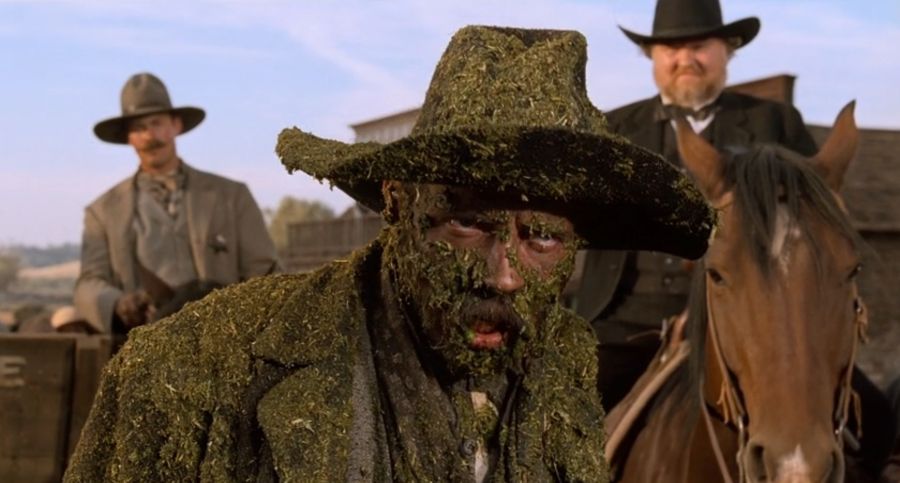
Buford: I hate manure.
Although, thinking about that, that’s more in keeping with Biff’s character rather than Buford’s character, as Biff crashed into manure trucks twice in ‘Parts I and II’ whilst Buford ended up in a manure truck only once. I’m not sure the joke entirely works here. 😐
Or maybe it does when you consider Thomas F. Wilson is playing Buford who is Biff’s ancestor in 1855. It might be funny for those watching the film that get the in-joke. Or maybe it is funny for everyone, I don’t know. It’s in the narrative sense that it baffles me.
Incidentally, why is the manure green when Buford ends up in it? Shouldn’t it be brown? The book seems to indicate the manure is brown when Buford crashed into it. How come it has a green layer on it when Buford crashed into it after being punched by Marty?
Maybe it’s a fermenting thing when it comes to manure, I’m not sure. I’m not an expert regarding that, quite frankly. Regardless, it’s amusing that Buford happened to end up in that stuff after being punched in the face a few times or more by Marty in the climatic fight.
I like that Craig Shaw Gardner gets to explore Marty’s struggle in trying to avoid getting involved in a fight with Buford Tannen since it might be his name on the tombstone instead of Doc Brown’s. Speaking of which, Doc Brown could’ve easily been shot earlier. 😮
According to the book, it’s established that Buford shooting Doc at the festival when he’s dancing with Clara could have been the start of his demise before Monday 7th September 1885. It doesn’t mean Doc being shot would’ve actually happened on the Monday itself.
That was an interesting insight whilst reading the book and it does explain Doc’s surprise when he realises Buford has turned up early when he’s behind him with a small gun called a derringer in his back. It’s a shame that’s not clearly indicated in the film when seeing that scene.
Fortunately, that doesn’t happen, as Marty’s there to throw the ‘frisbee’ at Buford to knock the derringer out of his hand when he’s about to shoot Doc. It does put Marty ‘in it’ however when he’s called ‘yellow’ and he reluctantly agrees to the challenge on Monday.
Incidentally, I thought it was ‘yella’ nor ‘yellow’ when it came to calling someone a ‘coward’. That’s how it was spelt in a script when I did in a school play in Year 7 in 2001. Although when Private Frazer in ‘Dad’s Army’ said it, it is spelt in ‘yellow’ in the DVD subtitles.
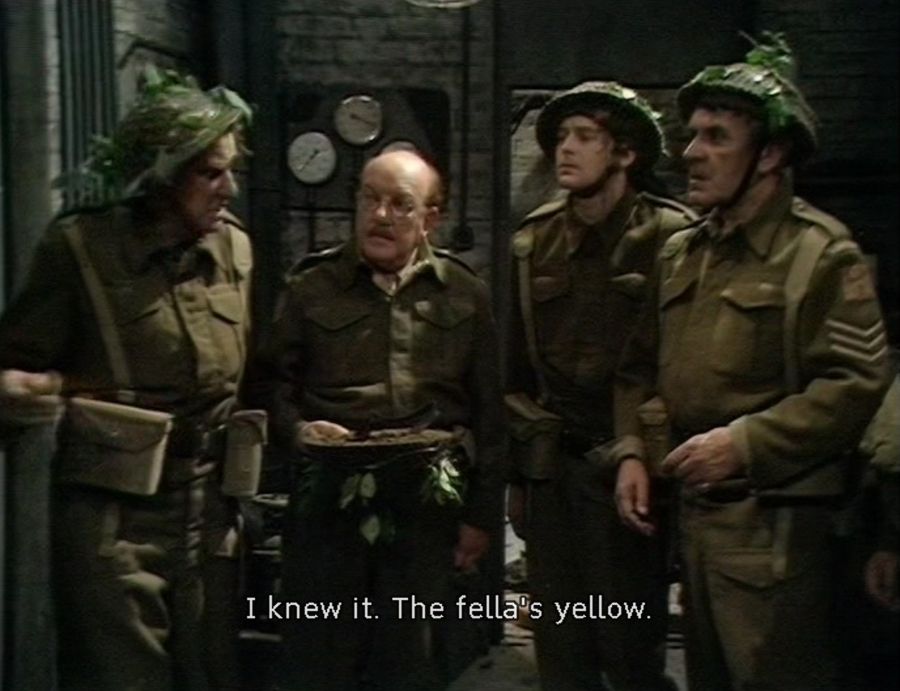
Frazer: I knew it! The fella’s yellow!
And when checking the spelling for it in ‘Back to the Future, Part III’ (which at the time of this review, I’ve checked via Disney+), it does spell as ‘yellow’ rather than ‘yella’. Although when hearing characters like Buford say it, it does sound more like ‘yella’ than ‘yellow’.
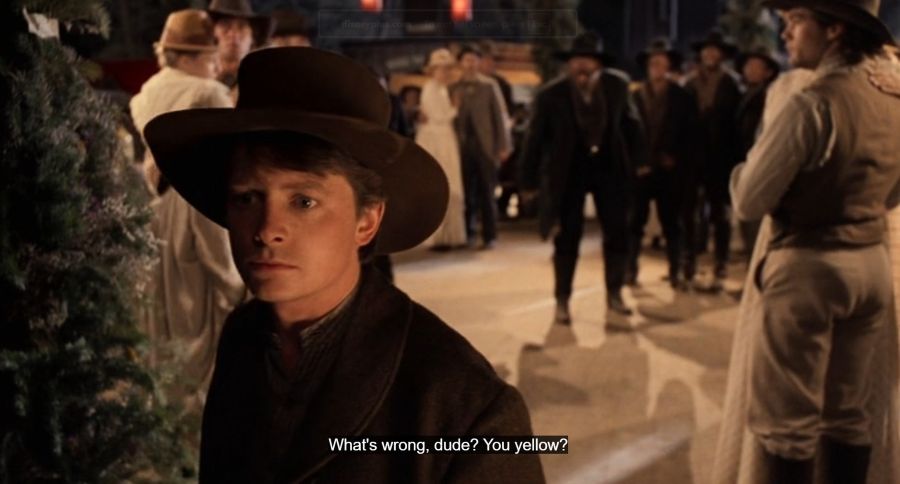
Buford: What’s wrong, dude? You yellow?
I don’t know. It’s not really a huge thing to harp on and maybe my memory of it is playing up. But I’m sure when I did it in the school play in 2001, it was spelt ‘yella’, not ‘yellow’. Maybe it’s how Americans say it compare to how UK residents say it. I’m not entirely sure.
I’ve checked up on Google and apparently, ‘yella’ can mean ‘yellow’, ‘cowardly’ or be a colloquial Arabic term for “Come on” or “Let’s go”. The meaning depends entirely on the context with the most common uses being either a spelling of ‘yellow’ or the Arabia ‘yalla’.
I’m not sure if that answers my question on why ‘yellow’ in ‘Back to the Future, Part III’ – both film and book – is spelt ‘yella’ instead as that’s what it would have sounded like in the film. But at least ‘yella’ can be another meaning for ‘yellow’ and ‘cowardly’ when one uses it. 😐
Going back to Marty, it was fascinating when going through his mind that he wanted to avoid getting involved in a fight with Buford. He finds himself being afraid when the odds seem to be going against him and that he might have to go out there and confront Buford.
The men in the Palace Saloon are encouraging Marty to go out there and fight Buford, and they’re clearly disappointed and consider him a coward when he and Doc go out in the back to escape. Seamus McFly however gets to stand up for Marty when he and Doc leave.
That scene featuring Seamus standing up for Marty isn’t included in the film. I like that it’s included in the film to establish Seamus’ approval of Marty in that he didn’t go through the ‘foolish’ way to overcome a bully like Buford by getting into a fight like his brother Martin did.
Another addition in the book that I found very interesting is when Marty meets a young D.W. Griffiths after having had his fight with Buford. Now, I didn’t know who this was, but I checked up on him online, and apparently, D.W. Griffiths, was an American film director.
He directed films like ‘The Birth of a Nation’ in 1915, ‘Intolerance’ in 1916, ‘Broken Blossoms’ in 1919, ‘Way Down East’ in 1920, ‘Orphans of the Storm’ in 1921 and ‘The Struggle’ in 1931. Most of these are silent films when D.W. Griffiths made them back then.
I think Marty meeting D.W. Griffiths in Hill Valley in 1885 is to indicate that he inspired him with his future movie-making. I’m not sure if this was included in the original script or was included by Craig Shaw Gardner. I suspect the latter, as D.W. Griffiths is only in one scene.
I don’t know if the boy who says, “Hey, mister! Mister Eastwood! Here’s your gun, mister!” was supposed to be the D.W. Griffiths character. He probably was. Although that scene where the boy gives Marty the gun before he and Doc depart isn’t included in the book. 😐
The romance story between Doc Brown and Clara is very engaging to read, and I like how the book explores Doc’s feelings for Clara, particularly in sections where it starts off with “Great Scott!” and ends with “Great Scott!” Some of those sections are very amusing.
It does get tense and dramatic when Doc telling Clara that he has to go back to 1985 in the time machine he invented doesn’t work, since she doesn’t believe him and slaps him for it. Clara’s backstory is also highlighted in the book. More so than seeing her in the film.
It’s unveiled Clara has had a bad history with former lovers and she came to Hill Valley to experience a new challenge, particularly with becoming a schoolteacher. Clara expected Doc Brown to be different from her previous lovers, especially as she ‘adores’ Jules Verne.
So, when Doc Brown lets her down by informing her who he is and she doesn’t believe him, she has enough and decides to leave Hill Valley. It’s interesting how that’s detailed in the book compared to how it’s shown in the film with some minor changes in the telling.
From reading the book, it’s interesting to find that Clara doesn’t immediately believe that Doc Brown has a time machine. Regardless, she’s determined to be with her true love, knowing that Doc shared his love for her to others in the Palace Saloon the previous night.
When Doc saves Clara from falling to her death from the locomotive that speeds up incredibly fast, thanks to the multi-coloured logs blowing up, she accepts that her Emmet is from the future, especially when she sees him wearing the pink hoverboard on his foot.
Marty’s reactions to Doc falling in love with Clara in the story are amusing to read, especially when he finds the looniness in his eyes. Doc’s attention in being distracted is stopping him and Marty from focusing on getting back to the future. I know it’s the same in the film.
But reading it in the book adds that extra layer to the frustration Marty has when he wants Doc to focus on their aim to return to the future and it doesn’t happen when Clara’s in the room. Marty does wonder at times whether he’s like that with Jennifer in their relationship.
I like how the book ends with all the 1985 scenes told in Chapter Twenty Two. Marty returns in the Delorean, the Delorean gets smashed by the diesel train, he returns to find his family well, and he reunites with Jennifer when she’s on the hammock at her house. 🙂
There’s also the scene where Marty resists getting in the car race with Needles, preventing him from being in the accident with the Rolls-Royce. And the concluding scenes of Marty and Jennifer reuniting with Doc, Clara and their family on their time travelling locomotive.
In some ways, I wish those scenes had been spread out a bit in order to provide more breathing space for the conclusion of ‘Part III’ as well as the ‘Back to the Future’ trilogy overall. Despite that, Craig Shaw Gardner does a good job in telling those scenes succinctly.
It’s interesting how the story concludes with Doc Brown and his family in the time travelling locomotive sailing off into the sky with Marty and Jennifer watching them. It’s left open-ended as to where they’re heading off to next, especially when viewing the film.
Me personally, I assumed Doc, Clara, their two boys Jules and Verne as well as Einstein the dog journeyed off into outer space, like in one of those Jules Vernes books such as ‘From the Earth to the Moon’. It could be what occurred, but it’s never established in book.
‘Back to the Future – Part III’ the book has been a very satisfying read for me. It concludes the ‘Back to the Future’ film trilogy in book form on a worthwhile note and I’m pleased with how Craig Shaw Gardner concluded the film trilogy as books based on the original film scripts.
It shouldn’t be a surprise, since Craig Shaw Gardner did well novelizing ‘Back to the Future, Part II’. I’ve been pleased with his efforts for the first two ‘Batman’ movie novelizations – ‘Batman’ and ‘Batman Returns’. His books haven’t disappointed me at all.
My aim in 2025 was to read the first ‘Back to the Future’ movie novelization by George Gipe to commemorate the 40th anniversary of a film trilogy that I love so much as well as the first film itself. To have read all three books of the film trilogy has been an achievement. 🙂
Hopefully, this isn’t my last venture in the world of ‘Back to the Future’, as I’m sure there’s more stuff to check out to celebrate the film trilogy’s legacy. But I’m very pleased I’ve been able to read the books based on the films. I’ve found them incredibly good reads. 🙂
I don’t know if ‘Back to the Future – Part III’ will get an audiobook reading someday. If it does, I wouldn’t mind someone like Lea Thompson or Mary Steenburgen to read the story. Who knows what will happen in the future? We’ll just have to wait and see what will occur.
On that note, I’d like to conclude with this lovely quote said by Doc Brown to Marty and Jennifer at the end of ‘Back to the Future, Part III’.
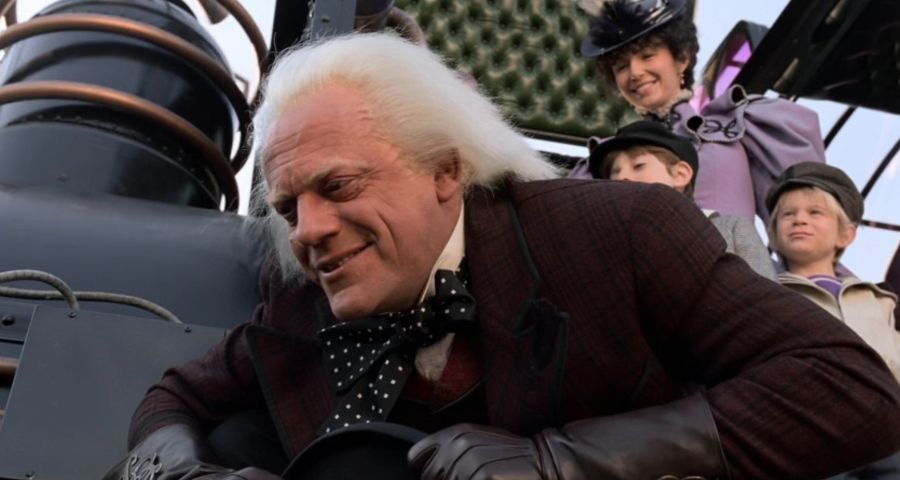
Doc Brown: Your future hasn’t been written yet. No one’s has. Your future is whatever you make it. So, make it a good one.
And that concludes my 40th anniversary celebrations of ‘Back to the Future’ in 2025. What with revisiting the film trilogy itself, checking out the movie novelizations, and seeing ‘Back to the Future – The Musical’ twice in London. I’ve done well for myself, haven’t I? 😀
See you in the future! 🙂
‘Back to the Future, Part III’ (Novelization) rating – 9/10
| The previous story was | |
| Return to Back to the Future | |
| Return to Sci-Fi |
 Bradley's Basement